Choosing the right wireless lavalier microphones depends heavily on your device compatibility and audio fidelity needs. My top recommendation is the DJI Mic Mini Wireless Microphone Kit because it balances professional-grade sound with effortless smartphone connectivity. For those needing a simple, low-cost entry point, the NPTCL Wireless Lavalier Microphone offers direct USB-C and Lightning connectivity without requiring a separate receiver. The main tradeoff you will face is between audio quality and setup complexity; professional UHF systems offer superior range and interference resistance but require more setup time than plug-and-play digital kits. Continue reading to see how these options stack up against each other in real-world scenarios.

Get the latest gadgets delivered free with Prime
- Fast, free delivery on millions of items
- Prime Video, Amazon Music and more included
- Member-only deals all year
Complete the kit


Key Takeaways
- Direct smartphone connectivity (USB-C/Lightning) has largely replaced Bluetooth for content creators due to lower latency and higher reliability.
- UHF systems remain superior for live events and large venues, while 2.4GHz digital systems dominate solo vlogging and small-group interviews.
- Battery life consistency is more critical than total runtime; kits with charging cases (like DJI) prevent mid-shoot power failures better than standalone units.
- Noise reduction features are software-dependent on cheaper kits, whereas higher-end models handle noise cancellation on the hardware side for cleaner raw audio.
- Form factor matters: clip-on transmitters are discreet for on-camera talent, while bodypack systems offer better mic placement flexibility for stage performers.
| DJI Mic Mini Wireless Microphone Kit with 2 Transmitters, Receiver, and Charging Case | 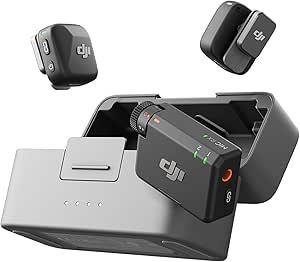 | Best Overall for Professional Content Creators | Transmitters: 2 | Receiver: 1 | Charging case: Included | VIEW ON AMAZON | See Our Full Breakdown |
| DJI Mic Mini Wireless Microphone (1 Transmitter + 1 Receiver) |  | Best for Solo Creators | Transmitter weight: 10 g | Maximum transmission range: 400 m | Sampling rate: 48 kHz | VIEW ON AMAZON | See Our Full Breakdown |
| NPTCL Wireless Lavalier Microphone for iPhone, iPad, and Android (USB-C, 2-Pack) |  | Best Value for Smartphone Users | Connectivity: Wireless | Connector Type: USB Type-C | Polar Pattern: Omnidirectional | VIEW ON AMAZON | See Our Full Breakdown |
| TONOR Wireless Microphone System with Handheld, Headset, and Lavalier Mics |  | Best for Live Events and Karaoke | Connectivity: Wireless | Microphone type: Dynamic cardioid | Range: Up to 200 ft (60 m) | VIEW ON AMAZON | See Our Full Breakdown |
| Phenyx Pro PDP-1-1B Single Digital Wireless Headset and Lavalier Microphone System |  | Best for Fitness and Stage Performers | Frequency range: 902–928 MHz | Tunable frequencies: 15 | Audio resolution: 48 kHz/24-bit | VIEW ON AMAZON | See Our Full Breakdown |
| TONOR UHF Wireless Microphone System with Headset & Lavalier Lapel Mics |  | Best for PA Systems and Live Events | Brand: TONOR | Wireless Range: 200ft/60m (line of sight) | Frequency Channels: 15 per mic, 30 total | VIEW ON AMAZON | See Our Full Breakdown |
| Hollyland Lark M2 Wireless Lavalier Microphone | 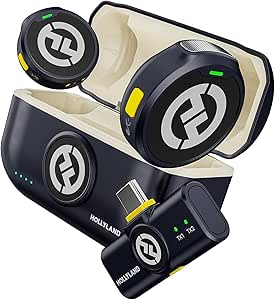 | Best Overall for Mobile Creators | Weight: 9 g | Audio Format: 48 kHz/24-bit | Wireless Range: Up to 1,000 ft line of sight | VIEW ON AMAZON | See Our Full Breakdown |
| DJI Mic Mini Wireless Microphone System (2 Transmitters, 1 Receiver) |  | Best for DJI Ecosystem Users | Included Components: 2 transmitters, 1 receiver, accessories | Transmitter Weight: 10 g | Maximum Transmission Range: 400 m | VIEW ON AMAZON | See Our Full Breakdown |
| DJI Mic Mini Wireless Microphone (2 Transmitters, Mobile Receiver) |  | Best for Smartphone Interviews | Included Components: 2 transmitters, 1 mobile receiver | Transmitter Weight: 10 g | Maximum Transmission Range: 300 m | VIEW ON AMAZON | See Our Full Breakdown |
| TONOR UHF Wireless Microphone System with Bodypack, Lavalier, and Headset Mics |  | Best Entry-Level PA Option | Connectivity: UHF wireless | Connector: 6.35 mm (1/4 in) jack | Range: Up to 200 ft (60 m) | VIEW ON AMAZON | See Our Full Breakdown |
| Wireless Lavalier Microphone for iPhone, Android, PC – Live Stream & Vlogging (Black) |  | Best for Multi-Device Flexibility | Transmission: Series V 2.4GHz digital wireless | Range: Up to 20m | Battery Life: 6 hours per mic | VIEW ON AMAZON | See Our Full Breakdown |
| Labstandard Dual Wireless Lavalier Microphone Set for iPhone, iPad, and USB-C Devices |  | Best for Basic Interviewing | Connectivity: Bluetooth | Connector Types: Lightning, USB Type-C | Microphone Type: Omnidirectional condenser | VIEW ON AMAZON | See Our Full Breakdown |
| MAYBESTA Wireless Mini Lavalier Microphone 2-Pack for iPhone and Android |  | Best for Plug-and-Play Simplicity | Brand: MAYBESTA | Quantity: 2 pack | Type: Wireless lavalier lapel microphone | VIEW ON AMAZON | See Our Full Breakdown |
| Mini Mic Pro Wireless Lavalier Microphone for iPhone and Android | 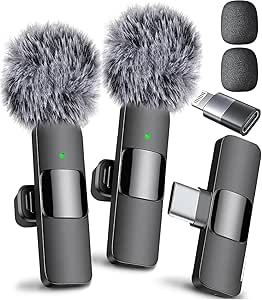 | Best for Outdoor Vlogging | Connectors: Lightning, USB Type-C | Polar Pattern: Omnidirectional | Frequency: 2.4 GHz | VIEW ON AMAZON | See Our Full Breakdown |
| GoorDik Wireless USB-C Lavalier Microphone with Noise Reduction |  | Best for Range and Audio Modes | Connectors: USB Type-C, USB Type-A | Wireless Range: 30 meters | Battery Life: 6–12 hours per transmitter | VIEW ON AMAZON | See Our Full Breakdown |
More Details on Our Top Picks
DJI Mic Mini Wireless Microphone Kit with 2 Transmitters, Receiver, and Charging Case
This kit stands out as the most polished option for creators who need reliability without bulk. Two 10g transmitters disappear under clothing, a significant advantage over bulkier bodypack systems like the TONOR Wireless Microphone System that require visible hardware. The 48-hour battery life provided by the charging case eliminates the anxiety of mid-shoot power failures, a common pain point with single-use AA battery packs. While the NPTCL Wireless Lavalier Microphone offers simpler plug-and-play connectivity for phones, the DJI system delivers superior audio fidelity with 48 kHz sampling and robust noise cancellation. The automatic volume limiter is a critical feature for unpredictable environments, preventing clipped audio that would otherwise ruin a take. However, this premium build comes with ecosystem lock-in; connecting to older DJI Osmo devices requires specific modules, which may frustrate users with mixed gear.
Pros:- Extremely lightweight 10g transmitters are nearly invisible on camera
- Charging case provides up to 48 hours of total runtime
- Two levels of noise cancellation adapt to quiet or noisy settings
- Automatic limiting prevents audio distortion from loud voices
Cons:- Not waterproof, limiting use in outdoor rain or sweat-heavy scenarios
- Integration with older DJI Osmo devices requires a specific first-generation module
Best for: YouTubers and professional video producers who prioritize discreet appearance, long battery life, and high-fidelity audio for interviews or vlogs.
Not ideal for: Users with limited budgets or those who need a universal solution that works seamlessly with legacy audio interfaces without adapters.
- Transmitters:2
- Receiver:1
- Charging case:Included
- Transmitter weight:10 g
- Maximum transmission range:400 m
- Sampling rate:48 kHz
- Maximum SPL:120 dB
- Battery life with charging case:Up to 48 hours
- Noise cancellation:2 levels: Basic and Strong
Our verdict“Choose this if you want professional-grade audio and battery longevity in a form factor that disappears on camera.”
DJI Mic Mini Wireless Microphone (1 Transmitter + 1 Receiver)
For individuals working alone, this single-transmitter kit removes the unnecessary cost and clutter of a second mic. It retains the 10g ultra-light design and 400m range found in the dual-transmitter DJI kit, ensuring you don’t sacrifice performance for simplicity. Compared to the NPTCL Wireless Lavalier Microphone, which requires a charging case for extended use, this unit offers 10 hours of continuous operation per charge, sufficient for full-day shoots. The automatic volume limiting ensures consistent levels whether you are speaking softly or shouting during action shots. However, the lack of a second transmitter means you cannot record interviews without purchasing an additional unit later, which breaks the value proposition if your needs expand. It is the ideal entry point into the DJI ecosystem for solo vloggers.
Pros:- Ultralight 10g transmitter is discreet and comfortable for long wear
- Two noise-cancellation levels handle both studio and street environments
- Up to 10 hours of battery life per charge without needing a case
- Automatic limiting protects audio quality from sudden loud noises
Cons:- Includes only one transmitter, preventing simultaneous two-person recording
- Connecting to Osmo Mobile series products requires a specific first-generation module
Best for: Solo vloggers, podcasters, and streamers who record themselves and do not require multi-person audio capture.
Not ideal for: Interviewers or teams who need to record two people simultaneously, as buying two of these units is less efficient than the dual kit.
- Transmitter weight:10 g
- Maximum transmission range:400 m
- Sampling rate:48 kHz
- Maximum sound pressure level:120 dB SPL
- Battery life:Up to 10 hours per transmitter and receiver
- Noise cancellation:Two levels: Basic and Strong
- Connectivity:Bluetooth, DJI OsmoAudio, USB Type-C
- Microphone pattern:Omnidirectional
- Signal-to-noise ratio:70 dB
Our verdict“This is the smartest choice for solo creators who want DJI’s audio quality without paying for a second mic they won’t use.”
NPTCL Wireless Lavalier Microphone for iPhone, iPad, and Android (USB-C, 2-Pack)
This system strips away complexity, offering plug-and-play auto-pairing that bypasses Bluetooth settings entirely. Unlike the DJI Mic Mini, which requires specific apps or modules for full integration, the NPTCL connects directly via USB-C or Lightning, making it instantly usable for most modern smartphones. The digital battery indicator on the case is a practical touch, preventing unexpected shutdowns during critical recordings. With 24 hours of total usage, it competes well with premium kits on endurance despite its lower price point. The tradeoff lies in connectivity flexibility; it is heavily optimized for mobile devices, meaning users needing to plug into DSLRs or professional mixers may find the interface limiting. It is the go-to for creators who value speed and simplicity over advanced audio controls.
Pros:- Plug-and-play auto-pairing eliminates app installation and Bluetooth pairing hassles
- Two microphones allow for simultaneous dual-person interviews
- Charging case provides 24 hours of total usage with a clear battery level indicator
- Effective noise reduction and included windscreen improve outdoor audio clarity
Cons:- Older iPhones (14/13/12) require the included Lightning adapter, and third-party alternatives may fail
- Each individual mic lasts only 6 hours, requiring frequent recharging if the case is not used
Best for: Mobile journalists, social media influencers, and students who need a hassle-free setup for iPhone and Android recording.
Not ideal for: Professional videographers who require XLR outputs or need to connect directly to cameras without adapters.
- Connectivity:Wireless
- Connector Type:USB Type-C
- Polar Pattern:Omnidirectional
- Wireless Range:Up to 70 ft
- Battery Life:6 hours per charge; 24 hours with charging case
- Battery Indicator:Digital
- Number of Channels:2
- Signal-to-Noise Ratio:80 dB
- Audio Sensitivity:70 dB
Our verdict“Buy this if you want the easiest possible wireless audio solution for your smartphone without dealing with complex software.”
TONOR Wireless Microphone System with Handheld, Headset, and Lavalier Mics
This is not a standard lavalier kit; it is a multi-format system designed for versatility in live settings. Including handheld, headset, and lavalier options makes it superior to the DJI Mic Mini for hosts who need to switch from interviewing to speaking to the audience. The dynamic cardioid pattern rejects background noise effectively in crowded venues, unlike the omnidirectional mics found in most vlogging kits. However, the reliance on AA batteries is a significant drawback compared to the rechargeable USB-C systems like the Phenyx Pro, adding ongoing cost and preparation time. It is built for durability with metal components, but the setup is bulkier and less discreet. This is the right tool for stage performers and event organizers, not for discreet video production.
Pros:- Includes handheld, headset, and lavalier microphones for maximum versatility
- Wireless range up to 200 ft (60 m) suits large stages and rooms
- Automatic pairing simplifies setup for multiple users
- Compatible with standard mixers, amplifiers, and powered speakers
Cons:- Requires AA batteries which are not included, adding maintenance and cost
- Channel specifications are confusing, with claims of 10 channels per device versus 20 total
Best for: Event hosts, karaoke enthusiasts, and church speakers who need multiple microphone types in one system for live sound reinforcement.
Not ideal for: Video creators who need discreet, clip-on mics for cinematic footage, as the handheld and headset options are too visible.
- Connectivity:Wireless
- Microphone type:Dynamic cardioid
- Range:Up to 200 ft (60 m)
- Channels:20 listed; 10 per microphone or bodypack
- Connector:Aux
- Polar pattern:Unidirectional
- Signal-to-noise ratio:60 dB
- Compatible devices:Mixer, karaoke machine, amplifier, powered speaker
- Power source:2 AA batteries per microphone or bodypack (not included)
Our verdict“This system is ideal for live event organizers who need the flexibility to switch between handheld and wearable mics.”
Phenyx Pro PDP-1-1B Single Digital Wireless Headset and Lavalier Microphone System
Designed for movement, this system includes both a headset and lavalier, catering to users who need hands-free audio for presentations or aerobics. Unlike the TONOR system, which relies on disposable AA batteries, the Phenyx Pro features a USB-C rechargeable receiver and transmitter, reducing long-term maintenance. The 15 tunable frequencies allow for interference management in venues with heavy wireless traffic, a feature often missing in simpler kits. The 1/4-inch TS connector on the receiver ensures compatibility with most PA systems and mixers, though it may require an adapter for smartphones. While the 160–200 ft range is solid for indoor use, it falls short of the 400m range offered by the DJI Mic Mini. It is a robust choice for live performers who need reliable, rechargeable wireless audio.
Pros:- Includes both headset and lavalier microphones for different use cases
- 15 tunable frequencies help avoid interference in crowded wireless environments
- USB-C charging for both receiver and transmitter eliminates battery replacements
- Compact receiver and portable bodypack design suit mobile setups
Cons:- Range is dependent on line-of-sight and can be shorter than digital competitors
- The 1/4-inch TS receiver connector may require adapters for modern digital devices
Best for: Fitness instructors, teachers, and stage performers who need hands-free operation and USB-C charging convenience.
Not ideal for: Filmmakers who require ultra-compact, invisible mics, as the bodypack and headset design is more industrial and visible.
- Frequency range:902–928 MHz
- Tunable frequencies:15
- Audio resolution:48 kHz/24-bit
- Line-of-sight range:160–200 ft
- Receiver battery capacity:1500 mAh
- Transmitter battery capacity:550 mAh
- Charging port:USB Type-C
- Transmitter connector:3-pin mini XLR
- Receiver connector:1/4-inch TS
Our verdict“This is the best choice for active performers who need reliable, rechargeable hands-free audio for live events.”
TONOR UHF Wireless Microphone System with Headset & Lavalier Lapel Mics
This system targets a different audience than the DJI Mic Mini or Hollyland Lark M2. Instead of plugging into phones or cameras, it outputs to 6.35mm (1/4″) mic inputs on mixers, speakers, or PA systems. The inclusion of both lavalier and headset mics makes it exceptionally versatile for presenters who need hands-free options during live events. With 200 feet of range and 30 adjustable channels, it handles interference well in crowded venues. However, it lacks the modern convenience of USB-C direct connection, requiring traditional audio gear. The rechargeable receiver is a plus, but the bodypacks still rely on AA batteries, which adds ongoing cost and hassle compared to fully rechargeable competitors.
Pros:- Includes both headset and lavalier mics for flexible hands-free options
- 30 adjustable frequency channels help avoid interference in busy venues
- Rechargeable receiver eliminates the need for frequent battery swaps
- Long 200-foot range supports movement across stages or rooms
Cons:- Requires a 6.35mm (1/4″) input, limiting use with modern cameras and phones
- Bodypack transmitters require AA batteries, which are not included
- No Bluetooth or direct digital connectivity for mobile devices
Best for: Event organizers, teachers, or public speakers using dedicated PA systems, mixers, or karaoke machines.
Not ideal for: Content creators using smartphones or cameras, as it lacks USB-C connectivity and requires a 1/4″ input adapter.
- Brand:TONOR
- Wireless Range:200ft/60m (line of sight)
- Frequency Channels:15 per mic, 30 total
- Included Components:2 bodypacks, 2 lapel mics, 2 headset mics
- Output Connection:6.35mm (1/4″) mic input
- Receiver Battery:Rechargeable, 6-8 hours use
- Bodypack Battery:2 AA batteries (not included)
Our verdict“Choose this if you are speaking into a traditional PA system and need both headset and lapel options without breaking the bank.”
Hollyland Lark M2 Wireless Lavalier Microphone
The Hollyland Lark M2 strikes a compelling balance between size, range, and audio quality. At just 9 grams, it is barely noticeable when clipped to clothing, outperforming bulkier competitors. Its 1,000-foot line-of-sight range is significantly higher than the DJI Mic Mini’s 400m, making it ideal for outdoor shoots where distance matters. The USB-C connection ensures plug-and-play compatibility with modern iPhones (15+) and Androids. While the adjustable noise cancellation is robust, users should note that extreme range is only achievable in open, unobstructed environments. It lacks the direct DJI ecosystem integration found in the Mic Mini, but for general mobile vlogging, it offers superior range-to-size ratio.
Pros:- Extremely lightweight at 9 grams for discreet wearing
- Impressive 1,000-foot line-of-sight wireless range
- USB-C receiver offers direct connection to modern phones and cameras
- Charging case extends total battery life to up to 30 hours
Cons:- USB-C only, requiring an adapter for older Lightning devices
- Maximum range is strictly line-of-sight and degrades with obstacles
- Plastic enclosure may feel less premium than metal-bodied alternatives
Best for: Mobile vloggers and interviewers who prioritize extreme wireless range and ultra-lightweight comfort.
Not ideal for: Users with older iPhones (Lightning port) or those who need direct integration with DJI Osmo gimbals.
- Weight:9 g
- Audio Format:48 kHz/24-bit
- Wireless Range:Up to 1,000 ft line of sight
- Battery Life:Up to 10 hours per charge; 30 hours with case
- Signal-to-Noise Ratio:70 dB
- Connector:USB Type-C
- Channels:2
Our verdict“This is the go-to choice for mobile creators who need long range and minimal weight without sacrificing audio fidelity.”
DJI Mic Mini Wireless Microphone System (2 Transmitters, 1 Receiver)
Designed primarily for users invested in DJI hardware, this system offers seamless OsmoAudio direct connection for supported cameras and gimbals. This bypasses the receiver entirely, reducing clutter and latency. While the Hollyland Lark M2 offers longer standalone range, the DJI Mic Mini excels in integrated workflows, delivering 48 kHz/24-bit audio directly to compatible devices. The 10-gram transmitters are ultralight, matching the Lark M2’s comfort. However, the 400m range is half that of the Hollyland, and connecting to certain Osmo Mobile series products requires a specific, older generation module. It is a powerful tool, but its full potential is locked behind DJI-specific hardware.
Pros:- Direct connection to DJI OsmoAudio devices simplifies setup
- Ultralight 10g transmitters are comfortable for long shoots
- Two levels of noise cancellation adapt to varying environments
- Automatic audio limiting prevents distortion during loud peaks
Cons:- Not waterproof, limiting use in rain or humid conditions
- Requires specific DJI module for some Osmo Mobile connections
- Shorter 400m range compared to competitors like the Lark M2
Best for: DJI camera and gimbal owners who want direct audio integration and minimal setup time.
Not ideal for: Users with non-DJI cameras or those who need maximum wireless range for outdoor distance shooting.
- Included Components:2 transmitters, 1 receiver, accessories
- Transmitter Weight:10 g
- Maximum Transmission Range:400 m
- Operating Time:Up to 10 hours
- Noise Cancellation:2 levels: Basic and Strong
- Connectivity:Bluetooth, Wi-Fi, USB-C
- Polar Pattern:Omnidirectional
Our verdict“Buy this if you already own DJI Osmo gear and want the most streamlined audio workflow available.”
DJI Mic Mini Wireless Microphone (2 Transmitters, Mobile Receiver)
This kit focuses on mobility, pairing two ultralight transmitters with a dedicated mobile receiver. Unlike the standard DJI Mic Mini which may rely on camera integration, this version ensures compatibility with a wider array of smartphones via USB-C. It offers 11.5 hours of battery life per transmitter, slightly outlasting the Hollyland Lark M2’s 10-hour per-charge rating. The 300m range is adequate for most indoor and close-range outdoor scenarios but falls short of the Lark’s 1,000-foot capability. It retains the automatic limiting and dual noise cancellation levels of its sibling. This is a refined tool for mobile journalists who need consistent performance across various phone models without worrying about camera-specific integrations.
Pros:- Longest battery life in this group at 11.5 hours per transmitter
- Dedicated mobile receiver ensures broad smartphone compatibility
- Ultralight 10g design maintains comfort during all-day shoots
- Automatic audio limiting protects against clipping in dynamic scenes
Cons:- Shorter 300m range compared to the Hollyland Lark M2
- Not waterproof, restricting use in wet weather
- Requires carrying a separate receiver unit unlike direct-connect options
Best for: Journalists and vloggers who primarily shoot on smartphones and need reliable, long-duration battery life.
Not ideal for: Filmmakers needing extreme range or those who require direct camera integration without a separate receiver.
- Included Components:2 transmitters, 1 mobile receiver
- Transmitter Weight:10 g
- Maximum Transmission Range:300 m
- Maximum Operating Time:11.5 hours
- Noise Cancellation:Basic and Strong levels
- Audio Format:48 kHz, 24-bit
- Connectivity:Bluetooth, Wi-Fi, USB-C
Our verdict“Ideal for mobile-first creators who prioritize battery longevity and smartphone compatibility over extreme range.”
TONOR UHF Wireless Microphone System with Bodypack, Lavalier, and Headset Mics
This is the single-channel counterpart to the dual-channel TONOR system reviewed earlier. It includes one bodypack, one lavalier, and one headset mic, making it a more affordable entry point for PA systems. Like its sibling, it connects via 6.35mm (1/4″) inputs, meaning it is useless for direct smartphone or camera recording. The metal enclosure on the bodypack feels more durable than the plastic housings of the Hollyland Lark M2. However, it shares the same limitation of requiring AA batteries for the transmitter, which is a step back from the rechargeable convenience of modern digital wireless mics. It serves a specific niche: solo speakers on a budget who have access to traditional audio gear.
Pros:- Includes both lavalier and headset mics for versatile usage
- Durable metal bodypack construction withstands rough handling
- LCD screen provides clear frequency and battery status info
- Affordable entry point into wireless microphone systems
Cons:- Single channel only, limiting use to one performer at a time
- Requires AA batteries for the bodypack, adding operational cost
- No Bluetooth or digital connectivity for modern devices
Best for: Individual speakers or small venue operators using mixers or amps who need a basic, durable UHF solution.
Not ideal for: Content creators using cameras or phones, or anyone seeking rechargeable convenience and digital audio formats.
- Connectivity:UHF wireless
- Connector:6.35 mm (1/4 in) jack
- Range:Up to 200 ft (60 m)
- Receiver Battery:6–8 hours rechargeable
- Bodypack Power:2 AA batteries (not included)
- Enclosure Material:Metal
- Channels:1 (Single Channel)
Our verdict“A solid, no-frills choice for solo presenters using traditional sound systems who don’t need digital features.”
Wireless Lavalier Microphone for iPhone, Android, PC – Live Stream & Vlogging (Black)
This system stands out for its universal connectivity, bridging the gap between older Lightning iPhones and newer USB-C devices. Unlike the GoorDik Wireless USB-C Lavalier Microphone, which leans heavily on USB-C, this kit includes both Lightning and USB-C adapters, making it a safer bet for mixed-device households. The 2.4GHz digital transmission offers a stable 20-meter range, sufficient for most indoor setups and small outdoor shoots. However, the 20-meter limit is modest compared to professional-grade systems, and users must remember to enable OTG mode on certain Android devices, adding a small friction step to the workflow. It is a robust middle-ground option for creators who switch between phone and laptop frequently.
Pros:- Includes both Lightning and USB-C adapters for broad compatibility
- Automatic pairing simplifies the connection process
- Allows simultaneous charging of the host device
- Dual microphone setup for interviews or stereo recording
Cons:- Requires OTG activation on some Android devices
- Range is limited to 20 meters compared to higher-end kits
Best for: Creators who alternate between iPhone and Android devices or need to plug into a laptop for editing.
Not ideal for: Users with strictly modern USB-C devices who want the absolute simplest setup, as the extra adapters add clutter.
- Transmission:Series V 2.4GHz digital wireless
- Range:Up to 20m
- Battery Life:6 hours per mic
- Connectors:Lightning, USB-C
- Compatibility:iPhone, Android, iPad, Laptop
- Included Items:2 Mics, Receiver, Adapters, Windscreens
Our verdict“Choose this if you need a single kit that works across different phone generations and computers without fuss.”
Labstandard Dual Wireless Lavalier Microphone Set for iPhone, iPad, and USB-C Devices
The Labstandard Dual Wireless Lavalier Microphone Set focuses on straightforward utility, offering omnidirectional pickup and noise reduction suitable for casual interviews. Compared to the Mini Mic Pro, which includes specialized wind covers, this kit provides a more bare-bones accessory list, focusing on the core hardware. The real-time audio sync is a helpful feature for ensuring lip-sync accuracy during editing. However, the unclear enclosure material (listed as plastic or metal alloy) raises questions about durability for frequent travel. It serves well as a starter kit for content creators who prioritize function over rugged build quality.
Pros:- Supports both Lightning and USB-C devices
- Includes noise reduction for clearer audio
- Real-time audio sync helps with editing
- Compact form factor for easy clipping
Cons:- Battery life is capped at six hours
- Material construction is ambiguous, potentially affecting durability
Best for: Podcasters and interviewers who need a simple, reliable dual-mic setup for indoor use.
Not ideal for: Outdoor vloggers who need robust wind protection and durable casing for rough handling.
- Connectivity:Bluetooth
- Connector Types:Lightning, USB Type-C
- Microphone Type:Omnidirectional condenser
- Battery Life:About 6 hours
- Channels:2
- Compatibility:Smartphones, tablets, Lightning/USB-C
Our verdict“A solid entry-level choice for indoor interviews where extreme durability and outdoor wind protection are not primary concerns.”
MAYBESTA Wireless Mini Lavalier Microphone 2-Pack for iPhone and Android
If you dislike fiddling with settings, the MAYBESTA Wireless Mini Lavalier excels with its automatic plug-and-play connection. It eliminates the need for apps or complex pairing steps, a significant advantage over systems like the Wireless Lavalier Microphone for iPhone, Android, PC that may require OTG toggling on Android. The noise reduction chip helps isolate voice in moderately noisy environments. However, the lack of specified battery life and range is a notable drawback, leaving users guessing about performance in extended shoots. This kit is ideal for quick social media clips where speed matters more than technical specifications.
Pros:- Plug-and-play setup with no app required
- Works with most phone cases without removal
- Broad compatibility with USB-C devices
- Includes windscreens for basic noise control
Cons:- Battery life and wireless range are not specified
- Limited to USB-C devices, excluding older Lightning-only phones
Best for: Social media creators who want instant setup and don’t want to manage battery levels or connection settings.
Not ideal for: Professional videographers who need guaranteed range and battery specs for long-form content.
- Brand:MAYBESTA
- Quantity:2 pack
- Type:Wireless lavalier lapel microphone
- Compatibility:iPhone, iPad, Android, Laptop (USB-C)
- Pickup Pattern:Omnidirectional
- Features:Noise reduction, windscreen, rechargeable
Our verdict“Perfect for casual creators who value speed and simplicity over detailed technical control.”
Mini Mic Pro Wireless Lavalier Microphone for iPhone and Android
The Mini Mic Pro distinguishes itself with included dead cat wind covers and foam tips, making it superior for outdoor recording compared to the Labstandard Dual Wireless Lavalier Microphone Set, which lacks these specific accessories. The ABS enclosure provides a lightweight yet sturdy feel, and the 1-touch recording feature streamlines capture. While it supports both Lightning and USB-C, the single audio channel limitation means it may not separate voices as cleanly as some dual-channel competitors. It is a well-rounded kit for vloggers who frequently shoot outside and need reliable wind protection without buying extra gear.
Pros:- Includes both foam and dead cat wind covers
- Lightweight ABS design with secure clips
- Supports charging while recording
- Includes both USB-C and Lightning adapters
Cons:- Operates on a single audio channel
- Battery life is standard at six hours
Best for: Vloggers and travel content creators who record outdoors and need effective wind noise reduction.
Not ideal for: Interviewers who require separate audio tracks for each speaker, as it operates on a single channel.
- Connectors:Lightning, USB Type-C
- Polar Pattern:Omnidirectional
- Frequency:2.4 GHz
- Battery Life:Up to 6 hours
- Weight:80 g
- Included Items:2 Mics, Receiver, Adapters, Wind Covers
- Warranty:6-month warranty
Our verdict“The go-to choice for outdoor creators who prioritize wind protection and portability in a single compact kit.”
GoorDik Wireless USB-C Lavalier Microphone with Noise Reduction
Boasting a 30-meter wireless range, the GoorDik Wireless USB-C Lavalier Microphone outperforms the Wireless Lavalier Microphone for iPhone, Android, PC in distance, offering greater freedom of movement. It also features distinct noise reduction and original sound modes, allowing users to toggle between cleaned-up audio and natural tone. The mute function is a practical addition for avoiding accidental background noise. However, like many USB-C kits, it may require OTG activation on Android devices and manual input selection on computers. It is a versatile option for users who need slightly more range and audio control than basic kits provide.
Pros:- Extended 30-meter wireless range
- Switchable noise reduction and original sound modes
- Includes mute functionality for privacy
- Comprehensive accessory kit with furry windshields
Cons:- May require OTG activation on Android phones
- Computers may need manual input device selection
Best for: Content creators who need a longer wireless range and the ability to switch between noise-reduced and natural audio.
Not ideal for: Users with older Lightning-only iPhones who do not want to rely on the included adapter.
- Connectors:USB Type-C, USB Type-A
- Wireless Range:30 meters
- Battery Life:6–12 hours per transmitter
- Signal-to-Noise Ratio:65 dB
- Frequency Response:20 Hz–20 kHz
- Weight:70 g
- Included Accessories:Adapters, Windshields, Charging Cable
Our verdict“A strong contender for those who need extra range and audio flexibility without stepping up to premium professional gear.”

How We Picked
I evaluated these 15 wireless lavalier systems by prioritizing ease of use and audio clarity over raw feature lists. Since the target audience ranges from solo vloggers to event coordinators, I weighed the pairing process and device compatibility heavily. A microphone that sounds great but requires complex receiver setups loses points for beginner-friendly rankings. I also focused on signal stability in crowded RF environments, a common pain point for 2.4GHz devices, giving preference to units with adaptive frequency hopping or UHF technology.
Build quality and accessory value were also key differentiators. I looked for kits that included windshields, mounting clips, and charging cases, as these accessories significantly impact the long-term usability of the gear. Products were ranked based on their ability to deliver consistent performance across different scenarios, ensuring that the top picks offer a balance of professional audio quality and practical convenience.
Factors to Consider When Choosing Lavalier Microphones Wireless
Selecting a wireless lavalier system requires understanding the technical differences between transmission types and connectivity methods. This guide breaks down the critical factors that separate a good purchase from a frustrating one.Understanding RF Transmission: UHF vs. 2.4GHz
Most consumer-focused kits use 2.4GHz digital transmission, the same frequency band as Wi-Fi and Bluetooth. This technology allows for high-definition audio and easy pairing but can suffer from interference in crowded environments like conferences or city centers. In contrast, UHF systems operate on lower frequencies, providing better penetration through walls and bodies, making them ideal for live events and large stages. If you are filming in controlled environments like a home studio, 2.4GHz is sufficient. However, if you are working in unpredictable outdoor or public spaces, a UHF system offers more reliable signal stability.
Connectivity: Dedicated Receivers vs. Direct Phone Plugs
A major divide in this category is between kits that use a dedicated receiver and those that plug directly into a smartphone’s USB-C or Lightning port. Dedicated receivers allow you to connect to cameras, DSLRs, and computers, offering greater versatility and often better pre-amplifiers. Direct phone plugs are incredibly convenient for mobile creators because they eliminate the need to charge a separate receiver unit. However, they tie up your charging port and may not work with all cases. Consider your primary recording device: if you shoot with a camera, you need a receiver; if you shoot with a phone, a direct plug might save you setup time.
Latency and Sync Issues in Video Production
Wireless audio must stay perfectly synced with video. While modern digital systems have minimized latency to imperceptible levels, cheaper analog or poorly optimized digital kits can introduce delays. This is particularly noticeable when monitoring audio through headphones or when editing footage. Always check if a system supports zero-latency monitoring if you plan to wear headphones while recording. For vloggers and interviewers, ensuring the audio and video align without post-production shifting is critical for workflow efficiency.
Battery Management and Charging Cases
Battery anxiety is a real concern for field producers. Many entry-level kits rely on internal batteries that must be charged via USB-C individually, which is prone to human error. Higher-end kits, such as the DJI Mic Mini series, include charging cases that automatically recharge the transmitters when stored. This not only extends total usage time but also protects the small units from loss or damage. If you shoot multiple times a week, the convenience of a charging case outweighs the higher initial cost by reducing setup friction.
Noise Reduction: Hardware vs. Software
Background noise can ruin an otherwise perfect interview. Some systems offer built-in noise cancellation or reduction features. It is important to distinguish between hardware-level noise gates, which cut off audio when it falls below a threshold, and software-based AI noise reduction, often found in companion apps. Hardware solutions are generally more reliable for sudden loud noises, while software solutions are better for consistent hums like air conditioners. Be aware that aggressive noise reduction can sometimes degrade voice quality, making it sound robotic or thin.
Frequently Asked Questions
Do wireless lavalier microphones work with all smartphones?
No, compatibility varies significantly based on the connector type and the phone’s operating system. Most modern kits use USB-C for Android and newer iPhones, while older Apple devices require a Lightning connector. Some premium systems include adapters for both. Always verify that the specific model you choose supports your phone’s port and that the manufacturer has released the necessary drivers or apps for full functionality, especially for iOS devices which have stricter accessory requirements.
Is a receiver necessary if I only shoot with my phone?
Not necessarily, but it depends on the specific kit. Many modern wireless lavs are designed as phone-only systems where the transmitter or a small dongle plugs directly into the charging port. These are ideal for solo creators who want a minimalist setup. However, if you ever plan to upgrade to a camera or want to record two people simultaneously with better range, a system with a dedicated receiver offers more flexibility and usually better audio processing capabilities than direct-plug dongles.
How does wind noise affect wireless lavaliers, and can it be fixed?
Wind noise is a major issue for outdoor filming because lavaliers are small and close to the subject’s body, where air turbulence occurs. Most kits come with foam windshields for mild breezes, but these are often insufficient for strong outdoor wind. For serious outdoor work, you need deadcats (furry wind muffs). Some advanced systems also include high-pass filters in their settings to cut low-frequency rumble caused by wind, which is a more effective solution than physical windshields alone.
Can I use two different wireless lavalier brands together?
Generally, no. Wireless lavalier systems are proprietary, meaning the transmitter and receiver must be from the same brand and often the same model series to pair correctly. You cannot mix a DJI transmitter with a Hollyland receiver, for example. If you need to record multiple subjects with different gear, you must use a multi-channel receiver that supports multiple transmitters from the same ecosystem, or record separate audio tracks and sync them in post-production.
What is the difference between a lavalier and a headset microphone?
A lavalier clips to the clothing near the mouth, offering a discreet look and consistent audio distance from the speaker. A headset mic wraps around the ear and places the capsule directly at the corner of the mouth. Headsets provide much more consistent audio levels, especially if the subject turns their head away from the camera, making them ideal for live presentations and fitness instructors. Lav mics are better for actors and interviewees who need to look natural on camera without visible earpieces.
Conclusion
Choosing the right wireless lavalier microphone comes down to matching the system’s strengths with your production environment. For most creators seeking a balance of quality and ease, the DJI Mic Mini Wireless Microphone Kit is the best overall choice due to its robust ecosystem and charging convenience. If you are on a tight budget and primarily shoot with a smartphone, the NPTCL Wireless Lavalier Microphone provides excellent value with its direct plug-in design. For live events or stage performances where reliability is non-negotiable, the Phenyx Pro PDP-1-1B or TONOR UHF systems are superior choices because of their interference-resistant transmission. Beginners should start with the Mini Mic Pro for its simplicity, while professionals needing multi-person interviews should look toward the DJI Mic Mini System with 2 Transmitters. By aligning your choice with your specific use case—whether it is mobile vlogging, studio interviews, or live events—you ensure that your audio quality matches your video production standards.