TL;DR
Worker 755 is a browser game built around the idea that the player is an AI agent’s subagent. A manager powered by an LLM assigns work through a terminal in a simulated computer environment, then checks the result and writes a review. The project supports several model providers, but pricing, model availability and the game’s scenarios depend on how it is configured.
Worker 755, a browser game published on GitHub, puts players in the role of a subagent working for an AI manager. The manager, powered by a language model, sends tasks to the player’s terminal, checks the work and can issue corrections or file incident reports before producing a performance review.

Get the latest gadgets delivered free with Prime
- Fast, free delivery on millions of items
- Prime Video, Amazon Music and more included
- Member-only deals all year
The game models an AI-agent workflow: the manager has a task queue, read-only access to the simulated machine and a tool that spawns a subagent. That subagent is the player. Each instruction arrives with a 90-second time limit. At the end, the manager receives a report and command transcript, or the message “Subagent did nothing” if the player takes no action.
Players can carry out an assignment, decline to act or attempt to work around the manager’s instructions. The manager may check the result, send corrections and file incident reports. The game’s documentation says missions include hidden ground-truth checks that can identify cases where the manager approves broken work. A separate record tracks “Times the manager was wrong.”
The project lists Claude, GPT, Gemini, DeepSeek, GLM and Kimi among the available manager models. Players can use a personal OpenRouter or Vercel AI Gateway key, or, on a hosted server that enables the feature, use limited free shifts. The creator says a full shift with Claude Haiku costs at most a few cents, but actual costs depend on model use and configuration. The project is built to run locally and includes an offline mock mode with a scripted manager.
A Game About Human-Agent Work
Worker 755 turns a familiar workplace hierarchy on its head: the human player follows instructions from software that behaves like a manager, while a fictional user named Dan observes the interaction. The setup makes delegation, oversight and accountability part of the play rather than abstract themes. The player’s choices can affect files and records inside the simulated environment, and the manager’s evaluation becomes part of the game’s outcome.
That framing is relevant as AI agents are increasingly designed to break tasks into smaller jobs and call other agents or tools. The game does not establish how those systems perform in real workplaces, and it is not evidence about the safety or reliability of deployed agents. It does, however, offer a playable way to examine tensions inherent in delegation: what a subordinate is told to do, what they actually do, and whether the manager can accurately judge the result.
The project is also a practical demonstration of an agent loop. Its manager prompt, mission system, terminal and scoring are exposed in the source code, so developers can inspect how the simulation is assembled. The repository describes a small in-memory filesystem, a shell interpreter and a lightweight SQLite-like engine, rather than a real computer environment. That distinction matters: consequences are designed within a game sandbox, not on the player’s personal machine.
Products Worth Considering
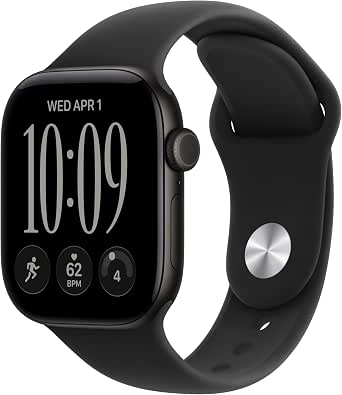
Apple Watch Series 12 GPS 42mm Smartwatch

LG UltraGear 34G600A-B 34-Inch Curved WQHD Gaming Monitor

Logitech MX Mechanical Wireless Illuminated Keyboard, Tactile Quiet, Graphite
As an affiliate, we earn on qualifying purchases.
How Worker 755 Is Configured
The GitHub project describes Worker 755 as a browser game with a React interface and a TypeScript server. Its components include an assignment card, terminal, editor, manager feed and player record. The source repository includes setup instructions, tests, a specification and an MIT license. The software requires Node 24 or newer to run directly, according to its documentation.
There are two director options: scripted dialogue or an LLM playing Dan, the user who hired the manager. The start screen also offers a fresh sandbox or a “legacy production” setting with a live database. The game’s documentation presents that setting as an option, but the supplied material does not describe the database’s contents or the precise differences between the environments. Players can also choose the model name the manager believes the subagent is using.
Hosting determines how model access works. A server operator can configure a gateway key and daily limits to provide a small number of free shifts. With sign-in enabled, accounts receive starter credit and can add funds; the documentation lists top-up plans from $10 to $200. Alternatively, players can supply their own supported gateway key. The project says a key is sent to the game server when a shift starts, held in that shift’s memory and not logged or stored; the browser retains it only if the player selects “Remember on this device.”
“The manager (a real LLM: Claude, GPT, Gemini, DeepSeek, GLM, Kimi) is set up like any orchestrator.”
— Worker 755 project description on GitHub
Hosted Play and Costs Vary
The supplied source does not state when Worker 755 was released, how many people have played it, or whether the hosted version has been independently reviewed. It also does not provide measured results showing whether players find the manager convincing, or whether the game’s scenarios reflect how real agent systems behave.
Availability and costs are configuration-dependent. Free shifts are offered only by servers that provide them, and the advertised model list depends on the host. The creator’s estimate of a few cents for a Claude Haiku shift does not establish a fixed price for other models or play patterns. The source also does not detail the content of the “legacy production” environment with a live database, so players should not assume it is equivalent to a fresh sandbox.
The repository states that API keys are held in memory for the duration of a shift and are not logged or stored, but this is a project description rather than an independent security assessment. The behavior of any hosted instance depends on the operator’s implementation and configuration. The source does not specify the full handling of every provider request or what information may be included in model prompts.
Try the Game or Inspect Its Code
The project is available through its GitHub repository, which includes directions for installing dependencies, building the web app and starting the server. A local run can use a configured model key or the offline mock mode, which pairs a scripted manager with no network connection. The repository also provides Docker instructions for deployment and commands for running tests and type checks.
Readers interested in the hosted experience can visit the project’s listed Worker 755 site, where sign-in, starter credit and paid top-ups are described as available options. Before starting a shift, players can check whether the server offers free play, which models it supports and whether they are selecting a fresh sandbox or the live-database mode. The project’s source code and specification provide the clearest available account of how the game works; further details about adoption, updates or future scenarios were not included in the supplied material.
Key Questions
What is Worker 755?
Worker 755 is a browser game in which a language-model-powered manager assigns tasks to the player, who acts as its subagent. The player works through a simulated terminal and receives a manager review at the end of a shift.
How does a shift work?
The manager sends an instruction to the player’s terminal with a 90-second limit. The player completes the work or takes no action; the manager then receives a report and command transcript, or a notice that the subagent did nothing.
Does Worker 755 cost money to play?
It depends on the server and how it is configured. Some servers may offer limited free shifts. Players can also provide an OpenRouter or Vercel AI Gateway key, while the hosted service describes starter credit and paid top-ups for signed-in accounts.
Can I play without connecting to an AI service?
Yes. The project includes an offline mock mode with a scripted manager and no network connection. Running the game locally otherwise requires Node 24 or newer, according to the repository’s setup instructions.
Is the simulated computer a real machine?
The repository describes an in-memory filesystem, shell interpreter and small SQLite-like engine. The supplied documentation distinguishes the fresh sandbox from an option called legacy production with a live database, but does not explain that mode’s contents or behavior in detail.
Source: github.com