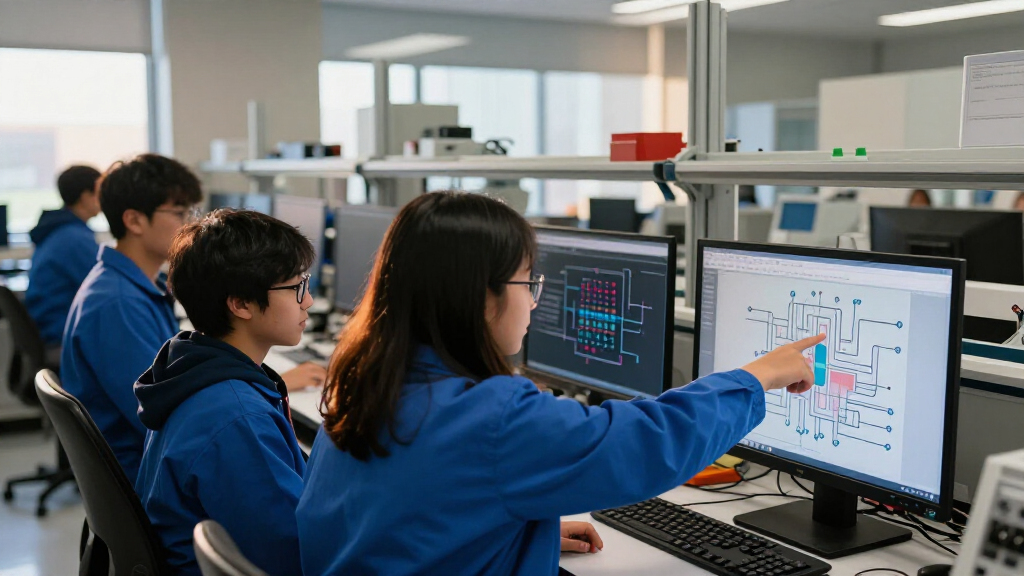
URI students have taken Brookhaven’s Quantum Information Science 101 course as learners and teaching assistants, mentoring students in quantum computing.
Browsing Category
Education Administration
15 posts
Helping Students Understand AI By Asking Better Questions
An OpenAI page title points to teaching students through questions, but the available information does not establish its recommendations or evidence.
The Twilight Dial That Gives This AI NLC Watch Its Bearings
A fictional, AI-built exhibition uses an interactive solar-depression dial to show how noctilucent clouds can remain sunlit after sunset.
How To Use Attention-Burden Metrics To Improve K-12 Edtech Purchasing Decisions
Learn how districts can apply attention-burden metrics to improve edtech procurement, ensuring better student engagement and effective resource use.
Unlocking Creative And Critical Skills In Students With AI Integration
OpenAI’s new report claims students improve reasoning and answer quality when ChatGPT use is paired with explicit critical-thinking training, though verification is pending.
Transform Your Learning Experience With AI Innovation
OpenAI advocates for AI-enabled continuous learning, shifting education from fixed stages to lifelong, on-demand skill development, amid ongoing debates.
The AI Revolution In College: What To Expect In 2026
An in-depth look at how AI is transforming higher education by 2026, including confirmed developments, ongoing changes, and future implications.
Top Reasons AI-Based Job Retraining Programs Are Changing Careers
Anthropic examines how effective AI-driven retraining programs are in helping workers adapt to technological change, but detailed findings remain unavailable.
The Future Of Student Organization: 9 AI Apps Leading The Way In 2026
Explore the top 9 AI-powered apps shaping student organization and productivity in 2026, and understand their impact and future developments.
Can ChatGPT Accelerate Scientific Breakthroughs For Researchers?
OpenAI begins offering free access to its frontier AI models for up to 100,000 scientists, aiming to accelerate scientific breakthroughs and broaden AI use in academia.