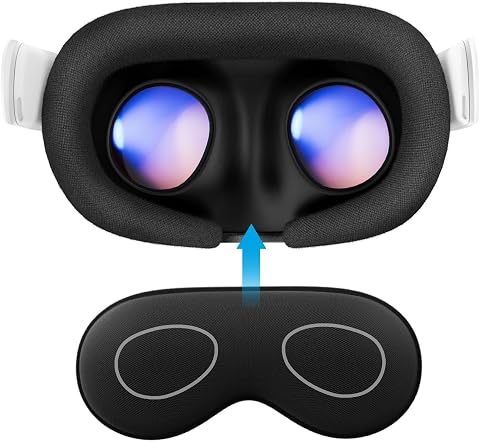
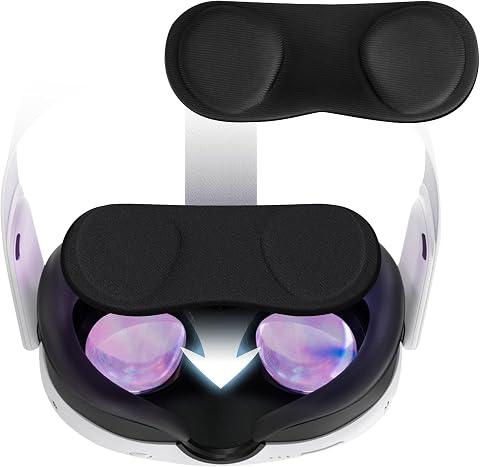
Prescription VR lens inserts replace the awkward experience of wearing glasses inside a headset with sharp, glasses-free vision tailored to your eyes. For this comparison, the magnetic-mount inserts with anti-blue light coating for Quest 2 and Quest 3S take the top spot because magnetic attachment makes swapping between players faster and safer for the lenses than twist-in alternatives. Two other standouts are the Zenni MR VR lenses for Quest 3S and Quest 2, which suit anyone who wants a plain optical lens without extra coatings, and the PSI Melanin lens inserts for Quest 3S, which offer a premium glare-reduction approach for long sessions. The main tradeoff in this category is that most of these inserts come in fixed prescription strengths rather than made-to-order lenses, so you need to match your SPH closely and accept single-lens or pair-only formats depending on the listing. Read on for the full breakdown of fit, mount style, and which insert suits your headset and prescription.

Get the latest gadgets delivered free with Prime
- Fast, free delivery on millions of items
- Prime Video, Amazon Music and more included
- Member-only deals all year
Complete the kit

Key Takeaways
- Magnetic mounts outperformed twist-in frames for convenience across the lineup — the magnetic anti-blue light pair for Quest 2/3S and the Sonicgrace alloy magnetic frame both allow removal in seconds when sharing a headset.
- Fixed-strength inserts dominate this category: most options ship in preset SPH steps like -2.75, -3.00, -3.50, -4.00, -5.50, and -6.00, so buyers with uncommon prescriptions have far fewer choices.
- Single-lens listings appear repeatedly (PSI right-eye -4.00 and -5.50, Amavasion single lenses), which works for people replacing one damaged lens but forces most buyers to order two units.
- Anti-blue light and melanin coatings are the biggest differentiator at similar price points — PSI‘s melanin option takes a different optical approach than standard blue-light filters and suits marathon sessions.
- Headset compatibility splits the lineup cleanly: Quest 3 owners only have PSI options here, while Quest 2 and 3S users can choose across magnetic, alloy-frame, and plain Zenni designs.


| vr lens inserts prescription | Compatibility | Brand | Prescription |
|---|---|---|---|
| Zenni MR VR Non-Prescription L | Meta Quest 3S, Quest 2 | — | — |
| Amavasion Prescription VR Lens | Meta Quest 3S, Meta Quest 2 | Amavasion | — |
| Amavasion VR Lens Insert for Q | Meta Quest 3S, Meta Quest 2 (Oculus Quest 2) | Amavasion | — |
| PSI Prescription Lens for Meta | Meta Quest 3 | PSI | SPH -4.00, right eye |
| Amavasion Prescription Lens In | Meta Quest 2 | Amavasion | -2.75 SPH |
| Prescription Lens Inserts for | Meta Quest 2, Meta Quest 3S | TUHSDVDHV | Custom-crafted to order |
| PSI Premium Anti Blue Light Le | — | PSI | None (non-prescription) |
| Sonicgrace VR Lens Insert for | Meta Quest 2 | — | — |
| PSI Single Prescription Lens I | — | PSI | SPH -5.50 |
More Details on Our Top Picks
Zenni MR VR Non-Prescription Lenses for Meta Quest 3S and Quest 2
This option stands out for a different job than everything else in this lineup: it is not a prescription product at all. Instead, it protects the native Quest 3S or Quest 2 lenses from scratches while adding anti-fog, anti-scratch, and anti-reflective coatings. Contact lens wearers get a clearer, more resilient optical surface, and glasses wearers can use it as a shield on days they skip their inserts. Compared with the Amavasion SPH -3.50 insert, which changes your vision, this one only guards it — so anyone expecting correction should skip it. The included carrying case and anti-fog activator cloth make it a low-effort maintenance pick, though the coatings demand gentle cleaning to keep working.
Pros:- Protects the headset’s native lenses from scratches during long sessions
- Anti-fog and anti-reflective coatings improve visual clarity
- Fits Quest 3S and Quest 2 precisely with no wobble
- Includes a carrying case and cleaning accessories
Cons:- No prescription power — purely protective
- Coatings require careful handling and cleaning to avoid degradation
Best for: Contact lens wearers and VR users who want to protect their Quest 3S/Quest 2 lenses from scratches and fog without altering vision
Not ideal for: Anyone who needs prescription correction in the headset — these are plano lenses with zero corrective power
- Compatibility:Meta Quest 3S, Quest 2
- Type:Non-prescription protective lenses
- Coatings:Anti-fog, anti-scratch, anti-reflective
- Installation:Tool-free, easy snap-in
- Includes:Carrying case, anti-fog activator cloth, lens cloth
- Correction:None (plano)
Our verdict“A smart buy for contact lens users who want lens protection and fog resistance, not vision correction.”
Amavasion Prescription VR Lens Insert for Meta Quest 3S/2 – SPH -3.50 (Single Lens)
This model makes the most sense for buyers with moderate myopia who want a genuinely broad menu of powers. Available from -1.00 to -6.00 in 0.25 increments, it covers far more prescriptions than the Amavasion -2.75 pair, which locks you into a single fixed strength. The tradeoff is structural: you are buying one lens at a time, so a full setup costs two purchases — but that same per-lens model lets you mix strengths if your eyes differ. The anti-glare coating cuts reflections during bright scenes, and the frame seats securely on both Quest 3S and Quest 2. The biggest limitation is optical: spherical-only correction means astigmatism is not addressed, unlike a fully custom insert.
Pros:- Wide power range from -1.00 to -6.00 in 0.25 steps
- Anti-glare coating reduces reflections during gameplay
- Fits both Quest 3S and Quest 2 with a secure mount
- Single-lens buying lets you match different prescriptions per eye
Cons:- Sold as one lens — a pair requires two separate purchases
- No cylindrical correction for astigmatism
- Fixed spherical powers only, no fine custom fitting
Best for: Moderately nearsighted users (roughly -1.00 to -6.00) with matching or near-matching eyes who want glasses-free VR on a Quest 3S or Quest 2
Not ideal for: Anyone with astigmatism or cylindrical correction needs — these are spherical-only lenses
- Brand:Amavasion
- Compatibility:Meta Quest 3S, Meta Quest 2
- Lens Power:SPH -3.50 (this listing)
- Available Power Range:-1.00 to -6.00 in 0.25 increments
- Quantity:1 lens (left or right)
- Coating:Anti-glare
- Correction Type:Spherical only (myopia)
Our verdict“The strongest choice for straightforward myopia across a wide power range, as long as astigmatism is not part of your prescription.”
Amavasion VR Lens Insert for Quest 3S/2 – Myopia Prescription – SPH -3.00 (One Lens)
Compared with the Amavasion -3.50 single-lens insert, this is essentially the same formula at a different strength — myopia correction, no-glare coating, easy mounting — which makes it a sensible pick if your prescription sits closer to SPH -3.00 rather than buying a power that is slightly off. The fit on both Quest 3S and Quest 2 is solid, and installation is quick enough to swap between headsets in a household. The same caveats apply, though: it is one lens per purchase, spherical-only, and useless outside the Quest 3S/2 family. If your eyes differ by more than a quarter diopter, the per-lens approach actually works in your favor — but astigmatism sufferers will still need a custom option.
Pros:- Accurate -3.00 SPH correction matched to common mild-to-moderate myopia
- No-glare coating keeps bright scenes free of distracting reflections
- Installs and seats cleanly on both Quest 3S and Quest 2
- Lower-commitment entry point into prescription inserts
Cons:- Single lens only — a second purchase is needed for both eyes
- Restricted to Quest 3S/2 compatibility
- Limited spherical power options may not fit unusual prescriptions
Best for: Buyers whose prescription is close to -3.00 SPH who already own a Quest 2 or 3S and want a low-cost, no-glasses VR setup
Not ideal for: Users of other headsets like the Quest 3, or anyone with astigmatism needing cylindrical correction
- Brand:Amavasion
- Compatibility:Meta Quest 3S, Meta Quest 2 (Oculus Quest 2)
- Lens Power:SPH -3.00
- Quantity:1 lens
- Coating:No-glare
- Correction Type:Spherical (myopia) only
- Specific Use:Virtual reality gaming and experiences
Our verdict“A straightforward, wallet-friendly pick for roughly -3.00 myopia on Quest 2 or 3S — provided you buy two and have no astigmatism.”
PSI Prescription Lens for Meta Quest 3 – Anti Blue Light Myopia Insert, Single Lens (SPH -4.00, Right)
This pick makes the most sense for Quest 3 owners with higher myopia around -4.00 who log long evening sessions. Its distinguishing feature against the Amavasion inserts is the anti blue light coating, which many late-night players find reduces eye fatigue — a similar philosophy to PSI’s Melanin Lens inserts elsewhere in this roundup. The two-part base-and-lens design means you attach the mount once and can pop lenses off quickly, and the single-lens model mirrors the Amavasion SPH -3.50 approach of mixing left and right powers. At just over 8 grams it adds negligible weight. Be aware it is Quest 3 only, and astigmatism correction is off the table here too.
Pros:- Anti blue light coating targets eye strain during extended sessions
- Two-part installation makes lens swapping fast after the base is mounted
- Individual lens purchasing supports mismatched left/right prescriptions
- Featherlight at roughly 8 grams per lens
Cons:- Quest 3 exclusive — no compatibility with Quest 2 or 3S
- Single-lens sale doubles the cost for a full pair
- Spherical correction only, no astigmatism support
Best for: Quest 3 owners with moderate-to-high myopia near -4.00 who play long sessions and want blue light filtering
Not ideal for: Quest 3S or Quest 2 owners — the mount is designed exclusively for the Quest 3 facial interface
- Brand:PSI
- Model:R-400
- Compatibility:Meta Quest 3
- Prescription:SPH -4.00, right eye
- Coating:Anti blue light
- Weight:8.21 g
- Installation:Two-part base-and-lens mount
- Warranty:30-day return guarantee
Our verdict“The right call for Quest 3 owners with roughly -4.00 vision who value blue light filtering over headset versatility.”
Amavasion Prescription Lens Insert for Meta Quest 2, -2.75 SPH (Pair)
This is the only option in this batch that ships as a matched pair in one purchase, which removes the annoyance of ordering twice that comes with the single-lens Amavasion and PSI listings. For a Quest 2 household with -2.75 myopia in both eyes, that simplicity is the whole appeal: one order, one install, glasses off. The frame mounts without tools, and the black finish blends into the headset. The flip side is rigidity — if your two eyes differ at all, or your prescription sits even a quarter diopter away, this pair will not serve you, and the Amavasion -3.50 single-lens listings with their finer power steps are the better route. There is also no mention of anti-glare or blue light coatings here, so visual polish trails the PSI Quest 3 insert.
Pros:- Includes both lenses in a single matched purchase
- Frame installs easily on the Quest 2
- Removes glasses from the headset entirely for a more comfortable fit
- Simple one-and-done buying process
Cons:- Locked to a single -2.75 SPH prescription with no power options in this listing
- Quest 2 only — not compatible with Quest 3 or 3S
- No anti-glare or blue light coating advertised
Best for: Quest 2 owners with equal -2.75 SPH vision in both eyes who want a complete set in a single purchase
Not ideal for: Anyone whose eyes differ from each other or from -2.75 — the fixed prescription cannot be adjusted
- Brand:Amavasion
- Compatibility:Meta Quest 2
- Prescription:-2.75 SPH
- Lenses Included:2 (matched pair)
- Color:Black
- Intended Use:VR gaming
- Correction Type:Spherical (myopia) only
Our verdict“A clean, single-purchase solution for Quest 2 users whose vision is squarely -2.75 in both eyes — everyone else should look at the modular listings.”
Prescription Lens Inserts for Meta Quest 2 & Quest 3S with Magnetic Mount and Anti-Blue Light Coating
Most off-the-shelf inserts on this list, like the Sonicgrace SPH -6.00 model, lock you into preset diopter strengths. This option goes further by being custom-crafted to your actual prescription, which makes it the standout choice for anyone with astigmatism or an unusual correction that generic lenses can’t handle. The magnetic mounting system is genuinely useful in multi-user households — pop the lenses out and hand the headset over without prying at clips. Compared with the PSI Melanin inserts, which are non-prescription, this is the only way to get true vision correction plus blue light filtering in one package. The tradeoffs: each pair is made to order, so there’s no instant gratification, and the muddled spec sheet (is it 30g or 50g?) hints at loose quality control on documentation, if not the product itself.
Pros:- Custom prescription grinding corrects astigmatism, not just simple myopia
- Magnetic mount enables instant removal for shared headsets and cleaning
- Anti-blue light coating reduces eye strain in long sessions
- Slim frame protects headset lenses from scratches without blocking field of view
Cons:- Requires a custom prescription order, so no off-the-shelf usability
- Inconsistent listed weights (30g vs 50g) suggest sloppy product documentation
- Only a 30-day voluntary return guarantee, shorter than typical custom lens retailers
Best for: Buyers with astigmatism or non-standard prescriptions who need fully custom lenses rather than fixed diopter steps
Not ideal for: Impatient buyers or gift-givers — custom prescription orders mean you can’t grab these off the shelf and use them the same day
- Brand:TUHSDVDHV
- Compatibility:Meta Quest 2, Meta Quest 3S
- Attachment:Magnetic
- Coating:Anti-blue light
- Weight:30g (listed as 50g in product info)
- Prescription:Custom-crafted to order
- Warranty:30-day voluntary return guarantee
Our verdict“This is the pick for anyone whose prescription doesn’t fit neatly into fixed diopter increments, provided they can wait for a custom build.”
PSI Premium Anti Blue Light Lens Inserts for Oculus Meta Quest 3S (Melanin Lens)
If your vision is fine but late-night VR sessions leave your eyes feeling fried, this is where the melanin lens technology earns its place. Unlike standard blue light coatings that tint everything yellow, melanin filtering preserves color fidelity — a real advantage when you’re playing visually rich games where washed-out colors ruin the experience. At just 8.21g, these are among the lightest inserts in this roundup, noticeably lighter than the alloy-framed Sonicgrace option, so they add virtually no noticeable weight to the headset. The catch is obvious: unlike the custom TUHSDVDHV inserts or the PSI Single Lens SPH -5.50, these offer zero vision correction. They’re purely a comfort and eye-strain product for people who already see clearly, or who wear contacts inside the headset.
Pros:- Melanin lenses filter blue light while keeping colors accurate, avoiding the yellow tint of standard filters
- Featherlight at 8.21g, adding almost no headset weight
- Precise mold-based fit designed specifically for the Quest 3S
- Quick installation via attachable base mount
Cons:- Non-prescription, so useless for anyone needing vision correction
- Quest 3S-only compatibility with no cross-headset flexibility
- Fits only one headset generation, limiting future reuse if you upgrade
Best for: Contact lens wearers and 20/20 users who want blue light filtering during long VR sessions without color distortion
Not ideal for: Anyone who needs vision correction — these have no myopia or astigmatism correction at all
- Brand:PSI
- Compatible Device:Oculus Meta Quest 3S
- Lens Type:Melanin anti blue light
- Prescription:None (non-prescription)
- Weight:8.21 g
- Color:Brown (melanin tint)
- Quantity:2 lenses (pair)
Our verdict“The best comfort-focused insert for sharp-eyed VR users, and an easy skip for anyone who wears glasses.”
Sonicgrace VR Lens Insert for Quest 2 – Myopia Glass with Blue Light Filter, Alloy Magnetic Frame, SPH -6.00
For buyers with strong myopia, most preset inserts tap out around -3.00 to -3.50 SPH — the Amavasion SPH -3.00 and -3.50 single lenses being prime examples. The Sonicgrace goes to -6.00 diopters, covering a range of nearsighted users who simply can’t use those weaker options. Unlike the custom TUHSDVDHV inserts, there’s no prescription order or waiting period: pick your diopter from -2.0D to -6.0D and it ships immediately. The alloy magnetic frame feels more durable than plastic clip designs, though that ruggedness comes with added weight compared with the 8.21g PSI lenses. The real limitation is platform lock-in — this works with the Quest 2 only, so Quest 3 or 3S owners are out of luck. And anyone with astigmatism still needs a custom solution, since diopter-only correction can’t address it.
Pros:- Diopter range extends to -6.00, well beyond the -3.00 to -3.50 ceiling of most preset inserts
- Off-the-shelf availability — no custom prescription order or wait time
- Durable alloy magnetic frame installs and removes in seconds
- Blue light filter built in for long gaming sessions
Cons:- Quest 2-only compatibility, useless for newer headsets
- Diopter-only correction cannot address astigmatism
- Alloy frame is heavier than competing plastic inserts
Best for: High-myopia Quest 2 owners (roughly -4.00 to -6.00 SPH) who want immediate correction without a custom lens order
Not ideal for: Quest 3 or 3S owners, and anyone with astigmatism or a prescription outside the -2.0D to -6.0D range
- Compatibility:Meta Quest 2
- Diopter Range:-2.0D to -6.0D
- Lens Strength:SPH -6.00
- Frame Material:Alloy
- Mounting:Magnetic with clip-on design
- Blue Light Filter:Yes
Our verdict“The go-to choice for strongly nearsighted Quest 2 owners who want correction today, not after a custom order.”
PSI Single Prescription Lens Insert for Meta Quest 3, Right Eye, SPH -5.50
Most inserts in this roundup ship as matched pairs, which is awkward if your eyes need different corrections. This single-lens, mix-and-match approach solves that: buy a -5.50 for your right eye and a different strength for your left, and you’ve built a personalized set that no fixed pair can match. It’s the same modular idea behind the Amavasion single-lens offerings, but this one pushes into higher myopia territory at SPH -5.50 — closer to the Sonicgrace’s -6.00 ceiling than Amavasion’s -3.00 to -3.50 range. At 8.21g and with the same attachable base as the PSI Melanin pair, installation is quick and the lens adds essentially nothing to headset weight. The obvious friction: you’re buying one lens at a time, so a full set means two purchases, and anyone with astigmatism or asymmetric needs beyond simple SPH still needs a fully custom option like the TUHSDVDHV inserts.
Pros:- Single-lense mix-and-match design accommodates different prescriptions per eye
- SPH -5.50 strength covers higher myopia than most preset pairs
- Featherlight 8.21g build with quick attachable-base installation
- Clear lens design avoids any color tinting of the display
Cons:- Includes only one lens, so a complete set requires a second purchase
- Fixed SPH -5.50 strength — no diopter range or customization in this listing
- Simple SPH correction only, with no astigmatism support
Best for: Quest 3 owners whose eyes need different SPH strengths and want to build a custom pair lens by lens
Not ideal for: Buyers wanting a ready-made pair in one purchase, or anyone with astigmatism requiring cylinder correction
- Brand:PSI
- Compatible Device:Meta Quest 3
- Lens:Single right-eye lens
- Prescription:SPH -5.50
- Color:Clear
- Weight:8.21 g
- Installation:Attachable base mount
Our verdict“A smart modular pick for people whose two eyes disagree — just remember you’re buying half a pair.”

How We Picked
My ranking logic centers on four buyer-facing factors. First, fit and compatibility: each insert was judged on how securely it mounts, whether it interferes with the headset’s facial interface, and whether it supports glasses wearers with higher prescriptions. Magnetic mounts ranked above friction-fit frames because repeated removal is the number-one way these inserts get scratched. Second, prescription coverage: I favored listings available in pairs over single-lens formats, and wider SPH ranges over narrow ones, since a -6.00 option serves far more buyers than a single -2.75 offering.
Third, optical coatings: anti-blue light was treated as a genuine value-add for long VR sessions, and PSI’s melanin lens was evaluated separately because it filters light differently than standard coatings. Fourth, practicality for shared headsets: households where multiple people use one Quest need quick-swap designs, which pushed magnetic options up the order. Products were ranked by how well they solve the actual problem — clear, comfortable vision without glasses — rather than by feature count alone.
| vr lens inserts prescription | Compatibility | Brand | Prescription |
|---|---|---|---|
| Zenni MR VR Non-Prescription L | Meta Quest 3S, Quest 2 | — | — |
| Amavasion Prescription VR Lens | Meta Quest 3S, Meta Quest 2 | Amavasion | — |
| Amavasion VR Lens Insert for Q | Meta Quest 3S, Meta Quest 2 (Oculus Quest 2) | Amavasion | — |
| PSI Prescription Lens for Meta | Meta Quest 3 | PSI | SPH -4.00, right eye |
| Amavasion Prescription Lens In | Meta Quest 2 | Amavasion | -2.75 SPH |
| Prescription Lens Inserts for | Meta Quest 2, Meta Quest 3S | TUHSDVDHV | Custom-crafted to order |
| PSI Premium Anti Blue Light Le | — | PSI | None (non-prescription) |
| Sonicgrace VR Lens Insert for | Meta Quest 2 | — | — |
| PSI Single Prescription Lens I | — | PSI | SPH -5.50 |
Factors to Consider When Choosing Vr Lens Inserts Prescription
Before choosing prescription VR lens inserts, a few category-wide realities shape every purchase decision. Understanding them will save you from ordering the wrong strength, the wrong mount, or the wrong format for your household.Fixed-Strength vs. Made-to-Order Lenses
The biggest mistake buyers make is assuming every prescription insert is custom-ground to their exact prescription. Most of the options in this comparison ship in preset SPH increments, meaning you pick the closest match rather than an exact copy of your optician’s numbers. If your prescription is -3.25 and the closest insert is -3.00, you can generally tolerate a slight undercorrection in VR, but a full step off will cause eye strain within an hour. Buyers with cylinder (astigmatism) correction should know that fixed-strength inserts usually ignore it entirely — acceptable for mild astigmatism, frustrating for stronger ones. If your prescription falls between two available strengths, rounding down is usually the safer choice for close-range VR screens. Made-to-order inserts exist from other retailers at higher cost, so weigh whether precision or price matters more for your eyes.
Single Lens vs. Pair — Do the Math Before Ordering
Several listings in this category, including the PSI right-eye options and two Amavasion single-lens models, ship one lens at a time. This format exists because people scratch or lose a single lens and want a replacement without buying a pair. But if you need correction in both eyes — which describes most glasses wearers — you must order two units, which changes the real cost and doubles the shipping risk. Check whether left-eye versions of the same product exist before committing to a right-eye listing. A common regret among buyers is ordering one lens, finding it works well, and then discovering the matching left eye is unavailable in their strength. When in doubt, pair listings like the Amavasion -2.75 set remove that gamble entirely.
Mount Type Determines Longevity
How an insert attaches to your headset matters more than it first appears. Twist-in and snap-in frames put stress on both the lens and the headset’s stock lenses every time you install or remove them, and one careless removal can scratch your Quest’s optics permanently. Magnetic mounts, like those on the Quest 2/3S anti-blue light pair and the Sonicgrace alloy frame, pop off cleanly with zero contact risk. If you live alone and never remove your inserts, mount type barely matters. If you share a headset with a glasses-free partner or children, magnetic attachment stops being a luxury and becomes protective gear for a several-hundred-dollar device. Alloy frames also resist the cracking that thinner plastic rings sometimes develop after months of heat inside a headset.
Blue Light and Melanin Coatings: Hype vs. Help
Nearly every insert here advertises a blue light filter, but the coatings are not all equivalent. Standard anti-blue light layers tint the view slightly warm, which most people stop noticing within minutes but color-critical users — designers, photographers doing VR walkthroughs — may find distracting. PSI’s melanin lens takes a different approach, mimicking the eye’s natural pigment to filter a broader band of light, which some users report feels gentler over multi-hour sessions. The honest framing: blue light coating in VR is a comfort feature, not a medical one, and the research on eye damage from screens doesn’t strongly support panic-level filtering. Treat coatings as a tiebreaker between two otherwise equal inserts, not a reason to overpay.
Headset Model Compatibility Is Not Backward-Friendly
Quest 2, Quest 3, and Quest 3S have different lens geometries, and inserts are not interchangeable between them. The Quest 3S shares its optical design with the Quest 2, which is why so many products list both headsets together — but the Quest 3 is a distinct platform requiring its own frame shape. In this lineup, only PSI makes Quest 3-compatible prescription inserts, which effectively decides the purchase for Quest 3 owners regardless of other preferences. Before ordering, also check whether the insert works with your facial interface accessory, as thicker third-party gaskets can occasionally conflict with taller lens frames. Buying the wrong headset version is the most common return reason in this category.
High Prescriptions and Lens Thickness
Buyers with strong myopia face a physical constraint that marketing pages rarely mention: thicker lenses sit closer to the headset’s optics, and at strengths like -5.50 or -6.00, edge thickness can bring the insert uncomfortably near the stock lenses. That proximity raises scratching risk during installation and can slightly reduce the maximum field of view. The Sonicgrace -6.00 insert addresses this with a deeper alloy frame that holds the lens at a safer standoff. If your prescription is beyond -6.00, fixed-strength inserts largely stop being an option and custom-ground lenses become the realistic path. Strong prescriptions also benefit most from anti-reflective coatings, since internal reflections between the insert and headset lens become more visible as lens curvature increases.
Frequently Asked Questions
Can I use VR prescription inserts if my prescription is between two available strengths?
Usually yes, with a caveat. VR headsets present images at a fixed focal distance roughly arm’s length away, so slight undercorrection is far more tolerable than it would be for driving or reading. If your prescription is -3.25 and only -3.00 and -3.50 are available, the -3.00 is generally the safer pick because overcorrection in VR tends to cause faster eye strain than undercorrection. However, if you also have significant astigmatism, a fixed-strength insert may leave you with smeared edges regardless of SPH choice. Test a session of 30 minutes or less first, and stop if you notice headaches or double vision at the screen edges.
Do magnetic inserts risk falling off during active gameplay?
Quality magnetic mounts are engineered with enough pull strength to stay seated through fast head movements, and the magnetic Quest 2/3S pair in this lineup uses a ring of magnets rather than a single point of attachment. The realistic failure mode isn’t gameplay — it’s grabbing the headset carelessly by the lens area when taking it off. Compared with twist-in frames, magnetic designs actually reduce the risk of scratching your headset’s stock lenses during removal, because the insert pops straight off without sliding across the optics. If you play vigorous rhythm games or fitness apps, look for alloy-framed magnetic options like the Sonicgrace, since metal frames hold magnet positions more rigidly than thin plastic rings over time.
Are single-lens listings like the PSI right-eye inserts a good way to save money?
Only in one specific scenario: you already own the matching insert for your other eye and need a replacement. Otherwise, ordering two single-lens units usually costs more than one pair listing, doubles the chance of a shipping or strength mix-up, and risks the left-eye version being out of stock in your prescription. The Amavasion -2.75 pair exists precisely for buyers who want both eyes covered in one order. One legitimate middle case is asymmetric prescriptions — if one eye needs -4.00 and the other -2.00, mixing single-lens products in different strengths may be your only fixed-strength path. Just confirm both products use the same mount style so the frames sit at matching depths.
Will blue light or melanin coatings distort colors in VR?
All filtering coatings shift color to some degree — typically a slight warm or yellow cast that most brains adapt to within a session. Standard anti-blue light coatings affect blues and whites most, which matters if you use VR for design review or color-accurate work but is irrelevant for gaming and fitness. Melanin lenses, like the PSI Quest 3S option, filter across a broader spectrum and tend to feel like late-afternoon light rather than an obvious tint. If color fidelity is a priority, the plain Zenni MR lenses with no coating are the cleanest optical path in this comparison. For everyone else, the comfort benefit of reduced glare during long sessions outweighs a subtle warm shift.
Can I wear these inserts together with my glasses instead of getting prescription versions?
Physically, most headsets allow glasses inside, but it’s the worst of both worlds: your glasses frames press into your face, reduce the effective field of view, and — most dangerously — can scratch the headset’s stock lenses on contact. Prescription inserts exist precisely to remove glasses from the equation, moving your correction to a thin frame that sits millimeters from the headset optics. If you’ve already scratched a headset lens with glasses, inserts also protect your remaining resale value, since scratched stock lenses are the most common defect on used Quest listings. Non-prescription plano inserts like the Zenni MR also serve a protective role for glasses-free users who share a headset with glasses wearers. In short, inserts beat glasses inside VR on comfort, safety, and hygiene.
Conclusion
The right pick depends on your headset, your prescription, and who else uses it. For best overall, the magnetic-mount anti-blue light pair for Quest 2 and Quest 3S wins on convenience, scratch protection, and covering both eyes in one purchase. For best value, the Amavasion -2.75 pair delivers complete two-eye correction in the most common prescription range without paying for premium coatings. The PSI Melanin inserts for Quest 3S take the best premium slot for marathon players who want a gentler, broader-spectrum filter than standard blue-light coatings. Quest 3 owners are limited to PSI in this lineup, choosing between the -4.00 and -5.50 single-lens options based on their strength. For beginners and glasses wearers who just want clear vision with no extras, the plain Zenni MR lenses are the simplest entry point. And for strong prescriptions at -6.00 or near it, the Sonicgrace alloy magnetic frame is the most physically robust choice. Match the insert to your exact headset model first, prescription second, and coatings last — that order prevents nearly every common regret in this category.
Halloween Picks
halloween
As an affiliate, we earn on qualifying purchases.