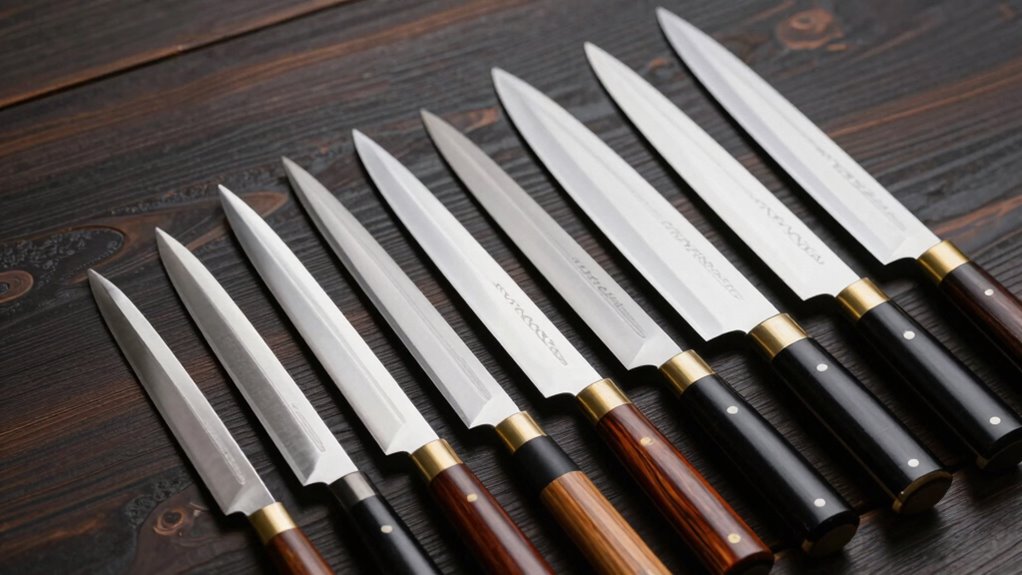
Traditional Japanese knives are renowned for their exceptional craftsmanship, razor-sharp edges, and specialized designs tailored for precise cutting tasks. The best picks include the Shan Zu 8 Inch Japanese Chef Knife for overall versatility and the Yanagiba Knife for sashimi and sushi preparation. While these knives excel in performance, tradeoffs often involve higher costs or maintenance requirements. Cheaper options may lack the refined edge retention or authenticity found in premium models. Continue reading for a detailed breakdown of what makes each knife unique and how to choose the right one for your needs.

Get the latest gadgets delivered free with Prime
- Fast, free delivery on millions of items
- Prime Video, Amazon Music and more included
- Member-only deals all year
Complete the kit



Key Takeaways
- Top-ranked knives combine high-quality VG10 steel with traditional forging techniques for durability and sharpness.
- Specialized blades like Yanagibas are best for sashimi, while Gyuto and Santoku knives suit all-purpose kitchen tasks.
- Price often correlates with craftsmanship and materials, but mid-range options can provide excellent value for home cooks.
- Maintenance, such as hand-washing and proper honing, is essential to preserve the blade’s edge over time.
- Choosing the right handle material and weight depends on personal comfort and intended use.
| SHAN ZU 8 Inch Japanese Chef Knife, 9-Layer Forged 10Cr15MoV High Carbon Steel |  | Best Single-Blade Workhorse | Blade Length: 8 inches | Steel Core: 10Cr15MoV Japanese high carbon steel | Construction: 9-layer forged | VIEW ON AMAZON | See Our Full Breakdown |
| Japanese Yanagiba Knife, 2 Pack, 10-1/2 Inch Sashimi & Sushi Knives, Made in Japan |  | Best for Sashimi Purists | Brand: JapanBargain | Set Quantity: 2 knives | Blade Length: 10-1/2 inches | VIEW ON AMAZON | See Our Full Breakdown |
| Damascus Japanese Knife Set – VG10 3-Piece Kitchen Knife Set |  | Best Premium Set | Brand: DRGSKL | Set Quantity: 3 pieces | Blade Material: VG10 Damascus steel | VIEW ON AMAZON | See Our Full Breakdown |
| FAMCÜTE 8″ Japanese Chef Knife with Rosewood Handle |  | Best Value Single Knife | Blade Length: 8 inches | Steel Type: 9CR18MOV | Construction: 5 layers, hand-forged | VIEW ON AMAZON | See Our Full Breakdown |
| DRGSKL Japanese Chef Knife Set – 3PCS Kitchen Utility Knife Set for Cooking |  | Best All-Around Starter Set | Steel: ATS-34 | Set Quantity: 3 pieces — chef knife, utility knife, meat cleaver | Construction: Full tang, hand-forged | VIEW ON AMAZON | See Our Full Breakdown |
| Kai Seki Magoroku Watakake Nakiri Knife 165mm (AB-5424) |  | Best Dedicated Vegetable Knife | Blade Length: 165mm | Knife Type: Nakiri | Brand: Kai | VIEW ON AMAZON | See Our Full Breakdown |
| HOSHANHO 8-Inch Chef’s Knife – Japanese High Carbon Steel with Ergonomic Handle |  | Best Steel for the Money | Blade Length: 8 inches | Steel Type: Japanese 10Cr15CoMoV high carbon steel | Hardness: 60 HRC | VIEW ON AMAZON | See Our Full Breakdown |
| Traditional Japanese Professional Kitchen Chef Knife Set – Gyuto, Santoku, Nakiri, Petty |  | Best Starter Set | Blade Material: 420HC stainless steel | Handle Material: Rosewood | Number of Pieces: 4 | VIEW ON AMAZON | See Our Full Breakdown |
| 10″ Sashimi Sushi Knife – Traditional Japanese Yanagiba-Style Knife with Stainless Steel Blade and Pakkawood Handle |  | Best for Sushi Enthusiasts | Blade Length: 10 inches | Blade Type: Single-bevel Yanagiba-style | Blade Material: Premium stainless steel | VIEW ON AMAZON | See Our Full Breakdown |
| Traditional Japanese Professional Gyuto Kitchen Chef’s Knife – 8-inch High Carbon Stainless Steel with Single Bevel Edge and Rosewood Handle |  | Best Single-Bevel All-Rounder | Blade Material: 420HC stainless steel | Blade Length: 8 inches | Edge Type: Single bevel, 15° on right side | VIEW ON AMAZON | See Our Full Breakdown |
| SHANGDAO Japanese Kitchen Knife Set, 3 Piece Sushi Chef Knives, 10” Yanagiba, 7” Deba, 5” Utility |  | Best for Professional-Grade Precision and Traditional Craftsmanship | Number of Pieces: 3 | Blade Lengths: 10 inches, 7 inches, 5 inches | Material: German stainless steel DIN: 1.4116 | VIEW ON AMAZON | See Our Full Breakdown |
| Atumuryou Japanese Chef Knife Set (3-Piece), 67-Layer Damascus Knives with VG10 Steel Core, Ocean-Blue Ergonomic Handles |  | Best for Stunning Aesthetics and High-Performance Edge Retention | Brand: Atumuryou | Model Number: AT8101B-3 | Pieces Included: 8″ Chef, 7″ Santoku, 3.5″ Paring | VIEW ON AMAZON | See Our Full Breakdown |
| Sakai Takayuki Japanese Deba Knife 165mm Yasuki White Steel |  | Best for Fish and Meat Precision with Classic Craftsmanship | Model: 06036 | Blade Length: 165mm | Steel Type: Yasuki White Steel | VIEW ON AMAZON | See Our Full Breakdown |
| traditional japanese knife | Handle Material | Blade Length |
|---|---|---|
| SHAN ZU 8 Inch Japanese Chef K | — | 8 inches |
| Japanese Yanagiba Knife | Wood | 10-1/2 inches |
| Damascus Japanese Knife Set | G10 | — |
| FAMCÜTE 8" Japanese Chef Knife | Rosewood | 8 inches |
| DRGSKL Japanese Chef Knife Set | Walnut wood | — |
| Kai Seki Magoroku Watakake Nak | — | 165mm |
| HOSHANHO 8-Inch Chef’s Knife | Wood | 8 inches |
| Traditional Japanese Professio | Rosewood | — |
| 10" Sashimi Sushi Knife | Pakkawood | 10 inches |
| Traditional Japanese Professio | Rosewood | 8 inches |
| SHANGDAO Japanese Kitchen Knif | Solid rose wood | — |
| Atumuryou Japanese Chef Knife | — | — |
| Sakai Takayuki Japanese Deba K | — | 165mm |
More Details on Our Top Picks
SHAN ZU 8 Inch Japanese Chef Knife, 9-Layer Forged 10Cr15MoV High Carbon Steel
Best Single-Blade Workhorse — this gyuto earns its spot as the knife to buy if you only want one. The 9-layer forged construction wraps a hard 62 HRC 10Cr15MoV core in softer steel, which is the same protective logic behind pricier options like the FAMCÜTE 8-Inch, but with more layers guarding against chips. Compared with the FAMCÜTE, the SHAN ZU trades a slightly higher price for a matte finish that hides fingerprints and a more distinctive octagonal handle. That octagonal red sandalwood grip feels genuinely traditional, though cooks raised on Western bolsters will need an adjustment period. The 12° edge slices tomatoes cleanly but demands drying after every wash — the carbon core will discolor if neglected. The included luxury gift box makes it an easy present, unlike bare-bladed competitors.
Pros:- 9-layer forged construction resists chipping better than monosteel blades
- 62 HRC core with a 12° edge holds sharpness through long prep sessions
- Octagonal red sandalwood handle offers authentic traditional feel with ergonomic comfort
- Gift box and matte finish add presentation and practical polish
Cons:- Carbon steel core rusts if left wet — requires diligent drying
- Octagonal wa-style handle feels unfamiliar to Western-knife users
Best for: Home cooks who want one do-everything gyuto that bridges traditional Japanese craft and daily versatility
Not ideal for: Dishwasher-reliant or low-maintenance cooks — the high-carbon core and wood handle both need hand washing and drying
- Blade Length:8 inches
- Steel Core:10Cr15MoV Japanese high carbon steel
- Construction:9-layer forged
- Hardness:62 HRC
- Blade Angle:12°
- Handle:Octagonal natural red sandalwood
- Finish:Matte
- Packaging:Luxury gift box
Our verdict“Buy this if you want a single traditional-style gyuto that outbuilds the FAMCÜTE and you’re willing to care for carbon steel.”
Japanese Yanagiba Knife, 2 Pack, 10-1/2 Inch Sashimi & Sushi Knives, Made in Japan
Best for Sashimi Purists — this is the only product in the lineup that delivers genuine Made in Japan provenance at this price, and it comes as a two-pack, which no other pick here matches. The extra-long 10-1/2 inch yanagiba blades are purpose-built for the single continuous draw-cut that sashimi demands; a generalist like the SHAN ZU gyuto simply cannot replicate that clean, uninterrupted slice through raw fish. The tradeoff is equally clear: this is a specialist tool. Where the DRGSKL Damascus 3-piece set covers chopping, slicing, and prep across a whole kitchen, these knives are close to useless for anything beyond fish and delicate proteins. The stainless steel keeps maintenance lighter than the Sakai Takayuki White Steel deba elsewhere in this guide, but the wooden handles still need occasional oiling.
Pros:- Authentic Japanese-made construction at an accessible price
- 10-1/2 inch blades enable the long draw-cuts sashimi requires
- Rust-resistant stainless steel needs less upkeep than carbon alternatives
- Two-knife value lets you keep one as backup or gift one
Cons:- Specialist design — nearly useless outside fish and delicate slicing
- Wooden handles require ongoing maintenance and hand drying
Best for: Sushi and sashimi enthusiasts who want authentic Japanese blades and a spare for hosting
Not ideal for: Cooks seeking everyday versatility — these single-purpose slicers can’t handle general kitchen prep
- Brand:JapanBargain
- Set Quantity:2 knives
- Blade Length:10-1/2 inches
- Material:High carbon stainless steel
- Handle Material:Wood
- Made In:Japan
Our verdict“Choose this pair if raw-fish prep is your priority and you’d rather own two authentic specialists than one generalist.”
Damascus Japanese Knife Set – VG10 3-Piece Kitchen Knife Set
Best Premium Set — the VG10 Damascus core is the real argument here, because VG10 is the same steel that anchors high-end Japanese cutlery, and the hand-forged cladding produces the rippling pattern that makes this set gift-worthy straight out of the box. Compared with the DRGSKL ATS-34 3-piece set, this one skips the black coating entirely — you see the Damascus pattern instead of hiding the blade — and swaps walnut for G10 handles that shrug off water in a way no wood can. That matters if you cook daily and don’t want to baby your handles. The honest tradeoff: three knives still leave gaps, and there’s no cleaver for heavier work, so the SHAN ZU remains the better one-blade solution for minimalists. You’re also paying a premium for the aesthetics, not just the performance.
Pros:- VG10 Damascus core delivers professional-grade sharpness and edge retention
- G10 handles resist moisture far better than wood alternatives
- Exposed Damascus pattern makes it a standout gift
- Anti-corrosion coating extends blade life with less fuss
Cons:- Premium price sits well above basic starter sets
- Only three knives — no dedicated heavy-duty option like the DRGSKL’s cleaver
Best for: Buyers who want a visually striking, low-maintenance set for everyday cooking and impressive gifting
Not ideal for: Budget-limited shoppers or those needing a complete knife block — three pieces won’t cover every task
- Brand:DRGSKL
- Set Quantity:3 pieces
- Blade Material:VG10 Damascus steel
- Handle Material:G10
- Blade Coating:Anti-corrosion
- Technology:Wet edge grinding
- Warranty:Product warranty available
Our verdict“Pick this set when presentation and steel quality matter more than covering every possible kitchen task.”
FAMCÜTE 8″ Japanese Chef Knife with Rosewood Handle
Best Value Single Knife — the 60-day hand-forged production time is unusual at this price and explains why the 5-layer 9CR18MOV blade holds a 62 HRC edge comparable to the more layered SHAN ZU, despite costing noticeably less. You give up the SHAN ZU’s matte finish, extra cladding layers, and gift box, but you keep the essentials: sharpness, balance, and a comfortable rosewood handle that suits long prep sessions. Against the DRGSKL Damascus set, this knife makes sense for buyers who’d rather own one excellent blade than three decent ones — a single 8-inch chef knife handles 90 percent of home cooking anyway. The corrosion resistance of 9CR18MOV also makes it friendlier than pure carbon options like the Sakai Takayuki deba elsewhere in this guide. Hand washing is still the rule here.
Pros:- Hand-forged 5-layer blade matches pricier knives in hardness at 62 HRC
- Rosewood handle offers genuine comfort during extended cutting
- 9CR18MOV steel resists rust better than carbon-only alternatives
- Excellent balance supports precise, controlled cuts
Cons:- Hand wash only — shortcuts degrade the blade
- Fewer protective layers and no gift box compared with the SHAN ZU
Best for: Budget-conscious cooks who want traditional hand-forged quality in one versatile blade
Not ideal for: Buyers wanting a full set or gift-ready packaging — this is a single knife with no presentation extras
- Blade Length:8 inches
- Steel Type:9CR18MOV
- Construction:5 layers, hand-forged
- Hardness:62 HRC
- Handle Material:Rosewood
- Production Time:60 days
Our verdict“This is the smart money pick for one-knife kitchens that want forged Japanese performance without the SHAN ZU’s added frills.”
DRGSKL Japanese Chef Knife Set – 3PCS Kitchen Utility Knife Set for Cooking
Best All-Around Starter Set — what separates this trio from the DRGSKL VG10 Damascus set is task coverage: here you get a chef knife, utility knife, and an actual meat cleaver, which means breaking down poultry and heavier cuts that the Damascus set simply can’t manage. The ATS-34 steel is a proven workhorse grade, and the dual-tech black shield coating does double duty — it protects the blade and makes cleanup faster, a real benefit the uncoated Damascus set can’t offer. The full-tang construction with walnut handles feels more traditional in hand than G10, though walnut demands more care against moisture. You do sacrifice the showpiece Damascus aesthetics, and like every three-piece set here, there’s no bread knife or slicer. The JapanBargain yanagiba pair still wins for fish specialists.
Pros:- Includes a cleaver, giving it heavy-duty capability no other set here has
- ATS-34 hand-forged steel balances toughness with sharpness
- Black shield coating speeds cleanup and adds blade protection
- Full tang with walnut handles delivers solid balance and control
Cons:- Walnut handles need more moisture care than the G10 on the VG10 set
- Coated blades hide the steel — no Damascus visual appeal
- Hand washing required to preserve the coating and edge
Best for: New cooks or gift-givers who want a versatile starter trio that includes heavy-duty capability
Not ideal for: Enthusiasts chasing Damascus aesthetics or collectors who want exposed premium steel
- Steel:ATS-34
- Set Quantity:3 pieces — chef knife, utility knife, meat cleaver
- Construction:Full tang, hand-forged
- Handle Material:Walnut wood
- Coating:Dual-tech black shield
Our verdict“Choose this set if versatility across light and heavy tasks beats aesthetics — it’s the most capable trio for a first serious kitchen setup.”
Kai Seki Magoroku Watakake Nakiri Knife 165mm (AB-5424)
Kai is the parent company of Shun, and that pedigree shows in this nakiri’s fit and finish — something the HOSHANHO chef’s knife can’t claim despite its harder steel. The straight edge and thin profile make push-cutting vegetables noticeably cleaner than a curved gyuto like the Traditional Gyuto 8-inch, which is built for rocking strokes. At 165mm, the blade offers enough length for cabbage and squash work while staying nimble for herbs. Where this option falters is transparency: the listing omits steel type and hardness entirely, so buyers comparing it against the 420HC-based 4-piece set are left guessing about edge retention. That said, for anyone whose prep is mostly produce, the shape alone does more for results than a spec sheet.
Pros:- Made in Japan by Kai, one of the most established blade makers
- True nakiri geometry excels at clean vegetable push-cuts
- 165mm length balances control with enough reach for larger produce
- Trusted brand lineage shared with Shun
Cons:- No steel type or hardness disclosed in the listing, making value hard to judge
- Single-purpose shape limits versatility compared with a gyuto or santoku
Best for: Vegetable-forward home cooks and plant-based cooks who want a purpose-built Japanese nakiri from an established Japanese maker
Not ideal for: Buyers who want one knife for everything — a nakiri can’t handle protein breakdown or rocking cuts
- Blade Length:165mm
- Knife Type:Nakiri
- Brand:Kai
- Series:Seki Magoroku Watakake
- Model:AB-5424
- Country of Origin:Japan
Our verdict“This pick makes the most sense for cooks whose board time is dominated by vegetables and who value Japanese manufacturing pedigree over raw specs.”
HOSHANHO 8-Inch Chef’s Knife – Japanese High Carbon Steel with Ergonomic Handle
Among the general-purpose options in this roundup, this knife stands out for the most impressive steel at its price point: 10Cr15CoMoV at 60 HRC is a class above the 420HC used in both the 4-piece set and the Traditional Gyuto, translating to sharper edges that hold longer between touch-ups. The hand-sharpened 13-degree edge outcuts steeper factory grinds, and the sloped bolster nudges your hand into a proper pinch grip — a detail the Kai nakiri doesn’t address at all. The tradeoff is real, though: high carbon content means this blade will pit and discolor if left wet, and the wooden handle doubles down on the maintenance burden. Compared with the rust-resistant Yanagiba-style sashimi knife, this model rewards careful owners and punishes careless ones.
Pros:- 10Cr15CoMoV steel at 60 HRC outclasses the 420HC competition in edge retention
- Hand-sharpened 13-degree per-side edge slices noticeably cleaner than standard grinds
- Ergonomic sloped bolster promotes a safe pinch grip
- Gift box included, making it a ready present option
Cons:- High carbon blade demands prompt drying and oiling despite rust-resistance claims
- Wooden handle adds another maintenance surface
- Brand lacks the established reputation of Kai or Sakai Takayuki
Best for: Detail-oriented home cooks willing to hand-wash and dry immediately in exchange for premium steel performance at a budget price
Not ideal for: Dishwasher-habit households or anyone who leaves knives in the sink — the high carbon steel and wood handle will degrade fast
- Blade Length:8 inches
- Steel Type:Japanese 10Cr15CoMoV high carbon steel
- Hardness:60 HRC
- Edge Angle:13 degrees per side
- Handle Material:Wood
- Blade Finish:Matte
- Brand:HOSHANHO
Our verdict“Buy this if steel quality per dollar is your top filter and you’ll actually maintain it; skip it if low-effort care matters more than edge performance.”
Traditional Japanese Professional Kitchen Chef Knife Set – Gyuto, Santoku, Nakiri, Petty
For someone building a Japanese knife collection from scratch, this four-piece lineup covers the essential blade shapes in one purchase: gyuto for proteins, santoku for all-purpose work, nakiri for vegetables, and a petty for detail tasks. The full-tang construction and rosewood handles give it a more traditional feel than the Atumuryou 3-piece with its modern ocean-blue polymer handles, which will matter to buyers chasing a classic aesthetic. The catch is the steel: 420HC is the softest blade material in this roundup, well behind the HOSHANHO’s 60 HRC 10Cr15CoMoV, so expect more frequent sharpening sessions. Blade lengths are also undisclosed, leaving buyers guessing about fit. Rosewood handles will dry and crack without occasional oiling — a small ritual, but a real one.
Pros:- Four essential Japanese blade shapes cover nearly every kitchen task
- Full-tang construction delivers balance and long-term durability
- Rosewood handles give an authentic traditional look
- Corrosion-resistant stainless steel is low-fuss for beginners
Cons:- 420HC steel has the weakest edge retention of any option here
- Rosewood handles need periodic oiling to prevent drying and cracking
- No blade lengths or pricing disclosed in the listing
Best for: New cooks or gift-givers who want a complete traditional-shaped Japanese starter set without piecing knives together individually
Not ideal for: Sharpness enthusiasts — 420HC steel will need honing far more often than the harder steels elsewhere in this roundup
- Blade Material:420HC stainless steel
- Handle Material:Rosewood
- Number of Pieces:4
- Included Knives:Gyuto, Santoku, Nakiri, Petty
- Full Tang:Yes
- Corrosion Resistance:Yes
Our verdict“A sensible one-box foundation for newcomers to Japanese knife shapes, as long as you accept softer steel and a sharpening routine in exchange.”
10″ Sashimi Sushi Knife – Traditional Japanese Yanagiba-Style Knife with Stainless Steel Blade and Pakkawood Handle
This is the most accessible entry into single-bevel sashimi cutting in the roundup. Compared with the 2-pack of made-in-Japan Yanagiba knives or the Sakai Takayuki White Steel deba, it trades hand-forged pedigree and carbon steel for rust-resistant stainless and a much friendlier price — a worthwhile exchange for beginners who aren’t ready to baby a reactive blade. The single-bevel edge is what makes the difference on fish: it produces the clean, glue-less slices that a double-bevel knife like the HOSHANHO chef’s knife simply cannot replicate on raw protein. Be honest with yourself about skill, though. Single-bevel blades demand different sharpening technique and deliberate wrist control, and a 10-inch blade feels unwieldy if your cutting board is small. This is a specialized tool that earns its keep only if fish is regularly on the menu.
Pros:- Single-bevel edge produces clean sashimi slices double-bevel knives can’t match
- Stainless blade avoids the rust maintenance of carbon steel yanagibas
- Slip-resistant Pakkawood handle stays secure with wet hands during fish work
- Gift box makes it an easy present for sushi-loving friends
Cons:- Single-bevel sharpening requires skill and different whetstone technique
- Highly specialized shape offers little versatility beyond fish
- 10-inch length demands counter space and confident knife control
Best for: Home sushi makers who want authentic single-bevel slicing performance without the maintenance burden of carbon steel
Not ideal for: All-purpose cooks — a yanagiba handles almost nothing well besides fish, and the learning curve on single-bevel sharpening is steep
- Blade Length:10 inches
- Blade Type:Single-bevel Yanagiba-style
- Blade Material:Premium stainless steel
- Handle Material:Pakkawood
- Finish:Polished
- Includes:Gift box
- Intended Use:Sashimi, sushi, fish filleting, precision slicing
Our verdict“The right choice for cooks serious about sushi at home who want single-bevel performance with stainless-steel convenience; everyone else should stick with a gyuto.”
Traditional Japanese Professional Gyuto Kitchen Chef’s Knife – 8-inch High Carbon Stainless Steel with Single Bevel Edge and Rosewood Handle
This knife makes an unusual bet: putting a single-bevel edge on a gyuto, the Japanese answer to a Western chef’s knife. The result is slicing sharpness that outperforms the double-bevel 4-piece set’s gyuto on clean pull-cuts through meat and vegetables, while remaining more versatile than the dedicated yanagiba sashimi knife. The full-tang rosewood handle keeps the balance traditional, though it shares the same oiling demands as the set’s handles. Two caveats shape the decision here. The edge is ground 15 degrees on the right side only, meaning left-handed users get a compromised cut — a genuine dealbreaker, not a quibble. And like all single-bevel blades, sharpening takes more care than the double-bevel HOSHANHO. For right-handed cooks who want one traditional knife doing everything, the formula clicks.
Pros:- Single-bevel edge delivers noticeably cleaner slices than double-bevel gyutos
- Full-tang rosewood handle offers balanced, traditional feel
- Gyuto shape handles proteins, vegetables, and even sashimi duty
- Corrosion-resistant steel suits daily professional use
Cons:- Ground for right-handed users only
- Single-bevel edge requires careful sharpening technique and handling
- Rosewood handle needs maintenance to preserve its finish
- 420HC steel lags behind the HOSHANHO’s harder blade in edge retention
Best for: Right-handed cooks who want a single do-everything knife with the slicing precision of a single-bevel Japanese edge
Not ideal for: Left-handed users — the right-side-only bevel will steer and cut unevenly, making this effectively unusable for them
- Blade Material:420HC stainless steel
- Blade Length:8 inches
- Edge Type:Single bevel, 15° on right side
- Handle Material:Rosewood
- Full Tang:Yes
Our verdict“A compelling one-knife solution for right-handed cooks chasing traditional single-bevel sharpness — everyone else should look at the double-bevel alternatives in this roundup.”
SHANGDAO Japanese Kitchen Knife Set, 3 Piece Sushi Chef Knives, 10” Yanagiba, 7” Deba, 5” Utility
This set stands out for its high-quality German stainless steel blades paired with traditional wooden handles, offering a blend of durability and authentic craftsmanship. Compared with the Atumuryou Damascus set, the SHANGDAO knives prioritize reliability and straightforward performance over intricate steel layering, making them ideal for serious cooks who prefer a classic feel. The handmade forging process enhances cutting accuracy, but the wooden handles require regular maintenance to prevent drying or cracking. This set is better suited for chefs or home cooks dedicated to traditional Japanese techniques who value longevity and ease of sharpening. However, those looking for a more decorative or low-maintenance option might find the wooden handles less appealing.
Pros:- High-quality German stainless steel blades for lasting sharpness
- Traditional wooden handles for comfort and reduced fatigue
- Handmade forged design enhances cutting accuracy
Cons:- Handles may need regular maintenance to prevent drying or cracking
- Specialized knives may not be versatile for all kitchen tasks
Best for: Professional chefs or serious home cooks who want durable, traditional Japanese knives with a focus on precision.
Not ideal for: Casual cooks or those seeking low-maintenance, lightweight knives that require minimal upkeep.
- Number of Pieces:3
- Blade Lengths:10 inches, 7 inches, 5 inches
- Material:German stainless steel DIN: 1.4116
- Handle Material:Solid rose wood
- Hardness:HRC56-58
Our verdict“This set is ideal for those committed to authentic Japanese craftsmanship and professional-quality performance, accepting the need for handle upkeep.”
Atumuryou Japanese Chef Knife Set (3-Piece), 67-Layer Damascus Knives with VG10 Steel Core, Ocean-Blue Ergonomic Handles
This set makes a statement with its striking Damascus steel patterns and razor-sharp VG10 core, offering excellent edge retention and corrosion resistance. Compared to the SHANGDAO set, the Atumuryou knives emphasize beauty and finely honed craftsmanship, appealing to users who appreciate both performance and visual appeal. The 67-layer Damascus construction provides a tough yet elegant blade, but the steel’s higher maintenance needs—careful hand washing and drying—may be a downside for busy kitchens. The full-tang, ergonomic handles in vivid ocean-blue resin give excellent balance and comfort, making them suitable for detailed prep work. These attributes make the Atumuryou set a perfect gift or a statement piece for skilled cooks who value both aesthetics and precision.
Pros:- Razor-sharp VG10 steel core with excellent edge retention
- Beautiful 67-layer Damascus patterns for visual appeal
- Ergonomic, full-tang handles for comfort and balance
- Ideal as a gift or display piece
Cons:- Damascus steel requires careful, frequent hand washing and drying
- Higher steel quality can make sharpening more challenging for amateurs
Best for: Enthusiast cooks or collectors seeking high-performance knives with eye-catching designs and premium steel.
Not ideal for: Cooks who prefer low-maintenance, easy-to-sharpen knives or those with limited time for delicate care routines.
- Brand:Atumuryou
- Model Number:AT8101B-3
- Pieces Included:8″ Chef, 7″ Santoku, 3.5″ Paring
- Blade Construction:67-layer Damascus steel
- Core Steel:VG10
- Hardness:62 HRC
- Edge Angle:12° per side
- Handle:Stabilized wood and ocean-blue resin, ergonomic
Our verdict“This set appeals to those who want a blend of high performance and striking design, prepared to handle some extra maintenance.”
Sakai Takayuki Japanese Deba Knife 165mm Yasuki White Steel
This Deba knife features Yasuki white steel, known for its sharpness and durability, making it an excellent choice for filleting fish and portioning meat. Compared with the more versatile SHANGDAO set, the Sakai Takayuki Deba is specialized, excelling in precise, clean cuts of delicate seafood and meat. Its 165mm blade size offers a good balance for detailed work without feeling unwieldy. The natural wood handle with resin bolster provides comfort, but it requires careful handling to maintain its appearance and function. This knife is best suited for experienced cooks or professionals who need a dedicated tool for fish prep and appreciate traditional Japanese craftsmanship. For those seeking a multi-purpose or general-use knife, this might be overly specialized.
Pros:- High-quality Yasuki white steel for sharpness and durability
- Ergonomic natural wood handle for comfortable grip
- Ideal size for precise fish and meat cutting
Cons:- Requires careful handling to maintain sharpness
- Limited to specific culinary tasks, less versatile overall
- Potential maintenance needed for natural wood handle
Best for: Cooks focusing on fish and meat preparation who want a dedicated, high-quality Deba with traditional materials.
Not ideal for: Home cooks looking for a general-purpose or all-in-one kitchen knife, or those hesitant about knife maintenance.
- Model:06036
- Blade Length:165mm
- Steel Type:Yasuki White Steel
- Handle:Natural wood with resin bolster
Our verdict“This Deba is perfect for specialists and professionals who need a dedicated fish and meat cutter, accepting the need for careful handling and maintenance.”
How We Picked
In selecting these traditional Japanese knives, I prioritized cutlery that exemplifies authentic craftsmanship, high-quality materials, and functional design suited for precise slicing and chopping. Performance factors like edge retention, sharpening ease, and balance were central, along with build quality and ease of maintenance. I compared each product’s steel type, forging method, and handle ergonomics, ensuring they meet the standards expected of traditional Japanese blades. The ranking reflects a balance of durability, versatility, price, and user appeal, making sure each knife serves a distinct purpose for different types of cooks.| traditional japanese knife | Handle Material |
|---|---|
| SHAN ZU 8 Inch Japanese Chef K | — |
| Japanese Yanagiba Knife | Wood |
| Damascus Japanese Knife Set | G10 |
| FAMCÜTE 8" Japanese Chef Knife | Rosewood |
| DRGSKL Japanese Chef Knife Set | Walnut wood |
| Kai Seki Magoroku Watakake Nak | — |
| HOSHANHO 8-Inch Chef’s Knife | Wood |
| Traditional Japanese Professio | Rosewood |
| 10" Sashimi Sushi Knife | Pakkawood |
| Traditional Japanese Professio | Rosewood |
| SHANGDAO Japanese Kitchen Knif | Solid rose wood |
| Atumuryou Japanese Chef Knife | — |
| Sakai Takayuki Japanese Deba K | — |
Factors to Consider When Choosing Traditional Japanese Knives
Choosing a traditional Japanese knife involves more than just selecting a sharp blade. Consider how the knife’s design, steel quality, and handle feel align with your cooking style and maintenance willingness. Understanding these factors helps avoid common pitfalls like purchasing a blade that’s too delicate or unsuitable for your tasks. The right choice will enhance your precision and comfort, whether you’re slicing sashimi or chopping vegetables.Steel Quality and Edge Retention
Japanese knives often feature high-carbon steels like VG10, White Steel, or Blue Steel, which offer excellent edge retention and sharpness. However, these steels can be more prone to rust if not properly cared for. Cheaper steels may require more frequent sharpening and may dull faster, impacting precision. Investing in a steel known for longevity ensures your knife maintains its performance over years, but it also means committing to regular maintenance like honing and careful cleaning.
Blade Shape and Specialty Design
The shape of the blade determines its best use. Gyuto knives are versatile, suitable for a wide range of kitchen tasks, while Yanagiba blades are specialized for sashimi slicing, offering long, single-bevel edges for clean cuts. Nakiri knives excel at vegetable prep with their rectangular shape, and Deba knives are designed for butchery. Choosing a blade shape aligned with your primary tasks ensures you get the most from your investment and avoids frustration with tools that aren’t suited to your cooking style.
Handle Material and Ergonomics
Handles can be made from wood, Pakkawood, or synthetic materials, each offering different benefits. Wooden handles provide traditional aesthetic and warmth but require more maintenance, while synthetic handles tend to be more durable and easier to clean. The shape and weight distribution of the handle influence comfort during prolonged use. Trying out different handle styles can prevent fatigue and improve control, especially for detailed slicing or repetitive chopping tasks.
Price and Value
While high-end knives made from VG10 or Blue Steel can cost a premium, mid-range options often offer excellent value, balancing quality and affordability. Cheaper knives may lack the refinement and durability of premium models, but some can still perform well for casual use. Consider how often you’ll use the knife and what level of performance is necessary for your cooking habits. Investing in a slightly pricier, well-made knife can save money over time by reducing the need for frequent replacement or sharpening.
Maintenance and Care
Proper maintenance extends the life of a Japanese knife. Hand washing and thorough drying are essential to prevent rust, especially with high-carbon steels. Regular honing and occasional professional sharpening keep the edge in top condition. Some blades are more delicate and require gentle handling, while others are more robust. Being aware of your willingness to care for the knife helps in selecting a model that matches your lifestyle and ensures consistent performance.
Frequently Asked Questions
Are traditional Japanese knives suitable for everyday home use?
Yes, many traditional Japanese knives, such as the Gyuto and Santoku, are designed for versatile, everyday use. They excel at slicing, dicing, and chopping with precision, making them suitable for home kitchens that prioritize high-quality tools. However, some specialty blades like Yanagiba or Deba are better suited for specific tasks like sashimi or fish preparation. For regular domestic cooking, selecting a well-balanced Gyuto or Santoku offers the best combination of performance and ease of maintenance.
What’s the main difference between a Gyuto and a Santoku?
The Gyuto resembles a Western chef’s knife with a slightly curved edge, making it versatile for a wide range of tasks like slicing and chopping. The Santoku, on the other hand, has a flatter profile with a shorter, wider blade, optimized for precision cuts and more controlled chopping. While both are excellent kitchen staples, your choice depends on personal preference and the type of cutting motions you prefer. Gyutos tend to be more adaptable for various tasks, whereas Santokus excel at fine, controlled work.
How often do I need to sharpen a high-quality Japanese knife?
The frequency of sharpening depends on usage, but high-quality Japanese knives with high-carbon steel can typically go several months between professional sharpenings if cared for properly. Regular honing with a ceramic or steel rod helps maintain the edge between sharpenings. Over time, the edge will naturally dull, especially with frequent use or cutting hard items, requiring professional sharpening to restore its original sharpness. Keeping a proper honing routine extends the intervals between professional service and preserves the blade’s performance.
Can I use a Japanese knife on all types of food?
Japanese knives are highly specialized, and while many are versatile, some are optimized for specific tasks. For example, Yanagiba excels at slicing raw fish for sashimi, but isn’t suitable for chopping vegetables or heavy-duty tasks. Gyuto knives are more general-purpose, while Nakiri knives are ideal for vegetables. Using the right knife for each task ensures cleaner cuts and less damage to the blade, prolonging its life and maintaining its sharpness. For a well-rounded kitchen, having a few different knives tailored to specific tasks is advisable.
What handle material should I choose for better durability?
Handle materials vary from traditional wood to synthetic options like Pakkawood and resin composites. Wooden handles offer a classic aesthetic and comfortable grip but require more upkeep to prevent cracking or warping. Synthetic handles tend to be more durable, resistant to moisture, and easier to clean, making them suitable for busy kitchens or those less inclined to regular maintenance. Consider your storage environment and maintenance willingness when choosing handle material, as it impacts the knife’s longevity and comfort during use.
Conclusion
For those seeking an all-around performer, the Shan Zu 8 Inch Japanese Chef Knife stands out as the best overall choice, balancing quality and versatility. If value is your priority, the HOSHANHO 8-Inch Chef’s Knife offers excellent craftsmanship at a more accessible price. Premium buyers aiming for the finest materials and craftsmanship should consider the Atumuryou Damascus Set or the Sakai Takayuki Deba. Beginners or casual cooks will benefit from a durable, easy-to-maintain option like the Japanese Santoku or Gyuto knives. For specialized needs like sashimi or fish prep, the Yanagiba knives are unmatched, though they require more skill and care. Ultimately, your choice should reflect your cooking style, maintenance willingness, and budget.