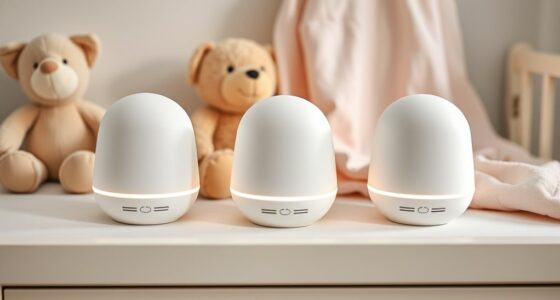
I’d start by deciding whether you want to connect existing smart blinds or motorize manual blinds: these accessories solve different problems. The TailorVibe Bluetooth Hub is my leading pick for coordinating up to 16 compatible blinds with schedules and voice control. For manual horizontal blinds, the SwitchBot Blind Tilt adds solar-assisted, app-based angle control, while the Mojedi two-pack favors straightforward remote operation without Wi-Fi. The central tradeoff is smart-home reach versus simplicity: hubs add routines and assistant integration but depend on device compatibility, while retrofit motors can automate existing blinds yet fit only particular mechanisms.

Get the latest gadgets delivered free with Prime
- Fast, free delivery on millions of items
- Prime Video, Amazon Music and more included
- Member-only deals all year
My ranking reflects how much useful control each option adds, how clearly its compatibility is described, and what extra equipment or setup it asks of the buyer. A hub does not replace a blind motor, and a tilt opener does not necessarily raise or lower a blind. Matching the accessory to the blind’s existing hardware is the first step toward a purchase that actually works.
Complete the kit



Key Takeaways
- TailorVibe is the strongest listed hub for scale: it supports up to 16 compatible Bluetooth blinds, schedules, group control, Alexa, and Google Home.
- SwitchBot adds app-based slat adjustment to manual horizontal blinds: its included solar panel and battery are useful, but voice and remote features require a separate Hub Mini.
- Mojedi suits buyers who want simple control: its two openers include an infrared remote and inline controls, with no app or Wi-Fi requirement.
- Hapadif is the Tuya-centered hub option: check that your shades are compatible and plan around its included AA battery.
- Blind hardware sets the shortlist: wand-tilt and tilt-rod accessories are not interchangeable, and none of these options is described as universal.
| TailorVibe Bluetooth Hub for Motorized Blinds |  | Best Overall Hub for Multiple Compatible Blinds | Connectivity: Bluetooth, Wi-Fi, Ethernet | Compatible assistants: Amazon Alexa, Google Home | Maximum blinds supported: 16 | VIEW ON AMAZON | See Our Full Breakdown |
| SwitchBot Blind Tilt Motorized Blind Opener with Solar Panel |  | Best Solar-Assisted Retrofit for Precise Tilt Control | Compatible blinds: Horizontal blinds with a tilt rod | Compatible tilt rod diameters: 6.2–10.2 mm and 12 mm | Adjustment precision: 2° increments | VIEW ON AMAZON | See Our Full Breakdown |
| Hapadif Smart Bridge Hub for Motorized Blinds and Shades |  | Best Tuya-App Hub for Compatible Shades | Model: Hpd-sbh-001 | Compatibility: Alexa, Google Home, Tuya app | Controls: Voice, remote app control, schedules, and routines | VIEW ON AMAZON | See Our Full Breakdown |
| Mojedi Motorized Blind Opener for Wand-Tilt Blinds, 2-Pack |  | Best Simple Remote-Controlled Two-Pack | Quantity: 2 openers | Compatibility: Horizontal Venetian blinds with standard wand-tilt mechanisms | Controls: Infrared remote and inline three-button controller | VIEW ON AMAZON | See Our Full Breakdown |
| smart blinds accessorie | Dimensions | Weight | Model | Compatibility |
|---|---|---|---|---|
| TailorVibe Bluetooth Hub for M | 3.54 × 3.54 × 0.91 inches | 2.63 ounces | TVUS-WG001-000B01-01 | — |
| SwitchBot Blind Tilt Motorized | 8.3 × 1.9 inches | — | — | — |
| Hapadif Smart Bridge Hub for M | 4 × 3.5 × 1.5 inches | 2.08 ounces | Hpd-sbh-001 | Alexa, Google Home, Tuya app |
| Mojedi Motorized Blind Opener | 2.5 × 2.5 inches | — | — | Horizontal Venetian blinds with standard wand-tilt mechanisms |
More Details on Our Top Picks
TailorVibe Bluetooth Hub for Motorized Blinds
For a home that already has compatible Bluetooth motorized blinds, TailorVibe offers the clearest route to one coordinated control point. Its stated support for up to 16 blinds, plus app and voice control, schedules, and group operation, gives it a stronger multi-window case than Hapadif, whose supplied details do not specify a maximum number of shades. This is the most capable hub in this lineup for buyers whose priority is managing several blinds together.
The network connection choices also distinguish it from the other hub pick: TailorVibe connects through Wi-Fi or Ethernet, giving a buyer a wired option near the network equipment. The description calls setup plug-and-play, but the stated coverage is up to 236 inches and recommends one hub per floor in multi-story homes. Treat that coverage as a planning figure, not a promise that every layout or wall will be covered.
This is still a bridge, not a motor for ordinary blinds. It only helps if the motorized blinds already in the home are compatible. Unlike SwitchBot or Mojedi, it does not retrofit a manual tilt mechanism. I’d pick TailorVibe over Hapadif when the 16-blind capacity and Ethernet option matter; I’d skip both hubs if the goal is to automate manual blinds or if device compatibility cannot be confirmed.
Pros:- Supports up to 16 compatible blinds with group control
- Combines app control, schedules, Alexa, and Google Home
- Connects to the network over Wi-Fi or Ethernet
- Described as plug-and-play for setup
Cons:- Only works with compatible Bluetooth motorized blinds
- The description recommends one hub per floor in multi-story homes
- Does not motorize manual blinds
Best for: People with compatible Bluetooth motorized blinds who want schedules, voice control, and coordinated operation across several windows.
Not ideal for: Buyers with manual blinds, unsupported motorized shades, or a multi-story layout where they do not want to plan for separate hubs by floor.
- Connectivity:Bluetooth, Wi-Fi, Ethernet
- Compatible assistants:Amazon Alexa, Google Home
- Maximum blinds supported:16
- Stated coverage:Up to 236 inches
- Dimensions:3.54 × 3.54 × 0.91 inches
- Weight:2.63 ounces
- Model:TVUS-WG001-000B01-01
Our verdict“I’d choose TailorVibe when a compatible multi-blind setup needs the broadest stated hub capacity and flexible network connection.”
SwitchBot Blind Tilt Motorized Blind Opener with Solar Panel
SwitchBot is a more direct retrofit than either hub: it attaches to a compatible horizontal blind tilt rod and adjusts slat angle in increments as small as 2 degrees. That makes it the better fit for someone who wants to change glare and daylight without replacing the blind. Its included rechargeable battery, solar panel, and light sensor add a practical automation angle that Mojedi’s simpler remote-based opener does not offer.
Its boundaries matter just as much as its automation. The stated fit covers tilt rods with specific diameters, and the unit does not work with vertical blinds or roller shades. App control and timers work over Bluetooth, but Alexa, Google Home, Siri, and remote control require a separately sold SwitchBot Hub Mini. That extra dependency makes it less turnkey for voice-first households than TailorVibe’s hub-based offer, although the two products serve different blind setups.
I’d put SwitchBot ahead of Mojedi for buyers who want fine adjustments and app routines, especially where keeping the battery topped up with the included solar panel is appealing. Mojedi is the simpler choice for wand-tilt blinds when an infrared remote and buttons are enough. Skip SwitchBot if the blind lacks a compatible tilt rod or if your main need is powered raising and lowering rather than slat-angle control.
Pros:- Retrofits compatible blinds without replacing them
- Includes a solar panel and rechargeable battery
- Adjusts slat angles in increments as small as 2 degrees
- Provides Bluetooth app control, timers, and a light sensor
Cons:- Does not fit vertical blinds or roller shades
- Voice assistant and remote features require a separate Hub Mini
- Works only with specified horizontal blind tilt rods
Best for: Owners of compatible horizontal blinds who want app timers, fine slat-angle adjustments, and solar-assisted charging.
Not ideal for: People with vertical blinds, roller shades, incompatible tilt rods, or anyone who expects voice control without buying a separate Hub Mini.
- Compatible blinds:Horizontal blinds with a tilt rod
- Compatible tilt rod diameters:6.2–10.2 mm and 12 mm
- Adjustment precision:2° increments
- Battery and charging:2000 mAh lithium battery; solar panel included
- Control methods:App, timers; voice and remote features require a separate Hub Mini
- Bluetooth app group limit:Up to 4 blind sets in range
- Dimensions:8.3 × 1.9 inches
- Warranty:1 year
Our verdict“I’d choose SwitchBot for a compatible tilt-rod blind when precise app-based slat control matters more than an all-in-one voice setup.”
Hapadif Smart Bridge Hub for Motorized Blinds and Shades
Hapadif is aimed at buyers who already own compatible motorized shades and want a bridge to Tuya app control, voice commands, schedules, and routines. Its core role resembles TailorVibe’s: connect an existing motorized setup rather than make manual blinds smart. The supplied details name Alexa and Google Home alongside Tuya, so it can suit a household that already uses those controls and whose shade system is confirmed compatible.
Compared with TailorVibe, Hapadif has a less fully specified setup profile. TailorVibe states a 16-blind limit and gives Wi-Fi and Ethernet as network options; Hapadif provides no maximum shade count or coverage figure in the supplied details. That does not establish that it performs worse, but it leaves a buyer with more to verify before planning a larger installation. Its listed included AA battery is another practical difference, and buyers should check what that battery powers and what ongoing power requirements apply rather than assume a particular arrangement.
This hub makes most sense when the Tuya app is part of the intended setup and the motorized shades are on its compatibility list. It is not the best choice for someone trying to add tilt automation to a manual blind; SwitchBot and Mojedi are the retrofit options here. I’d favor TailorVibe for a specified multi-blind capacity and wired networking, but Hapadif remains a reasonable shortlist candidate when its app ecosystem is the better match.
Pros:- Works with Alexa and Google Home voice control
- Supports remote operation through the Tuya app
- Allows custom schedules and routines
- Includes a user manual and AA battery
Cons:- Limited to compatible motorized shade devices
- The supplied details do not state a maximum number of shades or coverage
- Includes an AA battery, so buyers should verify the power arrangement
Best for: Owners of confirmed-compatible motorized shades who want Tuya app access, Alexa or Google Home voice control, and schedules or routines.
Not ideal for: Buyers who need a stated device capacity, a specified coverage range, or an opener for manual blinds.
- Model:Hpd-sbh-001
- Compatibility:Alexa, Google Home, Tuya app
- Controls:Voice, remote app control, schedules, and routines
- Battery:1 included AA alkaline battery
- Dimensions:4 × 3.5 × 1.5 inches
- Weight:2.08 ounces
- Color:White
Our verdict“I’d shortlist Hapadif when Tuya is the desired app and the shade system’s compatibility is confirmed, but choose TailorVibe for clearer capacity and network specifications.”
Mojedi Motorized Blind Opener for Wand-Tilt Blinds, 2-Pack
Mojedi takes the least connected approach in this group: two openers attach to compatible horizontal Venetian blinds with wand-tilt mechanisms, then operate through an infrared remote or inline three-button controller. There is no app or Wi-Fi setup. That is a genuine advantage for buyers who want powered slat adjustment without adding another smart-home account, hub, or network dependency.
Compared with SwitchBot, Mojedi gives up solar charging, light sensing, app timers, and fine-angle specifications in favor of a straightforward control bundle and two units. It also differs in what it fits: SwitchBot specifies compatible tilt rods, while Mojedi names standard wand-tilt mechanisms. Those descriptions are not interchangeable, so buyers should inspect the blind hardware rather than assume either opener fits. The rechargeable Type-C battery and tool-free attachment avoid drilling, but the product does not provide the connected schedules or assistant control offered by the hub picks.
I’d place Mojedi below SwitchBot for smart-home features, but it may be the more sensible choice if simple local control is the goal and the blind mechanism matches. It can make tilt operation easier without replacing the blind, yet it is not a full smart-blind system and does not raise or lower the blind. Skip it if you require phone access, voice commands, Wi-Fi routines, or a different blind style.
Pros:- Automates compatible blinds without replacing them
- Tool-free attachment requires no drilling
- Includes an infrared remote and inline three-button controller
- Rechargeable Type-C power with no app or Wi-Fi requirement
Cons:- Fits only compatible horizontal blinds with wand-tilt mechanisms
- Does not offer app, Wi-Fi, or voice control
- Does not provide the app timers or solar panel listed for SwitchBot
Best for: Buyers with two compatible wand-tilt Venetian blinds who want motorized slat control by remote or inline buttons without app setup.
Not ideal for: People who want Wi-Fi, app or voice control, or who own vertical, roller, or non-wand-tilt blinds.
- Quantity:2 openers
- Compatibility:Horizontal Venetian blinds with standard wand-tilt mechanisms
- Controls:Infrared remote and inline three-button controller
- Installation:Tool-free attachment; no drilling
- Power:Rechargeable battery with Type-C charging
- App or Wi-Fi:Not required; not provided
- Dimensions:2.5 × 2.5 inches
- Included components:Two openers, infrared remote, inline controller, Type-C cable
Our verdict“I’d choose Mojedi when two matching wand-tilt blinds need uncomplicated remote operation rather than smart-home integration.”

How We Picked
I ranked these accessories by the job they perform for smart blinds, rather than treating a hub and a retrofit motor as interchangeable. Compatibility comes first: the TailorVibe and Hapadif are bridges for compatible motorized shades, while SwitchBot and Mojedi attach to specific kinds of manual horizontal blinds. Buyers should not mistake a smart bridge for a motor that can move an ordinary blind.
Next, I compared the practical control each product supplies. TailorVibe leads for multi-blind coordination because its description specifies capacity for 16 blinds, group control, schedules, and both Wi-Fi and Ethernet network connections. Hapadif also offers voice access, app control, schedules, and routines, but the provided information does not state a device limit or network connection options. SwitchBot earns its place through fine slat-angle adjustment, a solar panel, and Bluetooth app timers; its advertised assistant and remote features depend on an additional hub. Mojedi trades connected features for two openers, a remote, and an inline controller.
I also weighed setup demands and limitations: required hubs, power arrangements, blind mechanism fit, and whether the product controls slat tilt rather than raising or lowering the full blind. I did not infer compatibility with brands or models that are not named in the supplied details. That makes the ranking most useful as a shortlist; buyers should verify their exact blind mechanism and existing motor system before choosing.
| smart blinds accessorie | Model | Compatibility | Controls |
|---|---|---|---|
| TailorVibe Bluetooth Hub for M | TVUS-WG001-000B01-01 | — | — |
| SwitchBot Blind Tilt Motorized | — | — | — |
| Hapadif Smart Bridge Hub for M | Hpd-sbh-001 | Alexa, Google Home, Tuya app | Voice, remote app control, schedules, and routines |
| Mojedi Motorized Blind Opener | — | Horizontal Venetian blinds with standard wand-tilt mechanisms | Infrared remote and inline three-button controller |
Factors to Consider When Choosing Smart Blinds Accessories
Before comparing smart features, identify what you have now: a motorized shade needing a bridge, or a manual blind whose slats you want to tilt. That distinction rules out mismatched accessories before app ecosystems and charging details come into play.Start with the blind mechanism
TailorVibe and Hapadif are hubs for compatible motorized blinds or shades; they do not add a motor to ordinary blinds. SwitchBot is designed for horizontal blinds with a compatible tilt rod, while Mojedi attaches to horizontal Venetian blinds with a suitable wand-tilt mechanism. Neither retrofit listing claims support for vertical blinds or roller shades. Check the specific mechanism and compatibility information before choosing, since the product names alone do not prove a fit.
Choose the control level you will use
If you want voice access, group operation, schedules, or routines, a bridge or a connected retrofit matters more than a basic remote. TailorVibe specifies Alexa, Google Home, group control, and a 16-blind capacity; Hapadif lists Alexa, Google Home, and Tuya routines. SwitchBot’s app and timers work over Bluetooth, but voice and remote features need a separate Hub Mini. Mojedi is the clearest pick for local operation, not remote control from a phone.
Check what is included and what is extra
The included solar panel and rechargeable battery make SwitchBot a distinct choice for a tilt retrofit, though its Hub Mini is an additional requirement for assistant and remote features. Mojedi includes a remote and inline controller, so its core operation does not rely on an app or Wi-Fi. TailorVibe lists network cables and power cables; Hapadif lists an AA battery. For every option, confirm the complete power and connection needs for your setup instead of assuming the listed accessories cover every installation scenario.
Plan coverage and quantity
For a larger motorized-blind installation, TailorVibe is the only option here with a stated maximum of 16 blinds and a coverage figure of up to 236 inches. Its description recommends one hub per floor in a multi-story home, so check placement and layout. Hapadif does not list capacity or coverage in the supplied details. SwitchBot can group up to four blind sets in Bluetooth range in the app; Mojedi is supplied as a two-pack, but that does not imply app-based grouping.
Be clear about tilt versus lift
Both retrofit motors in this lineup are described around adjusting slat angle, not lifting the full blind. That distinction affects daily use: a tilt accessory can manage glare and light while leaving the blind at its current height. If you need automated raising and lowering, verify that the blind’s motor or the accessory supports that movement; do not infer lift control from the word “motorized.”
Match the accessory to your smart-home setup
Existing ecosystems can narrow the choice quickly. Tuya users may prefer Hapadif if their shade model is compatible; Alexa or Google Home owners should still check the exact device pairing requirements. SwitchBot can add those assistants through its separate Hub Mini, while Mojedi deliberately avoids smart-home integration. Choose the least complicated setup that meets your control needs: extra connectivity is useful only if you will use it and the blind hardware supports it.
Frequently Asked Questions
Do these accessories work with any blinds?
No. Each product has a distinct compatibility target. TailorVibe and Hapadif connect to compatible motorized blinds or shades, SwitchBot specifies horizontal blinds with compatible tilt rods, and Mojedi specifies horizontal Venetian blinds with wand-tilt mechanisms. I’d check the blind’s model and mechanism against the accessory details before ordering; the descriptions do not establish universal compatibility.
Which option is best for controlling several existing motorized blinds?
TailorVibe has the clearest stated capacity for a multi-blind setup, supporting up to 16 compatible blinds with group control and schedules. Hapadif also coordinates compatible motorized shades and supports routines, but its supplied details do not give a maximum device count or coverage range. For a multi-story home, TailorVibe’s description recommends one hub per floor.
Can the SwitchBot or Mojedi opener raise and lower the whole blind?
The supplied descriptions focus on tilt adjustment: SwitchBot changes the angle of horizontal blind slats, and Mojedi controls slat adjustment on compatible wand-tilt blinds. They do not state that either opener lifts or lowers the full blind. If height control is necessary, confirm that the product and blind mechanism support it before buying.
Do I need a separate hub for SwitchBot voice control?
Yes. SwitchBot’s app control and timers work over Bluetooth, while Alexa, Google Home, Siri, and remote-control features require a separately sold SwitchBot Hub Mini according to the supplied description. Buyers who want the opener to work only from its app over Bluetooth can use the listed app controls without treating voice integration as included.
Which pick is simplest for someone who does not want an app?
Mojedi is the best fit for that preference among these four. Its two openers use an included infrared remote and inline three-button controller, and the description says no app or Wi-Fi is required. That simplicity comes with a tradeoff: it does not offer phone control, voice commands, or the schedules and routines listed for the connected options.
Conclusion
My recommendation depends on what is already installed. For compatible motorized blinds across several rooms, I’d choose TailorVibe for its stated 16-blind capacity, group control, schedules, and Wi-Fi or Ethernet connection. For a Tuya-centered household with compatible shades, Hapadif is the more relevant hub candidate, though I’d verify its capacity and power details first.
For manual horizontal blinds, I’d pick SwitchBot for app timers, precise tilt adjustment, and solar-assisted charging, provided the tilt rod matches and a separate Hub Mini is acceptable for voice features. I’d choose Mojedi when the blinds use compatible wand-tilt mechanisms and a remote or inline buttons are enough. In every case, match the hardware first: these accessories address different blind types and control jobs, so the best choice is the one that fits your existing mechanism and the way you intend to operate it.