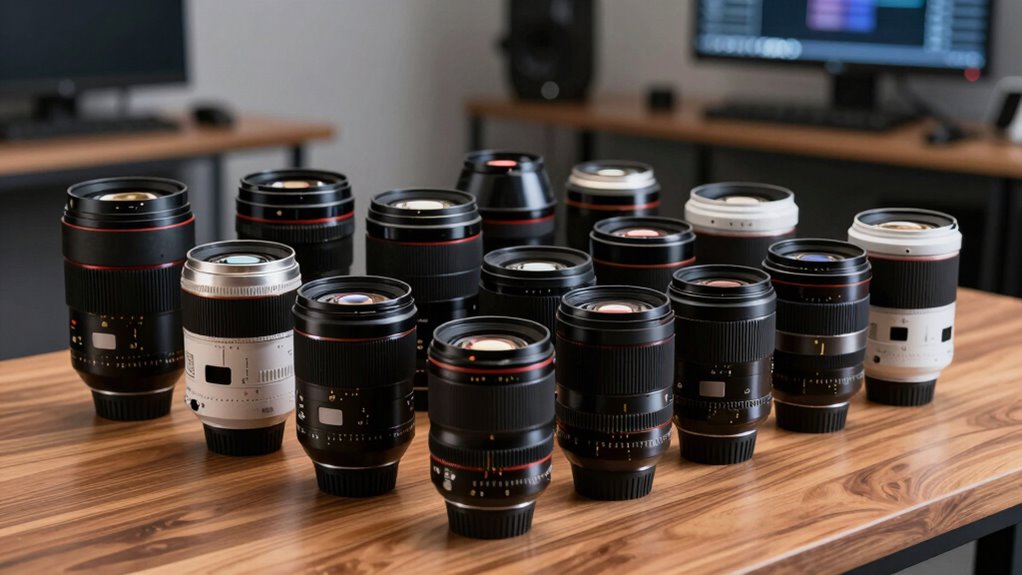
Choosing the right lens for filmmaking can transform your visuals, but with so many options, it’s essential to understand what each offers. The SIRUI Sniper Autofocus Lens Set stands out for versatility and autofocus features, making it great for run-and-gun shooting. The SIRUI VP-1 24mm T1.4 is ideal for filmmakers seeking high-quality, low-light performance with interchangeability. Meanwhile, the Rokinon Cine DS85M-C 85mm offers a classic cinematic look with manual focus and a wide aperture, suited for portrait and narrative work. These picks highlight key tradeoffs: autofocus versus manual control, single focal length versus zoom, and cinema-grade features versus portability. Understanding these differences helps in selecting a lens that best fits your style and project requirements.

Get the latest gadgets delivered free with Prime
- Fast, free delivery on millions of items
- Prime Video, Amazon Music and more included
- Member-only deals all year
Complete the kit



Key Takeaways
- Versatility varies: some lenses excel in autofocus and multiple focal lengths, while others prioritize manual control and cinematic quality.
- Aperture size impacts low-light performance and depth of field, with T1.4 and T1.8 offering significant advantages for moody, cinematic shots.
- Mount compatibility and size are critical — choose a lens that fits your camera system and shooting style.
- Cinema lenses often come at a premium but deliver smoother focus and better optical consistency, essential for professional productions.
- Smartphone anamorphics expand creative options for mobile filmmakers, but require additional apps and handling considerations.
| SIRUI Sniper Autofocus Lens Set, 23/33/56mm, F1.2 APS-C Cine Lens, E Mount |  | Best Versatile Autofocus Set | Focal Lengths: 23mm, 33mm, 56mm | Aperture: F1.2 | Compatibility: Sony APS-C E Mount | VIEW ON AMAZON | See Our Full Breakdown |
| SIRUI VP-1 Vision Prime 24mm T1.4 Full Frame Cine Lens, E/RF/Z/L Mount |  | Best Full-Frame Cinema Lens | Mounts: E, RF, Z, L | Focal Length: 24mm | Aperture: T1.4 | VIEW ON AMAZON | See Our Full Breakdown |
| Rokinon Cine DS85M-C 85mm T1.5 Full Frame Cine Lens for Canon EF |  | Best Portrait and Narrative Lens | Full Frame Coverage: Yes | Aperture Range: T1.5 – T22 | Focal Length: 85mm | VIEW ON AMAZON | See Our Full Breakdown |
| 1.33X Anamorphic Lens for Smartphone Filmmaking |  | Best Smartphone Cinematic Tool | Magnification: 1.33X | Aspect Ratio: 2.4:1 | Compatibility: iPhone 14 Pro Max, Android smartphones | VIEW ON AMAZON | See Our Full Breakdown |
| SIRUI 20mm T1.8 1.33X Anamorphic Lens for E Mount Cameras |  | Best E Mount Anamorphic Lens | Focal Length: 20mm | Aperture: T1.8 | Squeeze Factor: 1.33x | VIEW ON AMAZON | See Our Full Breakdown |
| lenses for filmmaking | Aperture | Focal Length |
|---|---|---|
| SIRUI Sniper Autofocus Lens Se | F1.2 | — |
| SIRUI VP-1 Vision Prime 24mm T | T1.4 | 24mm |
| Rokinon Cine DS85M-C 85mm T1.5 | — | 85mm |
| 1.33X Anamorphic Lens for Smar | — | — |
| SIRUI 20mm T1.8 1.33X Anamorph | T1.8 | 20mm |
More Details on Our Top Picks
SIRUI Sniper Autofocus Lens Set, 23/33/56mm, F1.2 APS-C Cine Lens, E Mount
The SIRUI Sniper Autofocus Lens Set shines for its flexibility, offering three focal lengths tailored for street, portrait, and documentary shooting. Its fast F1.2 aperture delivers beautiful background blur and performs well in low light, making it a practical choice for solo creators. Autofocus with Eye AF and subject tracking ensures sharp focus during dynamic scenes, a feature that sets it apart from manual-only lenses. Compared to traditional cinema lenses, this set is more adaptable for hybrid photography and video work. However, it’s limited to Sony APS-C E Mount cameras and might have a higher price due to its autofocus tech and multiple focal lengths.
Pros:- Multiple focal lengths for diverse shooting situations
- Fast F1.2 aperture for low-light and depth of field control
- Autofocus with Eye AF and subject tracking enhances efficiency
Cons:- Limited to Sony APS-C E Mount cameras
- No weather sealing or rugged build info
- Potentially higher cost for specialized features
Best for: Filmmakers who need a versatile, autofocus-capable lens set for street, portrait, and run-and-gun scenarios.
Not ideal for: Pro shooters needing weather sealing or higher durability, or those working outside Sony APS-C systems.
- Focal Lengths:23mm, 33mm, 56mm
- Aperture:F1.2
- Compatibility:Sony APS-C E Mount
- Autofocus:STM with Eye AF
Our verdict“A flexible, autofocus-enabled lens set perfect for versatile shooting, especially if you work with Sony APS-C cameras and need speed and tracking.”
SIRUI VP-1 Vision Prime 24mm T1.4 Full Frame Cine Lens, E/RF/Z/L Mount
The SIRUI VP-1 24mm T1.4 is designed with serious filmmakers in mind, offering a high-quality, low-light capable prime lens with exceptional optical clarity. Its interchangeability across mounts like E, RF, Z, and L makes it a flexible tool for various camera bodies. The compact aluminum construction ensures durability without sacrificing portability. Its T1.4 aperture provides beautiful separation from backgrounds, ideal for storytelling and low-light shoots. The main tradeoff is its fixed focal length—additional lenses are needed to cover different perspectives—and its premium price reflects its cinema-grade quality. Handling requires care due to precision glass, but it’s a reliable choice for cinematic projects.
Pros:- Interchangeable mounts for camera flexibility
- Fast T1.4 aperture for low-light and shallow depth of field
- Compact, durable aluminum body
Cons:- Limited to 24mm focal length
- Requires careful handling due to precision glass
- Higher price point for cinema-quality lens
Best for: Filmmakers seeking a high-end, low-light, full-frame lens with interchangeable mounts for versatile production environments.
Not ideal for: Budget filmmakers or those needing a zoom lens or multiple focal lengths in a single package.
- Mounts:E, RF, Z, L
- Focal Length:24mm
- Aperture:T1.4
- Weight:600g
Our verdict“A top choice for cinematic storytelling with excellent low-light performance and mount versatility, best suited for dedicated filmmakers with specific focal length needs.”
Rokinon Cine DS85M-C 85mm T1.5 Full Frame Cine Lens for Canon EF
The Rokinon Cine DS85M-C is a classic cinema lens favored for portrait and narrative work. Its wide T1.5 aperture allows for stunning shallow depth of field and excellent low-light performance. The manual focus ring is smooth and precise, making it ideal for controlled focus pulls, though it might be less suitable for run-and-gun scenarios that demand autofocus. This lens’s optical performance is consistent, and it matches well with other Rokinon DS series lenses for a cohesive look. The main drawback is its manual focus operation and lack of stabilization, which requires careful handling during shooting.
Pros:- Excellent optical quality with smooth manual focus
- Wide T1.5 aperture for low-light and depth control
- Consistent color and look with other Rokinon lenses
Cons:- Manual focus only, no autofocus
- Limited to Canon EF mount
- No image stabilization
Best for: Professional filmmakers creating narrative, portrait, or stylized scenes where manual focus control and cinematic quality are priorities.
Not ideal for: Fast-paced, autofocus-dependent workflows or videographers who prefer built-in stabilization or zoom versatility.
- Full Frame Coverage:Yes
- Aperture Range:T1.5 – T22
- Focal Length:85mm
- Filter Size:72mm
Our verdict“A dependable, manual-focus lens that excels in controlled cinematic shoots, particularly for portraits and storytelling where focus precision matters.”
1.33X Anamorphic Lens for Smartphone Filmmaking
The 1.33X Smartphone Anamorphic Lens expands mobile filmmaking with a cinematic widescreen ratio and dramatic flares, perfect for content creators and mobile filmmakers. It’s compatible with many iPhone and Android models, transforming standard smartphone videos into more professional-looking footage. However, it requires an app like Filmic Pro for de-squeezing and proper aspect ratios, adding a layer of complexity. Mounting can be tricky if your phone case is bulky. Despite these challenges, this lens provides a significant visual upgrade for mobile videos, making it ideal for social media, travel, or quick content creation.
Pros:- Creates cinematic widescreen aspect ratio with flares
- Compatible with many smartphones
- Enhances color saturation and light effects
Cons:- Needs an app for de-squeezing footage
- Cannot use the middle camera of the phone
- Mounting may require removing case or accessories
Best for: Mobile filmmakers seeking cinematic widescreen effects and flair effects without investing in traditional cinema lenses.
Not ideal for: Pro-level cinema or DSLR workflows, or those who prefer built-in stabilization and autofocus.
- Magnification:1.33X
- Aspect Ratio:2.4:1
- Compatibility:iPhone 14 Pro Max, Android smartphones
Our verdict“An accessible tool for mobile creators aiming to add cinematic effects to their videos with minimal gear investment.”
SIRUI 20mm T1.8 1.33X Anamorphic Lens for E Mount Cameras
The SIRUI 20mm T1.8 1.33X Anamorphic lens offers a compact, cinema-grade option for E Mount camera users seeking a wide, cinematic look. Its 1.33x squeeze factor produces a stunning 2.35:1 aspect ratio, perfect for landscapes, music videos, or narrative films. Autofocus and eye-tracking add modern convenience, although understanding anamorphic principles is essential for optimal results. Its fast T1.8 aperture enhances low-light scenes, and at just 480g, it’s portable enough for handheld or gimbal use. The main caveat: mastering anamorphic shooting techniques is required to maximize its potential, and it’s only compatible with E Mount cameras.
Pros:- Cinematic 2.35:1 aspect ratio with anamorphic effect
- Autofocus with eye-tracking
- Fast T1.8 aperture for low-light conditions
Cons:- Limited to E Mount cameras
- Requires understanding of anamorphic techniques
- More expensive than standard wide lenses
Best for: Filmmakers wanting a lightweight, cinematic anamorphic lens for E Mount cameras, especially for landscape or stylized projects.
Not ideal for: Beginners unfamiliar with anamorphic workflows or shooters with non-E Mount systems.
- Focal Length:20mm
- Aperture:T1.8
- Squeeze Factor:1.33x
- Coverage:Super 35
Our verdict“A powerful, portable anamorphic option for E Mount users aiming for cinematic widescreen visuals with modern autofocus features.”

How We Picked
Our selection process focused on a mix of professional-grade optical performance, versatility, and real-world filmmaking needs. We prioritized lenses that offer a range of focal lengths, aperture sizes, and mounting options, ensuring they cater to different shooting styles—from run-and-gun street scenes to cinematic narratives. We also considered build quality, ease of use, and how well each lens integrates into a typical filmmaking workflow. Cost was a factor but balanced against features that elevate production value. The final lineup reflects a curated balance of high-end cinema gear and innovative tools for mobile and budget-conscious filmmakers.
| lenses for filmmaking | Aperture |
|---|---|
| SIRUI Sniper Autofocus Lens Se | F1.2 |
| SIRUI VP-1 Vision Prime 24mm T | T1.4 |
| Rokinon Cine DS85M-C 85mm T1.5 | — |
| 1.33X Anamorphic Lens for Smar | — |
| SIRUI 20mm T1.8 1.33X Anamorph | T1.8 |
Factors to Consider When Choosing Lenses For Filmmaking
Choosing the right lens for filmmaking depends on your project scope, camera system, and desired aesthetic. Understanding focal lengths, aperture sizes, and lens types helps tailor your gear to your creative vision. Whether you need versatile zooms, high-end cinema primes, or innovative anamorphic tools, making informed decisions safeguards your investment and elevates your production quality.
Understanding Focal Length and Aperture
Focal length determines your framing and field of view; wider lenses like 20mm or 24mm are great for landscapes and immersive shots, while longer lenses like 85mm excel at portraits and isolating subjects. Aperture influences light intake and depth of field—faster lenses (T1.4, T1.8) excel in low-light scenarios and create a cinematic bokeh. Matching your lens choice to your shooting environment and style is essential for achieving your desired look.
Cinema vs. Photography Lenses
Cinema lenses often feature manual focus rings, focus scales, and consistent optical performance, making them ideal for controlled narrative shoots. Photography lenses with autofocus and zoom capabilities offer flexibility but may lack the optical consistency and smooth focus pulls required for professional filmmaking. Consider your workflow: if precision focus and optical fidelity matter most, investing in cinema lenses is wise. For more casual or run-and-gun projects, versatile photo lenses can suffice.
Specialized Tools: Anamorphic and Compact Lenses
Innovative tools like anamorphic lenses create a distinctive cinematic aspect ratio and lens flare aesthetic, perfect for stylized storytelling. Smartphone anamorphic adapters expand mobile filmmaking options, though they require additional apps and handling care. Compact, lightweight lenses like the SIRUI 20mm T1.8 are excellent for handheld or gimbal work, but mastering their technical nuances—especially with anamorphic effects—is key to getting professional results.
Frequently Asked Questions
What is the main difference between cinema and photography lenses?
Cinema lenses are designed for precise focus control, optical consistency, and durability, often featuring manual focus rings and focus scales for accurate focus pulling. Photography lenses tend to include autofocus and zoom functions, prioritizing versatility and speed. For filmmaking, cinema lenses provide a more predictable and smooth focus experience, which is crucial for professional narrative work, whereas photo lenses are more adaptable but less precise in focus transitions.
Why are aperture sizes like T1.4 or T1.8 important for filmmaking?
Fast apertures such as T1.4 and T1.8 allow more light to hit the sensor, enabling shooting in lower light conditions without extra lighting equipment. They also produce a shallow depth of field, helping to isolate subjects from backgrounds and create a cinematic look. These features are especially valuable for storytelling, emphasizing mood and focus control while maintaining image quality in challenging lighting environments.
Should I choose a zoom lens or a prime for filmmaking?
Zoom lenses offer flexibility, allowing you to change focal lengths quickly and adapt to dynamic shooting situations, which is beneficial for run-and-gun or documentary filmmaking. Prime lenses, on the other hand, are often sharper, have larger apertures, and deliver more consistent optical performance, making them preferred for controlled, cinematic shots. Your choice depends on your workflow—if speed and adaptability matter, zooms are advantageous; for quality and control, primes excel.
What are the benefits of using anamorphic lenses?
Anamorphic lenses produce a widescreen aspect ratio with characteristic lens flares and a distinctive oval bokeh, giving footage a cinematic aesthetic. They also allow for a wider field of view in a compact form factor. However, they require understanding specific shooting techniques and post-processing for de-squeezing the image, making them more suitable for experienced filmmakers seeking a stylized look.
Can smartphone lenses replace traditional cinema lenses?
While smartphone anamorphic lenses and adapters significantly enhance mobile video quality, they cannot fully replace professional cinema lenses in terms of optical quality, control, and durability. They are excellent for quick, creative content or social media but lack the precision, low-light performance, and focus control of dedicated cinema optics. They are best viewed as supplementary tools rather than complete replacements.
Conclusion
If you’re a professional filmmaker or serious hobbyist focused on narrative, portrait, or cinematic work, investing in high-quality cinema lenses like the SIRUI VP-1 or Rokinon DS85M-C will provide the optical control and durability needed. For versatile shooters who need autofocus and multiple focal lengths, the SIRUI Sniper set offers great value. Mobile creators and content producers aiming for stylized, widescreen visuals will find the smartphone anamorphic or compact anamorphic options compelling. Each choice hinges on your project scope, camera system, and budget—matching your gear to your creative intentions ensures the best results.
Halloween Picks
halloween
As an affiliate, we earn on qualifying purchases.