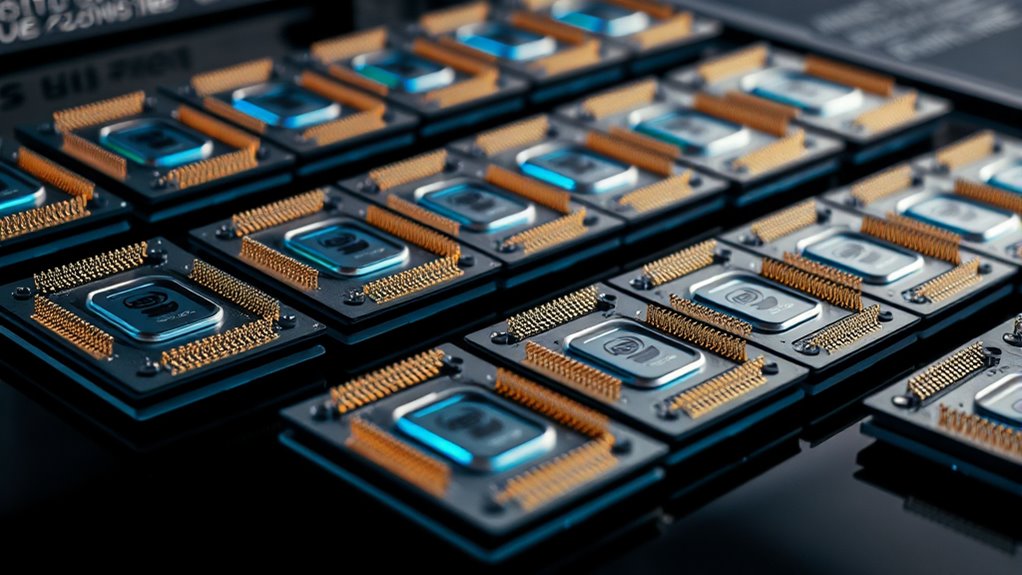

When selecting an Intel desk CPU, the main decision revolves around balancing performance, budget, and intended use. The Intel Core Ultra 7 Series stands out as the best overall for high-end multitasking and gaming, thanks to its innovative hybrid core design. The Intel Core i9-12900KF offers exceptional power for demanding tasks, while the Dell Tower with Intel Core Ultra 9-285 provides a ready-to-use workstation experience. Buyers face tough tradeoffs between raw speed, core count, power efficiency, and cost. Continue reading to see the full breakdown and find the best CPU for your needs.

Get the latest gadgets delivered free with Prime
- Fast, free delivery on millions of items
- Prime Video, Amazon Music and more included
- Member-only deals all year
Complete the kit


Key Takeaways
- High-core-count CPUs like the Intel Ultra 7 series excel in multi-threaded workloads and future-proofing.
- Unlocked processors such as the i9-12900KF provide overclocking flexibility for enthusiasts.
- Workstation-focused models like the Lenovo ThinkStation P3 offer enhanced stability and support for professional applications.
- Gaming desktops benefit most from CPUs with high single-core speeds, like the i7-14700K.
- Choosing the right CPU depends heavily on your specific use case—gaming, professional work, or general productivity.




More Details on Our Top Picks
Lenovo ThinkCentre P3 Tiny AI Workstation Desktop with Intel Core Ultra 5 235 vPro
This tiny desktop stands out for its impressive balance of power and space-saving design, making it ideal for professionals who need high-performance multitasking without occupying much desk space. Compared to the larger Lenovo Legion Tower 5i, it sacrifices some GPU power and upgrade flexibility but excels in quiet operation and portability. The Intel Core Ultra 5 235 vPro offers strong multi-core performance suited for AI tasks and productivity, while the integrated Intel Arc Graphics is sufficient for light design work but not demanding 3D modeling or gaming. Its DDR5 RAM and fast PCIe 4.0 SSD ensure quick data handling, and connectivity options like Wi-Fi 6 support seamless workflows. However, its small form factor limits upgrade options, especially for graphics and additional storage, and the integrated graphics won’t handle intensive visuals. This pick makes the most sense for space-conscious professionals needing reliable multitasking and AI capabilities in a compact form.Pros:- Compact size saves valuable workspace
- Strong multi-core performance with Intel Core Ultra 5
- Fast connectivity including Wi-Fi 6 and multiple USB ports
- High-speed 1TB PCIe Gen4 SSD
Cons:- Limited upgrade options due to small form factor
- Integrated graphics may not support advanced 3D or gaming tasks
- External DVD drive sold separately
Best for: Small office environments or professional users needing high performance in tight spaces
Not ideal for: Gamers or users requiring extensive GPU upgrades or high-end 3D rendering
- Processor:Intel Core Ultra 5 235 vPro (12 Cores, 14 Threads, 1.4 GHz base, 4.6 GHz turbo)
- Graphics:Intel Arc Graphics
- RAM:32GB DDR5-5200
- Storage:1TB PCIe Gen4 NVMe SSD
- Connectivity:Wi-Fi 6, Bluetooth 5.1, DP 1.4, HDMI 2.1, LAN 1Gb
- Operating System:Windows 11 Pro
Our verdict“This workstation is perfect for professionals who prioritize space efficiency without compromising core computing power.”
Lenovo Legion Tower 5i AI Gaming Desktop PC, Intel Ultra 7 Series 2, 32GB DDR5 RAM, 1TB SSD, NVIDIA GeForce RTX 5060 Ti, Windows 11 Pro
This desktop makes a strong case for gamers and demanding multitaskers thanks to its cutting-edge Intel Ultra 7 Series 2 processor and RTX 5060 Ti GPU, outperforming the i7-12700KF in graphics-intensive tasks. Its 32GB DDR5 RAM and 1TB SSD deliver rapid load times and smooth gameplay, especially with the Legion Coldfront liquid cooling system maintaining stability during intensive use. Compared with the i9-12900KF, it offers comparable performance but is optimized for gaming with additional cooling and AI tools. The large chassis and multiple USB ports facilitate future upgrades, yet its high-end specs come with a premium price tag, and the size demands ample space. This model is best suited for gamers and streamers seeking top-tier performance without compromise.Pros:- Powerful Intel Ultra 7 processor and RTX 5060 Ti GPU for gaming
- Fast DDR5 RAM and SSD ensure smooth performance
- Advanced liquid cooling maintains optimal temperatures
- Expandable motherboard with multiple USB ports
Cons:- Premium price point limits accessibility
- Large footprint requires ample space for setup
- High power consumption at 125W
Best for: Enthusiast gamers and streamers looking for a future-proof gaming rig
Not ideal for: Casual users or those with limited space, due to its size and high cost
- Processor:Intel Ultra 7 Series 2 (20-Core 265F)
- Graphics Card:NVIDIA GeForce RTX 5060 Ti (8GB GDDR7)
- RAM:32 GB DDR5 5600MHz
- Storage:1 TB SSD
- Cooling System:Legion Coldfront Liquid Cooling
- Operating System:Windows 11 Pro
- USB Ports:9
Our verdict“This desktop is a clear choice for serious gamers and power users demanding top-tier hardware and expandability.”
Lenovo ThinkStation P3 Tiny Workstation Desktop, Intel i5-14500 vPro, 16GB/32GB/64GB RAM, 512GB/1TB/2TB SSD, Supports 8K Display, Windows 11 Pro
Designed for demanding professional workflows, the ThinkStation P3 Tiny excels in CAD, 3D modeling, and data analysis, thanks to its Intel i5-14500 vPro processor and configurable RAM and storage. Compared to the Lenovo ThinkCentre P3 Tiny, it emphasizes higher graphics capability and enterprise-grade security, supporting 8K displays for visualization tasks. Its compact size keeps the workspace clean, yet options are limited for RAM and storage upgrades, making it less suitable for users who need maximum flexibility. The support for high-resolution displays and rich connectivity makes it ideal for professional environments, but overkill for casual browsing or light productivity. This workstation makes the most sense for professionals who need high-res visual output and enterprise features in a small footprint.Pros:- Compact size saves space in professional setups
- Supports high-resolution 8K displays for detailed visuals
- Configurable RAM and storage options
- Rich connectivity including Wi-Fi 6 and DisplayPort 1.4
Cons:- Limited upgrade options for RAM and storage
- May be overpowered for basic tasks
- Requires some professional setup for optimal use
Best for: Designers and engineers needing professional performance in limited space
Not ideal for: Casual or home users who don’t require high-end graphics or 8K support
- Processor:Intel i5-14500 vPro
- RAM:16GB/32GB/64GB DDR5
- Storage:512GB/1TB/2TB PCIe NVMe SSD
- Graphics:Intel UHD 770
- Display Support:Up to 8K@60Hz via DisplayPort 1.4
- Connectivity:Wi-Fi 6, Bluetooth 5.1
Our verdict“This workstation is ideal for professionals needing high-res visual support and small size, at the expense of upgrade flexibility.”
Intel Core i9-12900KF Gaming Desktop Processor, 16 Cores (8P+8E), Up to 5.2 GHz, Unlocked, LGA1700, 125W
This processor sets a high bar for gaming and intensive multitasking with its 16 cores and turbo speeds reaching 5.2 GHz. Its unlocked design invites overclocking, making it appealing for enthusiasts who want to push performance further. Compared to the i7-12700KF, it offers more cores and higher potential processing power, but at a higher power draw and cost. It’s compatible only with newer LGA1700 motherboards, which can be a consideration for those upgrading existing systems. Power consumption at 125W is significant, requiring a robust cooling solution. This CPU is best for gamers and content creators who need maximum performance and are comfortable with building a custom high-end system.Pros:- High core count with 16 cores for multitasking
- Unlocked for overclocking potential
- Maximum turbo speeds up to 5.2 GHz
- Supports the latest LGA1700 platform
Cons:- Requires a discrete high-performance graphics card
- High power consumption at 125W
- Limited to newer motherboard chipsets
Best for: Gaming enthusiasts and overclockers seeking maximum CPU performance
Not ideal for: Casual users or those on a tight budget, due to high cost and power requirements
- Cores:16 (8 Performance + 8 Efficiency)
- Max Clock Speed:5.2 GHz
- Socket:LGA1700
- Cache:30 MB L3
- Power:125W
- Architecture:Intel 7
Our verdict“This CPU is tailored for gamers and overclockers who demand the highest processing speeds in a high-end build.”
Intel Core i7-12700KF Desktop Processor, 12 Cores (8P+4E), up to 5.0 GHz, Unlocked, LGA1700, 125W
The i7-12700KF strikes a balance between high performance and efficiency, making it a popular choice for gaming and multitasking. Its 12 cores and turbo speed up to 5.0 GHz outperform many older CPUs and match the needs of demanding applications. Compared with the i9-12900KF, it offers slightly less core count but still delivers excellent gaming performance at a more accessible price point. Its unlocked design encourages overclocking, though it requires a compatible LGA1700 motherboard and robust cooling. Power consumption at 125W is high but typical for high-performance CPUs. This processor suits gamers and power users who want strong performance without the premium cost of the top-tier CPUs.Pros:- High-performance 12-core CPU with turbo up to 5.0 GHz
- Unlocked for overclocking
- Efficient microarchitecture improves power consumption
- Compatible with LGA1700 motherboards
Cons:- Requires discrete graphics card
- High power draw at 125W
- Limited to newer motherboard platforms
Best for: Gamers and multitaskers needing robust performance at a reasonable price
Not ideal for: Users requiring the absolute highest core count or enterprise-level features
- Cores:12 (8P+4E)
- Turbo Boost:up to 5.0 GHz
- Socket:LGA1700
- Cache:12 MB L2, 25 MB L3
- Power:125W
- Architecture:Intel 7
Our verdict“This CPU is an excellent choice for gamers and enthusiasts seeking great performance without stepping into the highest price brackets.”
Intel Core i9-11900K Desktop Processor, 8 Cores, up to 5.3 GHz, Unlocked, LGA1200
The Intel Core i9-11900K stands out for its impressive single-core performance, making it ideal for gaming and tasks that prioritize high clock speeds. Compared to the Intel Core Ultra 9-285, it offers superior raw speed at the expense of newer features and expandability. Its 8 cores and 5.3 GHz Turbo boost ensure fast response times, but the lack of an included thermal solution means you’ll need an aftermarket cooler, adding cost and complexity. With a TDP of 125W, it consumes more power, which could impact energy bills or cooling requirements. This processor is best suited for users who want top-tier gaming or creative performance on a budget that can handle cooling upgrades. It’s less ideal for those seeking future-proofing or energy efficiency.Pros:- Exceptional single-core performance for gaming and creative apps
- Supports PCIe Gen 4.0 and latest Intel technologies
- Compatible with high-end 500-series motherboards
Cons:- No thermal solution included, requiring additional purchase
- High power consumption at 125W, demanding cooling and power supply considerations
Best for: High-end gamers and creative professionals who prioritize raw single-core speed and are comfortable with custom cooling.
Not ideal for: Budget-conscious users or those seeking a ready-to-go system with included cooling and lower power draw.
- Cores:8
- Max Turbo Frequency:5.3 GHz
- Socket:LGA1200
- Thermal Solution Included:No
- Chipset Compatibility:Intel 500 series & select 400 series
- Technology Support:Intel Turbo Boost Max Technology 3.0, PCIe Gen 4.0
Our verdict“This CPU is perfect for users who need maximum gaming and creative power but are prepared to handle cooling and power needs.”
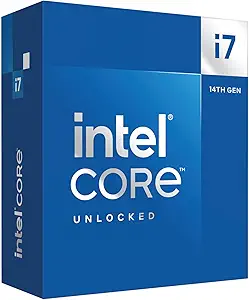
Intel Core i7-14700K 14th Gen Gaming Desktop Processor, 20 Cores, Unlocked
The Intel Core i7-14700K offers a versatile balance of high core count and speed, with 20 cores (8 Performance and 12 Efficiency) reaching up to 5.6 GHz, making it a strong choice for gaming and multitasking. Compared to the Intel Core Ultra 7 265KF, it provides slightly higher turbo speeds and newer platform support, including DDR5 RAM. Its unlocked design supports overclocking, but the system demands a compatible motherboard, often requiring BIOS updates, which could be a hurdle for some users. Its high power consumption and heat generation under load are tradeoffs for its performance edge. This processor makes sense for gamers who want future-proofing and overclocking headroom but might be excessive for users with basic needs.Pros:- 20 cores for excellent multitasking and gaming performance
- Unlocked for overclocking flexibility
- Supports both DDR4 and DDR5 platforms
Cons:- Requires a compatible, BIOS-updated motherboard
- High power draw and heat output under load
Best for: Gaming enthusiasts and power users who want top-tier performance with overclocking potential and current platform support.
Not ideal for: Casual users or those with limited technical knowledge who prefer plug-and-play solutions or lower power systems.
- Cores:20 (8 P-cores + 12 E-cores)
- Max Clock Frequency:5.6 GHz
- Socket Compatibility:LGA 1700
- Integrated Graphics:None
- Platform Support:Intel 600 and 700 series motherboards
- Technology Support:Overclocking, DDR4/DDR5
Our verdict“This CPU is ideal for gamers and enthusiasts seeking high core counts and overclocking but requires a capable platform and cooling setup.”
Intel Core Ultra 7 Desktop Processor 265KF – 20 cores (8 P-cores + 12 E-cores) up to 5.5 GHz
The Intel Core Ultra 7 265KF shares many features with the Intel Core i7-14700K, including 20 cores and a top speed of 5.5 GHz, making it a powerhouse for demanding multitasking and heavy workloads. Its hybrid architecture ensures efficient performance, but the need for an Intel 800 Series chipset motherboard limits upgrade options for existing users. While its high core count and clock speeds promise swift processing, the same high power consumption and heat generation are tradeoffs that users should consider. This CPU makes the most sense for professionals or power users who want cutting-edge performance on a new platform, rather than those seeking budget or simplicity.Pros:- High core count with 20 cores for multitasking and processing
- Maximum speeds up to 5.5 GHz for demanding applications
- Efficient hybrid architecture for performance and power management
Cons:- Requires a new, compatible motherboard with Intel 800 Series chipset
- High power consumption and heat output
Best for: Professionals and power users who need maximum processing power with future-proof platform support.
Not ideal for: Budget-conscious users or those who prefer easy upgrade paths with older platforms.
- Total Cores:20
- Performance Cores:8
- Efficiency Cores:12
- Max Clock Frequency:5.5 GHz
- Socket Compatibility:Intel 800 Series
Our verdict“Best suited for users who require top-tier performance on a new platform and are prepared for higher energy and cooling demands.”
Lenovo ThinkStation P3 Tower Workstation with Intel Ultra 9 285 vPro, 64GB DDR5, 1TB SSD, NVIDIA RTX 2000 Ada 16GB, Windows 11 Pro
The Lenovo ThinkStation P3 Tower is designed for professionals requiring serious computational power, especially with its Intel Ultra 9-285 vPro processor, 64GB DDR5 RAM, and a robust NVIDIA RTX 2000 Ada 16GB graphics card. While the Intel Core Ultra 9-285 is powerful, it’s primarily geared toward enterprise and creative workflows, making it less ideal for gaming or casual use. Its high expandability, security features, and 4K display support cater to demanding workloads, but its size and weight mean it’s not suited for small or space-constrained environments. This workstation is best for those who need maximum reliability and expandability for professional tasks, not for everyday or casual users.Pros:- Powerful high-end CPU with vPro security features
- Massive 64GB DDR5 RAM and 1TB SSD for heavy multitasking
- Supports 4K UHD output and multiple high-resolution displays
Cons:- Heavy and large, requiring dedicated space
- Limited USB ports for peripherals
Best for: Professional creatives and enterprise users needing high reliability and extensive expandability.
Not ideal for: Casual users or gamers seeking a smaller, less expensive desktop.
- Processor:Intel Core Ultra 9 285 vPro
- Memory:64 GB DDR5
- Storage:1 TB SSD
- Graphics Card:NVIDIA RTX 2000 Ada 16GB
- Operating System:Windows 11 Pro
- Dimensions:16.3 x 7.1 x 14.6 inches
Our verdict“This workstation excels for demanding professional workflows but is overkill for casual or gaming setups.”

How We Picked
I evaluated these Intel desk CPUs based on core count, clock speeds, power efficiency, overclocking potential, and compatibility with popular applications. Build quality, thermal performance, and value also played key roles in the selection. The ranking reflects a mix of raw performance, versatility, and suitability for different user needs, from gamers to professionals. I aimed to identify options that offer the best balance of features and price, while highlighting standout models for specific tasks.Factors to Consider When Choosing Intel Deskcpus
Choosing the right Intel desk CPU requires understanding several key factors that influence performance and value. Beyond raw specs, buyers should consider how the processor’s architecture aligns with their workload, whether they prioritize overclocking, energy efficiency, or integrated features. Making the wrong choice can lead to bottlenecks or unnecessary expenses. Here are the main factors to keep in mind.Performance Needs and Core Count
Assess your typical workload—gaming, content creation, professional applications, or general use. Higher core counts benefit multitasking and heavy workloads, but may not improve performance in everyday tasks. For gaming, high single-core speeds often matter more, while creative and professional work benefits from multi-core, multi-threaded CPUs. Matching core count to your needs prevents overspending or underperforming.
Clock Speeds and Turbo Capabilities
Look beyond base clock speeds to turbo boost frequencies, which determine how well a CPU performs during demanding tasks. CPUs with higher turbo speeds deliver better single-threaded performance, critical for gaming and certain applications. Be cautious, however, as higher speeds often mean increased power consumption and heat output, requiring adequate cooling solutions.
Overclocking and Power Efficiency
If you’re interested in squeezing extra performance, choose an unlocked CPU like the i9-12900KF. Overclocking can enhance performance but also increases heat and power demands, making cooling solutions more important. Conversely, for users prioritizing efficiency and longevity, CPUs with lower power envelopes may be preferable, especially in compact or energy-conscious setups.
Compatibility and Platform Features
Ensure your motherboard supports the CPU’s socket type and chipset. Future-proofing involves selecting newer sockets and features like PCIe 4.0 or 5.0, DDR5 RAM, and robust power delivery. Compatibility issues can limit upgrade paths or cause bottlenecks, so verify support for your preferred components before purchasing.
Price and Value Considerations
High-end CPUs come at a premium, but not all justify their cost for every user. Balance your budget with your performance needs. Sometimes, a mid-range CPU with good performance per dollar provides better overall value than the most expensive option. Avoid overspending on features you won’t utilize, but don’t skimp on core performance if your tasks demand it.
Frequently Asked Questions
Should I choose an unlocked CPU for overclocking?
Unlocked CPUs, like the i9-12900KF, allow you to adjust clock speeds beyond stock settings, offering potential performance boosts. However, overclocking entails increased heat output and power consumption, requiring advanced cooling and a stable power supply. If you’re new to overclocking or don’t need that extra headroom, a locked CPU may be more reliable and easier to maintain. Consider your technical comfort level and cooling capacity before opting for an unlocked processor.
Is a higher core count always better for my desktop?
Not necessarily. While more cores benefit multi-threaded workloads like rendering or data analysis, many everyday tasks and gaming still rely heavily on high single-core performance. If your primary use is gaming or light productivity, a CPU with fewer cores but higher clock speeds may deliver better real-world results. For content creation or professional workloads, higher core counts provide a clear advantage, but balance that with your budget and motherboard compatibility.
How important is integrated graphics in these CPUs?
Most high-end Intel CPUs, especially those aimed at gaming or professional workstations, lack integrated graphics, so a discrete GPU becomes necessary. If you don’t plan to use a dedicated graphics card, look for models with integrated graphics, such as certain variants of the i7 or i5 series. For most users, especially gamers or creators, relying on discrete GPUs is standard, but integrated graphics can be a valuable backup or cost-saving feature for office tasks.
Should I prioritize DDR5 or DDR4 support?
DDR5 support offers faster and more efficient memory, which can future-proof your build and improve performance in memory-intensive tasks. However, DDR5 components are typically more expensive, and your motherboard must support this standard. If budget constraints exist, DDR4 remains a solid choice with wider compatibility and lower costs. Evaluate your workload and upgrade plans to decide which memory standard best fits your needs.
What is the benefit of choosing a workstation CPU over a gaming CPU?
Workstation CPUs like the Lenovo ThinkStation series are optimized for stability, multi-tasking, and compatibility with professional applications like CAD, 3D rendering, and video editing. They often support ECC memory and have longer lifecycle support. However, they may lack the high single-core speeds of gaming-focused CPUs, making them less ideal for gaming but better suited for professional workloads requiring reliability and extended support.
Conclusion
For most users seeking a versatile and powerful desktop CPU, the Intel Core Ultra 7 series offers a superb blend of performance and future readiness, making it the best overall choice. Gamers and enthusiasts aiming for maximum speed should consider the i9-12900KF or the i7-14700K, especially if overclocking is a priority. Professionals and creative users working with demanding applications will find the Lenovo ThinkStation P3 or Lenovo ThinkStation P3 Tiny best suited to their needs. Budget-conscious buyers should focus on mid-range models that balance core count and clock speed without overspending, while power users needing stability might prefer workstation-grade options. Ultimately, selecting the right Intel desk CPU depends on aligning your workload and upgrade plans with these performance profiles.
As an affiliate, we earn on qualifying purchases.Halloween Picks
halloween