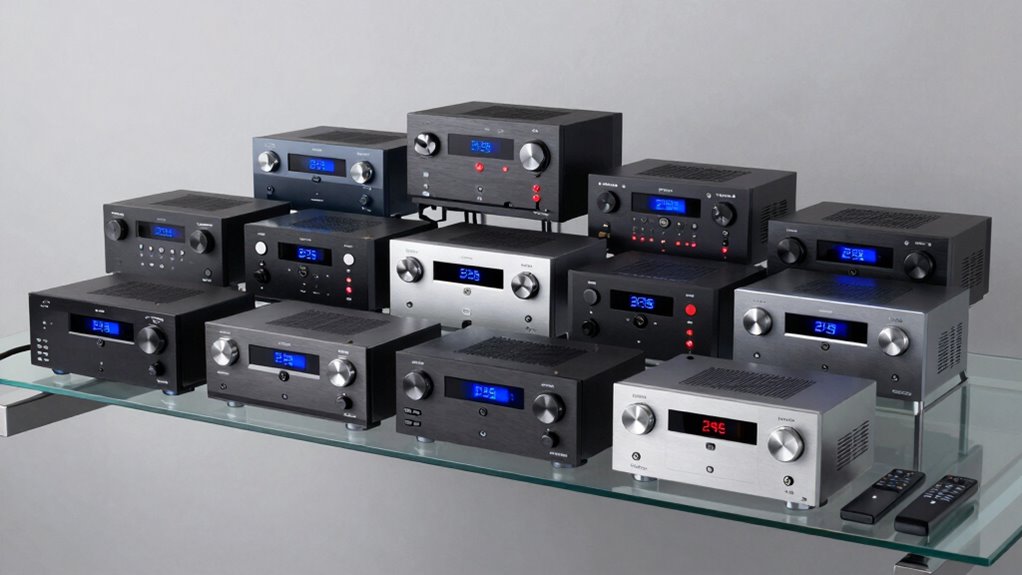

Choosing the right AV receiver is key to building a compelling home theater setup. The best models deliver robust sound, support for the latest video formats, and easy connectivity, but they vary widely in features and price. The Denon AVR-S670H stands out as the best overall thanks to its 8K support and voice control, while the Onkyo TX-NR6100 offers excellent value with THX certification. For those wanting premium sound and more channels, the Onkyo TX-RZ50 is a top contender. Keep reading to see how these options compare and which one fits your needs best.
Play games included with Prime
Start a Prime free trial and play with Amazon Luna on your devices.
Start playingAs an affiliate, we earn on qualifying purchases.
Complete the kit



Key Takeaways
- Support for the latest HDMI standards (8K/4K120) is essential for future-proofing your home theater.
- More channels generally mean more immersive surround sound but come at a higher cost.
- Voice control and streaming features are now standard and significantly improve usability.
- THX certification can indicate better audio calibration and clarity, especially in larger rooms.
- Balance between features and price is key—higher-end models offer more but may be unnecessary for casual viewers.
| Denon AVR-S670H 5.2 Channel Home Theater Receiver with 8K UHD HDMI, Streaming, and Voice Control |  | Best Overall for Versatile High-Resolution Home Theater | Channels: 5.2 | Power per channel: 75W | Video resolution support: 8K UHD, 4K/120Hz pass-through | VIEW ON AMAZON | See Our Full Breakdown |
| Yamaha RX300A 5.2-Channel Home Theater AV Receiver with Dolby Atmos, 4K120/8K HDMI, Bluetooth Multipoint |  | Best for Ease of Setup and Wireless Streaming | Channels: 5.2 | Power: 70W | HDMI Support: 4K120/8K60, HDMI eARC/ARC | VIEW ON AMAZON | See Our Full Breakdown |
| Onkyo TX-NR6100 7.2 Channel THX Certified Network AV Receiver – Black |  | Best for Power and Advanced Processing | Power: 210 W/Ch | Channels: 7.2 | HDMI: 8K with HDMI 2.1 40Gbps | VIEW ON AMAZON | See Our Full Breakdown |
| Sony STRDH590 5.2 Channel Surround Sound Home Theater Receiver |  | Best Budget-Friendly Option for Basic Home Theater | Channel: 5.2 | Power: 725W total | HDMI Inputs: 4 in/1 out | VIEW ON AMAZON | See Our Full Breakdown |
| Onkyo TX-RZ50 9.2-Channel THX Certified AV Receiver |  | Best for Power, Surround, and Future-Proofing | Channels: 9.2 | HDMI Ports: 8 | HDMI Version: 8K/4K at 40 Gbps | VIEW ON AMAZON | See Our Full Breakdown |
| Denon AVR-X1700H 7.2 Channel AV Receiver – 80W/Channel, 8K HDMI, Dolby Atmos, DTS:X, Built-in HEOS, Alexa Voice Control |  | Best Overall for High-Performance Home Theater | Channels: 7.2 | Power per Channel: 80W | HDMI Inputs: 3 dedicated 8K inputs | VIEW ON AMAZON | See Our Full Breakdown |
| Yamaha RX-V4A 5.2-Channel AV Receiver with MusicCast |  | Best for Modern 4K/8K Video and Multi-Room Streaming | Channels: 5.2 | HDMI: 4 in / 1 out, HDMI 2.1, HDCP 2.3, eARC | Video Support: 4K60, 4K120AB, 8K60B, Dolby Vision | VIEW ON AMAZON | See Our Full Breakdown |
| Denon AVR-S570BT AV Receiver 5.2 Channel 8K Ultra HD Audio & Video, Bluetooth Streaming, 4 HDMI 8K Inputs | 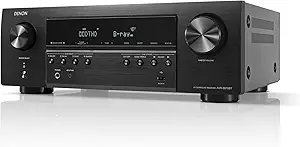 | Best Budget-Friendly 8K Support with Easy Setup | Channels: 5.2 | HDMI Inputs: 4 | Supports: 8K, HDR, HLG, Dolby Vision | VIEW ON AMAZON | See Our Full Breakdown |
| Yamaha RX-V6A 7.2-Channel AV Receiver with MusicCast |  | Best for Immersive 7.2 Channel Audio and Advanced HDMI 2.1 | Channels: 7.2 | HDMI Inputs: 7 | HDMI Outputs: 1 | VIEW ON AMAZON | See Our Full Breakdown |
| Pyle 9.1 Channel AV Receiver with HDMI 2.1, Bluetooth, and Subwoofer Output |  | Best for Maximum Surround Sound and High-Channel Count | Channels: 9.1 | HDMI: HDMI 2.1 | Video Support: 8K/4K pass-through | VIEW ON AMAZON | See Our Full Breakdown |
More Details on Our Top Picks
Denon AVR-S670H 5.2 Channel Home Theater Receiver with 8K UHD HDMI, Streaming, and Voice Control
The Denon AVR-S670H stands out for its support of 8K UHD pass-through and HDR formats, making it an excellent choice for those seeking future-proof video capabilities. Compared with the Onkyo TX-NR6100, it offers comparable power but simplifies setup with user-friendly features, although it sacrifices some raw power for a more balanced experience. Its seamless multi-room streaming via HEOS and voice control compatibility with Alexa elevate everyday convenience. However, its 75W per channel rating might limit its effectiveness in large spaces, and the absence of a built-in calibration microphone can complicate precise speaker setup for newcomers. This receiver makes the most sense for users wanting a flexible, feature-rich system that balances modern video and audio formats without requiring extensive technical expertise.
Pros:- Supports 8K video pass-through and HDR formats for high-quality visuals
- Seamless multi-room streaming via HEOS and Bluetooth
- Voice control compatibility with Alexa and other assistants
- Supports gaming features like VRR and ALLM
Cons:- Limited to 75W per channel, which might be insufficient for large spaces
- Complex setup can be intimidating for beginners
- No built-in speaker calibration microphone included
Best for: Homeowners who want a feature-packed, future-ready receiver with voice control and multi-room streaming.
Not ideal for: Large rooms or users needing extremely high power output, as its 75W per channel may not drive large speakers sufficiently.
- Channels:5.2
- Power per channel:75W
- Video resolution support:8K UHD, 4K/120Hz pass-through
- HDR formats:HDR10+, HLG, Dolby Vision, Dynamic HDR
- Connectivity:HDMI eARC, Bluetooth, Wi-Fi, HEOS
- Upscaling:8K upscaling of 4K content
Our verdict“This receiver is ideal for users seeking a versatile, modern home theater with robust streaming and voice features, but it may fall short in very large rooms or for those who prioritize raw power.”
Yamaha RX300A 5.2-Channel Home Theater AV Receiver with Dolby Atmos, 4K120/8K HDMI, Bluetooth Multipoint
The Yamaha RX300A provides an appealing balance of high-quality audio, easy setup, and modern HDMI features. Unlike the more powerful Onkyo TX-NR6100, it offers slightly lower wattage but compensates with automatic room correction and an intuitive on-screen menu, simplifying configuration for beginners. Its support for Dolby Atmos and DTS Virtual:X ensures immersive sound, and Bluetooth Multipoint enables seamless wireless streaming from multiple devices. Its 5.2 channel configuration limits expandability compared to 7.2 or higher systems, making it less suitable for larger setups. This model is better suited for users who prioritize straightforward installation and wireless convenience over raw power or extensive surround sound configurations.
Pros:- Supports Dolby Atmos and DTS Virtual:X for immersive sound
- Easy setup with automatic room calibration and on-screen menu
- Supports 4K and 8K video with advanced HDMI features
- Wireless streaming with Bluetooth Multipoint
Cons:- Limited to 5.2 channels, restricting future expansion
- Power output may be insufficient for large or demanding rooms
- Complex features might overwhelm beginners
Best for: Home theater newcomers or those who want a straightforward, easy-to-use receiver with excellent sound enhancement features.
Not ideal for: Power users or large-room occupants, as its 5.2 channels and lower wattage may restrict immersive experience in bigger spaces.
- Channels:5.2
- Power:70W
- HDMI Support:4K120/8K60, HDMI eARC/ARC
- Dolby Atmos:Yes
- DTS Virtual:X:Yes
- Room Correction:Yes
Our verdict“This receiver makes the most sense for users seeking a simple, reliable home theater setup with excellent sound quality and wireless flexibility, but not for those needing high power or extensive surround channels.”
Onkyo TX-NR6100 7.2 Channel THX Certified Network AV Receiver – Black
The Onkyo TX-NR6100 delivers a substantial 210W per channel and supports 7.2 channels, making it an excellent choice for large rooms demanding high volume and dynamic sound. Its THX certification guarantees sound quality with precise calibration, and 8K HDMI 2.1 support future-proofs your setup for the latest video standards. Compared to the Denon AVR-S670H, it offers significantly more raw power, but its setup might challenge less experienced users due to its complexity. It also lacks specific details on additional features like zone control or multi-room streaming, which could matter for advanced multi-zone systems. This receiver is better suited to users who prioritize power and future-proofing over simplicity.
Pros:- High power output with 210W per channel for large, demanding spaces
- Supports Dolby Atmos and DTS:X for immersive surround sound
- 8K HDMI 2.1 with HDMI 40Gbps for future compatibility
- THX certification ensures premium audio quality
Cons:- Complex setup requiring technical knowledge
- No detailed information on additional features like multi-room streaming
- Large size may limit placement options
Best for: Power users with large spaces needing high volume and detailed surround sound, especially gamers and audiophiles.
Not ideal for: Beginners or those with smaller rooms, as its complex setup and higher power requirements might be overkill.
- Power:210 W/Ch
- Channels:7.2
- HDMI:8K with HDMI 2.1 40Gbps
- Additional Features:Discrete Zone 2 Audio and Video
- Certification:THX Certified
- Supports:Dolby Atmos, DTS:X
Our verdict“This receiver is ideal for large rooms and power users who want the best in sound and future-video compatibility, but beginners should look elsewhere due to its complexity.”
Sony STRDH590 5.2 Channel Surround Sound Home Theater Receiver
The Sony STRDH590 is a straightforward 5.2 channel receiver that offers essential features at an accessible price. It supports 4K HDR pass-through, Bluetooth streaming, and virtual surround sound with S Force PRO, making it suitable for entry-level setups. Unlike the Yamaha RX300A, it provides a slightly higher power output at 725W total, but its lack of built-in Wi-Fi limits wireless options for streaming. Its simple configuration may pose challenges for beginners unfamiliar with AV setups, and its 5.2 channels restrict surround sound complexity. This pick makes the most sense for budget-conscious users who want decent sound and video support without advanced features or large space requirements.
Pros:- Supports 4K HDR pass-through for high-quality video
- Bluetooth connectivity for wireless streaming
- Supports virtual surround sound with S Force PRO
- Affordable price point
Cons:- Limited to 5.2 channels, restricting expansion
- No built-in Wi-Fi, only Bluetooth for streaming
- Complex setup for those unfamiliar with AV equipment
Best for: Budget-conscious homeowners or first-time buyers looking for a basic, reliable home theater system.
Not ideal for: Power users or those wanting multi-zone audio, as its features are limited and it supports only 5.2 channels.
- Channel:5.2
- Power:725W total
- HDMI Inputs:4 in/1 out
- Supported Video:4K HDR
- Connectivity:Bluetooth
- Virtual Surround:S Force PRO
Our verdict“This receiver is best suited for users on a budget who want a simple, reliable home theater experience without extensive features or large spaces.”
Onkyo TX-RZ50 9.2-Channel THX Certified AV Receiver
The Onkyo TX-RZ50 offers a substantial 9.2 channels of processing power and THX certification, making it a top choice for serious home theater enthusiasts. Its 8 HDMI ports with 8K/4K transfer and support for the latest video standards give it a clear edge over models like the Yamaha RX-V6A, especially for complex setups requiring multiple sources. Its advanced room correction with DIRAC Live ensures precise sound, ideal for audiophiles. The large size and complex setup might challenge those with limited technical skills or space constraints. Its high price and lack of detailed feature list mean it’s best for dedicated home theater rooms rather than casual users. This model is designed for users who want the highest quality sound and video performance with room for expansion.
Pros:- Supports 9.2 channels and Dolby Atmos/DTS:X for immersive sound
- Supports 8K HDMI with 40 Gbps transfer speed
- Advanced room correction with DIRAC Live
- Multiple HDMI outputs for versatile setups
Cons:- Complex setup requiring technical expertise
- Large physical size may limit placement options
- High price point
Best for: Home theater enthusiasts and large-room owners who demand high power, multiple zones, and future-ready features.
Not ideal for: Casual viewers or those with limited technical knowledge, because of its complex installation and size.
- Channels:9.2
- HDMI Ports:8
- HDMI Version:8K/4K at 40 Gbps
- Power Output:120W per channel
- Supported Services:Amazon Music, Deezer, Pandora, Spotify, TIDAL, TuneIn
- Certification:THX Certified
Our verdict“This receiver is perfect for users wanting top-tier audio, extensive HDMI support, and room calibration, but is less suited for casual or space-constrained setups.”
Denon AVR-X1700H 7.2 Channel AV Receiver – 80W/Channel, 8K HDMI, Dolby Atmos, DTS:X, Built-in HEOS, Alexa Voice Control
The Denon AVR-X1700H stands out for its robust combination of 8K video support and immersive audio formats like Dolby Atmos and DTS:X, making it ideal for users seeking a premium experience. Compared with the Yamaha RX-V6A, it offers more dedicated HDMI inputs and better multi-room streaming options, but its complexity can challenge those unfamiliar with advanced setup procedures. This receiver’s versatile connectivity and voice control compatibility make it suitable for tech-savvy enthusiasts who want a future-proof system, although its weight and size mean you’ll need a dedicated space. For those prioritizing a straightforward installation or a more compact design, this might feel bulky or overly complex.
Pros:- Supports advanced 8K HDMI video and immersive multi-dimensional audio
- Versatile connectivity options including multiple HDMI inputs and streaming services
- Hands-free voice control with Alexa and compatibility with other voice assistants
Cons:- Complex features may require technical knowledge for optimal setup
- Heavy and sizable, may require dedicated space
Best for: Home theater enthusiasts who want top-tier audio and video quality with multi-room streaming capabilities
Not ideal for: Casual users or those with limited space seeking a simple plug-and-play setup
- Channels:7.2
- Power per Channel:80W
- HDMI Inputs:3 dedicated 8K inputs
- HDMI Output:1
- Supports:8K/60Hz, 4K/120Hz pass-through, HDR10, Dolby Vision, HLG
- Audio Formats:Dolby Atmos, DTS:X, DTS Virtual:X
- Voice Control:Alexa, Siri, Google Assistant
- Streaming Services:Spotify, Pandora, Amazon Music HD
Our verdict“This receiver is perfect for those who want a feature-rich, future-ready home theater setup and are comfortable with a more involved installation.”
Yamaha RX-V4A 5.2-Channel AV Receiver with MusicCast
The Yamaha RX-V4A is tailored for users who want the latest HDMI 2.1 features, including 4K and 8K pass-through, combined with robust streaming options via MusicCast. Compared to the Denon AVR-S570BT, it offers more advanced HDMI support and automatic room calibration through YPAO, making it more suitable for those seeking high-quality video without extensive manual setup. While it doesn’t specify a high price, its complex setup might intimidate beginners, and its lack of built-in streaming apps means users need to rely on MusicCast or external devices. This makes it ideal for tech-savvy users who prioritize future-proof video support and multi-room audio, but less so for those who prefer simplicity or a more straightforward interface.
Pros:- Supports latest HDMI 2.1 features for high-quality video pass-through
- Multiple streaming options and voice control compatibility
- Automatic room calibration for optimized sound
Cons:- No specific price info available, which might affect budget planning
- Complex setup may require technical know-how
Best for: Homeowners wanting cutting-edge HDMI features and integrated multi-room audio for a versatile entertainment setup
Not ideal for: Casual viewers or less experienced users who want a simple, all-in-one streaming solution without additional configuration
- Channels:5.2
- HDMI:4 in / 1 out, HDMI 2.1, HDCP 2.3, eARC
- Video Support:4K60, 4K120AB, 8K60B, Dolby Vision
- Wi-Fi:2.4 GHz/5 GHz
- Streaming:AirPlay 2, MusicCast, Spotify Connect
- Voice Control:Alexa, Google Assistant, Siri
Our verdict“Ideal for users seeking a future-proof receiver with high-quality video pass-through and multi-room audio, provided they’re comfortable with setup complexity.”
Denon AVR-S570BT AV Receiver 5.2 Channel 8K Ultra HD Audio & Video, Bluetooth Streaming, 4 HDMI 8K Inputs
The Denon AVR-S570BT offers a compelling mix of 8K video support and simple Bluetooth streaming, making it a practical choice for those who want to upgrade without overspending. Compared to the Yamaha RX-V4A, it provides more HDMI 8K inputs, though its power output of 70W per channel is somewhat limited for larger rooms. Its straightforward on-screen setup and remote control make it accessible for less technical users, but the absence of Wi-Fi connectivity limits streaming flexibility somewhat. This makes it a good fit for users who prioritize basic 8K compatibility and ease of use over advanced network features or high power output.
Pros:- Supports 8K Ultra HD and HDR formats for high-quality video
- Multiple HDMI 8K inputs suited for various devices
- Built-in Bluetooth for wireless music streaming
Cons:- Power output may be limited for very large rooms
- No mention of Wi-Fi connectivity
Best for: Budget-conscious buyers seeking a straightforward, 8K-capable AV receiver for small to medium rooms
Not ideal for: Large home theaters or users who want integrated Wi-Fi for streaming without additional devices
- Channels:5.2
- HDMI Inputs:4
- Supports:8K, HDR, HLG, Dolby Vision
- Audio Formats:DTS HD Master, Dolby TrueHD
- Power:70W x 5
- Standby Power:0.1 W
- eARC:Yes
- Bluetooth:Built-in
Our verdict“This receiver is best for budget-minded users wanting 8K support with simple setup and basic streaming capabilities.”
Yamaha RX-V6A 7.2-Channel AV Receiver with MusicCast
The Yamaha RX-V6A makes a strong case for larger home theaters with its 7.2-channel capacity and support for HDMI 2.1, HDCP 2.3, and eARC. Compared to the Denon AVR-X1700H, it offers more channels and a higher number of HDMI inputs, which benefits those with multiple devices. Its support for Dolby Atmos, DTS:X, and HDR formats ensures immersive sound and visuals, while Yamaha’s YPAO calibration simplifies setup. However, its setup can be intimidating for less experienced users, and it lacks built-in streaming apps, relying instead on external devices or MusicCast for streaming. This receiver excels for users seeking expansive sound and video flexibility in a larger room but might be overkill for smaller setups or casual viewers.
Pros:- Supports HDMI 2.1 for high-quality video pass-through
- Multiple connectivity options including Wi-Fi, Bluetooth, and AirPlay 2
- Supports immersive audio formats like Dolby Atmos and DTS:X
Cons:- Complex setup for some users due to multiple features
- No built-in streaming apps, requiring external devices
Best for: Homeowners with larger rooms who want immersive 7.2 surround sound and future-proof HDMI support
Not ideal for: Casual users or those with limited space who prefer simpler, all-in-one solutions
- Channels:7.2
- HDMI Inputs:7
- HDMI Outputs:1
- Video Support:4K60, 4K120AB, 8K60B HDMI 2.1
- Connectivity:Wi-Fi, Bluetooth, AirPlay 2
- Voice Control:Alexa, Google Assistant, Siri
Our verdict“Best suited for larger rooms and users seeking expansive sound with cutting-edge HDMI features, provided they can handle setup complexity.”
Pyle 9.1 Channel AV Receiver with HDMI 2.1, Bluetooth, and Subwoofer Output
The Pyle 9.1 Channel AV Receiver stands out for its high channel count and powerful sound, making it a good choice for large, immersive home theaters. Compared with the Yamaha RX-V6A, it offers more channels and a dedicated subwoofer output, promising more full-range clarity. Its support for HDMI 2.1 and 8K pass-through ensures compatibility with the latest video standards, while Bluetooth adds wireless flexibility. Yet, its setup can be complex for those unfamiliar with advanced audio systems, and the lack of detailed remote control features or Wi-Fi connectivity limits ease of use. This model is better suited for users who want maximum surround sound without worrying about streaming integrations or compact design.
Pros:- Powerful 9.1 surround sound with deep bass
- Supports high-quality 8K HDMI 2.1 video pass-through
- Wireless Bluetooth streaming for versatile audio options
Cons:- Complex setup requiring technical knowledge
- Limited remote control features and no built-in Wi-Fi
Best for: Large home theaters or users prioritizing high-channel surround sound and deep bass
Not ideal for: Casual users or those with small spaces who prefer simpler systems
- Channels:9.1
- HDMI:HDMI 2.1
- Video Support:8K/4K pass-through
- Bluetooth:Yes
- Inputs:HDMI, optical, coaxial, USB, analog
- Amplification:Class D
Our verdict“This receiver is designed for large, immersive setups where maximum surround sound and high-channel count are priorities, despite a more involved installation.”

How We Picked
The products in this roundup were selected based on a combination of performance, usability, build quality, and feature set. Priority was given to models that support the latest video and audio standards, such as 8K HDMI, Dolby Atmos, and DTS:X, which are essential for a high-quality home theater experience. We also considered user interface design, streaming capabilities, and connectivity options like Bluetooth and Wi-Fi. Price-to-value ratio played a key role, ensuring that each model offers meaningful features without overspending. The ranking reflects these factors, highlighting options suitable for different budgets and needs.Factors to Consider When Choosing Av Receiver For Home Theater
Choosing the right AV receiver depends on your specific home theater setup and priorities. It’s important to consider several key factors that influence performance, usability, and future-proofing. Understanding these will help you avoid common pitfalls, such as overpaying for features you don’t need or selecting a model incompatible with your existing equipment.Channel Count and Power Output
The number of channels determines how many speakers you can connect for surround sound. More channels, such as 7.2 or 9.2, enable more immersive audio experiences, especially with Atmos or DTS:X. Power output, measured in watts per channel, affects how loud and clear your speakers sound at higher volumes. Balance your room size and speaker specifications to avoid underpowered or overpowering setups.
Video and Audio Format Support
Opt for an AV receiver that supports the latest standards, including 8K HDMI, 4K120, and HDR formats like Dolby Vision. These ensure compatibility with upcoming devices and streaming content. Dolby Atmos and DTS:X support are also essential for immersive sound. Skipping these features may limit your home theater’s potential as content quality continues to improve.
Connectivity and Streaming
Modern AV receivers should offer multiple HDMI inputs, Bluetooth, Wi-Fi, and streaming app compatibility. These features make it easier to connect multiple devices, from game consoles to streaming sticks. However, beware of models with too many complicated options if you’re a beginner—simplicity can matter just as much as versatility.
Ease of Use and Setup
User-friendly interfaces, automatic calibration, and voice control simplify setup and daily use. Some models include calibration microphones that optimize sound for your room, which is especially helpful for non-experts. Avoid overly complex systems if you prefer straightforward operation or lack technical confidence.
Build Quality and Brand Reliability
Investing in a well-built unit from a reputable brand often means better longevity and support. Look for solid construction, good warranties, and positive user feedback. Cheaper or lesser-known brands might save money upfront but could lead to issues with durability or customer service down the line.
Frequently Asked Questions
Do I need an AV receiver with 8K support if I don’t have an 8K TV?
While you might not need 8K support immediately, having an AV receiver with this capability ensures your setup is ready for future content and devices. It also often includes other benefits like higher bandwidth for better audio quality and support for advanced HDMI features. Investing in an 8K-capable receiver can make your system more future-proof without adding significant complexity if you don’t plan to upgrade your TV right now.
Is it worth paying more for a THX-certified AV receiver?
Choosing a THX-certified receiver can be advantageous if you prioritize precise calibration and sound clarity, especially in larger or acoustically challenging rooms. THX certification often indicates that the unit has undergone rigorous testing for sound quality and performance. However, for smaller rooms or casual listening, a non-THX model might provide excellent sound at a lower cost, making the investment less critical.
Can I use a home theater receiver with ceiling speakers for Atmos?
Yes, most modern AV receivers support Atmos and can connect ceiling speakers or upward-firing modules. Just ensure the receiver has enough channels and supports Dolby Atmos decoding. Proper placement and calibration are essential for optimal Atmos effects. If your setup includes ceiling speakers, double-check the receiver’s specifications to confirm it can handle your desired configuration.
How important is the number of HDMI inputs on an AV receiver?
The number of HDMI inputs determines how many devices you can connect directly to your receiver—such as game consoles, Blu-ray players, and streaming devices. More inputs offer greater flexibility, especially for larger setups. However, having too many can complicate setup and may lead to unused ports, so choose a model with enough inputs for your current and future needs without overpaying for extras you won’t use.
Should I prioritize power over channels when choosing an AV receiver?
Both power and channel count are important, but they serve different purposes. The number of channels determines how many speakers you can connect, while power output affects how loudly and clearly your system performs. For large rooms or high-volume preferences, higher power ratings matter more. In smaller rooms, a receiver with moderate power and sufficient channels typically provides a balanced, high-quality experience without unnecessary expense.
Conclusion
For most users, the Denon AVR-S670H offers the best overall balance of features, performance, and future-proofing, making it ideal for those who want a versatile, easy-to-use system. If you’re on a tighter budget or prefer excellent value, the Yamaha RX-V4A or Denon AVR-S570BT deliver solid performance without overextending. Audiophiles or larger setups should consider the Onkyo TX-RZ50 for its premium build and expanded channels. Beginners will benefit from models with automatic calibration and simple interfaces, while serious enthusiasts should prioritize models with Dolby Atmos, THX certification, and high channel counts for maximum immersion.
Fall yard work Picks
leaf blowers
As an affiliate, we earn on qualifying purchases.