For a premium fitness tracker that balances health insights, GPS, and smartwatch features, I’d start with the Garmin vívoactive 6. The Garmin vívoactive 5 offers a similar watch-first approach, while the Fitbit Charge 6 is a slimmer choice for everyday tracking. The main tradeoff is whether you want a bright display and broader features, a discreet band, or recovery data tied to a membership. I’ve ranked these 13 options by how well their design and capabilities match distinct buyer needs, not by feature count alone. Read on for the full comparison and advice on choosing the right premium tracker for you.

Get the latest gadgets delivered free with Prime
- Fast, free delivery on millions of items
- Prime Video, Amazon Music and more included
- Member-only deals all year
Complete the kit



Key Takeaways
- Garmin’s vívoactive 6 and vívoactive 5 lead the watch-first group; the newer 6 ranks ahead for buyers seeking a dedicated fitness smartwatch, while the 5 remains a sensible alternative.
- The Fitbit Charge 6 is the strongest slim-screen option in this lineup; it offers a more compact form than the full-size Amazfit and Garmin watches.
- Screenless trackers serve a different purpose: WHOOP 5.0 and the Amazfit Helio Strap put activity and recovery data ahead of an on-wrist display.
- Amazfit spans the widest range of premium styles, from the Active 2’s sapphire-glass focus to the larger Active Max and Balance 2 watches.
- Price-free value depends on fit and ongoing needs: buyers should weigh display size, phone compatibility, membership requirements, and wrist comfort rather than counting features alone.
| Garmin vívoactive 5 GPS Smartwatch, 42 mm, Black |  | Best for Long-Battery All-Round Fitness | Display: AMOLED touchscreen | Battery life: Up to 11 days in smartwatch mode | GPS: Built-in | VIEW ON AMAZON | See Our Full Breakdown |
| Amazfit Active 3 Premium GPS Running Smartwatch |  | Best for GPS Route Navigation | Display: 1.32-inch AMOLED, 390 x 390 resolution, up to 3,000 nits | Glass and frame: Sapphire glass and stainless steel frame | GPS: Built-in GPS with six satellite systems | VIEW ON AMAZON | See Our Full Breakdown |
| Google Fitbit Charge 6 Fitness Tracker, Obsidian/Black |  | Best Compact Tracker for Google Services | Display and input: Touchscreen | GPS: Built-in | Workout modes: More than 40 | VIEW ON AMAZON | See Our Full Breakdown |
| Garmin vívoactive 6 GPS Fitness Smartwatch, 42 mm, Bone |  | Best for Broad Sports and Recovery Features | Display: AMOLED touchscreen | Case size: 42 mm | Battery life: Up to 11 days in smartwatch mode | VIEW ON AMAZON | See Our Full Breakdown |
| Amazfit Active 2 Premium Smartwatch with Sapphire Glass |  | Best Lightweight Premium-Finish Pick | Display: 1.32-inch AMOLED | Case: 44 mm stainless steel | Screen glass: Sapphire | VIEW ON AMAZON | See Our Full Breakdown |
| WHOOP 5.0 Fitness and Activity Tracker with 12-Month Membership |  | Best for Recovery Coaching | Display: Screenless | Battery life: Up to 14+ days | Included membership: 12 months | VIEW ON AMAZON | See Our Full Breakdown |
| Amazfit Helio Strap Screenless Activity Tracker |  | Best Screenless Value Alternative | Operating system: Zepp OS | Battery life: Up to 10 days | GPS: No GPS | VIEW ON AMAZON | See Our Full Breakdown |
| Garmin vívosmart 5 Fitness Tracker, Large, Black | 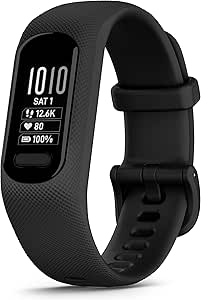 | Best for a Simple On-Wrist Display | Display: 0.84-inch OLED, 88 × 154 resolution | Size: Large | Battery life: Up to 7 days | VIEW ON AMAZON | See Our Full Breakdown |
| Google Fitbit Air Special Edition Stephen Curry Screenless Tracker, Rye |  | Best for Lightweight All-Day Wear | Display: No display | Battery life: Up to 7 days | Fast charging: 5 minutes for up to 1 day of battery life | VIEW ON AMAZON | See Our Full Breakdown |
| Amazfit Active Max Smartwatch, 1.5-Inch AMOLED Display, GPS, 4GB Storage |  | Best Feature-Rich Premium Smartwatch | Display: 1.5-inch AMOLED | GPS: Built-in; supports BeiDou, GLONASS, GPS, and Galileo | Storage: 4 GB | VIEW ON AMAZON | See Our Full Breakdown |
| Google Fitbit Inspire 3 Fitness Tracker, Lilac Bliss/Black, Small and Large Bands |  | Best for Simple, Screen-Based Tracking | Display: Color touchscreen | Battery life: Up to 10 days | Water resistance: 50 meters | VIEW ON AMAZON | See Our Full Breakdown |
| Samsung Galaxy Fit3 Fitness Tracker, 1.6-Inch AMOLED Display, Black |  | Best for Android Users Who Prioritize Battery | Display: 1.6-inch AMOLED, 320 × 320 | Battery life: Up to 14 days | Water resistance: 5ATM and IP68; listed depth 1.5 meters | VIEW ON AMAZON | See Our Full Breakdown |
| Amazfit Balance 2 Smartwatch, 1.5-Inch AMOLED Display with Sapphire Glass |  | Best for Multisport Training and Navigation | Display: 1.5-inch AMOLED with sapphire crystal glass | Battery life: Up to 21 days under typical use | GPS: Dual-band; supports six satellite systems | VIEW ON AMAZON | See Our Full Breakdown |
| fitness tracker premium | Battery life | Display | GPS | Water resistance |
|---|---|---|---|---|
| Garmin vívoactive 5 GPS Smartw | Up to 11 days in smartwatch mode | AMOLED touchscreen | Built-in | — |
| Amazfit Active 3 Premium GPS R | Up to 12 days | 1.32-inch AMOLED, 390 x 390 resolution, up to 3,000 nits | Built-in GPS with six satellite systems | 50 meters |
| Google Fitbit Charge 6 Fitness | — | — | Built-in | 50 meters |
| Garmin vívoactive 6 GPS Fitnes | Up to 11 days in smartwatch mode | AMOLED touchscreen | Built-in; GPS, GLONASS, Galileo, and QZSS | 50 meters |
| Amazfit Active 2 Premium Smart | Up to 10 days of typical use | 1.32-inch AMOLED | Built-in; supports BeiDou, GLONASS, GPS, and Galileo | 50 meters |
| WHOOP 5.0 Fitness and Activity | Up to 14+ days | Screenless | — | — |
| Amazfit Helio Strap Screenless | Up to 10 days | — | No GPS | 50 meters |
| Garmin vívosmart 5 Fitness Tra | Up to 7 days | 0.84-inch OLED, 88 × 154 resolution | Connects to a phone’s GPS | IPX7; water resistant to 1 meter |
| Google Fitbit Air Special Edit | Up to 7 days | No display | Via smartphone | Up to 50 meters |
| Amazfit Active Max Smartwatch | Up to 25 days | 1.5-inch AMOLED | Built-in; supports BeiDou, GLONASS, GPS, and Galileo | 50 meters |
| Google Fitbit Inspire 3 Fitnes | Up to 10 days | Color touchscreen | — | 50 meters |
| Samsung Galaxy Fit3 Fitness Tr | Up to 14 days | 1.6-inch AMOLED, 320 × 320 | No built-in GPS | 5ATM and IP68; listed depth 1.5 meters |
| Amazfit Balance 2 Smartwatch | Up to 21 days under typical use | 1.5-inch AMOLED with sapphire crystal glass | Dual-band; supports six satellite systems | — |
More Details on Our Top Picks
Garmin vívoactive 5 GPS Smartwatch, 42 mm, Black
The vívoactive 5 is a strong fit for buyers who want a premium fitness watch that can cover workouts, sleep, and everyday smartwatch tasks without frequent charging. Its built-in GPS and more than 30 sports apps support outdoor runs and varied training, while Body Battery, HRV status, and sleep tracking add context to recovery. Up to 11 days of battery life is a clear advantage over the Fitbit Charge 6 when regular charging is a nuisance. The tradeoff is that the newer vívoactive 6 offers more than 80 sports apps and sleep coaching, so this model makes more sense for buyers who value a capable feature set over the latest training extras. Health readings are estimates, and music or notification features can depend on a paired phone or connected account.
Pros:- Up to 11 days of battery life in smartwatch mode
- Built-in GPS and more than 30 indoor and GPS sports apps
- Health tracking includes HRV status, nap detection, and Body Battery
- Music storage and Garmin Pay add phone-free conveniences
Cons:- Health and recovery metrics are estimates, not medical measurements
- Some notification and music features depend on a paired smartphone or connected services
Best for: Active buyers who want built-in GPS, detailed sleep and recovery tracking, and long smartwatch battery life in a versatile daily watch.
Not ideal for: Athletes who want the broadest selection of guided workouts and sports profiles; the vívoactive 6 offers more than 80 sports apps.
- Display:AMOLED touchscreen
- Battery life:Up to 11 days in smartwatch mode
- GPS:Built-in
- Sports apps:More than 30 indoor and GPS sports apps
- Health tracking:Heart rate, stress, sleep, HRV status, nap detection, and Body Battery
- Music and payments:Music storage and Garmin Pay
- Weight:1.31 ounces
- Dimensions:1.7 x 1.7 x 0.43 inches
Our verdict“Choose the vívoactive 5 if you want a balanced Garmin fitness smartwatch with long battery life and GPS without needing the vívoactive 6’s larger sports-app selection.”
Amazfit Active 3 Premium GPS Running Smartwatch
For runners who want route guidance on their wrist, the Amazfit Active 3 Premium brings a more navigation-focused package than the Garmin vívoactive 5. Its built-in GPS supports six satellite systems, while offline maps and automatic rerouting can help when a planned route changes or phone service is unavailable. A sapphire screen and stainless steel frame also give it a more rugged finish than the Garmin’s listed polymer build. Guided plans and running-performance metrics suit people who follow structured training, and the stated battery life reaches up to 12 days. The tradeoffs are its heavier 2.82-ounce build and platform limits: some messaging features are Android-only. Onboard music storage is mentioned, but its capacity is not specified, so I would not choose it primarily as a phone-free music player.
Pros:- Offline maps and automatic rerouting support route changes without relying on a phone connection
- Built-in GPS supports six satellite systems
- Sapphire glass and a stainless steel frame add screen and case durability
- Guided running plans and performance metrics support structured training
Cons:- At 2.82 ounces, it is heavier than the Garmin vívoactive 5
- Some messaging features are limited to Android
- Onboard music storage capacity is not specified
Best for: Road and trail runners who want offline maps, rerouting, guided plans, and a durable screen for route-led training.
Not ideal for: Buyers seeking a lighter watch or consistent messaging features across iOS and Android; some messaging functions are Android-only.
- Display:1.32-inch AMOLED, 390 x 390 resolution, up to 3,000 nits
- Glass and frame:Sapphire glass and stainless steel frame
- GPS:Built-in GPS with six satellite systems
- Battery life:Up to 12 days
- Navigation:Offline maps and automatic rerouting
- Water resistance:50 meters
- Health tracking:Heart rate, blood oxygen, stress, and sleep
- Weight:2.82 ounces
Our verdict“Pick the Active 3 Premium if route navigation and running guidance matter more to you than a lighter fit or broad platform parity.”
Google Fitbit Charge 6 Fitness Tracker, Obsidian/Black
The Fitbit Charge 6 suits buyers who want a narrower tracker rather than the larger smartwatch form of the Garmin vívoactive 6. It covers heart rate, sleep, stress, and more than 40 workout modes, with built-in GPS for tracking outdoor sessions without carrying a phone. Google Maps directions, Google Wallet, and YouTube Music controls make it particularly appealing if those services already anchor your phone routine. It also links with compatible exercise machines, a useful perk for gym sessions. That convenience comes with dependencies: some functions require compatible devices or services, and Google Health Premium features move behind a separate subscription after the trial. The supplied data also lists an unusual five-ounce item weight, so shoppers comparing comfort should check the wearable’s fit details rather than assume it feels like a lightweight band.
Pros:- Built-in GPS and more than 40 workout modes cover indoor and outdoor activity
- Tracks heart rate, sleep, stress, and daily activity
- Google Maps directions, Google Wallet, and YouTube Music controls add useful connected features
- Water resistant to 50 meters
Cons:- Some Google health features require a separate subscription after the trial
- Several functions depend on compatible devices or services
- The supplied item-weight specification is five ounces, so fit and comfort merit checking
Best for: Google-oriented users who prefer a compact tracker with built-in GPS, gym-machine links, and wrist access to Maps, Wallet, and YouTube Music controls.
Not ideal for: Buyers who want all health features without a separate subscription or who prefer Garmin’s longer stated smartwatch battery life and broader sports-app approach.
- Display and input:Touchscreen
- GPS:Built-in
- Workout modes:More than 40
- Health features:Heart rate, sleep, stress, ECG, and SpO2
- Water resistance:50 meters
- Connected features:Google Maps directions, Google Wallet, and YouTube Music controls
- Connectivity:Bluetooth and Wi-Fi
- Band material:Silicone
Our verdict“Choose the Charge 6 if you want a compact, Google-connected fitness tracker and are comfortable with service-dependent features.”
Garmin vívoactive 6 GPS Fitness Smartwatch, 42 mm, Bone
The vívoactive 6 earns its place for buyers who want breadth: it pairs built-in GPS and up to 11 days of smartwatch battery life with more than 80 sports apps, sleep coaching, suggested workouts, and recovery insights. Compared with the vívoactive 5, it expands the activity menu and adds a more explicit coaching focus, making it the better match for someone who rotates between many sports or wants prompts for what to do next. The tradeoff is that its core everyday package remains familiar: both Garmin watches offer AMOLED screens, GPS, and similar stated battery life, so the 6 is less compelling if a smaller app selection already covers your routine. Health measures are estimates, and Garmin Pay availability depends on location and payment network support.
Pros:- More than 80 sports apps suit varied training routines
- Up to 11 days of battery life in smartwatch mode
- Sleep coaching, nap detection, suggested workouts, and recovery insights add guidance
- Built-in GPS supports outdoor activity tracking
Cons:- Health metrics are estimates rather than medical measurements
- Garmin Pay depends on supported countries and payment networks
- Its core display, GPS, and stated battery profile are similar to the vívoactive 5
Best for: Multi-sport users who want a wide choice of activity profiles, guided sleep and workout support, and a long-lasting GPS smartwatch.
Not ideal for: Buyers whose training needs are covered by a smaller app set; the vívoactive 5 offers a similar core GPS and battery package.
- Display:AMOLED touchscreen
- Case size:42 mm
- Battery life:Up to 11 days in smartwatch mode
- GPS:Built-in; GPS, GLONASS, Galileo, and QZSS
- Sports apps:More than 80
- Water resistance:50 meters
- Health features:Heart rate, sleep, menstrual cycle, step count, nap detection, and recovery insights
- Connectivity features:Smart notifications, music storage, and Garmin Pay
Our verdict“Choose the vívoactive 6 over the vívoactive 5 if you will use its broader sports selection and coaching features, not just its everyday smartwatch basics.”
Amazfit Active 2 Premium Smartwatch with Sapphire Glass
The Amazfit Active 2 Premium combines a stainless steel case and sapphire glass with a notably light listed weight of 1.12 ounces, making it an appealing option for buyers who want a polished watch that stays unobtrusive during training. Its 160-plus workout modes give it a broader activity menu than the Garmin vívoactive 5, while built-in GPS and offline maps make outdoor routes easier to follow without keeping a phone in hand. The package also includes leather and silicone bands, so the look can shift between everyday wear and exercise. Compared with the Active 3 Premium, this model is lighter and has a slightly shorter stated battery life, up to 10 days of typical use versus 12 days. Battery life varies with use, and speech-to-text replies are limited to Android messages.
Pros:- Sapphire glass and a stainless steel case give it a premium finish
- Tracks more than 160 workout types
- Built-in GPS, offline maps, and turn-by-turn directions support outdoor training
- Light 1.12-ounce listed weight and leather and silicone bands offer versatile wear
Cons:- Up to 10 days of typical-use battery life is shorter than the Active 3 Premium’s stated 12 days
- Speech-to-text message replies are limited to Android messages
- Battery life varies with use
Best for: Buyers who want a lightweight, dressier fitness smartwatch with sapphire glass, many workout modes, GPS navigation, and interchangeable band styles.
Not ideal for: People who prioritize the longest listed battery life or use iOS and expect speech-to-text message replies; those features favor neither this model’s stated runtime nor its reply support.
- Display:1.32-inch AMOLED
- Case:44 mm stainless steel
- Screen glass:Sapphire
- Battery life:Up to 10 days of typical use
- GPS:Built-in; supports BeiDou, GLONASS, GPS, and Galileo
- Workout modes:More than 160
- Water resistance:50 meters
- Bands and weight:Leather and silicone bands; 1.12 ounces
Our verdict“Choose the Active 2 Premium if you value a lighter sapphire-and-steel design and broad workout coverage more than the Active 3 Premium’s longer stated battery life.”
WHOOP 5.0 Fitness and Activity Tracker with 12-Month Membership
WHOOP 5.0 is built around recovery insights, not on-wrist controls. It tracks sleep, strain, heart rate, HRV, stress, and other metrics, then uses app-based coaching to connect those signals with training and daily habits. The included 12-month membership gives buyers a year to explore that coaching, while the up to 14+ days of battery life means fewer charging interruptions than the Garmin vívosmart 5. The tradeoff is fundamental: there is no display for checking stats or notifications at a glance, and continued access to the service requires a membership. Compared with the Amazfit Helio Strap, WHOOP puts more emphasis on personalized interpretation than on a broad set of sport modes. I’d choose it for data-led training, not for someone seeking a conventional tracker.
Pros:- Tracks sleep, strain, recovery, heart rate, HRV, stress, and additional health metrics
- Personalized coaching turns collected data into habit and training insights
- Up to 14+ days of battery life
- Includes a 12-month membership and wireless waterproof PowerPack
Cons:- Screenless design prevents at-a-glance stats and on-device notifications
- Ongoing membership is required for the service
- App-centered coaching may be unnecessary for buyers who only want basic activity tracking
Best for: Dedicated exercisers who want app-based recovery and training guidance and are comfortable keeping an ongoing membership.
Not ideal for: Buyers who want a screen, wrist-based notifications, or access to their tracker’s full service without a recurring membership.
- Display:Screenless
- Battery life:Up to 14+ days
- Included membership:12 months
- Tracked metrics:Sleep, strain, recovery, heart rate, HRV, VO2 max, stress, menstrual cycle insights
- Connectivity:Apple Health, Google Health Connect, Strava, Natural Cycles
- Included components:WHOOP 5.0 tracker, SuperKnit band, wireless waterproof PowerPack, quick start guide
- Model:973-004-000
- Warranty:Lifetime warranty
Our verdict“Choose WHOOP 5.0 if recovery coaching matters more to you than a display and you’re willing to maintain a membership.”
Amazfit Helio Strap Screenless Activity Tracker
The Helio Strap is a screenless tracker for sport and recovery metrics without the membership requirement listed for WHOOP 5.0. It covers heart rate, blood oxygen, stress, sleep, and recovery, and its 27 sports modes include strength training and HYROX tracking. That makes it a more activity-mode-focused alternative to WHOOP’s personalized coaching approach. Its battery lasts up to 10 days, shorter than WHOOP’s stated 14+ days, but the strap is water resistant to 50 meters and works with the Zepp app and compatible Amazfit devices. There is no built-in GPS, so recorded routes depend on another device or a connected phone when supported. I’d pick it for training-mode variety and simple wrist wear; skip it if you need a screen or standalone route tracking.
Pros:- Tracks heart rate, blood oxygen, stress, sleep, activity, and recovery
- Offers 27 sports modes, including strength training and HYROX tracking
- Water resistant to 50 meters
- Up to 10 days of battery life
Cons:- No built-in GPS for independent route tracking
- Screenless design means no on-device information display
- Battery life is shorter than WHOOP 5.0’s stated 14+ days
Best for: Screenless-tracker buyers who want strength and HYROX modes, water resistance, and recovery metrics without choosing WHOOP’s membership-based service.
Not ideal for: Runners and cyclists who want built-in GPS, or anyone who needs on-wrist stats and notifications.
- Operating system:Zepp OS
- Battery life:Up to 10 days
- GPS:No GPS
- Water resistance:50 meters
- Sports modes:27
- Metrics:Heart rate, sleep duration, step count, stress
- Band material:Nylon
- Compatibility:Android 7.0 and above; iOS 15.0 and above
Our verdict“Choose the Helio Strap if you want a screenless, sport-mode-rich tracker and can do without built-in GPS.”
Garmin vívosmart 5 Fitness Tracker, Large, Black
Unlike the screenless WHOOP 5.0 and Amazfit Helio Strap, the Garmin vívosmart 5 has a touchscreen and smartphone notifications, making everyday checks easier without opening an app. It tracks activity, sleep, heart rate, stress, and Body Battery, with activity profiles for walking, running, yoga, cardio, and pool swimming. Up to seven days of battery life is shorter than the Helio Strap’s stated 10 days, and route tracking relies on a paired phone rather than built-in GPS. That distinction matters for runners who prefer to leave their phone behind. The vívosmart 5 is water resistant for swimming and showering, though its IPX7 rating and one-meter specification are not the same as the 50-meter rating on the Helio Strap. I’d favor it for straightforward, visible daily tracking over advanced training analysis.
Pros:- Touchscreen and smartphone notifications provide on-wrist access to information
- Tracks heart rate, sleep, stress, activity, and Body Battery
- Includes profiles for walking, running, yoga, cardio, and pool swimming
- Up to seven days of battery life
Cons:- GPS tracking requires a paired smartphone
- Battery life is shorter than the Amazfit Helio Strap’s stated up to 10 days
- Some health features are estimates and are not medical devices
Best for: Buyers who want a compact tracker with a display, phone notifications, daily wellness metrics, and common activity profiles.
Not ideal for: Phone-free runners seeking built-in GPS, or data-focused athletes looking for the recovery coaching offered by WHOOP 5.0.
- Display:0.84-inch OLED, 88 × 154 resolution
- Size:Large
- Battery life:Up to 7 days
- Water resistance:IPX7; water resistant to 1 meter
- GPS:Connects to a phone’s GPS
- Metrics measured:Heart rate, sleep duration, Body Battery
- Supported activities:Walking, running, yoga, cardio, pool swimming, and more
- Connectivity:Bluetooth
Our verdict“Choose the vívosmart 5 if you want Garmin wellness tracking and wrist notifications more than standalone GPS or long battery life.”
Google Fitbit Air Special Edition Stephen Curry Screenless Tracker, Rye
This Fitbit Air’s case for buyers is lightweight, screenless all-day wear, supported by a micro-adjustable Performance Loop band. It tracks heart rate, sleep, activity, skin temperature variation, and blood oxygen, with water resistance up to 50 meters. A five-minute charge can provide up to a day of battery, a useful fallback when its overall battery life of up to seven days runs low. Compared with the Garmin vívosmart 5, the Fitbit trades its touchscreen and notifications for a less display-centered design; compared with the WHOOP 5.0, it has a shorter stated battery life and includes only a three-month Google Health Premium trial. GPS is via a smartphone, so it is not a standalone route tracker. I’d choose it for comfort and health tracking, not for a screen or phone-free workouts.
Pros:- Micro-adjustable band is designed for all-day wear and workouts
- Tracks heart rate, sleep, activity, skin temperature variation, and blood oxygen
- Water resistant up to 50 meters
- Five-minute charge provides up to one day of battery life
Cons:- No display for checking stats or notifications on the wrist
- GPS requires a smartphone
- Google Health Premium requires a separate subscription after the included trial
Best for: People who want a lightweight, adjustable tracker for continuous wear, sleep monitoring, and everyday activity across Android or iOS.
Not ideal for: Buyers who want a screen, standalone GPS, or ongoing access to Google Health Premium without a separate subscription.
- Display:No display
- Battery life:Up to 7 days
- Fast charging:5 minutes for up to 1 day of battery life
- Water resistance:Up to 50 meters
- GPS:Via smartphone
- Sensors:3-axis accelerometer, gyroscope, skin temperature sensor, optical heart rate monitor, red and infrared SpO2 sensors
- Band:Google Performance Loop Band; one size, 130–210 mm
- Compatibility:Android 11.0 or higher and Apple iOS 16.4 or higher
Our verdict“Choose the Fitbit Air if comfort and quick charging matter more than a screen or standalone GPS.”
Amazfit Active Max Smartwatch, 1.5-Inch AMOLED Display, GPS, 4GB Storage
The Active Max is the most watch-like choice in this group: it pairs a 1.5-inch AMOLED display with built-in GPS, offline maps, and 4GB of storage for music and podcasts. That puts it ahead of the vívosmart 5 for phone-free route tracking and gives it a much fuller on-wrist experience than screenless options such as WHOOP 5.0. It also offers more than 170 workout modes, BioCharge energy monitoring, and Zepp Coach plans, making it the strongest fit here for buyers who want training tools and everyday smartwatch features together. Its up to 25 days of battery life is a standout claim, though actual use may vary. The larger display and wider feature set are less appealing to anyone who wants a discreet band; hands-free message replies also require an Android phone.
Pros:- Built-in multi-system GPS and offline maps support route tracking without a phone
- 1.5-inch AMOLED display and 4GB storage for music and podcasts
- More than 170 workout modes and personalized Zepp Coach plans
- Up to 25 days of battery life
Cons:- Larger smartwatch format is less discreet than the tracker bands in this roundup
- Hands-free message replies require an Android phone
- Battery life may vary with usage
Best for: Fitness-focused smartwatch buyers who want built-in GPS, offline maps, music storage, and a large selection of workout modes in one device.
Not ideal for: People seeking a small, screenless tracker, or iPhone users who specifically want hands-free message replies.
- Display:1.5-inch AMOLED
- GPS:Built-in; supports BeiDou, GLONASS, GPS, and Galileo
- Storage:4 GB
- Battery life:Up to 25 days
- Workout modes:170+
- Water resistance:50 meters
- Health metrics:Blood oxygen (SpO2), heart rate, sleep duration, and stress
- Compatibility:Android and iOS
Our verdict“Choose the Active Max if you want a full-featured fitness smartwatch with built-in navigation and long stated battery life.”
Google Fitbit Inspire 3 Fitness Tracker, Lilac Bliss/Black, Small and Large Bands
The Fitbit Inspire 3 makes the most sense for someone who wants everyday health and activity tracking in a slim band, rather than a feature-heavy smartwatch. It covers heart rate, sleep, stress, blood oxygen, menstrual health, and more than 20 exercise modes, while its color touchscreen and phone notifications keep basic updates visible on-wrist. Compared with the larger Samsung Galaxy Fit3, the Inspire 3 is a more compact choice, but its screen is smaller and it lacks the Samsung’s longer listed battery life. Its up to 10 days of battery and 50-meter water resistance suit routine wear without frequent charging. The tradeoffs are that GPS depends on a connected phone, and some features require Fitbit Premium, so the full experience may involve a subscription.
Pros:- Tracks activity, heart rate, stress, blood oxygen, sleep, and menstrual health
- More than 20 exercise modes plus automatic exercise tracking
- Up to 10 days of battery life
- Water resistant to 50 meters and includes small and large bands
Cons:- GPS requires a connected smartphone
- Some features require a Fitbit Premium membership
Best for: People seeking a lightweight daily tracker for sleep, wellness, and workouts who want a compact screen and use either a recent iPhone or Android phone
Not ideal for: Runners who want GPS without carrying a phone, or buyers who want every health feature without a Fitbit Premium membership
- Display:Color touchscreen
- Battery life:Up to 10 days
- Water resistance:50 meters
- Connectivity:Bluetooth
- Compatibility:iOS 15 or later; Android 9 or later
- Band material:Silicone
- Weight:3.8 ounces
- Included bands:Small and large
Our verdict“Choose the Inspire 3 for compact, broad daily tracking, but pick a model with built-in GPS if phone-free route recording matters.”
Samsung Galaxy Fit3 Fitness Tracker, 1.6-Inch AMOLED Display, Black
The Galaxy Fit3 is the screen-and-battery pick for Android users: its 1.6-inch AMOLED display gives workout and health information more room than the compact Fitbit Inspire 3, and battery life is listed at up to 14 days. Its aluminum body is light, while sleep, heart rate, blood oxygen, and more than 101 workout modes give it range for everyday tracking. It also adds snore detection, though that does not make it a substitute for medical monitoring. There are important limitations: no built-in GPS means outdoor route tracking depends on a phone, and this international model is not compatible with iPhones and carries no US warranty. I’d choose the Inspire 3 for broader phone compatibility; the Fit3 makes more sense when a larger AMOLED screen and longer battery life matter more.
Pros:- Large 1.6-inch AMOLED touchscreen with 320 × 320 resolution
- Up to 14 days of listed battery life
- Lightweight aluminum body at 18.5 g
- Tracks 101+ workout modes along with sleep, heart rate, and blood oxygen
Cons:- Works with Android devices only and is not compatible with iPhone
- No built-in GPS
- International model does not include a US warranty
Best for: Android phone owners who want a large, bright tracker display, extensive workout modes, and fewer charging interruptions
Not ideal for: iPhone owners, buyers who need built-in GPS, or anyone who wants US warranty coverage
- Display:1.6-inch AMOLED, 320 × 320
- Battery life:Up to 14 days
- Water resistance:5ATM and IP68; listed depth 1.5 meters
- Body material:Aluminum
- Weight:18.5 g
- Workout modes:101+
- GPS:No built-in GPS
- Compatibility:Android devices only; not compatible with iPhone or iOS
- Warranty:No warranty in the US
Our verdict“Pick the Galaxy Fit3 if you use Android and value its large AMOLED screen and battery life more than GPS or US warranty support.”
Amazfit Balance 2 Smartwatch, 1.5-Inch AMOLED Display with Sapphire Glass
The Amazfit Balance 2 is the most capable sports watch in this group for people who want route guidance and broad activity coverage, not just daily wellness summaries. Dual-band GPS supports six satellite systems, and offline maps give it a practical advantage over the Fitbit Inspire 3 and Samsung Galaxy Fit3, both of which lack built-in GPS. More than 180 sports modes, including golf and HYROX, pair with heart-rate, sleep, stress, blood-oxygen, and HRV tracking for a fuller training picture. Its sapphire-glass AMOLED screen and 100-meter water resistance suit harder use, while typical-use battery life is listed at up to 21 days. The tradeoff is a more involved smartwatch experience: training insights and gear tracking run through the Zepp app, so this is a less straightforward pick for someone who only wants basic step and sleep tracking.
Pros:- Dual-band GPS supports six satellite systems and offline maps
- Tracks more than 180 sports, including golf and HYROX
- Up to 21 days of battery life under typical use
- Sapphire-glass AMOLED display and 100-meter water resistance
Cons:- Training insights and gear tracking use the Zepp app
- Its broad sports and navigation features may be more than casual step and sleep tracking requires
Best for: Multisport athletes and outdoor exercisers who want built-in dual-band GPS, offline maps, extensive activity modes, and longer battery life
Not ideal for: Minimalist tracker buyers who want simple daily metrics without app-based training insights or smartwatch features
- Display:1.5-inch AMOLED with sapphire crystal glass
- Battery life:Up to 21 days under typical use
- GPS:Dual-band; supports six satellite systems
- Sports modes:180+
- Water resistance depth:100 meters
- Health metrics:Heart rate, sleep, blood oxygen, stress, and HRV
- Compatibility:Android 7.0 and above; iOS 15.0 and above
- Operating system:Zepp OS
- Storage:32 GB
Our verdict“Choose the Balance 2 if you will use its GPS, maps, and multisport tools; for simpler everyday tracking, the Inspire 3 is a more focused option.”

How We Picked
I compared these trackers on the factors that shape everyday use: the usefulness of their activity and health tracking, GPS and workout support, display and controls, comfort, durability cues, and how much smartwatch functionality they add. I also looked at ongoing requirements, including whether a product is tied to a membership, and whether its screenless design suits people who prefer unobtrusive tracking. A premium label alone did not move a product up the ranking; the device needed to make a clear case for its form and feature set.
The ranking favors versatile options that can handle workouts and daily wear without forcing a narrow use case. That puts the Garmin vívoactive 6 first, with the vívoactive 5 and Fitbit Charge 6 close behind for different preferences. Dedicated recovery bands, entry-level trackers, and niche screenless options rank lower not because they lack value, but because they fit a smaller set of buyers. Within Amazfit’s lineup, I distinguish compact, rugged-glass, and larger-screen models rather than treating them as interchangeable.
Factors to Consider When Choosing Fitness Tracker Premium
Choosing a premium tracker starts with deciding how you want to interact with your data. A watch, a slim band, and a screenless strap can all track activity, but they serve different routines. I’d use these factors to narrow the field before comparing individual models.
Pick the form you’ll actually wear
Screen size affects more than appearance: it changes how quickly you can check workout stats, notifications, and daily progress. A larger watch can make on-device information easier to read, but it may feel bulky during sleep, strength training, or under a sleeve. Slim bands are less prominent and often suit people who want tracking without a watch-like presence. Screenless designs remove visual distractions, but they also require you to use a phone or app for more of your information. Before choosing, think about when you’ll wear the device, not just how it looks in product photos. A tracker left at home because it feels awkward is a poor fit, however capable it may be.
Match GPS and workout tools to your training
Built-in GPS matters most if you run, cycle, or walk outdoors and want route data without carrying a phone. If your workouts are mostly indoors or you usually bring your phone, GPS may be a feature you rarely use. Check whether you need guided workout tools, sport-specific modes, or only duration and heart-rate tracking. A long feature list can distract from the basics: readable live stats, controls you can use while moving, and dependable access to workout records. Buyers who train across several activities should favor versatility over a device tuned to one sport. Casual exercisers may get more from a comfortable band and clear daily summaries than from advanced workout menus.
Check phone compatibility and app habits
A tracker’s usefulness depends partly on how well it works with your phone and the apps you already use. Confirm compatibility before buying, especially if you rely on notifications, music controls, or health-data sharing. Some features may work differently across phone platforms, so don’t assume every advertised function is equally available to every owner. Consider how often you want to open an app: a watch with a display can make quick checks easier, while screenless devices are more app-dependent by design. If you prefer simple daily summaries, a complex companion app may feel like extra work rather than a benefit. Choose an ecosystem you’re comfortable returning to, because consistent data review matters more than rarely used extras.
Weigh ongoing membership and data access
Some fitness trackers connect their core experience to a membership, while others are more centered on device features and companion software. Before committing, check which insights remain available without recurring access and whether the membership’s approach suits your habits. Recovery-focused tracking can be useful if you’ll review trends and adjust training, but it may be unnecessary if you mainly want steps, workouts, and notifications. A screenless tracker can make sense when you value continuous monitoring over on-device interaction, yet it asks you to accept a less immediate view of your stats. Don’t judge ongoing costs by the first year alone; think about how long you expect to keep the device. The best choice is the one whose ongoing data model you’ll continue to use.
Choose durability for your actual routine
Glass and case materials matter most when your tracker regularly meets gym equipment, rough surfaces, or outdoor activity. Sapphire glass can appeal to buyers who want added scratch resistance, but it does not make a device indestructible or replace sensible care. A larger watch can offer a more expansive display while also creating more contact points on the wrist. If you train with gloves, lift weights, or sleep with your tracker on, consider how its shape and controls feel in those situations. Also check band sizing and replacement options, since a poor fit can undermine both comfort and tracking consistency. Buy for the wear conditions you actually face rather than paying extra for durability you may not need.
Decide which features are worth paying for
Premium features are worthwhile when they solve a problem you have, such as phone-free GPS workouts, richer on-device information, or more focused recovery tracking. They add little if you won’t use their controls, apps, or data insights. Compare products by your three most-used tasks rather than by the total number of listed capabilities. A premium smartwatch and a premium band may serve different priorities, so a smaller device is not automatically a lesser option. Beginners often benefit from straightforward activity summaries and an easy fit more than advanced training metrics. Make a short list of must-haves and accept that choosing one form factor may mean giving up features that belong to another.
Frequently Asked Questions
Is a premium fitness tracker worth choosing over a basic band?
It is worth it when you will use the added capabilities, such as built-in GPS, a more informative display, broader workout controls, or deeper health and training trends. If your main goal is counting steps and checking basic activity, a simpler tracker may already cover your needs. Premium models also differ in how much they depend on a phone app or membership, so extra features can bring extra commitment. I’d compare the tasks you do each week with the features you’ll actually use for them. If the upgrade solves no regular problem, the premium label alone is not a reason to choose it.
Should I choose a screenless tracker or one with a display?
Choose a screenless tracker if you want a discreet wearable and don’t mind checking your phone for detailed data. A display is better if you want to see workout stats, time, or notifications directly on your wrist. Screenless models can reduce distractions, but they make quick feedback less convenient. Think about whether you check your numbers during exercise or mostly review them afterward. Your answer will point more clearly to the right design than a comparison of feature lists.
Do I need built-in GPS if I carry my phone on runs?
Not necessarily: if you always carry your phone and are happy to use its location data, built-in GPS may not change your routine. On-device GPS is more useful when you want to leave your phone behind or prefer the tracker to record outdoor routes independently. It can also simplify a run, but it is only valuable if you regularly exercise outside. Indoor workouts, walking around a familiar area, and phone-based tracking may not justify prioritizing GPS. Decide based on how often you’ll use phone-free workouts rather than treating GPS as a universal premium requirement.
What should I check before choosing a tracker with a membership?
Check which data and insights remain available if you stop paying, and whether the membership features address a real need for you. A subscription-centered approach may appeal if you plan to review recovery patterns regularly, but it can be a poor match if you only want basic activity records. Find out how the device presents its information and how often you’ll need the app. Consider the commitment over the full time you expect to own the tracker, not just the included period. If ongoing access feels like a burden, a model with a less membership-dependent experience may suit you better.
Can a fitness tracker replace a smartwatch?
Some full-size fitness watches in this lineup cover more smartwatch-style tasks than a slim band, but they may not replace every feature you rely on from a dedicated smartwatch. Check the specific functions you use, such as notifications, music storage, or phone interaction, rather than assuming all watches behave alike. A band prioritizes compact activity tracking and may offer a more limited on-wrist experience. If your priority is training data and daily movement, that tradeoff may be acceptable. If you want a device for broad phone-related tasks, compare those features directly before buying.
Conclusion
Best overall: I’d choose the Garmin vívoactive 6 for a balanced fitness smartwatch with a display and broad everyday appeal. Best value: the Garmin vívoactive 5 is a strong alternative for buyers who want a versatile watch without needing the newest option. Best for beginners: the Fitbit Inspire 3 keeps the experience focused and approachable. Best premium: the Amazfit Balance 2 suits buyers drawn to a larger AMOLED display and sapphire glass, while the WHOOP 5.0 is the specific pick for those who favor screenless recovery tracking and accept its membership model. For a slim tracker with a screen, choose the Fitbit Charge 6; for a discreet screenless alternative, compare the Amazfit Helio Strap. Match the device to how you train, wear, and review your data, and the right choice becomes much clearer.
Fall Picks
fall essentials
As an affiliate, we earn on qualifying purchases.