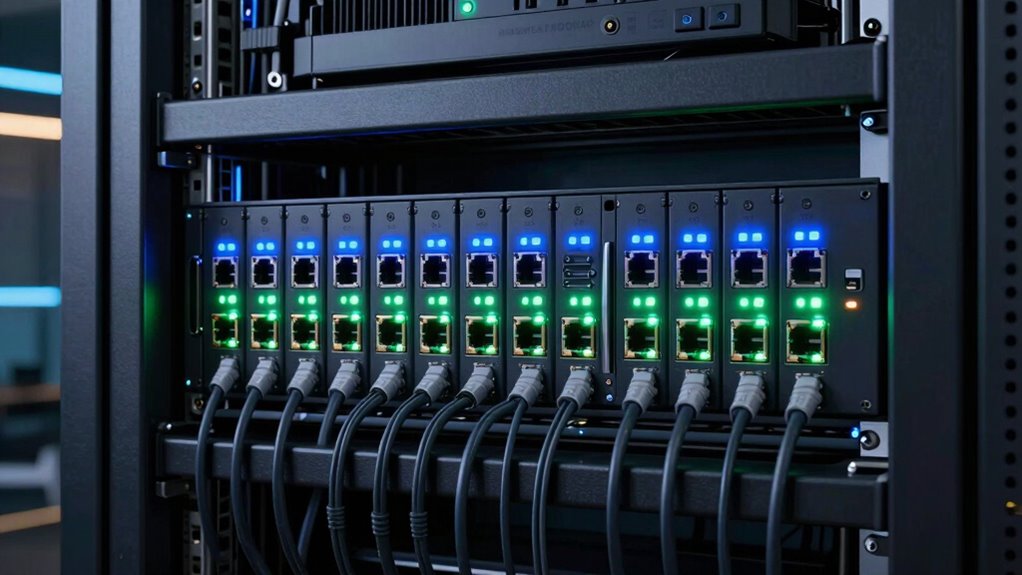

When searching for a 24 port managed switch, the key considerations include performance, management features, and build quality. The TP-Link Omada SL2428P stands out as the best overall for its PoE capabilities and robust management options. For those prioritizing ease of use, the TP-Link TL-SG1024DE offers straightforward setup at a more affordable price. Meanwhile, the NETGEAR GS724T excels with its feature set tailored to small business needs. But these choices come with tradeoffs, such as cost versus complexity or feature breadth versus simplicity. Continue reading for a full breakdown of options to find the best fit for your network.

Get the latest gadgets delivered free with Prime
- Fast, free delivery on millions of items
- Prime Video, Amazon Music and more included
- Member-only deals all year
Complete the kit


Key Takeaways
- The top-ranked switches balance performance, management features, and build quality effectively.
- PoE capability is a common feature in premium models, ideal for powering IP devices without extra cables.
- Ease of management varies, with some models offering simple web interfaces, while others support advanced cloud control.
- Price often correlates with feature set; more features mean higher costs but better scalability.
- Rackmount options are preferred for professional environments, while desktop models suit small offices or home use.
| TP-Link Omada SL2428P 24-Port Fast Ethernet Smart Managed PoE Switch |  | Best for Centralized Management and PoE Power | Number of Ports: 28 (24 PoE+ ports, 4 Gigabit non-PoE ports) | PoE Power Budget: 250W | PoE+ Power per Port: Up to 30W | VIEW ON AMAZON | See Our Full Breakdown |
| TP-Link TL-SG1024DE 24-Port Gigabit Easy Smart Managed Switch |  | Best for Easy Management and Basic Network Security | Number of Ports: 24 | Compatible Devices: Desktop | Switch Type: Metal | VIEW ON AMAZON | See Our Full Breakdown |
| NETGEAR 24-Port Gigabit Ethernet Smart Managed Network Switch (GS724T) |  | Best for High-Speed Business Connectivity and Remote Management | Number of Ports: 24 | Uplink Ports: 4 x 10G SFP+ | Data Transfer Rate: 24 Gbps | VIEW ON AMAZON | See Our Full Breakdown |
| D-Link 24-Port Gigabit Smart Managed Ethernet Switch, L2, VLANs, QoS, IGMP Snooping, LAG, Web UI, Desktop/Rackmount, Fanless, NDAA/TAA Compliant |  | Best for Energy-Efficient, Feature-Rich Small to Mid-Size Networks | Number of Ports: 24 | Management: Web-based | Energy Efficiency: IEEE 802.3az | VIEW ON AMAZON | See Our Full Breakdown |
| Linksys LGS328C 24-Port Gigabit Managed Network Switch with 4 x 10G SFP+ Uplink Ports |  | Best for High-Speed Uplinks and Enterprise-Grade Security | Number of Ports: 24 Gigabit | Uplink Ports: 4 x 10G SFP+ | Features: Managed, security, static routing | VIEW ON AMAZON | See Our Full Breakdown |
| TP-Link TL-SG1428PE 24-Port Gigabit Easy Smart Managed PoE+ Switch |  | Best Overall for Power-Driven Small Businesses | Number of Ports: 24 | Maximum Power: 250 watts | Switch Type: PoE+ Network Switch | VIEW ON AMAZON | See Our Full Breakdown |
| Zyxel 24 Port Managed Gigabit Ethernet Switch GS1915-24E |  | Best Quiet Operation for Small Offices | Number of Ports: 24 | Switch Type: Managed | Data Transfer Rate: 24 gigabits_per_second | VIEW ON AMAZON | See Our Full Breakdown |
| NETGEAR 26-Port PoE Gigabit Ethernet Smart Switch (GS724TP) |  | Best for Power-Heavy Network Expansion | Number of Ports: 26 | PoE Power Budget: 190W | SFP Ports: 2 | VIEW ON AMAZON | See Our Full Breakdown |
| TP-Link 24 Port Gigabit Ethernet Switch Desktop/Rackmount Plug & Play Shielded Ports |  | Best for Simple, Reliable Network Expansion | Number of Ports: 24 | Switch Type: Unmanaged | Data Transfer Rate: 48 gigabits_per_second | VIEW ON AMAZON | See Our Full Breakdown |
| Goalake 24-Port Gigabit Managed Switch – Plug & Play Network, VLAN & QoS, Industrial Fan Design, Desktop/Rackmount |  | Best for Versatile, Feature-Rich Small Business Networks | Number of Ports: 24 | Management Features: VLAN, QoS, Port Monitoring | Fan Design: Industrial | VIEW ON AMAZON | See Our Full Breakdown |
| Omada SG3428 24-Port Gigabit L2+ Smart Managed Switch |  | Best Overall for Enterprise-Grade Networks | Number of Ports: 24 | Compatible Devices: Desktop | Maximum Power: 384 watts | VIEW ON AMAZON | See Our Full Breakdown |
| Omada SG2428LP, 24 Port Gigabit PoE+ Managed Switch |  | Best for Quiet, Power-Over-Ethernet Environments | Number of Ports: 24 | Port Type: Gigabit PoE+ | Management: Web GUI, CLI (Telnet/SSH), SNMP, RMON | VIEW ON AMAZON | See Our Full Breakdown |
| port managed switch | Number of Ports | Data Transfer Rate |
|---|---|---|
| TP-Link Omada SL2428P 24-Port | 28 (24 PoE+ ports, 4 Gigabit non-PoE ports) | — |
| TP-Link TL-SG1024DE 24-Port Gi | 24 | 1000 Mbps |
| NETGEAR 24-Port Gigabit Ethern | 24 | 24 Gbps |
| D-Link 24-Port Gigabit Smart M | 24 | — |
| Linksys LGS328C 24-Port Gigabi | 24 Gigabit | — |
| TP-Link TL-SG1428PE 24-Port Gi | 24 | 1 gigabit_per_second |
| Zyxel 24 Port Managed Gigabit | 24 | 24 gigabits_per_second |
| NETGEAR 26-Port PoE Gigabit Et | 26 | — |
| TP-Link 24 Port Gigabit Ethern | 24 | 48 gigabits_per_second |
| Goalake 24-Port Gigabit Manage | 24 | — |
| Omada SG3428 24-Port Gigabit L | 24 | 1000 megabits_per_second |
| Omada SG2428LP | 24 | — |
More Details on Our Top Picks
TP-Link Omada SL2428P 24-Port Fast Ethernet Smart Managed PoE Switch
This switch stands out for organizations needing centralized control over PoE devices, thanks to its integration with the Omada SDN platform. Compared to the NETGEAR GS724T, it offers a higher PoE power budget of 250W, making it more suitable for powering multiple access points or security cameras. However, its reliance on SDN-compatible devices and the limited 10/100 Mbps PoE ports can be drawbacks for users unfamiliar with network management or seeking faster PoE connections. This pick makes the most sense for medium-sized businesses prioritizing remote management and PoE flexibility.
Pros:- Supports centralized management via Omada SDN platform
- High PoE power budget suitable for multiple devices
- Includes SFP slots for fiber connections
- Remote cloud access for management convenience
Cons:- Requires SDN-compatible devices for full SDN features
- Limited to 10/100 Mbps ports for PoE connections
- Complex setup for users unfamiliar with network management
Best for: IT managers and network administrators managing multiple PoE devices in a centralized environment
Not ideal for: Small offices or home users with basic network needs who won’t utilize SDN features or PoE
- Number of Ports:28 (24 PoE+ ports, 4 Gigabit non-PoE ports)
- PoE Power Budget:250W
- PoE+ Power per Port:Up to 30W
- SFP Slots:2 Combo SFP slots
- Management Platform:Omada SDN
- Warranty:5 years
Our verdict“This switch is ideal for network professionals seeking centralized management with robust PoE support, but less suited for simple or home setups.”
TP-Link TL-SG1024DE 24-Port Gigabit Easy Smart Managed Switch
This model makes the list for small to medium-sized desktop setups where straightforward management and durability matter. Compared with the NETGEAR GS724T, it offers simpler plug-and-play operation with industry-standard VLAN, QoS, and IGMP snooping, ideal for users who want manageable network security without advanced features. Its limited to desktop use and lacks PoE support, which can be a drawback for those needing power over Ethernet or rack mounting. This switch is best for offices or workgroups that need reliable, easy-to-use network management without complexity.
Pros:- Easy plug-and-play setup
- Supports VLAN, QoS, IGMP Snooping for security and performance
- Sturdy metal construction for durability
- Three-year warranty with free support
Cons:- Limited to desktop use, not rackmount
- No PoE support
- Basic management features may not suffice for complex networks
Best for: Small business setups or office environments requiring straightforward, reliable management
Not ideal for: Enterprise networks or scenarios requiring PoE or rackmount features
- Number of Ports:24
- Compatible Devices:Desktop
- Switch Type:Metal
- Warranty:3-year
- Data Transfer Rate:1000 Mbps
- Dimensions:11.6″L x 7.1″W x 1.7″H
Our verdict“This switch suits users seeking simple, reliable management in small or office environments without PoE needs.”
NETGEAR 24-Port Gigabit Ethernet Smart Managed Network Switch (GS724T)
The GS724T is a solid choice for businesses that need serious gigabit performance combined with remote management through NETGEAR Insight. Compared to the Linksys LGS328C with its 10G uplinks, the GS724T provides reliable gigabit ports suitable for most business applications. Its fanless design ensures silent operation, perfect for office environments. However, it doesn’t include wireless features or PoE support, and its larger size and plastic case may be less appealing compared to more compact or metal options. It’s best suited for small to medium enterprises prioritizing speed and remote control over physical expansion or PoE.
Pros:- High-speed 24 gigabit ports
- Includes 2 SFP ports for fiber expansion
- Remote management via NETGEAR Insight
- Fanless, energy-efficient operation
Cons:- No wireless or PoE support
- Larger and heavier for small setups
- Requires some technical knowledge for advanced management
Best for: Small to medium-sized business networks requiring remote management and high-speed connectivity
Not ideal for: Large enterprise data centers or users needing PoE or wireless integration
- Number of Ports:24
- Uplink Ports:4 x 10G SFP+
- Data Transfer Rate:24 Gbps
- Case Material:Plastic
- Dimensions:16.2″L x 10.7″W x 4.6″H
- Management:Remote via NETGEAR Insight
Our verdict“Ideal for businesses needing high-speed, remotely managed network connectivity without PoE or wireless features.”
D-Link 24-Port Gigabit Smart Managed Ethernet Switch, L2, VLANs, QoS, IGMP Snooping, LAG, Web UI, Desktop/Rackmount, Fanless, NDAA/TAA Compliant
The DGS-1100-24V2 offers a compelling mix of advanced features and silent operation, making it suitable for small to enterprise networks that prioritize energy efficiency. Compared with the TP-Link TL-SG1024DE, it adds support for VLANs, QoS, and Link Aggregation, providing greater scalability and traffic control. Its fanless design and web management make it accessible for users with some network experience but not demanding on hardware complexity. Its lack of PoE support limits its use for powering devices but makes it a quieter, eco-friendly choice for reliable network infrastructure.
Pros:- Energy-efficient fanless design
- Supports VLANs, QoS, and LAG for scalable management
- Web-based interface for easy setup
- NDAA/TAA compliant for government or regulated environments
Cons:- No PoE support
- Limited to 24 ports, may not suit very large networks
- Requires some network knowledge for full utilization
Best for: Small to mid-sized organizations needing advanced traffic management with minimal noise and power consumption
Not ideal for: Environments requiring PoE or high-density rackmount setups
- Number of Ports:24
- Management:Web-based
- Energy Efficiency:IEEE 802.3az
- Form Factor:Desktop or Rackmount
- Regulatory Compliance:NDAA/TAA
- Advanced Features:VLANs, QoS, LAG
Our verdict“This switch is best suited for users who want advanced features and silent operation in smaller or eco-conscious settings.”
Linksys LGS328C 24-Port Gigabit Managed Network Switch with 4 x 10G SFP+ Uplink Ports
The LGS328C excels in environments where high-speed uplinks and security are priorities. Its 4 x 10G SFP+ ports provide a significant bandwidth boost over standard gigabit uplinks, making it ideal for expanding networks requiring fast data flow to core switches or data centers. Compared to the NETGEAR GS724T, it offers more advanced security features like MAC-based port security and static routing, suitable for enterprise networks. The absence of PoE limits its use for powering devices. Its metal housing and flexible mounting options make it a durable choice for professional settings, though it’s less suitable for small or home offices.
Pros:- Four 10G SFP+ uplink ports for high-speed expansion
- Advanced security features including static routing
- Metal housing for durability
- Flexible mounting options
Cons:- No PoE support
- More suitable for enterprise than small setups
- Lacks built-in wireless capabilities
Best for: Medium to large businesses needing high-speed uplinks and advanced security in a managed switch
Not ideal for: Small offices or network environments where PoE or wireless features are essential
- Number of Ports:24 Gigabit
- Uplink Ports:4 x 10G SFP+
- Features:Managed, security, static routing
- Housing:Metal
- Mounting Options:Desktop / Wall mount
- Management:Managed switch
Our verdict“This switch is perfect for expanding high-performance networks with security and high-speed uplinks in professional environments.”
TP-Link TL-SG1428PE 24-Port Gigabit Easy Smart Managed PoE+ Switch
The TP-Link TL-SG1428PE stands out for its robust PoE+ support, providing enough power for multiple devices without needing additional injectors. Compared to the Zyxel GS1915-24E, it offers a higher power budget (250W vs. 60W), making it suitable for deploying IP cameras or wireless access points directly from the switch. Its web-based management is straightforward, but lacks advanced customization options found in more enterprise-grade switches. The inclusion of SFP slots adds flexibility for high-speed uplinks, though the switch’s size and weight mean it requires more space. This model suits small to medium businesses needing PoE+ but may be overkill for simple network expansions.
Pros:- Supports 24 PoE+ ports with a high 250W power budget
- Easy web-based setup for quick deployment
- Includes SFP slots for flexible uplink options
- Auto PoE recovery enhances device uptime
Cons:- No advanced management features like SNMP or Layer 3 routing
- Larger size may require dedicated space
Best for: Small business owners needing reliable PoE+ power and simple management.
Not ideal for: Home users or small offices with no PoE device requirements, as its size and power budget are unnecessary.
- Number of Ports:24
- Maximum Power:250 watts
- Switch Type:PoE+ Network Switch
- Data Transfer Rate:1 gigabit_per_second
- Interface:PoE, SFP
- Item Dimensions:17.3″L x 8.7″W x 1.73″H
Our verdict“Best for small businesses seeking a PoE+ capable switch with straightforward management and high power capacity.”
Zyxel 24 Port Managed Gigabit Ethernet Switch GS1915-24E
The Zyxel GS1915-24E excels in silent performance thanks to its fanless design, making it ideal for quiet environments like small offices or labs. It offers flexible mounting options and supports advanced features such as VLAN, QoS, and NebulaFlex cloud management, which makes remote control simple. However, compared with the NETGEAR GS724TP, it lacks PoE support, limiting its use for powering VoIP phones or cameras. Its plastic case, while lightweight, may be less durable under heavy use. This switch is best suited for small businesses or workspaces where silence and reliability are priorities.
Pros:- Fanless operation for silent running
- Flexible mounting options for various setups
- Supports advanced features like VLAN, QoS, and Nebula cloud management
- Reliable with dual firmware images and loop protection
Cons:- Lacks PoE support for powering devices
- Plastic case may be less durable long-term
Best for: Small office environments needing a silent, managed switch with cloud management options.
Not ideal for: Networks requiring PoE or high physical durability, such as industrial settings or PoE-dependent deployments.
- Number of Ports:24
- Switch Type:Managed
- Data Transfer Rate:24 gigabits_per_second
- Features:VLAN, QoS, NebulaFlex
- Case Material:Plastic
- Fan:Fanless
Our verdict“Ideal for small offices that value quiet operation and simple, reliable management without PoE requirements.”
NETGEAR 26-Port PoE Gigabit Ethernet Smart Switch (GS724TP)
The NETGEAR GS724TP offers a generous 24 PoE+ ports with a 190W total power budget, making it a strong choice for deploying multiple powered devices like cameras and access points. Its dual SFP ports enable fiber connectivity, providing scalability for growing networks. Compared to the TP-Link TL-SG1428PE, it provides a slightly higher port count (26 vs. 24) and includes cloud management via Insight, perfect for remote monitoring. Its fanless, energy-efficient design minimizes noise, but regional compatibility is limited to U.S. and Canada, which could be restrictive for international deployments. This switch suits medium-sized networks with PoE needs that require remote management.
Pros:- 24 PoE+ ports with 190W power budget
- Includes fiber SFP ports for uplinks
- Cloud management capabilities for remote control
- Silent, energy-efficient operation
Cons:- Regional restrictions limit compatibility outside U.S./Canada
- Requires network management expertise for full utilization
Best for: IT managers managing remote or distributed networks needing PoE and cloud oversight.
Not ideal for: Small home networks or environments without PoE devices, where extra ports and features are unnecessary.
- Number of Ports:26
- PoE Power Budget:190W
- SFP Ports:2
- Operation:Fanless
- Management:Insight Cloud
- Design:Desktop or Rackmount
Our verdict“Best suited for medium-sized networks requiring PoE, fiber uplinks, and remote management features.”
TP-Link 24 Port Gigabit Ethernet Switch Desktop/Rackmount Plug & Play Shielded Ports
The TP-Link TL-SG1024S offers a straightforward, unmanaged solution for expanding network capacity without complex configuration. Its durable metal case ensures longevity, and the fanless design keeps noise to a minimum—ideal for quiet office environments. Compared to managed options like the Goalake 24-Port Switch, it lacks VLAN or QoS features, limiting control over traffic prioritization. Its plug-and-play nature simplifies setup, but this also means it cannot be tailored for advanced network management. Its lower power consumption and simplicity make it a reliable choice for basic network expansion.
Pros:- Durable metal casing for long-term reliability
- Fanless, quiet operation
- Plug-and-play setup for easy deployment
- Energy-efficient technology
Cons:- No advanced management features
- No PoE support for powering devices
Best for: Small offices or home setups needing plug-and-play reliability without management complexity.
Not ideal for: Networks requiring VLAN segmentation, QoS, or PoE support for powered devices.
- Number of Ports:24
- Switch Type:Unmanaged
- Data Transfer Rate:48 gigabits_per_second
- Case Material:Metal
- Operation:Fanless
- Mounting:Desktop or Rackmount
Our verdict“Ideal for simple network expansion where ease of use and durability matter most, with no need for managed features.”
Goalake 24-Port Gigabit Managed Switch – Plug & Play Network, VLAN & QoS, Industrial Fan Design, Desktop/Rackmount
The Goalake 24-Port Managed Switch combines high-performance features like VLAN, QoS, port monitoring, and security controls in a rugged design with an industrial fan for quiet operation. It’s designed for small to mid-sized businesses needing advanced network segmentation and traffic management. Compared with the NETGEAR GS724TP, it offers similar port counts but emphasizes versatility with multiple mounting options and comprehensive management features. Its built-in surge and short-circuit protection add to its reliability. However, some network administrators may find the configuration options complex initially, and it lacks PoE support, limiting device powering capabilities. This switch makes sense for users who want a managed, scalable solution with robust security and control.
Pros:- Supports full gigabit connectivity on all ports
- Advanced features like VLAN, QoS, port monitoring
- Flexible mounting options for various installation needs
- Built-in surge and short-circuit protection
Cons:- Requires some network configuration knowledge
- No PoE support for powering connected devices
Best for: Small to mid-sized businesses needing advanced management, security, and versatile installation options.
Not ideal for: Home users or environments not requiring VLAN or QoS, or where PoE powering is essential.
- Number of Ports:24
- Management Features:VLAN, QoS, Port Monitoring
- Fan Design:Industrial
- Mounting Options:Desktop, Rackmount
- Protection Features:Surge, Short-circuit
- Connectivity:Gigabit Ethernet
Our verdict“Best for growing networks needing advanced management and flexible installation with a focus on security and scalability.”
Omada SG3428 24-Port Gigabit L2+ Smart Managed Switch
The Omada SG3428 stands out for its combination of high-speed connectivity and advanced management features, making it well-suited for larger or more complex networks. Its 24 Gigabit ports, along with 4 SFP slots, provide flexible options for backbone connections or uplinks, outperforming simpler switches like the TP-Link TL-SG1024DE in terms of scalability. The ability to integrate with the Omada SDN platform enables centralized control, which is a major advantage for IT teams managing multiple switches. However, this level of control introduces a management complexity that might overwhelm small business owners or non-technical users. This switch is ideal for enterprise environments or advanced network setups that require granular security, VLAN segmentation, and high-performance throughput. The need for firmware upgrades to access full SDN features could be a slight hurdle, but overall, it offers a robust solution for demanding networks.
Pros:- High-speed 24 Gigabit ports with SFP slots for flexible connectivity
- Supports Omada SDN platform for centralized network management
- Advanced security features including VLAN, ACL, Port Security, and DoS defense
- 5-year warranty with free technical support
Cons:- Requires SDN firmware upgrades, which may need technical expertise
- Management complexity can be daunting for non-technical users
Best for: Large businesses or enterprise IT teams seeking a highly customizable, scalable managed switch.
Not ideal for: Small offices or home users who prefer plug-and-play simplicity without managing SDN features.
- Number of Ports:24
- Compatible Devices:Desktop
- Maximum Power:384 watts
- Interface:RJ45
- Data Transfer Rate:1000 megabits_per_second
- Switch Type:managed
- Additional features:4 SFP Slots
Our verdict“This switch is best suited for organizations with dedicated IT resources needing scalable, secure, and high-performance networking.”
Omada SG2428LP, 24 Port Gigabit PoE+ Managed Switch
The Omada SG2428LP offers a compelling choice for office or healthcare settings where quiet operation and PoE+ capability are priorities. Its 24 Gigabit ports support PoE+ power to connected devices like VoIP phones, security cameras, or access points, making it more versatile than non-PoE switches such as the NETGEAR GS724T. The fanless design ensures silent operation, a key benefit in noise-sensitive environments. While its security features, including 802.1X and ACLs, match those of more advanced switches, the hardware specifications are less detailed, which might concern users needing high hardware transparency. This switch makes sense for small to medium-sized offices, conference rooms, or healthcare facilities that require reliable power delivery and quiet operation without sacrificing essential network management features. The lack of detailed hardware specs means it’s less suitable for users demanding extensive hardware customization or high-throughput applications.
Pros:- Fanless passive cooling ensures silent operation
- Supports PoE+ for powering connected devices
- Advanced management options including cloud integration
- Robust security features like 802.1X and ACL
Cons:- Limited hardware detail may concern users needing transparency
- Requires technical knowledge for optimal setup
- No explicit pricing information available
Best for: Offices or healthcare facilities seeking a quiet, PoE+ managed switch with solid security features.
Not ideal for: Large enterprise data centers that need extensive hardware transparency and maximum throughput for demanding workloads.
- Number of Ports:24
- Port Type:Gigabit PoE+
- Management:Web GUI, CLI (Telnet/SSH), SNMP, RMON
- Warranty:5 years
- Security Features:802.1X, IP-MAC-Port binding, DHCP snooping, ACL, DoS/DDoS, flood control, STP, SSHv2
- Design:Fanless passive cooling
- Network Features:Failover connection, VLAN segmentation, IGMP, port isolation, loop detection
Our verdict“This switch is ideal for small to medium offices prioritizing quiet operation and Power over Ethernet capabilities with manageable complexity.”

How We Picked
These products were selected based on a combination of technical specifications, management features, build quality, and versatility. Priority was given to switches that offer reliable performance, ease of setup, and scalability for various network sizes. We also evaluated the presence of PoE support, VLAN capabilities, and management interfaces, ensuring options suit both beginners and advanced users. Products were ranked by their overall value proposition, balancing features against price and user needs, to guide buyers toward the best fits for different scenarios.Factors to Consider When Choosing 24 Port Managed Switch
Choosing the right 24 port managed switch requires considering several important factors beyond just port count. Each feature impacts how well the switch integrates into your existing network, how scalable it is, and how much management control you’ll have. Understanding these factors can help prevent costly mistakes and ensure your investment aligns with your future growth plans.Performance and Throughput
Look for switches that offer gigabit speeds on all ports for optimal data transfer, especially if you handle large files or high-bandwidth applications. Managed switches with support for 10G uplinks provide additional headroom for future expansion. Failing to match your network’s throughput needs can result in bottlenecks that slow down your entire system.
Management Capabilities
Consider whether you need basic web management or more advanced options like CLI, SNMP, or cloud control. Simpler interfaces are easier for beginners, but advanced features offer greater control for complex setups. Be wary of models that promise management but lack intuitive interfaces, as this can lead to configuration errors and increased maintenance efforts.
PoE Support
If powering IP cameras, VoIP phones, or wireless access points is part of your plan, prioritize switches with PoE or PoE+ support. Check the total power budget to ensure it can handle the number of devices you plan to connect. Overlooking PoE capacity can lead to insufficient power delivery or the need for additional hardware, increasing costs and complexity.
Build Quality and Reliability
A sturdy chassis and fanless operation often translate into longer lifespan and quieter operation. For industrial or high-traffic environments, ruggedized or fanless models reduce failure risks. Skimping on build quality may save money upfront but can result in higher maintenance and replacement costs over time.
Scalability and Future Proofing
Consider whether the switch supports stacking, higher bandwidth uplinks, or cloud management. These features enable growth without replacing hardware prematurely. Investing in a more capable switch now can save significant costs and effort later, especially for expanding networks.
Frequently Asked Questions
Is PoE necessary in a managed switch for small business networks?
PoE support is very useful if your network includes IP cameras, VoIP phones, or wireless access points, as it simplifies wiring and reduces the need for separate power supplies. For small businesses with minimal IP device deployment, PoE can be optional, but it provides flexibility for future expansion. Keep in mind that PoE switches tend to cost more, so evaluate your current needs against future plans before choosing.
Can I replace my unmanaged switch with a managed one without disrupting my network?
In many cases, yes, but it’s best to plan the migration carefully. Managed switches often require configuration, so ensure you have a backup of your current network setup. For simple environments, replacing an unmanaged switch is straightforward, but complex networks with VLANs or QoS settings may need detailed planning to avoid downtime. Testing the new switch in a controlled setting first can help prevent surprises.
What’s the benefit of a cloud-managed switch over traditional management?
Cloud management offers remote access, easier troubleshooting, and centralized control, especially for multiple sites. It simplifies firmware updates and configuration changes, making network management more flexible. However, cloud-controlled switches depend on internet connectivity, so consider your network’s reliability and security before choosing this option.
Are rackmount switches always better than desktop models?
Rackmount switches are ideal for professional settings where space and organization matter, providing durability and scalability. Desktop models are more suitable for small offices or home use where space is limited. The choice depends on your environment, but in most cases, rackmount units deliver better long-term stability and expansion options for growing networks.
How important is port speed and uplink capacity in a 24 port switch?
Gigabit ports are standard for most applications, ensuring fast local data transfer. Uplink capacity, especially support for 10G or higher, is important if you need to connect to high-speed backbone networks or data centers. Neglecting uplink speed can cause bottlenecks, limiting overall network performance, especially as your data needs grow.
Conclusion
For most small to medium-sized business users, the TP-Link Omada SL2428P offers the best balance of features, PoE support, and manageability, making it the top overall choice. Those seeking budget-friendly options with reliable performance might prefer the TP-Link TL-SG1024DE. If advanced management and scalability are priorities, the NETGEAR GS724T or the Omada SG3428 excel. Beginners should consider plug-and-play models, while larger organizations or industrial environments may require rugged, rackmount solutions. Tailoring your choice to your specific needs will ensure your network remains robust and adaptable.
As an affiliate, we earn on qualifying purchases.Halloween Picks
halloween