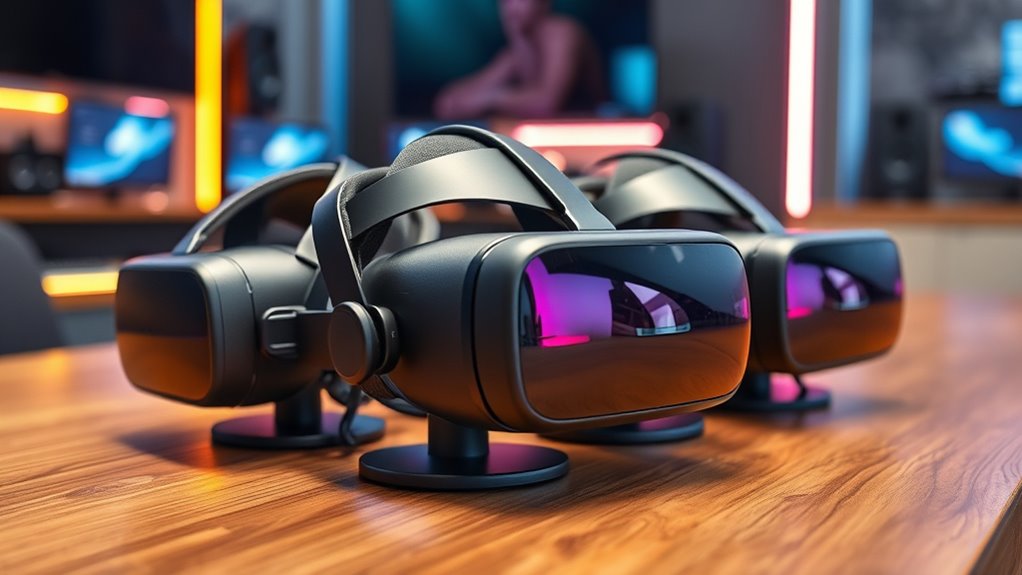
The Meta Quest 3 512GB is my best overall pick among these standalone VR headsets, with a strong mix of current hardware, storage, and mixed reality features. The Meta Quest 3S 256GB is a better fit for buyers who want a current Quest at a lower tier, while the HTC VIVE Focus Vision stands out for people who want PC VR connectivity and broader XR use. The lineup also includes older Quest models and renewed or bundled versions, which can suit narrower needs but come with more compromises around age, storage, or configuration. The main tradeoffs are image quality, comfort, standalone performance, and whether you need a wired PC option. Read on for the full comparison and help choosing the right headset for your use.

Get the latest gadgets delivered free with Prime
- Fast, free delivery on millions of items
- Prime Video, Amazon Music and more included
- Member-only deals all year
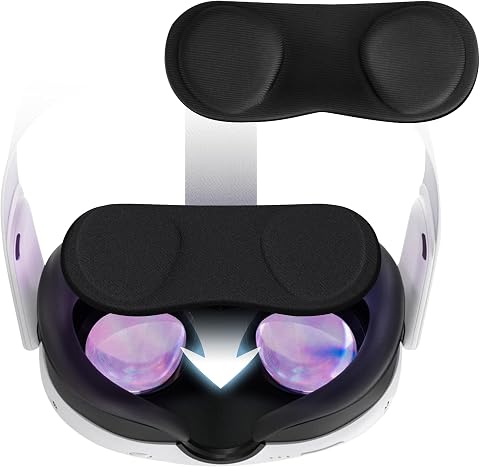
Complete the kit

Key Takeaways
- Quest 3 512GB leads this lineup for buyers who want a current standalone headset with room for a broad game library and mixed reality features.
- Quest 3S models bring newer standalone access at a lower hardware tier; the 256GB version gives more breathing room than the 128GB variants.
- VIVE Focus Vision is the clearest fit for PC VR and mixed reality use, though its wired bundle makes more sense for a planned setup than casual untethered play.
- Renewed, older, and promotional bundles need closer checking: the included content or condition does not change the underlying generation and storage limits.
- Quest 2 and the original Quest are legacy options in this group, so buyers should weigh compatibility, support, and lifespan against the appeal of a lower-tier entry point.
| Meta Quest 3S 256GB VR Headset |  | Best Overall | Storage: 256GB | Processor: Snapdragon XR2 Gen 2 | Memory: 8GB RAM | VIEW ON AMAZON | See Our Full Breakdown |
| Meta Quest 3S 128GB VR Headset (Renewed Premium) |  | Best for Budget-Conscious Beginners | Storage: 128GB | Processor: Snapdragon XR2 Gen 2 | Memory: 8GB RAM | VIEW ON AMAZON | See Our Full Breakdown |
| HTC VIVE Focus Vision Wired Bundle XR Headset |  | Best for Extended Sessions | Display resolution: 2448 × 2448 pixels per eye | Field of view: Up to 120° | Refresh rate: 90Hz | VIEW ON AMAZON | See Our Full Breakdown |
| Meta Quest 3 512GB | VR Headset — GOLF+ Included — Tee Off in VR |  | Best Premium Standalone | Storage: 512GB | Processor: Snapdragon XR2 Gen 2 | Memory: 8GB RAM | VIEW ON AMAZON | See Our Full Breakdown |
| HTC VIVE Focus Vision Mixed Reality and PC VR Headset with Controllers |  | Best for Tracking and Expandability | Display resolution: 2448 × 2448 pixels per eye | Field of view: Up to 120° | Refresh rate: 90Hz | VIEW ON AMAZON | See Our Full Breakdown |
| HTC Vive Focus Plus 6DoF Standalone VR Headset Bundle |  | Best for Business and Flexible Tracking | Tracking: 6DoF; world-scale tracking | Display: AMOLED | Refresh rate: 90 Hz | VIEW ON AMAZON | See Our Full Breakdown |
| Meta Quest 3 512GB VR Headset |  | Best Overall | Storage: 512 GB | Display: 4K Infinite Display | Processor: Snapdragon XR2 Gen 2 | VIEW ON AMAZON | See Our Full Breakdown |
| Meta Quest 2 All-in-One VR Headset, 128 GB |  | Best for Straightforward Standalone VR | Storage: 128 GB | Display: LCD | Maximum resolution: 1832 × 1920 | VIEW ON AMAZON | See Our Full Breakdown |
| Meta Quest 3S 128GB VR Headset with Gorilla Tag Bundle and 3-Month Horizon+ Trial |  | Best for New VR Players Who Want a Game Bundle | Storage: 128 GB | Processor: Snapdragon XR2 Gen 2 | Memory: 8 GB RAM | VIEW ON AMAZON | See Our Full Breakdown |
| Oculus Quest All-in-one VR Gaming Headset – 64GB |  | Best for Compact, Sensor-Free Room-Scale Play | Storage: 64 GB | Display size: 5.7 inches | Display type: OLED | VIEW ON AMAZON | See Our Full Breakdown |
| vr headsets standalone | Storage | Memory | Refresh rate | Connectivity |
|---|---|---|---|---|
| Meta Quest 3S 256GB VR Headset | 256GB | 8GB RAM | — | Wireless |
| Meta Quest 3S 128GB VR Headset | 128GB | 8GB RAM | 90Hz | — |
| HTC VIVE Focus Vision Wired Bu | — | 12GB RAM | 90Hz | DisplayPort, USB, Wi-Fi |
| Meta Quest 3 512GB | VR Headse | 512GB | 8GB RAM | Up to 120Hz | USB Type-C, Bluetooth |
| HTC VIVE Focus Vision Mixed Re | 128GB; expandable up to 2TB via MicroSD | 12GB RAM | 90Hz | — |
| HTC Vive Focus Plus 6DoF Stand | 32 GB | — | 90 Hz | USB Type-C |
| Meta Quest 3 512GB VR Headset | 512 GB | 8 GB RAM | — | Wi-Fi; USB Type-C |
| Meta Quest 2 All-in-One VR Hea | 128 GB | — | 90 Hz | Wi-Fi; USB Type-C |
| Meta Quest 3S 128GB VR Headset | 128 GB | 8 GB RAM | — | — |
| Oculus Quest All-in-one VR Gam | 64 GB | — | 90 Hz | — |
More Details on Our Top Picks
Meta Quest 3S 256GB VR Headset
The Meta Quest 3S 256GB is my best overall pick for buyers who want a capable standalone headset for games, fitness, and mixed reality without adding a PC. Its Snapdragon XR2 Gen 2 processor, 8GB of RAM, and full-color passthrough bring current-generation performance to a simpler setup than the HTC VIVE Focus Vision. The 256GB capacity gives more room for games than the 128GB Quest 3S, which matters if you like keeping several larger titles installed. It also includes Batman: Arkham Shadow and a games catalog trial, so there is content to start with. The tradeoff is a battery rated at just over two hours, which can interrupt longer sessions; buyers wanting PC streaming and hot-swappable power should look to the VIVE instead.
Pros:- Snapdragon XR2 Gen 2 processor and 8GB RAM support current-generation standalone experiences.
- 256GB storage leaves more room for installed games than the 128GB Quest 3S.
- Full-color passthrough supports mixed reality in the physical room.
- Includes Batman: Arkham Shadow and a three-month games catalog trial.
Cons:- Battery life is just over two hours, limiting long sessions between charges.
- Does not offer the VIVE Focus Vision’s DisplayPort PC streaming or hot-swappable battery.
Best for: Standalone VR newcomers and active players who want current-generation games, mixed reality, and room for a larger library.
Not ideal for: People who play for long uninterrupted stretches or need PC VR streaming and easily replaceable batteries.
- Storage:256GB
- Processor:Snapdragon XR2 Gen 2
- Memory:8GB RAM
- Battery life:2+ hours
- Cameras:Dual RGB color cameras
- Connectivity:Wireless
- Included game:Batman: Arkham Shadow
Our verdict“Choose this Quest 3S if you want a well-rounded wireless headset with generous storage and included content, and can live with short sessions between charges.”
Meta Quest 3S 128GB VR Headset (Renewed Premium)
This renewed Meta Quest 3S 128GB keeps the core standalone experience of its 256GB sibling: the same Snapdragon XR2 Gen 2 processor, 8GB of RAM, full-color passthrough, hand tracking, and Touch controllers. That makes it a sensible entry point for a buyer who wants wireless VR and mixed reality without stepping up to the Meta Quest 3 512GB. The main compromise is storage: 128GB calls for a smaller installed library or more frequent game management. Its LCD display and listed battery estimates of just over two to three hours also set expectations for image and session time. Because this is a renewed unit, it suits buyers comfortable with refurbished hardware and the stated one-year warranty; those wanting more storage should choose the 256GB Quest 3S.
Pros:- Standalone operation requires no PC or external tracking setup.
- XR2 Gen 2 processor and 8GB RAM match the 256GB Quest 3S.
- Dual RGB cameras enable full-color passthrough.
- Includes hand tracking and Touch controllers.
Cons:- 128GB storage leaves less room for a large game library than the 256GB Quest 3S.
- LCD display is a step away from the premium visual experience some buyers seek.
- Battery life is inconsistently listed as 2+ hours and three hours.
Best for: First-time VR buyers who want standalone play and hand tracking, keep a modest library, and are comfortable buying a renewed device.
Not ideal for: Players who install many large games, prefer a new unit, or want longer sessions and a higher-end display.
- Storage:128GB
- Processor:Snapdragon XR2 Gen 2
- Memory:8GB RAM
- Display:LCD
- Maximum resolution:2064 × 2208 pixels
- Refresh rate:90Hz
- Field of view:96 degrees
- Weight:515g
- Warranty:1 year
Our verdict“Pick this renewed Quest 3S if you want the core standalone experience for a smaller library and accept the refurbished condition and LCD display.”
HTC VIVE Focus Vision Wired Bundle XR Headset
The HTC VIVE Focus Vision Wired Bundle earns its place for standalone users who also want a path to PC VR and longer play sessions. Its hot-swappable battery lets a player replace the main pack instead of ending a session to recharge, a practical advantage over the Quest 3 and Quest 3S models, which are listed with roughly two hours of battery life. The headset also pairs standalone use with DisplayPort streaming, 12GB of RAM, eye and hand tracking, and MicroSD expansion up to 2TB. That flexibility comes with more setup complexity: PC streaming over Wi-Fi requires the PC to connect to the router by Ethernet, and expanded body tracking needs extra trackers. For a buyer who mainly wants easy, self-contained gaming, the Quest 3S is a simpler fit.
Pros:- DisplayPort streaming supports low-latency PC VR alongside standalone use.
- Hot-swappable main battery supports longer play sessions.
- Built-in eye and hand tracking, with support for additional trackers.
- MicroSD storage can expand up to 2TB.
Cons:- Wi-Fi PC streaming requires an Ethernet connection from the PC to the router.
- Full-body tracking requires compatible additional trackers.
- PC-focused features add setup complexity compared with the Quest 3S.
Best for: PC VR enthusiasts who want a standalone headset, swappable power, tracking features, and expandable storage in one device.
Not ideal for: Casual standalone players who prioritize a simple setup, or buyers who do not want to add trackers for full-body tracking.
- Display resolution:2448 × 2448 pixels per eye
- Field of view:Up to 120°
- Refresh rate:90Hz
- Memory:12GB RAM
- Expandable storage:Up to 2TB via MicroSD
- Connectivity:DisplayPort, USB, Wi-Fi
- Tracking:Eye and hand tracking; supports face and body trackers
- Battery:Hot-swappable main battery with reserve front battery
Our verdict“Choose the VIVE Focus Vision if you want standalone flexibility with PC VR and replaceable power, and are willing to handle its more involved setup.”
Meta Quest 3 512GB | VR Headset — GOLF+ Included — Tee Off in VR
The Meta Quest 3 512GB is the premium standalone choice here for buyers who want sharper visuals and a large library without needing a PC. Its pancake lens design and listed 2064 × 2208 pixels per eye give it a visual edge over the Quest 3S, while the same XR2 Gen 2 platform and 8GB of RAM keep mixed reality and current games in reach. The 512GB capacity is especially useful for people who keep many titles installed; by comparison, the Quest 3S 256GB offers less room and a more entry-level position. This bundle includes GOLF+ content, though that matters most to players drawn to that game. Battery life is still about 2.2 hours, and buyers who need PC streaming or hot-swappable power should consider the VIVE Focus Vision.
Pros:- 512GB storage accommodates a larger installed library than either Quest 3S model.
- Pancake lenses and 2064 × 2208 pixels per eye support sharper viewing than the Quest 3S.
- XR2 Gen 2 processor, 8GB RAM, and full-color passthrough support mixed reality.
- Includes GOLF+ content and in-game credits.
Cons:- Battery life is listed at about 2.2 hours, limiting long sessions.
- Does not offer the VIVE Focus Vision’s DisplayPort streaming or hot-swappable battery.
- The bundled GOLF+ content may have little value to buyers uninterested in golf.
Best for: Standalone players who value a sharper display, broad game storage, and mixed reality for gaming, fitness, and media.
Not ideal for: Buyers who want long uninterrupted sessions, PC VR streaming, or who do not expect to use the included GOLF+ content.
- Storage:512GB
- Processor:Snapdragon XR2 Gen 2
- Memory:8GB RAM
- Resolution:2064 × 2208 pixels per eye
- Refresh rate:Up to 120Hz
- Battery life:About 2.2 hours
- Connectivity:USB Type-C, Bluetooth
- Included content:GOLF+ with 1,800 in-game credits
Our verdict“Choose the Quest 3 512GB if display clarity and library capacity matter more than extended battery time or PC VR connectivity.”
HTC VIVE Focus Vision Mixed Reality and PC VR Headset with Controllers
For buyers who want a standalone headset that can grow into a more elaborate XR setup, the HTC VIVE Focus Vision stands apart from the Meta Quest 3 and Quest 3S. Its eye tracking and low-light hand tracking provide built-in tools for interaction, while MicroSD expansion up to 2TB lets owners add capacity beyond the included 128GB. DisplayPort streaming also gives it a wired PC VR option, and the hot-swappable battery is useful when a session runs longer than a typical charge. The tradeoff is that its strengths reward a more involved setup: Wi-Fi PC streaming requires Ethernet from the PC to the router, and expanded full-body tracking calls for extra hardware. Buyers focused on straightforward standalone gaming may find the Quest 3 512GB easier to live with and more generous on built-in storage.
Pros:- Standalone and PC VR use, including DisplayPort streaming.
- Eye tracking and low-light hand tracking are built in.
- MicroSD expansion supports up to 2TB beyond the 128GB onboard storage.
- Detachable hot-swappable battery supports extended sessions.
Cons:- PC streaming over Wi-Fi requires the PC to connect to the router by Ethernet.
- Full-body tracking requires compatible additional trackers.
- The 128GB onboard capacity is lower than the Quest 3 512GB.
Best for: XR enthusiasts who want standalone play, built-in eye tracking, expandable storage, and the option to connect to a Windows PC.
Not ideal for: Buyers seeking a simple, high-capacity standalone setup without PC networking requirements or optional tracker purchases.
- Display resolution:2448 × 2448 pixels per eye
- Field of view:Up to 120°
- Refresh rate:90Hz
- Display type:LCD
- Memory:12GB RAM
- Storage:128GB; expandable up to 2TB via MicroSD
- Tracking:Eye tracking, low-light hand tracking, and camera-based movement tracking
- Battery:Detachable, hot-swappable battery
Our verdict“Pick the VIVE Focus Vision if tracking features and expansion matter more to you than a simpler setup and large built-in storage.”
HTC Vive Focus Plus 6DoF Standalone VR Headset Bundle
The Vive Focus Plus is the specialist in this group: its standalone design pairs 6DoF controllers with world-scale tracking, making it suited to training and interactive spaces that need movement without external sensors. Its AMOLED display and 90 Hz refresh rate offer a different emphasis from the newer Meta Quest 3, which has stronger listed mixed-reality features and a newer processor. This bundle also includes a face cushion, charger, and USB-C cable, while its adjustable fit and glasses accommodation can help with longer sessions. The tradeoffs are its 32 GB storage and an older Android-based platform; hand tracking also depends on VIVE Wave and SDK integration. The supplied listing gives conflicting resolution figures, so I would verify that specification before buying.
Pros:- Standalone world-scale tracking with 6DoF controllers
- AMOLED display with a 90 Hz refresh rate
- Adjustable fit designed to accommodate glasses
- Bundle includes controllers, face cushion, charger, and USB-C cable
Cons:- 32 GB storage is limited for a sizable app library
- Hand tracking requires VIVE Wave and SDK integration
- Product listing gives conflicting resolution specifications
Best for: Organizations and VR users who want standalone 6DoF tracking, included controllers, and a headset suited to managed training or demonstrations
Not ideal for: Buyers seeking a large game library, high storage capacity, or mixed-reality features comparable to the Meta Quest 3
- Tracking:6DoF; world-scale tracking
- Display:AMOLED
- Refresh rate:90 Hz
- Field of view:110°
- Storage:32 GB
- Platform:Android; standalone
- Connectivity:USB Type-C
- Included items:Headset, controllers, face cushion, QC 3.0 charger, USB Type-C cable
Our verdict“Choose the Vive Focus Plus for standalone 6DoF demonstrations and training when its older platform and limited storage fit your needs.”
Meta Quest 3 512GB VR Headset
The Meta Quest 3 is the strongest all-around standalone pick here because it combines 512 GB storage, a Snapdragon XR2 Gen 2 processor, and mixed-reality cameras in one wireless headset. Its 4K Infinite Display and 110-degree field of view make it a more capable visual and mixed-reality option than the Meta Quest 2, while the Quest 2 remains a simpler choice for buyers who do not need the newer hardware. Eight gigabytes of RAM support the Quest 3’s more demanding graphics, and inside-out tracking keeps room setup straightforward. The main compromise is runtime: the listed battery life is 2+ hours, which can interrupt longer sessions. It also depends on Wi-Fi for connected features, so it suits buyers who want a broad standalone experience and have reliable wireless access.
Pros:- 512 GB storage leaves room for a broad library
- Snapdragon XR2 Gen 2 processor and 8 GB RAM
- 4K Infinite Display with 110-degree field of view
- Dual RGB cameras support mixed-reality experiences
Cons:- Listed battery life is 2+ hours, limiting long sessions
- Connected features require Wi-Fi
- Newer hardware may be unnecessary for buyers with basic VR needs
Best for: VR players and fitness users who want a high-capacity standalone headset with mixed-reality cameras and newer graphics hardware
Not ideal for: People who need long uninterrupted sessions or plan to use connected features where reliable Wi-Fi is unavailable
- Storage:512 GB
- Display:4K Infinite Display
- Processor:Snapdragon XR2 Gen 2
- Memory:8 GB RAM
- Battery life:2+ hours
- Field of view:110 degrees
- Connectivity:Wi-Fi; USB Type-C
- Sensors:Inside-out tracking
Our verdict“Pick the Meta Quest 3 for a versatile standalone headset with ample storage, strong graphics hardware, and mixed-reality support.”
Meta Quest 2 All-in-One VR Headset, 128 GB
The Meta Quest 2 keeps standalone VR simple: it works without a PC or console and supports gaming, fitness, social apps, and screen casting. Its 128 GB storage gives buyers more room than the 64 GB original Oculus Quest, while hand tracking and Touch controllers offer different ways to interact. Compared with the newer Meta Quest 3, it has an LCD display and older hardware, and it lacks the Quest 3’s listed mixed-reality cameras and newer processor. That makes the Quest 2 a better fit for buyers focused on familiar VR activities than those seeking the latest visual or mixed-reality capabilities. Casting can help share a session on a compatible screen, though the listing does not specify battery runtime, so extended-use planning is less clear.
Pros:- Standalone operation requires no PC or console
- Includes two Touch controllers
- Supports hand tracking and 3D positional audio
- Can cast gameplay to a compatible display
Cons:- Older LCD display and hardware than the Meta Quest 3
- No battery runtime is specified in the supplied product data
- Some apps and experiences may be intended for more mature audiences
Best for: First-time VR buyers who want wireless gaming, fitness, and social apps without connecting a PC or console
Not ideal for: Buyers seeking newer mixed-reality features, higher-end display hardware, or clearly specified battery runtime
- Storage:128 GB
- Display:LCD
- Maximum resolution:1832 × 1920
- Refresh rate:90 Hz
- Connectivity:Wi-Fi; USB Type-C
- Sensors:Accelerometer, gyroscope, magnetometer
- Battery capacity:3640 mAh
- Included controllers:2 Touch controllers
Our verdict“Choose the Quest 2 for accessible standalone gaming and fitness if the newer Quest 3’s mixed-reality features are not a priority.”
Meta Quest 3S 128GB VR Headset with Gorilla Tag Bundle and 3-Month Horizon+ Trial
This Quest 3S bundle pairs a Snapdragon XR2 Gen 2 processor and 8 GB RAM with Gorilla Tag items and a three-month Horizon+ trial. That gives a new player a concrete place to start, while the wireless design avoids the PC setup required for tethered VR. Compared with the Meta Quest 3 512GB, this model has only 128 GB of storage, so buyers with large game libraries may need to be selective. Its listed battery life is also 2+ hours, which can cut short longer play sessions. Horizon+ access lasts three months according to the bundle details; buyers should account for the subscription requirement after the trial if they want continued access. The Quest 3S makes the most sense for someone drawn to the included game and willing to manage storage.
Pros:- Snapdragon XR2 Gen 2 processor and 8 GB RAM
- Wireless standalone play
- Includes exclusive Gorilla Tag items
- Includes a three-month Horizon+ trial
Cons:- 128 GB storage is more restrictive than the Meta Quest 3 512GB
- Listed battery life is 2+ hours
- Continued Horizon+ access requires a subscription after the trial
Best for: New VR players, especially Gorilla Tag fans, who want a wireless headset with included game content and a trial library
Not ideal for: Players who install many large games, need long continuous sessions, or do not want subscription-based access after a trial
- Storage:128 GB
- Processor:Snapdragon XR2 Gen 2
- Memory:8 GB RAM
- Battery life:2+ hours
- Cameras:Dual RGB color cameras
- Included content:Gorilla Tag bundle
- Included access:3-month Horizon+ trial
Our verdict“Choose this Quest 3S bundle if Gorilla Tag and a trial game library make an appealing starting point and 128 GB is enough.”
Oculus Quest All-in-one VR Gaming Headset – 64GB
The original Oculus Quest offers standalone and PC-compatible play with inside-out tracking, so room-scale setup does not require external sensors. Its OLED display and 90 Hz refresh rate give it a different visual profile from the LCD-based Meta Quest 2, while the Quest 2 provides twice the listed storage and supports a broader, newer standalone lineup. The Oculus Quest still covers seated and standing play in a compact all-in-one format, but its 64 GB capacity can fill quickly as a library grows. The listing also names smartphone compatibility and Bluetooth connectivity, so buyers should check whether their intended PC setup and accessories are supported. This is a legacy option for people with a specific reason to choose it, rather than the most future-facing pick in a standalone roundup.
Pros:- Inside-out tracking avoids external sensors
- OLED display with a 90 Hz refresh rate
- Supports seated and standing play
- Can operate standalone or with compatible PC setups
Cons:- 64 GB storage limits the size of an installed library
- Older platform than the Meta Quest 2
- Listing states Facebook account login is required
Best for: Buyers seeking a compact standalone headset with OLED visuals for seated or room-scale play and a modest game library
Not ideal for: People building a large library or wanting the newer standalone platform and greater storage of the Meta Quest 2
- Storage:64 GB
- Display size:5.7 inches
- Display type:OLED
- Display resolution:1440 × 1600
- Refresh rate:90 Hz
- Field of view:110 degrees
- Tracking:Inside-out
- Platform compatibility:PC; standalone
Our verdict“Consider the original Oculus Quest for compact sensor-free play if its 64 GB capacity and older platform suit your needs.”

How We Picked
I ranked these headsets by how well they serve the core promise of standalone VR: useful experiences without requiring a gaming PC or console. I weighed generation and standalone capability alongside display and mixed reality features, storage, comfort potential, and the flexibility to connect to a PC. Those factors matter because a headset can look attractive on a spec sheet but feel limiting once a buyer installs several games or wants newer experiences.
The order favors the Quest 3 512GB as the most balanced current option, followed by the Quest 3S variants for buyers prioritizing a more accessible entry into current Quest software. VIVE Focus Vision models rank higher for PC VR and XR needs, but their wired emphasis makes them less universal standalone picks. Renewed, game-bundled, and older Quest listings rank according to their underlying headset generation and configuration, not the promotional extras in the listing title.
| vr headsets standalone | Connectivity |
|---|---|
| Meta Quest 3S 256GB VR Headset | Wireless |
| Meta Quest 3S 128GB VR Headset | — |
| HTC VIVE Focus Vision Wired Bu | DisplayPort, USB, Wi-Fi |
| Meta Quest 3 512GB | VR Headse | USB Type-C, Bluetooth |
| HTC VIVE Focus Vision Mixed Re | — |
| HTC Vive Focus Plus 6DoF Stand | USB Type-C |
| Meta Quest 3 512GB VR Headset | Wi-Fi; USB Type-C |
| Meta Quest 2 All-in-One VR Hea | Wi-Fi; USB Type-C |
| Meta Quest 3S 128GB VR Headset | — |
| Oculus Quest All-in-one VR Gam | — |
Factors to Consider When Choosing Vr Headsets Standalone
Choosing a standalone headset is partly about hardware and partly about how you expect to use it. I would start with the experiences you want, then check the headset’s age, storage, comfort, and PC options against that plan.
Start With the Games and Apps You Want
Standalone headsets run apps on the headset itself, so the software library and compatibility matter as much as the display. Before choosing a model, list a few games, fitness apps, or social experiences you actually expect to use and confirm they support that headset generation. A newer model can provide a longer runway for upcoming apps, while older headsets may have a narrower selection or miss newer features. Avoid choosing by an included game bundle alone; promotional content may be temporary, account-specific, or less useful than the headset you keep. If PC VR is part of your plan, check which connection methods and apps the headset supports. This keeps a standalone purchase aligned with the experiences you care about.
Choose Storage for How You Play
Storage affects how many large games and apps can stay installed at once. Buyers who rotate through a small set of favorites may manage with less, while people who want a broad library or capture content should leave more room. Remember that the operating system and built-in software use some capacity, so the number on the box is not all available for games. A common mistake is treating cloud saves as a replacement for storage; they can preserve progress without keeping the app installed. Compare the capacity of each exact listing, especially when the same headset appears in 128GB and 256GB versions. Paying for more storage is most useful when frequent uninstalling would interrupt your routine.
Balance Image Quality Against the Rest of the Headset
Resolution and lens design affect how clear text, distant objects, and fine details appear, but they are only part of visual comfort. Fit, lens adjustment, and whether the headset stays in the right position can change the view just as much during longer sessions. Mixed reality features also matter only if you expect to use apps that blend virtual objects with your room. Do not assume that every newer headset looks identical: models in one product family can use different displays and optics. If possible, check whether the headset supports prescription inserts or the glasses you already wear. A visual upgrade is most valuable to users who spend long sessions in games where clarity noticeably affects play.
Plan Around Comfort and Room Setup
Weight distribution, face interface, and strap adjustment affect how long a headset stays comfortable. A lighter-feeling headset may be easier for short casual sessions, while long games can make pressure points more noticeable. Room lighting and available play space also shape what works: inside-out tracking needs a usable view of the surroundings, and mixed reality relies on seeing the room clearly. Buyers often focus on the headset and overlook whether it fits their glasses or whether other household members can adjust it quickly. Think about where it will be stored and charged, since a headset that is awkward to put on may see less use. If more than one person will share it, easy fit adjustment deserves extra weight.
Decide Whether PC VR Is a Real Requirement
Standalone play keeps setup simple, but PC VR can open access to a different set of demanding games and applications. That flexibility brings its own requirements: a capable computer, compatible connection, and room for a cable or wireless network setup. A wired bundle can be sensible for a dedicated PC VR space, but it is less convenient for someone who mainly wants to pick up and play untethered. Check whether a listing includes the required cable and controllers, and whether its PC connection supports your intended apps. Do not pay extra for PC features you are unlikely to use. Buyers who want both modes should choose based on their most frequent use, then treat the other mode as a bonus.
Treat Renewed and Older Listings as Different Kinds of Purchase
A renewed headset and a newer-generation headset solve different problems. Renewed condition may offer a way to obtain a particular model, but it does not make its hardware newer or guarantee the same condition across sellers. Older generations can still suit simple use, yet their app support and remaining lifespan deserve careful checking. Confirm the exact model, included controllers, storage, warranty terms, and return window before ordering. Bundles may include a game or trial, but those extras should not outweigh missing features or limited compatibility. For a headset intended to last through several years of new releases, generation is usually a more meaningful factor than a bundle label.
Frequently Asked Questions
Should I choose the Quest 3 512GB or a Quest 3S?
I would choose the Quest 3 512GB if visual quality, mixed reality, and generous storage are central to your use. The Quest 3S is a sensible alternative for buyers who want access to the current Quest ecosystem and can accept its lower hardware tier. Compare the exact 3S capacity too: 256GB is more convenient for a growing library than 128GB. Think about how often you install large games and whether the visual differences matter for the apps you play. The right choice depends more on those habits than on the shared product family name.
Is a renewed Quest 3S a safe choice for a first headset?
It can be, if the listing clearly states the headset’s condition, included controllers, warranty, and return terms. Renewed status does not change the device’s generation or capabilities, so compare it with a new 3S configuration on those terms. For a first headset, predictable fit and a straightforward return option can matter more than a bundled trial. Check whether the renewal seller explains how the unit was inspected and what accessories are included. If those details are unclear, a clearly specified new configuration is easier to evaluate.
Does the VIVE Focus Vision make sense if I mostly want wireless standalone games?
It may, but I would first confirm that its standalone library and setup match the games you plan to play. The Focus Vision listings in this roundup are most distinctive for mixed reality and PC VR flexibility, particularly where a wired PC connection is useful. That emphasis may be unnecessary for someone seeking quick, untethered gaming sessions. Compare it with the Quest options based on your main software and how often you will connect to a computer. Choose the VIVE when the added PC or XR capability is part of your regular plan, not just a possibility.
How much storage should I get if I share the headset with family?
Shared use usually favors more storage because different people tend to keep different games and apps installed. The 256GB Quest 3S or 512GB Quest 3 gives more room to avoid repeated downloads than the 128GB options. Still, consider whether everyone will have separate accounts and how the headset handles app sharing before deciding; capacity alone does not settle household access. Leave space for system software and future installs rather than planning around the full stated capacity. If the family only plays a few rotating titles, a smaller configuration can remain manageable.
Is an older Quest 2 or original Quest worth buying now?
These models can suit a buyer who wants basic VR use and has verified that the specific apps they need still run on that generation. Their age makes support, compatibility with newer releases, and long-term usefulness more uncertain than with the Quest 3 family. The original Quest’s 64GB capacity also leaves less room for a varied library. Check current software support and the unit’s condition before committing, especially for used or renewed listings. For a headset meant to serve as a main device over time, I would favor a newer generation in this roundup.
Conclusion
Best overall: I recommend the Meta Quest 3 512GB for buyers seeking the broadest balance of standalone capability, storage, and mixed reality in this lineup. Best value: the Quest 3S 128GB suits buyers who keep a smaller library, while the 256GB 3S is the more comfortable pick for frequent installers. Best premium and PC VR fit: choose the HTC VIVE Focus Vision when its PC and XR features match a planned setup. Best for beginners: a clearly specified Quest 3S gives a more current starting point than the older Quest models. For simple legacy use, the Quest 2 or original Quest may still fit, but I would choose them only after confirming app support and condition.