The best AR glasses balance a clear, comfortable virtual screen with the features you will actually use. I’d put the XREAL One Pro among the strongest all-around options for its X1 chip, 120Hz display, and native 3DoF, while the VITURE Luma Ultra stands out for 6DoF tracking and hand gestures, and the RayNeo Air 4 Pro adds HDR10 and Bang & Olufsen audio. The key tradeoffs are display size versus comfort, simple screen mirroring versus spatial features, and broad device compatibility versus activity-specific design. The right choice depends on whether you mainly watch, work, play, or want contextual information while moving. Read on for the full comparison and guidance on choosing the best AR glasses for your needs.

Get the latest gadgets delivered free with Prime
- Fast, free delivery on millions of items
- Prime Video, Amazon Music and more included
- Member-only deals all year
Complete the kit



Key Takeaways
- The XREAL One Pro models pair a 120Hz display with an X1 chip and native 3DoF, making them the strongest candidates here for buyers who want spatial screen placement without relying on a separate accessory.
- The VITURE Luma Ultra models stand apart through 6DoF tracking and hand gesture support; those features matter more to interactive spatial use than to straightforward movie viewing.
- Display-size claims vary widely, from the ASUS AirVision M1’s stated 100-inch screen to the Rokid Max 2’s 215-inch screen, but a larger virtual image is not automatically more comfortable or useful.
- Several lineup entries emphasize 120Hz, myopia adjustment, HDR10, or audio, showing that comfort and viewing conditions can matter as much as headline screen size.
- The Maverick Sport has a different purpose from the screen-focused glasses: its activity-specific information may suit outdoor use, while most of the other picks focus on private virtual screens.
| RayNeo Air 3s AR/XR Glasses with 201-Inch FHD HueView Display |  | Best for Color-Rich Video and Gaming | Display: FHD HueView; 201-inch virtual screen | Refresh rate: 120 Hz | Color: 98% DCI-P3; ΔE <2 | VIEW LATEST PRICE | See Our Full Breakdown |
| XREAL 1S AR Glasses – 500″ Virtual Screen, Powered by X1 Chip, Native 3DoF |  | Best for the Biggest Virtual Screen | Virtual screen: Up to 500 inches | Resolution: 1920 × 1200 | Display type: OLED | VIEW LATEST PRICE | See Our Full Breakdown |
| XREAL 1 Pro+ AR Glasses with 171-Inch Spatial Display |  | Best Premium Spatial Display | Virtual display: 171 inches | Display: OLED, 1920 × 1080 | Refresh rate: 120 Hz | VIEW LATEST PRICE | See Our Full Breakdown |
| XREAL One Pro AR Glasses with X1 Chip, 171-Inch 120Hz FHD Display and Native 3DoF | 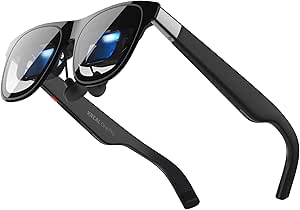 | Best for Adjustable Fit and Simple Spatial Viewing | Display: Sony 0.55-inch Micro-OLED, FHD | Virtual screen: 171 inches | Refresh rate: 120 Hz | VIEW LATEST PRICE | See Our Full Breakdown |
| VITURE Pro 2 XR Glasses with 120Hz Display and Adjustable Myopia Correction |  | Best for Built-In Myopia Adjustment | Virtual display: 146 inches | Resolution: 1080p | Panel: Sony Micro-OLED | VIEW LATEST PRICE | See Our Full Breakdown |
| ASUS AirVision M1 Smart AR Glasses with 100-Inch Micro-OLED Display |  | Best for Multi-Screen Work | Display: Micro-OLED | Resolution: 1920 × 1080 | Virtual screen size: Up to 100 inches | VIEW LATEST PRICE | See Our Full Breakdown |
| VITURE Luma Ultra XR Glasses with 6DoF Tracking and Hand Gesture Support |  | Best for Spatial Computing | Display resolution: 1200p | Virtual screen size: Up to 152 inches | Field of view: 52° | VIEW LATEST PRICE | See Our Full Breakdown |
| RayNeo Air 4 Pro AR/XR Glasses with HDR10 Display and Bang & Olufsen Audio |  | Best for Movies and Gaming | Display size: 201 inches | Display technology: HDR10 | Refresh rate: 120Hz | VIEW LATEST PRICE | See Our Full Breakdown |
| Maverick Sport Augmented Reality Glasses for Golf, Cycling, Running, Driving, and Navigation |  | Best for Outdoor Sports and Navigation | Display: Sony OLED | Water and dust resistance: IP55 | Battery life: Up to 10 hours of continuous use | VIEW LATEST PRICE | See Our Full Breakdown |
| Rokid Max 2 AR Glasses with 215-Inch Micro-OLED Display |  | Best for Lightweight Screen Mirroring | Display: Micro-OLED | Virtual screen size: 215 inches at 6 meters | Field of view: 50° | VIEW LATEST PRICE | See Our Full Breakdown |
| TOZO VIZO Z1 Pro AR Glasses with 160-Inch Virtual Display |  | Best for Lightweight, Adjustable Wear | Display: Micro-OLED | Resolution: Up to 1920 × 1080 per eye | Refresh rate: Up to 120Hz | VIEW LATEST PRICE | See Our Full Breakdown |
| VITURE Beast XR/AR Glasses, 1200p, 58° FOV |  | Best for Fit Adjustability and Screen Positioning | Display: Sony Micro-OLED | Resolution: 1200p per eye | Field of view: 58° | VIEW LATEST PRICE | See Our Full Breakdown |
| XREAL xbx a01+ AR Glasses with 147-Inch Display |  | Best Lightweight Pick for Stabilized Viewing | Display: Dual Micro-OLED | Resolution: 1920 × 1080 per eye | Virtual display: 147 inches | VIEW LATEST PRICE | See Our Full Breakdown |
| XREAL One Pro AR Glasses with X1 Chip, 57° FOV, 120Hz OLED Display, Dual IPD (57-66mm) |  | Best for Built-In Spatial Processing | Processor: X1 Spatial Computing Chip | Tracking: Native 3DoF; 6DoF with XREAL Eye | Display: Micro-OLED, 1920 × 1080 | VIEW LATEST PRICE | See Our Full Breakdown |
| VITURE Luma Ultra XR Glasses |  | Best for Multi-Screen Workspaces | Display: Sony Micro-OLED | Resolution: 1200p | Brightness: Up to 1500 nits | VIEW LATEST PRICE | See Our Full Breakdown |
| AR glasse | Refresh rate | Display | Connectivity | Audio |
|---|---|---|---|---|
| RayNeo Air 3s AR/XR Glasses wi | 120 Hz | FHD HueView; 201-inch virtual screen | USB | Built-in speakers with dual opposing acoustic chambers |
| XREAL 1S AR Glasses | 120 Hz | — | USB-C DisplayPort | Bose-tuned open-ear audio |
| XREAL 1 Pro+ AR Glasses with 1 | 120 Hz | OLED, 1920 × 1080 | USB Type-C | — |
| XREAL One Pro AR Glasses with | 120 Hz | Sony 0.55-inch Micro-OLED, FHD | — | Bose-tuned built-in audio |
| VITURE Pro 2 XR Glasses with 1 | 120 Hz | — | USB-C video output | — |
| ASUS AirVision M1 Smart AR Gla | — | Micro-OLED | USB-C cable | Built-in speakers and noise-canceling microphone |
| VITURE Luma Ultra XR Glasses w | 120Hz | — | — | Harman-tuned audio |
| RayNeo Air 4 Pro AR/XR Glasses | 120Hz | — | USB Type-C | Four Bang & Olufsen-tuned speakers with open-ear spatial audio |
| Maverick Sport Augmented Reali | — | Sony OLED | — | — |
| Rokid Max 2 AR Glasses with 21 | 120Hz | Micro-OLED | USB-C | — |
| TOZO VIZO Z1 Pro AR Glasses wi | Up to 120Hz | Micro-OLED | USB-C DisplayPort | Dual built-in stereo speakers |
| VITURE Beast XR/AR Glasses | 120Hz | Sony Micro-OLED | — | — |
| XREAL xbx a01+ AR Glasses with | — | Dual Micro-OLED | USB-C DisplayPort | Built-in directional speakers with four audio modes |
| XREAL One Pro AR Glasses with | 120Hz | Micro-OLED, 1920 × 1080 | USB-C, Bluetooth, Wi-Fi | — |
| VITURE Luma Ultra XR Glasses | Up to 120Hz | Sony Micro-OLED | — | HARMAN-tuned open-ear audio |
More Details on Our Top Picks
RayNeo Air 3s AR/XR Glasses with 201-Inch FHD HueView Display
The RayNeo Air 3s is a strong fit for buyers who put vivid, accurate color ahead of spatial tracking. Its 98% DCI-P3 coverage, stated ΔE below 2, and 120 Hz refresh rate suit films and fast-moving games, while its 201-inch virtual display is larger than the XREAL One Pro’s 171-inch screen. Unlike that XREAL model, the Air 3s does not list native 3DoF tracking, so it is better understood as a personal display than a spatial-screen experience. OptiCare dimming and eye-comfort certifications add viewing-focused features, though the maker recommends regular breaks. Built-in speakers avoid extra headphones, but the glasses still depend on a compatible USB-connected device and offer no water resistance.
Pros:- 98% DCI-P3 color coverage and stated ΔE below 2 support vivid, accurate-looking content.
- 120 Hz refresh rate suits fast video and games.
- OptiCare dimming and TÜV SÜD low-blue-light and flicker-free certifications add eye-comfort features.
- Built-in speakers use dual opposing acoustic chambers.
Cons:- No native 3DoF tracking is listed, unlike the XREAL 1S and XREAL One Pro.
- Requires a compatible connected device rather than operating as a standalone display.
- Not water resistant, and the manufacturer recommends breaks during use.
Best for: Viewers and gamers who prioritize color accuracy, smooth motion, and a large private screen for compatible USB-connected devices.
Not ideal for: Buyers seeking native head tracking, water resistance, or long uninterrupted viewing sessions.
- Display:FHD HueView; 201-inch virtual screen
- Refresh rate:120 Hz
- Color:98% DCI-P3; ΔE <2
- Contrast ratio:200,000:1
- Dimming:3840 Hz DC dimming and PWM dimming
- Audio:Built-in speakers with dual opposing acoustic chambers
- Connectivity:USB
- Weight:2.88 oz
Our verdict“Choose the Air 3s for color-focused video and gaming, but pick an XREAL model if native spatial tracking matters more.”
XREAL 1S AR Glasses – 500″ Virtual Screen, Powered by X1 Chip, Native 3DoF
The XREAL 1S stands out for its advertised 500-inch virtual screen and native 3DoF, giving it a more spatial viewing approach than the screen-focused RayNeo Air 3s. Its X1 chip handles head tracking in the glasses, while a 120 Hz display and stated 3 ms latency are aimed at keeping movement smooth. The tradeoff is a 52-degree field of view, which may make the huge screen feel less expansive than its size suggests. It also needs a USB-C DisplayPort-enabled source for video and power, so the large virtual display is not a standalone setup. Bose-tuned open-ear audio and TÜV Rheinland eye-comfort certification strengthen its case for personal entertainment, but buyers wanting more brightness and a wider listed field of view may prefer the XREAL 1 Pro+.
Pros:- Advertised 500-inch virtual screen offers the largest listed display in this group.
- Native 3DoF tracking is handled by the X1 chip.
- 120 Hz refresh rate and stated 3 ms latency support smooth motion.
- Bose-tuned open-ear audio and TÜV Rheinland eye-comfort certification.
Cons:- Requires a USB-C DisplayPort-enabled device for video and power.
- The 52-degree field of view may feel narrow despite the large virtual-screen claim.
- Tethered operation means it has no independent battery autonomy.
Best for: USB-C DisplayPort device owners who want a very large virtual screen with built-in head tracking for films, games, or work.
Not ideal for: Buyers without a USB-C DisplayPort video source, or those who want standalone operation or a wider field of view.
- Virtual screen:Up to 500 inches
- Resolution:1920 × 1200
- Display type:OLED
- Refresh rate:120 Hz
- Field of view:52 degrees
- Tracking:Native 3DoF via X1 chip
- Connectivity:USB-C DisplayPort
- Audio:Bose-tuned open-ear audio
Our verdict“Pick the XREAL 1S if screen scale and native 3DoF matter most and you already have a compatible USB-C DisplayPort source.”
XREAL 1 Pro+ AR Glasses with 171-Inch Spatial Display
The XREAL 1 Pro+ is the more feature-rich spatial-display pick here, pairing native 3DoF with a 57-degree field of view, 120 Hz OLED panels, and brightness rated up to 1200 nits. Compared with the XREAL One Pro, it adds listed AI HDR, Real 3D conversion, and higher peak brightness, which gives buyers more ways to adapt content and viewing conditions. Its 171-inch virtual screen is smaller on paper than the XREAL 1S’s 500-inch claim, but the Pro+ emphasizes display capability rather than headline screen size. There is a catch for buyers who want anchored placement: 6DoF requires the optional XREAL Eye. It also depends on USB-C video output, so device compatibility should guide the decision before its premium feature set does.
Pros:- Native 3DoF tracking is built in through the X1 chip.
- 120 Hz OLED display with brightness rated up to 1200 nits.
- 57-degree field of view and stated 39 PPD clarity.
- Real 3D conversion and three-level electrochromic dimming.
Cons:- 6DoF spatial anchoring requires the optional XREAL Eye.
- USB-C video connectivity limits use with devices that lack compatible output.
- Its 171-inch virtual screen is smaller than the XREAL 1S’s advertised 500-inch screen.
Best for: Buyers who want native 3DoF, bright OLED visuals, and on-glasses 3D conversion from a compatible USB-C device.
Not ideal for: Shoppers who need 6DoF anchoring included, use devices without USB-C video output, or want a standalone headset.
- Virtual display:171 inches
- Display:OLED, 1920 × 1080
- Refresh rate:120 Hz
- Peak brightness:Up to 1200 nits
- Field of view:57 degrees
- Clarity:39 PPD
- Tracking:Native 3DoF; optional XREAL Eye for 6DoF
- Connectivity:USB Type-C
Our verdict“Choose the XREAL 1 Pro+ for its brighter, feature-rich spatial display, provided you can live with USB-C dependence and optional 6DoF hardware.”
XREAL One Pro AR Glasses with X1 Chip, 171-Inch 120Hz FHD Display and Native 3DoF
The XREAL One Pro offers a clear route into spatial viewing: its X1 chip provides native 3DoF, so basic head-tracked screen placement does not depend on an add-on. The 171-inch virtual display, 57-degree field of view, and 120 Hz Micro-OLED are closely matched to the XREAL 1 Pro+, but the Pro+ lists a higher peak brightness and adds Real 3D conversion. In return, the One Pro gives buyers two IPD fit ranges, adjustable lens tint, and Bose-tuned audio, making fit flexibility a central strength. Its 700-nit stated brightness is lower than the Pro+ model’s 1200 nits, and 6DoF anchoring still requires the optional XREAL Eye. HDMI sources may need an adapter or Beam.
Pros:- Native 3DoF tracking with stated 3 ms motion-to-photon latency.
- 120 Hz Micro-OLED display with a 57-degree field of view.
- Two IPD fit options accommodate different interpupillary distances.
- Adjustable electrochromic tint and Bose-tuned built-in audio.
Cons:- 6DoF spatial anchoring requires the optional XREAL Eye.
- 700-nit stated brightness is lower than the XREAL 1 Pro+ specification.
- HDMI devices may need an additional Beam or adapter.
Best for: People who want native 3DoF screen tracking and need a choice of medium or large IPD fit for compatible USB-C video devices.
Not ideal for: Buyers prioritizing the highest listed brightness, built-in 6DoF anchoring, or direct HDMI connection.
- Display:Sony 0.55-inch Micro-OLED, FHD
- Virtual screen:171 inches
- Refresh rate:120 Hz
- Brightness:Up to 700 nits
- Field of view:57 degrees
- Tracking:Native 3DoF; optional XREAL Eye for 6DoF
- IPD fit options:M: 57–66 mm; L: 66–75 mm
- Audio:Bose-tuned built-in audio
Our verdict“Pick the XREAL One Pro for native 3DoF and flexible fit options, but favor the Pro+ if higher listed brightness and Real 3D matter more.”
VITURE Pro 2 XR Glasses with 120Hz Display and Adjustable Myopia Correction
The VITURE Pro 2 addresses a practical fit issue that the XREAL models here do not list: independent myopia adjustment from 0 to -5.00D per eye. That can reduce the need for prescription lens inserts for some nearsighted wearers. Its 120 Hz Sony Micro-OLED display and stated 1600-nit peak brightness make it a capable personal screen, though its 146-inch virtual display and 50-degree field of view are more modest than the XREAL One Pro’s 171 inches and 57 degrees. Seven nose-pad sizes and a removable shade help with physical fit and viewing conditions, but compatibility is not universal: some consoles, HDMI devices, and older phones need separate accessories. It also may feel warm during use.
Pros:- Independent myopia adjustment from 0 to -5.00D per eye.
- 120 Hz Sony Micro-OLED display with stated 1600-nit peak brightness.
- Seven nose-pad sizes and a removable lens shade support fit and viewing preferences.
- Supports real-time 2D-to-3D conversion on compatible devices.
Cons:- Some consoles, HDMI devices, older phones, and non-USB-C setups need separate accessories.
- The 50-degree field of view is narrower than the XREAL One Pro’s 57 degrees.
- May feel warm during use.
Best for: Nearsighted users who want a personal display with built-in per-eye correction and a range of nose-pad sizes.
Not ideal for: Buyers who need a wide field of view, native spatial tracking, or plug-and-play compatibility with HDMI and older devices.
- Virtual display:146 inches
- Resolution:1080p
- Panel:Sony Micro-OLED
- Refresh rate:120 Hz
- Peak brightness:1600 nits
- Field of view:50 degrees
- Myopia adjustment:0 to -5.00D per eye
- Weight:63 g
- Connectivity:USB-C video output
Our verdict“Choose the VITURE Pro 2 if built-in nearsightedness adjustment is your priority, and look to an XREAL model for native spatial tracking or a wider field of view.”
ASUS AirVision M1 Smart AR Glasses with 100-Inch Micro-OLED Display
The ASUS AirVision M1 is the work-focused pick here: its AirVision app supports adjustable display layouts and multi-screen setups, giving it a clearer productivity angle than the RayNeo Air 4 Pro, which emphasizes HDR entertainment. The 1080p Micro-OLED display, up to 1,100 nits of brightness, and 95% DCI-P3 coverage make text and color-rich content its central strengths. At 87 g, it is relatively light, and its built-in speakers and noise-canceling microphone cover basic calls without extra audio gear.
The tradeoff is a wired, device-dependent setup: it needs a compatible USB-C source and has no water resistance. Its stated virtual screen is smaller than the Rokid Max 2’s, and the included prescription lens module does not include prescription lenses. I’d choose it for desk-style viewing, not outdoor sports or a self-contained AR experience.
Pros:- AirVision app supports multi-screen layouts and display adjustments.
- 1080p Micro-OLED display with up to 1,100 nits brightness and 95% DCI-P3 coverage.
- 87 g design includes speakers and a noise-canceling microphone.
- Supplied prescription lens module provides a route to custom lenses.
Cons:- Requires a compatible device over a USB-C cable.
- Not water resistant, limiting use in rain or sweaty outdoor activities.
- Prescription lenses are not included with the lens module.
Best for: Laptop and compatible-device users who want an adjustable virtual workspace with multi-screen layouts and built-in call audio.
Not ideal for: Buyers who need untethered use, weather resistance, or prescription lenses ready to wear without arranging their own lenses.
- Display:Micro-OLED
- Resolution:1920 × 1080
- Virtual screen size:Up to 100 inches
- Maximum brightness:1,100 nits
- Color gamut:95% DCI-P3
- Connectivity:USB-C cable
- Weight:87 g (3.2 oz)
- Audio:Built-in speakers and noise-canceling microphone
Our verdict“Choose the AirVision M1 if adjustable multi-screen work matters more than a larger virtual screen or outdoor-ready features.”
VITURE Luma Ultra XR Glasses with 6DoF Tracking and Hand Gesture Support
The VITURE Luma Ultra is the most spatial-computing-focused option in this group. Its 6DoF tracking, enabled by three cameras, can anchor virtual content in space rather than limiting the experience to a screen that follows your view. SpaceWalker adds multi-screen modes for Mac and PC, while 1200p resolution, a 52° field of view, and a 120Hz refresh rate support a more expansive, fluid image than the ASUS AirVision M1’s 1080p, 100-inch display.
That extra capability comes with compatibility caveats. Mobile 6DoF is listed as coming soon, and hand gestures require a VITURE Pro Neckband; some features also depend on software or compatible devices. The built-in myopia adjustment and electrochromic film are useful fit and viewing aids, but this is a less straightforward plug-in display than the RayNeo Air 4 Pro. I’d pick it for spatial workflows, not for buyers seeking the simplest setup.
Pros:- Three-camera system supports 6DoF spatial tracking.
- SpaceWalker offers multi-screen modes on Mac and PC.
- 1200p display pairs a 52° field of view with a 120Hz refresh rate.
- Built-in myopia adjustment up to -4.0D and electrochromic film.
Cons:- Hand gesture recognition requires pairing with the VITURE Pro Neckband.
- Mobile 6DoF support is listed as coming soon.
- Some features depend on compatible devices or software.
Best for: XR enthusiasts and Mac or PC users who want tracked spatial screens and are willing to check device and accessory requirements.
Not ideal for: Buyers who want mobile 6DoF or gesture controls to work immediately without extra hardware or software dependencies.
- Display resolution:1200p
- Virtual screen size:Up to 152 inches
- Field of view:52°
- Peak brightness:1,500 nits
- Refresh rate:120Hz
- Tracking:6DoF with front RGB camera and dual depth cameras
- Myopia adjustment:Built-in adjustment up to -4.0D
- Supported IPD range:58–70 mm
- Audio:Harman-tuned audio
Our verdict“Pick the Luma Ultra for spatial tracking and multi-screen XR features, provided your devices and accessories support the functions you want.”
RayNeo Air 4 Pro AR/XR Glasses with HDR10 Display and Bang & Olufsen Audio
The RayNeo Air 4 Pro is the entertainment-first choice, pairing an HDR10 display and 120Hz refresh rate with AI SDR-to-HDR upscaling. Its four Bang & Olufsen-tuned speakers deliver open-ear spatial audio, so movie and game sound does not require a separate headset. Compared with the ASUS AirVision M1, it puts less emphasis on multi-screen work modes and more on a large, vivid media image; its listed 201-inch display also exceeds the ASUS model’s 100-inch virtual screen.
USB-C plug-and-play operation without Wi-Fi or an internal battery keeps the setup direct, but also means the glasses rely on a compatible connected device. The Sound Tube is sold separately for more focused listening, and the listed 2D-to-3D conversion applies to compatible iPhones rather than every source. I’d favor this model for personal viewing, while the VITURE Luma Ultra is the better fit for tracked spatial interaction.
Pros:- HDR10 display with 120Hz refresh and AI SDR-to-HDR upscaling.
- Four Bang & Olufsen-tuned speakers provide open-ear spatial audio.
- USB-C connection works without Wi-Fi or an internal battery.
- Native 3D viewing and AI-assisted 2D-to-3D conversion are supported on compatible iPhones.
Cons:- Requires a compatible USB-C device and does not have an internal battery.
- Sound Tube for more focused audio is sold separately.
- Specified 2D-to-3D conversion support is limited to iPhone 15, 16, and 17.
Best for: Phone, tablet, handheld-console, and laptop users who want a large, high-refresh-rate personal screen with built-in spatial audio.
Not ideal for: Buyers seeking untethered glasses, broad 2D-to-3D conversion across devices, or more focused audio without an additional accessory.
- Display size:201 inches
- Display technology:HDR10
- Refresh rate:120Hz
- Processor:Vision 4000
- Audio:Four Bang & Olufsen-tuned speakers with open-ear spatial audio
- Connectivity:USB Type-C
- Weight:2.72 ounces
- Compatible devices:iPhone 15/16/17, Android devices, MacBook, iPad, Steam Deck, PS5, Switch 2
Our verdict“Choose the RayNeo Air 4 Pro for vivid, high-refresh-rate media viewing and built-in open-ear audio rather than spatial productivity features.”
Maverick Sport Augmented Reality Glasses for Golf, Cycling, Running, Driving, and Navigation
The Maverick Sport takes a different approach from screen-mirroring glasses such as the Rokid Max 2: it is designed to put activity data and directions in your line of sight while you move. Its apps cover golf, fitness, driving, walking, and translation, with Strava sync and Garmin radar integration giving it specific appeal to athletes already using those tools. An IP55 rating for rain and dust and up to 10 hours of continuous battery life also suit outdoor sessions better than the indoor-oriented ASUS AirVision M1, which is not water resistant.
The focused design is also its limitation. Maverick offers purpose-built apps rather than a broad third-party app store, so it is less adaptable for general media or virtual-screen use. The product information does not provide display resolution or field of view, making image-detail comparisons with the Micro-OLED Rokid difficult. I’d choose this for glanceable sports and route information, not as a replacement for a large personal display.
Pros:- Displays sports data and navigation directions in the line of sight.
- Purpose-built apps cover sports, driving, walking, and translation.
- IP55-rated for water and dust resistance.
- Up to 10 hours of continuous battery life, with Strava sync and Garmin radar integration.
Cons:- Uses a focused set of apps rather than a broad third-party app store.
- Product data does not specify display resolution or field of view.
- Its sports-oriented functions make it less suited to general virtual-screen viewing than the Rokid Max 2.
Best for: Golfers, runners, cyclists, and drivers who want glanceable activity metrics or directions and use compatible sports integrations.
Not ideal for: Buyers seeking a general-purpose virtual screen, a broad third-party app ecosystem, or detailed published display specifications.
- Display:Sony OLED
- Water and dust resistance:IP55
- Battery life:Up to 10 hours of continuous use
- Included apps:E-Sport, E-Drive, E-Walk, E-Translate
- Integrations:Strava sync and Garmin radar integration
- Intended activities:Golf, cycling, running, driving, walking, and navigation
Our verdict“Pick the Maverick Sport for outdoor metrics and navigation, but choose conventional display glasses if media viewing is your main goal.”
Rokid Max 2 AR Glasses with 215-Inch Micro-OLED Display
The Rokid Max 2 is a straightforward screen-mirroring pick for buyers who want a large virtual image without moving up to the VITURE Luma Ultra’s camera-based 6DoF features. Its 215-inch virtual screen, 50° field of view, and 120Hz refresh rate favor immersive video and gaming, while the 75 g frame is lighter than the ASUS AirVision M1. A USB-C connection handles both power and mirroring, making the core setup simpler than the Maverick Sport’s activity-specific app approach.
Its standout fit feature is a built-in myopia adjustment dial, rated for up to 600 diopters, plus adjustable nose pads. That does not solve every vision need: astigmatism and presbyopia are not supported, and higher myopia calls for separate prescription lenses. The 600-nit maximum brightness is also lower than the ASUS and VITURE figures, and the glasses need a compatible USB-C source for power. I’d choose it for light, wired viewing, not tracked spatial work or users who need specialized prescriptions.
Pros:- Micro-OLED display with a listed 215-inch virtual screen and 120Hz refresh rate.
- 75 g design is lighter than the ASUS AirVision M1.
- Built-in myopia adjustment up to 600 diopters and adjustable nose pads.
- USB-C supports screen mirroring and supplies power.
Cons:- Does not support astigmatism or presbyopia; higher myopia requires separate prescription lenses.
- Requires a compatible USB-C device for power and screen mirroring.
- Maximum brightness of 600 nits is below the listed ASUS AirVision M1 and VITURE Luma Ultra figures.
Best for: Travelers and media viewers who want a lightweight, large-screen USB-C display and fall within the supported myopia adjustment range.
Not ideal for: People with astigmatism, presbyopia, or myopia beyond the built-in correction range, and buyers who need 6DoF tracking or untethered use.
- Display:Micro-OLED
- Virtual screen size:215 inches at 6 meters
- Field of view:50°
- Refresh rate:120Hz
- Maximum brightness:600 nits
- Connectivity:USB-C
- Myopia adjustment:Up to 600 diopters
- Weight:75 grams
- Compatibility:Compatible smartphones, Windows laptops, iPad (2020 or later), and Mac
Our verdict“Choose the Rokid Max 2 for lightweight, large-screen USB-C viewing if its myopia adjustment suits your prescription needs.”
TOZO VIZO Z1 Pro AR Glasses with 160-Inch Virtual Display
The TOZO VIZO Z1 Pro pairs a light 63 g frame with Full HD Micro-OLED panels and a refresh rate of up to 120Hz, making it a straightforward pick for movies, gaming, and a large private screen. Its adjustable diopters and in-eye brightness controls offer useful fit and viewing adjustments without adding a tracking or software setup layer. Compared with the XREAL xbx a01+, it adds diopter adjustment but gives up that model’s specified stabilized view tracking. The 160-inch figure describes a virtual display, not a screen you can view around in a room, and device compatibility depends on USB-C DisplayPort output. This makes the TOZO a better match for viewers who value a light, adjustable display over spatial features; buyers seeking screen positioning should look at the VITURE Beast instead.
Pros:- Approximately 63 g frame is comparatively light for longer viewing sessions.
- Full HD per-eye Micro-OLED resolution and up to 120Hz refresh rate suit video and gaming.
- Adjustable diopters and in-eye brightness provide useful personal fit and viewing controls.
- Built-in stereo speakers and tactile controls avoid relying on earbuds or touch-only operation.
Cons:- USB-C DisplayPort video output is required, limiting compatibility with some devices.
- The 160-inch screen is a virtual display rather than a physical screen.
- No tracking or screen-positioning feature is specified.
Best for: Viewers who want lightweight USB-C display glasses with diopter adjustment for compatible phones, tablets, or computers.
Not ideal for: Buyers who need built-in spatial tracking or want glasses that connect to devices without USB-C DisplayPort video output.
- Display:Micro-OLED
- Resolution:Up to 1920 × 1080 per eye
- Refresh rate:Up to 120Hz
- Virtual display:160-inch equivalent
- Weight:Approximately 63 g
- Diopter adjustment:0 to 600°
- Connectivity:USB-C DisplayPort
- Audio:Dual built-in stereo speakers
Our verdict“Choose the TOZO VIZO Z1 Pro if you want a light, adjustable personal display and do not need spatial tracking.”
VITURE Beast XR/AR Glasses, 1200p, 58° FOV
The VITURE Beast is the flexible-fit choice here: adjustable arms, interchangeable nose pads, two fit sizes, and a prescription-ready design give buyers more ways to adapt the glasses than the simpler TOZO VIZO Z1 Pro. Its built-in 3DoF lets users reposition and re-center the virtual display, which is useful when a fixed-in-view screen does not suit a particular task. The 174-inch virtual display, 1200p per eye, and 120Hz refresh rate form a strong viewing package, while electrochromic dimming helps adapt the lenses to different surroundings. The tradeoff is an 88 g frame, heavier than the TOZO and XREAL xbx a01+. SpaceWalker features also depend on a compatible device, so this is a less simple choice for anyone who only wants plug-in viewing.
Pros:- Adjustable arms, interchangeable nose pads, and regular or large fit options broaden fit flexibility.
- Built-in 3DoF supports screen positioning and smart re-centering.
- 1200p-per-eye Micro-OLED display refreshes at up to 120Hz.
- Electrochromic dimming offers nine or more levels for adapting to different settings.
Cons:- At 88 g, the frame is heavier than the TOZO VIZO Z1 Pro and XREAL xbx a01+.
- SpaceWalker multi-screen features require a compatible device.
- The 174-inch display is virtual, not a physical screen.
Best for: People who need multiple fit adjustments, prescription-ready glasses, and a repositionable virtual screen for compatible devices.
Not ideal for: Buyers who prioritize the lightest possible frame or want spatial and multi-screen features without checking device support.
- Display:Sony Micro-OLED
- Resolution:1200p per eye
- Field of view:58°
- Virtual display:174 inches
- Refresh rate:120Hz
- Tracking:Built-in 3DoF
- Weight:88 g
- Fit options:Regular up to 70 IPD; large up to 74 IPD
- Compatibility:SpaceWalker for iOS, Android, macOS, and Windows
Our verdict“Pick the VITURE Beast if fit options and built-in screen positioning matter more to you than minimum weight or simple setup.”
XREAL xbx a01+ AR Glasses with 147-Inch Display
At 62 g, the XREAL xbx a01+ is the lightest option in this five-product group, and its stabilized view tracking helps keep the virtual screen centered rather than simply following head movement. That distinction sets it apart from the TOZO VIZO Z1 Pro, which is similarly focused on display viewing but does not list tracking. Dual 1080p Micro-OLED panels, HDR10, and brightness up to 1600 nits make this a compelling choice for compatible-device movies and games; directional speakers provide audio without earbuds. The connection is less universal than the feature list may suggest: some consoles and older iPhones need an adapter, and prescription inserts are sold separately. Skip it if you need water resistance or want tracking features beyond stabilized viewing.
Pros:- 62 g frame is the lightest among these five picks.
- Dual 1920 × 1080 Micro-OLED panels support HDR10 and up to 1600 nits brightness.
- Stabilized view tracking helps keep the screen centered.
- Directional speakers offer four audio modes without requiring earbuds.
Cons:- Nintendo Switch, Switch 2, and older Lightning iPhones require an adapter.
- Prescription inserts are optional and sold separately.
- The glasses are not water resistant.
Best for: Travelers and handheld gamers who want a light Full HD virtual display with stabilized viewing on USB-C DisplayPort devices.
Not ideal for: People who need built-in water resistance, included prescription correction, or direct connection to devices that require an adapter.
- Display:Dual Micro-OLED
- Resolution:1920 × 1080 per eye
- Virtual display:147 inches
- Maximum brightness:1600 nits
- Weight:62 g
- Connectivity:USB-C DisplayPort
- Audio:Built-in directional speakers with four audio modes
- Prescription support:Optional inserts sold separately
- Water resistance:Not water resistant
Our verdict“Choose the XREAL xbx a01+ for lightweight, stabilized viewing, provided your device connects directly or you are willing to use an adapter.”
XREAL One Pro AR Glasses with X1 Chip, 57° FOV, 120Hz OLED Display, Dual IPD (57-66mm)
The XREAL One Pro makes its case with the X1 Spatial Computing chip: native 3DoF tracking and 3 ms latency are built in, so screen positioning does not hinge on an external computing accessory. That gives it a more self-contained spatial setup than the VITURE Beast, whose positioning and customization run through compatible SpaceWalker features. Its 57° field of view, 120Hz Full HD Micro-OLED display, and simulated 171-inch screen are aimed at buyers who want more than a static display. Dual IPD ranges also make fit adjustment more specific. The main caveat is that full 6DoF requires the optional XREAL Eye, and older iPhones may need another adapter or beam. This is a strong fit for spatial-screen users, but excessive if a basic USB-C display is all you need.
Pros:- X1 chip provides native 3DoF tracking with specified 3 ms latency.
- 57° field of view and 120Hz refresh rate support an immersive, smooth virtual display.
- Dual IPD ranges provide a more tailored fit across different users.
- USB-C video support covers compatible phones, computers, and handheld gaming devices.
Cons:- Full 6DoF spatial anchoring requires the optional XREAL Eye.
- Older iPhone models may need an additional beam or adapter.
- No water resistance is specified.
Best for: Users who want native 3DoF screen positioning and low-latency spatial viewing with compatible phones, computers, or handhelds.
Not ideal for: Buyers who only need a simple personal screen, require full 6DoF without an accessory, or need water-resistant glasses.
- Processor:X1 Spatial Computing Chip
- Tracking:Native 3DoF; 6DoF with XREAL Eye
- Display:Micro-OLED, 1920 × 1080
- Refresh rate:120Hz
- Field of view:57°
- Virtual display:171 inches
- IPD ranges:57–66 mm (M); 66–75 mm (L)
- Connectivity:USB-C, Bluetooth, Wi-Fi
Our verdict“Choose the XREAL One Pro if native 3DoF and adjustable IPD are priorities, and treat 6DoF as an optional accessory upgrade.”
VITURE Luma Ultra XR Glasses
The VITURE Luma Ultra is the productivity-oriented pick: its 1200p Sony Micro-OLED display, up-to-120Hz refresh rate, and SpaceWalker multi-screen workspaces are suited to users who want more than one virtual screen from a compatible device. The front RGB camera and dual depth cameras distinguish it from the VITURE Beast, which emphasizes built-in 3DoF screen positioning and fit options instead. Open-ear HARMAN-tuned audio also keeps the wearer more aware of nearby sound than closed headphones would. The limitations are closely tied to its advanced features: 3DoF and multi-screen support vary by platform, while full 6DoF tracking and hand gestures require the VITURE Pro Neckband. Some devices also need a compatible dock or adapter, so check your setup before choosing it over a simpler USB-C display model.
Pros:- 1200p Sony Micro-OLED display supports refresh rates up to 120Hz.
- SpaceWalker offers multi-screen workspaces on compatible platforms.
- Open-ear HARMAN-tuned audio helps preserve awareness of surroundings.
- Front RGB and dual depth cameras support the glasses’ XR feature set.
Cons:- Full 6DoF tracking and hand gesture control require the VITURE Pro Neckband.
- Feature support varies by device, operating system, app, and connection method.
- Some consoles and other devices need a compatible dock or adapter.
Best for: Mobile and laptop users who want SpaceWalker multi-screen workspaces and open-ear audio on a supported device.
Not ideal for: Buyers who want full 6DoF or gesture controls without a separate Neckband, or whose device lacks supported video output.
- Display:Sony Micro-OLED
- Resolution:1200p
- Brightness:Up to 1500 nits
- Refresh rate:Up to 120Hz
- Field of view:52°
- Virtual display:152 inches
- Cameras:Front RGB camera and dual depth cameras
- Audio:HARMAN-tuned open-ear audio
- Tracking:3DoF on supported SpaceWalker platforms; 6DoF requires VITURE Pro Neckband
Our verdict“Choose the VITURE Luma Ultra for compatible multi-screen work and open-ear audio, but budget for the Neckband if you need 6DoF or gesture controls.”

How We Picked
I compared the 15 listed models by the factors that shape an AR-glasses purchase: display clarity and refresh rate where specified, spatial tracking, adjustment options, audio features, stated viewing size, and the range of likely use cases. I also considered whether a feature adds practical value for watching video, gaming, working with a virtual screen, or using information during an activity. Product names and listed specifications provide the basis for these comparisons; I do not treat advertised screen size as a direct measure of real-world comfort or usable field of view.
The order prioritizes versatility and meaningful capability over the largest numerical screen claim. Models with native 3DoF, a dedicated processing chip, 6DoF tracking, or useful fit adjustments rank highly for buyers seeking more than basic screen mirroring. Specialized picks remain valuable for their intended users, but sit lower for general-purpose use; where two entries appear to be variants of the same model, I distinguish them only by the specifications given rather than assuming unlisted differences.
Factors to Consider When Choosing Best AR Glasses
Specs can narrow the field, but the best match depends on what you connect, where you wear the glasses, and how long you use them. I’d settle those practical questions before choosing based on a screen-size claim or a feature list.
Start With Your Main Use
Decide whether your primary job is watching video, extending a laptop screen, gaming, or viewing prompts during an activity. These uses place different demands on glasses: a movie viewer may value image quality and audio, while spatial work benefits from screen positioning and tracking. A feature-rich model can be a poor fit if you only need a display connected to a phone. Conversely, a basic screen-mirroring option may feel limiting if you expect interactive spatial controls. Choose one main use and one secondary use before comparing specifications. That keeps an impressive but irrelevant feature from driving the purchase.
Treat Virtual Screen Size as a Claim, Not a Comfort Score
Manufacturers describe virtual displays with different screen-size figures, so those numbers do not create a dependable head-to-head ranking by themselves. A bigger stated image may sound compelling, yet comfort also depends on the field of view, how the image sits in your vision, and whether you can keep it clear. Look for details that describe the viewing experience, not only the diagonal size. If possible, check fit and return terms before committing, since face shape and eye position affect how usable a virtual screen feels. Avoid paying extra for a larger number unless it supports the way you plan to watch or work.
Check Tracking Needs Before Paying for Spatial Features
Screen mirroring and spatial tracking solve different problems. Native 3DoF can keep a virtual screen anchored as you turn your head, while 6DoF adds awareness of movement through space; neither feature automatically makes every app or device compatible. Gesture support can make interaction more direct, but it is useful only if the software and workflows you use recognize it. If you mainly sit and watch, advanced tracking may add little value. Buyers interested in virtual workspaces or interactive content should verify the supported devices and software rather than assuming tracking specifications guarantee broad functionality.
Make Fit and Vision Adjustments a Priority
Glasses that are uncomfortable or hard to focus will spend more time stored away, even if their display is capable. Check whether a model offers nose-pad choices, fit adjustment, or vision correction suited to your prescription; the VITURE Pro 2, for example, lists adjustable myopia correction. Do not assume an adjustment covers every prescription or replaces prescription eyewear. Eye spacing and the position of the image can also affect sharpness, so confirm what the manufacturer supports for your needs. A fit feature is most valuable when it solves a specific issue you already expect to have.
Verify the Whole Device Chain
AR glasses depend on a source device, connection method, and sometimes companion software or accessories. Before buying, check that your phone, computer, or gaming device can output video in the required way and that the connection supports the functions you want. A screen may appear through a cable even when tracking or spatial controls are unavailable, so confirm each feature separately. Think about where you will use the glasses too: a setup that works at a desk may be awkward for travel. Compatibility checks prevent the common mistake of choosing by the glasses’ specs alone.
Pay More Only for a Feature You Will Use
Higher-end features make sense when they solve a repeated problem, such as needing a stable spatial screen, higher refresh rate, or activity-specific information. If your priority is casual viewing, spending more for hand tracking may bring little benefit. If you need specialized prompts while cycling, driving, or golfing, a general-purpose virtual display may not be the right substitute for purpose-built eyewear. Compare the full setup, including accessories and device requirements, rather than the glasses alone. The best value is the model whose useful features match your routine, not the one with the longest specification list.
Frequently Asked Questions
Can I use AR glasses as a monitor for a laptop or phone?
Many display-focused AR glasses can show video from a compatible phone or computer, but the connection and supported features vary by model and source device. Check whether your device can output video through the glasses’ required connection before buying. A mirrored screen is not the same as a spatial workspace: tracking, screen pinning, and multitasking may require extra support or software. Confirm those capabilities separately if you want more than a private virtual display. This is especially useful for avoiding a purchase that works for video but not for your intended work setup.
Do I need 3DoF or 6DoF tracking?
You may not need either if you want a screen that simply follows your view for movies or casual viewing. Native 3DoF is more relevant when you want a virtual screen to stay positioned as you turn your head. 6DoF adds spatial movement tracking, which can benefit interactive experiences, but it does not guarantee compatibility with every app or device. Decide based on the software you plan to use, not on the larger tracking number alone. For many buyers, fit and a reliable image matter more than advanced tracking.
Are AR glasses comfortable for people who wear prescription glasses?
Comfort depends on the frame, eye position, and the way a model handles vision correction. Some glasses list adjustable myopia correction, while others may need prescription inserts or another solution; the lineup does not establish that every prescription is supported. Check the manufacturer’s supported range and whether inserts are available before ordering. If you have astigmatism or a prescription outside the listed adjustment range, ask for compatibility details rather than assuming a diopter control will work. Fit and a clear image are personal, so a suitable return policy can also reduce risk.
Is a larger virtual screen always better?
No. Screen-size figures are stated differently across products, and a larger advertised image does not tell you how much of it you can see clearly or comfortably. Field of view, image position, sharpness, and fit all affect the experience. A smaller screen that stays clear and comfortable may be more useful for long sessions than a larger image that feels difficult to view. Compare screen-size claims alongside field-of-view details and adjustment options. Treat the number as one clue, not a verdict.
Should I choose general-purpose AR glasses or activity-specific smart glasses?
Choose based on where and how you will use the information. General-purpose display glasses in this roundup focus mainly on virtual screens for viewing, gaming, or work, while the Maverick Sport is described for activities such as golf, cycling, running, driving, and navigation. Those are different jobs, so a large virtual screen is not automatically a substitute for activity-relevant prompts. For movement outdoors, check visibility, controls, safety guidance, and the information actually shown. If most of your use is seated media or computing, a screen-focused model is likely a closer match.
Conclusion
For the strongest all-around mix of spatial capability and high-refresh viewing, I’d start with the XREAL One Pro; the two listed One Pro entries have overlapping claims, so compare their exact fit and specifications before choosing between them. For a best value starting point, consider the RayNeo Air 3s if you want a straightforward virtual screen and do not need advanced tracking; I can’t judge value by price here, so match its listed features to your needs. For a premium spatial experience, the VITURE Luma Ultra is the distinctive pick for 6DoF and hand gestures. For beginners, the ASUS AirVision M1 may suit buyers who prefer a simpler display-focused option, provided its device compatibility fits their setup. For activity-specific use, look at the Maverick Sport rather than assuming entertainment-focused AR glasses will cover outdoor prompts. If your priority is HDR viewing and audio, compare the RayNeo Air 4 Pro; if myopia adjustment matters, give the VITURE Pro 2 closer attention.