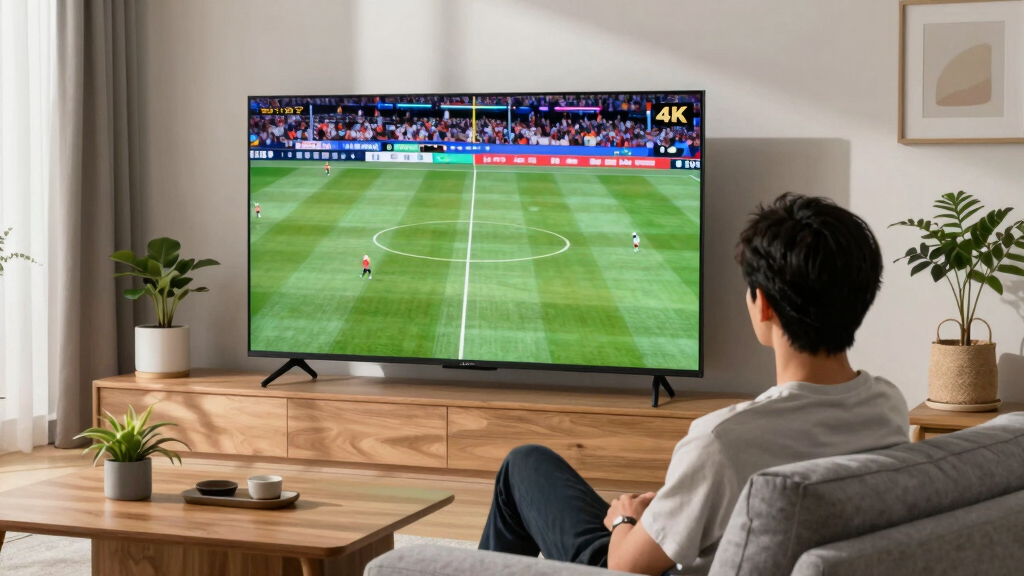

For shoppers comparing 4K smart TVs for sports viewing, I rate the TCL 55-inch QM6K as the best overall because its larger screen and Mini LED QLED display offer an appealing balance of game-day scale, contrast, and value. The Sony 43-inch BRAVIA XR is my premium motion pick, pairing a 120Hz panel with Sony’s XR processing, while the Hisense 55-inch E7 makes a strong value case with Mini LED hardware at a larger size. The main choice is between cleaner motion and processing, bigger-screen impact, and a lower price with a simpler panel. Smart-platform preference also matters because Roku, Fire TV, Google TV, and Samsung’s interface differ in app access and everyday ease. Continue reading for my full breakdown of which model fits each type of sports viewer.

Get the latest gadgets delivered free — and shop member deals
- Fast, free delivery on millions of items
- Access to Prime Big Deal Days deals on October 6–7
- Prime Video, Amazon Music and more included
Complete the kit



Key Takeaways
- The TCL 55-inch QM6K takes my best-overall spot because its Mini LED QLED display and 55-inch size create a stronger all-around sports package than the many basic 43-inch models.
- The amazon.com/dp/B0GM2DPGNT?tag=digitechbytes.com-20&ascsubtag=dc-299079″ target=”_blank” rel=”nofollow sponsored noopener”>Sony 43-inch BRAVIA XR is the motion-focused premium choice; its disclosed 120Hz panel and XR processing give it a clearer sports advantage than the lower-tier BRAVIA 2 II.
- The Hisense 55-inch E7 offers the most persuasive value combination, pairing a larger screen with Mini LED hardware instead of asking buyers to settle for a basic LED panel.
- The Samsung M70H is the standout compact Mini LED option, while the U8000F, U8000H, and Q7F suit shoppers who prioritize Samsung‘s ecosystem over the strongest motion specifications.
- The Roku Select is my easiest beginner pick, whereas the Insignia F50, Toshiba C350, Amazon Ember, and Hisense E6 make more sense for price-led Fire TV shoppers.




| 4K smart TVs for sports viewing | Screen size | Resolution |
|---|---|---|
| Sony 43-Inch BRAVIA XR Series | 43 inches | 4K HDR |
| Samsung 43-Inch Class Crystal | 43 inches | 4K UHD |
| Samsung 43-Inch Class Mini LED | 43 inches | 4K |
| Samsung 43-Inch Class Crystal | 43 inches | — |
| Samsung 43-Inch Class QLED Q7F | 43 inches | — |
| Insignia 43" Class F50 Series | 43 inches | 4K UHD (2160p) |
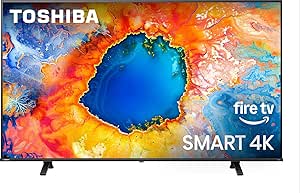
| TOSHIBA 43-Inch Class C350 Ser | 43 inches | 4K UHD |
| Amazon Ember 43" 4-Series 4K U | 43 inches | 4K Ultra HD |
| Roku Select Series 43-Inch 4K | 43 inches | 4K HDR |
| TCL 55 Inch Class QM6K Series | 55 inches | 4K HDR |
| Hisense 55-Inch E7 Cinema Seri | — | 4K UHD |
| Sony 43 Inch BRAVIA 2 II LED 4 | 43 inches | 4K HDR |
| Hisense 43-Inch E6 Cinema Seri | 43 inches | 4K UHD |
More Details on Our Top Picks
Sony 43-Inch BRAVIA XR Series 4K HDR Smart Google TV
I rank the Sony BRAVIA XR first because it combines a native 120Hz refresh rate, AI-based picture processing, and clearly documented HDMI 2.1 support. Those features help fast passes and camera pans remain readable while giving buyers room to connect modern consoles. Compared with the Samsung M70H, the Sony lacks Mini LED backlighting, so the Samsung has the stronger contrast proposition. Sony counters with Dolby Vision, Dolby Atmos, DTS:X, and a more fully specified audio system. It is also a firmer motion choice than the Samsung U8000F, whose Motion Xcelerator does not come with a stated 120Hz panel. The tradeoffs are premium pricing and a 43-inch screen that can feel undersized across a large room.
Pros:- Native 120Hz refresh rate supports clearer fast-action motion
- XR Processor adjusts detail, color, and motion
- Four HDMI 2.1 connections provide broad device flexibility
- Dolby Vision, Dolby Atmos, and DTS:X support
Cons:- 43-inch screen is small for distant seating
- Higher-cost feature set than Crystal UHD alternatives
- Mini LED backlighting is absent
Best for: I would choose this for sports fans in bedrooms, apartments, or compact dens who want smooth motion plus strong console support.
Not ideal for: I would skip it for buyers furnishing a large living room or anyone who prioritizes Mini LED black levels over broader format support.
- Screen size:43 inches
- Resolution:4K HDR
- Processor:XR Processor with AI Technology
- HDR support:Dolby Vision
- Refresh rate:120Hz
- Audio:Dolby Atmos, DTS:X, X-Balanced Speakers
- HDMI:4 x HDMI 2.1
- Gaming features:VRR, ALLM, Auto HDR Tone Mapping, Auto Genre Picture Mode
- Smart platform:Google TV with Gemini
Our verdict“I recommend the Sony BRAVIA XR as the most balanced compact choice for serious sports viewing and gaming.”
Samsung 43-Inch Class Crystal UHD U8000F 4K Smart TV
The Samsung U8000F earns its place by pairing an unusually polished metal design with accessible 4K viewing and more than 2,700 free channels. I see it as a casual-sports option for buyers who value price, appearance, and easy access to programming over advanced panel hardware. Motion Xcelerator is intended to smooth movement, but Samsung does not state a 120Hz refresh rate; the Sony BRAVIA XR and Samsung M70H are safer choices for viewers sensitive to blur during hockey or soccer. The newer Samsung U8000H also lists a Crystal Processor 4K and Color Booster, giving it a clearer picture-processing case. This model fights back with slim metal construction and Knox protection, though missing HDR-format details make its picture ceiling harder to judge.
Pros:- Motion Xcelerator provides basic smoothing for sports
- More than 2,700 free channels reduce reliance on paid services
- Slim metal design looks cleaner than many entry-level TVs
- Samsung Knox adds built-in security controls
Cons:- No 120Hz refresh rate is specified
- HDR and Dolby format support are not documented
- Picture hardware is less advanced than QLED and Mini LED alternatives
Best for: I would point budget-minded apartment viewers toward this model when slim styling and free sports-adjacent channels matter more than elite motion performance.
Not ideal for: I would steer avid hockey, motorsport, and soccer viewers elsewhere if they want a confirmed 120Hz panel or documented HDR support.
- Screen size:43 inches
- Resolution:4K UHD
- Model year:2025
- Motion technology:Motion Xcelerator
- Content access:Over 2,700 free channels, including Samsung TV Plus
- Security:Samsung Knox Security
- Design:Slim-bezel metal sheet construction
Our verdict“I recommend the U8000F for casual sports viewers seeking a stylish 43-inch 4K TV without paying for advanced display technology.”
Samsung 43-Inch Class Mini LED M70H Series Smart TV
I give the Samsung M70H the premium-picture role because its Mini LED panel and 120Hz refresh rate directly address two sports-viewing priorities: contrast under mixed lighting and cleaner fast motion. Soccer Mode also gives it a more sport-specific identity than the Samsung Q7F or U8000H. Compared with the Sony BRAVIA XR, this model has the stronger backlight technology on paper, which should help bright uniforms stand apart from darker stadium areas. The Sony remains more transparent about audio, Dolby Vision, HDMI 2.1, and variable-refresh features. Samsung provides little audio information here, so buyers may need to budget for a soundbar without knowing how capable the built-in system is. Its higher expected price also makes sense only for viewers who will appreciate Mini LED contrast.
Pros:- Mini LED backlighting supports deeper blacks and stronger contrast
- 120Hz refresh rate suits rapid sports action
- Soccer Mode targets sport-specific viewing
- Gaming Hub and Samsung TV Plus broaden entertainment access
Cons:- Built-in speaker capabilities are not specified
- HDMI and variable-refresh details are not provided
- Advanced display hardware may carry a sizable price premium
Best for: I would buy this for dedicated soccer, basketball, or hockey viewers who want 120Hz motion and Mini LED contrast in a compact room.
Not ideal for: I would skip it for value shoppers or buyers who need clearly documented Dolby Vision, speaker, and connection details before purchasing.
- Screen size:43 inches
- Series:M70H
- Resolution:4K
- Display technology:Mini LED
- Refresh rate:120Hz
- HDR:Mini LED HDR
- Sports feature:Soccer Mode
- Entertainment features:Samsung TV Plus and Gaming Hub
- Motion technology:Motion Xcelerator with DLG
Our verdict“I recommend the M70H to sports-first buyers willing to pay more for Mini LED contrast and confirmed 120Hz motion.”
Samsung 43-Inch Class Crystal UHD U8000H Series Smart TV
The Samsung U8000H is my free-streaming pick because Samsung TV Plus supplies more than 2,700 channels, while the Crystal Processor 4K can upscale lower-resolution broadcasts for a sharper 4K screen. Color Booster should also make team kits and field colors appear livelier. Against the older Samsung U8000F, this 2026 model presents a clearer processing story, though both rely on Motion Xcelerator rather than a confirmed 120Hz panel. That keeps the Sony BRAVIA XR and Samsung M70H ahead for demanding fast-action viewers. The U8000H also lacks stated HDR-format support, leaving the Samsung Q7F better positioned for high-contrast sports streams. I would treat this as a convenient everyday TV, not a performance display: content access and upscaling drive its value more than premium motion or backlighting.
Pros:- Samsung TV Plus includes more than 2,700 free channels
- Crystal Processor 4K upscales lower-resolution broadcasts
- Color Booster adds extra color intensity
- Motion Xcelerator targets smoother sports and gaming
Cons:- No native refresh rate is stated
- HDR format support is not documented
- 43-inch size is limiting for large viewing spaces
Best for: I would choose this for cord-cutters who watch varied free programming and occasional sports in a bedroom or small living area.
Not ideal for: I would avoid it for motion-sensitive fans who require confirmed 120Hz playback or HDR10+ and Dolby Vision documentation.
- Screen size:43 inches
- Series:U8000H
- Model year:2026
- Processor:Crystal Processor 4K
- Upscaling:4K Upscaling
- Motion technology:Motion Xcelerator
- Color feature:Color Booster
- Streaming service:Samsung TV Plus with over 2,700 free channels
Our verdict“I recommend the U8000H to streaming-focused cord-cutters who want plentiful free content and capable 4K upscaling.”
Samsung 43-Inch Class QLED Q7F Series Smart TV
I assign the Samsung Q7F the color-focused role because its QLED panel, Quantum HDR, and HDR10+ give it a stronger case for vivid uniforms, bright arenas, and detailed shadows than either Crystal UHD model. The Q4 AI Gen1 processor adjusts picture and sound, while Object Tracking Sound Lite aims to make on-screen action feel better placed. Compared with the Samsung M70H, however, the Q7F lacks Mini LED backlighting and does not list a 120Hz refresh rate. That makes the M70H the more convincing pick for rapid motion and deeper blacks, while the Sony BRAVIA XR offers clearer HDMI 2.1 credentials. The Q7F suits viewers who favor wide color and HDR impact, but its extra features add cost and may feel busy to buyers seeking a simple interface.
Pros:- QLED technology produces a wide range of color
- Quantum HDR and HDR10+ improve highlight and shadow detail
- Q4 AI Gen1 processor adjusts picture and sound
- Object Tracking Sound Lite adds directional audio processing
Cons:- No 120Hz refresh rate is specified
- Costs more than Crystal UHD alternatives
- Feature-heavy smart experience may require added setup time
Best for: I would choose this for football and basketball fans who prioritize vivid team colors, HDR contrast, and built-in streaming choices.
Not ideal for: I would skip it for motion-first buyers who want a confirmed 120Hz panel or shoppers seeking the least expensive 43-inch option.
- Screen size:43 inches
- Series:Q7F
- Model year:2025
- Display technology:QLED
- Processor:Q4 AI Gen1
- HDR:Quantum HDR and HDR10+
- Audio feature:Object Tracking Sound Lite
- Smart features:Samsung Vision AI, Gaming Hub, and Alexa Built-in
- Security:Samsung Knox Security with triple-layer protection
Our verdict“I recommend the Q7F for sports viewers who place richer color and HDR presentation above confirmed high-refresh motion.”
Insignia 43″ Class F50 Series LED 4K UHD Smart Fire TV
I rank the Insignia F50 Series as the budget choice for viewers who want 4K sports streaming without paying for advanced display hardware. Its HDR10 support can add punch to bright uniforms and daytime fields, while Ethernet offers a steadier streaming option than Wi-Fi alone. Compared with the Toshiba C350, the Insignia lacks Dolby Vision, dedicated sports enhancements, and advanced upscaling, so lower-resolution broadcasts may look less polished. It is also a 43-inch, likely 60Hz-class LED rather than a high-refresh model such as the TCL QM6K. The payoff is a simple Fire TV setup, three HDMI inputs, and unusually broad legacy connectivity. I see it making the most sense for a bedroom or small den where price and flexibility matter more than premium motion handling.
Pros:- Affordable route to 4K sports streaming with HDR10
- Ethernet can provide more stable live-stream performance than Wi-Fi
- Three HDMI ports and broad legacy connectivity support varied equipment
- Built-in Fire TV keeps apps and live content in one interface
Cons:- No stated high-refresh-rate or advanced motion technology
- Picture processing is less advanced than the Toshiba C350
- DTS Virtual-X cannot match the fuller speaker system of the TCL QM6K
Best for: Budget-conscious viewers furnishing a bedroom or small den who stream sports through Fire TV and want wired Ethernet support
Not ideal for: Motion-sensitive fans or large-room viewers who need a bigger screen, high native refresh rate, or advanced local dimming
- Screen Size:43 inches
- Resolution:4K UHD (2160p)
- HDR:HDR10
- Smart TV Platform:Fire TV
- Sound:DTS Virtual-X
- HDMI Inputs:3
- Network Connectivity:Ethernet and Wi-Fi
- Wall Mount Compatibility:VESA 200 × 300
Our verdict“I would choose the Insignia F50 for inexpensive small-room sports viewing, but not for the smoothest fast-action picture.”
TOSHIBA 43-Inch Class C350 Series LED 4K UHD Smart Fire TV
Among these smaller models, I give the Toshiba C350 the picture-quality nod because its REGZA Engine ZR, AI Upscaler, and sports enhancements directly address uneven broadcast quality. That processing can make cable feeds and compressed streams appear cleaner, while Dolby Vision and HDR10+ provide wider HDR support than the Insignia F50 or Roku Select Series. Motion Rate 120 may help presentation, but the panel remains native 60Hz; buyers should not confuse it with the TCL QM6K’s genuine 144Hz refresh rate. The 14-watt audio system is another compromise, even with Dolby Atmos support, and smart-home compatibility is absent. I rank it above the other budget 43-inch TVs for sports-focused processing, yet below the TCL because rapid camera pans and large-room impact remain more limited.
Pros:- REGZA Engine ZR and AI Upscaler can improve lower-resolution sports feeds
- Sports enhancements give it a clearer event-viewing focus than basic budget TVs
- Dolby Vision, HDR10+, and HLG provide broad HDR compatibility
- Fire TV combines live programming and streaming apps
Cons:- Native 60Hz refresh rate limits motion clarity during rapid play
- Fourteen-watt speakers may lack stadium-scale impact
- No smart-home device compatibility
Best for: Apartment dwellers and small-room sports fans who watch mixed-quality cable and streaming feeds and want stronger picture processing
Not ideal for: Viewers seeking true high-refresh motion, smart-home integration, or powerful built-in audio
- Screen Size:43 inches
- Resolution:4K UHD
- Display Technology:LED
- Native Refresh Rate:60Hz
- Motion Rate:120
- HDR Formats:Dolby Vision, HDR10+, and HLG
- Speaker Power:14 watts
- Smart TV Platform:FireOS
- Dimensions:8.9″ D × 37.9″ W × 23.9″ H
Our verdict“I recommend the Toshiba C350 for the strongest sports-oriented picture package at 43 inches when a native 120Hz or 144Hz panel is outside the budget.”
Amazon Ember 43″ 4-Series 4K Ultra HD Smart TV
I place the Amazon Ember 4-Series ahead of the cheaper Insignia F50 for households with several source devices and busy wireless networks. Its four HDMI inputs leave room for a cable box, soundbar, console, and another accessory, while Wi-Fi 6 can reduce network bottlenecks when paired with compatible equipment. HDR10+ also offers scene-by-scene picture adjustment that the Insignia’s basic HDR10 does not provide. The tradeoff is that the supplied data lists no sports mode, advanced local dimming, or high-refresh panel, so the TCL QM6K remains far better for motion-heavy games. At only 43 inches, it also lacks big-room scale. I see this as a convenience-first Fire TV, with a fast quad-core processor and four-port flexibility taking priority over specialized sports performance.
Pros:- Four HDMI inputs accommodate more sources than the Insignia F50
- Wi-Fi 6 supports faster, less congested wireless streaming with compatible routers
- HDR10+ adjusts HDR presentation scene by scene
- Quad-core processor supports a responsive Fire TV interface
Cons:- No stated sports mode or advanced motion-processing system
- No listed native high-refresh panel
- The 43-inch screen can feel undersized in a large seating area
Best for: Fire TV households with Wi-Fi 6 networking and several HDMI devices in a bedroom, office, or compact living room
Not ideal for: Dedicated sports rooms where a larger screen, native high refresh rate, and advanced contrast control carry more weight
- Screen Size:43 inches
- Resolution:4K Ultra HD
- HDR:HDR10+
- Processor:Quad-core
- Wireless Networking:Wi-Fi 6
- HDMI Inputs:4
- Smart TV Platform:Fire TV
- Remote:Alexa Voice Remote Enhanced
Our verdict“I would pick the Amazon Ember for a connected Fire TV setup with several devices, not as the lineup’s strongest motion performer.”
Roku Select Series 43-Inch 4K HDR Smart TV
I rank the Roku Select Series as the easiest choice for viewers who switch between league apps, live-TV services, and over-the-air content. Its uncluttered Roku interface and no-nonsense voice remote put app access ahead of the denser feature sets found on the Amazon Ember and Toshiba C350. Support for Roku Voice, Siri, Alexa, Google Assistant, and AirPlay also makes it more platform-neutral than the Fire TV models. Roku Smart Picture adds automatic picture assistance, but the supplied specifications do not identify a high refresh rate or sports-specific motion system. That leaves the Toshiba better equipped for processing poor broadcasts and the TCL QM6K far stronger for fast play. Built-in sound may also call for a soundbar. I favor this model for low-friction streaming and private Bluetooth listening, not maximum stadium impact.
Pros:- Straightforward Roku interface makes switching between sports services easy
- Works with Roku Voice, Siri, Alexa, and Google Assistant
- Bluetooth Headphone Mode supports private late-night viewing
- Apple AirPlay broadens phone and tablet casting options
Cons:- Built-in sound may need a soundbar for convincing crowd ambience
- No stated high-refresh-rate panel or dedicated sports motion mode
- Streaming quality relies heavily on a stable Wi-Fi connection
Best for: Casual sports streamers who value a simple app interface, broad voice-assistant support, and Bluetooth headphone listening
Not ideal for: Home-theater fans who want powerful onboard sound, a 55-inch presentation, or confirmed high-refresh motion handling
- Screen Size:43 inches
- Resolution:4K HDR
- HDR:HDR10
- Smart TV Platform:Roku TV
- Wireless Connectivity:Wi-Fi and Bluetooth
- Remote:Voice remote
- Picture Feature:Roku Smart Picture
- Casting:Apple AirPlay
- Private Listening:Bluetooth Headphone Mode
Our verdict“I favor the Roku Select Series for viewers who want sports apps to feel simple and accessible rather than technically elaborate.”
TCL 55 Inch Class QM6K Series Mini LED QLED 4K HDR Smart Google TV
I rank the TCL QM6K first because it addresses the three display traits that matter most for sports: motion, brightness, and screen scale. Its native 144Hz refresh rate gives fast pans and player movement a clearer foundation than the 60Hz Toshiba C350, while Mini LED local dimming and Quantum Dot color should preserve field detail in bright rooms. At 55 inches, it also creates a more convincing group-viewing experience than every 43-inch model in this batch. The Onkyo speakers and subwoofer reduce the immediate need for external audio, though a separate system can still sound larger. Buyers pay with greater setup complexity and a likely higher price than the Roku or Insignia. Even so, the combination of Mini LED contrast, high-refresh motion, and broader HDR support makes its lead clear.
Pros:- Native 144Hz refresh rate provides the strongest motion foundation in this group
- Mini LED local dimming and Quantum Dot color suit bright sports broadcasts
- Fifty-five-inch screen offers more group-viewing impact than the 43-inch models
- Onkyo speakers with a subwoofer provide a fuller audio starting point
Cons:- More expensive than basic LED alternatives
- Picture, motion, and gaming controls may require setup time
- The 55-inch cabinet is less suitable for compact rooms
Best for: Serious sports fans building a bright-room or group-viewing setup who also want strong gaming performance
Not ideal for: Budget shoppers, small bedrooms, or buyers who want the simplest possible interface and setup process
- Screen Size:55 inches
- Display Technology:Mini LED QLED
- Resolution:4K HDR
- Native Refresh Rate:144Hz
- HDR Formats:Dolby Vision, HDR10+, HDR10, and HLG
- Local Dimming:LD500 with Halo Control System
- Processor:AIPQ PRO
- Audio:Onkyo speakers with subwoofer, Dolby Atmos, and DTS Virtual:X
- Smart TV Platform:Google TV
Our verdict“I would buy the TCL QM6K for the best blend of smooth motion, bright-room picture quality, and large-screen sports impact.”
Hisense 55-Inch E7 Cinema Series Hi-QLED Mini-LED 4K UHD Smart Fire TV
I rank the Hisense E7 Cinema Series highest among these three for viewers who prioritize fluid action and a larger field of view. Its native 144Hz panel is better equipped for rapid camera pans than the motion-enhancement system in the 43-inch Hisense E6, while Mini-LED backlighting should produce stronger contrast around players and score graphics. The 55-inch screen also makes distant action easier to follow than on the Sony BRAVIA 2 II. AI Sports Mode adds event-specific picture and sound adjustments, though I would expect some owners to spend time refining its many settings. It also carries a premium positioning that may be hard to justify for casual viewers. This is the performance-led choice, but the Sony is simpler for smaller rooms and the E6 offers similar Fire TV convenience in a compact format.
Pros:- Native 144Hz refresh rate supports smoother fast-action playback
- Mini-LED backlighting improves contrast and highlight control
- 55-inch screen makes players, balls, and on-screen statistics easier to follow
- AI Sports Mode can tailor picture and sound to live events
Cons:- Premium positioning may exceed the needs of occasional sports viewers
- Numerous AI, motion, and picture controls may require careful setup
- Fire TV may not appeal to buyers invested in Google TV
Best for: Sports fans with medium-size rooms who watch fast football, hockey, basketball, or motorsports and want a high-refresh-rate 55-inch screen
Not ideal for: Casual viewers on tight budgets or buyers who prefer a simple picture setup with few adjustments
- Display Size:55 inches
- Resolution:4K UHD
- Backlighting:Mini-LED
- Refresh Rate:144Hz native
- HDR Support:Dolby Vision, HDR10+, HDR10, HLG
- Sound:Dolby Atmos
- Smart Platform:Fire TV
- Sports Feature:AI Sports Mode
- Model Year:2026
Our verdict“I recommend this to serious sports viewers who will benefit from its 55-inch Mini-LED display and native 144Hz refresh rate.”
Sony 43 Inch BRAVIA 2 II LED 4K HDR Smart Google TV
I see the Sony BRAVIA 2 II as the compact choice for buyers who care more about polished processing than raw panel specifications. Sony’s 4K Processor X1, Motionflow XR, and Triluminos Pro color are aimed at keeping broadcasts sharp, colorful, and controlled during camera movement. Compared with the Hisense 43E6QF, it offers Google TV rather than Fire TV, plus AirPlay 2 and Google Cast for broader casting flexibility. It cannot match the 55-inch Hisense E7’s scale, Mini-LED contrast, or native 144Hz refresh rate, so I would not pick it for a large living room or the most demanding motion performance. The 43-inch screen is better suited to a bedroom, office, or close seating position. Its PS5 features add versatility, but buyers focused only on sports may be paying for gaming benefits they rarely use.
Pros:- Motionflow XR is designed to improve clarity during fast camera movement
- 4K Processor X1 supports sharper upscaling of broadcast content
- Google TV, AirPlay 2, and Google Cast provide flexible streaming options
- PlayStation 5 features add value for buyers who also game
Cons:- 43-inch screen can feel undersized across a large room
- Cannot match the Hisense E7’s Mini-LED contrast or native 144Hz panel
- Gaming extras may add little value for sports-only households
Best for: Apartment dwellers and bedroom viewers who want Sony picture processing, flexible casting, and a compact 43-inch screen
Not ideal for: Large-room viewers or sports fans seeking Mini-LED contrast and a confirmed high-refresh-rate panel
- Screen Size:43 inches
- Resolution:4K HDR
- Processor:4K Processor X1
- Motion Technology:Motionflow XR
- Color Technology:Triluminos Pro
- Smart Platform:Google TV
- Casting:Apple AirPlay 2 and Google Cast
- Gaming Features:PlayStation 5 exclusive features
Our verdict“I would choose this for a smaller room where refined processing and broad casting support matter more than screen size or premium backlighting.”
Hisense 43-Inch E6 Cinema Series Hi-QLED 4K UHD Smart Fire TV
I would place the Hisense E6 Cinema Series ahead of basic LED alternatives for buyers who want a compact sports screen built around Fire TV. Its Hi-QLED color, broad HDR support, and MEMC motion smoothing can make bright uniforms and quick plays easier to track, while the AI Light Sensor adapts the picture as room lighting changes. Compared with the Sony BRAVIA 2 II, this model favors Alexa and Fire TV over Google TV, AirPlay 2, and Sony’s dedicated processing suite. It is also far less performance-focused than the 55-inch Hisense E7: Motion Rate 120 is an enhancement rating, not the E7’s native 144Hz refresh rate. I like its fit for kitchens, bedrooms, and small apartments, but the 43-inch size lacks impact in a broad living room. Some buyers may also find the remote layout busy.
Pros:- Hi-QLED display supports rich color for uniforms and playing surfaces
- MEMC motion smoothing helps reduce blur during fast action
- Dolby Vision, HDR10+, HDR10, and HLG provide broad HDR compatibility
- Fire TV and Alexa offer convenient voice-led streaming access
Cons:- Motion Rate 120 does not indicate a native 120Hz refresh rate
- 43-inch screen has limited impact at longer seating distances
- Remote layout may feel crowded to some users
Best for: Alexa households that need a compact 43-inch sports TV for a bedroom, kitchen, den, or small apartment
Not ideal for: Large-room viewers and buyers who expect Motion Rate 120 to equal a native 120Hz or 144Hz panel
- Screen Size:43 inches
- Resolution:4K UHD
- Display Technology:Hi-QLED
- HDR Formats:Dolby Vision, HDR10+, HDR10, HLG
- Motion Rating:Motion Rate 120
- Motion Processing:MEMC
- Smart Platform:Fire TV with Alexa
- Connectivity:Wi-Fi 6
- Sound Technology:Dolby Atmos
Our verdict“I recommend this to Fire TV and Alexa users who want stronger color and motion features in a small-room sports television.”
How We Picked
I ranked these TVs around the needs of live-sports viewers rather than treating every 4K screen alike. I gave motion handling and source processing 35% of the score because fast camera pans, moving balls, player outlines, and lower-quality broadcasts expose weaknesses quickly. Brightness, contrast, and backlight control accounted for 25%, followed by screen size and viewing-angle practicality at 15%. Smart-platform usability, connectivity, audio flexibility, build quality, and feature value made up the remaining 25%. I compared the disclosed specifications and feature sets without presenting the selections as hands-on test results.
The ranking rewards models that combine several sports-friendly strengths rather than winning on one specification. A larger Mini LED screen moved ahead when it offered a better mix of game-day scale and bright-room potential, but the Sony XR retained a premium role because its 120Hz panel and processing are directly relevant to motion. I treated value as the quality of the feature package rather than relying on temporary sale prices. Basic LED models rank lower because they make greater compromises in display hardware, though several remain sensible for casual viewing or tight budgets. This method places sports performance ahead of brand familiarity while still accounting for ease of ownership.
Factors to Consider When Choosing 4K Smart TVs For Sports Viewing
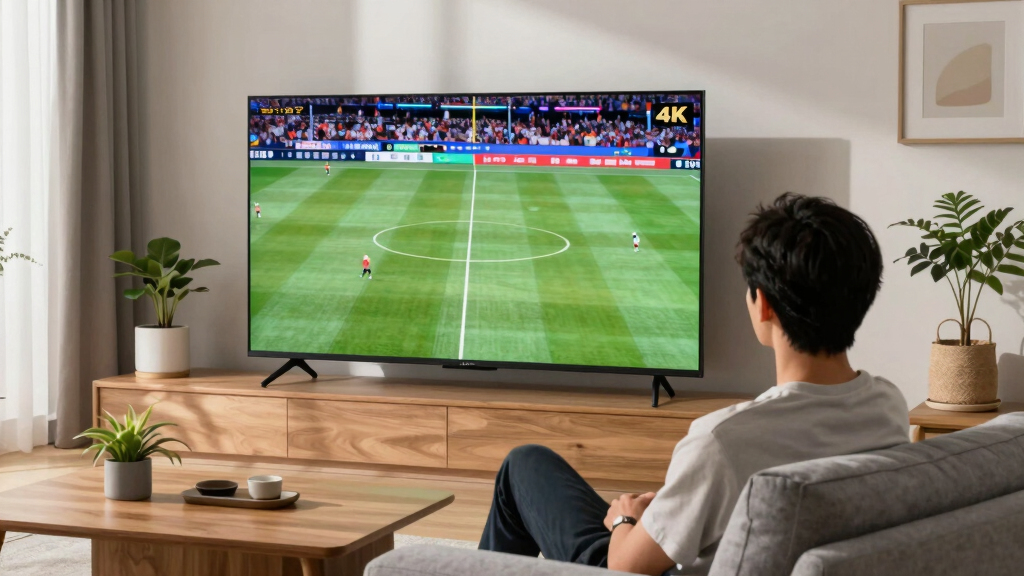
I would choose a sports TV by matching its motion capability, backlight, size, platform, and connections to the room rather than buying from resolution alone. Every model here is 4K, so the more revealing differences appear when the camera pans across a field, daylight hits the screen, or several people watch from different seats.
Refresh Rate and Motion Processing
A 120Hz panel gives a television more flexibility when displaying fast movement, but it cannot add detail that is missing from a compressed broadcast. Most live sports feeds arrive at 50 or 60 frames per second, making processing quality and clean frame handling just as relevant as the number printed on the box. Aggressive motion interpolation can smooth a camera pan while creating halos around players or the ball. I prefer adjustable controls because different sports respond differently: a slow baseball broadcast needs less intervention than hockey or motorsport. If the TV will also handle a current console, 120Hz support and HDMI 2.1 become more valuable. I would pay extra for these features when fast sports are the main use, but casual weekend viewers can remain happy with a well-processed 60Hz model.
Brightness, Contrast, and Room Lighting
Mini LED backlighting divides the screen illumination into smaller controllable areas, which can improve contrast around bright uniforms, score graphics, and stadium lights. QLED or Hi-QLED refers to color technology and does not, by itself, promise strong local dimming. In a sunny family room, high usable brightness and reflection control may matter more than perfect black levels. Evening viewers gain more from controlled blooming and shadow detail, particularly during night games. I also account for window placement because even a powerful backlight can struggle against a direct reflection. For mixed daytime and nighttime viewing, I favor a balanced Mini LED model over a basic LED television with vivid showroom settings.
Screen Size, Distance, and Group Seating
A 43-inch screen works well in a bedroom, office, or seating position roughly five to seven feet away, while a 55-inch screen adds useful game-day scale at about six-and-a-half to nine feet. The larger format makes the ball, clock, and player numbers easier to follow without moving closer. Buying too small is a common mistake because 4K detail provides little benefit when the image occupies a narrow part of the viewer’s field of vision. Yet size should not override viewing-angle performance when friends routinely sit off-center. Some contrast-focused panels look rich from the middle seat but lose color or brightness from the sides. I would map the room’s actual seats before deciding between the many 43-inch options and the more immersive 55-inch TCL or Hisense models.
Smart Platform and Live-Sports Access
The best interface is the one that carries the viewer’s required sports services and makes them easy to reach. Roku TV favors a straightforward layout, while Fire TV places Amazon content and Alexa controls closer to the center of the experience. Google TV leans toward cross-service recommendations, and Samsung’s system suits households already using its devices and accounts. Before buying, I would verify regional support for every league app, live-TV service, and local broadcaster the household uses. App launch speed and menu clarity often matter more over several seasons than an oversized list of rarely opened features. Beginners should favor simplicity, while viewers juggling many subscriptions may prefer stronger content discovery and voice search.
Connections, Streaming Stability, and Audio
HDMI 2.1 is most useful for high-frame-rate console gaming and is not required for an ordinary cable box or streaming stick. Port count still matters when a soundbar, console, receiver, and external tuner must remain connected at once. An eARC connection simplifies sending higher-quality audio to compatible equipment, while Ethernet can offer more consistent streaming when crowded Wi-Fi causes dropouts. I would prioritize stable live-stream playback over decorative audio badges because a stalled feed ruins a match faster than modest built-in speakers. Dolby Atmos compatibility also does not mean a thin television can reproduce the scale of a stadium on its own. A basic soundbar is often a better upgrade than paying more for small differences between integrated speaker systems.
Frequently Asked Questions
Is a 120Hz TV worth paying more for if most sports streams are 60fps?
I think 120Hz is worth the premium for viewers who watch hockey, basketball, football, racing, or other motion-heavy sports several times a week. The extra refresh capability supports cleaner cadence and gives the television more room for controlled motion processing, even when the source is 60fps. It will not repair a heavily compressed stream, and poor interpolation can still produce artifacts. A capable 60Hz model remains reasonable for slower sports or occasional viewing. Within this lineup, the Sony BRAVIA XR makes the clearest case for paying more because 120Hz is paired with dedicated image processing.
Should I buy a 43-inch or 55-inch TV for watching sports?
I would choose 43 inches for a smaller room, desktop-style setup, or seating distance below roughly seven feet. At longer distances, a 55-inch screen makes players and score graphics easier to read and gives group viewing more impact. Room width also matters because a larger screen cannot fix poor side-angle visibility. Buyers sometimes choose 43 inches based on furniture width and later find that the match feels visually distant. If both sizes fit, the TCL QM6K or Hisense E7 provides a more immersive sports presentation than the compact models.
Does Mini LED matter more than QLED for sports?
For bright-room sports, I usually place Mini LED backlighting ahead of a QLED label alone. Mini LED can deliver better light control and punchier highlights, while QLED mainly describes a color-enhancing layer. A television can have both, which is why combinations such as Mini LED QLED are attractive for varied viewing conditions. Processing, panel speed, and reflections can still outweigh either label when motion is the priority. The TCL QM6K, Hisense E7, and Samsung M70H stand apart from basic LED alternatives because their listed display hardware targets more than color volume alone.
Which smart TV platform is easiest for a first-time smart TV buyer?
I rate Roku TV as the easiest starting point because its home screen places apps and inputs in a familiar grid without requiring much setup knowledge. Fire TV is also approachable, especially for households already using Alexa or Amazon services, though its interface is more content-led. Google TV suits viewers who want recommendations across several services, while Samsung’s platform works well inside a Samsung household. App availability can differ by country, so I would check required sports services before choosing any interface. Among these models, the Roku Select Series is my beginner recommendation.
Do I need HDMI 2.1 for live sports viewing?
No, HDMI 2.1 is not required for sports delivered through streaming apps, cable boxes, antennas, or common external players. Standard live broadcasts rarely use the 4K-at-120Hz signals that make the newer connection valuable. The feature becomes useful when the same television will serve a modern console, particularly for high-frame-rate sports games. Port quantity, eARC support, and network reliability may have a larger effect on a dedicated match-day setup. I would treat the Sony BRAVIA XR’s HDMI 2.1 support as a versatility advantage rather than a reason to buy it for broadcasts alone.
Conclusion
For the broadest mix of size, display hardware, and sports-friendly value, my best overall choice is the TCL 55-inch QM6K. Buyers who place motion processing above screen size should choose the Sony 43-inch BRAVIA XR as the premium pick, especially when console gaming shares the setup. The Hisense 55-inch E7 is my best value recommendation because it brings Mini LED and Hi-QLED features to the larger format, while the Roku Select Series is the best choice for beginners who want a simpler interface. For a compact Mini LED setup, I would choose the Samsung M70H; for the lowest-cost secondary-room option, the Insignia F50 is the more fitting target. Samsung loyalists can choose the Q7F for QLED color or the newer U8000H for a basic 2026 model, while Fire TV households can compare the Toshiba C350, Amazon Ember, and Hisense E6 by current price. My final choice comes down to priority: TCL for the strongest balance, Sony for motion, Hisense E7 for value, Roku for ease, and Samsung M70H for compact display hardware.
Fall Picks
fall essentials
As an affiliate, we earn on qualifying purchases.