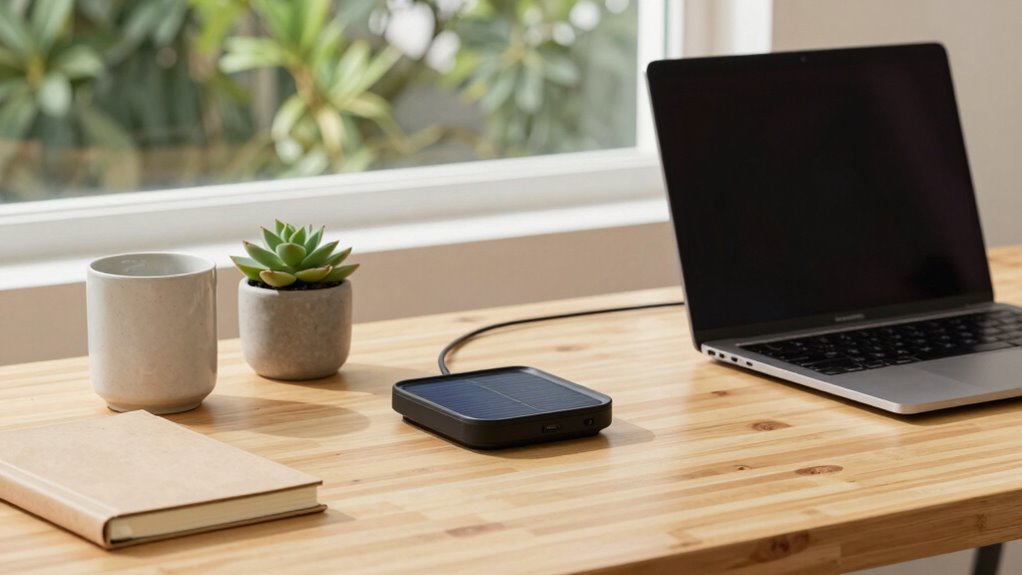

A sustainable device routine involves making mindful choices daily to reduce energy use and waste. Unplug chargers when not in use, adjust screen brightness, and activate power-saving modes. Use eco-friendly accessories made from recycled or biodegradable materials. Invest in energy-efficient devices with long battery life, and regularly maintain them to extend their lifespan. Limit unnecessary downloads and use cloud storage wisely. Continue to explore simple ways to make your tech habits more eco-conscious and impactful.
Key Takeaways
- Unplug devices and chargers when not in use to save energy and reduce waste.
- Choose energy-efficient devices with long battery life and eco-friendly materials.
- Regularly maintain devices through updates and cleaning to extend lifespan.
- Use renewable energy sources like solar chargers and power banks whenever possible.
- Practice mindful digital habits, such as deleting unnecessary files and limiting downloads.
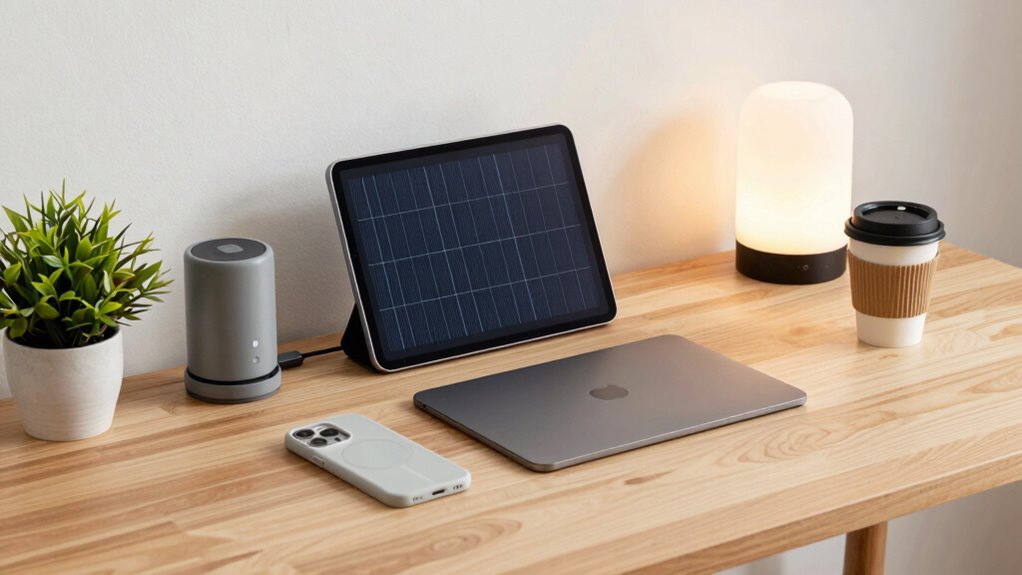
Have you ever wondered how your daily device usage impacts the environment? Every time you turn on your smartphone, laptop, or tablet, energy is consumed—most of which still comes from non-renewable sources. Adopting a sustainable device routine means making intentional choices to reduce that energy consumption and minimize your carbon footprint. It starts with practicing energy conservation. Simple steps like unplugging chargers when devices aren’t in use, adjusting screen brightness, and enabling power-saving modes can considerably cut down unnecessary energy use. These habits not only prolong your device’s lifespan but also lessen the strain on power grids, contributing to a healthier planet.
Reducing device energy use helps protect the environment and extends your device’s lifespan.
Choosing eco-friendly accessories is another key aspect of a sustainable routine. For example, instead of using cheap, disposable phone cases or accessories made from non-biodegradable plastics, opt for items made from recycled or sustainable materials. Eco friendly accessories like biodegradable phone cases, sustainably sourced charging cables, and renewable energy-powered accessories help reduce waste and lessen the environmental impact of your device habits. These choices demonstrate a commitment to reducing plastic waste and supporting manufacturers who prioritize sustainability.
Incorporating energy-efficient devices into your routine is also crucial. Look for products with high energy efficiency ratings or those that use less power without sacrificing performance. For instance, investing in a laptop with a long battery life and energy-efficient hardware means you’ll need to charge it less often, saving electricity in the long run. Additionally, consider using solar-powered chargers or portable power banks that harness renewable energy. Not only do these options reduce reliance on grid power, but they also promote renewable energy sources, aligning with eco-friendly principles. Being aware of energy sources used to power your devices can help you make more environmentally conscious choices. Furthermore, choosing devices with energy-saving features can significantly contribute to reducing your overall energy footprint.
Maintaining your devices properly extends their lifespan and delays the need for replacements. Regularly updating software, cleaning screens, and handling devices with care prevents damage and keeps them running efficiently. Proper maintenance reduces electronic waste and the environmental toll associated with manufacturing new electronics. Implementing device maintenance routines can improve overall longevity and performance, saving resources and energy. Being mindful of your digital footprint by limiting unnecessary downloads and deleting files you no longer need can further decrease your device’s energy consumption and support sustainability efforts.
Finally, staying mindful of your digital footprint complements your physical device habits. Limit unnecessary downloads and delete files you no longer need to keep your devices running smoothly and efficiently. Use cloud storage wisely to avoid overloading local storage, which can slow down your device and increase energy consumption. By adopting these habits, you’re actively participating in a more sustainable device routine—one that values energy conservation, reduces waste, and supports eco-friendly innovations. Your small daily choices can make a considerable difference in protecting the environment while ensuring your devices serve you well for years to come.
eco-friendly biodegradable phone case
As an affiliate, we earn on qualifying purchases.
As an affiliate, we earn on qualifying purchases.
Frequently Asked Questions
How Often Should I Clean My Device for Sustainability?
You should clean your device at least once a month to maintain sustainability. Regular cleaning prevents dirt buildup, which can slow down performance and lead to early replacement. When cleaning, consider device recycling options for old parts and guarantee your software updates are current, improving efficiency and longevity. This routine helps reduce electronic waste, conserves resources, and keeps your device running smoothly for longer periods.
What Are Eco-Friendly Device Accessories I Can Use?
Think of eco-friendly device accessories as the gentle rain nourishing your tech garden. You can choose accessories made from eco-friendly materials like bamboo, silicone, or recycled plastics. Opt for biodegradable accessories, such as biodegradable phone cases or compostable keyboard covers, which break down naturally without harming the environment. These choices help reduce waste and carbon footprint, making your device routine greener and more sustainable while still keeping your tech stylish and functional.
How Can I Reduce Energy Consumption of My Devices?
To reduce your devices’ energy consumption, start by adjusting energy-efficient settings like lowering screen brightness and enabling power-saving modes. Make sure to turn devices off when not in use, instead of leaving them on standby. Incorporate device recycling practices by properly disposing of or donating old gadgets. These steps help conserve energy, extend device lifespan, and minimize electronic waste, contributing to a more sustainable routine.
Are There Sustainable Alternatives to Common Device Chargers?
Think of finding a charger as discovering a new path through a forest. You can choose renewable energy-powered chargers that harness the sun or wind, acting like a gentle breeze fueling your device. Biodegradable materials make chargers break down naturally, like leaves returning to the earth. These sustainable alternatives reduce environmental impact, allowing you to charge your devices responsibly while nurturing the planet’s health.
How Long Is a Typical Sustainable Device Lifespan?
A typical sustainable device lifespan ranges from 3 to 5 years, depending on device durability and how well you maintain it. By choosing devices made from recyclable materials, you promote material recyclability, reducing electronic waste. Proper care, updates, and avoiding unnecessary repairs can extend your device’s lifespan, ensuring it remains functional longer. This approach not only benefits the environment but also maximizes your device’s value over its sustainable life.
Conclusion
By adopting a sustainable device routine, you’re not only saving energy and reducing waste but also contributing to a healthier planet. Remember, “A little goes a long way”—small, mindful changes in how you use and care for your devices can make a big difference over time. Stay committed to these habits, and you’ll help create a more sustainable future while enjoying the benefits of your tech. Every step counts when it comes to caring for our world.