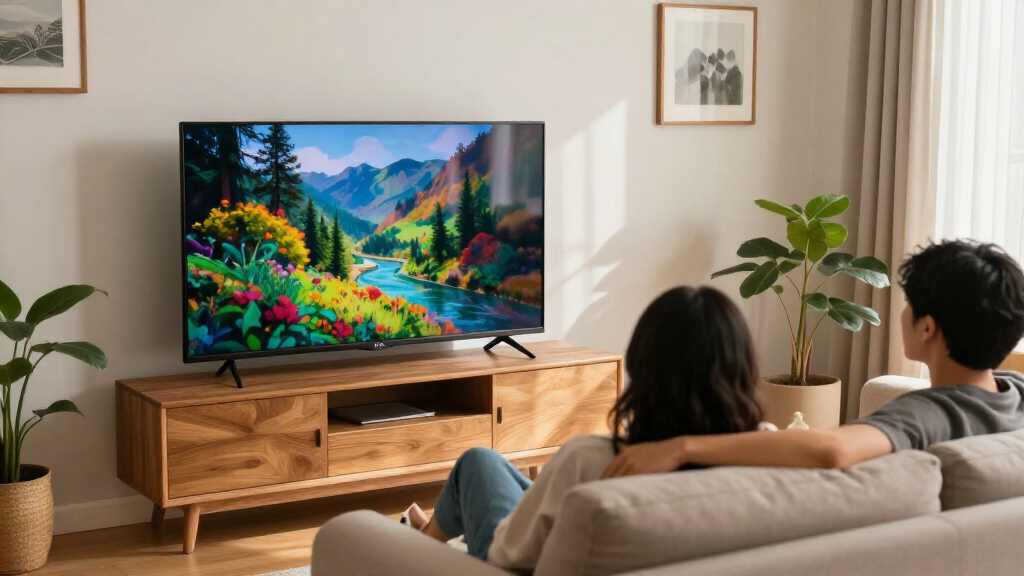

The best LG electronics depend on what you need: for a high-end, all-around TV, I’d start with the LG 55-Inch OLED evo G5; the 27UP850K-W 4K monitor is a strong fit for detailed desktop work, while the S6FTR soundbar adds rear speakers for more enveloping TV audio. This roundup spans OLED and Mini LED televisions, gaming and productivity monitors, a soundbar, and a portable DVD writer, so there is no single feature set that suits every buyer. The main tradeoffs are picture quality versus room brightness, screen size versus available space, and specialized performance versus versatility. I ranked the options by how well their features match distinct buyer needs, with practical usability and setup needs in view. Continue reading for the full breakdown and guidance on choosing the right LG device for your home or desk.

Get the latest gadgets delivered free with Prime
- Fast, free delivery on millions of items
- Prime Video, Amazon Music and more included
- Member-only deals all year
Complete the kit



Key Takeaways
- The G5 is the standout premium TV pick: its OLED evo positioning makes it the strongest choice here for buyers putting cinematic picture quality first, while its 55-inch size may not suit those seeking a larger screen.
- LG’s TV lineup presents different compromises rather than one universal winner: the OLED B6 and C6 models offer an OLED route, while the QNED73B and QNED84B Mini LED models suit buyers comparing screen technology and room needs.
- Monitor choice hinges on the job: the 27UP850K-W is a 4K IPS option for detailed work, the UltraGear 34G600A-B targets wide-screen gaming, and the 27U411A-B emphasizes accessible Full HD use.
- The 27U730SA-W bridges monitor and smart display duties: webOS and 65W USB-C charging make it more flexible for a desk than a conventional monitor, but its feature mix is unnecessary for a simple display setup.
- Two products solve specific problems rather than broad electronics needs: the GP65NW60 supports disc reading and writing on the go, while the S6FTR adds a soundbar and rear surround speakers for a more room-filling TV setup.
| LG 55-Inch OLED evo G5 4K Smart TV (2025) |  | Best Premium TV | Screen size: 55 inches | Display technology: OLED evo | Resolution: 4K | VIEW LATEST PRICE | See Our Full Breakdown |
| LG UltraGear 34G600A-B 34-Inch Curved WQHD Gaming Monitor, 160Hz, FreeSync Premium, HDR10 |  | Best for Immersive PC Gaming | Screen size: 34 inches | Resolution: 3440 × 1440 | Aspect ratio and curvature: 21:9; 1800R | VIEW LATEST PRICE | See Our Full Breakdown |
| LG GP65NW60 Slim Portable External DVD Writer, White |  | Best for Legacy Disc Access | Model: GP65NW60 | Drive type: External DVD writer | Interface: USB 2.0; USB 3.0 compatible | VIEW LATEST PRICE | See Our Full Breakdown |
| LG 27UP850K-W 27-Inch UltraFine 4K UHD IPS Monitor |  | Best for USB-C Productivity | Screen size: 27 inches | Resolution: 3840 × 2160 (4K UHD) | Display type: IPS LED | VIEW LATEST PRICE | See Our Full Breakdown |
| LG 65-Inch Class OLED AI B6 4K Smart TV (2026) |  | Best for a Large-Screen OLED Upgrade | Screen size: 65 inches | Display type and resolution: OLED; 4K | Processor: A8 AI Processor 4K Gen3 | VIEW LATEST PRICE | See Our Full Breakdown |
| LG 65″ OLED evo C6 4K Smart TV (2026) Bundle with 1-Year Protection, HDMI Cables, and Guide |  | Best for High-Performance Home Theater and Gaming | Screen size: 65 inches | Resolution: 4K UHD | Display technology: OLED evo | VIEW LATEST PRICE | See Our Full Breakdown |
| LG 27U411A-B 27-Inch Full HD IPS Monitor, 120Hz, 1ms MBR, HDR10 |  | Best Value for Everyday Gaming | Screen size: 27 inches | Resolution: 1920 x 1080 (Full HD) | Panel type: IPS | VIEW LATEST PRICE | See Our Full Breakdown |
| LG 43-Inch QNED73B Mini LED 4K Smart TV (2026) |  | Best Compact 4K TV | Screen size: 43 inches | Resolution: 4K | Display technology: Mini LED | VIEW LATEST PRICE | See Our Full Breakdown |
| LG 27U730SA-W 27-Inch 4K UHD Smart Monitor with webOS, IPS, HDR10, USB-C 65W, and Adjustable Stand |  | Best All-in-One Smart Monitor | Model: 27U730SA-W | Screen size: 27 inches | Resolution: 3840 x 2160 (4K UHD) | VIEW LATEST PRICE | See Our Full Breakdown |
| LG S6FTR 5.1 Channel Home Theater Soundbar with Rear Surround Speakers |  | Best for Adding Physical Surround Sound | Audio channels: 5.1 | Audio output mode: Surround | Speaker configuration: Soundbar, wireless subwoofer, rear surround speakers | VIEW LATEST PRICE | See Our Full Breakdown |
| LG 65-inch QNED evo AI QNED84B Mini LED 4K Smart TV |  | Best for Bright-Room Gaming | Screen size: 65 inches | Display technology: Mini LED | Resolution: 4K | VIEW LATEST PRICE | See Our Full Breakdown |
| LG 65-Inch OLED evo C6 4K Smart TV (2026) |  | Best for Premium Movie-and-Gaming Performance | Screen size: 65 inches | Display technology: OLED evo | Resolution: 4K | VIEW LATEST PRICE | See Our Full Breakdown |
| LG electronic | Screen size | Resolution | Refresh rate | Display technology |
|---|---|---|---|---|
| LG 55-Inch OLED evo G5 4K Smar | 55 inches | 4K | Up to 165Hz | OLED evo |
| LG UltraGear 34G600A-B 34-Inch | 34 inches | 3440 × 1440 | 160Hz | VA LED |
| LG GP65NW60 Slim Portable Exte | — | — | — | — |
| LG 27UP850K-W 27-Inch UltraFin | 27 inches | 3840 × 2160 (4K UHD) | — | — |
| LG 65-Inch Class OLED AI B6 4K | 65 inches | — | — | — |
| LG 65" OLED evo C6 4K Smart TV | 65 inches | 4K UHD | Up to 165Hz | OLED evo |
| LG 27U411A-B 27-Inch Full HD I | 27 inches | 1920 x 1080 (Full HD) | 120Hz | — |
| LG 43-Inch QNED73B Mini LED 4K | 43 inches | 4K | 60Hz | Mini LED |
| LG 27U730SA-W 27-Inch 4K UHD S | 27 inches | 3840 x 2160 (4K UHD) | — | — |
| LG S6FTR 5.1 Channel Home Thea | — | — | — | — |
| LG 65-inch QNED evo AI QNED84B | 65 inches | 4K | 144 Hz | Mini LED |
| LG 65-Inch OLED evo C6 4K Smar | 65 inches | 4K | Native 120 Hz; VRR up to 165 Hz for PC gaming | OLED evo |
More Details on Our Top Picks
LG 55-Inch OLED evo G5 4K Smart TV (2025)
For buyers who want LG’s most performance-focused screen in this group, the 55-inch OLED evo G5 pairs self-lit pixels with Brightness Booster Ultimate and an Alpha 11 AI Processor Gen 2. Its up to 165Hz refresh rate, 0.1ms response time, VRR, and four HDMI 2.1 inputs make it the stronger gaming pick than the 65-inch OLED AI B6, which tops out at 120Hz. Dolby Vision and Dolby Atmos also suit film and streaming, while webOS adds apps and free LG Channels. The tradeoff is its wall-focused design: it makes the most sense mounted, rather than on a traditional stand. The 55-inch screen is also smaller than the B6, and upscaling results can vary with source quality. I’d rank it as the premium performance choice, not the better fit for every living room.
Pros:- Self-lit OLED pixels deliver deep blacks and vivid color.
- Up to 165Hz, 0.1ms response time, VRR, and four HDMI 2.1 inputs suit advanced gaming setups.
- Dolby Vision and Dolby Atmos support cinematic picture and sound formats.
- Wall-focused design sits close to the wall when mounted.
Cons:- Wall-focused design is less suited to setups that rely on a TV stand.
- Upscaled picture quality varies depending on the source resolution.
- Its 55-inch screen is smaller than the 65-inch OLED AI B6.
Best for: Gamers and movie fans who want a premium 55-inch OLED, high refresh rate, and a wall-mounted setup.
Not ideal for: Buyers who need a TV designed for stand placement or want the larger 65-inch screen of the OLED AI B6.
- Screen size:55 inches
- Display technology:OLED evo
- Resolution:4K
- Processor:Alpha 11 AI Processor Gen 2
- Refresh rate:Up to 165Hz
- Gaming connections:4 HDMI 2.1 inputs
- HDR and audio:Dolby Vision and Dolby Atmos
- Smart TV platform:webOS
Our verdict“Choose the G5 for a premium, wall-mounted OLED with stronger gaming specifications than the 65-inch OLED AI B6.”
LG UltraGear 34G600A-B 34-Inch Curved WQHD Gaming Monitor, 160Hz, FreeSync Premium, HDR10
The 34-inch curved UltraGear is the lineup’s specialist for PC players who want a wide field of view without moving to a television. Its 3440 × 1440 resolution and 21:9 format give games and compatible workspaces more horizontal room than the 27-inch UltraFine 4K, while 160Hz and AMD FreeSync Premium target smoother gameplay. Black Stabilizer and Dynamic Action Sync add gaming-specific controls; the UltraFine, by contrast, puts more emphasis on 4K detail, color coverage, and USB-C connectivity. That focus comes with real constraints: this monitor takes substantial desk space, its 300 cd/m² brightness and HDR10 support are more modest than a premium HDR display, and listed connections are limited to DisplayPort and HDMI. I’d pick it for an immersive gaming desk, not for someone seeking a compact or connection-rich general-purpose monitor.
Pros:- 34-inch 21:9 curved display provides extra horizontal screen space.
- 160Hz refresh rate and 1ms MBR support fluid motion.
- AMD FreeSync Premium helps reduce tearing and stutter.
- Stand adjusts for height, tilt, and swivel, with built-in stereo speakers.
Cons:- The 34-inch ultrawide format needs substantial desk space.
- Connectivity is limited to DisplayPort and HDMI, with no USB-C listed.
- 300 cd/m² brightness and HDR10 offer a more modest HDR setup than the UltraFine 4K’s DisplayHDR 400.
Best for: PC gamers with a spacious desk who want an ultrawide curved screen and high refresh rate.
Not ideal for: Laptop-focused users who need USB-C docking, or buyers with limited desk space or a preference for 4K resolution.
- Screen size:34 inches
- Resolution:3440 × 1440
- Aspect ratio and curvature:21:9; 1800R
- Display technology:VA LED
- Refresh rate:160Hz
- Motion feature:1ms Motion Blur Reduction
- Adaptive sync and HDR:AMD FreeSync Premium; HDR10
- Stand adjustment:Tilt, height, and swivel
Our verdict“Choose this UltraGear for an expansive, fast gaming display if your desk can accommodate its ultrawide footprint.”
LG GP65NW60 Slim Portable External DVD Writer, White
The GP65NW60 fills a different role from LG’s TVs and monitors: it adds a way to read and write discs on a compatible computer. Its slim, lightweight body is easier to pack than a full-size optical drive, and M-DISC support gives users a media option for long-term archiving. Jamless Play and Silent Play address interruptions and noise, while included CyberLink software adds utility. Compared with the 27-inch UltraFine 4K, this is not a workstation upgrade but a small accessory for people whose files, software, or media still live on discs. The limitation is speed: USB 2.0 and DVD writing up to 8x make it a poor choice for frequent large disc-writing jobs. I’d choose it for occasional access and portability, rather than as a fast, modern storage solution.
Pros:- Slim, lightweight design is easy to carry with a laptop.
- Supports M-DISC media for archival use.
- Jamless Play and Silent Play can help reduce playback interruptions and noise.
- USB 3.0 compatible and works with Windows and Mac systems.
Cons:- USB 2.0 interface limits transfer speed compared with newer storage connections.
- DVD writing tops out at 8x, which can be slow for repeated disc jobs.
- An external drive is an extra accessory to carry and connect.
Best for: Laptop owners, students, and archivists who occasionally need to read or write DVDs and CDs, including M-DISC media.
Not ideal for: People who frequently burn discs, need faster modern storage, or want a built-in optical drive.
- Model:GP65NW60
- Drive type:External DVD writer
- Interface:USB 2.0; USB 3.0 compatible
- DVD write speed:Up to 8x
- CD write speed:Up to 24x
- Features:M-DISC support, Jamless Play, Silent Play
- Dimensions:5.67 × 5.41 × 0.55 inches
- Weight:6.88 oz
Our verdict“Choose the GP65NW60 if you need an inexpensive-to-carry optical drive for occasional disc access or M-DISC archiving.”
LG 27UP850K-W 27-Inch UltraFine 4K UHD IPS Monitor
The 27UP850K-W UltraFine is the clearest fit here for desk work that benefits from sharp text, a wide viewing angle, and a one-cable laptop connection. Its 27-inch 4K IPS panel offers more pixel detail than the 34-inch UltraGear’s 3440 × 1440 screen, while USB-C power delivery up to 90W can charge a compatible laptop as it carries data. The stand’s height, tilt, and pivot adjustments also make it easier to set up for different tasks. Up to 95% DCI-P3 coverage and DisplayHDR 400 add color range and HDR support, though this is not the gaming pick: 60Hz and 5ms response time trail the UltraGear’s 160Hz refresh rate. I’d choose the UltraFine for work, not fast-paced gaming, and check that the laptop supports USB-C charging before relying on the single-cable setup.
Pros:- 4K IPS resolution provides detailed text and broad viewing angles.
- USB-C delivers up to 90W of power while supporting data transfer.
- Up to 95% DCI-P3 coverage and DisplayHDR 400 support richer color and HDR content.
- Height, tilt, and pivot adjustments make positioning flexible.
Cons:- 60Hz refresh rate is less suitable for high-frame-rate gaming than the UltraGear.
- 5ms response time is slower than gaming-focused monitors.
- USB-C charging benefits depend on the connected laptop supporting the required power delivery.
Best for: Laptop-based professionals and creators who want a sharp 4K desktop display with USB-C charging and an adjustable stand.
Not ideal for: Competitive gamers who prioritize high refresh rates, or users whose laptop cannot charge through USB-C.
- Screen size:27 inches
- Resolution:3840 × 2160 (4K UHD)
- Display type:IPS LED
- Refresh rate and response time:60Hz; 5ms
- HDR:VESA DisplayHDR 400; HDR10
- Color gamut:Up to 95% DCI-P3
- USB-C power delivery:Up to 90W
- Stand adjustments:Height, tilt, and pivot
Our verdict“Choose the UltraFine for 4K productivity and laptop connectivity, but opt for the UltraGear if gaming speed matters more.”
LG 65-Inch Class OLED AI B6 4K Smart TV (2026)
For viewers who want OLED in a larger living-room format, the 65-inch OLED AI B6 offers self-lit pixels, Dolby Vision, Dolby Atmos, Filmmaker Mode, and webOS streaming features. Its 65-inch panel gives it a clear size advantage over the 55-inch OLED evo G5, and its up to 120Hz refresh rate with 0.1ms response time, G-Sync, FreeSync Premium, and VRR still covers serious gaming. The G5 remains the stronger choice for buyers chasing a higher refresh rate, with up to 165Hz, while the B6 prioritizes a larger screen and a different processor tier: A8 AI Processor 4K Gen3. The main practical hurdle is space; it needs 57 inches of width, with added depth on its stand. I’d select it for a roomy TV area, rather than a compact room or maximum-spec gaming setup.
Pros:- 65-inch OLED panel uses over 8.3 million self-lit pixels.
- Dolby Vision, Dolby Atmos, and Filmmaker Mode support film-focused viewing.
- Up to 120Hz, 0.1ms response time, G-Sync, FreeSync Premium, and VRR support gaming.
- webOS includes streaming, LG Channels, and personalization features.
Cons:- Requires 57 inches of width for installation.
- With the stand, depth increases to 8.6 inches.
- Its 120Hz ceiling is below the 55-inch OLED evo G5’s up-to-165Hz rate.
Best for: Living-room viewers who want a 65-inch OLED for films, streaming, and console gaming at up to 120Hz.
Not ideal for: Buyers with limited installation width, or gamers who want the G5’s higher up-to-165Hz refresh rate.
- Screen size:65 inches
- Display type and resolution:OLED; 4K
- Processor:A8 AI Processor 4K Gen3
- HDR and audio formats:Dolby Vision; Dolby Atmos
- Refresh rate and response time:Up to 120Hz; 0.1ms
- Gaming features:NVIDIA G-Sync, AMD FreeSync Premium, VRR
- Smart platform:webOS
- Dimensions with stand:57.0 × 35.4 × 8.6 inches (W × H × D)
Our verdict“Choose the B6 if a larger 65-inch OLED matters more than the G5’s higher refresh rate and wall-focused design.”
LG 65″ OLED evo C6 4K Smart TV (2026) Bundle with 1-Year Protection, HDMI Cables, and Guide
I’d choose this bundled 65-inch OLED evo for a living room where cinematic contrast and fast gaming matter equally. Its α11 AI Processor 4K Gen3, Dolby Vision, and Dolby Atmos are aimed at detailed pictures and immersive sound, while support for up to 165Hz, VRR, G-Sync Compatible, and FreeSync Premium gives compatible gaming setups room to benefit from high frame rates. Compared with the 65-inch LG OLED evo G5 listed in this roundup, this package stands out for including a protection plan, HDMI cables, and a setup guide; those extras are useful, though the cables are HDMI 2.0, so buyers should check whether they meet the bandwidth needs of their devices. The main tradeoff is OLED’s premium positioning, and this 65-inch screen may be excessive for smaller rooms.
Pros:- OLED evo display offers deep black levels and vivid contrast.
- Up to 165Hz refresh rate and VRR support suit compatible gaming systems.
- Dolby Vision and Dolby Atmos support cinematic picture and audio formats.
- Bundle adds a one-year protection plan, two HDMI cables, and a beginner’s guide.
Cons:- OLED technology is a premium choice compared with standard LED televisions.
- Included HDMI 2.0 cables may not suit every high-bandwidth 4K gaming configuration.
- The 65-inch size can be unwieldy in compact rooms.
Best for: Home-theater buyers with a large viewing area who also connect a high-refresh-rate gaming PC or console and want bundle accessories included.
Not ideal for: Budget-focused shoppers, small-room viewers, or gamers who need included cables confirmed for every high-bandwidth 4K setup.
- Screen size:65 inches
- Resolution:4K UHD
- Display technology:OLED evo
- Processor:α11 AI Processor 4K Gen3
- Refresh rate:Up to 165Hz
- Smart platform:webOS 26
- Gaming features:G-Sync Compatible, AMD FreeSync Premium, VRR
- Bundle items:1-year CPS protection plan, two 6-foot HDMI 2.0 cables, beginner’s guide
Our verdict“Choose this bundle if you want a large OLED for movies and high-refresh-rate gaming and value the included setup extras.”
LG 27U411A-B 27-Inch Full HD IPS Monitor, 120Hz, 1ms MBR, HDR10
This monitor prioritizes smooth motion at Full HD rather than the fine detail of a 4K screen. The 120Hz refresh rate and 1ms Motion Blur Reduction can make compatible games feel clearer in motion, while the IPS panel’s wide viewing angles help when the screen is shared or used for general work. Compared with the LG 27U730SA-W smart monitor in this roundup, the 27U411A-B is a more straightforward display: it skips webOS and USB-C power delivery, but offers a faster stated refresh rate than that model’s product data specifies. Its 27-inch, 1920 x 1080 resolution is the key compromise; text and detailed images will look less crisp than on a 4K monitor. Tilt-only adjustment also limits ergonomic flexibility.
Pros:- 120Hz refresh rate supports smoother motion than a standard 60Hz display.
- IPS panel provides 178-degree viewing angles.
- HDR10 and up to 99% sRGB coverage support colorful visuals.
- Matte screen and tilt adjustment suit a basic desk setup.
Cons:- Full HD resolution is less detailed than the 4K LG 27U730SA-W smart monitor.
- Stand adjustment is limited to tilt, without height or swivel control.
- 250 cd/m² brightness may be limiting in bright rooms.
Best for: PC gamers and students who want a responsive 27-inch screen for Full HD games, browsing, and everyday desk work.
Not ideal for: Users who need 4K detail for photo editing, dense spreadsheets, or sharper text, or who want height and swivel adjustments.
- Screen size:27 inches
- Resolution:1920 x 1080 (Full HD)
- Panel type:IPS
- Refresh rate:120Hz
- Motion Blur Reduction:1ms
- HDR:HDR10
- Color gamut:Up to 99% sRGB
- Stand adjustment:Tilt: -5° to 20°
Our verdict“Pick this monitor for smoother Full HD gaming on a simple budget-conscious desk, not for 4K work or full ergonomic adjustment.”
LG 43-Inch QNED73B Mini LED 4K Smart TV (2026)
I’d place this 43-inch Mini LED 4K TV in a bedroom, smaller apartment, or secondary viewing space where a 65-inch set would dominate the room. QNED color, HDR10 Pro, and Filmmaker Mode give viewers picture options for streaming and movies, while webOS and LG Channels put apps and free channels on the TV itself. Compared with the 65-inch OLED evo C6 in this roundup, this model takes a smaller-screen, 60Hz approach rather than targeting premium contrast and high-refresh gaming. Game Optimizer, ALLM, and cloud gaming features are useful additions, but they don’t change the refresh-rate ceiling; fast-paced play may look less fluid than on the C6. Smart services also depend on internet access, and some content requires subscriptions.
Pros:- Mini LED backlighting and QNED color support detailed, vivid 4K viewing.
- Filmmaker Mode offers a picture setting intended to preserve a director-style presentation.
- webOS provides streaming access and LG Channels.
- Game Optimizer, ALLM, and cloud gaming features support casual play.
Cons:- 60Hz refresh rate is less suited to fast action than the OLED evo C6’s stated high-refresh capability.
- Internet is required for network-based smart features, and some services require subscriptions.
- The 43-inch screen may feel small as a main TV in a large living room.
Best for: Apartment residents, bedroom viewers, and households seeking a compact 4K smart TV with built-in streaming and casual gaming features.
Not ideal for: Competitive gamers seeking high refresh rates or buyers wanting the deep-black presentation of the OLED evo C6.
- Screen size:43 inches
- Resolution:4K
- Display technology:Mini LED
- Refresh rate:60Hz
- Processor:a7 AI Processor 4K Gen9
- HDR formats:HDR10, HLG
- Smart platform:webOS
- Dimensions with stand:37.8 x 24.3 x 7.9 inches
Our verdict“Choose this set for compact-room 4K streaming and casual gaming, but look to the OLED evo C6 for high-refresh play and a larger-screen experience.”
LG 27U730SA-W 27-Inch 4K UHD Smart Monitor with webOS, IPS, HDR10, USB-C 65W, and Adjustable Stand
The 27U730SA-W combines a 4K IPS monitor with webOS, so it can handle desk work and streaming without requiring a separate computer for every task. Its 3840 x 2160 resolution makes fine text and detailed content sharper than on the Full HD LG 27U411A-B, while USB-C power delivery up to 65W can connect and charge a compatible laptop through one cable. AirPlay 2, Screen Share, Bluetooth, a remote, and a stand with height, swivel, tilt, and pivot adjustments add flexibility that the simpler 27U411A-B lacks. The tradeoff is that this feature-rich design is less focused on high-refresh gaming; the supplied specifications don’t state a refresh rate. Streaming needs internet, and remote PC functions require Windows 10 Pro or later.
Pros:- 4K UHD IPS panel provides detailed images and wide viewing angles.
- USB-C supplies up to 65W power delivery to compatible devices.
- webOS, remote control, and built-in speaker support standalone streaming.
- Stand adjusts for tilt, height, swivel, and pivot.
Cons:- The listed specifications do not state a refresh rate, limiting its appeal to buyers who prioritize gaming motion.
- Streaming requires an internet connection, and some services may require subscriptions.
- Remote PC functionality requires a PC running Windows 10 Pro or later.
Best for: Hybrid workers who want a sharp 4K desk display, laptop charging over USB-C, and built-in streaming for breaks or shared spaces.
Not ideal for: Competitive gamers who need a confirmed high refresh rate, or users who don’t need smart features and prefer a simpler monitor.
- Model:27U730SA-W
- Screen size:27 inches
- Resolution:3840 x 2160 (4K UHD)
- Panel type:IPS
- Operating system:webOS
- USB-C power delivery:Up to 65W
- Connectivity:AirPlay 2, Screen Share, Bluetooth, 2 HDMI, 2 USB, USB-C
- Stand adjustments:Tilt, height, swivel, pivot
Our verdict“Choose this smart monitor if you want one adjustable 4K screen for laptop work and standalone streaming rather than a gaming-first display.”
LG S6FTR 5.1 Channel Home Theater Soundbar with Rear Surround Speakers
The S6FTR is the audio pick for viewers who want more than a TV’s built-in speakers can provide: its 5.1-channel setup pairs a soundbar with a subwoofer and wireless rear speakers for a more enveloping layout. Dolby Audio and AI-driven sound adaptation are designed to keep dialogue and bass suited to different content, while the WOW Interface lets compatible LG TV owners control the bar and television with one remote. Compared with the LG OLED evo C6, which supports Dolby Atmos as a TV audio format, this soundbar adds separate rear speakers and a subwoofer but does not list Dolby Atmos support. Placement takes planning: the rear speakers need AC power and a wired connection between them, and there’s no built-in Wi-Fi for network audio features.
Pros:- 5.1-channel configuration includes rear surround speakers and a subwoofer.
- AI-driven sound adaptation and Dolby Audio support varied content.
- WOW Interface can let compatible LG TV and soundbar controls share one remote.
- Shelf-mountable metal-grill design suits a home-theater setup.
Cons:- Rear speakers need AC power and a wired connection between them, restricting placement.
- No built-in Wi-Fi; connections rely on Bluetooth, HDMI, or USB.
- Bluetooth range is listed at about 10 meters.
Best for: LG TV owners setting up a dedicated movie or sports area who can place powered rear speakers around the room.
Not ideal for: Minimalist rooms with limited outlet access, buyers who want Wi-Fi audio features, or those seeking a wireless rear-speaker setup.
- Audio channels:5.1
- Audio output mode:Surround
- Speaker configuration:Soundbar, wireless subwoofer, rear surround speakers
- Connectivity:Bluetooth, HDMI, USB
- Subwoofer connection:Wireless
- Subwoofer diameter:6 inches
- Bluetooth range:10 meters
- Mounting type:Shelf mount
Our verdict“Choose the S6FTR if you want a physical 5.1 surround layout and can accommodate powered, wired rear speakers.”
LG 65-inch QNED evo AI QNED84B Mini LED 4K Smart TV
I’d choose the QNED84B for a bright living room where gaming smoothness matters as much as TV viewing. Its Mini LED backlight aims to balance high brightness with deep contrast, while the 144 Hz refresh rate, VRR and FreeSync support fluid play with compatible gaming hardware. Compared with the LG OLED evo C6, this model’s Mini LED approach is the better fit for buyers prioritizing a bright picture; the C6 instead offers self-lit pixels, Dolby Vision and a faster stated response time. The QNED84B also includes Filmmaker Mode for a less processed movie presentation. Its tradeoffs are that Motion Booster 288 depends on a compatible 144 Hz PC or GPU, and many smart features rely on internet access and subscriptions.
Pros:- Mini LED backlighting pairs high brightness with deep contrast.
- 144 Hz refresh rate, VRR and FreeSync support smooth gaming with compatible hardware.
- α8 AI Processor 4K Gen3 adjusts picture and sound by content type.
- Filmmaker Mode offers a more director-intended presentation for movies.
Cons:- Motion Booster 288 requires a PC or GPU capable of 144 Hz output.
- Smart features depend on internet access, and some services require subscriptions.
- Unlike the OLED evo C6, it does not use self-lit pixels.
Best for: Gamers and families who want a bright 65-inch 4K screen with high-refresh-rate support for compatible PCs and consoles.
Not ideal for: Movie-focused buyers who prioritize OLED pixel-level blacks, or people without compatible high-refresh gaming hardware who would not benefit from its gaming features.
- Screen size:65 inches
- Display technology:Mini LED
- Resolution:4K
- Refresh rate:144 Hz
- HDR formats:HDR10, HLG
- Motion enhancement:Motion Booster 288
- Dimensions with stand (W × H × D):57.3 × 35.6 × 10.6 inches
Our verdict“Choose the QNED84B if you want a bright Mini LED TV with strong high-refresh gaming support, rather than OLED’s self-lit-pixel picture.”
LG 65-Inch OLED evo C6 4K Smart TV (2026)
I’d put the OLED evo C6 ahead of the QNED84B for buyers who want cinematic contrast and responsive gaming in one 65-inch TV. Its 8.3 million self-lit pixels can turn off individually, creating pixel-level blacks, while Dolby Vision, Dolby Atmos and Filmmaker Mode make it the more movie-focused choice in this pair. For gaming, the 0.1 ms response time, VRR support up to 165 Hz for PC gaming and four HDMI 2.1 inputs give buyers room for multiple connected devices. The QNED84B may suit a brighter-room setup better, with its Mini LED backlight and 144 Hz panel. The C6’s premium features come with dependencies: reaching 165 Hz requires a compatible PC graphics card, and streaming services need internet access, an LG account and, in some cases, subscriptions.
Pros:- Self-lit OLED pixels deliver pixel-level blacks and detailed contrast.
- Dolby Vision, Dolby Atmos and Filmmaker Mode support an immersive movie setup.
- 0.1 ms response time and VRR up to 165 Hz for compatible PC gaming.
- Four HDMI 2.1 inputs accommodate multiple compatible gaming devices.
Cons:- The 165 Hz VRR mode requires a compatible PC graphics card.
- Streaming and other network-based services require internet access and an LG account; some need subscriptions.
- Compared with the QNED84B, it lacks a Mini LED backlight designed for high brightness.
Best for: Movie enthusiasts and multi-device gamers seeking OLED contrast, Dolby Vision support and several HDMI 2.1 connections.
Not ideal for: Buyers who mainly watch in a bright room and favor a Mini LED approach, or PC gamers without hardware that can output at the supported high refresh rates.
- Screen size:65 inches
- Display technology:OLED evo
- Resolution:4K
- Processor:Alpha 11 AI Processor Gen 3
- Refresh rate:Native 120 Hz; VRR up to 165 Hz for PC gaming
- Response time:0.1 ms
- HDMI inputs:4 HDMI 2.1
- Audio and video formats:Dolby Vision, Dolby Atmos
Our verdict“Choose the OLED evo C6 if OLED contrast, cinematic formats and responsive gaming matter more than a Mini LED design for a bright room.”
How We Picked
I compared these 12 LG products by intended use, feature fit, and the practical tradeoffs a buyer faces before choosing. For TVs, the key distinctions were OLED versus Mini LED, screen size, and whether the model is aimed at a premium viewing setup or a more general living-room role. For monitors, I weighed resolution, refresh rate, screen shape, smart functions, and connectivity against the kinds of work or play each one supports. I also considered setup needs: a soundbar with rear speakers takes more placement than a single compact audio device, while a portable DVD writer is useful only if disc access matters to the buyer.
The ranking favors products with a clear role and a strong match for that role, rather than treating every LG device as interchangeable. The G5 leads for buyers seeking a premium television; the monitor and audio picks follow according to their specialized uses. The remaining products are ranked by how distinct and useful their feature set is for a defined buyer, not by an assumed universal measure of performance. Bundle contents, model-year labels, and specifications can vary by seller or region, so I’d confirm the exact listing details before ordering.
Factors to Consider When Choosing Best LG Electronics
LG’s electronics range includes devices that solve very different problems, so I’d begin with the room, task, and connections rather than the brand name alone. These buying factors help narrow the field before comparing specific models.
Match the display technology to the room
TV technology matters most when the room’s lighting and viewing habits are clear. OLED is a natural direction for buyers who value contrast and movie viewing, while Mini LED is worth comparing when the room is bright or the TV will serve a mix of everyday viewing. A common mistake is to choose by a technology label without considering where the screen will sit or what is usually on it. If you watch mostly in daylight, room brightness and reflections may shape satisfaction as much as display type. For a dark room, contrast may carry more weight. I’d also check the exact model’s connections and smart features, since technology names alone do not describe the full TV experience.
Choose TV size around seating distance and placement
A larger screen can make films and games feel more involving, but it also needs suitable wall or stand space and a comfortable viewing distance. Measure the usable width and height before choosing a TV, including room for a stand, soundbar, and cable access. Buyers often focus on diagonal size and overlook how the display will fit between furniture or inside a built-in area. A 55-inch model may be easier to place, while a 65-inch screen can suit a larger viewing area; neither is automatically the better choice. Check the product dimensions, not just the stated screen size. I’d also plan the viewing position so the screen is not awkwardly high or off-center.
Buy monitor specifications for your actual workload
Resolution, refresh rate, aspect ratio, and panel size all affect a monitor differently, so I’d prioritize the spec that changes your daily task most. Higher resolution helps when reading fine text or working with detailed images, while a higher refresh rate can make motion feel smoother in supported games. A wide curved screen may suit immersive gaming or side-by-side windows, but it can take more desk space and may not fit every workflow. Don’t assume that a higher number in one specification makes a monitor better for every use. Check whether your computer can drive the desired resolution and refresh rate through its available ports. For shared or changing setups, stand adjustment and USB-C power delivery can be more useful than a feature you rarely use.
Check connectivity before buying a smart monitor
A smart monitor can reduce dependence on a separate computer for streaming or light tasks, but its built-in platform does not replace every desktop function. Before choosing one, list the devices you plan to connect, such as a laptop, console, webcam, or external drive. Then check port types, charging output, and whether one cable can handle both display and power for your laptop. A frequent mismatch is assuming that USB-C on a monitor supports every function a computer needs; capabilities vary by device and connection. Also think about how often you’ll use the monitor’s smart features independently. If your screen will always be attached to a desktop, paying attention to core display needs may matter more than built-in apps.
Plan the whole audio setup, not just the soundbar
Soundbars differ in how much of a room they occupy and how much setup they require. A system with rear speakers can create a more enveloping arrangement, but it needs suitable space, power access, and a plan for speaker placement. Buyers in small rooms or shared spaces may prefer a simpler audio setup even if it offers less surround coverage. Check how the soundbar connects to your TV and whether the required cables or mounting hardware are included. Also consider whether you can place rear speakers behind the seating area; without a workable position, the added components may bring little benefit. I’d choose the system that fits the room instead of buying for channel count alone.
Buy legacy accessories only when they solve a real need
A portable DVD writer is a specialized tool, not a general-purpose upgrade for every laptop. It makes sense if you still need to read archived discs, install software from physical media, or create discs for a compatible workflow. Before buying, check whether your computer has the right USB connection and whether its operating system supports the tasks you want to perform. Another common mistake is assuming a DVD drive can read or write every disc format; confirm format support for your existing media. If you only need occasional access, borrowing a drive or using another storage method may be simpler. This kind of purchase earns its place when disc access is a recurring need.
Frequently Asked Questions
Should I choose an LG OLED TV or a Mini LED TV for a bright living room?
Start with how much daylight reaches the screen and whether you can control it with curtains or blinds. Mini LED models such as the QNED73B and QNED84B are the alternatives in this lineup for buyers comparing an LCD-based display approach with OLED. The G5, B6, and C6 are OLED options, which may appeal more when contrast and movie viewing are priorities. Room lighting, screen placement, and viewing habits can matter more than the technology label alone. I’d compare the exact model specifications and dimensions before deciding, since this roundup includes different screen sizes and model years.
Is the 34-inch UltraGear monitor a better choice than a 27-inch 4K monitor?
Not for every desk or task. The UltraGear 34G600A-B combines a curved WQHD screen with a 160Hz refresh rate, making it the more gaming-oriented option here. A 27-inch 4K model such as the 27UP850K-W is a better match when fine desktop detail and a more compact footprint matter more. Check your desk width, viewing distance, and computer graphics capability before choosing the wider display. If your work involves detailed text or images, compare resolution and scaling needs rather than assuming a larger screen is automatically better.
What should I check before buying the 27U730SA-W smart monitor for a laptop?
Confirm that your laptop supports video output and charging through USB-C, and check whether its power needs fit the monitor’s stated 65W delivery. USB-C features can differ between computers, so the port’s shape alone does not confirm compatibility. Consider whether you’ll use webOS apps without the laptop, since that is part of what distinguishes this model from a conventional monitor. Check the rest of your required connections, including any peripherals that need to stay attached. If the monitor will mainly serve a fixed desktop computer, a simpler display may better match your setup.
Does the LG S6FTR make sense if I have limited room behind my sofa?
The S6FTR’s rear surround speakers are most useful when they can be placed around the listening area rather than crowded beside the TV. If there is no practical position behind or beside the seating, the system’s multi-speaker arrangement may be harder to use as intended. Check for nearby power access and plan cable routes before choosing a soundbar with separate rear speakers. A simpler audio setup may fit better in a small room or a space where speakers cannot be placed freely. I’d also verify which connection method works with your TV and whether the included accessories match your planned installation.
Is a portable DVD writer still worth buying if my laptop has no disc drive?
It can be worthwhile if you regularly need to read or create DVDs, access older software, or retrieve files from discs. The GP65NW60 is the lineup’s dedicated portable disc option, but it will not help with tasks that use other disc formats unless those formats are supported. Check your laptop’s available USB ports and the drive’s compatibility with your operating system before ordering. For occasional use, compare the effort of keeping an external drive with alternatives such as moving files to cloud or USB storage. The right choice depends on whether physical discs are part of your actual workflow.
Conclusion
For the best overall premium TV direction, I’d choose the LG 55-Inch OLED evo G5 if picture quality leads your priorities and its screen size fits your room. Buyers seeking a more value-minded or everyday television should compare the OLED B6 and QNED73B against their room and viewing habits rather than paying for features they will not use. For a premium 65-inch OLED setup, the standard C6 is the clearest model to compare, while the C6 bundle may suit buyers who want its included extras and protection—check the listing contents carefully. Beginners choosing a desk display can start with the 27UP850K-W for 4K work or the 27U411A-B for a simpler Full HD screen. For specific needs, pick the UltraGear 34G600A-B for wide-screen gaming, the 27U730SA-W for smart monitor functions and USB-C charging, the S6FTR for rear-speaker audio, or the GP65NW60 when disc access is still part of your routine. My ranking favors clear use cases, so the right LG choice is the one that fits your room, connections, and daily habits—not the one with the longest feature list.