For most interviews, the DJI Mic Mini Wireless Microphone (2 Transmitters, 1 Receiver) is my best overall pick because its two transmitters suit a host and guest, while the lineup also includes phone-focused and multi-speaker alternatives. The COMICA BoomX-D2 is a strong option for a compact two-person recording setup, while the FULAIM 4-Transmitter system fits interviews with several participants. The main tradeoffs are connection compatibility, how many people you need to mic, and whether you prefer a camera-ready receiver or a simple phone plug-in. A small, simple kit can be easier to carry, but it may offer less flexibility for larger interviews. Read on for the full breakdown and advice on matching a system to your recording workflow.

Get the latest gadgets delivered free with Prime
- Fast, free delivery on millions of items
- Prime Video, Amazon Music and more included
- Member-only deals all year
Complete the kit


Key Takeaways
- The DJI Mic Mini two-transmitter, one-receiver kit is my best overall choice for typical host-and-guest interviews; pick the mobile-receiver version when a phone is your main recording device.
- The FULAIM 4-Transmitter system and Ominoral 4-Pack address group interviews, while most other options here are better suited to one or two speakers.
- TONOR and HOTEC UHF kits prioritize headset and lavalier flexibility; that can suit presentations or mixed speaking situations better than compact clip-on kits.
- Phone compatibility separates several similarly named choices. Mini Mic Pro, MAYBESTA, and NEEWER KM19 are phone-oriented options, so check connector fit before choosing.
- A charging case changes the carry-and-charge routine, not the basic interview plan. Compare the DJI Mic Mini and Mini Mic Pro versions by included case and receiver type, rather than assuming the name alone tells you the full kit.
| TONOR UHF Wireless Microphone System with Headset and Lavalier Mics |  | Best for Two-Person In-Person Interviews | Wireless type: UHF | Transmitters: 2 bodypacks | Microphones: 2 headset mics and 2 lapel mics | VIEW ON AMAZON | See Our Full Breakdown |
| HOTEC UHF Wireless Headset and Lavalier Microphone System | 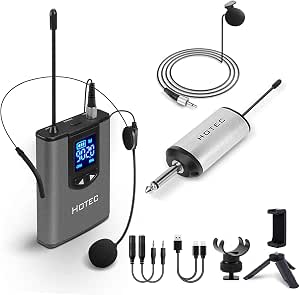 | Best for Rechargeable PA Interviews | Wireless type: UHF, 902–928 MHz | Selectable channels: 32 | Range: Up to 240 ft, line of sight | VIEW ON AMAZON | See Our Full Breakdown |
| DJI Mic Mini Wireless Microphone (2 Transmitters, 1 Receiver) |  | Best Compact Interview Kit | Transmitters and receiver: 2 transmitters, 1 receiver | Transmitter weight: 10 g | Transmission range: Up to 400 m | VIEW ON AMAZON | See Our Full Breakdown |
| DJI Mic Mini Wireless Microphone (2 Transmitters, 1 Receiver, Charging Case) | 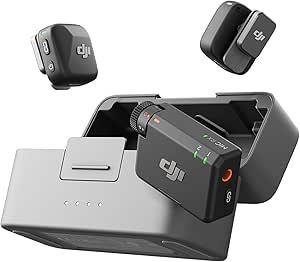 | Best for Long Field Interview Days | Channels: 2 | Transmitter weight: 10 g | Maximum transmission range: 400 m | VIEW ON AMAZON | See Our Full Breakdown |
| COMICA BoomX-D2 Wireless Lavalier Microphone System |  | Best for Recording Backup Tracks | Wireless type: 2.4 GHz | Transmitters and receiver: 2 transmitters, 1 receiver | Transmission range: Up to 650 ft (200 m) | VIEW ON AMAZON | See Our Full Breakdown |
| TONOR UHF Wireless Microphone System with Bodypack, Lavalier, and Headset Mics |  | Best for PA-Based Interviews | Wireless type: UHF | Microphones: Lavalier and headset | Receiver connector: 6.35 mm (1/4 in) jack | VIEW ON AMAZON | See Our Full Breakdown |
| FULAIM 4-Transmitter Wireless Lavalier Microphone System |  | Best for Four-Person Interviews | Transmitter and receiver count: 4 transmitters, 1 receiver | Audio resolution: 48 kHz/24-bit | Audio modes: Mono, Stereo, Safety Track | VIEW ON AMAZON | See Our Full Breakdown |
| Mini Mic Pro Wireless Lavalier Microphone with Charging Case |  | Best Compact Kit for Phone Interviews | Connections: USB-C and Lightning | Microphone count: 2 lavalier microphones | Pickup pattern: Omnidirectional | VIEW ON AMAZON | See Our Full Breakdown |
| MAYBESTA Wireless Mini Lavalier Microphones for iPhone and Android, 2-Pack |  | Best Simple Two-Person Phone Setup | Microphone count: 2 mini lavalier microphones | Connections: Lightning and USB Type-C | Wireless frequency: 2.4 GHz | VIEW ON AMAZON | See Our Full Breakdown |
| Ominoral 4-Pack Wireless Lavalier Microphone System |  | Best Multi-Device Four-Person Kit | Transmitters: 4 | Receiver connections: Lightning, USB-C, and 3.5 mm | Wireless technology: 2.4 GHz RF | VIEW ON AMAZON | See Our Full Breakdown |
| Phenyx Pro PDP-1-1B Single Digital Wireless Headset and Lavalier Microphone System |  | Best for Headset-or-Lavalier Flexibility | Frequency range: 902–928 MHz | Channels: 15 tunable channels | Microphone frequency response: 110 Hz–18 kHz | VIEW ON AMAZON | See Our Full Breakdown |
| DJI Mic Mini Wireless Microphone (2 Transmitters, Mobile Receiver) |  | Best for Lightweight Phone Interviews | Included components: Two transmitters, one mobile receiver, accessories | Transmitter weight: 10 g | Connector: USB Type-C | VIEW ON AMAZON | See Our Full Breakdown |
| Mini Mic Pro Wireless Lavalier Microphone for iPhone and Android | 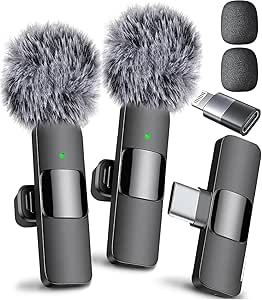 | Best for Simple Phone Setup | Connectors: Lightning and USB-C | Compatible devices: Android, laptop, smartphone, tablet, iPad, and iPhone | Polar pattern: Omnidirectional | VIEW ON AMAZON | See Our Full Breakdown |
| NEEWER KM19 Mini Wireless Lavalier Microphone, USB-C, Black |  | Best for Long Two-Person Recording Days | Wireless connection: 2.4 GHz | Audio sampling: 48 kHz, 24-bit | Frequency response: 20 Hz–20 kHz | VIEW ON AMAZON | See Our Full Breakdown |
| NEEWER CM28 Wireless Lavalier Microphone Set with Charging Case |  | Best for Onboard Backup Recording | Included components: Two transmitters, one receiver, charging case, adapters, and cables | Transmitter storage: 4 GB each | Recording format: 48 kHz WAV | VIEW ON AMAZON | See Our Full Breakdown |
More Details on Our Top Picks
TONOR UHF Wireless Microphone System with Headset and Lavalier Mics
For interviews recorded through a PA system or mixer, the TONOR’s strongest advantage is that it supplies two bodypacks and both a headset and a lapel mic for each speaker. That gives an interviewer a hands-free option while keeping the other person’s microphone placement discreet. Its 15 selectable frequencies per bodypack offer some room to find a cleaner channel, though the HOTEC provides more selectable frequencies and rechargeable power for both transmitter and receiver. TONOR’s receiver is rechargeable, but each bodypack needs two AA batteries, so you’ll need to bring spares. The 1/4-inch output also means it suits compatible sound equipment better than a camera-first setup such as the COMICA BoomX-D2, which has camera-oriented connections and recording modes. I’d choose TONOR for two speakers using a compatible PA; skip it for a direct-to-phone interview kit.
Pros:- Two bodypacks support interviews with two speakers.
- Each speaker can choose between a headset and lapel microphone.
- Selectable frequencies and separate bodypack volume controls offer practical setup flexibility.
- Rechargeable receiver is specified for 6–8 hours of use.
Cons:- Each bodypack requires two AA batteries, which are not included.
- The receiver’s 1/4-inch output requires compatible equipment or an adapter.
- The stated 200-foot range is line of sight.
Best for: Interviewers recording two speakers through a PA, mixer, or other equipment with a 1/4-inch microphone input who want headset and lapel options.
Not ideal for: Camera-first creators or reporters seeking a direct phone connection, and anyone who wants rechargeable bodypacks rather than AA-powered transmitters.
- Wireless type:UHF
- Transmitters:2 bodypacks
- Microphones:2 headset mics and 2 lapel mics
- Range:Up to 200 ft (60 m), line of sight
- Frequency options:15 per bodypack; 30 channels total
- Receiver output:6.35 mm (1/4-inch) jack
- Receiver runtime:6–8 hours
- Bodypack power:2 AA batteries per bodypack, not included
Our verdict“Choose TONOR for two-person interviews routed through a compatible sound system, but pick a camera-focused kit if you need simpler direct recording.”
HOTEC UHF Wireless Headset and Lavalier Microphone System
The HOTEC is a practical single-speaker interview kit for a PA or mixer setup: it includes both a headset and lavalier mic, plus rechargeable batteries for the transmitter and receiver. That rechargeable design removes the AA-battery dependency of the TONOR UHF system, though TONOR is the better match when two people need separate bodypacks at once. HOTEC’s 32 selectable UHF frequencies provide more channel choices than TONOR’s 15 per bodypack, which can help when a venue has competing wireless equipment. The included cables, phone holder, and hot shoe mount broaden its recording options, but the receiver still outputs through a 1/4-inch jack, so camera or phone users may need the right adapter. Its 240-foot range is a line-of-sight claim, not a promise through walls or crowds. I’d favor it for a solo interviewer who values rechargeable operation over a two-speaker system.
Pros:- Includes both headset and lavalier microphones.
- Rechargeable batteries are included for the transmitter and receiver.
- 32 selectable UHF channels provide frequency choices for busy venues.
- Included cables and mounts support several recording setups.
Cons:- Only one bodypack is included, so it does not independently mic two speakers.
- The 1/4-inch receiver output may require an adapter for cameras, phones, or computers.
- The stated 240-foot range is line of sight.
Best for: Solo interviewers and presenters using a compatible PA, mixer, camera, or phone setup who want rechargeable UHF gear and a choice of mic style.
Not ideal for: Two-person interview crews needing two simultaneous wireless microphones, or buyers who need a receiver that connects directly without checking input compatibility.
- Wireless type:UHF, 902–928 MHz
- Selectable channels:32
- Range:Up to 240 ft, line of sight
- Microphones:Headset and lavalier
- Polar pattern:Omnidirectional
- Signal-to-noise ratio:80 dB
- Output connector:6.35 mm (1/4-inch) jack
- Power:Rechargeable; 2 included lithium-ion batteries
Our verdict“Pick HOTEC for a rechargeable, single-speaker interview setup with flexible mic placement, not for interviews that need two wireless transmitters.”
DJI Mic Mini Wireless Microphone (2 Transmitters, 1 Receiver)
When interview subjects need to move naturally, DJI’s 10 g transmitters are easier to wear discreetly than the bodypack-and-cable arrangement of the TONOR UHF system. Two transmitters let you record an interviewer and guest, while two noise-cancellation levels and automatic limiting offer tools for handling changing surroundings and sudden loud speech. The advertised 400 m range is ample for open settings, though actual performance depends on conditions and this compact set is aimed at smartphones and select DJI Osmo devices rather than broad compatibility with PA gear. Its stated operating time is up to 10 hours, but the charging-case version of the DJI Mic Mini adds up to 48 hours with its case, making that alternative more appealing for repeated field interviews. This version makes sense when portability matters more than an included charging case or wide device support.
Pros:- Two 10 g transmitters are lightweight and discreet for on-camera interviews.
- Two noise-cancellation levels provide a choice for different environments.
- Automatic audio limiting can help control sudden loud peaks.
- Up to 10 hours of stated operating time supports long recording days.
Cons:- Compatible device support is limited to smartphones and select DJI Osmo devices.
- This package does not list a charging case; the case-equipped version offers longer combined battery life.
- Not waterproof.
Best for: Mobile journalists and two-person interview creators using smartphones or compatible DJI Osmo devices who want lightweight clip-on transmitters.
Not ideal for: Interview teams relying on PA systems, broad camera compatibility, or a charging case for extended recording away from power.
- Transmitters and receiver:2 transmitters, 1 receiver
- Transmitter weight:10 g
- Transmission range:Up to 400 m
- Operating time:Up to 10 hours
- Noise cancellation:2 levels: Basic and Strong
- Microphone pattern:Omnidirectional
- Connector:USB Type-C
- Compatible devices:Smartphones and select DJI Osmo devices
Our verdict“Choose this DJI set for lightweight two-person smartphone or Osmo interviews, and choose the case-equipped version for longer field days.”
DJI Mic Mini Wireless Microphone (2 Transmitters, 1 Receiver, Charging Case)
This DJI Mic Mini package is the stronger choice over the non-case version when interviews run across a full day: the included case raises stated battery life to up to 48 hours, reducing how often you need to find power between sessions. Two light 10 g transmitters keep a two-person setup unobtrusive, and the Basic and Strong noise-cancellation modes give you some control over ambient sound. Compared with the COMICA BoomX-D2, DJI emphasizes compact wear and its compatible DJI direct connection, while COMICA lists mono, stereo, and safety recording modes plus real-time monitoring. Check device compatibility before buying; the listed connections center on cameras, smartphones, USB-C, and compatible DJI OsmoAudio devices. The transmitters are not waterproof, and the supplied magnet can interfere with some devices, so this is not a set-and-forget choice around sensitive electronics.
Pros:- Charging case supports up to 48 hours of stated battery life.
- Two 10 g transmitters suit discreet two-person interviews.
- Two noise-cancellation levels offer flexibility for different recording environments.
- Automatic limiting can help manage sudden changes in vocal volume.
Cons:- Transmitters are not waterproof.
- The magnet may interfere with pacemakers or magnetic cards.
- Compatibility should be checked against the intended camera, phone, or DJI device.
Best for: Mobile interview crews recording two people across a long day who want small transmitters, a charging case, and compatibility with their camera or smartphone setup.
Not ideal for: Users needing waterproof microphones, safety-track recording modes, or an uncomplicated fit near pacemakers and magnetic cards.
- Channels:2
- Transmitter weight:10 g
- Maximum transmission range:400 m
- Battery life with case:Up to 48 hours
- Sampling rate:48 kHz
- Maximum SPL:120 dB
- Frequency range:20 Hz–20,000 Hz
- Connectivity:Bluetooth, DJI OsmoAudio, USB Type-C
Our verdict“Choose the case-equipped DJI Mic Mini for long, mobile interview days, provided your recording devices are compatible and the magnet is suitable for your setup.”
COMICA BoomX-D2 Wireless Lavalier Microphone System
For interviews where a clipped word or sudden loud answer would be costly, the BoomX-D2 stands apart with a safety mode that records a backup track at -6 dB. That gives editors a lower-level version to use if the main recording clips, while its mono and stereo modes also make it more adaptable in post than the simpler HOTEC UHF system. Two transmitters cover an interviewer and guest, and real-time monitoring helps you catch connection or level problems while recording. The stated 12-hour battery life is useful for long sessions, and the 3.5 mm and USB-C connections suit many cameras and mobile devices. Compatibility still needs checking: Lightning iPhones require an additional adapter, and USB-C digital audio works only with compatible devices. Its 2.4 GHz link and 60 dB signal-to-noise ratio may make it less attractive than UHF systems for some venue setups.
Pros:- Safety mode records a -6 dB backup track to help preserve usable audio after clipping.
- Two transmitters support interviewer-and-guest recording.
- Real-time audio monitoring helps catch recording issues during the interview.
- Up to 12 hours of stated battery life suits extended sessions.
Cons:- Lightning iPhones require an additional adapter.
- USB-C digital audio is limited to compatible devices.
- The 2.4 GHz connection may be less suitable than UHF for some crowded wireless environments.
Best for: Video interviewers and editors who record two speakers and want monitoring plus a lower-level backup track for difficult-to-repeat conversations.
Not ideal for: Lightning iPhone users without an extra adapter, or crews seeking a UHF system for a PA-based venue setup.
- Wireless type:2.4 GHz
- Transmitters and receiver:2 transmitters, 1 receiver
- Transmission range:Up to 650 ft (200 m)
- Latency:Under 20 ms
- Battery life:Up to 12 hours
- Recording modes:Mono, stereo, safety mode (-6 dB backup track)
- Connectors:3.5 mm jack and USB Type-C
- Frequency response:80 Hz–20 kHz
Our verdict“Pick the BoomX-D2 when a backup track and live monitoring matter more than a UHF connection or plug-and-play compatibility with every phone.”
TONOR UHF Wireless Microphone System with Bodypack, Lavalier, and Headset Mics
For interviews delivered through a PA system, mixer, or amplifier, this TONOR stands apart from the phone-focused FULAIM and Mini Mic Pro kits. Its UHF bodypack works with either a lavalier or headset mic, so the speaker can choose a discreet interview setup or a more secure fit while moving. The 15 adjustable frequencies give you options when nearby wireless gear creates interference, and the receiver runs for 6–8 hours after charging. The tradeoff is a less direct recording workflow: it connects through a 6.35 mm jack, not Bluetooth or a phone-ready USB receiver, and it needs compatible sound equipment. Its bodypack also takes two AA batteries, sold separately. I’d choose it for live, amplified interviews, not direct-to-phone capture.
Pros:- Includes both lavalier and headset microphones for different interview setups
- 15 adjustable frequencies offer flexibility around other UHF equipment
- Receiver provides 6–8 hours of use per charge
- Up to 200 ft line-of-sight range suits interviews across a room or venue
Cons:- Requires a compatible sound system and does not connect directly to phones or Bluetooth devices
- Bodypack requires two AA batteries that are not included
- The receiver’s 6.35 mm connection is less adaptable for direct camera or mobile recording than the FULAIM system
Best for: Interviewers, presenters, or educators who need a lavalier or headset mic routed through a compatible PA system, mixer, or amplifier.
Not ideal for: Phone-first journalists and video creators who need a direct USB-C or Lightning connection, or anyone recording without a compatible sound system.
- Wireless type:UHF
- Microphones:Lavalier and headset
- Receiver connector:6.35 mm (1/4 in) jack
- Line-of-sight range:Up to 200 ft (60 m)
- Adjustable frequencies:15
- Receiver runtime:6–8 hours
- Bodypack power:Two AA batteries, not included
- Compatible equipment:Amplifier, speaker, PA system, or mixer
Our verdict“Choose this TONOR for hands-free interviews amplified through a PA or mixer, but skip it for direct-to-phone recording.”
FULAIM 4-Transmitter Wireless Lavalier Microphone System
When an interview has a host and several guests, the FULAIM’s four transmitters and one receiver make it a more natural fit than the two-mic Mini Mic Pro or MAYBESTA. Its 48 kHz/24-bit recording specification, receiver display, and 3.5 mm monitoring jack give a crew useful tools for checking levels and following conversations. Mono, stereo, and Safety Track modes add flexibility; the safety track is especially helpful when a speaker suddenly gets louder. The charging case extends total operation to 21 hours, though each charge lasts up to seven hours. Its advertised 300 m range is line-of-sight, so walls and crowded locations can reduce the practical distance. Choose it for multi-person mobile or camera interviews; for one subject, it brings more transmitters and setup complexity than needed.
Pros:- Four transmitters support recording up to four people at once
- Safety Track mode can provide a quieter backup recording against clipping
- Receiver display and 3.5 mm monitoring jack aid on-location checks
- Charging case extends total operation to up to 21 hours
Cons:- The 300 m range is specified for line-of-sight use and may not reflect obstructed interview locations
- Up to seven hours per charge is shorter than the case-assisted total runtime
- More transmitters and controls may be unnecessary for routine one-on-one interviews
Best for: Small video crews recording roundtable interviews or panels with up to four speakers on compatible phones, computers, or DSLR cameras.
Not ideal for: Solo interviewers who need a minimal one- or two-mic kit, or buyers who expect the stated range to hold through walls and obstructions.
- Transmitter and receiver count:4 transmitters, 1 receiver
- Audio resolution:48 kHz/24-bit
- Audio modes:Mono, Stereo, Safety Track
- Wireless range:Up to 300 m line of sight
- Battery runtime:Up to 7 hours per charge; up to 21 hours with charging case
- Monitoring:3.5 mm audio jack
- Wireless technology:2.4 GHz
- Compatible devices:USB-C phones and devices, computers, and DSLR cameras
Our verdict“Pick the FULAIM when you regularly record several interview participants and want monitoring and a safety-track option in one kit.”
Mini Mic Pro Wireless Lavalier Microphone with Charging Case
This Mini Mic Pro is the compact, phone-first pick in this group: USB-C and Lightning adapters let interviewers connect to a range of mobile devices without relying on a camera-style receiver. The included two lavalier microphones make it more useful for a two-person conversation than a single-mic setup, while the charging case can also charge a connected device during recording. That combination favors travel and quick interviews over the FULAIM’s more production-oriented display, monitoring jack, and multi-person controls. Runtime is listed at up to six hours per charge, and the included foam and furry wind tips help with breezy locations. I would be cautious about drawing conclusions from its listed signal-to-noise figure, which appears unusually high. It also gives no specified wireless range, so it is a weaker choice for interviews where subjects move far from the camera.
Pros:- USB-C and Lightning adapters support a broad range of mobile devices
- Includes two lavalier microphones for two-person conversations
- Charging case can charge a device while recording
- Foam and furry wind tips provide options for reducing wind noise
Cons:- Runtime is listed at up to six hours per charge
- No specific wireless range is provided
- The listed signal-to-noise figure appears unusually high and is difficult to use as a reliable comparison
Best for: Mobile journalists and creators recording short, close-range interviews on USB-C or Lightning phones and tablets.
Not ideal for: Crews needing documented wireless range, extended single-charge runtime, or the FULAIM’s receiver display and headphone monitoring.
- Connections:USB-C and Lightning
- Microphone count:2 lavalier microphones
- Pickup pattern:Omnidirectional
- Compatible devices:Android devices, iPhone, iPad, smartphones, tablets, and laptops
- Runtime:Up to 6 hours per charge
- Included wind protection:Foam tips and deadcat tips
- Charging case:Included; can charge a connected device while recording
Our verdict“Choose this Mini Mic Pro for compact, close-range phone interviews, but prefer the FULAIM when monitoring and documented multi-person features matter more.”
MAYBESTA Wireless Mini Lavalier Microphones for iPhone and Android, 2-Pack
The MAYBESTA is aimed at interviewers who want two clip-on mics and a simple mobile connection rather than a full camera or PA system. Its plug-and-play setup, mute function, and Lightning and USB-C connectors cover common phone and tablet workflows. The longer receiver connector is intended to fit many phone cases, which can save time when recording in the field. Compared with the Mini Mic Pro, however, the supplied information gives no charging case, wind protection, or battery runtime, making it harder to plan a long interview day. It also lists a single channel, so buyers should check how the system handles two microphones in their intended setup rather than assume separate tracks. The stated C battery is unusual for a compact lavalier kit. I’d favor it for straightforward two-person phone capture, not work requiring detailed recording controls or dependable endurance data.
Pros:- Two wireless mini lavalier microphones suit interviewer-and-guest conversations
- Plug-and-play operation avoids app-based setup
- Lightning and USB-C connectors cover many mobile devices
- Mute function offers a quick way to silence a microphone
Cons:- Battery information lists a C battery, an unusual choice for a compact wireless mic
- No specific wireless range or battery runtime is provided
- The single-channel specification leaves the two-mic recording workflow less clear than the FULAIM’s stated modes
Best for: Phone-based interviewers who need two microphones, quick setup, and a receiver connector designed to work with many phone cases.
Not ideal for: Creators who need specified battery runtime, wind protection, separate-channel recording details, or a kit built around camera and mixer connections.
- Microphone count:2 mini lavalier microphones
- Connections:Lightning and USB Type-C
- Wireless frequency:2.4 GHz
- Pickup pattern:Omnidirectional
- Channels:1
- Signal-to-noise ratio:80 dB
- Power:Battery-powered; listed battery type is C
- Features:Plug and play, mute function, noise reduction
Our verdict“Pick the MAYBESTA for quick two-person phone interviews, but choose a system with published runtime and recording modes for more demanding shoots.”
Ominoral 4-Pack Wireless Lavalier Microphone System
Ominoral makes the strongest case here for interviewers who need four transmitters and broad device connections without centering the kit on a single phone type. Its receiver includes Lightning, USB-C, and 3.5 mm inputs, giving it more connection options than the USB-C-focused FULAIM, while the listed 10-hour runtime per microphone exceeds the FULAIM’s seven hours per charge. The tradeoff is that FULAIM provides more clearly described recording tools, including mono, stereo, Safety Track, a receiver display, and a monitoring jack. Ominoral lists AI noise reduction and omnidirectional pickup, with furry windshields noted among its supplied strengths, but it gives limited detail about its audio modes. Its 328 ft range applies to open, unobstructed areas, and Android devices may need OTG enabled. I’d pick it for flexible device matching, not for a tightly specified monitored workflow.
Pros:- Four transmitters support interviews with up to four people
- Receiver connections include Lightning, USB-C, and 3.5 mm
- Up to 10 hours of operation per microphone is listed
- AI noise reduction and furry windshields can help in noisy or breezy settings
Cons:- The stated 328 ft range depends on open, unobstructed conditions
- Android devices may require OTG to be enabled
- Recording modes and monitoring features are less clearly specified than on the FULAIM
Best for: Interview teams recording up to four speakers across phones, tablets, computers, or cameras that need Lightning, USB-C, and 3.5 mm connections.
Not ideal for: Android users unable to enable OTG, or crews who need clearly specified recording modes and receiver-based monitoring like the FULAIM offers.
- Transmitters:4
- Receiver connections:Lightning, USB-C, and 3.5 mm
- Wireless technology:2.4 GHz RF
- Maximum range:Up to 328 ft (100 m) in open, unobstructed environments
- Runtime:Up to 10 hours per microphone
- Charging time:Approximately 2 hours
- Pickup pattern:Omnidirectional
- Android connection note:OTG may need to be enabled
Our verdict“Choose Ominoral for a four-person kit that connects across several device types, but favor FULAIM if documented monitoring and safety-track controls are higher priorities.”
Phenyx Pro PDP-1-1B Single Digital Wireless Headset and Lavalier Microphone System
The Phenyx Pro suits interviewers who may switch between a clipped lavalier and a headset, such as presenters who also lead demonstrations or events. Its two included microphone styles make it more adaptable for spoken work than the phone-focused DJI Mic Mini Mobile Receiver, while 15 tunable UHF channels can help when several wireless systems share a venue. The metal receiver and bodypack are a more performance-oriented setup than tiny mobile transmitters, but the receiver’s 6.35 mm output may call for an adapter when connecting to a camera, phone, or recorder. Its stated 160–200 ft range applies to line of sight, and walls or other obstacles can shorten it. Choose this for a compatible mixer or PA workflow, not the simplest direct-to-phone interview rig.
Pros:- Includes both headset and lavalier microphones for different interview and presentation setups
- 15 tunable UHF channels offer channel choices when using wireless equipment in busy venues
- USB-C charging for the receiver and transmitter
- Metal enclosure and stated 160–200 ft line-of-sight range
Cons:- The 6.35 mm receiver connection may require an adapter for cameras, phones, and some recorders
- Walls, metal, and glass can reduce the stated wireless range
- A bodypack and separate receiver are less compact than mobile-receiver systems such as the DJI Mic Mini
Best for: Interviewers, event hosts, and presenters who need both a lavalier and headset option and can connect through a mixer or compatible audio input.
Not ideal for: Phone-first creators who want a direct USB-C or Lightning connection, or camera operators without a suitable 6.35 mm input or adapter.
- Frequency range:902–928 MHz
- Channels:15 tunable channels
- Microphone frequency response:110 Hz–18 kHz
- Signal-to-noise ratio:96 dB
- Receiver battery capacity:1500 mAh
- Transmitter battery capacity:550 mAh
- Charging:USB Type-C
- Range:160–200 ft line of sight
- Included microphones and outputs:Headset and lavalier; 6.35 mm jack and XLR
Our verdict“Choose the PDP-1-1B if you need both headset and lavalier options for a compatible venue audio setup, but skip it for a direct-to-phone workflow.”
DJI Mic Mini Wireless Microphone (2 Transmitters, Mobile Receiver)
For interviews recorded on a phone, the DJI Mic Mini Mobile Receiver keeps the kit small: its 10 g transmitters are less obtrusive on clothing than a bodypack like the Phenyx Pro PDP-1-1B. Two transmitters also make it practical to mic an interviewer and guest, and two noise-cancellation levels plus automatic audio limiting provide useful controls for changing room noise and sudden loud speech. The listed 300 m transmission range is generous, though actual results depend on conditions, and the 11.5-hour maximum operating time is a stronger fit for long recording days than the Mini Mic Pro’s six-hour limit. This mobile-receiver version prioritizes portability over a broad set of wired camera connections; check that its USB-C connection suits your recording device. It is not waterproof.
Pros:- Two lightweight 10 g transmitters can mic an interviewer and guest
- Two noise-cancellation levels and automatic audio limiting provide practical recording controls
- Up to 11.5 hours of operating time supports extended interview days
- Listed transmission range reaches up to 300 m
Cons:- USB-C mobile receiver may not suit cameras or devices requiring other audio connections
- The system is not waterproof
- Its 70 dB signal-to-noise ratio is lower than the Phenyx Pro PDP-1-1B’s listed 96 dB figure
Best for: Phone-based interviewers who need to mic two people, value lightweight transmitters, and want noise-control options for changing environments.
Not ideal for: Camera crews needing a conventional camera receiver connection, or interviewers recording in wet conditions and expecting waterproof hardware.
- Included components:Two transmitters, one mobile receiver, accessories
- Transmitter weight:10 g
- Connector:USB Type-C
- Microphone type:Omnidirectional lavalier
- Maximum transmission range:300 m
- Maximum operating time:11.5 hours
- Noise cancellation:Two levels: Basic and Strong
- Signal-to-noise ratio:70 dB
Our verdict“Pick this DJI Mic Mini version for lightweight, two-person phone interviews, but choose a system with camera-oriented connections if your recording setup demands them.”
Mini Mic Pro Wireless Lavalier Microphone for iPhone and Android
The Mini Mic Pro is aimed at interviewers who want a low-friction connection to a phone or tablet rather than a receiver designed around camera gear. Its USB-C and Lightning adapters cover many current Android and Apple devices, and the plug-and-play design needs no app or Bluetooth pairing. That makes setup more direct than a system such as the NEEWER CM28, whose multiple adapters and recording modes suit a more involved kit. Included foam and dead cat wind covers give interviewers a way to manage indoor handling noise and outdoor breezes, though they cannot remove every environmental sound. The tradeoff is up to six hours of battery life, which is shorter than the DJI Mic Mini’s listed runtime. Its listed 80 g weight may also be less attractive to buyers prioritizing the lightest possible setup.
Pros:- Includes USB-C and Lightning adapters for compatible phones and tablets
- Plug-and-play connection works without an app or Bluetooth pairing
- Foam and dead cat wind covers are included
- Omnidirectional pickup captures voices without precise mic aiming
Cons:- Up to six hours per charge is shorter than the DJI Mic Mini’s listed operating time
- The listed 80 g weight may not suit buyers seeking an especially light kit
- A basic phone-oriented connection offers fewer stated recording controls than the NEEWER CM28
Best for: New phone-based interviewers who want a straightforward USB-C or Lightning connection and included wind covers without app setup.
Not ideal for: Crews recording long interview days, or buyers who need advanced receiver controls, a camera-focused kit, or the lightest listed setup.
- Connectors:Lightning and USB-C
- Compatible devices:Android, laptop, smartphone, tablet, iPad, and iPhone
- Polar pattern:Omnidirectional
- Battery life:Up to 6 hours per charge
- Weight:80 g
- Dimensions:3 × 0.5 × 0.25 inches
- Included wind protection:Two foam tips and two dead cat tips
- Special features:One-touch recording, battery indicator, clip, and noise reduction
Our verdict“Choose the Mini Mic Pro for uncomplicated phone interviews across USB-C and Lightning devices, but look elsewhere for longer sessions or a more configurable kit.”
NEEWER KM19 Mini Wireless Lavalier Microphone, USB-C, Black
The KM19 is a practical fit when interviewers want two transmitters, a charging case, and controls that can adapt to different surroundings. Its three noise-cancellation levels offer more adjustment than the DJI Mic Mini’s two, while mute control and mono or stereo output help shape a two-person recording workflow. Each transmitter runs up to six hours, but the case raises the stated total runtime to as much as 30 hours—useful across a day of separate interviews without relying on a single charge. The USB-C receiver and OTG adapters are geared to compatible mobile devices, not every camera: it is not compatible with GoPro, and some Android phones require OTG activation. Compared with the NEEWER CM28, this model emphasizes case-supported runtime and simple mobile output rather than built-in transmitter recording storage.
Pros:- Two transmitters and a charging case support interviews with a guest and repeated recording sessions
- Three noise-cancellation levels and mute control offer useful on-the-fly adjustments
- Up to 30 hours of stated total runtime with the charging case
- Supports mono and stereo output, with receiver charging during use
Cons:- Not compatible with GoPro
- Some Android phones require OTG activation, and app interaction is Android-only
- Unlike the NEEWER CM28, it does not list built-in transmitter recording storage
Best for: Mobile interviewers who regularly record two people, want a charging case for repeated sessions, and can confirm USB-C or OTG compatibility.
Not ideal for: GoPro users, crews needing built-in transmitter backups, or Android users who cannot activate OTG on their phone.
- Wireless connection:2.4 GHz
- Audio sampling:48 kHz, 24-bit
- Frequency response:20 Hz–20 kHz
- Signal-to-noise ratio:81 dB
- Maximum SPL:120 dB
- Wireless range:Up to 100 m (328 ft)
- Runtime:Up to 6 hours per transmitter; up to 30 hours with charging case
- Included components:One receiver, two transmitters, charging case, two OTG adapters, charging cable, two windscreens, and pouch
- Warranty:1 year manufacturer
Our verdict“Choose the KM19 for two-person mobile interviews spread across a long day, but pick the CM28 if onboard backup recordings matter more than case-supported runtime.”
NEEWER CM28 Wireless Lavalier Microphone Set with Charging Case
The CM28 stands out for interviews where a wireless drop would be costly: each transmitter has 4 GB of storage for up to nine hours of uncompressed 48 kHz WAV recording, giving you an onboard backup as well as a wireless feed. That is a distinct advantage over the NEEWER KM19, which offers a charging case and noise-control choices but does not list transmitter storage. The CM28 also includes adapters and cables for compatible phones, cameras, computers, and tablets, making it more flexible across recording devices than the Mini Mic Pro’s phone-oriented setup. Its 200 m range is stated for unobstructed conditions, not every interview location; walls and interference can affect performance. Transmitter recording can run up to nine hours, while the receiver is listed for up to eight, so check charge status before a full day of sessions.
Pros:- Each transmitter includes 4 GB storage for up to nine hours of 48 kHz WAV recording
- Onboard recordings provide a backup if the wireless link is interrupted
- Includes a charging case, adapters, and cables for compatible phones, cameras, computers, and tablets
- Supports mono, stereo, and MS audio export modes
Cons:- The stated 200 m wireless range depends on unobstructed conditions
- Transmitter and receiver operating times differ, at up to nine and eight hours respectively
- A larger, multi-device kit involves more setup than the Mini Mic Pro’s direct mobile connection
Best for: Interviewers and small crews who want transmitter-side WAV backups in addition to a wireless recording feed and need adapters for several device types.
Not ideal for: Buyers who need a very simple direct-to-phone setup, or who want equal listed runtimes across transmitter and receiver.
- Included components:Two transmitters, one receiver, charging case, adapters, and cables
- Transmitter storage:4 GB each
- Recording format:48 kHz WAV
- Transmitter recording time:Up to 9 hours
- Receiver operating time:Up to 8 hours
- Wireless range:Up to 200 m in unobstructed areas
- Polar pattern:Unidirectional
- Signal-to-noise ratio:80 dB
- Audio modes:Mono, stereo, and MS export
Our verdict“Pick the CM28 when independent transmitter recordings are a priority, but choose a simpler mobile kit if you do not need onboard WAV backups or multiple connection options.”

How We Picked
I ranked these systems around the needs of a real interview workflow: capturing clear speech, recording the right number of people, connecting reliably to the intended phone or camera, and keeping setup manageable. I also weighed receiver and connector formats, included microphone choices, charging and carrying convenience, and flexibility for different recording situations. A feature matters here when it solves an interview problem, such as avoiding a second recording device or allowing a host and guest to use separate transmitters.
The ranking favors kits that offer a practical balance for common two-person interviews, then gives specialized options their place when they better serve phone-only recording, group discussions, or headset use. Similar product names do not guarantee identical bundles, so the DJI Mic Mini and Mini Mic Pro configurations are treated as separate choices. I did not rank by brand alone: the best fit depends on participant count, recording device, and how much setup flexibility the buyer needs.
Factors to Consider When Choosing Wireless Lavalier Mic System For Interviews
Choosing an interview mic starts with the recording situation, not the longest feature list. These decisions can prevent a kit from being awkward or incompatible on the day of an interview.
Match the transmitter count to the conversation
Count every person whose voice needs an independent microphone, including the interviewer if they speak on camera. A two-transmitter kit is usually a practical starting point for a host and one guest, while a four-transmitter setup can reduce compromises for panels or roundtable discussions. More transmitters can also mean more equipment to charge, position, and check before recording. Avoid buying a multi-person kit just because it sounds more future-proof if your interviews are usually one-to-one. For rotating guests, a spare transmitter may help, but confirm that the system supports the number of active microphones you expect to use at once.
Check the receiver against your recording device
Before choosing a system, identify the exact device and port you will record into: camera, computer, or phone. A receiver that plugs directly into a phone can simplify a mobile setup, but it may not be the right fit for a camera workflow. Connector shape alone does not settle compatibility; phone cases, port type, and device support can all affect whether a receiver fits and works as intended. If you plan to record on more than one device, decide whether you are willing to carry the extra receiver or adapter required. A quick compatibility check can prevent a kit from arriving that cannot connect to your main interview recorder.
Choose lavalier or headset based on movement
A lavalier clips to clothing and generally keeps the microphone discreet, which suits seated interviews and on-camera conversations. A headset keeps the mic positioned near the mouth, which can be useful when a speaker turns their head, moves around, or needs consistent pickup during a presentation. Headsets are more visible, so they may not suit an interview where an unobtrusive appearance matters. Some UHF kits include both microphone styles, offering flexibility at the cost of a less minimal setup. Think about clothing, movement, and how the speaker will appear on screen before paying for a microphone type you may not use.
Plan for the room, not just the wireless link
Wireless microphones can make placement easier, but they cannot remove room echo, traffic, ventilation, or nearby conversations. For a quiet seated interview, mic position and a room with soft furnishings may make a bigger difference than adding more transmitters. In a busy location, keep the receiver and microphones within a clear working range and listen for interference or dropouts before recording the full conversation. Schedule a short sound check with both speakers talking at their usual volume. Do not assume that a wireless system will make a noisy room sound like a treated studio.
Decide whether a charging case earns its place
A charging case can make it easier to carry and recharge small components between shoots, especially if the kit stays in a camera bag. It does not replace checking the charge of each transmitter and receiver before an interview. Compare case-equipped and case-free versions by looking at which components are included and how you will store them, rather than treating the case as a sound-quality feature. If you record occasionally at a fixed desk, a simpler bundle may be enough. For mobile work, a single organized case can reduce loose parts and make setup less rushed.
Keep a backup plan for important conversations
An interview may be difficult or impossible to repeat, so decide in advance what happens if a battery runs low, a connection drops, or a microphone shifts. A spare wired microphone, a second recording device, or an available backup track can reduce the risk of losing usable speech. Test levels before the guest arrives and listen through headphones rather than relying only on a receiver light. Clip transmitters securely and check that clothing is not rubbing against the mic. Even a capable wireless kit benefits from a simple recording checklist and a backup approach.
Frequently Asked Questions
Is a two-transmitter kit enough for a host and one guest?
Usually, yes: two transmitters let the interviewer and guest each wear a microphone, which can make their voices easier to balance in the recording. Confirm that both transmitters can operate together with the receiver in the bundle you choose. If the interviewer stays off camera and does not need a separate mic, a single-mic setup may be enough. For occasional additional guests, decide whether you can record them with a separate microphone or need a system designed for more simultaneous speakers. Always test both voices before starting the interview.
Should I choose a phone receiver or a camera receiver?
Choose based on the device that will capture the interview, not simply the device you use to monitor or edit it. A phone receiver can keep a mobile recording setup small and direct, while a camera-oriented receiver is more appropriate when audio is going into a camera. If you record on both, check whether the kit includes the connections you need or whether adapters are required. Adapters can add handling and compatibility questions, particularly when a phone case blocks access to the port. Confirm the exact bundle contents before purchase.
Is a four-microphone system a better choice for future flexibility?
It is a better fit if you regularly record panels or expect several people to speak at once. For mostly one-to-one interviews, extra transmitters can add charging, setup, and storage work without improving the conversation. Check that the system supports the number of active microphones you need, rather than relying on the number in the product name alone. You should also plan how to keep track of each speaker’s mic and record a balanced test before the session. A two-person kit is often the simpler choice when guest count rarely changes.
Will a wireless lavalier system make interviews sound professional in a noisy room?
Not on its own. A wireless system gives the speaker freedom to move and can place a microphone close to their voice, but it cannot eliminate room echo or steady background noise. If possible, choose a quieter room, move away from hard reflective surfaces, and keep the microphone positioned consistently. Record a short sample and listen through headphones before committing to the full interview. For busy locations, a backup recording can help protect a conversation if wireless interference or handling noise becomes a problem.
When should I pay extra for a kit with a charging case?
A case is most useful when you travel between interview locations or need to keep small transmitters, receivers, and accessories together. It can simplify carrying and charging, but does not automatically mean the microphones suit your device or participant count better. Compare the case-equipped bundle with the simpler version to see whether the receiver and other included parts match your workflow. If the kit stays in one place and you already have a reliable charging routine, the case may add little practical value. Either way, check charge levels before recording.
Conclusion
For a typical host-and-guest conversation, I recommend the DJI Mic Mini two-transmitter, one-receiver kit as the best overall, with the mobile-receiver version a better match when a phone is your primary recorder. For a best value starting point, compare the phone-focused Mini Mic Pro and MAYBESTA options against your exact device and interview setup before choosing. My best premium-style pick for a more flexible group workflow is the FULAIM 4-Transmitter system, while the DJI Mic Mini with charging case suits buyers who value an organized portable kit. For beginners, a straightforward phone-compatible bundle can reduce connection steps; for presenters who want a headset as well as a lavalier, the TONOR or HOTEC UHF kits better address that specific need. Choose by speaker count and recording device first, then narrow the field by microphone style and carrying preferences.
Fall Picks
fall essentials
As an affiliate, we earn on qualifying purchases.