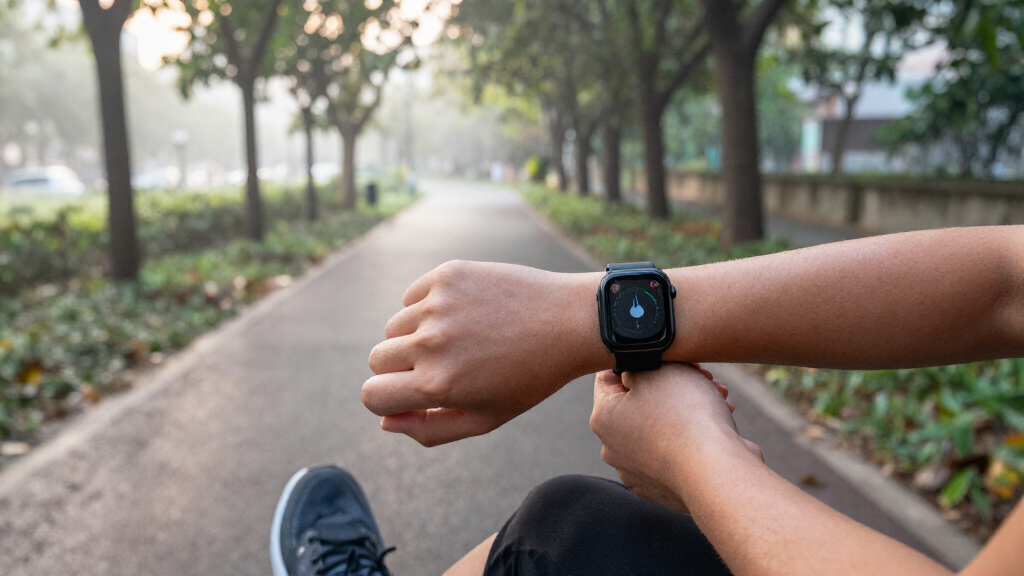

The best smartwatches balance useful health and fitness tools, easy everyday controls, and compatibility with your phone. I’d name the Apple Watch Series 12 the best overall for iPhone owners seeking a full-featured daily companion, while the Garmin Forerunner 165 stands out for runners and the Amazfit Bip 6 for shoppers who want GPS and a large display without focusing on premium smartwatch extras. The biggest tradeoffs are phone compatibility, battery life, workout depth, and how much you value apps and calls on your wrist. A model that suits an iPhone user may be a poor fit for an Android owner, and a fitness-first watch may offer fewer everyday smart features. Read on for the full breakdown of all 15 options and the buyer priorities that separate them.

Get the latest gadgets delivered free with Prime
- Fast, free delivery on millions of items
- Prime Video, Amazon Music and more included
- Member-only deals all year
Complete the kit



Key Takeaways
- Phone compatibility narrows the field: Apple Watch models are the natural picks for iPhone owners, while Samsung and Google options are aimed at Android users; check compatibility before comparing features.
- Fitness priorities change the ranking: Garmin’s Forerunner 165 is tailored to running, while the vívoactive 5 and Instinct 3 AMOLED cover broader fitness and rugged-outdoor needs.
- Premium features are not the only route to everyday usefulness: Amazfit Bip 6 pairs GPS with a large AMOLED screen, making it a practical alternative to watches centered on a larger app ecosystem.
- Small case sizes suit different wrists and routines: The 40–42 mm Apple and Samsung models may feel more manageable, while larger displays such as the Bip 6’s 1.97-inch screen prioritize glanceability.
- Entry-level calling watches make tradeoffs: The TG08, QONBINK, aeac, and other generic models advertise broad sports and health features, but shoppers should verify phone support, sensor limits, and companion-app needs before relying on them.
| TG08 Smartwatch for Women with 1.83-Inch Display, 120 Sports Modes, Bluetooth Calling, and Health Tracking |  | Best Value for Everyday Basics | Display: 1.83-inch IPS, 240 × 284 resolution | Sports modes: 120 | Health monitoring: Heart rate and sleep | VIEW LATEST PRICE | See Our Full Breakdown |
| Samsung Galaxy Watch9 Bluetooth Smartwatch, 40mm, Graphite |  | Best for Android Health Coaching | Case size: 40 mm | Operating system: One UI 9.0 | Connectivity: Bluetooth, Wi-Fi, and NFC | VIEW LATEST PRICE | See Our Full Breakdown |
| Amazfit Active Max Smartwatch with 1.5-Inch AMOLED Display |  | Best for Long Battery Life and Outdoor Training | Display: 1.5-inch AMOLED, up to 3,000 nits | Battery life: Up to 25 days | Storage: 4 GB | VIEW LATEST PRICE | See Our Full Breakdown |
| Apple Watch SE 3 GPS 40mm Smartwatch |  | Best for iPhone Safety Features | Display size: 40 mm | Connectivity: GPS; iPhone or Wi-Fi for connected features | Battery life: Up to 18 hours | VIEW LATEST PRICE | See Our Full Breakdown |
| Samsung Galaxy Watch8 40mm Bluetooth Smartwatch, Graphite |  | Best for Android Running and Sleep Guidance | Case size: 40 mm | Connectivity: Bluetooth | Compatibility: Samsung and other compatible Android phones | VIEW LATEST PRICE | See Our Full Breakdown |
| Smartwatch with Alexa, Bluetooth Calling, Fitness Tracking, and IP68 Water Resistance |  | Best for Alexa on a Budget | Display: 1.83-inch TFT-LCD touchscreen, 240 × 284 resolution | Connectivity: Bluetooth 5.3 | Voice assistant: Amazon Alexa | VIEW LATEST PRICE | See Our Full Breakdown |
| Google Pixel Watch 5 (41mm) Wi-Fi Android Smartwatch, Obsidian |  | Best for Android Health and Safety | Model: GA10900-US | Display: Domed Actua 360 with scratch-resistant Gorilla Glass | Compatibility: Android only; not compatible with iOS | VIEW LATEST PRICE | See Our Full Breakdown |
| Garmin Forerunner 165 GPS Running Smartwatch, 43 mm, Black |  | Best for GPS Running and Training | Display: AMOLED touchscreen with button controls | Case size: 43 mm | GPS: Built-in GPS | VIEW LATEST PRICE | See Our Full Breakdown |
| Smartwatch for Women with Bluetooth Calling, 1.27-Inch Touchscreen, Health Tracking, and 107 Sports Modes |  | Best Compact Pick | Display: 1.27-inch touchscreen | Weight: 35 g | Health tracking: Heart rate, blood oxygen, sleep, and menstrual cycle | VIEW LATEST PRICE | See Our Full Breakdown |
| QONBINK Smart Watch with 1.85-Inch HD Display |  | Best for a Large Display and Everyday Calls | Display: 1.85-inch HD touchscreen | Bluetooth: Bluetooth 5.3 | Sport modes: More than 120 | VIEW LATEST PRICE | See Our Full Breakdown |
| aeac Smartwatch for Women with 1.32-Inch AMOLED Display, Health Tracking, Calls, and 110+ Sports Modes |  | Best for Style-Focused Everyday Use | Display: 1.32-inch AMOLED touchscreen | Watch face size: 43 mm | Sports modes: 110+ | VIEW LATEST PRICE | See Our Full Breakdown |
| Garmin vívoactive 5 GPS Smartwatch, 42 mm, Ivory |  | Best for Balanced Fitness Tracking | Display: AMOLED touchscreen | Case size: 42 mm | Battery life: Up to 11 days in smartwatch mode; up to 5 days with always-on display | VIEW LATEST PRICE | See Our Full Breakdown |
| Garmin Instinct 3 AMOLED GPS Smartwatch, 45 mm, Black |  | Best for Rugged Outdoor Adventures | Display: 1.2-inch AMOLED | Case size: 45 mm | Battery life: Up to 18 days in smartwatch mode | VIEW LATEST PRICE | See Our Full Breakdown |
| Amazfit Bip 6 Smartwatch with 1.97-Inch AMOLED Display and GPS |  | Best Value for Maps and Long Battery Life | Display: 1.97-inch AMOLED | Case material: Aluminum | Battery life: Up to 14 days | VIEW LATEST PRICE | See Our Full Breakdown |
| Apple Watch Series 12 GPS 42mm Smartwatch |  | Best for iPhone Safety and Health Features | Connectivity: GPS, iPhone, and Wi-Fi | Battery life: Up to 24 hours of normal use | Fast charging: 15 minutes for up to 12 hours of normal use | VIEW LATEST PRICE | See Our Full Breakdown |
| smartwatch | GPS | Display | Water resistance | Battery life |
|---|---|---|---|---|
| TG08 Smartwatch for Women with | Via smartphone | 1.83-inch IPS, 240 × 284 resolution | IP67 | — |
| Samsung Galaxy Watch9 Bluetoot | Built-in | — | — | — |
| Amazfit Active Max Smartwatch | Built-in GPS, BeiDou, GLONASS, and Galileo | 1.5-inch AMOLED, up to 3,000 nits | 50 meters | Up to 25 days |
| Apple Watch SE 3 GPS 40mm Smar | — | — | — | Up to 18 hours |
| Samsung Galaxy Watch8 40mm Blu | — | — | — | — |
| Smartwatch with Alexa | No built-in GPS | 1.83-inch TFT-LCD touchscreen, 240 × 284 resolution | IP68; listed depth 15 meters | — |
| Google Pixel Watch 5 | No GPS geotagging functionality | Domed Actua 360 with scratch-resistant Gorilla Glass | 50 meters | Up to 40 hours |
| Garmin Forerunner 165 GPS Runn | Built-in GPS | AMOLED touchscreen with button controls | 50 meters | Up to 11 days in smartwatch mode; up to 19 hours in GPS mode |
| Smartwatch for Women with Blue | Via connected smartphone | 1.27-inch touchscreen | IP68; swimming and hot showers are not recommended | More than 7 days |
| QONBINK Smart Watch with 1.85- | Uses a connected smartphone | 1.85-inch HD touchscreen | Waterproof; listed depth 15 meters | — |
| aeac Smartwatch for Women with | Via smartphone | 1.32-inch AMOLED touchscreen | 3ATM; listed to 30 meters | Up to 10 days |
| Garmin vívoactive 5 GPS Smartw | Built-in | AMOLED touchscreen | 50 meters | Up to 11 days in smartwatch mode; up to 5 days with always-on display |
| Garmin Instinct 3 AMOLED GPS S | Multi-band GPS with SatIQ | 1.2-inch AMOLED | Not specified in the supplied specs | Up to 18 days in smartwatch mode |
| Amazfit Bip 6 Smartwatch with | Built-in; supports BeiDou, GLONASS, GPS, and Galileo | 1.97-inch AMOLED | 50 meters | Up to 14 days |
| Apple Watch Series 12 GPS 42mm | — | — | — | Up to 24 hours of normal use |
More Details on Our Top Picks
TG08 Smartwatch for Women with 1.83-Inch Display, 120 Sports Modes, Bluetooth Calling, and Health Tracking
The TG08 focuses on accessible everyday features: a large 1.83-inch display, Bluetooth calling, heart-rate and sleep monitoring, and 120 sports modes. That combination gives casual users plenty to explore without the more advanced navigation and training tools found on the Amazfit Active Max. Its stated 5–7 days of active battery life also means fewer charging interruptions than the Apple Watch SE 3, though actual use can vary.
The tradeoffs are clear: GPS depends on a paired smartphone, and step recording may not begin until more than 20 steps have been taken. IP67 water resistance suits everyday splashes, but it is not the stronger 50-meter rating listed for the Active Max. I’d choose the TG08 for basic calling and activity tracking, not for standalone outdoor route tracking or detailed training analysis.
Pros:- Large 1.83-inch touchscreen with customizable watch faces
- Bluetooth calling, notifications, and music controls
- 120 sports modes plus heart-rate and sleep monitoring
- Stated 5–7 days of active battery life and IP67 water resistance
Cons:- GPS tracking requires a paired smartphone
- Step recording starts only after more than 20 steps
- IP67 water resistance is less suited to swimming than the Active Max’s 50-meter rating
Best for: First-time smartwatch buyers who want a large screen, Bluetooth calls, and basic health and activity tracking with an Android or iPhone.
Not ideal for: Runners or hikers who need built-in GPS, and users who want advanced health insights or a higher water-resistance rating.
- Display:1.83-inch IPS, 240 × 284 resolution
- Sports modes:120
- Health monitoring:Heart rate and sleep
- Battery:350 mAh; 5–7 days active use, up to 30 days standby
- Water resistance:IP67
- GPS:Via smartphone
- Compatibility:iOS 9.0+ and Android 5.0+
- Connectivity:Bluetooth calling and notifications
Our verdict“Choose the TG08 for an affordable-feeling mix of calls, basic health tracking, and many activity modes, but skip it if you need built-in GPS.”
Samsung Galaxy Watch9 Bluetooth Smartwatch, 40mm, Graphite
The Galaxy Watch9 is the strongest fit here for Android users who want health tracking paired with personalized guidance. It tracks sleep and heart-health measures, includes blood-pressure tracking, and adds coaching that can turn collected data into practical fitness and sleep suggestions. Compared with the Galaxy Watch8, the Watch9’s listed feature set places more emphasis on blood pressure and health scoring; both remain Android-only choices rather than cross-platform picks.
Built-in GPS and NFC payments make it more self-contained for runs and everyday errands than the TG08, whose GPS relies on a phone. Blood-pressure readings do require calibration with a separate cuff, and setup depends on a compatible Android phone and companion apps. I’d pick it over the Amazfit Active Max for its Samsung-oriented health features, but not for long battery life: no battery-duration figure is provided, while Amazfit claims up to 25 days.
Pros:- Tracks sleep, blood pressure, and heart-health measures
- Personalized fitness and sleep coaching
- Built-in GPS and NFC payments
- Lightweight 40mm design with a breathable sports band
Cons:- Blood-pressure tracking requires calibration with a separate cuff
- Requires an Android smartphone and companion apps
- No battery-life estimate is provided in the product details
Best for: Android users, especially Samsung phone owners, who want health and sleep coaching, built-in GPS, and contactless payments.
Not ideal for: iPhone owners, buyers who do not want companion-app requirements, and anyone seeking a stated long battery-life figure or cuff-free blood-pressure readings.
- Case size:40 mm
- Operating system:One UI 9.0
- Connectivity:Bluetooth, Wi-Fi, and NFC
- GPS:Built-in
- Health metrics:Blood pressure, sleep, and heart-health score
- Compatibility:Samsung and other Android phones
- Weight:1.1 ounces
- Shape:Round
Our verdict“Pick the Galaxy Watch9 if you use Android and value guided health features more than a clearly specified, long-lasting battery.”
Amazfit Active Max Smartwatch with 1.5-Inch AMOLED Display
The Amazfit Active Max stands apart for buyers who want built-in navigation, extensive workout support, and fewer charging stops. Its multi-satellite GPS, offline maps, and turn-by-turn directions give outdoor sessions more independence than the TG08, which needs a smartphone for GPS. With more than 170 workout modes, Zepp Coach plans, and BioCharge energy monitoring, it also offers a training-focused toolkit that goes beyond the Galaxy Watch8’s sleep and running guidance.
The up-to-25-day battery claim is its biggest practical advantage over the Apple Watch SE 3’s stated 18-hour battery life, though real runtime will depend on use. Its 1.5-inch AMOLED display is bright enough for sunny conditions, and 50-meter water resistance expands where it can be worn. The catch: connected calls and features still need a phone, and hands-free message replies require Android. It is a better outdoor companion than a phone-independent communications watch.
Pros:- Built-in multi-satellite GPS with offline maps and turn-by-turn directions
- Up to 25 days of stated battery life
- More than 170 workout modes, BioCharge monitoring, and Zepp Coach plans
- Bright 1.5-inch AMOLED display and 50-meter water resistance
Cons:- Hands-free instant message replies require an Android phone
- Bluetooth calling and connected features need a paired smartphone
- Its training and navigation feature set may be more than casual users need
Best for: Frequent outdoor exercisers and travelers who want built-in GPS, offline maps, broad workout options, and long claimed battery life.
Not ideal for: Buyers who want a tightly integrated iPhone experience or hands-free message replies without an Android phone.
- Display:1.5-inch AMOLED, up to 3,000 nits
- Battery life:Up to 25 days
- Storage:4 GB
- Workout modes:More than 170
- GPS:Built-in GPS, BeiDou, GLONASS, and Galileo
- Water resistance:50 meters
- Sensors and metrics:Blood oxygen, heart rate, sleep duration, and stress
- Compatibility:Android and iOS smartphones
Our verdict“Choose the Active Max for outdoor training and long stretches between charges; choose an Apple Watch SE 3 instead for a more iPhone-centered experience.”
Apple Watch SE 3 GPS 40mm Smartwatch
The Apple Watch SE 3 is the clearest choice for iPhone owners who prioritize everyday connection and emergency safety features. It tracks sleep, health metrics, and workouts, while hard-fall and severe-car-crash detection can help connect users with emergency services. Compared with the Android-only Galaxy Watch9 and Watch8, its main advantage is Apple-focused integration; it is not the pick for Android households or shoppers seeking a long interval between charges.
Fast charging helps offset its up-to-18-hour battery life, adding up to eight hours of battery in 15 minutes, but that still means more frequent charging than the Amazfit Active Max’s stated runtime. Calls and messages rely on an iPhone or Wi-Fi, so this GPS model is not a standalone cellular watch. Siri is included, though availability and usage limits apply. I’d choose it over the TG08 for iPhone safety and ecosystem features, not for battery endurance.
Pros:- Fall and severe car-crash detection can help connect users with emergency services
- Tracks health metrics, sleep, and workouts
- Fast charging can add up to eight hours of battery in 15 minutes
- Supports calls, messages, music, and customizable watch faces through iPhone or Wi-Fi
Cons:- Battery life is stated at up to 18 hours, shorter than the Active Max’s claim
- Calls and messages depend on an iPhone or Wi-Fi
- Siri rollout is in English and usage limits may apply
Best for: iPhone owners who want workout and sleep tracking, quick charging, and fall and car-crash detection in a compact smartwatch.
Not ideal for: Android users, people who want cellular independence, and buyers who prefer multi-day battery life without regular charging.
- Display size:40 mm
- Connectivity:GPS; iPhone or Wi-Fi for connected features
- Battery life:Up to 18 hours
- Fast charging:Up to 8 hours of battery in 15 minutes
- Health and activity:Health metrics, sleep, and workout tracking
- Safety features:Hard-fall and severe-car-crash detection
- Manufacturer:Apple
- Model number:MJKR4LW/A
Our verdict“Choose the Apple Watch SE 3 if you use an iPhone and value safety features and quick charging more than long battery life.”
Samsung Galaxy Watch8 40mm Bluetooth Smartwatch, Graphite
The Galaxy Watch8 suits Android users who want coaching woven into everyday activity and sleep tracking. Its Running Coach offers performance analysis and real-time feedback, while bedtime guidance and energy insights make it more coaching-oriented than the TG08’s broader but simpler set of activity modes. Compared with the Galaxy Watch9, the Watch8’s standout angle is its running feedback and slim, lightweight fit; the Watch9 lists built-in GPS and NFC payments, features not specified for this Watch8 model.
Blood-pressure tracking comes with extra setup: it requires a separate cuff and periodic calibration. Some functions also depend on compatible devices, apps, or accounts, and Running Coach is limited to outdoor runs with GPS setup. That makes the Watch8 a less straightforward choice for casual users who just want basic notifications, but a better fit than the TG08 for Android runners who will use its guided feedback. It does not make sense for iPhone owners.
Pros:- Running Coach offers performance analysis and real-time feedback
- Sleep coaching includes bedtime guidance
- Tracks heart rate, activity, sleep, and energy insights
- Lightweight, slim design intended for a snug fit
Cons:- Blood-pressure tracking needs a separate cuff and periodic calibration
- Some features depend on a compatible Samsung Galaxy phone, apps, or accounts
- Running Coach is limited to outdoor runs and requires GPS setup
Best for: Android users who run outdoors and want guided performance feedback alongside sleep, heart-rate, and activity tracking.
Not ideal for: iPhone owners, indoor-only runners, and buyers who want blood-pressure tracking without a separate cuff and periodic calibration.
- Case size:40 mm
- Connectivity:Bluetooth
- Compatibility:Samsung and other compatible Android phones
- Health features:Sleep, heart rate, activity, energy score, and blood-pressure tracking
- Blood-pressure requirement:Initial and periodic calibration with a third-party cuff, sold separately
- Color:Graphite
- Warranty:2 years
- Brand:Samsung
Our verdict“Pick the Galaxy Watch8 if you have an Android phone and will use its outdoor running and sleep coaching; skip it for basic tracking or cuff-free blood-pressure readings.”
Smartwatch with Alexa, Bluetooth Calling, Fitness Tracking, and IP68 Water Resistance
This pick makes sense for buyers who want Alexa and wrist-based calling without moving to a more involved smartwatch platform. Its 1.83-inch display gives notifications and activity summaries room to breathe, while the 8–10-day battery target means fewer charging interruptions than the QONBINK Smart Watch, which is rated for up to 5–7 days. More than 120 sports modes and basic health tracking cover everyday use, but the proprietary OS cannot reply to messages, so it is less useful for handling conversations than a full-featured Apple or Samsung watch. It also lacks built-in GPS, leaving route tracking dependent on your phone. I’d choose it for voice commands, calls, and simple tracking—not for precise outdoor workouts or richer app interactions.
Pros:- Built-in Amazon Alexa supports voice commands from the wrist.
- Bluetooth calling lets you handle calls without reaching for your phone.
- More than 120 sports modes plus heart-rate, sleep, and activity tracking.
- Rated for 8–10 days of use between charges.
Cons:- No built-in GPS, so outdoor route tracking depends on a connected phone.
- Cannot reply to text messages from the watch.
- Proprietary OS offers a more limited smartwatch experience than major platform watches.
Best for: Android or iPhone users who want Alexa, wrist calls, basic fitness tracking, and a battery that can last several days between charges.
Not ideal for: Runners who want phone-free GPS or anyone who needs to read and reply to messages from the watch.
- Display:1.83-inch TFT-LCD touchscreen, 240 × 284 resolution
- Connectivity:Bluetooth 5.3
- Voice assistant:Amazon Alexa
- Health metrics:Heart rate, sleep, menstrual cycle, steps, and stress
- Sports modes:More than 120
- Water resistance:IP68; listed depth 15 meters
- Battery:300 mAh; rated for 8–10 days of use and up to 30 days on standby
- GPS:No built-in GPS
Our verdict“Choose this for Alexa, calls, and long battery life in a simple tracker; skip it if you need built-in GPS or message replies.”
Google Pixel Watch 5 (41mm) Wi-Fi Android Smartwatch, Obsidian
The Pixel Watch 5 is the standout here for Android-focused wellness and safety features, rather than broad phone compatibility. Its domed Actua 360 display has scratch-resistant Gorilla Glass, and the health tools cover heart rate, sleep, and other wellness metrics. Loss of Pulse Detection can prompt an emergency-services call, a feature that gives this watch a different purpose from the training-oriented Garmin Forerunner 165 GPS Running Smartwatch. The tradeoff is its Android-only compatibility: iPhone owners should look at cross-platform options such as the Forerunner instead. The listed 40-hour battery life is respectable for a smartwatch, but it still calls for more frequent charging than simpler multi-day models. It also has no GPS geotagging functionality, which limits its appeal for tracking outdoor routes.
Pros:- Domed Actua 360 display uses scratch-resistant Gorilla Glass.
- Tracks heart rate, sleep, and other wellness metrics.
- Loss of Pulse Detection can prompt a call to emergency services.
- Includes 64 GB of storage.
Cons:- Not compatible with iPhone.
- No GPS geotagging functionality.
- Up to 40 hours of battery life means more frequent charging than multi-day alternatives.
Best for: Android users who prioritize wellness tracking, a polished display, and an emergency feature that may prompt a call for help.
Not ideal for: iPhone owners, runners who need GPS route tracking, or buyers seeking a watch that can go many days between charges.
- Model:GA10900-US
- Display:Domed Actua 360 with scratch-resistant Gorilla Glass
- Compatibility:Android only; not compatible with iOS
- Connectivity:Wi-Fi and Bluetooth
- Battery life:Up to 40 hours
- Health tracking:Heart rate, sleep, and wellness metrics
- GPS:No GPS geotagging functionality
- Water resistance:50 meters
- Storage and weight:64 GB; 31 g
Our verdict“Pick the Pixel Watch 5 for Android wellness and safety features, but choose the Garmin Forerunner 165 if GPS-based training matters more.”
Garmin Forerunner 165 GPS Running Smartwatch, 43 mm, Black
For runners, the Forerunner 165 brings the most purpose-built workout tools in this group: built-in GPS, adaptive training plans, and recovery insights. That makes it a stronger fit for logging routes and shaping workouts than the Pixel Watch 5, which has no GPS geotagging, and more training-focused than the general-purpose calling watches. The AMOLED touchscreen is paired with physical buttons, giving runners another way to operate the watch during activity. Its up-to-11-day smartwatch battery is useful between sessions, though GPS use is rated for up to 19 hours, so frequent long outings will shorten the time between charges. It also works with Android and iPhone, unlike the Pixel Watch. Safety and live-location tools still rely on a compatible phone and network coverage, and Garmin Pay support varies by country and payment provider.
Pros:- Built-in GPS records outdoor routes without relying on a phone for location.
- Suggested workouts and adaptive training plans support structured running.
- Combines an AMOLED touchscreen with physical button controls.
- Rated for up to 11 days in smartwatch mode.
Cons:- GPS mode is rated for up to 19 hours, shorter than smartwatch-mode battery life.
- Safety and live-location features require a compatible smartphone and network coverage.
- Garmin Pay availability depends on supported countries and payment networks.
Best for: Runners who want built-in GPS, guided training, recovery information, and compatibility with either Android or iPhone.
Not ideal for: Buyers who mainly want voice-assistant features, a broad app-first smartwatch experience, or safety and live-location tools that work without a phone connection.
- Display:AMOLED touchscreen with button controls
- Case size:43 mm
- GPS:Built-in GPS
- Battery life:Up to 11 days in smartwatch mode; up to 19 hours in GPS mode
- Water resistance:50 meters
- Activity profiles:More than 25
- Payment support:Garmin Pay
- Compatibility:Android and iPhone
Our verdict“Choose the Forerunner 165 if GPS runs and training guidance lead your priorities; it is a better fit for that job than the Pixel Watch 5.”
Smartwatch for Women with Bluetooth Calling, 1.27-Inch Touchscreen, Health Tracking, and 107 Sports Modes
At 35 g with a 1.27-inch display, this is the compact choice for buyers who find larger watches cumbersome. Two quick-release straps make it easy to change the look, while health tracking covers heart rate, blood oxygen, sleep, and menstrual cycles. It also supports Bluetooth calls and notifications, a useful mix for everyday wear. Compared with the larger 1.83-inch Alexa smartwatch in this roundup, it puts less screen area on the wrist and does not list a built-in voice assistant; in return, its smaller form may suit narrower wrists better. The battery lasts more than seven days per charge, but GPS uses a connected smartphone, and the IP68 rating does not make it a swim watch: the description advises against swimming and hot showers. Message replies are not supported by the voice feature.
Pros:- Lightweight 35 g design with two quick-release straps.
- Tracks heart rate, blood oxygen, sleep, and menstrual cycles.
- Supports Bluetooth calls and message notifications.
- Battery lasts more than seven days per charge.
Cons:- GPS relies on a connected smartphone.
- Not recommended for swimming or hot showers despite its IP68 rating.
- Voice features do not support message replies.
Best for: People with smaller wrists who want a lightweight watch, interchangeable straps, health tracking, and Bluetooth calling.
Not ideal for: Swimmers, runners seeking phone-free GPS, or buyers who want a large display or the ability to reply to messages from the watch.
- Display:1.27-inch touchscreen
- Weight:35 g
- Health tracking:Heart rate, blood oxygen, sleep, and menstrual cycle
- Sports modes:107
- Connectivity:Bluetooth calling and message notifications
- Battery life:More than 7 days
- Water resistance:IP68; swimming and hot showers are not recommended
- GPS:Via connected smartphone
- Straps:Two quick-release straps
Our verdict“Choose this compact model for a lighter fit and broad everyday health tracking, but look to the Garmin Forerunner 165 for built-in GPS training.”
QONBINK Smart Watch with 1.85-Inch HD Display
The QONBINK puts screen size and everyday communication ahead of GPS-based fitness: its 1.85-inch HD touchscreen is the largest listed here, and Bluetooth calling, notifications, and voice commands cover common phone-free moments. More than 120 sport modes and continuous heart-rate and sleep monitoring add basic activity coverage. Compared with the smaller women’s smartwatch in this roundup, QONBINK offers a roomier screen, though its ABS case and 5–7-day battery rating make it less compelling for buyers who value a compact fit or longer intervals between charging. It also lacks built-in GPS, so location tracking depends on a connected smartphone. Messages can appear as notifications, but the watch cannot reply to them. I’d treat it as a large-screen companion for calls and daily tracking, not a training watch.
Pros:- Large 1.85-inch HD touchscreen gives notifications and controls more room.
- Supports Bluetooth calls, message notifications, and voice commands.
- Offers more than 120 sport modes with heart-rate, sleep, and step tracking.
- Includes practical tools such as alarms and camera control.
Cons:- GPS functions through a connected smartphone rather than built into the watch.
- Messages cannot be replied to from the watch.
- Rated for up to 5–7 days of battery life, shorter than the Alexa smartwatch in this roundup.
Best for: Buyers who prefer a large touchscreen for notifications and calls and want basic activity tracking across many sport modes.
Not ideal for: Runners who need built-in GPS, people who want to reply to messages from the watch, or anyone prioritizing a smaller design and longer battery life.
- Display:1.85-inch HD touchscreen
- Bluetooth:Bluetooth 5.3
- Sport modes:More than 120
- Battery:350 mAh; rated for up to 5–7 days and up to 30 days on standby
- Health metrics:Heart rate, sleep, and steps
- Water resistance:Waterproof; listed depth 15 meters
- Compatibility:iOS 10.0+ and Android 4.4+
- GPS:Uses a connected smartphone
- Case material:Acrylonitrile butadiene styrene (ABS)
Our verdict“Choose QONBINK for a large screen and wrist calls at the center of your daily routine, but pick the Garmin Forerunner 165 for phone-free GPS workouts.”
aeac Smartwatch for Women with 1.32-Inch AMOLED Display, Health Tracking, Calls, and 110+ Sports Modes
The aeac AR-01 suits buyers who want a smaller, dressier smartwatch for everyday notifications and activity tracking. Its 1.32-inch AMOLED screen, rose-gold metal band, and customizable faces give it a more jewelry-like look than the sporty silicone designs of the Garmin vívoactive 5 and Amazfit Bip 6. Calls, voice commands, music control, and broad health tracking cover common daily needs, while more than 110 sports modes offer plenty of activity choices.
The tradeoff is that GPS depends on your phone, so it is less suitable for tracking outdoor workouts independently than the Garmin vívoactive 5 or Bip 6. Its 3ATM water resistance is also a more limited match for swimming than those watches’ 50-meter ratings. Choose it for style and basic connected features, not advanced navigation or rugged training.
Pros:- Rose-gold metal band and customizable AMOLED watch faces offer a dressier look than the Garmin vívoactive 5 or Amazfit Bip 6.
- Tracks heart rate, blood oxygen, stress, sleep, steps, and activity.
- Supports calls, voice commands, notifications, and music control.
- Offers more than 110 sports modes and up to 10 days of stated battery life.
Cons:- GPS requires a connected smartphone, unlike the built-in GPS on the Garmin vívoactive 5 and Amazfit Bip 6.
- 3ATM water resistance is less suited to swimming than the 50-meter ratings of those alternatives.
- Compatibility starts at Android 6.0 or iOS 9.0, so buyers should check their phone’s operating system.
Best for: Buyers who want a rose-gold, smaller-screen watch for calls, notifications, everyday health tracking, and casual workouts.
Not ideal for: Runners and swimmers who want built-in GPS or stronger water-resistance specs; location tracking relies on a connected phone, and water resistance is rated at 3ATM.
- Display:1.32-inch AMOLED touchscreen
- Watch face size:43 mm
- Sports modes:110+
- Water resistance:3ATM; listed to 30 meters
- Battery life:Up to 10 days
- GPS:Via smartphone
- Health tracking:Heart rate, blood oxygen, stress, and sleep
- Compatibility:Android 6.0+ and iOS 9.0+
Our verdict“Choose the aeac AR-01 for a dressier daily smartwatch with calls and broad activity tracking, but pick the Garmin vívoactive 5 or Amazfit Bip 6 for standalone GPS or stronger water resistance.”
Garmin vívoactive 5 GPS Smartwatch, 42 mm, Ivory
The Garmin vívoactive 5 is a strong middle ground for buyers who want dependable fitness tools without the bulk or specialized outdoor focus of the Garmin Instinct 3. Its built-in GPS tracks outdoor routes without a phone, while more than 30 sports apps, training tools, sleep coaching, and Body Battery give activity and recovery data a larger role than on the style-focused aeac AR-01. Music storage and Garmin Pay also make it more self-contained for workouts and errands.
Battery life reaches up to 11 days in smartwatch mode, but using the always-on display cuts that claim to up to five days. Its 50-meter water resistance is better suited to swimming than the aeac’s 3ATM rating, though the Instinct 3 is the more rugged choice for demanding outdoor use. Health measurements are estimates, not medical readings.
Pros:- Built-in GPS records outdoor activities without requiring a phone.
- More than 30 sports apps and training tools support varied exercise routines.
- Includes sleep coaching, stress tracking, and Body Battery insights.
- Combines music storage and Garmin Pay with up to 11 days of smartwatch-mode battery life.
Cons:- Always-on display use reduces stated battery life to up to five days.
- Health metrics are estimates and should not be treated as medical measurements.
- Less rugged and less navigation-focused than the Garmin Instinct 3.
Best for: Fitness-minded buyers who want built-in GPS, varied sports tracking, recovery insights, music storage, and contactless payments in a 42 mm watch.
Not ideal for: Outdoor users who need a rugged case, navigation sensors, or a long-battery adventure watch; the Garmin Instinct 3 is better equipped for that use.
- Display:AMOLED touchscreen
- Case size:42 mm
- Battery life:Up to 11 days in smartwatch mode; up to 5 days with always-on display
- GPS:Built-in
- Water resistance:50 meters
- Sports apps:More than 30 indoor and GPS sports apps
- Health tracking:Heart rate, sleep, stress, hydration, calories burned, and sleep coaching
- Additional features:Music storage, Garmin Pay, smartphone notifications, and wheelchair activity tracking
Our verdict“Pick the vívoactive 5 for a balanced fitness smartwatch with built-in GPS and useful daily extras, while choosing the Instinct 3 for tougher outdoor demands.”
Garmin Instinct 3 AMOLED GPS Smartwatch, 45 mm, Black
The Garmin Instinct 3 is the clearest choice here for buyers who put outdoor durability and navigation ahead of a lightweight everyday profile. Its metal-reinforced bezel, scratch-resistant lens, and 10 ATM water rating give it a tougher brief than the Garmin vívoactive 5 or Amazfit Bip 6. Multi-band GPS with SatIQ, a compass, and a barometric altimeter add practical location and elevation tools for routes beyond a routine neighborhood run. The built-in flashlight is another useful distinction for low-light outings.
Despite that rugged focus, its 1.2-inch AMOLED display keeps the screen compact, and the 45 mm case may feel substantial on smaller wrists. The vívoactive 5 is a more balanced pick for workouts and daily features such as Garmin Pay, while the Instinct 3 favors resilience and navigation. Its health readings, including Pulse Ox, are estimates, and Pulse Ox availability varies by country.
Pros:- Metal-reinforced bezel, scratch-resistant lens, and 10 ATM water rating suit demanding outdoor use.
- Multi-band GPS with SatIQ supports route tracking in challenging environments.
- Compass and barometric altimeter add navigation and elevation information.
- Built-in flashlight and up to 18 days of smartwatch-mode battery life support longer outings.
Cons:- The 45 mm case and rugged construction may feel bulky on smaller wrists.
- Pulse Ox is not available in all countries, and health metrics are estimates rather than medical readings.
- Less focused on everyday conveniences such as contactless payments than the Garmin vívoactive 5.
Best for: Hikers, trail runners, and outdoor users who want multi-band GPS, navigation sensors, a flashlight, and a rugged watch build.
Not ideal for: Buyers seeking a small, lightweight everyday watch or a broader set of convenience features; the 45 mm build is rugged, while the vívoactive 5 adds Garmin Pay and music storage.
- Display:1.2-inch AMOLED
- Case size:45 mm
- Battery life:Up to 18 days in smartwatch mode
- GPS:Multi-band GPS with SatIQ
- Navigation sensors:3-axis compass and barometric altimeter
- Water resistance:Not specified in the supplied specs
- Health features:Heart rate, sleep monitoring, Pulse Ox, and stress tracking
- Storage:4 GB
Our verdict“Choose the Instinct 3 for rugged outdoor navigation and durability, not for a slim daily watch with the convenience extras found on the vívoactive 5.”
Amazfit Bip 6 Smartwatch with 1.97-Inch AMOLED Display and GPS
The Amazfit Bip 6 brings together a large screen, built-in GPS, and lengthy stated battery life in a lightweight aluminum design. Its 1.97-inch AMOLED display gives maps, workout information, and notifications more room than the compact Garmin Instinct 3 or aeac AR-01 screens. With support for GPS, BeiDou, GLONASS, and Galileo, plus downloadable maps and turn-by-turn directions, it offers more navigation capability than the simpler aeac, whose GPS depends on a phone.
More than 140 workout modes, 50-meter water resistance, and up to 14 days of battery life make it a versatile pick for varied routines. Compared with the Garmin vívoactive 5, it has a bigger screen and longer stated battery life, while the Garmin offers wheelchair activity tracking and Garmin Pay. The Bip 6’s silicone band and Android 7.0+/iOS 14.0+ requirements may also rule it out for some buyers.
Pros:- Large 1.97-inch AMOLED display makes workout data and maps easier to read at a glance.
- Built-in multi-system GPS, downloadable maps, and turn-by-turn navigation provide more independence than phone-based GPS.
- Up to 14 days of stated battery life reduces charging frequency.
- More than 140 workout modes and 50-meter water resistance support a wide range of activities.
Cons:- Requires Android 7.0+ or iOS 14.0+, excluding some older smartphones.
- Silicone band is less dressy than the rose-gold metal band on the aeac AR-01.
- Does not list Garmin Pay or wheelchair activity tracking, features offered by the Garmin vívoactive 5.
Best for: Buyers who want a large, readable smartwatch with built-in GPS, downloadable maps, many workout modes, and fewer charging stops.
Not ideal for: People with older phones, or buyers seeking a metal or dress-style band; it requires Android 7.0+ or iOS 14.0+ and comes with a silicone band.
- Display:1.97-inch AMOLED
- Case material:Aluminum
- Battery life:Up to 14 days
- GPS:Built-in; supports BeiDou, GLONASS, GPS, and Galileo
- Water resistance:50 meters
- Workout modes:140+
- Compatibility:Android 7.0+ and iOS 14.0+
- Health metrics:Blood oxygen, breath rate, calories burned, heart rate, sleep, and stress
Our verdict“Choose the Bip 6 for a large display, built-in maps, and long battery life, while the vívoactive 5 is a better fit if Garmin Pay or wheelchair tracking matters more.”
Apple Watch Series 12 GPS 42mm Smartwatch
The Apple Watch Series 12 is the most phone-connected choice in this group for buyers already using an iPhone. Its broad tracking spans heart rate, HRV, sleep, blood oxygen, menstrual cycles, and fitness, with readiness insights drawing on recent activity, vitals, and sleep. Fall and severe car crash detection give it a safety role that stands apart from the Garmin vívoactive 5 and Amazfit Bip 6, which focus more on sports tracking, GPS, and battery life.
That connected feature set comes with a clear compromise: up to 24 hours of normal-use battery life means more frequent charging than the Garmin Instinct 3’s up to 18 days or Bip 6’s up to 14. Fast charging can provide up to 12 hours of normal use after 15 minutes, but does not remove the daily charging routine. Siri and select audio intelligence features are also rolling out over time, so this is a better match for iPhone users who value safety and health features over long battery life.
Pros:- Tracks heart rate, HRV, sleep, blood oxygen, menstrual cycles, and fitness metrics.
- Readiness insights draw on recent activity, vitals, and sleep.
- Fall and severe car crash detection can help contact emergency services and notify emergency contacts.
- Fast charging provides up to 12 hours of normal use after 15 minutes.
Cons:- Up to 24 hours of normal-use battery life requires more frequent charging than the Garmin Instinct 3 or Amazfit Bip 6.
- The supplied connectivity is centered on iPhone and Wi-Fi, making this a poor fit for Android buyers.
- Siri and select audio intelligence features are rolling out over time.
Best for: iPhone owners who want broad health tracking, readiness insights, connected calls and messages, and fall or crash detection.
Not ideal for: Android users and people who want a watch to last several days between charges; the supplied connectivity is iPhone-focused and battery life is up to 24 hours.
- Connectivity:GPS, iPhone, and Wi-Fi
- Battery life:Up to 24 hours of normal use
- Fast charging:15 minutes for up to 12 hours of normal use
- Health tracking:Heart rate, HRV, sleep, blood oxygen, menstrual cycles, and fitness metrics
- Safety features:Fall and severe car crash detection
- Readiness insights:Based on recent activity, vitals, and sleep
- Model number:MJED4LS/A
- Date first available:September 8, 2026
Our verdict“Choose the Series 12 if you use an iPhone and prioritize health and safety features, but choose the Instinct 3 or Bip 6 for much longer battery life.”
How We Picked
I ranked these watches by how well their stated features serve distinct buyer needs: everyday phone use, fitness tracking, running, outdoor activity, and value-focused basics. I weighed phone compatibility, display and controls, GPS and workout capabilities, health-tracking scope, build and water-resistance claims, and the likely effort needed to manage the companion app. A long feature list alone did not earn a high position; useful features that fit a clear routine mattered more than a high count of sports modes.
The leading positions go to models with clearer roles and stronger integration: Apple’s Series 12 is the broad iPhone pick, the Samsung and Pixel watches target Android users, and Garmin models serve buyers who prioritize training or outdoor use. Amazfit’s Bip 6 and Active Max offer a different balance, with fitness-friendly features and large or AMOLED displays. The less-established calling watches sit lower because their specifications provide fewer details for judging software support, sensor reliability, and long-term usability. I treat advertised health measurements as wellness tools, not medical diagnoses.
Factors to Consider When Choosing Best Smartwatches
Before choosing among the best smartwatches, I’d start with the routine the watch must support—not the longest feature list. These factors help separate a comfortable daily companion from a watch that looks capable on paper but does not fit your phone, workouts, or charging habits.
Check Phone Compatibility Before Comparing Features
A smartwatch is only as useful as its connection to your phone and its companion app. Check the exact operating-system requirements, not just whether the product says it supports Bluetooth, since basic pairing does not guarantee access to every feature. Some functions, such as responding to messages or using particular apps, may depend on the phone brand or software version. Buyers switching phones later should check whether the watch can move between platforms or will lose features. A common mistake is choosing by screen and sensor count, then discovering that the watch’s strongest functions are tied to a different phone ecosystem. I’d treat compatibility as a pass-or-fail filter before weighing the rest.
Match Battery Expectations to Your Charging Routine
Battery life depends on more than the watch model: GPS workouts, always-on displays, calls, notifications, and frequent health measurements all draw power. If you want sleep tracking, consider whether you can charge at another point in the day without disrupting your routine. A watch with richer apps and frequent wrist interactions may need more regular charging than a simpler fitness-focused design. Check whether the manufacturer’s battery estimate assumes features you plan to turn off. Buyers often compare headline battery claims without accounting for their own use, then find the real routine inconvenient. Pick a charging pattern you can sustain rather than treating maximum battery life as a number detached from daily habits.
Choose Fitness Tools That Match Your Activity
For casual activity, step counts and basic workout tracking may be enough; structured training calls for more useful workout summaries, reliable GPS, and controls that work while moving. Runners should check whether GPS is built in, whether the watch supports their preferred training metrics, and how easy it is to review a session afterward. Outdoor users may care more about durability, navigation-related tools, and dependable operation than messaging apps. Large counts of supported sports modes can be less meaningful than a few well-supported activities you actually do. If you use health readings to make care decisions, remember that consumer wrist sensors are not substitutes for medical devices or professional advice. Start with your main activity, then decide which extra metrics would change your choices.
Prioritize Fit, Readability, and Controls
Case diameter is only part of comfort: thickness, weight, strap shape, and how far the watch sits off the wrist all affect long wear. A large display can make notifications and workout figures easier to read, but it may feel bulky during sleep or under a sleeve. Smaller cases can suit narrower wrists while showing less information at once. Check strap sizing and replacement options, especially if you plan to wear the watch overnight or during exercise. Touchscreens are convenient, but physical buttons can be easier to use with sweaty hands or during a run. If possible, compare dimensions against a watch you already find comfortable rather than relying on screen size alone.
Separate Smart Features From Fitness Features
Wrist calls, voice assistants, notifications, and third-party apps serve a different purpose from GPS and workout tracking. Decide whether you want to leave your phone behind for short tasks or mainly want a clear record of activity and sleep. Bluetooth calling generally relies on a nearby phone, so it does not automatically mean the watch can handle calls independently. Likewise, GPS support does not guarantee maps or turn-by-turn guidance. Buyers can overpay for smart functions they rarely use or choose a fitness watch expecting a broad app selection. Write down the two or three tasks you want the watch to handle without reaching for your phone, then use those to judge the feature tradeoff.
Look Beyond the Feature List at Ongoing Support
A smartwatch is a software product as much as a piece of hardware, so app quality, update support, and strap availability matter after setup. Before buying a lesser-known model, check the companion app’s name, phone permissions, data export options, and whether its functions require an account. Also look for clear instructions on water resistance: a rating does not mean every kind of water exposure is suitable. Established ecosystems may offer more consistent app integration, while simpler models can be easier to operate but provide fewer ways to review or share data. Avoid assuming that a long list of advertised measurements means each one is equally accurate or useful. Prefer a watch whose ongoing support and data handling match how long you expect to keep it.
Frequently Asked Questions
Which smartwatch should I choose if I may change from iPhone to Android?
Choose with your next phone in mind, because some watches offer their fullest features only within one platform’s ecosystem. Apple Watch models are designed around iPhone use, so they are a poor choice if an Android switch is likely. Samsung and Google watches are Android-focused, and features can still vary by phone brand or software version. Garmin and Amazfit options may be worth comparing if fitness tracking matters more to you than tight integration with phone apps. Before buying, check the manufacturer’s current compatibility list and confirm that the specific features you want work on both phones.
Do I need built-in GPS if I usually carry my phone?
Not necessarily: if your phone is always with you, a watch that uses the phone’s location may cover casual route tracking. Built-in GPS is more useful when you want to leave the phone behind or record an outdoor workout without carrying it. GPS can affect battery use, so frequent long sessions make battery behavior part of the choice. Check whether the watch records a route independently and whether that data can sync to the apps you already use. If you only track indoor workouts or daily steps, GPS may not be worth making a top priority.
Are budget smartwatches with many health features a good alternative to established brands?
They can suit buyers who mainly want basic notifications, calls, and activity summaries, but feature counts do not tell the whole story. Check whether the companion app is supported, whether data can be exported, and how clearly the maker explains each health measurement. Less-documented models may offer fewer details about software updates, sensor limits, and long-term support than established ecosystems. Treat readings as general wellness information rather than a basis for diagnosis or treatment. If reliable training records or long-term app support matter, compare those points before choosing a lower-cost feature list.
Should I choose a smartwatch or a dedicated fitness watch for running?
Choose a smartwatch if you want calls, notifications, apps, and running tools together in one device. A dedicated fitness-oriented model may be a better match if workout recording, training feedback, and outdoor sessions take priority over wrist-based phone tasks. Check GPS behavior, workout controls, data summaries, and compatibility with the training platform you use. Also think about charging: frequent GPS sessions can change how often you need to recharge. For a new runner, simple and readable workout tracking may matter more than advanced metrics that are hard to interpret.
Can I wear a smartwatch while swimming or showering?
Do not assume that a water-resistance label makes every water activity safe. Ratings and manufacturer guidance differ, and swimming, hot showers, soaps, and high-pressure water can place different demands on seals. Read the exact model’s instructions and check whether its water-related tracking is intended for your activity. Water resistance can also change as a device ages or is damaged, so avoid treating it as permanent protection. If swimming is a regular use case, choose a model with explicit swim guidance rather than relying on a generic claim.
Conclusion
For most iPhone owners who want a capable everyday companion, I’d start with the Apple Watch Series 12 as this roundup’s best overall pick; the Apple Watch SE 3 is the more straightforward Apple option for beginners who do not need every premium feature. Android users should compare the Samsung Galaxy Watch9, Galaxy Watch8, and Google Pixel Watch 5 against their phone and preferred interface. For value-focused buyers wanting GPS and a large display, the Amazfit Bip 6 is the standout, while the Garmin Forerunner 165 suits runners and the Garmin Instinct 3 AMOLED better fits rugged outdoor use. Choose the Garmin vívoactive 5 for a fitness-centered daily routine, and consider the Amazfit Active Max if an AMOLED display is a priority. The TG08, QONBINK, aeac, and other generic calling models are best approached as basic-feature options: verify app support and phone compatibility before relying on their health or workout claims.
Fall Picks

DJI Osmo Action 4 Essential Combo Waterproof 4K Action Camera
As an affiliate, we earn on qualifying purchases.