
TL;DR

Get the latest gadgets delivered free with Prime
- Fast, free delivery on millions of items
- Prime Video, Amazon Music and more included
- Member-only deals all year
A home automation report by Spencer Kittleson argues that essential devices should keep working without an internet connection or a vendor’s cloud service. His own setup uses locally controlled hardware and software, while keeping cloud services such as Alexa optional rather than necessary.
Home automation builder Spencer Kittleson says essential devices in his house continue to work when the internet is unavailable, describing a local-first approach in a report published in October 2026. His central rule is that core household functions should not depend on a vendor’s server, a design choice meant to keep controls such as lights and switches usable during outages or cloud-service failures.
Kittleson says his system runs on hardware he owns, including Tasmota firmware on ESP boards, an MQTT broker and Node-RED software on a Raspberry Pi. MQTT lets devices publish information for other parts of the system to use, rather than requiring each device to connect directly to every other one. He says this arrangement allows a sensor, for example, to share readings with both a phone and a backend service.
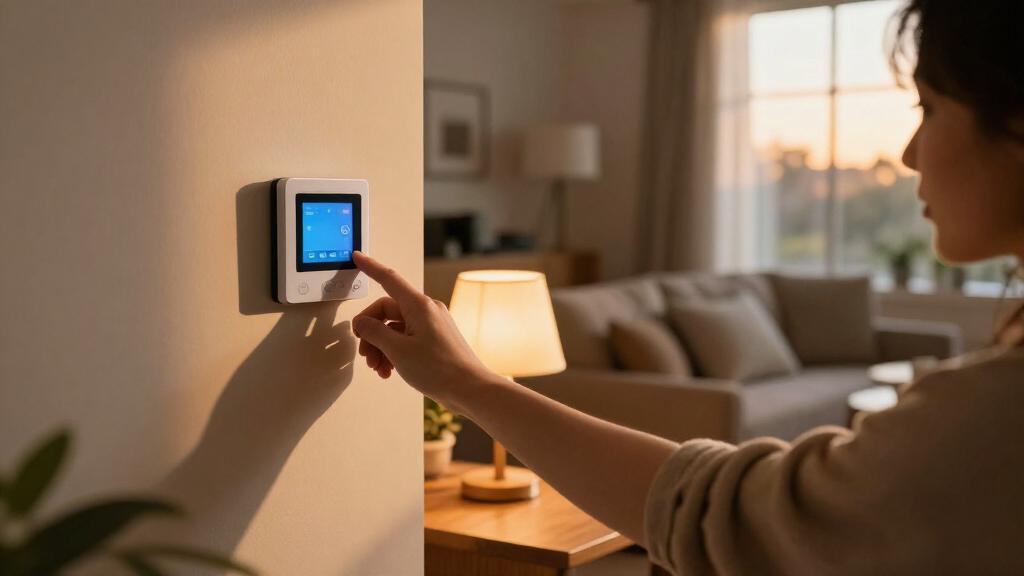
Cloud services have not been removed entirely. Kittleson says he uses Alexa and some AWS services, but treats Alexa as an optional way to control devices. If it is unavailable, he says, wall switches and a wall-mounted dashboard remain usable. His stated approach also preserves familiar controls: adding automation should not make an existing wall switch ineffective or force household members to rely on a voice assistant or app.
The report describes working examples, including a sprinkler controller and a garage-door setup. For the garage, sensors feed information into an automation that can check whether the door is closed, open it, and turn on a fan. Kittleson says the system also logs activity and can alert him if the door is left open. He advises checking automations regularly, citing an earlier problem in which four scheduled triggers controlled the same garden pump.
Keeping Household Controls Available
A local-first setup can reduce the effect of internet outages, service interruptions and vendor changes on basic home functions. Kittleson recounts that a Nest integration he used stopped working after Google changed an API. He also cites a Samsung refrigerator that displayed a TLS certificate error and a Camp Chef grill controller that required Wi-Fi to show its temperature. These are examples from his experience, not a broad assessment of how often such failures occur.
The practical trade-off is between convenience and reliance. Cloud-connected products may be easier to install, while equipment configured for local control can take more work to set up and maintain. Kittleson’s approach makes reliability and control the priority for essential functions, while allowing cloud features where they are not the only route to operate a device.
That distinction matters to people choosing smart locks, thermostats, lights or other household equipment. A device’s advertised features do not by themselves show what will remain usable if a company changes an API, a service goes offline or the home loses internet access. Kittleson recommends checking those dependencies before buying and preserving a manual or local control method.
Products Worth Considering

Bose Smart Soundbar 700 with Alexa, Black

Amazon Kindle Paperwhite Signature Edition (12th Generation, 2024), 32 GB, Metallic Raspberry

Amazon Kindle Paperwhite (2024, 16 GB) – 7-inch Glare-Free Display, Black
As an affiliate, we earn on qualifying purchases.
From Cloud Integrations to Local Control
Kittleson presents the report as a set of rules developed over about 10 years of home automation, rather than as a product announcement or controlled technical study. His first rule is that core functions should keep working with the internet unplugged. Other rules include keeping old controls when adding new ones, making systems inexpensive to change, and reviewing automations so they do not conflict.
He says he added a further rule after more people began living in the house: a cloud-dependent device should provide an API with logs, or he will not install it. He also favors keeping configuration in one place instead of spreading it across several vendor apps, and providing more than one way to trigger an action, such as a switch, app, voice assistant, QR code or NFC tag.
The report includes material from two talks about home automation, as well as examples of the equipment and software behind Kittleson’s setup. His recommendations reflect his own priorities and experience. The supplied source does not provide independent testing comparing local-first systems with cloud-dependent products.
“Nothing core in my house depends on a vendor’s server. If the internet goes down, the house keeps running.”
— Spencer Kittleson, in the supplied report
Limits of the Reported Setup
The source describes one household’s design and experiences; it does not establish how reliably local control works across different brands, networks or homes. It gives no independent measurements of outage performance, setup costs, maintenance time or security risks. The report also does not specify which devices or functions would remain available during a power failure, which is different from losing internet access.
It is also unclear how many of the cloud-connected devices Kittleson discusses have local fallback controls, and whether those options are available to typical consumers without custom configuration. His examples of API and connectivity failures are attributed to his experience, and the source does not provide further technical details about the incidents.
Check Controls Before Buying
Kittleson’s report does not announce a product launch or a formal next milestone. For readers considering smart-home equipment, the immediate takeaway is to check whether essential controls work locally and what happens if the internet or the maker’s service is unavailable. Buyers can also look for physical controls, documented APIs and usable logs, then decide which cloud features are optional rather than necessary.
For people already running automations, Kittleson recommends reviewing schedules and device interactions to catch overlapping triggers or routines that no longer make sense. The supplied source does not say whether he plans another talk, update or release of technical instructions beyond the material it describes.
Key Questions
What does it mean for a smart-home device to work without the internet?
It means that at least its essential function can still be controlled within the home when the internet is unavailable. The exact functions depend on the device and system; internet-independent operation does not, by itself, mean a device will work during a power failure.
Does Kittleson avoid all cloud services?
No. He says he uses Alexa and some AWS services, but treats them as optional ways to control or support the system. He says wall switches and a dashboard provide other control paths.
What equipment does his local system use?
Kittleson lists Tasmota on ESP boards, an MQTT broker and Node-RED on a Raspberry Pi. He describes these as parts of his own setup, not as a universal configuration for every home.
Why does he recommend keeping physical controls?
A wall switch or other local control can remain usable if an app, internet connection or cloud service is unavailable. Kittleson also argues that adding automation should not force people to change established habits or remove the old way of operating a device.
Does the report prove local smart-home systems are more reliable?
No. It presents Kittleson’s personal setup and examples, but the supplied source does not include independent testing or comparisons across products and homes.
Source: docodethatmatters.com