
For anyone serious about monitoring weather conditions and lightning activity at home or on the property, WiFi weather stations with lightning detection offer a powerful combination of real-time alerts and remote access. The Ambient Weather WS-2902 stands out as the best overall choice thanks to its comprehensive sensor suite and reliable connectivity. For those focused on lightning specifically, the AcuRite Atlas Professional Weather Station provides highly accurate lightning detection alongside detailed weather data. However, the main tradeoffs involve balancing cost, complexity, and the level of detail needed—more advanced models tend to be pricier and more complex, while simpler options may lack certain features. Keep reading for a detailed comparison that will help you find the right fit for your needs.

Get the latest gadgets delivered free with Prime
- Fast, free delivery on millions of items
- Prime Video, Amazon Music and more included
- Member-only deals all year
Complete the kit



Key Takeaways
- The best overall WiFi weather station with lightning detection combines accuracy, ease of use, and reliable connectivity, with the Ambient Weather WS-2902 leading this balance.
- Lightning detection performance varies significantly, with dedicated models like the AcuRite Atlas offering more precise alerts for outdoor safety.
- Price and complexity increase with feature set; beginners may prefer simpler setups, while advanced users benefit from multi-sensor integrations.
- Compatibility with smart home systems and app usability are key factors that influence long-term satisfaction.
- Not all lightning detectors are equally reliable, so choosing a model with proven detection accuracy is essential for safety-focused use cases.
| Ambient Weather WS-2902 Wi-Fi Smart Weather Station |  | Best Overall | Sensor Array: Osprey Sensor Array with Rain Cup | Display: LCD Color Display | Wireless Connectivity: Wi-Fi-enabled | VIEW ON AMAZON | See Our Full Breakdown |
| AcuRite Lightning Detector for Atlas Weather Station |  | Best Lightning Detection Accessory | Compatibility: AcuRite Atlas Weather Station | Detection Range: 25 miles (50 km) | Setup: Plug into battery compartment | VIEW ON AMAZON | See Our Full Breakdown |
| AcuRite Iris 5-in-1 Weather Station for Indoor and Outdoor Use |  | Best for Real-Time, All-in-One Monitoring | Display: High-definition TFT | Wireless Range: 100 meters | Sensor Range: 330 feet | VIEW ON AMAZON | See Our Full Breakdown |
| AcuRite Optimus (01216MCB) Weather Station with Wi-Fi HD Display | 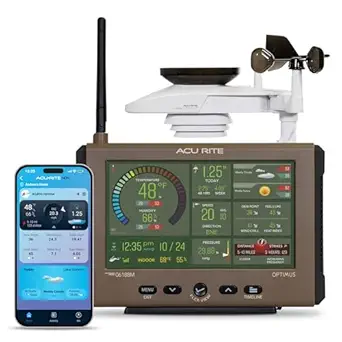 | Best Premium All-in-One | Weather Data Points: Over 20 | Display Type: High-definition LCD | Outdoor Sensor Power: 4 AA batteries or Solar Power Pack | VIEW ON AMAZON | See Our Full Breakdown |
| AcuRite Optimus (01224MCB) Weather Station with Wi-Fi Display and Lightning Detection |  | Best Compact, All-in-One with Lightning Detection | Type: All-In-One Connected Weather Station | Sensors: Temperature, Humidity, Rainfall, Wind Speed, Wind Direction, Lightning Detection | Display: LCD | VIEW ON AMAZON | See Our Full Breakdown |
| AcuRite Atlas Professional Weather Station with Wi-Fi and Lightning Detection |  | Best for Professional-Grade Weather Monitoring at Home and RVs | Display: HD display with battery backup | Connectivity: Wi-Fi, Weather Underground | Sensors: Thermometers, hygrometers, barometer, anemometers | VIEW ON AMAZON | See Our Full Breakdown |
| wifi weather stations with lightning detection | Display | Connectivity |
|---|---|---|
| Ambient Weather WS-2902 Wi-Fi | LCD Color Display | — |
| AcuRite Lightning Detector for | — | — |
| AcuRite Iris 5-in-1 Weather St | High-definition TFT | — |
| AcuRite Optimus | — | Wi-Fi, smart home devices |
| AcuRite Optimus | LCD | Wi-Fi, Smart-Home Integration |
| AcuRite Atlas Professional Wea | HD display with battery backup | Wi-Fi, Weather Underground |
More Details on Our Top Picks
Ambient Weather WS-2902 Wi-Fi Smart Weather Station
The Ambient Weather WS-2902 stands out for its comprehensive data collection, including wind, rain, UV, and solar radiation, all displayed on a vibrant color LCD. It surpasses simpler models like the AcuRite Iris by offering extensive sensor integration and smart home compatibility, making it ideal for weather enthusiasts who want detailed hyper-local insights. However, its reliance on Wi-Fi can limit functionality during network outages, and some advanced features depend on app integration. Overall, this station balances detailed data with smart features, though setup may be more involved than basic models.
Pros:- Provides extensive hyper-local weather data including UV and solar radiation
- Wi-Fi-enabled for remote access and smart home integration
- Includes an easy-to-read, color LCD display
Cons:- Requires Wi-Fi connection for full features, which can be a limitation during outages
- Some features rely on community network and app integration, adding setup complexity
Best for: Weather hobbyists and homeowners seeking detailed, customizable weather monitoring with smart home integration.
Not ideal for: Casual users or those with unreliable Wi-Fi, since full functionality depends on a stable internet connection.
- Sensor Array:Osprey Sensor Array with Rain Cup
- Display:LCD Color Display
- Wireless Connectivity:Wi-Fi-enabled
- Features:Wind speed/direction, temperature, humidity, rainfall, UV, solar radiation
Our verdict“This station is best suited for those who want detailed weather data and smart home connectivity, and are comfortable with a more involved setup.”
AcuRite Lightning Detector for Atlas Weather Station
The AcuRite Lightning Detector offers a simple plug-in upgrade for the Atlas Weather Station, providing early storm warnings within 25 miles and strike tracking. Compared with the Iris 5-in-1, which includes lightning detection as part of a broader sensor suite, this detector focuses solely on lightning and strikes, making it a cost-effective option for lightning alerts. The tradeoff is that it doesn’t provide other weather data, so it’s better suited for users already invested in the Atlas system who want storm warnings without extra sensors.
Pros:- Easy plug-in setup for quick installation
- Provides early warnings within 25 miles
- Tracks strike count and estimates distance
Cons:- Limited to lightning detection only, no other weather info
- Requires an Atlas station for compatibility, restricting flexibility
Best for: Users with an AcuRite Atlas Weather Station seeking dedicated lightning detection without additional weather measurements.
Not ideal for: Those without an Atlas station or who need a standalone lightning detector with broader weather monitoring capabilities.
- Compatibility:AcuRite Atlas Weather Station
- Detection Range:25 miles (50 km)
- Setup:Plug into battery compartment
- Features:Lightning strike counter, estimated distance
Our verdict“Ideal for Atlas users wanting reliable lightning alerts without extra bells and whistles.”
AcuRite Iris 5-in-1 Weather Station for Indoor and Outdoor Use
The AcuRite Iris 5-in-1 Weather Station provides a broad array of weather data, including lightning detection, with a high-definition TFT display that adapts to indoor lighting conditions. It offers wireless sensors with a range up to 100 meters, making placement flexible. Compared to the standalone lightning detectors, the Iris combines lightning with temperature, wind, and rainfall, making it a versatile choice for users wanting an integrated weather station. However, outdoor sensor placement within 330 feet is necessary, and some might find setup complex or the display dim in bright sunlight.
Pros:- Offers comprehensive real-time weather data including lightning detection
- High-resolution, auto-dimming display suitable for indoor use
- Wireless sensors with up to 100 meters range for flexible placement
- Self-calibrating forecast technology for personalized insights
Cons:- Outdoor sensors must be placed within 330 feet of the display
- Setup can be complex for non-technical users
- Display brightness may be insufficient in very bright environments
Best for: Homeowners wanting an all-in-one weather station with lightning detection and flexible sensor placement.
Not ideal for: Users seeking a simple, plug-and-play device or those with limited outdoor space for sensor placement.
- Display:High-definition TFT
- Wireless Range:100 meters
- Sensor Range:330 feet
- Lightning Detection Radius:25 miles
Our verdict“Best suited for homeowners who want detailed, integrated weather monitoring with flexible sensor placement.”
AcuRite Optimus (01216MCB) Weather Station with Wi-Fi HD Display
The AcuRite Optimus (01216MCB) combines a high-definition LCD with a compact outdoor sensor, offering over 20 weather data points plus lightning detection. Its seamless smart home integration and mobile app connectivity make it a powerful choice for tech-savvy users wanting central weather data. Compared to the Iris, the Optimus emphasizes durability and integration, but often requires additional accessories like power bases or solar packs, and setup can be less straightforward. It’s ideal for those wanting a sleek, durable unit with broad smart features, despite some higher complexity.
Pros:- Provides over 20 real-time weather data points
- High-definition display with customizable views
- Seamless integration with smart home devices
- Durable, weather-resistant construction
Cons:- Requires batteries or additional accessories for full operation
- Setup can be complex for non-technical users
- Additional components like power bases may be needed
Best for: Tech-savvy users seeking a durable, high-accuracy weather station with extensive data and smart home compatibility.
Not ideal for: Casual or budget-conscious users who prefer simpler, plug-and-play solutions without extra accessories.
- Weather Data Points:Over 20
- Display Type:High-definition LCD
- Outdoor Sensor Power:4 AA batteries or Solar Power Pack
- Connectivity:Wi-Fi, smart home devices
Our verdict“Ideal for users wanting a premium, durable, and highly integrated weather station with extensive data points.”
AcuRite Optimus (01224MCB) Weather Station with Wi-Fi Display and Lightning Detection
The AcuRite Optimus (01224MCB) offers a streamlined, low-profile design combined with detailed, real-time weather data, including lightning detection. Its sleek look makes it suitable for outdoor placement without being obtrusive, and it integrates easily with smart-home systems via Wi-Fi. Compared to the Iris or the larger WS-2902, this model emphasizes a durable, weather-resistant build that fits well in outdoor environments. Limitations include its compatibility restrictions with some popular weather apps and a limited lightning detection range, which might not suit all users requiring extensive storm tracking.
Pros:- Provides detailed real-time weather and lightning detection
- Compact, low-profile design suitable for outdoor use
- Easy smart-home device integration
- Durable construction for harsh conditions
Cons:- Limited compatibility with some popular weather apps like Weather Underground
- Lightning detection range may be insufficient for large property monitoring
- Requires app for full functionality, limiting use without smartphone
Best for: Outdoor enthusiasts and homeowners looking for a compact, durable weather station with lightning detection and smart connectivity.
Not ideal for: Users needing extensive weather data or integration with all major weather apps, as compatibility is somewhat limited.
- Type:All-In-One Connected Weather Station
- Sensors:Temperature, Humidity, Rainfall, Wind Speed, Wind Direction, Lightning Detection
- Display:LCD
- Connectivity:Wi-Fi, Smart-Home Integration
Our verdict“Best for outdoor users who want a sleek, durable station with lightning detection and smart home integration, despite some app limitations.”
AcuRite Atlas Professional Weather Station with Wi-Fi and Lightning Detection
The AcuRite Atlas stands out for its comprehensive real-time weather data, including lightning detection up to 25 miles, making it a strong alternative to the more consumer-focused Ambient Weather WS-2902. Its high-definition display and Wi-Fi connectivity enable effortless data sharing with platforms like Weather Underground, providing detailed insights beyond basic weather info. The self-calibrating sensors contribute to sustained accuracy, though the initial setup may challenge users unfamiliar with technical configurations. Outdoor sensor installation could be tricky in extreme weather, and lightning detection accuracy may fluctuate with environmental conditions. Compared to simpler models, the Atlas offers a professional-level experience, but it requires a bit more technical comfort and patience during installation.Pros:- Provides an extensive array of real-time weather metrics including lightning detection
- Wi-Fi connectivity enables seamless data sharing with Weather Underground
- High-definition display with battery backup ensures clear, continuous viewing
- Self-calibrating sensors maintain accuracy over time
Cons:- Setup process can be complex for users without technical experience
- Outdoor sensor installation may be difficult in harsh or windy conditions
- Lightning detection range varies based on environmental factors, potentially affecting alerts
Best for: Homeowners or RV travelers needing detailed, reliable weather data with lightning detection for safety and planning.
Not ideal for: Casual weather enthusiasts or those seeking a simple plug-and-play device, since setup and calibration involve some technical steps.
- Display:HD display with battery backup
- Connectivity:Wi-Fi, Weather Underground
- Sensors:Thermometers, hygrometers, barometer, anemometers
- Lightning Detection:Up to 25 miles
- Data Points:Over 20
- Power:Battery backup included
- Installation:Wall mount or tabletop
Our verdict“This station is ideal for those who need detailed, professional-level weather data and are comfortable with a more involved setup process.”

How We Picked
To select these WiFi weather stations with lightning detection, I focused on core factors that matter most to users: detection accuracy, WiFi reliability, ease of setup, and sensor versatility. I prioritized models that combine weather data with lightning alerts, ensuring they are suitable for both casual weather enthusiasts and safety-conscious users. Devices were ranked based on their overall build quality, user interface, and value for money. I avoided products with overly complex interfaces or unreliable connectivity, aiming instead for options that balance performance with user-friendliness. The resulting list highlights a mix of premium and budget-friendly choices, each excelling in different areas to match diverse needs.| wifi weather stations with lightning detection | Display | Connectivity |
|---|---|---|
| Ambient Weather WS-2902 Wi-Fi | LCD Color Display | — |
| AcuRite Lightning Detector for | — | — |
| AcuRite Iris 5-in-1 Weather St | High-definition TFT | — |
| AcuRite Optimus | — | Wi-Fi, smart home devices |
| AcuRite Optimus | LCD | Wi-Fi, Smart-Home Integration |
| AcuRite Atlas Professional Wea | HD display with battery backup | Wi-Fi, Weather Underground |
Factors to Consider When Choosing Wifi Weather Stations With Lightning Detection
Choosing the right WiFi weather station with lightning detection requires understanding your specific needs and the features that will serve you best. Beyond basic weather data, consider how critical lightning detection is for your safety or operational planning. The following factors will help guide your decision, balancing performance, usability, and cost.Detection Accuracy and Range
Lightning detection accuracy is vital if safety or outdoor activity planning is a priority. Some stations use advanced sensors that can detect strikes from a wider radius and with better precision. Cheaper models may offer basic detection that could miss distant strikes or generate false alarms. Consider the typical lightning activity in your area and choose a station with proven detection reliability for your region.
Connectivity and App Compatibility
A weather station’s WiFi stability and the quality of its mobile app influence how easily you can access real-time data and alerts. Look for models that support secure, stable connections and offer intuitive, feature-rich apps. Compatibility with smart home systems can also extend functionality, allowing you to automate alerts or trigger safety protocols remotely.
Sensor Versatility and Data Depth
Beyond lightning detection, consider what additional sensors and data types are included. Multi-sensor setups with wind, rain, humidity, and temperature sensors provide a fuller weather picture. If outdoor safety is a concern, a model with high-quality lightning sensors will be more valuable than a basic station with limited features.
Ease of Installation and Maintenance
Simple setup and minimal maintenance are often overlooked but can significantly influence your experience. Models with straightforward mounting options, clear instructions, and durable sensors save time and frustration. Check whether the station requires frequent calibration or updates, especially if you plan to use it long-term.
Price and Long-Term Value
Higher-priced models generally offer better accuracy, build quality, and feature sets, but it’s important to match these to your specific needs. Budget options might serve casual hobbyists, while professional-grade stations are suited for safety-critical use. Consider what features you truly need and whether the investment aligns with your intended usage and safety concerns.
Frequently Asked Questions
How reliable is lightning detection on WiFi weather stations?
Lightning detection reliability varies among models, with dedicated sensors like those in the AcuRite Atlas typically providing more accurate and timely alerts. Many stations use radio frequency sensors that detect electromagnetic signals from strikes, but false alarms can occur, especially in stormy conditions. For critical safety, choosing a station with proven detection technology and good reviews is essential. Remember, no consumer device can match professional-grade lightning detection networks, but these stations offer a practical safety layer for most users.
Can I use these stations indoors and outdoors?
Most WiFi weather stations are designed for outdoor installation, with weatherproof sensors and displays. Some models, like the AcuRite Iris, are versatile enough for indoor or outdoor use, depending on where you want monitoring. Indoor stations are useful for climate control or hobbyist purposes, but if you want lightning alerts, outdoor installation ensures sensors can detect strikes in your vicinity. Always check the manufacturer’s recommendations for placement and weatherproofing to ensure accurate and reliable readings.
How often do I need to calibrate or maintain these stations?
Many modern stations require minimal calibration, especially those with digital sensors designed for plug-and-play operation. However, periodic maintenance, such as cleaning sensors and updating firmware, can improve accuracy and reliability. Lightning sensors typically need less maintenance but should be checked periodically to ensure proper operation. Follow the manufacturer’s guidelines for maintenance routines to keep your station functioning optimally over time.
Are WiFi weather stations with lightning detection suitable for safety alerts?
Yes, when chosen carefully, these stations can provide timely alerts for lightning activity, helping you take safety precautions during storms. While they are not a substitute for professional systems, they serve as a practical early warning tool for outdoor safety, especially when integrated with mobile apps. Keep in mind that detection accuracy and alert speed vary, so selecting a model with proven lightning sensors and reliable connectivity is key for safety-critical use.
What features should I prioritize if I want a beginner-friendly station?
For beginners, ease of setup, clear app interfaces, and straightforward data presentation are most important. Look for models with plug-and-play installation, minimal calibration needs, and simple alert systems. Some stations also include step-by-step guides or customer support that can help you get started quickly. Prioritizing these features ensures you get reliable weather data and lightning alerts without a steep learning curve.
Conclusion
For general outdoor monitoring and safety, the Ambient Weather WS-2902 offers the best mix of features and ease of use, making it ideal for most users. Those prioritizing lightning detection for safety should consider the AcuRite Atlas Professional Weather Station, which excels in lightning accuracy. Budget-conscious buyers or beginners might prefer simpler models like the AcuRite Iris, which still provide essential data without complexity. For users with specific needs—like integration with smart home systems or professional-grade detection—investing in higher-end models makes sense. Ultimately, your choice depends on how critical lightning alerts are versus general weather monitoring.
Halloween Picks
halloween
As an affiliate, we earn on qualifying purchases.