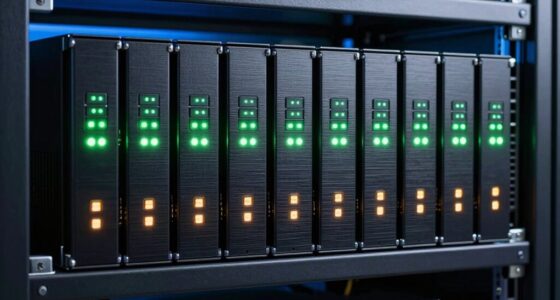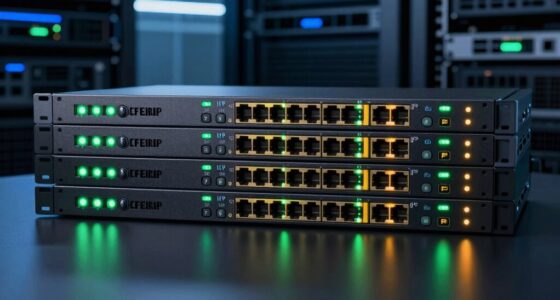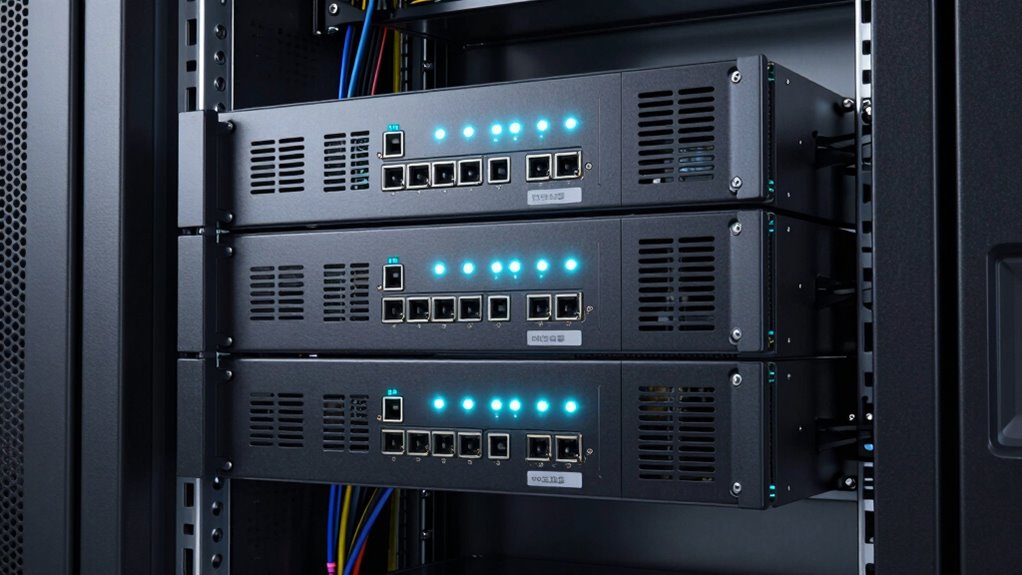

Choosing the right rackmount serial console server can significantly streamline your data center or industrial management setup. For 2026, the market offers a broad spectrum, from compact local access units to extensive remote management solutions. The Vertiv Avocent ACS 8000 stands out for its remote management capabilities with a high port count, making it ideal for data centers. The MOXA NPort 5650-16 offers robust industrial features, supporting multiple protocols and flexible power options for harsh environments. Meanwhile, the Tripp Lite 16-Port Console Switch provides a reliable, dual Ethernet setup suited for multi-device rack management. These picks reflect a balance between ease of use, scalability, and industrial robustness, but each involves tradeoffs in complexity, cost, or feature set. Understanding these differences will help you choose a device tailored to your specific needs.

Get the latest gadgets delivered free with Prime
- Fast, free delivery on millions of items
- Prime Video, Amazon Music and more included
- Member-only deals all year
Complete the kit



Key Takeaways
- The Vertiv Avocent ACS 8000 is best for large-scale remote management with high port density.
- The MOXA NPort 5650-16 excels in industrial environments with versatile protocol support and rugged design.
- The Tripp Lite 16-Port switch offers a straightforward, reliable management solution for multiple serial devices in smaller racks.
- Compact models like the Vertiv Avocent LRA are ideal for limited rack space but lack extensive remote features.
- Tradeoffs often involve balancing remote access capabilities, ease of setup, and environmental resistance.
| Vertiv Avocent LRA 1U Rack Mount Console with 8-Port KVM |  | Best for Compact Local Access | Form Factor: 1U rack mount | Number of Ports: 8 | Keyboard: Full 103-key with number pad | VIEW ON AMAZON | See Our Full Breakdown |
| Tripp Lite 16-Port Serial Console/Terminal Server Management Switch |  | Best for Multi-Device Rack Management | Number of Ports: 16 | Management: Serial Console/Terminal Server | Ethernet: Dual | VIEW ON AMAZON | See Our Full Breakdown |
| MOXA NPort 5650-16 – 16 Ports Rackmount Serial Device Server |  | Best for Industrial Environments | Number of Ports: 16 | Port Standards: RS-232/422/485 | Ethernet: 10/100M auto-sensing | VIEW ON AMAZON | See Our Full Breakdown |
| Vertiv Avocent ACS 8000 32-Port Serial Console Server with Dual Power Supply and Analog Modem |  | Best for Data Center Remote Management | Ports: 32 serial ports | Power Supply: Dual internal AC | Modem: Analog included | VIEW ON AMAZON | See Our Full Breakdown |
| Vertiv Avocent ACS8000 16-Port Serial Console Server (Renewed) |  | Best for Budget Remote Management | Ports: 16 | Power: Dual AC | Connectivity: Serial, USB | VIEW ON AMAZON | See Our Full Breakdown |
| rackmount serial console server | Number of Ports | Power Supply |
|---|---|---|
| Vertiv Avocent LRA 1U Rack Mou | 8 | — |
| Tripp Lite 16-Port Serial Cons | 16 | Dual |
| MOXA NPort 5650-16 | 16 | 100-240 VAC or 88-300 VDC |
| Vertiv Avocent ACS 8000 32-Por | — | Dual internal AC |
| Vertiv Avocent ACS8000 16-Port | — | — |
More Details on Our Top Picks
Vertiv Avocent LRA 1U Rack Mount Console with 8-Port KVM
The Vertiv Avocent LRA stands out for its space-saving 1U form factor and user-friendly interface. With 8 ports, it’s well-suited for small to medium racks where local access is needed without extra complexity. Its multilingual on-screen menu and full keyboard with touch pad make daily operations straightforward. Compared to larger remote management solutions, this device is limited to local control, making it less suitable for remote troubleshooting but perfect for quick, local server access.
Its compact design means it won’t support the extensive remote monitoring capabilities found in larger units, but it excels in environments where space efficiency and ease of use are priorities. The main tradeoff is its limited port count and absence of remote management features, which might restrict its utility in larger or more distributed setups.
Pros:- Space-efficient 1U design
- Multilingual on-screen menu
- Full keyboard with touch pad
Cons:- Limited to local access only
- No advanced remote features
- No display resolution details provided
Best for: Small data centers, local server lab setups, or IT closets needing quick local access.
Not ideal for: Remote management-heavy environments or setups requiring high port density.
- Form Factor:1U rack mount
- Number of Ports:8
- Keyboard:Full 103-key with number pad
- Languages Supported:7 on-screen menu, 12 keyboard languages
- Power Efficiency:Yes
Our verdict“Ideal for small, space-constrained environments needing simple local server access.”
Tripp Lite 16-Port Serial Console/Terminal Server Management Switch
The Tripp Lite 16-Port Console Switch offers a practical solution for managing multiple serial devices simultaneously. Its dual Ethernet and dual power supply provide redundancy, making it highly reliable for critical environments. This switch supports secure in-band and out-of-band management, suitable for those needing robust, physical access to servers, routers, or firewalls in a rack.
Compared with remote management units that rely on IP-based access, this device emphasizes security and local control, which can be a benefit or a limitation depending on your needs. It doesn’t support newer interfaces like USB or IP-based console access directly, so it’s less flexible for modern cloud-integrated setups. The built-in modem supports remote dial-in, but beyond that, remote access features are limited, which is a tradeoff for its focus on serial management.
Pros:- Supports secure in-band/out-of-band management
- Dual Ethernet and power supplies
- Compatible with a wide range of rack devices
Cons:- Limited to serial console management
- Lacks IP-based remote features
- No support for newer interfaces like USB or Ethernet console
Best for: Racks with multiple serial devices requiring reliable local and secure management.
Not ideal for: Environments needing IP-based remote access or modern management interfaces.
- Number of Ports:16
- Management:Serial Console/Terminal Server
- Ethernet:Dual
- Power Supply:Dual
- Built-in Modem:Yes
- Compliance:TAA GSA
Our verdict“A dependable choice for managing multiple serial devices with a focus on security and redundancy.”
MOXA NPort 5650-16 – 16 Ports Rackmount Serial Device Server
The MOXA NPort 5650-16 is tailored for industrial applications, supporting RS-232, RS-422, and RS-485 standards across 16 ports. Its flexible configuration options, including Telnet, web interface, and Windows utility, make it adaptable for complex network setups. The device’s rugged design, including 15KV ESD protection and universal power input, makes it suitable for harsh environments where reliability and protocol support are essential.
Compared to standard serial servers, this model emphasizes industrial-grade durability and extensive protocol support. However, its setup can be complex for those unfamiliar with industrial networking, and it excludes models optimized for temperature extremes. It’s best suited for industrial automation, transportation, or manufacturing environments where ruggedness and multiple communication standards are non-negotiable.
Pros:- Supports RS-232, RS-422, RS-485 standards
- Easy configuration via multiple methods
- Rugged design with ESD protection
Cons:- Complex setup for non-experts
- Excludes wide temperature models
- Requires technical knowledge for optimal use
Best for: Industrial environments needing versatile serial communication support and durable hardware.
Not ideal for: Typical data centers or office environments where industrial specs are unnecessary.
- Number of Ports:16
- Port Standards:RS-232/422/485
- Ethernet:10/100M auto-sensing
- Form Factor:Rackmount 19-inch
- Power Supply:100-240 VAC or 88-300 VDC
- ESD Protection:15KV
Our verdict“Perfect for industrial settings demanding protocol flexibility and durable hardware.”
Vertiv Avocent ACS 8000 32-Port Serial Console Server with Dual Power Supply and Analog Modem
The Vertiv Avocent ACS 8000 is designed for large-scale remote management, featuring 32 serial ports and dual internal AC power supplies for maximum uptime. Its inclusion of an analog modem supports out-of-band access, making it ideal for data centers where remote troubleshooting is critical. The device also features USB ports, environmental sensors, and a dual-core ARM processor, supporting automation and comprehensive monitoring.
This product excels where remote access, redundancy, and environmental monitoring are priorities, especially in complex data center environments. However, its setup can be complex and may require specialized knowledge. The size and cost reflect its enterprise focus, which could be overwhelming for smaller operations. It’s a robust choice for those managing large, distributed server environments with high availability needs.
Pros:- Supports remote management and troubleshooting
- Dual power supplies for high availability
- Includes environmental sensors
Cons:- Complex setup process
- Bulkier and more expensive
- Limited info on newer IoT device compatibility
Best for: Large data centers requiring extensive remote management and environmental monitoring.
Not ideal for: Small offices or setups with limited remote access needs.
- Ports:32 serial ports
- Power Supply:Dual internal AC
- Modem:Analog included
- USB Ports:8 USB 2.0
- Network Connectivity:Dual 1Gb Ethernet
- Memory:16GB flash
- Processor:Dual-core ARM
Our verdict“Best suited for enterprise-level data centers that need comprehensive remote management and high reliability.”
Vertiv Avocent ACS8000 16-Port Serial Console Server (Renewed)
The Vertiv Avocent ACS8000 16-port offers a reliable platform for remote out-of-band management, with dual AC power ensuring redundancy. Its USB support and compatibility with remote data centers make it a practical choice for those with a limited budget but still needing dependable serial management. As a renewed product, it may carry some risks regarding warranty or longevity but remains a solid option for cost-conscious buyers.
Compared to new units, this model might lack the latest features or extended warranty coverage, but it provides essential remote management at a lower price point. It’s suitable for smaller data centers, remote sites, or backup setups where full enterprise features are less critical but reliability remains a priority.
Pros:- Supports multiple serial devices
- Dual AC power for redundancy
- Affordable as a renewed product
Cons:- Limited detailed user reviews
- Potential warranty concerns
- No advanced remote features beyond basic out-of-band access
Best for: Budget-conscious remote management of serial devices in small or backup data centers.
Not ideal for: Environments requiring the latest features, extensive support, or new hardware warranties.
- Ports:16
- Power:Dual AC
- Connectivity:Serial, USB
- Management:Remote, Out-of-Band
Our verdict“A cost-effective solution for remote serial management where budget constraints exist.”

How We Picked
To compile this list, I focused on the core functions that define a rackmount serial console server: port count, remote management features, environmental durability, and ease of setup. I compared models based on scalability, compatibility with existing infrastructure, and user reviews highlighting reliability and support. Devices were selected to showcase a range of use cases—from small local access units to comprehensive data center management solutions—ensuring each pick offers a distinct role. Cost and complexity were also considered to help buyers match their technical level and budget with the appropriate product.
Factors to Consider When Choosing Rackmount Serial Console Server
Choosing the right rackmount serial console server depends heavily on your specific operational needs, environment, and scalability goals. Whether managing a handful of servers locally, overseeing a complex enterprise data center, or deploying rugged industrial equipment, understanding the key features will help you make an informed decision. Consider factors such as port count, remote access capabilities, environmental durability, and ease of setup to find the best fit for your infrastructure.
Port Count and Scalability
Assess your current and future needs for serial device management. Smaller setups may suffice with 8 or 16 ports, while large data centers might demand 32 or more. High port counts often come with more advanced remote management features, but they may also increase complexity and cost. Balance your growth expectations with your budget to avoid over- or under-provisioning.
Remote Management and Access
Decide whether you need out-of-band access, remote troubleshooting, or just local control. Devices like the Vertiv ACS 8000 excel in remote management, supporting environmental sensors and automation, ideal for data centers. Simpler models like the Tripp Lite switch are better for local or small-scale environments that don’t require remote access, saving cost and complexity.
Environmental and Industrial Compatibility
If your setup involves industrial environments or harsh conditions, look for ruggedized models like the MOXA NPort 5650-16. Features such as ESD protection, wide voltage input, and industrial protocols are critical. For standard IT environments, these features are less relevant, and simpler, more compact units may be preferable.
Ease of Setup and Maintenance
Consider your technical expertise and maintenance resources. Devices with web interfaces, Telnet, or Windows utilities are generally easier to configure. Complex enterprise units may require specialized knowledge but offer extensive automation and monitoring capabilities. Matching your skill level with the device’s setup complexity is key to long-term reliability.
Frequently Asked Questions
What is a rackmount serial console server used for?
A rackmount serial console server provides centralized access to multiple serial devices such as servers, switches, or industrial equipment within a rack. It simplifies management by allowing local or remote control, troubleshooting, and configuration of these devices, often over IP networks or out-of-band channels. This is especially useful in data centers or industrial settings where direct physical access is limited or impractical.
How many serial ports should I look for in a console server?
The ideal port count depends on the size of your deployment. Small environments may only need 8 or 16 ports, while larger data centers or industrial facilities might require 32 or more. It’s wise to choose a device with some room for growth, so you don’t outgrow your console server prematurely. Keep in mind that higher port counts typically come with additional features like remote management support.
Are remote management features essential in a serial console server?
If remote access, troubleshooting, and automation are priorities, then yes, remote management capabilities are essential. Devices supporting out-of-band management, environmental sensors, and automated scripting are invaluable for maintaining uptime in data centers or remote sites. Conversely, if your setup is small and accessible physically, basic local console access might suffice, reducing cost and complexity.
What environment considerations should I keep in mind?
For industrial or harsh environments, look for ruggedized units with features like ESD protection, wide voltage input, and support for protocols used in automation or transportation. In clean, climate-controlled data centers, standard units with good cooling and space efficiency are more appropriate. Matching the device’s durability to your environment helps avoid failures and extends equipment lifespan.
How difficult is it to set up a rackmount serial console server?
Setup difficulty varies widely. Simpler models often feature user-friendly web interfaces, Plug-and-Play configuration, and minimal setup steps, making them accessible for most users. More advanced enterprise units might require specialized network knowledge, configuration via CLI, or integration into larger management systems. Your technical skill level should guide your choice to ensure smooth deployment and ongoing maintenance.
Halloween Picks
halloween
As an affiliate, we earn on qualifying purchases.