Choosing optical media for long-term storage means balancing archival design, capacity, and drive compatibility—and no disc can protect files by itself. I rank the Verbatim M-DISC BDXL 100GB first for buyers who need high capacity paired with an inorganic recording layer. The M-DISC DVD+R is my pick for smaller, carefully selected files and a long-life archival format, while Verbatim UltraLife Gold CD-R suits modest collections that specifically fit on CD. The tradeoffs are substantial: high-capacity BDXL needs specialized hardware, lower-capacity media can mean many discs, and rewritable BD-RE is more convenient but less suited to a write-once preservation workflow.

Get the latest gadgets delivered free with Prime
- Fast, free delivery on millions of items
- Prime Video, Amazon Music and more included
- Member-only deals all year
I judge these options by the storage layer and format, the stated longevity claims, the practical amount of data each disc holds, and the effort required to read it later. Those claims are not a guarantee that a disc will last for a particular number of years. For archival quality, I would pair a compatible writer with verified burns, multiple copies, and periodic checks rather than treating any single disc as a permanent vault.
Complete the kit



Key Takeaways
- Best capacity and archival format: Verbatim M-DISC BDXL stores 100GB per disc, but requires a compatible BDXL burner and reader.
- Best smaller write-once archive: The 4.7GB M-DISC DVD+R is designed for long-term preservation, with a much lower capacity ceiling than Blu-ray.
- Best archival CD option: Verbatim UltraLife Gold CD-R uses dual reflective layers, but its 700MB capacity limits it to small files or legacy collections.
- Best reusable Blu-ray: Verbatim BD-RE can be rewritten up to 1,000 times, making it more convenient for active backups than one-time archival masters.
- More than disc choice matters: Match the disc to a compatible drive, verify each burn, keep separate copies, and retain access to playback hardware.
| Verbatim M DISC BDXL 100GB 6x Archival Blu-ray Discs, 5-Pack |  | Best Overall for High-Capacity Archiving | Format: Blu-ray BDXL M-DISC | Capacity: 100GB per disc | Recording speed: Up to 6x | VIEW ON AMAZON | See Our Full Breakdown |
| 1000 Years Archival Digital Storage M-Disc DVD+R 4.7GB 3 Pack Jewel Case |  | Best for Smaller Write-Once Archives | Format: M-DISC DVD+R | Capacity: 4.7GB per disc | Pack quantity: 3 discs | VIEW ON AMAZON | See Our Full Breakdown |
| Verbatim CD-R 700MB 52X UltraLife Gold Archival Grade – 50pk Spindle |  | Best Archival CD for Small Collections | Format: CD-R | Capacity: 700MB per disc | Recording speed: Up to 52x | VIEW ON AMAZON | See Our Full Breakdown |
| Verbatim 25GB 16X Blu-ray Recordable Media Disc – 50 Pack |  | Best Standard Blu-ray Bulk Backup | Format: BD-R | Capacity: 25GB per disc | Recording speed: Up to 16x | VIEW ON AMAZON | See Our Full Breakdown |
| Verbatim 43694 BD-RE Optical Disc |  | Best Reusable Blu-ray for Changing Backups | Format: BD-RE | Capacity: 25GB per disc | Pack quantity: 10 discs | VIEW ON AMAZON | See Our Full Breakdown |
| optical media archival quality | Format | Capacity | Pack quantity | Recording speed |
|---|---|---|---|---|
| Verbatim M DISC BDXL 100GB 6x | Blu-ray BDXL M-DISC | 100GB per disc | — | Up to 6x |
| 1000 Years Archival Digital St | M-DISC DVD+R | 4.7GB per disc | 3 discs | — |
| Verbatim CD-R 700MB 52X UltraL | CD-R | 700MB per disc | 50 discs | Up to 52x |
| Verbatim 25GB 16X Blu-ray Reco | BD-R | 25GB per disc | 50 discs | Up to 16x |
| Verbatim 43694 BD-RE Optical D | BD-RE | 25GB per disc | 10 discs | — |
More Details on Our Top Picks
Verbatim M DISC BDXL 100GB 6x Archival Blu-ray Discs, 5-Pack
For a large optical archive, this is the strongest match in the lineup: 100GB per disc paired with an inorganic recording layer designed to resist light, temperature, and humidity. That combination can mean fewer discs to label and store than the 4.7GB M-DISC DVD+R or 25GB BD-R. It ranks first because it brings the most storage per disc to a product specifically presented for archival use, rather than relying on capacity alone.
The tradeoff is access. You need a compatible BDXL burner to write these and compatible hardware to read them; a regular Blu-ray drive may not suffice. Its five individually cased discs are a tidy start, but a small pack may not cover a broad media library. Compared with the rewritable BD-RE, this is a better fit for fixed archive copies, not files that change often. I would choose it for large collections only if I can confirm drive compatibility and maintain more than one copy.
Pros:- Stores 100GB on each disc, reducing disc count for large archives.
- Inorganic recording layer is designed for long-term archival storage.
- Individual jewel cases offer physical protection and organization.
- Up to 6x recording speed for a BDXL format.
Cons:- Requires a compatible BDXL burner and reader.
- Five-disc pack may be too small for a sizable archive.
- A stated archival purpose does not guarantee a fixed lifespan in real storage conditions.
Best for: Buyers archiving large photo, video, or project collections who have access to compatible BDXL hardware and want fewer discs to manage.
Not ideal for: Anyone with only a standard DVD or Blu-ray drive, a small amount of data, or a need to update the same discs regularly.
- Format:Blu-ray BDXL M-DISC
- Capacity:100GB per disc
- Recording speed:Up to 6x
- Pack size:5 discs
- Packaging:Individual jewel cases
- Recording layer:Inorganic layer designed for archival use
- Drive compatibility:Compatible BDXL burner and optical drive required
- Warranty:10 years
Our verdict“I rank this first for buyers who can support BDXL because it combines the lineup’s highest capacity with a purpose-built archival recording layer.”
1000 Years Archival Digital Storage M-Disc DVD+R 4.7GB 3 Pack Jewel Case
This M-DISC DVD+R is my strongest alternative for a modest archive where write-once preservation matters more than disc count. The product states an archival duration of 1,000 years or more and packages each 4.7GB disc in a jewel case. Compared with the 100GB BDXL pick, it holds far less; the benefit is a DVD-sized workflow that may suit buyers who already have compatible DVD-burning hardware and want to separate documents or photo sets into smaller, labeled volumes.
Its capacity makes it a poor fit for large video libraries: the same archive could require many more DVDs than BDXL discs. The long-life claim should be understood as a product claim, not a guarantee of future readability, and the listing says a compatible DVD burner is required. Compared with Verbatim’s BD-RE, this disc cannot be erased and reused, which is helpful for keeping a master copy distinct from working files but inconvenient when an archive needs revision. I’d pick it when the collection is small, organized, and unlikely to change.
Pros:- M-DISC format is designed for long-term data preservation.
- Write-once DVD+R supports a fixed archival copy.
- Individual jewel cases help protect and identify each disc.
- Suitable for mixed documents, photos, and video within its capacity.
Cons:- 4.7GB per disc is restrictive for large collections.
- Requires a compatible DVD burner.
- The advertised longevity is not a guarantee of real-world data survival.
Best for: People preserving a limited set of important documents or photos who prefer write-once media and can use a compatible DVD burner.
Not ideal for: Those backing up large video files, seeking a low-disc-count archive, or expecting to revise stored content.
- Format:M-DISC DVD+R
- Capacity:4.7GB per disc
- Pack quantity:3 discs
- Archival duration:Claimed 1,000 years or more
- Photo storage:Up to 8,000 photos per disc, as stated by listing
- Video storage:Up to 240 minutes per disc, as stated by listing
- Document storage:Up to 100,000 documents per disc, as stated by listing
- Packaging:Jewel cases
Our verdict“I recommend this for compact, write-once archives when DVD capacity is sufficient and the buyer values the M-DISC format over fewer discs.”
Verbatim CD-R 700MB 52X UltraLife Gold Archival Grade – 50pk Spindle
CD-R is the most capacity-limited format here, but this Verbatim UltraLife model has a distinct archival angle: dual reflective layers and a branded surface with a hard coat. Its 700MB capacity suits small sets of documents, audio, or legacy files that are already organized for CD, not a modern high-resolution photo or video library. I rank it above an ordinary capacity-led disc for this narrow job because the product specifically emphasizes its gold archival construction and includes a limited lifetime warranty.
Compared with the M-DISC DVD and BDXL options, the CD-R holds dramatically less data, so a sizable archive can turn into a stack of discs with more labeling and tracking work. It is also write-once, not rewritable, and comes in a 50-disc spindle rather than individual jewel cases. Its fast 52X rating does not add archival life by itself; the recording speed is less central than careful burning, verification, and storage. I would choose it for CD-sized archives or equipment that depends on CD compatibility, but skip it for large collections.
Pros:- Dual reflective layers are designed for long-term data protection.
- Hard-coated branded surface adds a layer of handling protection.
- Broad compatibility with CD drives.
- 50 discs suit repeated small archival projects.
Cons:- 700MB capacity is low beside DVD and Blu-ray choices.
- Write-once format cannot be updated or reused.
- Spindle packaging offers less individual protection than jewel cases.
Best for: Buyers preserving small data sets or CD-based material who want a gold-layer archival CD-R and have compatible CD hardware.
Not ideal for: Anyone archiving large photo or video libraries, needing rewritable media, or wanting individual protective cases in the package.
- Format:CD-R
- Capacity:700MB per disc
- Recording speed:Up to 52x
- Pack quantity:50 discs
- Reflective layer:Proprietary dual reflective layers
- Surface:Branded surface with hard coat
- Rewritable:No
- Warranty:Limited lifetime
Our verdict“I see this as a focused archival CD choice for small collections, not a practical substitute for higher-capacity M-DISC media.”
Verbatim 25GB 16X Blu-ray Recordable Media Disc – 50 Pack
This 50-pack is the straightforward standard BD-R option for buyers who want Blu-ray capacity without moving to BDXL. Each disc holds 25GB, providing more room than DVD or CD and making a bulk set useful for separating a library into fixed backup volumes. Its hard coat is described as scratch-resistant, a practical advantage when discs are handled and filed. Against the first-place BDXL M-DISC, however, it offers one quarter of the per-disc capacity and lacks the same stated inorganic-layer detail.
The listing gives a 100-year archival-life figure, but I would not treat that number as a guarantee of data survival. This is non-rewritable media, so a mistaken burn or changed file set means starting another disc. Compared with BD-RE, that write-once limitation makes it a better candidate for a frozen copy, but less useful for rotating backups. It earns a bulk-backup role rather than the top archival rank: the pack and coating are useful, yet the product description supplies less specific evidence about archival construction than the M-DISC and gold-layer competitors.
Pros:- 25GB capacity per disc is practical for smaller media sets.
- Scratch-resistant hard coat supports careful handling.
- Pack of 50 provides many discs for organized backup sets.
- Compatible with most Blu-ray writers and hardware, as stated.
Cons:- Non-rewritable format limits reuse and makes errors costly in time and media.
- Requires a Blu-ray writer.
- Archival-layer details are less specific than the M-DISC options.
Best for: Buyers with a standard Blu-ray writer who want a bulk supply of write-once 25GB discs for organized backups.
Not ideal for: Those who need rewritable media, want the strongest stated archival-layer detail, or need the capacity of BDXL.
- Format:BD-R
- Capacity:25GB per disc
- Recording speed:Up to 16x
- Pack quantity:50 discs
- Rewritable:No
- Surface protection:Scratch-resistant hard coat
- Compatibility:Most Blu-ray writers and hardware, as stated
- Archival life:100 years, as stated in product specifications
Our verdict“I’d choose this for bulk, fixed backups on standard Blu-ray hardware, while preferring M-DISC BDXL when archival-layer detail and capacity take priority.”
Verbatim 43694 BD-RE Optical Disc
The main reason to choose this option is flexibility: these 25GB BD-RE discs can be rewritten up to 1,000 times. That makes them more suitable than the BD-R for rotating files, testing a backup process, or maintaining a working set that changes. The listed Super Eutectic Recording Layer and 100-year archival-life figure give it an archival-oriented description, but rewritability changes its best role: I see it as reusable backup media rather than the clearest choice for a final, untouched archive.
Compared with the write-once M-DISC DVD+R or BDXL, this pack offers convenience at the cost of a less specialized archival proposition. It is limited to 25GB per disc and requires Blu-ray hardware, so it cannot match BDXL’s capacity or work with ordinary DVD drives. The pack contains 10 discs, which gives room to separate backup sets, but buyers should keep a distinct write-once master for irreplaceable files. I would select BD-RE when regular updates matter more than minimizing changes to archived media.
Pros:- Can be rewritten up to 1,000 times for recurring backups.
- 25GB capacity offers more space than DVD or CD media.
- Uses a specified Super Eutectic Recording Layer.
- Pack of 10 supports multiple backup sets.
Cons:- Rewritability makes it less suited to a fixed, untouched archival master.
- Requires compatible Blu-ray hardware.
- 25GB capacity is far below the 100GB BDXL option.
Best for: People who need to refresh Blu-ray backup discs repeatedly and want a reusable format for changing file sets.
Not ideal for: Buyers creating a permanent write-once master archive or seeking maximum capacity per disc.
- Format:BD-RE
- Capacity:25GB per disc
- Pack quantity:10 discs
- Rewrites:Up to 1,000 times
- Recording layer:Super Eutectic Recording Layer (SERL)
- Archival life:100 years, as stated in product specifications
- Compatibility:Blu-ray hardware
- Use type:Rewritable optical media
Our verdict“I recommend this for repeatedly updated Blu-ray backups, but not as my first choice for a write-once archival master.”
How We Picked
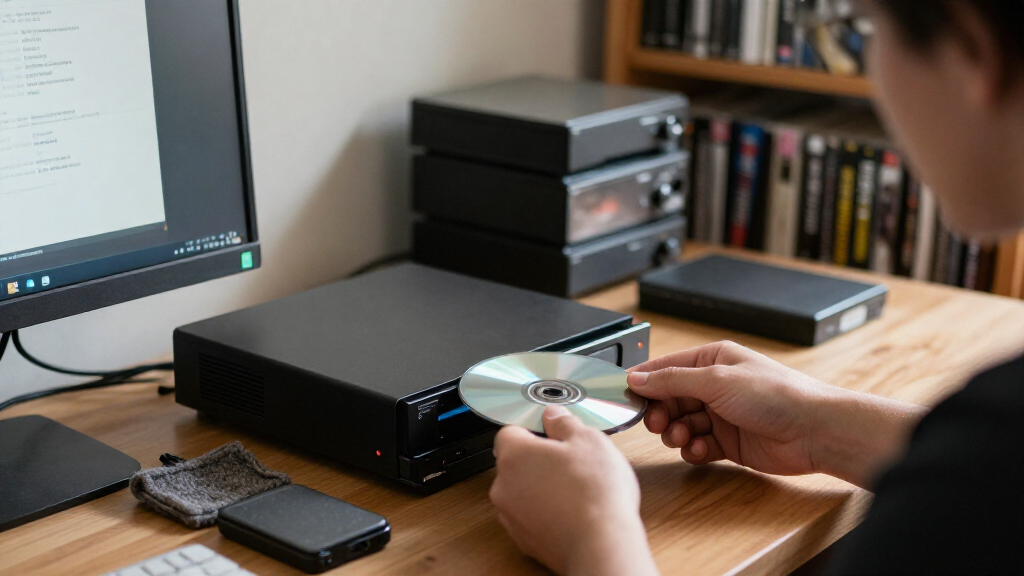
I ranked these five products around the promise of optical media archival quality, not general convenience or raw capacity alone. My first distinction is whether a product is presented as archival media and what recording-layer details are supplied. The two M-DISC options describe an inorganic recording layer or M-DISC preservation design; the UltraLife CD-R highlights dual reflective layers; the BD-RE listing specifies a Super Eutectic Recording Layer and a stated lifespan. The standard BD-R provides a hard coat and a stated archival-life figure, but less detail about its recording layer.
I also weigh the usable capacity per disc against the likely job. A 100GB disc can reduce the number of pieces in a large archive, but it also depends on BDXL hardware. A 4.7GB DVD or 700MB CD may be easier to organize around smaller collections yet requires more discs. Rewritability earns the BD-RE a role for frequently updated copies, though I rank it below write-once choices for a fixed archive. Claims such as “100 years” or “1,000 years” are manufacturer-stated figures, not a promise that data will remain readable under every storage condition.
Finally, I factor in compatibility and preservation practicality: whether the stated format requires a particular burner, whether discs have individual cases, and whether the product’s use case supports a stable archive. The ranking favors the most convincing blend of archival design and capacity, then separates specialist picks from broad-use options. None of these products removes the need for verification, duplicate copies, appropriate storage, or a plan for future hardware access.
| optical media archival quality | Format | Recording speed |
|---|---|---|
| Verbatim M DISC BDXL 100GB 6x | Blu-ray BDXL M-DISC | Up to 6x |
| 1000 Years Archival Digital St | M-DISC DVD+R | — |
| Verbatim CD-R 700MB 52X UltraL | CD-R | Up to 52x |
| Verbatim 25GB 16X Blu-ray Reco | BD-R | Up to 16x |
| Verbatim 43694 BD-RE Optical D | BD-RE | — |
Factors to Consider When Choosing Optical Media Archival Quality
For archival media, I would choose the disc format around the data and the hardware I can keep available. The longest stated life or largest capacity is not enough on its own: the disc must burn correctly, remain readable, and be supported by a drive when I need the files.
Separate archival design from capacity
Capacity tells me how many discs an archive may need; it does not tell me how resilient the recording layer is. The 100GB M-DISC BDXL stands out for combining high capacity with an inorganic archival layer. The M-DISC DVD+R applies the same broad archival intent at 4.7GB, while UltraLife Gold CD-R emphasizes dual reflective layers in a much smaller format. The 25GB BD-R and BD-RE provide Blu-ray storage, but their listings describe different use cases and layer details. I would compare the stated construction and format rather than treating every “archival” label as identical.
Match the format to your actual drive
Drive compatibility can decide the purchase before capacity does. BDXL media requires a compatible BDXL burner and reader; ordinary Blu-ray support should not be assumed to cover every BDXL disc. DVD+R needs a compatible DVD burner, and BD-R or BD-RE calls for Blu-ray hardware. Before buying a full supply, I would confirm both writing and reading support for the exact disc type. I would also keep a working drive or a realistic plan for finding one later, since an unreadable format is of little use to an archive owner.
Choose write-once or rewritable media deliberately
Write-once discs suit fixed copies because saved data is not meant to be revised on the same disc. That makes BD-R, DVD+R, CD-R, and M-DISC formats natural candidates for a finished archive, though careful file checks before burning are still necessary. BD-RE is different: its 1,000-rewrite specification can suit changing backup sets, but it is less aligned with an untouched master copy. I would keep working backups separate from archival masters, rather than asking one disc to fill both roles.
Estimate disc count before committing
Per-disc capacity changes the workload of labeling, storing, and checking an archive. BDXL’s 100GB can consolidate large collections; 25GB BD-R or BD-RE offers a middle ground; 4.7GB DVD and 700MB CD require more pieces for the same volume of data. More discs create more handling and organization, while higher-capacity formats can demand newer or less common hardware. I would estimate the number of discs from the actual files I intend to preserve and choose a format that I can manage, not just the one with the biggest capacity figure.
Treat longevity figures as claims, not guarantees
Published archival-life figures are not a substitute for preservation practice. Storage conditions, handling, burn quality, and future drive access all affect whether data remains usable. I would burn at a suitable setting supported by the drive and media, verify the written data, retain at least one separate copy, and store discs in protective cases away from heat, moisture, and direct light. Periodic checks can reveal problems while another copy is still available. No optical disc should be the only home for irreplaceable files.
Frequently Asked Questions
Which option is the strongest fit for a large optical archive?
The Verbatim M-DISC BDXL is the most capable choice here for large collections because each disc holds 100GB and its inorganic recording layer is designed for archival storage. That capacity can reduce the number of discs compared with 25GB Blu-ray, DVD, or CD options. It only makes sense if compatible BDXL hardware is available, and I would still keep verified duplicate copies rather than relying on one disc set.
Does a stated 1,000-year or 100-year lifespan mean my files are guaranteed to last that long?
No. Those figures are product specifications or manufacturer claims, not a guarantee that a specific burn will remain readable for that duration in every environment. Handling, storage, recording quality, and access to compatible drives all matter. I treat longevity claims as one point of comparison, then protect important files with multiple copies, verification, and careful storage.
Should I choose M-DISC DVD or M-DISC BDXL?
I would choose M-DISC BDXL for a large collection when I have a compatible BDXL burner and want 100GB per disc. The 4.7GB M-DISC DVD+R is a better match for smaller archives, especially when DVD hardware is already available and write-once storage is the priority. The DVD option requires many more discs for the same data, while the BDXL option carries a stricter hardware requirement.
Is rewritable BD-RE suitable for archival storage?
BD-RE can be useful for backups that change regularly, and this product is specified for up to 1,000 rewrites. That same flexibility makes it a different choice from write-once media intended for a fixed archival copy. I would use BD-RE for an updateable backup set and keep a separate write-once copy of files I do not want to alter.
What should I do after burning an archival disc?
I would verify that the files on the finished disc can be read, create another copy on separate media or storage, and record what each disc contains. Keep discs in protective cases in a cool, dry place away from direct light, and retain access to compatible reading hardware. Periodically checking copies helps identify problems before a single damaged or unreadable disc becomes the only remaining version.
Conclusion
For large archives and compatible hardware, I recommend the Verbatim M-DISC BDXL: it leads this group on capacity while retaining a purpose-built archival layer. Buyers with smaller collections who want a write-once disc should choose the M-DISC DVD+R; those preserving CD-sized files or legacy material can use the UltraLife Gold CD-R, accepting its low capacity. If a standard Blu-ray writer and bulk supply matter most, the 25GB BD-R is the practical fit, while BD-RE suits people who need to refresh backups. Whichever format I choose, I would verify burns, store separate copies, and plan for future drive access—archival quality works best as part of a preservation routine, not as a promise carried by one disc.
Halloween Picks
halloween
As an affiliate, we earn on qualifying purchases.