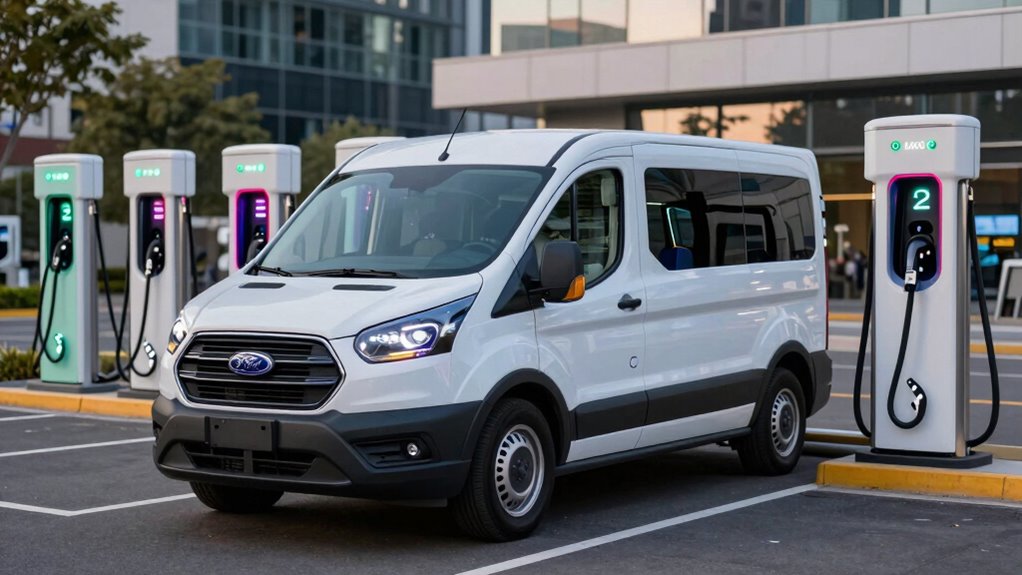

For most Ford E-Transit owners, I’d start with the EVIQO 48A hardwired charger: it has the highest listed amperage here, provided your electrical service and van’s onboard charging limits can use it. The ELEGRP 40A portable and AIMILER 32A with Wi-Fi are standout alternatives for buyers who want a plug-in setup or app features. The main tradeoffs are charging capacity, outlet versus hardwired installation, cable reach, and whether added controls justify extra setup. Match the charger to the E-Transit’s onboard AC charging capability and your circuit rather than choosing by amperage alone. Read on for the full comparison and guidance on choosing a charger that fits your home and charging routine.

Get the latest gadgets delivered free with Prime
- Fast, free delivery on millions of items
- Prime Video, Amazon Music and more included
- Member-only deals all year
Complete the kit



Key Takeaways
- EVIQO and Lectron Nexus are the only listed 48A hardwired options; they suit buyers planning a permanent installation, but actual charging speed depends on the van’s onboard AC charger and electrical supply.
- Plug-in 32A and 40A models dominate this lineup. Their NEMA 14-50 plugs can make installation more straightforward when a suitable receptacle and circuit are already available.
- The ELEGRP and both 40A EVDANCE listings offer portable, higher-amperage choices, while the EVDANCE 32A and other 32A models trade capacity for a lower circuit demand.
- AIMILER is the clearest app-focused choice in the listed specifications; most other entries are presented primarily around amperage, plug type, and cable length.
- Cable reach ranges from 20 to 25 feet among the portable choices, while the hardwired Lectron Nexus lists 23 feet, so parking position can matter as much as the charger’s headline amperage.
| VDLPOWERVP Level 2 Portable EV Charger, 32A, 7 kW, 20 ft Cable, NEMA 14-50 Plug |  | Best for Simple Portability | Charging level: Level 2 | Maximum current: 32A | Output: Up to 7 kW | VIEW ON AMAZON | See Our Full Breakdown |
| AIMILER Level 2 EV Charger, 32A, 25 ft Cable, Wi-Fi App, NEMA 14-50 Plug, J1772 Connector |  | Best for App-Based Scheduling | Maximum current: 32A | Maximum charging power: 7.68 kW | Voltage: 240V | VIEW ON AMAZON | See Our Full Breakdown |
| ELEGRP Level 2 Portable EV Charger, 40A, J1772, 240V NEMA 14-50 Plug, 25 ft Cable |  | Best Higher-Output Plug-In Pick | Maximum output: 9.6 kW | Maximum current: 40A | Current settings: 16A, 20A, 24A, 32A, 40A | VIEW ON AMAZON | See Our Full Breakdown |
| ApexCharger Mach 3 Portable Level 1 and Level 2 EV Charger, 40A, 25 ft Cable |  | Best for Mixed Outlet Access | Charging levels: Level 1 and Level 2 | Input voltage: 120–240V | Maximum current: 40A | VIEW ON AMAZON | See Our Full Breakdown |
| SEGUMA 32A Level 2 EV Charger with J1772 Connector and NEMA 14-50 Plug |  | Best for Fine-Grained Current Adjustment | Maximum current: 32A | Current settings: 10A, 16A, 20A, 24A, 32A | Wattage: 7,680 watts | VIEW ON AMAZON | See Our Full Breakdown |
| NexCyber Level 2 EV Charger, 32A, 240V, J1772, 25 ft Cable |  | Best for App-Based Scheduling | Maximum current: 32A; adjustable from 16A to 32A | Voltage: 240V | Vehicle connector: J1772 | VIEW ON AMAZON | See Our Full Breakdown |
| EVDANCE Level 2 Portable EV Charger, 32A, 240V, NEMA 14-50, 25 ft Cable |  | Best Portable Kit | Maximum current: 32A | Maximum power: 7.68 kW | Input voltage: 240V | VIEW ON AMAZON | See Our Full Breakdown |
| EVIQO Level 2 J1772 EV Charger, 48A, Hardwired, 240V |  | Best for High-Output Hardwired Charging | Maximum charging current: 48A; configurable up to 50A | Electrical requirements: 240V; dedicated 60A circuit, or 70A circuit for 50A setting | Installation: Hardwired; professional installation required | VIEW ON AMAZON | See Our Full Breakdown |
| BETUMODA Level 2 EV Charger, 40A, 25 ft, 9.6 kW, J1772 |  | Best for Flexible Outlet Options | Maximum current: 40A | Maximum charging power: 9.6 kW | Input voltage: 240V | VIEW ON AMAZON | See Our Full Breakdown |
| NexCyber Level 2 EV Charger, 40A, NEMA 14-50 Plug, 25 ft Cable |  | Best Plug-In Upgrade | Maximum current: 40A | Voltage: 240V | Plug: NEMA 14-50 | VIEW ON AMAZON | See Our Full Breakdown |
| Lectron Nexus Level 2 J1772 EV Charger, 48A, Hardwired, 23 ft Cable |  | Best Hardwired High-Output Pick | Charger level: Level 2 | Connector: J1772 | Maximum output: 48A at 240V | VIEW ON AMAZON | See Our Full Breakdown |
| ChargeHere 32A Portable Level 1 and Level 2 EV Charger with 25 ft J1772 Cable |  | Best for Outlet Flexibility | Charging levels: Level 1 and Level 2 | Maximum current: 32A | Maximum output: 7.68 kW | VIEW ON AMAZON | See Our Full Breakdown |
| EVDANCE Level 2 Portable EV Charger, 40A, 240V, 25 ft Cable |  | Best Portable Power Balance | Connector: J1772 | Plug: NEMA 14-50 | Voltage: 240V | VIEW ON AMAZON | See Our Full Breakdown |
| level 2 ev charger for ford e transit | Cable length | Maximum current | Plug | Connector |
|---|---|---|---|---|
| VDLPOWERVP Level 2 Portable EV | 20 ft | 32A | NEMA 14-50 | SAE J1772 |
| AIMILER Level 2 EV Charger | 25 ft | 32A | NEMA 14-50 | J1772 |
| ELEGRP Level 2 Portable EV Cha | 25 ft | 40A | NEMA 14-50 | J1772 |
| ApexCharger Mach 3 Portable Le | 25 ft | 40A | — | — |
| SEGUMA 32A Level 2 EV Charger | 25 ft | 32A | NEMA 14-50 | J1772 |
| NexCyber Level 2 EV Charger | 25 ft | 32A; adjustable from 16A to 32A | NEMA 14-50P | — |
| EVDANCE Level 2 Portable EV Ch | 25 ft | 32A | NEMA 14-50P | — |
| EVIQO Level 2 J1772 EV Charger | 25 ft | — | — | — |
| BETUMODA Level 2 EV Charger | 25 ft | 40A | — | — |
| NexCyber Level 2 EV Charger | 25 ft | 40A | NEMA 14-50 | — |
| Lectron Nexus Level 2 J1772 EV | 23 ft | — | — | J1772 |
| ChargeHere 32A Portable Level | 25 ft | 32A | — | J1772 |
| EVDANCE Level 2 Portable EV Ch | 25 ft | 40A | NEMA 14-50 | J1772 |
More Details on Our Top Picks
VDLPOWERVP Level 2 Portable EV Charger, 32A, 7 kW, 20 ft Cable, NEMA 14-50 Plug
For a Ford E-Transit owner who wants a portable home charger without app setup, the VDLPOWERVP keeps things straightforward: plug it into a compatible 240V NEMA 14-50 outlet, connect its J1772 handle, and use the LED indicators to check charging status. Its 20-foot cable is shorter than the 25-foot leads on the AIMILER and SEGUMA, so outlet placement matters more, especially when parking a large van. The charger supplies up to 32A and 7 kW, making it a simpler, lower-output choice than the 40A ELEGRP or ApexCharger Mach 3. An IP65-rated control box and listed safety protections add useful weather and fault protection, but the one-year warranty is shorter than the ELEGRP’s two years and ApexCharger’s five. Choose it for basic portability, not maximum output or connected controls.
Pros:- Portable 32A charging with up to 7 kW output
- IP65-rated control box and multiple listed safety protections
- 20-foot cable supports use in garages and at compatible travel outlets
Cons:- The 20-foot cable is shorter than the 25-foot leads on AIMILER and ELEGRP
- Requires a compatible 220–240V NEMA 14-50 outlet
- Specified warranty is only one year
Best for: E-Transit owners with a NEMA 14-50 outlet who want a portable, no-app charger for home and occasional travel use.
Not ideal for: Owners who need a longer reach across a garage, want app scheduling, or have an electrical setup that supports a 40A charger.
- Charging level:Level 2
- Maximum current:32A
- Output:Up to 7 kW
- Voltage:220–240V
- Plug:NEMA 14-50
- Connector:SAE J1772
- Cable length:20 ft
- Warranty:1 year
Our verdict“Pick the VDLPOWERVP if you want a straightforward 32A portable charger and can work with its shorter cable and NEMA 14-50 plug.”
AIMILER Level 2 EV Charger, 32A, 25 ft Cable, Wi-Fi App, NEMA 14-50 Plug, J1772 Connector
The AIMILER is the clearest choice here for an E-Transit owner who wants to manage charging remotely rather than just plug in and walk away. Its Wi-Fi app supports scheduling and status tracking, while the on-unit screen offers information at the charger itself. The 25-foot cable also gives it more parking flexibility than the 20-foot VDLPOWERVP. Output reaches 32A and 7.68 kW, so it remains in the same general power class as those 32A options rather than matching the 40A ELEGRP or ApexCharger Mach 3. Current adjustment from 16A to 32A can help owners fit charging to their circuit, but it does not replace checking the circuit’s capacity. The main friction is setup: app connectivity needs a 2.4 GHz Wi-Fi network, and the NEMA 14-50 plug requires a suitable outlet.
Pros:- Wi-Fi app enables charging schedules and status tracking
- 25-foot cable offers more reach than the VDLPOWERVP’s 20-foot lead
- Current can be adjusted from 16A to 32A
- Screen provides charging information at the unit
Cons:- App setup requires a 2.4 GHz Wi-Fi network
- Requires a suitable 240V NEMA 14-50 outlet for Level 2 use
- Tesla and NACS vehicles need a separate adapter
Best for: E-Transit owners with a 240V NEMA 14-50 outlet who want scheduled charging, remote status checks, and a longer cable.
Not ideal for: Buyers who want a charger that works without Wi-Fi setup, or owners whose vehicle requires a Tesla or NACS connector without an adapter.
- Maximum current:32A
- Maximum charging power:7.68 kW
- Voltage:240V
- Plug:NEMA 14-50
- Connector:J1772
- Cable length:25 ft
- Connectivity:Wi-Fi app
- Current adjustment:16A to 32A
- Certifications:ETL, FCC
Our verdict“Choose the AIMILER if app scheduling and cable reach matter more to you than stepping up to a 40A charger.”
ELEGRP Level 2 Portable EV Charger, 40A, J1772, 240V NEMA 14-50 Plug, 25 ft Cable
Among the plug-in options in this group, the ELEGRP gives an E-Transit owner the clearest step up in available charging power: it reaches 40A and 9.6 kW, compared with the 32A AIMILER and SEGUMA. That higher ceiling can support faster charging when the vehicle and branch circuit accept it; the van’s own charging limits still apply. Five current settings, from 16A to 40A, make it easier to match the charger to a properly rated circuit, while the 1–12 hour delay adds basic scheduling without the AIMILER’s app. Its 25-foot cable is useful for larger parking spaces, and IP67 protection and ETL certification add reassurance for varied conditions. The tradeoff is dependence on a NEMA 14-50 outlet and no stated app controls. Tesla vehicles also need a separate NACS adapter.
Pros:- Up to 40A and 9.6 kW, above the 32A AIMILER and SEGUMA
- Five selectable current settings help match charging to circuit capacity
- 1–12 hour charging delay without requiring app control
- IP67 rating and ETL certification
Cons:- Requires a compatible 240V NEMA 14-50 outlet
- No Wi-Fi app or remote status tracking is specified
- Tesla vehicles need a separately sold NACS adapter
Best for: E-Transit owners with a suitable NEMA 14-50 circuit who want a 40A portable charger, selectable current, and a charging delay.
Not ideal for: Owners who need Wi-Fi monitoring, do not have a compatible 240V outlet, or expect the van to charge above its onboard limit.
- Maximum output:9.6 kW
- Maximum current:40A
- Current settings:16A, 20A, 24A, 32A, 40A
- Voltage:240V
- Plug:NEMA 14-50
- Connector:J1772
- Cable length:25 ft
- Ingress protection:IP67
- Warranty:2 years
Our verdict“Choose the ELEGRP for a higher-output portable setup with current adjustment, provided your outlet and E-Transit support the charging level.”
ApexCharger Mach 3 Portable Level 1 and Level 2 EV Charger, 40A, 25 ft Cable
The ApexCharger Mach 3 is the most adaptable pick in this set for an E-Transit owner who may need to charge from different outlet types. It supports Level 1 at 120V and Level 2 at 240V, and includes a NEMA 5-15 adapter plus a J1772-to-Tesla adapter. That flexibility is unusual beside the NEMA 14-50-only VDLPOWERVP and ELEGRP, though Level 1 charging is much slower and is better treated as a fallback than a practical routine for a work van. At 240V, it reaches 40A and 9.6 kW, matching the ELEGRP’s stated maximum, with a 25-foot cable and adjustable current. Display, Bluetooth, and Wi-Fi add control options; the five-year warranty is also the longest specified here. Its price in convenience is a more involved feature set, and Level 2 still needs a suitable NEMA 14-50 outlet.
Pros:- Supports Level 1 and Level 2 charging
- Up to 40A and 9.6 kW on a suitable 240V setup
- Includes NEMA 5-15 and J1772-to-Tesla adapters
- 25-foot cable, display, Bluetooth, Wi-Fi, and a five-year warranty
Cons:- Level 2 charging requires a suitable NEMA 14-50 outlet
- Level 1 charging is a slow fallback compared with 240V charging
- One charging port is specified
Best for: E-Transit owners who travel between locations with different outlet access and want both Level 1 fallback charging and 40A Level 2 capability.
Not ideal for: Buyers who only need a basic home charger, or anyone assuming the included Level 1 adapter will provide usable charging speed for frequent van use.
- Charging levels:Level 1 and Level 2
- Input voltage:120–240V
- Maximum current:40A
- Maximum power:9.6 kW at 240V
- Cable length:25 ft
- Connectors:J1772 and Tesla NACS
- Included adapters:NEMA 5-15 and J1772-to-Tesla
- Controls:Display, Bluetooth, and Wi-Fi
- Warranty:5 years
Our verdict“Pick the Mach 3 if you need outlet flexibility and connected controls, rather than the simpler single-voltage setup of the ELEGRP.”
SEGUMA 32A Level 2 EV Charger with J1772 Connector and NEMA 14-50 Plug
SEGUMA suits an E-Transit owner who values adjustable charging more than app control. Its current options run from 10A to 32A, giving more low-current settings than the AIMILER’s 16A-to-32A range; that can be useful when sharing a circuit or limiting draw, though the circuit still needs to be correctly rated. A 25-foot cable and 1.77-inch TFT display make it easier to reach the van and check charging details at the unit. Like the AIMILER, it tops out at 32A, so it does not match the 40A ELEGRP or ApexCharger Mach 3 for maximum rated output. SEGUMA can be portable or wall-mounted and lists IP66 protection, but its 10.34-pound weight makes it less convenient to carry than a lighter travel-focused option. It also requires a NEMA 14-50 outlet and has no app connectivity listed.
Pros:- Adjustable current settings from 10A to 32A
- 25-foot cable supports flexible parking positions
- 1.77-inch TFT display shows charging information
- IP66 rating and portable or wall-mounted use
Cons:- Maximum output is 32A, below the 40A ELEGRP and ApexCharger Mach 3
- Requires a compatible NEMA 14-50 outlet
- Weighs 10.34 pounds and has no app connectivity listed
Best for: E-Transit owners who want a 25-foot J1772 charger with lower current settings and a display, for a home outlet or occasional portable use.
Not ideal for: Buyers seeking 40A output, Wi-Fi scheduling, or a particularly light charger to carry between locations.
- Maximum current:32A
- Current settings:10A, 16A, 20A, 24A, 32A
- Wattage:7,680 watts
- Connector:J1772
- Plug:NEMA 14-50
- Cable length:25 ft
- Display:1.77-inch TFT
- Ingress protection:IP66
- Weight:10.34 lb
Our verdict“Choose SEGUMA if lower current settings and a display matter more than app features or the 40A ceiling offered by the ELEGRP.”
NexCyber Level 2 EV Charger, 32A, 240V, J1772, 25 ft Cable
For an E-Transit owner with a NEMA 14-50 outlet who wants more control than a basic portable unit, this NexCyber pairs adjustable 16A–32A charging with Wi-Fi monitoring and scheduling. Its 25-foot cable gives more reach around a driveway or garage, while the touchscreen shows charging information without needing to open the app. Against the EVDANCE 32A, NexCyber adds app controls and a three-year warranty; EVDANCE counters with a carrying case and wall bracket. The tradeoff is the same 32A ceiling: it is a practical portable setup, not the faster 40A option offered by NexCyber’s own 40A model. It also needs a NEMA 14-50 outlet, and the manufacturer advises against direct sun or rain exposure despite the stated enclosure protection.
Pros:- Selectable current from 16A to 32A helps fit charging to the available circuit.
- Wi-Fi app supports monitoring and scheduled charging.
- 25-foot cable offers useful reach for varied parking positions.
- Touchscreen provides charging information without relying on the app.
Cons:- 32A maximum is lower than the 40A BETUMODA and NexCyber 40A models.
- Requires a NEMA 14-50 outlet for Level 2 charging.
- Manufacturer advises against direct sunlight or rain exposure.
Best for: E-Transit owners with a NEMA 14-50 outlet who want adjustable charging, app scheduling, and a long cable for home parking.
Not ideal for: Owners seeking the highest charging current, or anyone who needs an outdoor unit exposed directly to sun or rain.
- Maximum current:32A; adjustable from 16A to 32A
- Voltage:240V
- Vehicle connector:J1772
- Plug:NEMA 14-50P
- Cable length:25 ft
- Connectivity:Wi-Fi app and touchscreen
- Protection and certification:Stated IP66 / NEMA Type 4; ETL and FCC
- Warranty:3 years
Our verdict“Choose this NexCyber if app scheduling and adjustable current matter more than moving up to a 40A portable charger.”
EVDANCE Level 2 Portable EV Charger, 32A, 240V, NEMA 14-50, 25 ft Cable
The EVDANCE is a straightforward choice for E-Transit owners who want a portable 32A charger with useful accessories rather than app-based controls. Its five current settings let the owner match charging to the circuit, and the 25-foot cable, carrying case, and wall bracket make it easier to move between trips or keep organized at home. Compared with the NexCyber 32A, it gives up Wi-Fi monitoring and scheduling but includes a case and bracket; compared with the BETUMODA 40A, it also has a lower current ceiling. The LED display and delay controls cover basic status and timing needs, though the listed warranty applies to the extension cable rather than establishing broad charger coverage. Avoid leaving it in direct sun or heavy rain, despite its stated IP66 protection.
Pros:- Five current settings provide flexibility for different circuit capacities.
- 25-foot cable supports a range of parking layouts.
- Carrying case and wall-mounting bracket aid transport and storage.
- LED display and delay controls provide basic charging information and timing.
Cons:- 32A maximum is below the 40A BETUMODA and NexCyber 40A options.
- No Wi-Fi app control is listed, unlike the NexCyber 32A.
- The stated one-year warranty is for the EV charger extension cable.
Best for: E-Transit drivers who want a portable 32A charger with a carrying case, mounting bracket, and simple delay controls.
Not ideal for: Buyers who want app monitoring, a higher current ceiling, or clearly stated long-term charger warranty coverage.
- Maximum current:32A
- Maximum power:7.68 kW
- Input voltage:240V
- Vehicle connector:SAE J1772
- Plug:NEMA 14-50P
- Current settings:10A, 16A, 20A, 24A, 32A
- Cable length:25 ft
- Included accessories:Carrying case and wall-mounting bracket
- Protection:IP66-rated
Our verdict“Pick the EVDANCE if portability and included storage accessories matter more than app features or a higher current limit.”
EVIQO Level 2 J1772 EV Charger, 48A, Hardwired, 240V
For an E-Transit owner ready to install a dedicated home charging circuit, the EVIQO stands apart from the plug-in chargers here with 48A charging on a 60A circuit and a hardwired, weather-resistant design. That higher output can make it a better fit for frequent driving or a tighter overnight charging window, provided the vehicle and electrical setup can use it. Compared with the 40A NexCyber, it offers a higher stated charging current and outdoor-ready enclosure, but loses the option to unplug and take the charger elsewhere. The EVDANCE 32A is simpler to deploy with a NEMA 14-50 outlet; EVIQO instead calls for professional installation and a compatible 2.4 GHz Wi-Fi network for app controls. Its 25-foot cable helps with parking reach, while the 50A configuration requires a 70A circuit.
Pros:- 48A maximum output exceeds the portable 32A and 40A options in this batch.
- 25-foot cable provides practical reach from a fixed installation.
- IP66 / NEMA 4 enclosure is specified for indoor or outdoor use.
- App controls support charging management and scheduling.
Cons:- Hardwiring requires professional installation and a dedicated circuit.
- The 50A setting calls for a 70A circuit.
- App connectivity requires a 2.4 GHz Wi-Fi network.
Best for: E-Transit owners with a suitable electrical panel who want a permanently installed, higher-output home charger for regular use.
Not ideal for: Renters, owners who need a portable charger, or households without capacity for a dedicated 60A circuit and professional installation.
- Maximum charging current:48A; configurable up to 50A
- Electrical requirements:240V; dedicated 60A circuit, or 70A circuit for 50A setting
- Installation:Hardwired; professional installation required
- Vehicle connector:J1772
- Cable length:25 ft
- Wi-Fi:2.4 GHz
- Weather resistance:IP66 / NEMA 4
- Certifications:UL, ETL, FCC, Energy Star
- Warranty:3 years
Our verdict“Choose EVIQO for a permanent high-output installation if your home can support its circuit requirements.”
BETUMODA Level 2 EV Charger, 40A, 25 ft, 9.6 kW, J1772
The BETUMODA is the most adaptable plug-in pick here for an E-Transit owner who may need both home Level 2 charging and occasional charging from a standard outlet. It supports up to 40A and 9.6 kW through a NEMA 14-50 plug, while an included NEMA 5-15 adapter adds a lower-power Level 1 option. Five current settings and a delay timer help tailor charging to the circuit and schedule. Compared with the NexCyber 40A, BETUMODA adds the 120V adapter and lists five selectable current levels; NexCyber offers Wi-Fi app controls and a three-year warranty, which are not specified here. The 25-foot cable is useful, but 240V use still needs a dedicated circuit. Its J1772 connector also means Tesla and NACS vehicles need a separate adapter, and proprietary charging protocols are unsupported.
Pros:- 40A maximum and 9.6 kW output provide a higher ceiling than the 32A choices.
- Included NEMA 5-15 adapter adds a 120V charging option.
- Five current settings and a 0–12 hour delay offer charging flexibility.
- 25-foot cable and stated IP65 protection suit varied home setups.
Cons:- 240V Level 2 charging requires a dedicated 240V circuit.
- Tesla and NACS vehicles require a separate adapter.
- No Wi-Fi app controls or warranty details are listed in the supplied specifications.
Best for: E-Transit owners who want a portable 40A charger with both 240V NEMA 14-50 and standard 120V outlet options.
Not ideal for: Drivers who need Wi-Fi app controls, a stated long-term warranty, or support for proprietary vehicle charging protocols.
- Maximum current:40A
- Maximum charging power:9.6 kW
- Input voltage:240V
- Current settings:8A, 16A, 24A, 32A, 40A
- Vehicle connector:SAE J1772
- Outlet adapters:NEMA 14-50 plug and NEMA 5-15 adapter
- Cable length:25 ft
- Charging schedule:0–12 hour delay
- Protection and certification:IP65; FCC and CE
Our verdict“Choose BETUMODA if outlet flexibility and a 40A ceiling matter more than app controls or a hardwired setup.”
NexCyber Level 2 EV Charger, 40A, NEMA 14-50 Plug, 25 ft Cable
This NexCyber is a sensible step up for E-Transit owners who already have, or plan to install, a NEMA 14-50 outlet and want more output than a 32A portable charger. Its 40A maximum and 25-foot J1772 cable make it a stronger match for regular home charging than the NexCyber 32A, while the built-in display keeps basic status visible without an app. Wi-Fi app controls are optional, giving it more connected features than the EVDANCE 32A, though the supplied details do not describe the app functions as fully as the first NexCyber model. Compared with BETUMODA, it lacks the included 120V adapter but lists a three-year warranty and ETL/FCC certification. It remains a plug-in unit, so installation quality and circuit capacity matter; direct sun and rain exposure are discouraged by the manufacturer.
Pros:- 40A maximum output is a step above the NexCyber 32A and EVDANCE 32A.
- 25-foot J1772 cable accommodates a range of parking positions.
- Display provides basic information without requiring app use.
- ETL and FCC certification and a stated three-year warranty.
Cons:- Requires a NEMA 14-50 outlet and suitable circuit capacity.
- Wi-Fi app controls are optional, and their functions are not detailed in the supplied description.
- Manufacturer advises against direct sunlight or rain exposure.
Best for: E-Transit owners with a compatible NEMA 14-50 circuit who want a 40A plug-in charger with a display and optional app controls.
Not ideal for: Buyers needing a 120V adapter, a permanently hardwired 48A installation, or a charger intended for exposed outdoor placement.
- Maximum current:40A
- Voltage:240V
- Plug:NEMA 14-50
- Vehicle connector:J1772
- Cable length:25 ft
- Controls:Display and optional Wi-Fi app controls
- Weather protection:NEMA Type 3; stated IP65
- Certifications:ETL and FCC
- Warranty:3 years
Our verdict“Pick this NexCyber for a higher-output plug-in setup with a display, provided your NEMA 14-50 circuit and parking location suit it.”
Lectron Nexus Level 2 J1772 EV Charger, 48A, Hardwired, 23 ft Cable
For an E-Transit owner who wants a permanent home charging setup and has a suitable electrical circuit, the Lectron Nexus delivers up to 48A—more output than the plug-in EVDANCE 40A charger. That extra capacity can make it a stronger fit for frequent charging between work shifts, though the van’s onboard charging limits still determine how much power it can accept. Its 23 ft cable gives useful reach, while the IP66 rating supports outdoor installation. The tradeoff is commitment: this unit must be hardwired by a professional, unlike portable options that can move between locations or use a compatible outlet. Its J1772 connector suits the E-Transit, but Tesla vehicles need an adapter. ETL listing, named UL certifications, and a three-year limited warranty add useful documentation, but buyers should confirm electrical and vehicle compatibility before installation.
Pros:- Up to 48A at 240V, exceeding the output of the portable EVDANCE 40A charger.
- 23 ft cable offers placement flexibility between the unit and the vehicle.
- IP66 rating supports indoor or outdoor use.
- ETL listed with UL 2594, UL 2231, and UL 2251 certifications, plus a three-year limited warranty.
Cons:- Requires professional hardwired installation, so it is less flexible than plug-in chargers.
- The E-Transit’s onboard charging capability may limit the benefit of the charger’s maximum output.
- Tesla vehicles require a compatible NACS adapter.
Best for: E-Transit owners who charge at one home location, can arrange professional hardwired installation, and want up to 48A output.
Not ideal for: Drivers who rent, need a charger they can take on the road, or do not have an electrical setup suited to a hardwired 48A unit.
- Charger level:Level 2
- Connector:J1772
- Maximum output:48A at 240V
- Power:11.5 kW
- Cable length:23 ft
- Installation:Hardwired; professional installation required
- Certifications:ETL listed; UL 2594, UL 2231, UL 2251, Energy Star, FCC
- Warranty:3-year limited manufacturer warranty
Our verdict“Choose the Lectron Nexus if you want a fixed, high-output J1772 charger for an E-Transit and are prepared for professional installation.”
ChargeHere 32A Portable Level 1 and Level 2 EV Charger with 25 ft J1772 Cable
The ChargeHere stands apart from the hardwired Lectron Nexus by supporting both 120V Level 1 and 240V Level 2 charging. For an E-Transit owner who may move between a standard household outlet and a NEMA 14-50 connection, that flexibility is the main reason to choose it. On a suitable 240V circuit, it reaches 32A and 7.68 kW; its adjustable current settings can also help match charging to the available circuit. The 25 ft cable and IP66 enclosure suit varied parking arrangements, while the LCD provides charging information without an app. The compromise is lower maximum output than the 40A EVDANCE or 48A Lectron, and there is no Wi-Fi scheduling. Its 10-year warranty is long, but buyers should verify the outlet and circuit are appropriate for the selected current.
Pros:- Supports Level 1 and Level 2 charging with included 120V adapter.
- Adjustable current settings can match different circuit capacities.
- 25 ft cable and IP66 enclosure allow flexible indoor or outdoor placement.
- LCD, delay timer, and a stated 10-year warranty.
Cons:- Maximum 32A output is below the 40A EVDANCE and 48A Lectron Nexus.
- No Wi-Fi or app-based scheduling.
- NACS vehicles require a compatible J1772 adapter.
Best for: E-Transit owners who need one portable J1772 charger for both household 120V outlets and 240V NEMA 14-50 outlets.
Not ideal for: Drivers seeking the highest available charging output, app-based monitoring, or Wi-Fi scheduling.
- Charging levels:Level 1 and Level 2
- Maximum current:32A
- Maximum output:7.68 kW
- Input voltage:120V/240V
- Connector:J1772
- Plugs:NEMA 14-50 with NEMA 5-15 adapter
- Cable length:25 ft
- Current settings:6A, 8A, 10A, 13A, 16A, 20A, 24A, 32A
Our verdict“Pick the ChargeHere if outlet flexibility matters more than higher output or app controls.”
EVDANCE Level 2 Portable EV Charger, 40A, 240V, 25 ft Cable
The EVDANCE offers a useful middle ground for E-Transit owners who want more output than the 32A ChargeHere without moving to a fixed hardwired charger. Its 40A, 9.6 kW maximum comes through a NEMA 14-50 plug, so portability depends on having a suitable outlet available; it is not a plug-in-anywhere solution. The 25 ft cable, carry bag, and adjustable current settings make it easier to adapt to different parking spots and circuits. A display and 1–12 hour delay timer provide basic charging information and scheduling without an app. Compared with the Lectron Nexus, it is easier to relocate but has a lower maximum output. The product data lists built-in protections and an IP66 rating, while Tesla drivers need to supply a separate J1772 adapter.
Pros:- 40A and 9.6 kW output exceed the ChargeHere’s 32A maximum.
- 25 ft cable and included carry bag support portable use.
- Adjustable current and 1–12 hour delay timer provide practical control.
- IP66 rating, built-in electrical protections, and a 2.4-inch display.
Cons:- Requires a compatible NEMA 14-50 outlet for Level 2 charging.
- Maximum output is lower than the hardwired 48A Lectron Nexus.
- A J1772 adapter is required for Tesla vehicles and is not included.
Best for: E-Transit owners with a compatible NEMA 14-50 outlet who want a portable 40A charger with a long cable and simple onboard controls.
Not ideal for: Drivers without access to a suitable NEMA 14-50 outlet, or those who want a hardwired unit, Wi-Fi features, or the Lectron Nexus’s higher 48A capacity.
- Connector:J1772
- Plug:NEMA 14-50
- Voltage:240V
- Maximum current:40A
- Power:9.6 kW
- Cable length:25 ft
- Adjustable current settings:10A, 16A, 20A, 24A, 32A, 40A
- Delay timer:1–12 hours
Our verdict“Choose the EVDANCE for portable 40A charging when you have a suitable NEMA 14-50 outlet and value cable reach over hardwired maximum output.”

How We Picked
I compared the 13 chargers on the factors that shape everyday Ford E-Transit home charging: listed amperage, voltage and power information where supplied, plug-in versus hardwired installation, cable length, portability, connector type, and stated app features. I also treated the E-Transit’s onboard AC charging capability and the available home circuit as key compatibility checks. A charger’s maximum rating does not guarantee that the van will draw that power; the lower limit imposed by the vehicle, charger, circuit, or installation governs actual charging.
The order favors options that present a useful balance of capacity, installation fit, and practical flexibility for the van, then separates more specialized choices by their stated features. The 48A hardwired units rank well for permanent setups, while 40A plug-in models offer a middle ground for buyers with a suitable receptacle. The 32A models remain sensible for lower-demand circuits or buyers prioritizing portability, but cable length and controls distinguish them. Product specifications provided for this roundup do not establish independent reliability or certification details, so I avoid treating unlisted claims as proven advantages.
| level 2 ev charger for ford e transit | Plug | Connector |
|---|---|---|
| VDLPOWERVP Level 2 Portable EV | NEMA 14-50 | SAE J1772 |
| AIMILER Level 2 EV Charger | NEMA 14-50 | J1772 |
| ELEGRP Level 2 Portable EV Cha | NEMA 14-50 | J1772 |
| ApexCharger Mach 3 Portable Le | — | — |
| SEGUMA 32A Level 2 EV Charger | NEMA 14-50 | J1772 |
| NexCyber Level 2 EV Charger | NEMA 14-50P | — |
| EVDANCE Level 2 Portable EV Ch | NEMA 14-50P | — |
| EVIQO Level 2 J1772 EV Charger | — | — |
| BETUMODA Level 2 EV Charger | — | — |
| NexCyber Level 2 EV Charger | NEMA 14-50 | — |
| Lectron Nexus Level 2 J1772 EV | — | J1772 |
| ChargeHere 32A Portable Level | — | J1772 |
| EVDANCE Level 2 Portable EV Ch | NEMA 14-50 | J1772 |
Factors to Consider When Choosing Level 2 Ev Charger For Ford E Transit
I’d choose a home charger for the E-Transit by starting with the vehicle, panel, and parking layout—not the charger’s maximum amperage. These broader checks can prevent an expensive mismatch and help distinguish a convenient plug-in unit from a permanent installation.
Match Charger Output to the Van and Circuit
A charger’s amperage rating is a ceiling, not a promise of how quickly the E-Transit will charge. The van’s onboard AC charging limit, the charger’s own rating, and the circuit’s capacity all affect the power delivered. For continuous charging, EV charging loads generally require a circuit sized with a reserve rather than running at the breaker’s full rating; have an electrician confirm the correct setup. A 48A hardwired model needs a more capable circuit than a 32A unit, so its higher rating can add electrical work without improving charge speed if the van cannot use it. Check the exact model year and vehicle specifications before buying, then size the circuit and charger around that limit. This avoids paying for capacity that stays unused or connecting a charger to an unsuitable outlet.
Choose Plug-In or Hardwired Around Your Home
A NEMA 14-50 plug-in charger can be convenient if your garage already has a properly installed, appropriately rated receptacle near the parking spot. The presence of a dryer-style outlet does not by itself confirm that it is suitable for continuous EV charging; circuit rating, wiring, receptacle condition, and installation all matter. Hardwired chargers avoid a plug connection and can suit a fixed charging location, but they require a permanent installation and are less convenient to relocate. Buyers planning to move, rent, or use the charger in more than one place may prefer a portable unit if the electrical setup supports it. Compare the full installation cost and practical flexibility, not only the charger format. Ask an electrician to check the panel and proposed circuit before settling on either type.
Measure Cable Reach From the Actual Parking Position
The listed portable chargers in this group have cables from 20 to 25 feet, and the hardwired Lectron Nexus lists 23 feet. Those figures can determine whether a charger reaches the E-Transit’s inlet when the van is parked nose-in, backed in, or positioned beside other vehicles. Measure the route from the planned mounting point to the inlet, allowing room for the cable to hang without stretching across a walkway or driveway. A longer cable adds reach but can be heavier and harder to manage neatly. Avoid assuming that a charger’s stated cable length equals usable reach, since the cable starts at its housing and the vehicle inlet’s location shapes the final distance. When uncertain, choosing a mounting location that supports more than one parking position can be more helpful than buying based on length alone.
Decide Whether App Controls Matter
Among these listings, the AIMILER explicitly includes Wi-Fi app features, while the other models are presented mainly through charging format, amperage, and cable details. App access can be useful if you want to manage charging remotely or check session information, but it also makes the home setup dependent on the charger’s connectivity and software support. If the van already provides the scheduling or charge controls you need, an app-equipped charger may duplicate features rather than solve a problem. Buyers who prefer a simpler setup can focus on a clear display, straightforward controls, and dependable access to the charger instead. Check what functions the app actually provides and whether they work with your home network before treating connectivity as a deciding advantage. Do not choose a lower or higher power rating just to get app features.
Check Safety, Certification, and Installation Details
The product names and supplied specifications do not establish every safety detail a buyer needs. Before purchase, verify the exact unit’s certification for the intended market, required operating conditions, weather protection, and protections against electrical faults in its documentation. If the charger will be outdoors, check that the housing and plug setup are rated for the exposure at your chosen location. A portable charger still needs a suitable circuit and a secure place to hang or store its control box; portability does not remove installation requirements. For a hardwired unit, confirm who will install it and whether local rules call for a permit or inspection. These checks matter more for a work van that may need predictable overnight charging than a headline feature that does not affect safe installation.
Pay for Capacity Only When Your Routine Can Use It
A higher-amperage charger is most useful when both the E-Transit and home electrical service can accept the added output and your schedule benefits from shorter charging sessions. If the van is parked for long overnight periods, a suitable 32A charger may cover routine energy needs without a larger circuit upgrade. A 40A plug-in option can be a practical middle ground for buyers with a matching receptacle and a reason to seek more capacity. A hardwired 48A unit makes more sense as a long-term, fixed installation when the panel and vehicle support it. Consider your typical daily driving, the time available between shifts, and whether other household loads compete for electrical capacity. That calculation helps avoid buying a bigger charger simply because its rating is the largest on the list.
Frequently Asked Questions
Will a 48A charger charge my Ford E-Transit faster than a 32A charger?
Not automatically. The E-Transit’s onboard AC charging limit determines how much power it can accept, and the home circuit must also support the charger’s draw. If the van cannot use the extra output, a 48A unit may deliver no faster charging than a lower-rated charger. Compare the vehicle’s specifications for your model year with the charger rating and have an electrician confirm circuit capacity. The 48A models in this roundup make the most sense when the van, panel, and charging schedule can all benefit from that capacity.
Can I plug one of these chargers into an existing NEMA 14-50 outlet?
Some listed models use a NEMA 14-50 plug, but an existing receptacle is not automatically suitable. Have its circuit rating, wiring, condition, and installation checked for sustained EV charging before use. The charger’s amperage must also match what the circuit can safely provide, so the plug shape alone is not enough to confirm compatibility. If the outlet is shared, worn, or on an undersized circuit, ask an electrician about repair or replacement. A hardwired charger may be a better fit if you are installing a dedicated circuit anyway.
Is a 32A charger enough for an E-Transit used as a work van?
It can be, but the answer depends on daily distance, time parked, and the van’s charging limits. A van that returns to a home base for a long overnight period may have ample time to recharge on a suitable 32A setup. A vehicle covering long routes or returning for a shorter charging window may benefit from more available power, if the van and circuit support it. Estimate the energy you need to replace between shifts rather than choosing only by battery size or charger rating. For a fleet or multi-shift schedule, check charging requirements with a qualified installer before standardizing on one amperage.
Should I choose a portable charger or a hardwired charger for home use?
Choose a portable plug-in model if you value the option to relocate it and already have a suitable receptacle and circuit. A hardwired charger can be a cleaner permanent installation for a fixed parking space, especially when a new dedicated circuit is being installed. Portable units are not necessarily simpler if the available outlet is unsuitable, and hardwired units are not automatically faster unless the vehicle and electrical service can use their output. Think about whether you may move, whether the charger will be exposed to weather, and how the cable will be stored. Those practical details often settle the choice more clearly than the product category alone.
Does the E-Transit need a J1772 charger, and should I buy an adapter?
The chargers listed here use J1772 connectors, but you should confirm the AC charging inlet on your specific E-Transit model year and market before ordering. Do not assume that a connector shown in a listing guarantees a direct fit for every vehicle configuration. If an adapter is needed, verify that it is intended for AC charging and rated for the charger’s current; a connector adapter cannot increase the van’s charging limit. Check Ford’s vehicle documentation or ask a Ford dealer to confirm compatibility. Factor the adapter’s fit, storage, and added connection point into your decision.
Conclusion
Best overall: I’d choose the EVIQO 48A hardwired charger for a permanent setup when the E-Transit and home circuit can use its output. Best value: the 32A EVDANCE portable option is a straightforward fit for buyers who want a common NEMA 14-50 setup and do not need the highest listed amperage. Best premium: Lectron Nexus is the other 48A hardwired choice, with a listed 23-foot cable for a fixed installation. Best for beginners: the AIMILER’s Wi-Fi app may appeal to buyers who want connected controls, provided its outlet and circuit requirements match the home. Best for portable higher-capacity charging: I’d compare the ELEGRP 40A and 40A EVDANCE against your receptacle, cable reach, and vehicle limit. If the van spends long hours parked, a suitable 32A model may be all you need; if your schedule is tight, check the vehicle and circuit limits before paying for more output.
Fall Picks
fall essentials
As an affiliate, we earn on qualifying purchases.