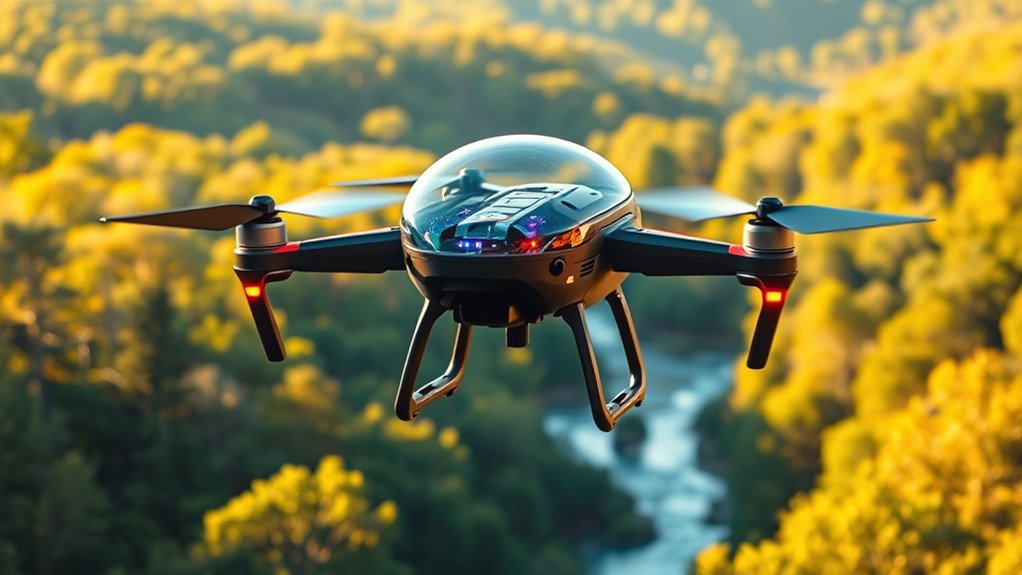
Among these FPV drones, the CADDXFPV Gofilm 20 is my best overall pick for cinewhoop-style filming, pairing a 4K/60FPS camera with a compact frame suited to controlled close-range flights. The BETAFPV Pavo20 Pro II stands out for pilots building a camera-focused setup, while the BETAFPV Cetus X kit is a more approachable route for learning with included gear. The main tradeoffs are camera capability versus durability, a ready-to-fly kit versus a customizable build, and indoor agility versus carrying a heavier camera. Some entries are tiny practice whoops or larger camera drones rather than direct cinewhoop substitutes, so matching the aircraft to your footage goals matters. Read on for the full breakdown, buying guidance, and picks by pilot type.

Get the latest gadgets delivered free with Prime
- Fast, free delivery on millions of items
- Prime Video, Amazon Music and more included
- Member-only deals all year
Complete the kit



Key Takeaways
- Gofilm 20 leads for all-around cinematic use because its stated 4K/60FPS camera gives it a clearer filming role than the practice-focused micro whoops.
- Pavo20 Pro II and Pavo Pico II target camera builds; the Pico II’s O4/O4 Pro bracket points toward a specific HD video system, while the Pavo20 Pro II is listed as PNP and calls for more setup decisions.
- Included gear changes the learning curve. The Cetus X, Aquila16, Aquila20, and Tinyhawk Lite are kit-oriented options, unlike standalone aircraft that may need a compatible radio, goggles, batteries, or video equipment.
- Air75 II and the 80mm STARTFPV R8 prioritize small-scale flying over carrying a substantial camera, making them more fitting for tight spaces and practice than footage-heavy builds.
- The DJI Avata 360 listings are a different kind of choice: their 360° camera focus may suit reframing footage, but their camera-drone format is less directly comparable to small ducted cinewhoops.
| CADDXFPV Gofilm 20 FPV Drone with 4K/60FPS Starlight Camera |  | Best Compact 4K Cinewhoop | Camera: 4K/60FPS starlight FPV camera | Field of view: 160° | Stabilization: EIS and Gyroflow support | VIEW ON AMAZON | See Our Full Breakdown |
| STARTFPV R8 ELRS 1S 80mm Micro FPV Whoop Drone BNF Kit |  | Best for Agile Indoor Practice | Frame size: 80 mm | Weight: 26 g | All-up weight: 38 g | VIEW ON AMAZON | See Our Full Breakdown |
| DJI Avata 360 Motion Fly More Combo 8K 360° Camera Drone |  | Best Premium 360° FPV Camera Package | 360° video: 8K/60fps HDR | Single-lens video: 4K/60fps | Effective still resolution: 120 MP | VIEW ON AMAZON | See Our Full Breakdown |
| Tinyhawk Lite FPV Drone RTF Kit with Goggles, Remote Control, RunCam Nano 3 VTX, 750mAh Battery |  | Best Beginner Ready-to-Fly Kit | Video capture resolution: 720p | Camera: RunCam Nano 3 | Battery capacity: 750 mAh | VIEW ON AMAZON | See Our Full Breakdown |
| DJI Avata 360 Motion Fly More Combo |  | Best for Long-Range 360° Workflow | Camera sensors: 1-inch-equivalent sensors | 360° video: 8K/60fps HDR | Single-lens video: 4K/60fps | VIEW ON AMAZON | See Our Full Breakdown |
| DJI Avata 360 FPV Drone with RC 2 Controller (2-Battery Bundle) |  | Best for 360-Degree Cinematic Capture | Sensors: 1-inch-equivalent | Video modes: 8K/60fps HDR 360; 4K/60fps single lens | Video transmission: O4+ FHD, 1080p/60fps, up to 20 km | VIEW ON AMAZON | See Our Full Breakdown |
| BETAFPV Cetus X FPV Kit with Betaflight Flight Controller and DVR Recording |  | Best Complete Kit for Learning Betaflight | Flight controller: Betaflight | Video transmitter: M04 VTX | Compatible camera: C04 | VIEW ON AMAZON | See Our Full Breakdown |
| BETAFPV Air75 II Brushless Whoop FPV Quadcopter |  | Best for Lightweight Practice and Racing | Power: 1S | Flight controller: Matrix 5IN1 II FC | ESC: 12A continuous, 18A peak | VIEW ON AMAZON | See Our Full Breakdown |
| BETAFPV Pavo20 Pro II Brushless Whoop Quadcopter, PNP |  | Best for Building an O4 Cinewhoop | Wheelbase: 93.9 mm | Dimensions: 6.5 × 6.5 × 2.8 in | Motors: LAVA 1104 7200KV brushless | VIEW ON AMAZON | See Our Full Breakdown |
| CADDXFPV Protos FPV Drone Ready-to-Fly Kit with Walksnail Ascent VTX and Goggles | 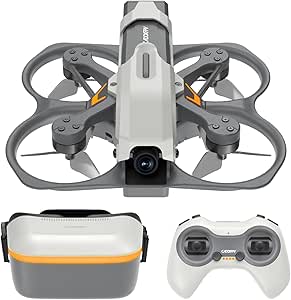 | Best Ready-to-Fly Kit for Guided Practice | Drone weight: 100 g | Camera sensor: 1/3-inch Starvis II | Effective still resolution: 2 MP | VIEW ON AMAZON | See Our Full Breakdown |
| BETAFPV Aquila16 FPV Kit with LiteRadio 2 SE Transmitter and VR03 Goggles |  | Best Beginner Kit for Gradual Skill Building | Included battery capacity: 1100 mAh | Flight time: Up to 8 minutes | Maximum range: 200 meters | VIEW ON AMAZON | See Our Full Breakdown |
| BETAFPV Air75 II Brushless FPV Whoop Quadcopter |  | Best Lightweight Whoop for Freestyle Practice | Motor: 0802 brushless, 22000KV | Flight controller: Matrix 5IN1 II | ESC: 12A continuous, 18A peak | VIEW ON AMAZON | See Our Full Breakdown |
| BETAFPV Pavo Pico II 2S Cinewhoop with HD VTX Bracket II for O4/O4 Pro |  | Best Compact Build for DJI O4 and O4 Pro | Weight without camera and battery: 39.1 g | Item weight: 189.6 g | Dimensions: 5.1 × 5.1 × 2.6 inches | VIEW ON AMAZON | See Our Full Breakdown |
| BETAFPV Aquila20 FPV Drone Kit with LiteRadio 4 SE and VR04 Goggles |  | Best Beginner Kit for Longer Practice Flights | Battery: 2S HV 1100 mAh lithium polymer | Flight time: Up to 10 minutes | Maximum range: 200 meters | VIEW ON AMAZON | See Our Full Breakdown |
| fpv drones cinewhoop | Flight time |
|---|---|
| CADDXFPV Gofilm 20 FPV Drone w | — |
| STARTFPV R8 ELRS 1S 80mm Micro | 3–6 minutes per battery |
| DJI Avata 360 Motion Fly More | — |
| Tinyhawk Lite FPV Drone RTF Ki | — |
| DJI Avata 360 Motion Fly More | — |
| DJI Avata 360 FPV Drone with R | — |
| BETAFPV Cetus X FPV Kit with B | About 5 minutes per battery |
| BETAFPV Air75 II Brushless Who | — |
| BETAFPV Pavo20 Pro II Brushles | Up to 7.5 minutes |
| CADDXFPV Protos FPV Drone Read | Up to 10 minutes per battery |
| BETAFPV Aquila16 FPV Kit with | Up to 8 minutes |
| BETAFPV Air75 II Brushless FPV | Up to 7 minutes 30 seconds |
| BETAFPV Pavo Pico II 2S Cinewh | Up to 6.5 minutes, depending on setup |
| BETAFPV Aquila20 FPV Drone Kit | Up to 10 minutes |
More Details on Our Top Picks
CADDXFPV Gofilm 20 FPV Drone with 4K/60FPS Starlight Camera
The Gofilm 20 is the most camera-focused compact cinewhoop in this group: its 4K/60fps starlight camera, 160° field of view, and EIS plus Gyroflow support are aimed at footage you can stabilize and reframe after flying. Its 115 g weight and 360° guards make it more suitable for close indoor passes than the much larger DJI Avata 360, though the DJI offers a more complete camera-and-control package. The Gofilm’s 2–4S battery compatibility also leaves room to choose a setup for different flying conditions. The tradeoff is short listed hover time—up to 5.5 minutes—and buyers must supply a high-speed microSD card for 4K recording. Choose it for compact, high-resolution cinewhoop footage, not long sessions or a ready-to-fly bundle.
Pros:- 4K/60fps starlight camera with a wide 160° field of view
- EIS and Gyroflow support help manage vibration in recorded footage
- Light 115 g frame with 360° protective guards
- 2–4S compatibility supports a range of battery setups
Cons:- High-speed microSD card for 4K recording is not included
- Listed hover time is up to 5.5 minutes
- Remote control is specified, but goggles and a complete FPV viewing kit are not listed
Best for: FPV pilots seeking a lightweight, guarded cinewhoop for 4K close-proximity footage and willing to provide a compatible high-speed microSD card.
Not ideal for: Buyers who want goggles, a complete flight bundle, or longer sessions without frequent battery changes.
- Camera:4K/60FPS starlight FPV camera
- Field of view:160°
- Stabilization:EIS and Gyroflow support
- Weight:115 g (4 oz)
- Wheelbase:94 mm
- Motors:1303 6000KV brushless
- Battery compatibility:2–4S
- Hover time:Up to 5.5 minutes
- Protective guards:360°
Our verdict“I’d choose the Gofilm 20 for compact 4K cinewhoop footage, provided short flights and a separately sourced recording card fit the plan.”
STARTFPV R8 ELRS 1S 80mm Micro FPV Whoop Drone BNF Kit
The STARTFPV R8 prioritizes light, responsive indoor flying over cinematic image quality. At 26 g before battery, its 80 mm frame and 0802 20000KV motors make it a small practice whoop, while the Betaflight-compatible Matrix G4 flight controller gives pilots room to tune its behavior. Unlike the Tinyhawk Lite, the R8 does not include goggles or a radio controller, so it suits pilots who already own compatible gear rather than someone seeking a complete first kit. It does include two batteries, a charger, spare propellers, and tools, which helps reduce interruptions once the rest of the FPV setup is ready. Flight time is listed at 3–6 minutes per battery, and its 1S power and small frame are better matched to indoor agility than carrying a dedicated cinematic camera setup.
Pros:- Compact 80 mm frame and 26 g drone weight suit indoor practice
- Betaflight-compatible Matrix G4 controller supports tuning
- Two batteries and a multi-battery charger are included
- Spare propellers and a tool kit are supplied
Cons:- ELRS transmitter and FPV goggles must be purchased separately
- 3–6 minutes of flight per battery means frequent swaps
- Small 1S platform is not aimed at carrying a dedicated cinematic camera setup
Best for: Indoor pilots who already have an ELRS 2.4 GHz transmitter and 5.8 GHz goggles and want a light, tunable practice whoop.
Not ideal for: First-time buyers needing a complete ready-to-fly package, or creators prioritizing stabilized, high-resolution cinewhoop footage.
- Frame size:80 mm
- Weight:26 g
- All-up weight:38 g
- Motors:0802 20000KV brushless
- Flight controller:Matrix G4 5-in-1, G473 MCU, ICM-42688P gyro
- Firmware:Betaflight
- Receiver:ELRS 2.4 GHz, version 3.5.X
- Battery:3.8 V 450 mAh lithium-ion
- Flight time:3–6 minutes per battery
Our verdict“I’d pick the R8 for agile indoor practice if I already owned compatible ELRS and FPV viewing gear.”
DJI Avata 360 Motion Fly More Combo 8K 360° Camera Drone
The DJI Avata 360 Motion Fly More Combo is the premium choice here for pilots who want immersive flight and flexible 360° footage in one package. Its 8K/60fps HDR 360° capture lets editors choose framing after the flight, while the included Goggles N3, RC Motion 3, and three batteries make it more complete than the camera-focused but separately equipped CADDXFPV Gofilm 20. Omnidirectional obstacle sensing and an integrated propeller guard add a layer of protection, though they do not make a 455 g drone as nimble or unobtrusive as a small ducted whoop. The bundle’s scale and feature set suit ambitious outdoor and planned indoor shots better than tight, casual practice. Buyers should also check DJI Fly app availability for their phone before choosing this system.
Pros:- 8K/60fps HDR 360° video allows reframing after the flight
- 4K/60fps single-lens filming provides a conventional capture option
- Goggles, motion controller, charging hub, sling bag, and three batteries are included
- Integrated propeller guard and omnidirectional obstacle sensing
Cons:- At 455 g, it is substantially larger and heavier than micro whoops
- DJI Fly app is unavailable on Google Play
- Some advertised features depend on footnoted conditions
Best for: Creators who want high-resolution 360° footage, motion-controlled FPV flight, and a bundled set of goggles, batteries, and charging gear.
Not ideal for: Pilots seeking a tiny, lightweight whoop for confined spaces, or buyers who need a simple setup without checking app compatibility.
- 360° video:8K/60fps HDR
- Single-lens video:4K/60fps
- Effective still resolution:120 MP
- Weight:455 g
- Maximum transmission range:20 km
- Battery capacity:2700 mAh
- Obstacle sensing:Omnidirectional
- Included accessories:DJI Goggles N3, DJI RC Motion 3, charging hub, sling bag, three batteries
- Video format:MP4
Our verdict“I’d choose this DJI bundle for flexible 360° production and an included FPV setup, not for the compactness of a traditional cinewhoop.”
Tinyhawk Lite FPV Drone RTF Kit with Goggles, Remote Control, RunCam Nano 3 VTX, 750mAh Battery
The Tinyhawk Lite makes the most sense for a newcomer who wants the core FPV gear in one box. Its ready-to-fly kit includes goggles, a radio controller, and a 750 mAh battery, unlike the STARTFPV R8, which requires a separate transmitter and goggles. The 37 g plastic frame is small enough for indoor learning, while Betaflight configurator support gives a beginner a path toward adjusting flight behavior as skills grow. This is a training-focused pick, not a footage-first cinewhoop: the listed capture resolution is 720p, far below the Gofilm 20’s 4K/60fps camera. Its limited VTX power options can also constrain signal reach and strength. I’d favor it for accessible FPV practice, but skip it if cinematic recording is the main goal.
Pros:- Ready-to-fly kit includes goggles and a radio controller
- Light 37 g plastic frame is suited to beginner practice
- Betaflight configurator support allows flight tuning
- 750 mAh battery is included
Cons:- 720p capture is limited for cinematic footage compared with the Gofilm 20
- VTX power options are limited to 25–400 mW, which may restrict signal strength and range
- The listed kit includes one 750 mAh battery
Best for: New FPV pilots who want a compact indoor-and-outdoor starter kit with goggles and a radio controller included.
Not ideal for: Cinewhoop creators seeking high-resolution stabilized footage, or pilots who need stronger video signal range.
- Video capture resolution:720p
- Camera:RunCam Nano 3
- Battery capacity:750 mAh
- Battery chemistry:Lithium polymer
- Item weight:37 g
- Dimensions:4 × 4 × 2 in
- Skill level:Beginner
- Connectivity:Type C
- Media type:Micro SD
Our verdict“I’d choose the Tinyhawk Lite to learn FPV with included goggles and controls, but not as a first choice for polished cinewhoop footage.”
DJI Avata 360 Motion Fly More Combo
This DJI Avata 360 Fly More Combo is aimed at pilots who value post-flight framing choices and a bundled motion-control setup more than the small footprint of a conventional cinewhoop. Its 8K/60fps HDR 360° video can yield multiple compositions from one flight, and the listed O4+ transmission reaches up to 20 km at 1080p/60fps under suitable conditions. As with the other DJI Avata 360 combo in this roundup, it includes Goggles N3, RC Motion 3, a charging hub, sling bag, and three batteries; compared with the Gofilm 20, it offers a more expansive camera and sensing package but is not the lighter, simpler close-quarters option. Propeller guards and omnidirectional sensing add protection, while the app download requirement and ideal-condition transmission claim add setup and operating caveats.
Pros:- 8K/60fps HDR 360° capture supports multiple edits from one flight
- 4K/60fps single-lens mode offers a conventional framing option
- Goggles, motion controller, charging hub, sling bag, and three batteries are included
- Integrated propeller guards and omnidirectional obstacle sensing
Cons:- DJI Fly app must be downloaded from DJI’s website rather than Google Play
- Up to 20 km transmission range depends on optimal, unobstructed conditions
- Large 360° camera-and-controller package is less suited to compact whoop flying
Best for: FPV creators seeking 360° footage, flexible reframing, motion controls, and a bundled multi-battery DJI setup.
Not ideal for: Pilots who need a small indoor micro-whoop, or buyers unwilling to install DJI Fly outside Google Play.
- Camera sensors:1-inch-equivalent sensors
- 360° video:8K/60fps HDR
- Single-lens video:4K/60fps
- Video transmission:O4+, 1080p/60fps
- Maximum transmission range:Up to 20 km under optimal, unobstructed conditions
- Safety features:Integrated propeller guards and omnidirectional obstacle sensing
- Included accessories:DJI Goggles N3, RC Motion 3, charging hub, sling bag, three batteries
- Filming modes:360° and single-lens
Our verdict“I’d pick this combo for a bundled, motion-controlled 360° filming workflow, but choose a smaller cinewhoop for tight indoor flights.”
DJI Avata 360 FPV Drone with RC 2 Controller (2-Battery Bundle)
I rank the Avata 360 as the strongest choice here for creators who prioritize flexible, high-resolution footage over a compact cinewhoop setup. Its 8K/60fps HDR 360 capture allows reframing after the flight, while the integrated propeller guard and omnidirectional obstacle sensing offer more protection around obstacles than the manual-focused Pavo20 Pro II. The RC 2 controller with a built-in screen, two batteries, and included storage make this bundle more ready for filming than the PNP Pavo20 Pro II, which needs a separate battery and compatible HD video system. The tradeoff is a more involved editing workflow: 360 footage takes substantial storage and processing, and this is a larger, more feature-rich filming platform than a small ducted whoop. I’d choose it for cinematic flexibility, not for a simple, lightweight practice quad.
Pros:- 8K/60fps HDR 360 video offers extensive reframing options
- Omnidirectional obstacle sensing and integrated propeller guard add flight protection
- RC 2 controller has a built-in 5.5-inch 1080p display
- Bundle includes two batteries, a 128GB MicroSD card, and filming accessories
Cons:- High-resolution 360 footage demands substantial storage and editing resources
- More complex and feature-heavy than a small whoop for basic practice flights
- The supplied data does not specify a compact cinewhoop-style ducted frame
Best for: FPV filmmakers who want to reframe 360-degree footage after flight and prefer a complete controller-and-battery bundle
Not ideal for: Pilots seeking an inexpensive, lightweight indoor cinewhoop or a straightforward setup for learning manual flight
- Sensors:1-inch-equivalent
- Video modes:8K/60fps HDR 360; 4K/60fps single lens
- Video transmission:O4+ FHD, 1080p/60fps, up to 20 km
- Obstacle sensing:Omnidirectional
- Safety feature:Integrated propeller guard
- Controller display:5.5-inch 1080p built-in screen
- Batteries included:2 Intelligent Flight Batteries
- Storage included:128GB MicroSD card with reader
Our verdict“Choose the Avata 360 if 8K 360 reframing and a complete filming bundle matter more than compact size and a simple editing workflow.”
BETAFPV Cetus X FPV Kit with Betaflight Flight Controller and DVR Recording
The Cetus X makes this list for buyers who want a complete FPV learning kit rather than a camera-first cinewhoop. It includes the quad, VR03 goggles with DVR, LiteRadio 3 transmitter, and four 1S batteries, so a new pilot can start flying without assembling a separate control and viewing setup. Betaflight offers configurable flight settings, giving it more room to grow than the guided, multi-mode CADDXFPV Protos kit. The tradeoff is modest image quality: the listed 480p video and short, roughly five-minute flights are better suited to practice and DVR review than polished filming. Its approximately 600-meter stated maximum range also depends on open conditions and can be affected by interference. I’d pick the Cetus X to learn FPV controls, not to capture cinematic footage.
Pros:- Kit includes quadcopter, goggles, transmitter, and four batteries
- Betaflight flight controller supports configurable settings
- VR03 goggles include DVR recording for reviewing practice flights
- Four included batteries provide more flying opportunities between charging sessions
Cons:- 480p video is limited for detailed or polished footage
- Flight time is about five minutes per battery
- Replacement camera compatibility is limited to the C04 with M04 VTX
Best for: New FPV pilots who want goggles, a transmitter, several batteries, and Betaflight settings in one starter kit
Not ideal for: Cinewhoop filmmakers who need high-resolution footage, longer flight sessions, or a camera platform designed around cinematic capture
- Flight controller:Betaflight
- Video transmitter:M04 VTX
- Compatible camera:C04
- Goggles:VR03 with DVR
- Transmitter:LiteRadio 3
- Batteries included:4 × BT2.0 450 mAh 1S 75C
- Flight time:About 5 minutes per battery
- Video:480p; MOV format
Our verdict“Pick the Cetus X for an all-in-one route into configurable FPV flying, but look elsewhere for cinewhoop-quality video.”
BETAFPV Air75 II Brushless Whoop FPV Quadcopter
The Air75 II is the small, responsive pick in this group, aimed at pilots who want a lightweight ducted quad for practice and racing rather than a self-contained filming kit. Its reinforced frame and cushioned flight-controller mount are designed to take some impact out of crashes, while the 0802 brushless motors and 12A continuous ESC support a more energetic feel than the beginner-oriented Cetus X kit. Adjustable camera angle from 15° to 45° lets pilots tune the view for slower control or faster runs. Unlike the Pavo20 Pro II, it is not presented as an HD-VTX-ready cinematic build; this is more about nimble flying than carrying a filming system. A key omission is the battery, so the buyer must plan for compatible power separately. I’d favor it for compact flying practice, not as a ready-to-record cinewhoop.
Pros:- Reinforced frame and impact-cushioning flight-controller mount are designed for crash resistance
- 0802 28000KV brushless motors and a high-output ESC support responsive handling
- Camera angle adjusts from 15° to 45° for different flying styles
- Small 1S whoop format suits compact flying spaces
Cons:- Battery is not listed among the included components
- No goggles, transmitter, or video recording system are specified
- Racing-oriented setup may be demanding for a beginner
Best for: Experienced micro-quad pilots seeking a light, ducted 1S quad for responsive practice or racing
Not ideal for: First-time buyers who need a complete ready-to-fly kit, or filmmakers expecting a battery and HD video system in the box
- Power:1S
- Flight controller:Matrix 5IN1 II FC
- ESC:12A continuous, 18A peak
- Motors:0802 brushless, 28000KV, dual ball bearing
- Propellers:GF 1614 three-blade
- Camera angle:Adjustable from 15° to 45°
- Connectivity:5.8 GHz and 2.4 GHz
- Dimensions:4.5 × 4.5 × 2.2 in
Our verdict“Choose the Air75 II for a nimble, crash-conscious micro whoop if you already have compatible FPV gear and batteries.”
BETAFPV Pavo20 Pro II Brushless Whoop Quadcopter, PNP
The Pavo20 Pro II is the most directly cinewhoop-oriented build here for pilots who want to add a compatible digital video system themselves. Its reinforced ducted frame and carbon plate provide a more filming-focused foundation than the Air75 II, while the adjustable bracket supports DJI O4, O4 Wide, and O4 Pro Air Units. The 93.9 mm wheelbase keeps the build compact, and the 0–40° camera tilt allows a choice between a flatter view and a more aggressive flight angle. It also lists up to 7.5 minutes of flight, though actual results depend on the chosen 3S battery and setup. Unlike the complete CADDXFPV Protos kit, this PNP quad does not include the battery or HD VTX system, so it suits experienced builders more than first-time pilots.
Pros:- Reinforced ducted frame and carbon plate provide a filming-focused build platform
- Compatible with DJI O4, O4 Wide, and O4 Pro Air Unit systems
- Adjustable camera tilt from 0° to 40°
- Dual BEC outputs support power delivery to the VTX and external devices
Cons:- Battery and HD VTX system are not listed as included
- Requires build and compatibility planning before it can capture HD video
- Up to 7.5 minutes of flight time leaves limited time per battery
Best for: FPV builders who want a compact ducted frame and plan to install a compatible DJI O4 video system
Not ideal for: Buyers seeking a ready-to-fly cinewhoop with battery, goggles, controller, and HD VTX already included
- Wheelbase:93.9 mm
- Dimensions:6.5 × 6.5 × 2.8 in
- Motors:LAVA 1104 7200KV brushless
- Flight controller:F4 2–3S 20A AIO FC
- Battery compatibility:3S; battery slot width up to 29 mm
- Flight time:Up to 7.5 minutes
- VTX compatibility:DJI O4 Air Unit, O4 Wide, and O4 Air Unit Pro
- Camera tilt:0–40°
Our verdict“Choose the Pavo20 Pro II if you want a compact ducted O4 build and are prepared to supply the battery and digital video system.”
CADDXFPV Protos FPV Drone Ready-to-Fly Kit with Walksnail Ascent VTX and Goggles
The Protos is the most accessible complete package here for a buyer who wants to fly without sourcing a separate quad, controller, and goggles. The kit includes three batteries, goggles, a controller, and accessories, while its Position Hold and Self-Stabilizing modes offer a less demanding starting point than the manual-oriented Pavo20 Pro II. It also provides Manual mode as skills develop, plus up to 10 minutes of flight per battery—longer than the Cetus X’s stated five-minute sessions. For cinewhoop buyers, though, its appeal is more about learning and compact FPV than high-end image capture: the listed camera is 2 MP, with 1080p and 720p capture. The recommended control distance is about 150 meters, much shorter than the Cetus X’s stated open-condition range. I’d pick it as a starter kit, not a long-range filming platform.
Pros:- Includes drone, goggles, controller, and three drone batteries
- Position Hold and Self-Stabilizing modes offer support while learning
- Up to 10 minutes of flight per battery exceeds the Cetus X’s stated flight time
- Compact 100 g drone and carry case support convenient transport
Cons:- 2 MP camera and listed 1080p/720p capture are limited for detailed cinematic footage
- Recommended RC control distance is approximately 150 m ± 50 m
- Charging butler charger is not included
Best for: New pilots who want a bundled FPV kit with assisted flight modes and multiple batteries for practice
Not ideal for: Experienced cinewhoop filmmakers who need high-resolution capture, a long recommended control distance, or a purpose-built professional camera platform
- Drone weight:100 g
- Camera sensor:1/3-inch Starvis II
- Effective still resolution:2 MP
- Video capture:1080p and 720p
- Goggle display:1080p at 60 FPS
- Flight time:Up to 10 minutes per battery
- Batteries included:3 drone batteries
- Flight modes:Position Hold, Self-Stabilizing, Manual
Our verdict“Choose the Protos for a bundled, mode-assisted entry into FPV, but not if cinematic image quality or extended control distance is the priority.”
BETAFPV Aquila16 FPV Kit with LiteRadio 2 SE Transmitter and VR03 Goggles
I’d choose the Aquila16 when the priority is learning cinewhoop-style FPV with the transmitter and goggles included. Its three flight modes and three speed settings let a new pilot start with gentler control, while Turtle Mode can flip the quad upright after an awkward landing. The VR03 goggles record 720p video, a useful way to review practice flights without adding a separate recorder. Compared with the Aquila20, this kit offers a more modest stated flight time of up to eight minutes, but its included gear and adjustable 15°–30° camera angle make it a clear starter package. The tradeoffs are a 200-meter maximum range and a camera cable that may loosen after crashes; M-mode also requires a separately purchased 650mAh battery.
Pros:- Includes the transmitter and DVR-equipped goggles, so the core control and viewing gear is supplied.
- Three flight modes and three speed settings provide approachable steps toward faster flying.
- Turtle Mode can help recover the quad after it lands upside down.
- LiteRadio 2 SE supports simulator practice and firmware upgrades.
Cons:- The 650mAh battery required for M mode is sold separately.
- The camera cable may loosen after crashes and interrupt the video signal or image.
- Maximum range is listed as 200 meters.
Best for: First-time FPV pilots who want a complete kit, gradual speed options, and goggles that can record practice flights.
Not ideal for: Pilots who need longer flights, greater range, or a kit ready for M mode with no additional battery purchase.
- Included battery capacity:1100 mAh
- Flight time:Up to 8 minutes
- Maximum range:200 meters
- Flight modes:N, S, and M
- Speed settings:Slow, Mid, and Fast
- Goggles display:4.3-inch LCD, 800 × 480 px
- Video recording:720p MP4
- Transmitter firmware:ELRS V3
- Camera angle:15°–30°
Our verdict“Choose the Aquila16 if you want a ready-to-fly introduction with adjustable learning settings and onboard DVR recording, and can accept its limited range.”
BETAFPV Air75 II Brushless FPV Whoop Quadcopter
The Air75 II is the pick here for pilots who already have compatible FPV gear and want a small, freestyle-oriented whoop rather than a complete beginner bundle. Its 0802 brushless motors and adjustable 15°–45° camera angle support different flying styles, from lower-angle cruising to a more forward-leaning view. The reinforced frame, canopy, and mounting system are intended to handle impacts, while the Matrix 5IN1 II flight controller and 12A continuous ESC make this a more component-focused choice than the ready-to-fly Aquila16. That flexibility comes with a setup burden: the listed components do not include a battery, and the stated flight time tops out at 7 minutes 30 seconds. I’d skip it if you need goggles and a transmitter in the box.
Pros:- Reinforced frame, canopy, and mounting system are designed to withstand impacts.
- Brushless motors are designed for smooth control and low-end torque.
- Adjustable camera angle accommodates different flying styles.
- Matrix 5IN1 II flight controller includes a 12A continuous ESC.
Cons:- A battery is not listed among the included components.
- Maximum stated flight time is 7 minutes 30 seconds.
- Unlike the Aquila16, it is not presented as a complete kit with transmitter and goggles.
Best for: FPV pilots who already own compatible control and viewing equipment and want a compact whoop for freestyle practice.
Not ideal for: New pilots seeking a complete kit or buyers who want a confirmed included battery and longer flight sessions.
- Motor:0802 brushless, 22000KV
- Flight controller:Matrix 5IN1 II
- ESC:12A continuous, 18A peak
- Battery capacity:480 mAh
- Flight time:Up to 7 minutes 30 seconds
- Camera angle:Adjustable from 15° to 45°
- Frame material:Polypropylene blend
- Dimensions:4.5 × 4.5 × 2.2 inches
- Propellers:GF 1614, 3-blade
Our verdict“Pick the Air75 II for a compact, freestyle-focused build if you already have compatible gear and are comfortable sourcing a battery.”
BETAFPV Pavo Pico II 2S Cinewhoop with HD VTX Bracket II for O4/O4 Pro
For an actual camera-carrying cinewhoop build in this group, I’d shortlist the Pavo Pico II first if the planned video system is DJI O4 or O4 Pro. Its shock-absorbing HD VTX Bracket II is designed to reduce camera vibration, while the compatible carbon plate supports either air unit. Pre-tuned PID profiles selectable through the OSD can simplify setup compared with building a freestyle whoop from scratch, such as the Air75 II. Its compact 45mm propeller format and 39.1g stated weight without camera or battery suit smaller builds, but that weight is not the ready-to-fly figure. The camera and battery add to the total, and the stated flight time is up to 6.5 minutes depending on setup. This is a component-focused choice, not a complete kit like the Aquila16.
Pros:- Four shock-absorbing bracket mounts are designed to reduce camera vibration.
- Compatible carbon plate supports DJI O4 and O4 Pro air units.
- Pre-tuned PID profiles can be selected through the OSD.
- Compact 45mm three-blade propellers suit a small cinewhoop build.
Cons:- The 39.1g weight excludes the camera and battery, so it does not represent the configured flight weight.
- Flight time depends on the build and is stated as up to 6.5 minutes.
- Unlike the Aquila16 and Aquila20, it is a build-focused quad rather than a complete transmitter-and-goggles kit.
Best for: Experienced builders planning a compact cinewhoop around a DJI O4 or O4 Pro air unit who value vibration control.
Not ideal for: Beginners seeking a ready-to-fly package, or pilots using a video system other than the listed O4 and O4 Pro compatibility.
- Weight without camera and battery:39.1 g
- Item weight:189.6 g
- Dimensions:5.1 × 5.1 × 2.6 inches
- Motor:LAVA 1102 14000KV
- Propellers:Gemfan 45 mm, 3-blade
- Flight controller:F4 2–3S 20A AIO
- Video system compatibility:DJI O4 and O4 Pro
- Power outputs:9V 2A for O4 system; 5V 3A for external devices
- Flight time:Up to 6.5 minutes, depending on setup
Our verdict“Choose the Pavo Pico II for a compact O4 or O4 Pro cinewhoop build where camera mounting and vibration control matter more than turnkey convenience.”
BETAFPV Aquila20 FPV Drone Kit with LiteRadio 4 SE and VR04 Goggles
The Aquila20 makes the most sense for a beginner who wants a ready-to-fly package and puts more weight on practice time than the Aquila16’s recording features. Its 2S 1100mAh battery is associated with a stated flight time of up to 10 minutes, compared with up to eight minutes for the Aquila16. Three flight modes, Turtle Mode, and altitude hold give newer pilots several aids as they learn, and the PA410 frame is designed to withstand beginner crashes. The main catch is that the flight modes cannot be changed from N to S or M while airborne, which limits in-flight flexibility. Goggles recording also requires a micro card that is not included. I’d favor the Aquila16 if onboard DVR readiness matters more; the Aquila20 suits those who prefer its longer stated session time.
Pros:- Ready-to-fly kit includes the drone, VR04 goggles, and LiteRadio 4 SE transmitter.
- Up to 10 minutes of stated flight time exceeds the Aquila16’s listed maximum.
- Three flight modes, altitude hold, and Turtle Mode support beginner practice and recovery.
- PA410 frame is designed to withstand beginner crashes.
Cons:- Micro card for goggles recording is not included.
- The pilot cannot switch from N mode to S or M mode during flight.
- Maximum range is listed as 200 meters.
Best for: Beginner pilots who want a complete kit, altitude hold, crash-recovery support, and longer stated flight time for practice.
Not ideal for: Pilots who want to switch modes mid-flight, record goggles footage without buying a separate card, or fly beyond the listed 200-meter range.
- Battery:2S HV 1100 mAh lithium polymer
- Flight time:Up to 10 minutes
- Maximum range:200 meters
- Flight modes:N, S, and M
- Connectivity:Bluetooth, 2.4 GHz ExpressLRS
- Frame material:PA410
- Drone dimensions:10.4 × 8.7 × 5.5 inches
- Goggles standby time:Up to 2 hours
- Transmitter battery life:More than 8 hours
Our verdict“Choose the Aquila20 if you want a beginner-ready kit with altitude hold and longer stated flights, and can accept fixed in-flight mode selection.”

How We Picked
I ranked these options by how well their stated format and equipment match the needs of an FPV cinewhoop buyer: close-range flight, camera use, indoor or confined-space handling, and a practical path from purchase to flight. I also weighed setup demands, included components, compatibility cues, and the likely role of each aircraft. A model with a camera-focused frame or an explicit HD video bracket ranks ahead for filming; a complete kit can rank higher for a newcomer who needs a transmitter and goggles, even if it is less suited to carrying a dedicated camera.
The list includes micro whoops, PNP aircraft, RTF kits, and 360° camera drones, so I did not treat them as interchangeable. Where two entries appear to share a model name or differ only by bundle, I treat the configuration as the deciding factor rather than assuming different flight performance. I also avoid inferring unlisted specifications: buyers should confirm compatibility, battery contents, and camera or video-system details for the exact listing before choosing.
Factors to Consider When Choosing Fpv Drones Cinewhoop
Choosing a cinewhoop is less about finding the smallest drone and more about matching the aircraft, camera, and control system to the footage and spaces you have in mind. These broader checks can prevent a mismatch that a product name or bundle label will not reveal.
Match the Frame to the Camera You Plan to Carry
Start with the camera you intend to fly, not a headline resolution alone. A built-in camera such as the Gofilm 20’s stated 4K/60FPS setup is a different proposition from a PNP frame that needs you to supply and configure video gear. Extra camera weight can affect flight time, responsiveness, and how confidently a small drone handles close passes. A tiny whoop may fit through narrower gaps but leave little room for a heavier camera or mounting hardware. Check the frame’s supported camera dimensions, mounting points, and recommended battery before buying. If your priority is practice rather than polished footage, a lighter camera-free whoop can be the more sensible tool.
Decide How Much Setup You Want to Do
Bundle terms describe different starting points, not guaranteed ease of use. An RTF or FPV kit may include a transmitter and goggles, while BNF and PNP configurations usually expect some compatible equipment or assembly knowledge. Before choosing a bundle, check whether it contains the battery, charger, radio, goggles, and the video receiver needed for your chosen system. Existing FPV pilots may prefer a PNP option to avoid paying for duplicate gear, while first-time buyers can lose time and money if a kit omits one essential component. Confirm that the transmitter protocol and video system match your current equipment. A complete bundle is only convenient when its parts work together and suit your region’s rules and flying environment.
Choose Video Gear for Your Actual Workflow
Camera recording and the live FPV feed serve different jobs. A high-resolution onboard camera captures footage, while the video transmitter and goggles determine what you see as you fly; one does not automatically imply the other is high quality or compatible with your gear. The Pavo Pico II listing names an O4/O4 Pro bracket, which signals a specific HD video-system path, whereas an analog-oriented kit may better suit someone who already owns compatible goggles. A 360° camera can offer reframing options after a flight, but it changes the aircraft and editing workflow compared with a conventional forward-facing cinewhoop camera. Check supported goggles, recording options, antenna placement, and whether footage needs post-processing. Choose the system around the final viewing and editing process, not just the camera label.
Be Realistic About Indoor Space and Flight Conditions
Small ducted drones are attractive for indoor work, but ducts do not make every room or flight risk-free. Furniture, loose cables, pets, and reflective or low-texture surfaces can complicate control and footage, while prop wash and confined airflow can affect stability. Micro whoops such as the Air75 II or STARTFPV R8 are better aligned with tight practice spaces than a larger camera-carrying setup. Outdoor flying brings different needs, including wind handling, line of sight, and compliance with local flight rules. Think through the typical room or location before treating a compact frame as universally versatile. A safe practice area and spare propellers can matter more to early progress than a more advanced camera.
Budget for Batteries, Repairs, and Compatibility
The aircraft is only one part of the ongoing setup. Batteries, charging equipment, replacement propellers, frame parts, and compatible radio or video gear can shape the real cost and convenience of ownership, even when a bundle looks complete. Small whoops are handy to carry, but crashes and frequent battery changes can still interrupt practice. Check connector type, battery voltage, charging method, and whether replacement parts are easy to identify for the exact model. When comparing similar listings, confirm whether they are actually separate aircraft or alternate bundles; the two Air75 II entries and multiple Avata 360 listings may differ by configuration rather than core airframe. Spend more only when the added camera, included equipment, or system compatibility solves a clear need.
Prioritize Safety, Rules, and Beginner-Friendly Features
A cinewhoop can reduce some propeller exposure through its frame, but it is not harmless around people, animals, or fragile objects. Beginners should prioritize stable, low-speed practice, a clear return or disarm procedure, and a space where a loss of control has limited consequences. Kit options such as the Cetus X, Aquila16, Aquila20, and Tinyhawk Lite can provide a more unified starting point than piecing together components, though buyers still need to check what each package contains. Read local rules for FPV flight, including any requirements for a visual observer or line of sight. Avoid learning camera moves near bystanders; practice control first in a clear area. A forgiving setup and a repeatable practice routine can protect both the aircraft and the people nearby.
Frequently Asked Questions
Which of these drones is the best starting point if I do not own FPV goggles or a radio?
I would start by comparing the listed complete kits, especially the BETAFPV Cetus X, Aquila16, Aquila20, and Tinyhawk Lite, rather than a PNP or BNF aircraft. A kit name does not guarantee that every required item is in the box, so verify the exact transmitter, goggles, batteries, charger, and video receiver included. Also check whether those components use a video and control system you can keep using if you later upgrade. If you already own compatible gear, a standalone aircraft may make more sense than buying duplicates. For a first purchase, completeness and compatibility matter more than camera resolution.
Can a micro whoop like the Air75 II or STARTFPV R8 carry a camera for cinematic footage?
These small whoops are best approached as agility and practice aircraft unless the exact listing confirms a suitable camera mount and payload. Adding a camera changes the aircraft’s weight and handling, and can shorten useful flight time or make close control harder. A compact frame may work for a very lightweight recording setup, but it is not automatically a substitute for a camera-focused cinewhoop. Check frame clearance, mounting, power options, and the manufacturer’s payload guidance before adapting one. If filming is the main goal, a purpose-built camera option such as the Gofilm 20 or a compatible Pavo build is a more direct starting point.
What is the practical difference between a PNP cinewhoop and an RTF kit?
A PNP aircraft generally suits pilots who already know how to supply or configure parts such as a radio receiver, goggles, batteries, and sometimes the video system. An RTF kit aims to bundle more of the equipment needed to begin, which can reduce compatibility work for a new pilot. The labels can vary by seller, so inspect the exact package contents rather than relying on the acronym alone. Also check whether the radio protocol and goggles can work with later aircraft you may buy. Choose PNP when your existing setup is compatible; choose a kit when a matched set of components is more useful than customization.
Should I choose the DJI Avata 360 listings instead of a conventional cinewhoop?
Choose an Avata 360 configuration if 360° capture and the ability to reframe footage are central to your project. A conventional cinewhoop is generally the more direct fit for close-proximity FPV shots with a forward-facing camera and a smaller, purpose-built frame. The 360° approach can require a different editing workflow and may not suit every flight space or filming style. Compare the exact bundle contents across the Avata 360 listings, since controller, battery, and accessory combinations may differ. Do not treat those bundle variants as separate performance classes without confirming what actually changes.
How should I choose between the Pavo20 Pro II and Pavo Pico II for a camera build?
Begin with the video system and camera you plan to use. The Pavo Pico II listing specifically names a bracket for O4 or O4 Pro, making it a clearer match for someone building around that system. The Pavo20 Pro II is listed as PNP, so it may appeal to a pilot who wants to select compatible electronics and already has some FPV equipment. Confirm camera fit, battery requirements, receiver configuration, and included parts on the exact listing before deciding. If you want a more turnkey camera route, compare the work required for either frame against a model sold with a camera already specified.
Conclusion
For the strongest balance of a defined camera setup and cinewhoop use, my best overall pick is the CADDXFPV Gofilm 20. The best value in practical capability is the BETAFPV Cetus X kit for buyers who want a learning-oriented package, provided its included equipment matches their needs. For a best premium or specialized camera route, I would look at the Pavo Pico II when building around O4/O4 Pro, or an Avata 360 bundle when 360° reframing is the goal. Beginners should compare the Cetus X, Aquila16, Aquila20, and Tinyhawk Lite by what each package actually includes; pilots focused on compact practice should look at the Air75 II or STARTFPV R8. Choose by camera workflow, available FPV gear, and flying space—not by the word “cinewhoop” on its own.
Halloween Picks
halloween
As an affiliate, we earn on qualifying purchases.