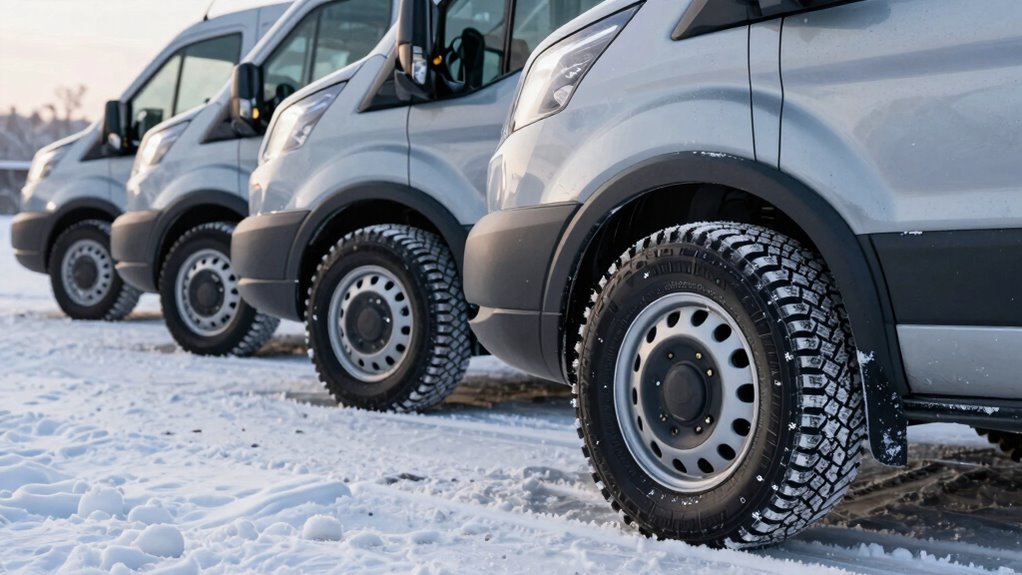

Choosing winter tires for a Ford Transit means weighing dedicated cold-weather traction against year-round flexibility, while checking that the tire matches your van’s required size and load rating. I put the Firestone Winterforce CV first for drivers who need a commercial winter tire focused on snow, slush, and ice. The RBP Repulsor A/T Plateau is the more flexible alternative: it carries the Three-Peak Mountain Snowflake symbol and is designed for year-round use, but it is an all-terrain tire rather than a winter-specific commercial model.

Get the latest gadgets delivered free with Prime
- Fast, free delivery on millions of items
- Prime Video, Amazon Music and more included
- Member-only deals all year
Both listed options are sized 235/65R16 and have a 121 load index, but their construction and intended seasons differ. The Firestone has an E load range and 10-ply rating; the RBP lists a B load range, despite sharing the same listed load index and capacity. I would not treat those details as interchangeable: check your Transit’s placard, axle requirements, and tire fitment before buying. My ranking favors the Firestone for dedicated winter service, while the RBP suits buyers seeking one snow-certified tire for more of the year.
Complete the kit



Key Takeaways
- I rank the Firestone Winterforce CV first for Transit owners prioritizing a tire built specifically for winter and commercial light-truck use.
- The RBP Repulsor A/T Plateau is the year-round alternative, with Three-Peak Mountain Snowflake certification and a stated 50,000-mile tread-life warranty.
- Both listings specify 235/65R16 and a 121 load index, but their load-range and construction details differ; verify the van’s requirements rather than relying on size alone.
- The Firestone’s full-depth grooves and sawtooth sipes target snow, slush, wet roads, and ice, but the listing provides no manufacturer warranty.
- The RBP’s all-terrain design offers more seasonal flexibility, though its 34-pound weight may affect efficiency and it is not a dedicated winter-only design.
| Firestone Winterforce CV Winter/Snow Commercial Light Truck Tire, 235/65R16C 121R E |  | Best Overall for Dedicated Transit Winter Use | Size: 235/65R16C | Load index: 121 | Load range: E | VIEW ON AMAZON | See Our Full Breakdown |
| RBP Repulsor A/T Plateau All-Terrain Tire 235/65R16 121/119R Light Truck |  | Best Year-Round Snow-Certified Alternative | Size: 235/65R16 | Load index: 121/119R | Load capacity: 3,197 lb | VIEW ON AMAZON | See Our Full Breakdown |
| ford transit winter tire | Size | Load index | Load range | Tread type |
|---|---|---|---|---|
| Firestone Winterforce CV Winte | 235/65R16C | 121 | E | Asymmetrical |
| RBP Repulsor A/T Plateau All-T | 235/65R16 | 121/119R | B | Symmetrical |
More Details on Our Top Picks
Firestone Winterforce CV Winter/Snow Commercial Light Truck Tire, 235/65R16C 121R E
For a Transit that stays on the road through winter, I rank the Firestone Winterforce CV first because it is specifically described as a commercial winter tire for light trucks and vans. That intended use is a closer fit than the RBP Repulsor A/T Plateau’s broader all-terrain brief. Firestone’s full-depth grooves are designed to clear water and slush, while sawtooth sipes add biting edges for snow and icy conditions. Those features address the messy mix many van drivers face rather than focusing only on packed snow.
The commercial specification is another point in its favor for a working van: this listing identifies an E load range and 10-ply rating. The RBP lists a B load range, so the Firestone’s stated construction may be the more relevant starting point for a Transit carrying tools or cargo. That is not a universal fit guarantee, however. The two products share a listed 121 load index and 3,197-pound capacity, but buyers still need to compare the tire’s full specification with their exact van requirements and approved fitment.
Compared with the RBP, the Firestone gives up year-round versatility. It is a winter tire, so drivers who want one set for warm weather and snow may prefer the RBP’s all-season positioning and stated 50,000-mile limited tread-life warranty. The Firestone listing also says no manufacturer warranty, which makes its ownership case less reassuring on paper. Its 43.3-pound listed weight is heavier than the RBP’s 34 pounds, another detail to weigh when efficiency matters, though tire weight alone cannot predict a specific fuel-economy change.
I would choose the Winterforce CV when winter is the main problem to solve and the Transit’s fitment checks out. Its winter-specific design and commercial-van intent justify the top position; the lack of a listed warranty and its seasonal focus are meaningful compromises, not details to overlook.
Pros:- Purpose-built winter/snow tire for commercial light trucks and vans
- Full-depth grooves are designed to clear water and slush
- Sawtooth sipes add biting edges for winter-road traction
- E load range and 10-ply rating are stated in the listing
Cons:- Listing states no manufacturer warranty
- Winter-only positioning is less versatile than the RBP all-terrain option
- Listed weight of 43.3 pounds is heavier than the RBP’s 34 pounds
Best for: Transit owners who drive through regular snow, slush, and icy winter conditions and need a commercial light-truck tire, provided the tire matches their van’s approved size and load requirements.
Not ideal for: Drivers seeking a single year-round tire, buyers who place high value on a stated tread-life warranty, or Transit owners whose required fitment or load specifications do not match this listing.
- Size:235/65R16C
- Load index:121
- Load range:E
- Tread depth:13/32 in
- Tread type:Asymmetrical
- Season:Winter
- Weight:43.3 lb
Our verdict“I recommend the Firestone Winterforce CV for Transit owners who prioritize a dedicated commercial winter tire over year-round flexibility.”
RBP Repulsor A/T Plateau All-Terrain Tire 235/65R16 121/119R Light Truck
The RBP Repulsor A/T Plateau is the better match for a Transit owner who wants one tire for mixed seasonal driving rather than a dedicated winter set. It is an all-terrain light-truck tire described for year-round use, and its Three-Peak Mountain Snowflake certification gives it a stronger winter-use case than an ordinary all-season tire. The listed saw-tooth grooves and dense siping are intended to provide grip across dry, wet, icy, and snowy surfaces.
That flexibility is why I place it second rather than dismissing it as a warm-weather alternative. Compared with the Firestone Winterforce CV, the RBP has a 50,000-mile limited tread-life warranty and a less specialized seasonal role. It may suit a van that sees occasional snow but also spends much of the year on clear roads or rougher surfaces. The Firestone remains my first choice for sustained winter duty because it is explicitly designed as a commercial winter tire for vans and light trucks.
There is a fitment point I would check carefully before choosing the RBP. Its listing gives a B load range, while the Firestone lists E and a 10-ply rating. Both show a load index of 121 and a 3,197-pound load capacity, but buyers should not assume that matching index and capacity erase the different load-range descriptions. Confirm the required construction and approved tire specification for the exact Transit, especially if it carries heavy cargo or works near its load limits.
The RBP’s listed weight is 34 pounds, lighter than the Firestone’s 43.3 pounds, but I would not promise a particular fuel saving from that difference. Its tradeoff is clear: more seasonal flexibility and a stated tread-life warranty, in exchange for a less winter-specialized design and a load-range listing that may not suit every van. Choose it when that mix matches your driving and verified fitment; skip it if your priority is the most direct commercial winter-tire match.
Pros:- Three-Peak Mountain Snowflake certified for severe-snow service
- Year-round all-terrain positioning offers broader seasonal use than the Firestone
- 50,000-mile limited manufacturer tread-life warranty is stated
- Listed weight is 34 pounds, below the Firestone’s 43.3 pounds
Cons:- All-terrain design is less winter-specialized than the Firestone Winterforce CV
- B load range differs from the Firestone’s E rating and needs careful fitment verification
- The description does not provide comparative winter braking or traction test results
Best for: Transit drivers who want a year-round all-terrain tire with Three-Peak Mountain Snowflake certification and a stated tread-life warranty, after confirming the B load range fits their vehicle’s requirements.
Not ideal for: Drivers facing frequent severe winter conditions who prefer a dedicated commercial winter tire, or owners whose Transit calls for a different load range or construction.
- Size:235/65R16
- Load index:121/119R
- Load capacity:3,197 lb
- Load range:B
- Tread type:Symmetrical
- Season:Year round
- Certification:Three-Peak Mountain Snowflake
- Tread-life warranty:50,000-mile limited manufacturer warranty
- Weight:34 lb
Our verdict“I would choose the RBP Repulsor A/T Plateau for year-round flexibility when its load range and fitment are confirmed for the specific Transit.”

How We Picked
I ranked these two options around the needs implied by Ford Transit winter use: winter-road traction, commercial-van suitability, fit and load details, and the tradeoff between seasonal specialization and year-round use. The Firestone takes the lead because it is identified as a commercial winter tire for light trucks and vans, with features aimed at clearing slush and adding biting edges in winter conditions. That makes its purpose a closer match for a Transit that regularly works through cold-weather months.
The RBP earns the second spot for a different kind of buyer. Its Three-Peak Mountain Snowflake certification signals suitability for severe-snow service, while its all-terrain construction and year-round season description make it more versatile outside winter. Its stated tread-life warranty is a useful distinction, but I do not let warranty alone outweigh the Firestone’s dedicated winter positioning.
I also compared the supplied fit and load information rather than assuming that a matching tire size settles compatibility. Both products list 235/65R16 and load index 121, yet their load ranges differ: Firestone E versus RBP B. Tire fitment depends on the specific Transit’s model year, wheel setup, axle loads, and manufacturer requirements. Product descriptions do not establish that either tire is correct for every Transit, so I treat verification as part of the buying decision, not a minor detail.
The descriptions do not provide direct comparative braking distances, independent test results, or detailed cold-temperature performance data. I therefore compare the stated designs and intended use without claiming that one tire has proven shorter stops or better ice grip. The ranking reflects the clearest match to winter-focused Transit use, not a claim of controlled testing.
| ford transit winter tire | Load range | Tread type | Season |
|---|---|---|---|
| Firestone Winterforce CV Winte | E | Asymmetrical | Winter |
| RBP Repulsor A/T Plateau All-T | B | Symmetrical | Year round |
Factors to Consider When Choosing Ford Transit Winter Tires
I would begin by checking the Transit’s required tire specification, then match the tire’s seasonal purpose to the van’s real winter schedule. The choice between these two is not simply winter grip versus no winter grip: both descriptions present winter capability, but one is a dedicated commercial winter tire and the other is a snow-certified all-terrain option.Confirm the exact Transit fitment and load needs
Start with the tire placard and owner information for the specific Ford Transit, including the model year, wheel size, axle requirements, and any approved alternatives. Both listings specify a size around 235/65R16 and a 121 load index, but those shared details do not prove that either product fits every Transit configuration. The RBP title gives 121/119R, while its specification table lists load capacity and B load range; the Firestone is listed as 121R with E load range and a 10-ply rating. I would resolve any discrepancy between the listing details and the vehicle’s requirements with a qualified tire professional before ordering.
Load capacity matters on a commercial van because passengers, equipment, and cargo all contribute to the load carried by each tire. Do not select a tire from the sidewall size alone or assume that a familiar load index makes differing load-range specifications interchangeable. Match the tire to the van’s required load rating and operating conditions.
Choose dedicated winter use or year-round flexibility
The Firestone Winterforce CV has the clearer case for a Transit that regularly works through winter: its stated category is commercial winter/snow, and its grooves and sipes are aimed at slush, snow, wet roads, and ice. The RBP’s Three-Peak Mountain Snowflake certification supports winter use too, but its all-terrain, year-round design serves a broader mix of conditions. If the van needs dependable seasonal winter equipment, I favor the Firestone. If managing one tire set across the year matters more and winter conditions are less central, the RBP is the more flexible candidate.
Neither product description supplies controlled test results that quantify snow braking, ice stopping, or performance against the other. I use the stated purpose and features to guide the comparison, not to claim measured superiority.
Treat the load-range difference as a decision point
The listings show a meaningful specification split: Firestone E load range versus RBP B load range. That distinction deserves attention on a work van, especially when it regularly carries heavy loads. While both products list a 121 load index and 3,197-pound capacity, buyers should verify all sidewall and fitment information against the vehicle’s placard and manufacturer guidance. If the RBP’s load range does not meet the Transit’s requirements, its snow certification and warranty do not make it the right tire.
The Firestone’s commercial positioning may better align with a work-focused Transit, but the word “commercial” is not a substitute for checking exact application. Fitment, inflation guidance, and load capacity must match the individual vehicle and how it is used.
Weigh warranty and seasonal ownership
The RBP has a stated 50,000-mile limited tread-life warranty, while the Firestone listing says no manufacturer warranty. That is a real ownership distinction, though warranty coverage is not a measure of winter traction and its terms may carry conditions. The RBP may appeal to owners seeking one tire for more months of the year; the Firestone’s seasonal design may lead some buyers to use a separate set for warmer months. I would weigh the warranty against your need for winter specialization, expected mileage, and willingness to change tires seasonally.
Also compare the listed weights: 34 pounds for the RBP and 43.3 pounds for the Firestone. That is a specification difference, but it does not establish the fuel-use outcome for a Transit. Tire design, pressure, load, route, and driving habits also affect efficiency.
Frequently Asked Questions
Which of these tires would I choose for a Ford Transit driven through regular winter conditions?
I would start with the Firestone Winterforce CV because it is described as a commercial winter tire for light trucks and vans, with grooves designed to clear slush and sawtooth sipes for winter grip. That makes its intended use the closer match for regular cold-weather work. I would still verify the exact Transit fitment and load requirements before purchase; a winter label alone does not confirm that a tire is suitable for every van configuration.
Can the RBP Repulsor A/T Plateau be used as a winter tire?
The RBP is listed as Three-Peak Mountain Snowflake certified and described as having grip features for snow and ice, so it is a winter-capable all-terrain option. Its year-round positioning makes it more flexible than the dedicated Firestone winter tire. Buyers who face frequent severe winter conditions may still prefer a tire designed specifically for commercial winter use, and should compare local conditions and the Transit’s approved tire requirements.
Are both tires guaranteed to fit every Ford Transit?
No. Both listings include a 235/65R16 size, but Transit fitment can depend on model year, wheel setup, axle requirements, and the vehicle’s specified load rating. The listings also differ on load range, with B for the RBP and E for the Firestone. I would use the vehicle placard and manufacturer guidance, then confirm compatibility with a tire professional rather than relying on the product title alone.
What is the main difference between the Firestone and RBP options?
The main difference is their purpose. The Firestone Winterforce CV is a dedicated commercial winter/snow tire with an E load range and 10-ply rating listed. The RBP Repulsor A/T Plateau is a year-round all-terrain tire with Three-Peak Mountain Snowflake certification and a stated 50,000-mile limited tread-life warranty. I would favor Firestone for winter specialization and RBP for broader seasonal use, provided its load-range specification meets the van’s needs.
Does the RBP’s tread-life warranty make it the better buy for a Transit?
Not by itself. The RBP listing states a 50,000-mile limited tread-life warranty, while the Firestone listing says no manufacturer warranty, but warranty coverage does not establish which tire is safer or better suited to a particular Transit. I would first confirm correct fitment and load range, then decide whether year-round use or dedicated winter design matters more for the van’s routes. Review the warranty terms before treating the stated mileage as a guarantee of service life.
Conclusion
For a Transit that regularly faces snow, slush, and icy roads, I recommend the Firestone Winterforce CV as the first choice because its commercial winter purpose is the closest match. For drivers who want a year-round, snow-certified all-terrain tire and have verified that its B load range suits their van, the RBP Repulsor A/T Plateau is the more flexible option and carries a stated tread-life warranty. If your Transit’s placard or operating load calls for a specification that either listing does not match, skip both until you confirm a compliant fit. The deciding factors are the van’s exact requirements and whether winter specialization or seasonal versatility better fits your work.
Halloween Picks
halloween
As an affiliate, we earn on qualifying purchases.