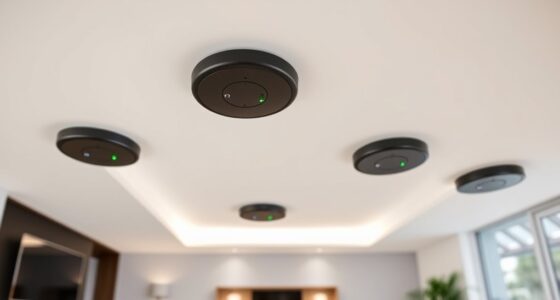
A wireless driveway alarm alerts you when movement is detected near an entrance without running signal wire along the drive. My best overall pick is the Wuloo Solar Wireless Driveway Alarm with 2 Motion Sensors, which pairs solar-powered sensors with coverage from two detection points. For a longer approach, the Hosmart Wireless Driveway Alarm advertises a half-mile range, while the HTZSAFE system with four sensors suits properties with several entry points. The main tradeoffs are sensor coverage, power and upkeep, signal range, and whether you want a plug-in or portable receiver. Read on for how the 15 options compare and which setup fits your driveway.

Get the latest gadgets delivered free with Prime
- Fast, free delivery on millions of items
- Prime Video, Amazon Music and more included
- Member-only deals all year
Complete the kit



Key Takeaways
- Two sensors are a useful starting point for coverage: Wuloo, 1byone, and eMACROS offer two-sensor configurations, while HTZSAFE‘s four-sensor kit is aimed at multiple approach points.
- Advertised range is not the same as reliable range on your property: Hosmart and several other models claim a half-mile reach, but buildings, terrain, and interference can reduce signal distance.
- Solar power reduces routine battery changes but does not remove placement limits: Solar models need suitable light and a sensor position that can still detect the intended approach.
- Receiver style changes daily convenience: Plug-in receivers suit a fixed indoor location, while portable or rechargeable receivers can be moved around the home.
- The strongest fit depends on the layout, not feature count alone: A single-sensor kit can suit one narrow entrance, while extra sensors matter more when a driveway branches or has multiple access points.
| Wuloo Solar Wireless Driveway Alarm with 2 Motion Sensors |  | Best Solar Pick for Two Approaches | Wireless range: Up to 1,760 feet | Motion detection range: Up to 30 feet | Included sensors: 2 | VIEW ON AMAZON | See Our Full Breakdown |
| Wireless Driveway Alarm with Motion Sensor and Receiver |  | Best for Large Expandable Systems | Wireless transmission range: Up to 1/2 mile (804.67 m; terrain dependent) | Motion detection range: 35–50 feet | System capacity: Up to 32 sensors and unlimited receivers | VIEW ON AMAZON | See Our Full Breakdown |
| Mighty Mule FM231 Wireless Driveway Alarm with 400 ft Range |  | Best for Vehicle-Only Alerts | Detection method: Buried electromagnetic sensor | Wireless range: Up to 400 feet | Power source: 2 AA batteries, not included | VIEW ON AMAZON | See Our Full Breakdown |
| Wireless Driveway Alarm with Motion Sensors |  | Best Two-Sensor Expandable Starter Kit | Transmission range: Up to 1/2 mile; varies with terrain | Motion detection range: 35–50 feet | Included components: 1 plug-in receiver and 2 motion sensors | VIEW ON AMAZON | See Our Full Breakdown |
| TECKNET Solar-Powered Wireless Driveway Alarm with RGB Alerts |  | Best for Customizable Visual Alerts | Sensor type: PIR motion sensor | Detection range: 16 feet at low sensitivity; 33 feet at high sensitivity | Signal transmission range: Up to 2,600 feet (1/2 mile) | VIEW ON AMAZON | See Our Full Breakdown |
| Hosmart Wireless Driveway Alarm with Motion Sensor, 1/2-Mile Range |  | Best for Flexible Alert Choices | Included: 1 receiver and 1 sensor | Maximum wireless range: Up to 1/2 mile in ideal conditions | Detection range: 30 feet | VIEW ON AMAZON | See Our Full Breakdown |
| Driveway Alarm – ½ Mile Long Range Motion Sensor – 1 Receiver + 2 Sensors |  | Best for Broad Detection Coverage | Included: 1 plug-in receiver and 2 sensors | Maximum wireless range: Up to 0.5 miles | Motion detection range: 35–50 feet | VIEW ON AMAZON | See Our Full Breakdown |
| 1byone Driveway Alarm with 2 PIR Sensors and Plug-in Receiver |  | Best for Customizable Indoor Alerts | Included: 2 PIR sensors and 1 plug-in receiver | Wireless range: Up to 1,000 feet | Motion detection range: Up to 24 feet | VIEW ON AMAZON | See Our Full Breakdown |
| Solar Driveway Alarm with Portable Rechargeable Receiver and 2 Solar Sensors |  | Best for Low-Maintenance, Wide-Area Coverage | Included: 1 receiver and 2 sensors | Maximum wireless range: Up to 3,000 feet in open conditions | Sensor detection range: Up to 55 feet | VIEW ON AMAZON | See Our Full Breakdown |
| HTZSAFE Wireless Driveway Alarm with 1 Receiver and 4 Motion Sensors |  | Best for Multi-Zone Expansion | Included components: 1 plug-in receiver; description says 2 sensors, while title says 4 | Maximum transmission range: Up to 0.5 miles | Motion detection range: 35–50 feet | VIEW ON AMAZON | See Our Full Breakdown |
| eMACROS 1/2 Mile Solar Wireless Driveway Alarm, 1 Receiver & 1 Sensor |  | Best for Long Driveways | Wireless range: Up to 2,640 feet | Sensor detection range: 20–30 feet | Power source: Solar-powered sensor | VIEW ON AMAZON | See Our Full Breakdown |
| FREETIM Wireless Driveway Alarm with Weatherproof Motion Sensor |  | Best for Adjustable Alerts | Wireless range: Up to 500 feet | Sensor detection range: 19–65 feet, unobstructed | Weather resistance: IP44 | VIEW ON AMAZON | See Our Full Breakdown |
| eMACROS Solar Wireless Driveway Alarm with 1 Receiver and 2 Sensors |  | Best for Two-Zone Coverage | Wireless range: Up to 2,600 feet in open areas | Detection range: Up to 30 feet high sensitivity; up to 20 feet low sensitivity | Power source: Solar-powered sensors | VIEW ON AMAZON | See Our Full Breakdown |
| FULNIX Driveway Alarm with Rechargeable Receiver and Solar Motion Sensor |  | Best for Rechargeable Convenience | Wireless range: Up to 3,000 feet in open, unobstructed conditions | Motion detection range: Up to 55 feet high sensitivity; up to 32 feet low sensitivity | Sensor power: Solar charging with USB-C backup | VIEW ON AMAZON | See Our Full Breakdown |
| 1byone Wireless Driveway Alarm with 1 Receiver and 2 Infrared Sensors |  | Best for Two Basic Alert Zones | Wireless range: Inconsistent listing: up to 1,000 feet in product content; maximum 300 feet in specifications | Detection range: Up to 24 feet | Included: 2 PIR sensors, 1 receiver, 4 wall plugs, 4 screws, and instruction manual | VIEW ON AMAZON | See Our Full Breakdown |
| driveway alarm wireless | Wireless range | Included |
|---|---|---|
| Wuloo Solar Wireless Driveway | Up to 1,760 feet | — |
| Wireless Driveway Alarm with M | — | — |
| Mighty Mule FM231 Wireless Dri | Up to 400 feet | — |
| Wireless Driveway Alarm with M | — | — |
| TECKNET Solar-Powered Wireless | — | — |
| Hosmart Wireless Driveway Alar | — | 1 receiver and 1 sensor |
| Driveway Alarm | — | 1 plug-in receiver and 2 sensors |
| 1byone Driveway Alarm with 2 P | Up to 1,000 feet | 2 PIR sensors and 1 plug-in receiver |
| Solar Driveway Alarm with Port | — | 1 receiver and 2 sensors |
| HTZSAFE Wireless Driveway Alar | — | — |
| eMACROS 1/2 Mile Solar Wireles | Up to 2,640 feet | 1 receiver and 1 sensor |
| FREETIM Wireless Driveway Alar | Up to 500 feet | 1 receiver and 1 sensor |
| eMACROS Solar Wireless Drivewa | Up to 2,600 feet in open areas | 1 receiver and 2 sensors |
| FULNIX Driveway Alarm with Rec | Up to 3,000 feet in open, unobstructed conditions | — |
| 1byone Wireless Driveway Alarm | Inconsistent listing: up to 1,000 feet in product content; maximum 300 feet in specifications | 2 PIR sensors, 1 receiver, 4 wall plugs, 4 screws, and instruction manual |
More Details on Our Top Picks
Wuloo Solar Wireless Driveway Alarm with 2 Motion Sensors
The Wuloo pairs two solar-powered sensors with a receiver, so it can watch more than one approach without starting with a single detection point. Its 1,760-foot stated wireless range is shorter than the 2,600 feet claimed for the TECKNET, but still gives buyers room to place the receiver away from the driveway. Solar charging cuts routine battery changes, while adjustable chimes, volume, and sensitivity help tailor alerts to the home. The tradeoff is a 30-foot detection limit, which may leave less time to react than the wider detection settings offered by some battery-powered systems. I’d choose this over the single-sensor TECKNET when two coverage points matter more than RGB alerts or maximum signal distance; skip it if a broad approach needs longer-range motion detection.
Pros:- Includes two sensors for covering separate approaches
- Solar charging with rechargeable lithium polymer batteries reduces routine battery replacement
- Weatherproof sensor design suits outdoor placement
- Adjustable chimes, volume, and sensitivity allow alert customization
Cons:- Motion detection is limited to 30 feet
- The stated wireless range is shorter than TECKNET’s 2,600-foot claim
- Expanding beyond the included sensors requires additional sensors
Best for: Homeowners who want two outdoor detection points and solar charging for a driveway with more than one entrance or approach.
Not ideal for: Buyers who need motion detection beyond 30 feet or want the longest stated wireless transmission range in this group.
- Wireless range:Up to 1,760 feet
- Motion detection range:Up to 30 feet
- Included sensors:2
- Expandable sensors:Up to 8 additional sensors
- Power source:Solar and rechargeable battery
- Battery type:Lithium polymer
- Battery life:Up to 24 months on a full charge
- Weather resistance:Weatherproof
Our verdict“Choose the Wuloo if you want two solar-powered coverage points, but pick a longer-detection option if vehicles need to be spotted earlier.”
Wireless Driveway Alarm with Motion Sensor and Receiver
This alarm’s standout is its capacity for up to 32 sensors and unlimited receivers, making it a flexible starting point for monitoring a driveway, gate, garage, and other areas from multiple listening points. The stated signal range reaches up to half a mile, though terrain can reduce it, and detection adjusts from 35 to 50 feet. Compared with the Wuloo, it offers a longer motion-detection range and much greater expansion capacity, but it includes only one sensor and requires three AA batteries that are not supplied. Its 35 melodies and four volume levels give more alert choices than a basic chime setup, but buyers should account for battery-powered sensor upkeep. I’d favor this over the Mighty Mule when detecting general movement and adding sensor zones matter more than vehicle-specific detection.
Pros:- Supports up to 32 sensors and unlimited receivers
- Adjustable detection range of 35–50 feet
- Up to half-mile stated transmission range
- Offers 35 melodies and four volume levels
Cons:- Includes only one motion sensor
- Three AA sensor batteries are not included
- Actual wireless range depends on terrain
Best for: Owners planning to monitor several gates, outbuildings, or driveway zones with a system that can grow to many sensors and receivers.
Not ideal for: Buyers who want a two-sensor kit out of the box, solar charging, or vehicle-only detection that can reduce alerts from pedestrians and animals.
- Wireless transmission range:Up to 1/2 mile (804.67 m; terrain dependent)
- Motion detection range:35–50 feet
- System capacity:Up to 32 sensors and unlimited receivers
- Sensor power:3 AA alkaline batteries, not included
- Receiver power:Plug-in
- Volume levels:4
- Melodies:35
- Operating temperature:-30°F to 150°F
Our verdict“Choose this system if expansion across many locations matters more than getting multiple sensors or solar power in the box.”
Mighty Mule FM231 Wireless Driveway Alarm with 400 ft Range
The Mighty Mule takes a different approach from the motion-sensing Wuloo and TECKNET: its buried electromagnetic sensor detects large metal objects such as vehicles, rather than movement from people or animals. That makes it a better fit for a driveway where false alerts from passing wildlife or pedestrians are a concern. The tradeoff is less flexibility: its wireless range is up to 400 feet, well below the half-mile claims of the expandable motion-sensor systems, and the sensor must be buried beside the driveway. It runs on two AA batteries, which are not included, and extra indoor receivers are sold separately. I’d choose this for focused vehicle detection, not broad outdoor monitoring; buyers who want simple surface mounting or coverage for gates and porches should prefer a motion-sensor kit.
Pros:- Electromagnetic detection is aimed at large metal objects such as vehicles
- Can reduce alerts from animals and pedestrians compared with PIR motion sensors
- Includes a low-battery indicator
- Supports additional indoor receivers
Cons:- Wireless range is up to 400 feet, shorter than the half-mile claims of several motion-sensor options
- Sensor requires burial next to the driveway
- Two AA batteries and additional receivers are not included
Best for: Homeowners who mainly need an alert when a vehicle enters a driveway and want to reduce triggers from pedestrians or animals.
Not ideal for: Buyers who want to detect people at a gate or porch, need a long receiver-to-sensor distance, or prefer not to bury a sensor.
- Detection method:Buried electromagnetic sensor
- Wireless range:Up to 400 feet
- Power source:2 AA batteries, not included
- Alert type:Audible chime
- Installation:Bury sensor next to driveway
- Expansion:Supports additional indoor receivers, sold separately
- Dimensions:6 × 3 × 13 inches
- Weight:1.5 pounds
Our verdict“Pick the Mighty Mule for vehicle-focused driveway alerts, but choose a motion-sensor system for broader coverage of people and outdoor areas.”
Wireless Driveway Alarm with Motion Sensors
This kit includes two motion sensors and one plug-in receiver, giving it a stronger out-of-box coverage setup than the single-sensor alarm in the same lineup. Its stated transmission range reaches half a mile, and it can expand to 32 sensors with unlimited receivers, so it can grow beyond the driveway. Detection spans 35–50 feet, with two sensitivity settings, four volume levels, and 35 melodies. Compared with the Wuloo, this model offers a longer detection range and more expansion potential, but trades solar charging for three AA batteries per sensor, which are not included. The range also varies with terrain, so the claim is not a guarantee for every property. I’d pick it for buyers who want two zones and room to add more, but not for anyone seeking low-maintenance solar operation.
Pros:- Includes two motion sensors and a plug-in receiver
- Supports expansion to 32 sensors and unlimited receivers
- Detection range reaches 35–50 feet with two sensitivity settings
- Provides four volume levels and 35 melodies
Cons:- Each sensor requires three AA batteries, not included
- Wireless range varies with terrain
- No solar charging is specified
Best for: Homeowners who want two motion-sensing zones immediately and may later add coverage for gates, garages, or other locations.
Not ideal for: Buyers who prioritize solar charging, dislike replacing AA batteries, or need a wireless range guaranteed across difficult terrain.
- Transmission range:Up to 1/2 mile; varies with terrain
- Motion detection range:35–50 feet
- Included components:1 plug-in receiver and 2 motion sensors
- Sensitivity settings:2
- Sensor power:3 AA 1.5V alkaline batteries per sensor, not included
- Expandable system:Up to 32 sensors and unlimited receivers
- Receiver alerts:4 volume levels and 35 melodies
- Operating temperature:-30°F to 150°F
Our verdict“Choose this as a flexible two-zone starter kit if you accept battery upkeep in exchange for broader detection and expansion.”
TECKNET Solar-Powered Wireless Driveway Alarm with RGB Alerts
The TECKNET stands apart with RGB visual alerts, four alert zones, and 36 chimes, giving the receiver more ways to distinguish activity than the Wuloo’s adjustable chime setup. Its solar-powered PIR sensor reduces routine battery changes, while the rotating bracket helps aim detection toward an approach. Signal transmission is stated at up to 2,600 feet, the longest claim among these five, but motion detection tops out at 33 feet on high sensitivity and falls to 16 feet on low. That shorter detection reach may matter more than the headline signal distance if a vehicle approaches quickly. Compared with the two-sensor Wuloo, TECKNET offers more alert customization and greater stated signal range, but the supplied data lists a battery as not included and specifies one unit. It suits a single alert zone better than multi-point coverage.
Pros:- Solar-powered PIR sensor reduces routine battery replacement
- Up to 2,600 feet of stated signal transmission range
- RGB visual alerts, four alert zones, and 36 melodies
- Rotating bracket supports sensor aiming
Cons:- Motion detection reaches only 33 feet at high sensitivity and 16 feet at low
- Product data lists the battery as not included
- Listed unit count is one, so multi-point coverage may require another sensor
Best for: Buyers who want solar charging, visual receiver alerts, and distinct alert zones for one driveway approach.
Not ideal for: Households needing multiple detection points in one kit or motion detection beyond 33 feet.
- Sensor type:PIR motion sensor
- Detection range:16 feet at low sensitivity; 33 feet at high sensitivity
- Signal transmission range:Up to 2,600 feet (1/2 mile)
- Power source:Solar-powered
- Alert options:36 melodies, 5 volume levels, 4 alert zones, RGB lights
- Operating temperature:-15°C to 50°C
- Mounting type:Wall mount with rotating bracket
Our verdict“Choose the TECKNET for a solar-powered single-zone setup with visual alert cues, not for broad detection distance or two-sensor coverage.”
Hosmart Wireless Driveway Alarm with Motion Sensor, 1/2-Mile Range
The Hosmart is a sensible pick for buyers who want a long-range link and room to build out coverage later, without starting with several sensors. Its included sensor detects people, vehicles, and large animals within 30 feet, while 38 selectable chimes make it easier to distinguish an alert from other household sounds. Compared with the two-sensor 1byone, Hosmart gives you a longer advertised transmission range and supports unlimited receivers, but it starts with one sensor and has a slightly narrower detection range than some alternatives. The weather-resistant sensor has an adjustable mount, useful for aiming coverage toward an approach rather than a busy area. The tradeoff is that its half-mile range assumes ideal conditions, and four AA batteries are not included.
Pros:- Detects people, vehicles, and large animals
- Supports up to four sensors and unlimited receivers
- Offers 38 chime choices
- Weather-resistant sensor has an adjustable mount
Cons:- Only one sensor is included
- Four AA sensor batteries must be supplied separately
- The advertised half-mile wireless range applies in ideal conditions
Best for: Homeowners who want to monitor one driveway approach now and add sensors or receivers as their coverage needs grow.
Not ideal for: Buyers who need two monitored zones immediately or want a sensor with a detection area wider than 30 feet.
- Included:1 receiver and 1 sensor
- Maximum wireless range:Up to 1/2 mile in ideal conditions
- Detection range:30 feet
- Expandable capacity:Up to 4 sensors and unlimited receivers
- Chimes:38 choices
- Sensor power:4 AA batteries, not included
- Sensor battery life:Approximately 1 year
- Receiver power:AC adapter or AA batteries
- Warranty:2 years
Our verdict“Choose Hosmart if you value customizable chimes and flexible receiver expansion more than having multiple sensors in the box.”
Driveway Alarm – ½ Mile Long Range Motion Sensor – 1 Receiver + 2 Sensors
For a driveway with a wide approach or a gate set back from the house, this kit pairs two included sensors with adjustable 35–50-foot motion detection. That broader sensing span gives it an advantage over the Hosmart, whose listed detection range is 30 feet, and means you can cover two points without buying another sensor first. Its stated half-mile transmission range is also suited to larger properties, though terrain and obstacles can reduce it. Expansion to up to 32 sensors makes it more adaptable than the Hosmart’s four-sensor limit. The compromises are practical: batteries are not included, and the product notes possible false alerts in extreme weather. The supplied description specifies one plug-in receiver, but gives limited detail on chime choices and alert customization compared with the 1byone.
Pros:- Includes two sensors for monitoring separate areas
- Adjustable motion detection spans 35–50 feet
- Expandable to as many as 32 sensors
- Plug-in receiver avoids needing receiver batteries
Cons:- Three AA batteries are required and not included
- Actual transmission range depends on terrain and obstructions
- Extreme weather may trigger false alarms
Best for: Owners of larger properties who need two monitored zones and want adjustable detection sensitivity across a broad approach.
Not ideal for: Buyers who want detailed chime or alert-mode options documented, or who cannot tolerate occasional weather-related false alerts.
- Included:1 plug-in receiver and 2 sensors
- Maximum wireless range:Up to 0.5 miles
- Motion detection range:35–50 feet
- Detection sensitivity:Adjustable
- Expandable capacity:Up to 32 sensors
- Sensor batteries:3 AA batteries required, not included
- Mounting:Wall mount
- Receiver:Plug-in
Our verdict“Pick this kit over the single-sensor Hosmart when wider detection and two starting coverage points matter most.”
1byone Driveway Alarm with 2 PIR Sensors and Plug-in Receiver
The 1byone is a better fit for a compact driveway, porch, or gate where two sensors and flexible indoor alerts matter more than maximum detection distance. Its 24-foot motion range is shorter than the 35–50 feet listed for the two-sensor half-mile alarm, so it is less suited to catching movement far from the sensor. In return, the receiver offers sound, LED flash, or both, plus three volume levels; that can help in a noisy room or when a silent visual cue is preferable. The 1,000-foot transmission range is also much shorter on paper than the half-mile systems in this group, making placement worth checking for a large or obstructed property. It pairs with up to five sensors per receiver, but the sensors use AAA batteries.
Pros:- Includes two weatherproof PIR sensors
- Offers sound, LED flash, or combined alerts
- Three volume levels span 25–80 dB
- Each receiver supports up to five sensors
Cons:- Motion detection reaches only up to 24 feet
- Wireless range is up to 1,000 feet, shorter than the half-mile options
- Sensors require AAA batteries
Best for: Households monitoring a short driveway, porch, or gate that want two sensors and a visual alert option indoors.
Not ideal for: Owners of long or obstructed driveways who need a half-mile-class transmission range or motion detection beyond 24 feet.
- Included:2 PIR sensors and 1 plug-in receiver
- Wireless range:Up to 1,000 feet
- Motion detection range:Up to 24 feet
- Chimes:36 choices
- Alert modes:Sound, LED flash, or sound and LED flash
- Volume:25–80 dB, 3 levels
- Sensor power:Alkaline AAA batteries
- Expansion:Up to 5 sensors per receiver
- Warranty:24 months
Our verdict“Choose the 1byone for nearby entry points where adjustable sound and visual alerts are more useful than long-range coverage.”
Solar Driveway Alarm with Portable Rechargeable Receiver and 2 Solar Sensors
This solar-powered set stands apart for buyers who want two outdoor sensing points without routine disposable-battery changes. The sensors use solar charging with USB-C backup, and the portable rechargeable receiver is specified for up to 30 days of use. Its 55-foot detection range exceeds the Hosmart’s 30 feet and the 1byone’s 24 feet, which can help cover a broad approach; the 3,000-foot wireless claim is intended for open conditions, not every property layout. The receiver adds 37 chimes, ten volume levels, and LED alerts, giving it more alert adjustment than the basic plug-in setup of the half-mile two-sensor alarm. It can also expand to 84 compatible sensors. The tradeoff is that real battery life varies with use and conditions, and the long range can shrink around buildings or terrain.
Pros:- Solar sensors include USB-C charging backup
- Portable receiver is specified for up to 30 days of use
- Detection range reaches up to 55 feet
- Expandable to up to 84 compatible sensors
Cons:- The 3,000-foot range applies to open, unobstructed conditions
- Battery life varies with usage and typical conditions
- Requires compatible sensors for expansion
Best for: Property owners seeking two outdoor sensors, rechargeable power, and portable alerts across a broad but relatively open site.
Not ideal for: Buyers who need predictable range through dense obstructions or prefer a simple plug-in receiver with no charging routine.
- Included:1 receiver and 2 sensors
- Maximum wireless range:Up to 3,000 feet in open conditions
- Sensor detection range:Up to 55 feet
- Sensor power:Solar charging with USB-C backup
- Sensor battery:2,500 mAh rechargeable
- Receiver battery:5,000 mAh
- Sensor weather resistance:IP65
- Expandable capacity:Up to 84 compatible sensors
- Receiver alerts:37 chimes, 10 volume levels, and LED alerts
Our verdict“Choose this model over the plug-in 1byone when rechargeable power, portable alerts, and a wider detection area take priority.”
HTZSAFE Wireless Driveway Alarm with 1 Receiver and 4 Motion Sensors
HTZSAFE’s strongest case is its expansion capacity: the system supports up to 32 sensors and unlimited receivers, making it a plausible base for monitoring a driveway, gate, and other entry points. Its stated 35–50-foot motion range is broader than the Hosmart’s 30 feet, and four volume levels with 35 melodies provide useful alert adjustments. There is, however, a significant listing discrepancy: the title promises four sensors, while the description says the package includes two sensors. I would verify the included count before choosing it over the clearly specified two-sensor alarm in this group. Range is listed at up to half a mile, but terrain affects performance, and the product data gives conflicting operating-temperature information. Sensor batteries are also not included.
Pros:- Supports up to 32 sensors and unlimited receivers
- Motion detection range is listed as 35–50 feet
- Offers four volume levels and 35 melodies
- Weather-resistant sensors suit indoor or outdoor monitoring
Cons:- Title says four sensors, but the description says two are included
- AA sensor batteries are not included
- Wireless range varies with terrain, and operating-temperature details conflict
Best for: Buyers planning a multi-zone alarm setup who are willing to confirm the sensor bundle before ordering.
Not ideal for: Anyone who needs a guaranteed four-sensor kit out of the box or depends on a clearly stated operating-temperature range.
- Included components:1 plug-in receiver; description says 2 sensors, while title says 4
- Maximum transmission range:Up to 0.5 miles
- Motion detection range:35–50 feet
- Expandable capacity:Up to 32 sensors and unlimited receivers
- Sensor batteries:3 AA alkaline batteries per sensor, not included
- Volume levels:4
- Melodies:35
- Mounting:Wall mount
- Operating temperature:Description lists -30 to 150 °F; product information lists 10 °F
Our verdict“Consider HTZSAFE for a scalable multi-zone setup, but confirm the included sensor count before comparing it with other two-sensor kits.”
eMACROS 1/2 Mile Solar Wireless Driveway Alarm, 1 Receiver & 1 Sensor
For a long property where a standard wireless link may fall short, this eMACROS system pairs a stated 2,640-foot transmission range with a solar-powered sensor, avoiding routine battery swaps when the panel gets adequate light. Its 20–30-foot detection zone covers the area near the sensor, while the long transmission range helps carry that alert back to the receiver. Compared with the FREETIM Wireless Driveway Alarm, which lists up to 500 feet of wireless range, this is a better fit for a distant gate or outbuilding. The tradeoff is that the solar sensor needs a suitable spot, and its detection area is much shorter than its wireless link. It can also grow to support up to 64 additional sensors, but careful placement and mounting height matter for reliable coverage.
Pros:- Wireless range is listed up to 2,640 feet.
- Solar-powered sensor reduces routine battery changes when it receives enough light.
- Expandable to support up to 64 additional sensors and unlimited receivers.
- Wiring-free, wall-mount installation suits remote locations.
Cons:- Sensor detects movement only within a 20–30-foot area.
- Solar charging may be less dependable in shaded or low-light locations.
- Mounting position and height require care to cover the intended approach.
Best for: Owners of long driveways, barns, or remote gates who want a solar-powered sensor and a long-range alert link.
Not ideal for: Buyers placing the sensor in heavy shade or wanting app notifications, since solar charging depends on light and this is a standalone alarm.
- Wireless range:Up to 2,640 feet
- Sensor detection range:20–30 feet
- Power source:Solar-powered sensor
- Frequency:433 MHz
- Temperature range:-20°C to 60°C
- Mounting type:Wall mount
- Included:1 receiver and 1 sensor
- Expansion:Up to 64 additional sensors and unlimited receivers
Our verdict“Choose this eMACROS model for a long driveway with a sunny sensor location, but skip it if the sensor must sit in deep shade.”
FREETIM Wireless Driveway Alarm with Weatherproof Motion Sensor
The FREETIM is the most tuneable choice here for buyers who want to shape both the sensor’s coverage and the sound at home. Its 19–65-foot adjustable detection range and 360-degree swivel mount make it easier to aim at a driveway entrance or walkway than the fixed-size coverage described for the eMACROS 1/2 Mile Solar Wireless Driveway Alarm. A receiver with 60 ringtones and four volume levels also offers more alert customization than a simple sound-and-light setup like the 1byone model. The compromise is reach: its wireless link is listed at up to 500 feet, far shorter than eMACROS’s half-mile claim, and obstacles or weather can reduce practical performance. The outdoor sensor is IP44-rated and uses three AAA batteries, so owners need to plan for battery upkeep.
Pros:- Adjustable detection range from 19 to 65 feet.
- 360-degree swivel mount helps direct the sensor toward an approach.
- 60 ringtone choices and four volume levels.
- Supports up to eight sensors per receiver.
Cons:- Wireless range is listed at up to 500 feet, below the eMACROS models’ long-range claims.
- Sensor requires three AAA batteries, which are not specified as included.
- Weather and obstacles can reduce detection or transmission performance.
Best for: Households that want to adjust sensor aim, detection distance, and chime style for a driveway or side entrance within receiver range.
Not ideal for: Owners of very long or obstructed driveways who need a longer wireless link or want a solar-powered sensor.
- Wireless range:Up to 500 feet
- Sensor detection range:19–65 feet, unobstructed
- Weather resistance:IP44
- Sensor mount:360-degree swivel; pole mount
- Ringtones:60
- Volume levels:4
- Power:Battery powered; 3 AAA batteries
- Included:1 receiver and 1 sensor
- System capacity:Up to 8 sensors per receiver
Our verdict“Pick FREETIM if alert customization and adjustable sensor positioning matter more than long-distance wireless reach.”
eMACROS Solar Wireless Driveway Alarm with 1 Receiver and 2 Sensors
Two sensors in the box make this eMACROS kit a practical pick for monitoring two approaches, such as a driveway entrance and a side path, without buying a second sensor right away. Both sensors are solar powered, and the system lists up to 2,600 feet of wireless range in open areas, putting it in a similar long-link category to the single-sensor eMACROS 1/2 Mile Solar Wireless Driveway Alarm. The key difference is coverage out of the box: this version gives you two detection points, while the other provides a single sensor. High and low sensitivity settings let you trade coverage distance for fewer unwanted alerts, but the system has no Wi-Fi, Bluetooth, or app support. Its long range is also specified for open conditions, so buildings and terrain can limit placement options.
Pros:- Includes two solar-powered motion sensors and one receiver.
- Wireless range is listed up to 2,600 feet in open areas.
- High and low sensitivity settings help balance detection reach and unwanted alerts.
- Standalone setup needs no Wi-Fi or trenching.
Cons:- No app, Wi-Fi, or Bluetooth connectivity.
- The maximum wireless range applies to open areas and may be reduced by obstructions.
- Sensor detection is limited to up to 30 feet on high sensitivity or 20 feet on low.
Best for: Property owners who want two solar-powered detection points for separate entrances or approaches and have a clear receiver path.
Not ideal for: Buyers who want smartphone alerts or need a wireless system whose range is not dependent on open-area conditions.
- Wireless range:Up to 2,600 feet in open areas
- Detection range:Up to 30 feet high sensitivity; up to 20 feet low sensitivity
- Power source:Solar-powered sensors
- Included:1 receiver and 2 sensors
- Frequency:433 MHz
- Temperature range:-20°C to 60°C
- Connectivity:Standalone; no Wi-Fi, Bluetooth, or app support
- Mounting type:Wall mount
Our verdict“Choose this kit over the single-sensor eMACROS model when you need two monitored zones from the start and can work with a standalone system.”
FULNIX Driveway Alarm with Rechargeable Receiver and Solar Motion Sensor
FULNIX stands apart by making both ends of the system rechargeable: the outdoor sensor has solar charging with USB-C backup, and the receiver is portable rather than limited to a plug-in location. Its up-to-3,000-foot open-condition wireless range is the longest stated here, while adjustable detection reaches up to 55 feet on high sensitivity. That combination suits buyers who want to carry alerts around the house and place the sensor away from an outlet. Compared with the FREETIM Wireless Driveway Alarm, FULNIX offers a longer stated link, more volume levels, and IP65 weather resistance. The tradeoff is that the 3,000-foot claim assumes an unobstructed path; receiver runtime is also specified at about 30 days using roughly 10 alerts a day, so heavier alert traffic may mean more frequent charging.
Pros:- Solar charging with USB-C backup for the sensor.
- Portable receiver is rechargeable and lists up to 30 days of runtime under stated alert conditions.
- Adjustable detection reaches up to 55 feet on high sensitivity.
- IP65 weather resistance and capacity for up to 84 compatible sensors.
Cons:- The 3,000-foot wireless range is specified for open, unobstructed conditions.
- Receiver runtime depends on alert frequency; the stated estimate assumes about 10 alerts per day.
- No Wi-Fi or app support for remote smartphone notifications.
Best for: People who want a portable rechargeable receiver, a solar-assisted outdoor sensor, and room to add many sensors.
Not ideal for: Buyers who prefer a plug-in receiver or need guaranteed long-range performance through buildings, trees, or uneven terrain.
- Wireless range:Up to 3,000 feet in open, unobstructed conditions
- Motion detection range:Up to 55 feet high sensitivity; up to 32 feet low sensitivity
- Sensor power:Solar charging with USB-C backup
- Sensor battery capacity:2,500 mAh
- Receiver battery capacity:5,000 mAh
- Receiver battery life:Up to 30 days at approximately 10 alerts per day
- Weather resistance:IP65
- Chimes and volume:37 chimes; 10 volume levels
- Maximum compatible sensors:84
Our verdict“Choose FULNIX if you want rechargeable portability and broad expansion, provided you can place it with a relatively clear wireless path.”
1byone Wireless Driveway Alarm with 1 Receiver and 2 Infrared Sensors
This 1byone kit is the straightforward choice when two detection points matter more than solar power or fine-tuned sensitivity. It includes two infrared sensors and one receiver, letting you cover a driveway and another approach right away. The receiver can signal with sound, an LED flash, or both, which is useful if an audible chime is not always appropriate. Compared with the eMACROS Solar Wireless Driveway Alarm with 1 Receiver and 2 Sensors, 1byone adds visual alert options but does not list solar power or comparable long-range transmission. Its sensor detection tops out at 24 feet, and the provided wireless-range information conflicts: one listing says up to 1,000 feet while another says 300 feet. That uncertainty makes it a weaker choice for a distant gate; I’d favor it for nearer, clearly defined zones.
Pros:- Includes two infrared sensors and one receiver.
- Offers sound, LED flash, or combined alerts.
- Can support up to five sensors per receiver.
- Wall-mount setup includes screws and wall plugs.
Cons:- Wireless range is inconsistent in the supplied information: up to 1,000 feet in one description and 300 feet in the specifications.
- Sensor detection range is limited to up to 24 feet.
- Battery-powered sensors require ongoing battery maintenance.
Best for: Buyers who want two basic motion-alert zones and the option to use a visual signal instead of, or alongside, sound.
Not ideal for: Owners of long driveways who need a dependable stated transmission range or a sensor with more than 24 feet of detection reach.
- Wireless range:Inconsistent listing: up to 1,000 feet in product content; maximum 300 feet in specifications
- Detection range:Up to 24 feet
- Included:2 PIR sensors, 1 receiver, 4 wall plugs, 4 screws, and instruction manual
- Power source:Battery powered
- Alert options:Sound, LED flash, or both
- Expandable sensors:Up to 5 per receiver
- Mounting type:Wall mount
- Warranty:2 years
Our verdict“Choose 1byone for two nearby alert zones and flexible sound-or-light signals, but avoid relying on it for a long-range driveway link.”

How We Picked
I ranked these alarms by how well their stated setup fits common driveway needs: sensor coverage, power approach, receiver usability, and claimed wireless range. I gave more weight to practical differences buyers can act on, such as the number of sensors included and whether the receiver is plug-in or portable, than to range claims alone. Solar models earned consideration for reduced battery maintenance, but that benefit depends on having an appropriate sensor location.
The order reflects the breadth of use each configuration appears to support, along with the tradeoffs that could limit it. Multi-sensor kits rank well for wide or branching approaches; longer-range claims matter most on properties where the receiver sits far from the sensor. I also accounted for setup simplicity and likely upkeep, while treating advertised range as a specification rather than a guarantee of performance through obstacles. Since the product names do not establish detection-zone adjustment, weather ratings, or compatibility between sensors and receivers, buyers should verify those details before choosing.
Factors to Consider When Choosing Driveway Alarm Wireless
Before choosing a kit, match the alarm to the shape of your driveway and the place where you will hear it. A longer advertised range cannot compensate for a sensor aimed at the wrong approach, and extra sensors add little if one well-placed unit covers the entrance. These factors help narrow the choices beyond the feature list.
Map the approach before choosing sensor count
Start by marking where a vehicle first enters the property and where you need to receive the alert. A straight, narrow drive may need only one sensor, while a fork, rear entrance, or separate gate may benefit from a multi-sensor kit such as HTZSAFE’s four-sensor configuration. More sensors can create overlapping alerts if their detection areas cover the same road or footpath. Consider whether people, pets, or passing traffic could trigger the unit before adding coverage points. Do not assume every kit lets you identify which sensor triggered the receiver; check that feature if separate alerts would help. A simple sketch of the approach can prevent buying extra sensors that do not solve a real coverage gap.
Treat wireless range as a starting point, not a promise
Range figures are usually most useful for comparing claims between models, not predicting performance at your property. Walls, metal siding, trees, slopes, and nearby wireless equipment can weaken a signal between a sensor and receiver. A half-mile claim may appeal for a long rural drive, but a shorter-range unit can be the better fit when the receiver sits near the entrance with fewer obstacles. Measure the route from the intended sensor position to the room where you need the alert, including the path through the building. If the manufacturer provides placement guidance or a return window, use it to reduce the risk of a poor signal fit. Avoid placing the receiver out of earshot simply because the package lists a long range.
Choose power around sunlight and maintenance access
Solar sensors can cut battery changes, but their usefulness depends on available daylight and sensor placement. A shaded tree line or north-facing wall may make a solar model less convenient than its name suggests. Battery-powered options can be easier to position where sunlight is limited, though they call for periodic checks and replacements. Think about how often you can reach the sensor safely, especially if it sits near a gate or at the far end of a long drive. Ask whether the solar unit stores enough charge for darker periods and whether the receiver has a separate power requirement. The right power choice is the one that suits the actual mounting spot and maintenance routine.
Pick a receiver you will notice and use
A fixed plug-in receiver works well when there is a dependable indoor outlet in a room where someone spends time. A portable or rechargeable receiver can be moved between rooms, which is helpful if household routines change throughout the day. Before buying, check whether the receiver needs to stay connected to power, how alerts are signaled, and whether volume or tone settings can be adjusted. A bright or multicolor alert can be useful where a sound may be missed, but it will not help if the receiver is kept in another part of the house. For a workshop, detached office, or large home, consider whether you need more than one receiver and confirm that the system supports it. Receiver convenience can matter as much as sensor range once the alarm is installed.
Check detection behavior and weather details
Motion sensors do not recognize intent: depending on placement and detection settings, people, animals, or movement beyond the driveway may trigger an alert. Aim the sensor across the path vehicles use rather than directly along a busy road, and look for guidance on detection angle and adjustment. The product name alone may not confirm resistance to rain, snow, or temperature swings, so verify the specific weather rating and mounting instructions. A sensor mounted too low may be blocked by plants or snow, while one mounted too high may miss the target area. Keep access clear for seasonal trimming and battery or panel checks. A test after installation can reveal nuisance triggers before you rely on the alarm.
Pay for coverage you can use, not feature count
Extra sensors, solar charging, long-range claims, and portable receivers each add value only when they address a specific problem on your property. A two-sensor kit may be a better fit than a larger bundle if you have one entrance and a clear receiver location. Conversely, a multi-entry property can justify additional sensors even if the initial setup takes more planning. Compare what is included with what you would need to add later, and check whether sensors are compatible with the same receiver. Also confirm the alert type and available settings rather than assuming all wireless alarms work alike. Choosing around a clear use case can prevent both undercoverage and unused equipment.
Frequently Asked Questions
Will a half-mile-range driveway alarm work through my house walls?
Not necessarily. The advertised figure generally describes a favorable signal path, while walls, metal structures, terrain, trees, and nearby electronics can reduce the usable distance. Measure from the sensor’s intended position to the receiver location, including the route through the home. If possible, place the receiver near an exterior wall facing the sensor rather than deep inside the building. Treat the stated range as a comparison point and confirm placement guidance before relying on it.
Should I choose a solar sensor or a battery-powered one?
Choose solar when the sensor can receive suitable daylight and you want fewer routine battery changes. A shaded driveway edge or a hard-to-reach mounting point may make a battery-powered design easier to maintain. Check whether the solar unit has stored power for low-light periods and whether its panel can face the sun without pointing the sensor away from the approach. Also account for how safely you can reach the unit for cleaning or service. The best power source depends on the mounting site, not just the convenience promised by the product name.
How many motion sensors do I need for a long or branching driveway?
For one clear entrance, a single sensor may be enough if it can detect movement at the point where you want an alert. A long driveway may need more than one detection point if you want notice both near the entrance and closer to the house. Branches, gates, and separate approaches are stronger reasons to add sensors than length alone. Before buying a larger kit, check whether each sensor can pair with the same receiver and whether the receiver identifies which one triggered it. Aim to cover distinct approaches rather than overlapping the same area.
Can a wireless driveway alarm avoid alerts from pets or passing traffic?
No motion alarm can be assumed to distinguish a visitor from every animal or moving object. The sensor’s aim, mounting height, detection area, and any sensitivity controls affect how often alerts occur. Position it across the driveway entrance and away from a public road, sidewalk, or tree line where movement could create nuisance alerts. Check the manufacturer’s instructions for detection limits and adjustment options before installation. If false alerts would be disruptive, choose a mounting spot that narrows the area the sensor can see.
Do I need a portable receiver, or is a plug-in receiver enough?
A plug-in receiver is a practical choice when someone is usually near a fixed indoor location with an available outlet. A portable or rechargeable receiver suits households where people move between rooms, work in a garage, or need to carry the alert with them. Check how the receiver is powered and whether its alert can be heard or seen in the locations where it will be used. A portable unit still needs charging, while a fixed one can be missed if it is installed far from daily activity. Choose based on where you need to receive alerts rather than on portability alone.
Conclusion
For a balanced starting point, I recommend the Wuloo Solar Wireless Driveway Alarm with 2 Motion Sensors as the best overall fit in this lineup, with solar power and two detection points. The best value depends on your layout: a simpler single-sensor kit is the sensible choice for one clear entrance, while the 1byone Driveway Alarm with 2 PIR Sensors and Plug-in Receiver is worth a look when a straightforward indoor receiver suits your routine. For a premium-style setup focused on broad coverage, consider the HTZSAFE system with four motion sensors; its extra sensors make the most sense on properties with several approaches. Beginners may prefer a basic two-sensor arrangement rather than a larger system that takes more placement planning. If your priority is advertised distance, compare the Hosmart and other half-mile-range options, but choose only after checking the signal path and receiver location at your property.