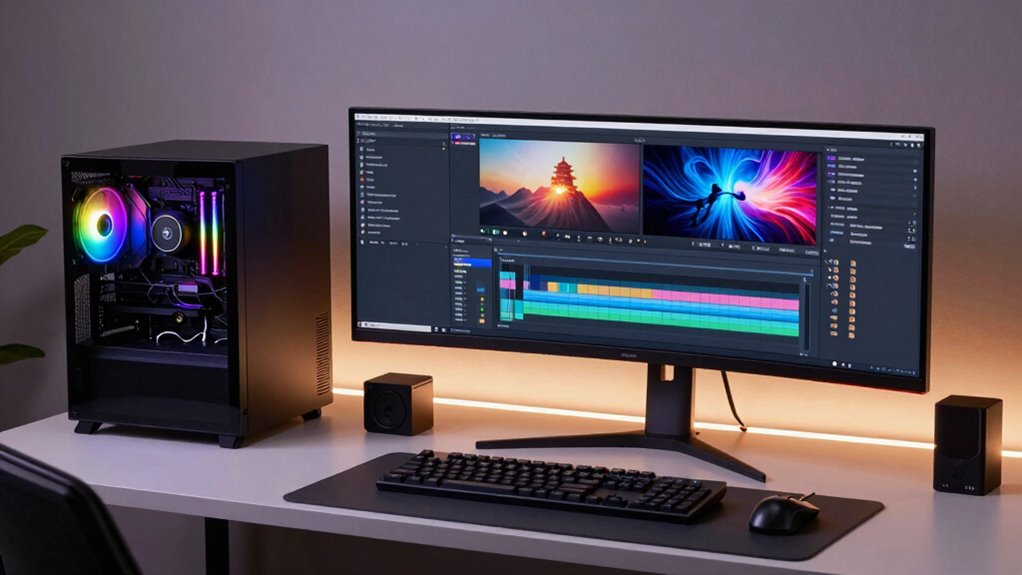

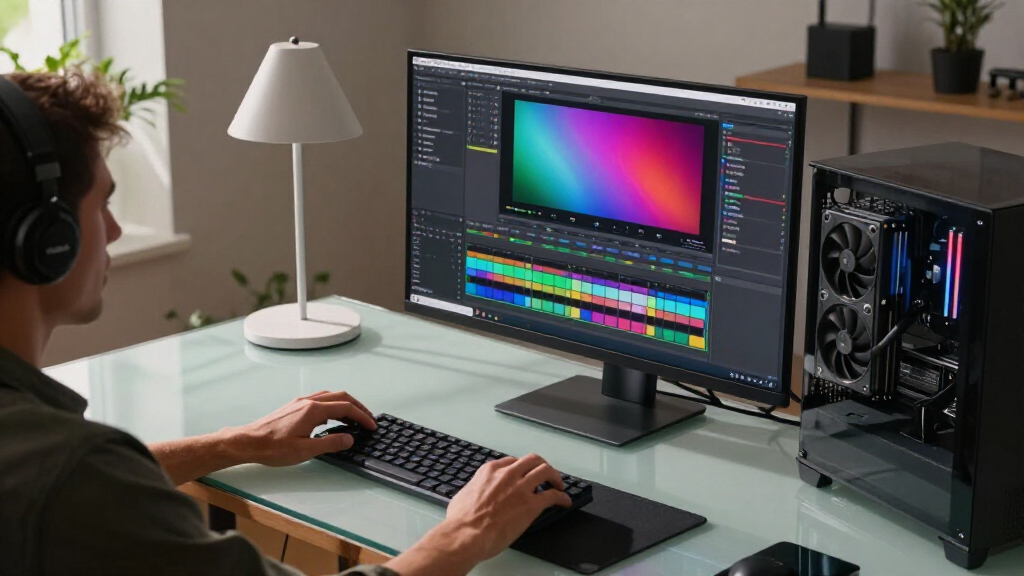
Choosing the right computer for 4K video editing involves balancing powerful performance with reliability and future-proofing. The Dell Precision T5820 Workstation stands out as the best overall due to its exceptional processing power and expandability. For those on a budget, the GEEKOM A6 Mini PC offers a compact yet capable option, while the CPU Solutions VidCore 4K Video Editing PC provides high-end performance for professional workflows. All these options involve tradeoffs: higher-end machines tend to be more expensive but offer better rendering speeds and multitasking, whereas budget builds might struggle with intensive edits. Continue reading for a detailed breakdown of each choice and how to pick the best computer for your 4K editing needs.
Complete the kit



Key Takeaways
- High RAM and GPU power are critical for smooth 4K editing, especially with complex timelines or multiple layers.
- Professional workstations like the Dell Precision excel in expandability and reliability but come at a premium price.
- Mini PCs such as the GEEKOM A6 can suit mobile editors or space-constrained setups without sacrificing too much performance.
- Balancing CPU and GPU is essential; a high-end CPU alone won’t guarantee fast 4K rendering without a capable GPU.
- Future-proofing matters—investing in DDR5 RAM and PCIe 4.0 SSDs can extend the relevance of your system for years.
| Dell Optiplex 7050 SFF Desktop PC with Intel i7-7700, 32GB RAM, 1TB SSD, Windows 11 Pro |  | Best Compact Budget for 4K Editing | Model: Dell Optiplex 7050 SFF | Processor: Intel i7-7700 3.60 GHz | Memory: 32GB DDR4 | VIEW ON AMAZON | See Our Full Breakdown |
| CPU Solutions VidCore 4K Video Editing PC with Core Ultra 9 285K, 64GB DDR5 RAM, 2000GB NVMe SSD, Windows 11 Pro, Quadro RTX 2000 ADA 16GB |  | Best High-End Workstation for 4K and 8K Editing | Processor: Intel Core Ultra 9 285K, 24 Cores, Turbo up to 5.7 GHz | Graphics Card: Quadro RTX 2000 ADA, 16GB GDDR6 ECC | RAM: 64GB DDR5 | VIEW ON AMAZON | See Our Full Breakdown |
| CPU Solutions Express 4K Video Editing PC, Ryzen 9 9950X, 64GB DDR5, 2TB NVMe SSD, Quadro RTX 2000ADA 16GB, Windows 11 Pro |  | Best Balanced High-Performance 4K Editing Workstation | Processor: Ryzen 9 9950X, 16-core, up to 5.7 GHz | Graphics Card: Quadro RTX 2000ADA, 16GB | RAM: 64GB DDR5 | VIEW ON AMAZON | See Our Full Breakdown |
| Dell Pro Tower Plus Core Ultra 7 256GB 32GB DDR5 1TB SSD Desktop Computer |  | Best Mid-Range for Versatile 4K Editing | Processor: Intel Core Ultra 7 265 | Memory: 32GB DDR5 | Storage: 1TB PCIe NVMe SSD | VIEW ON AMAZON | See Our Full Breakdown |
| GEEKOM A6 Mini PC, Ryzen 7 6800H, 16GB DDR5 Upgradable RAM, 1TB PCIe 4.0 SSD |  | Best Compact Powerhouse for Mobile 4K Editing | Processor: Ryzen 7 6800H | RAM: 16GB DDR5, upgradable to 64GB | Storage: 1TB PCIe 4.0 SSD | VIEW ON AMAZON | See Our Full Breakdown |
| Dell Precision T5820 Workstation with Intel Xeon W-2133, 128GB RAM, Nvidia Quadro P400, 3.8TB SSD |  | Best Overall for Professional 4K Video Editing | Processor: Intel Xeon W-2133 6 Core 3.6GHz | RAM: 128GB DDR4 | Graphics Card: Nvidia Quadro P400 2GB | VIEW ON AMAZON | See Our Full Breakdown |
| BOSGAME P3 Plus Mini PC, AMD Ryzen 7 7840HS, 16GB DDR5 RAM, 1TB NVMe SSD |  | Best Compact 4K Editing PC with High-End Gaming Capabilities | Processor: AMD Ryzen 7 7840HS | Graphics: AMD Radeon 780M | RAM: 16GB DDR5 | VIEW ON AMAZON | See Our Full Breakdown |
| Dell Pro Tower Plus Core Ultra 7 256GB 32GB DDR5 Business Desktop |  | Best Business Desktop for 4K Video Editing with Security Features | Processor: Intel Core Ultra 7 265 | RAM: 32GB DDR5 | Storage: 512GB PCIe NVMe SSD | VIEW ON AMAZON | See Our Full Breakdown |
| NIMO 17.3″ AI Laptop with AMD Ryzen AI 9 HX 370, 64GB RAM, 4TB SSD |  | Best High-Performance Portable for 4K and AI Workloads | Processor: AMD Ryzen AI 9 HX 370 | Graphics: Radeon 890M | Display: 17.3-inch FHD, 144Hz | VIEW ON AMAZON | See Our Full Breakdown |
| Dell Tower Desktop with Intel Core Ultra 7-265, 32GB RAM, Windows 11 Home |  | Best Budget-Friendly Tower for 4K Video Editing | Processor: Intel Core Ultra 7 265 | RAM: 32GB DDR5 | Storage: 512GB PCIe NVMe SSD | VIEW ON AMAZON | See Our Full Breakdown |
| CPU Solutions VidCore Core Ultra 9 Video Editing PC, 4K/8K, 3D Modeling, 24-Core, 64GB RAM, 2TB NVMe SSD, Quadro RTX 2000 ADA |  | Best Overall for Professional 4K/8K Editing and 3D Workflows | Processor: Intel Core Ultra 9 24-core, 5.7 GHz Turbo | RAM: 64GB | Storage: 2TB NVMe SSD | VIEW ON AMAZON | See Our Full Breakdown |
| Gaming PC Desktop Core i9-14900HX, RTX 5060 Ti 8GB, 1TB NVMe SSD |  | Best Value for Versatile 4K Editing and Gaming Performance | Processor: Intel Core i9-14900HX, 24 Cores, up to 5.8GHz | Graphics Card: NVIDIA GeForce RTX 5060 Ti 8GB | Memory: 16GB DDR5 | VIEW ON AMAZON | See Our Full Breakdown |
| NIMO 17.3 FHD AI Gaming Laptop, AMD Ryzen 7 8745HS, 16GB DDR5, 1TB SSD, Radeon 780M |  | Best Portable 4K Editing Solution for Creators on the Move | Processor: AMD Ryzen 7 8745HS | Display: 17.3-inch 4K | RAM: 16GB DDR5 | VIEW ON AMAZON | See Our Full Breakdown |
| computers for 4k video editing | Processor | Storage | RAM |
|---|---|---|---|
| Dell Optiplex 7050 SFF Desktop | Intel i7-7700 3.60 GHz | 1TB SSD | — |
| CPU Solutions VidCore 4K Video | Intel Core Ultra 9 285K, 24 Cores, Turbo up to 5.7 GHz | 2000GB NVMe SSD | 64GB DDR5 |
| CPU Solutions Express 4K Video | Ryzen 9 9950X, 16-core, up to 5.7 GHz | 2TB NVMe SSD | 64GB DDR5 |
| Dell Pro Tower Plus Core Ultra | Intel Core Ultra 7 265 | 1TB PCIe NVMe SSD | — |
| GEEKOM A6 Mini PC | Ryzen 7 6800H | 1TB PCIe 4.0 SSD | 16GB DDR5, upgradable to 64GB |
| Dell Precision T5820 Workstati | Intel Xeon W-2133 6 Core 3.6GHz | 3.8TB SSD (4x 960GB SATA SSD) | 128GB DDR4 |
| BOSGAME P3 Plus Mini PC | AMD Ryzen 7 7840HS | 1TB PCIe 4.0 NVMe SSD | 16GB DDR5 |
| Dell Pro Tower Plus Core Ultra | Intel Core Ultra 7 265 | 512GB PCIe NVMe SSD | 32GB DDR5 |
| NIMO 17.3" AI Laptop with AMD | AMD Ryzen AI 9 HX 370 | 4TB SSD | 64GB DDR5 |
| Dell Tower Desktop with Intel | Intel Core Ultra 7 265 | 512GB PCIe NVMe SSD | 32GB DDR5 |
| CPU Solutions VidCore Core Ult | Intel Core Ultra 9 24-core, 5.7 GHz Turbo | 2TB NVMe SSD | 64GB |
| Gaming PC Desktop Core i9-1490 | Intel Core i9-14900HX, 24 Cores, up to 5.8GHz | 1TB NVMe SSD | — |
| NIMO 17.3 FHD AI Gaming Laptop | AMD Ryzen 7 8745HS | 1TB SSD | 16GB DDR5 |
More Details on Our Top Picks
Dell Optiplex 7050 SFF Desktop PC with Intel i7-7700, 32GB RAM, 1TB SSD, Windows 11 Pro
This Dell Optiplex 7050 SFF stands out for delivering solid performance at a budget-friendly price, especially compared to the high-end workstations. Its Intel i7-7700 processor paired with 32GB RAM and a fast 1TB SSD ensures smooth multitasking and quick file access, making it suitable for mid-level 4K editing tasks. However, its small form factor limits upgrade options, and the absence of a dedicated GPU could hinder more demanding workflows. Compared with the CPU Solutions VidCore, this option is less future-proof but offers a more affordable entry point for editors who are just starting or working on less complex projects.
Pros:- Affordable entry point with decent specs for 4K editing
- Quick storage access thanks to 1TB SSD
- Ample 32GB RAM for multitasking and multitasking
Cons:- Small form factor limits upgrade possibilities
- No dedicated graphics card may impact rendering performance
- Renewed condition may vary in appearance
Best for: Budget-conscious freelancers or small studios needing capable 4K editing on a tight budget
Not ideal for: Professionals working on complex 8K projects or requiring extensive future upgrades
- Model:Dell Optiplex 7050 SFF
- Processor:Intel i7-7700 3.60 GHz
- Memory:32GB DDR4
- Storage:1TB SSD
- Operating System:Windows 11 Pro
- Ports:USB 3.0/2.0, HDMI, DisplayPort, Ethernet, Audio I/O
Our verdict“A practical choice for budget-conscious editors handling moderate 4K projects with limited upgrade needs.”
CPU Solutions VidCore 4K Video Editing PC with Core Ultra 9 285K, 64GB DDR5 RAM, 2000GB NVMe SSD, Windows 11 Pro, Quadro RTX 2000 ADA 16GB
This desktop shines for professionals tackling complex 4K, 8K, or 3D projects, especially when compared with the more modest Dell Optiplex. Its powerful Core Ultra 9 285K processor with 24 cores and a turbo up to 5.7 GHz, combined with 64GB DDR5 RAM, ensures smooth handling of intensive workflows. The Quadro RTX 2000 ADA graphics card with 16GB VRAM provides excellent rendering and GPU-accelerated tasks, making it ideal for demanding editing and visual effects. Its 2TB NVMe SSD offers rapid data access, but the high-end specs come with a hefty price tag and larger footprint that requires ample space. This makes it suited for studios or professionals with a need for maximum performance and future-proofing.
Pros:- Exceptional multi-core processor with high clock speed
- Massive 64GB DDR5 RAM for demanding multitasking
- Professional-grade Quadro RTX 2000 ADA GPU with 16GB VRAM
- Fast 2TB NVMe SSD for large project files
Cons:- High cost limits accessibility for casual users
- Large size demands significant workspace
- High power consumption
Best for: Professional editors working on complex 4K/8K projects, 3D rendering, or demanding post-production workflows
Not ideal for: Casual editors or those on a tight budget who don’t require top-tier specs
- Processor:Intel Core Ultra 9 285K, 24 Cores, Turbo up to 5.7 GHz
- Graphics Card:Quadro RTX 2000 ADA, 16GB GDDR6 ECC
- RAM:64GB DDR5
- Storage:2000GB NVMe SSD
- Power Supply:750W
- Connectivity:10 USB ports, 4 Mini DisplayPort outputs
Our verdict“An ideal choice for high-end professional editing environments demanding maximum processing power and graphics capability.”
CPU Solutions Express 4K Video Editing PC, Ryzen 9 9950X, 64GB DDR5, 2TB NVMe SSD, Quadro RTX 2000ADA 16GB, Windows 11 Pro
This Ryzen 9 9950X-based system offers a compelling mix of power and expandability, especially when compared with the less customizable Dell Pro Tower Plus. The 16-core Ryzen processor with up to 5.7 GHz boosts rendering and export speeds, while 64GB DDR5 RAM supports heavy multitasking and large project files. The Quadro RTX 2000ADA graphics card with 16GB VRAM ensures high-quality visuals and GPU-accelerated effects. Its 2TB NVMe SSD provides rapid data access, but the absence of explicit upgrade options and the high price tag could be limiting for some. This machine is well-suited for professionals who need a balance of raw power, future upgrade potential, and reliability.
Pros:- Powerful Ryzen 9 9950X with high clock speeds
- Large, upgradable 64GB DDR5 RAM
- Professional-grade Quadro RTX 2000 ADA GPU
- Fast 2TB NVMe SSD for large data handling
Cons:- High price point may be prohibitive
- Limited information on upgrade paths
- Requires technical know-how for upgrades
Best for: Experienced content creators and small studios needing high performance with room for future upgrades
Not ideal for: Beginners or casual users seeking a more affordable, plug-and-play system
- Processor:Ryzen 9 9950X, 16-core, up to 5.7 GHz
- Graphics Card:Quadro RTX 2000ADA, 16GB
- RAM:64GB DDR5
- Storage:2TB NVMe SSD
- Motherboard:AMD B650 Chipset
- Connectivity:10 USB ports, 7 USB 3.2, 4 Mini DisplayPort
Our verdict“A versatile, high-performance workstation ideal for experienced editors who want power and room for future expansion.”
Dell Pro Tower Plus Core Ultra 7 256GB 32GB DDR5 1TB SSD Desktop Computer
This Dell Pro Tower Plus offers a compelling middle ground, especially when compared to the premium CPU Solutions options. Its Core Ultra 7 265 processor with 20 cores provides robust multi-threaded performance suitable for many 4K editing tasks. The 32GB DDR5 RAM and 1TB SSD ensure fast workflows, while support for three 4K displays enhances productivity. However, its integrated graphics limit high-end rendering tasks, and lacking WiFi might mean additional setup. For users who don’t need the utmost power but want reliable performance, this model balances features and cost effectively, although it’s less suited for intensive 8K workflows or future expansion.
Pros:- Strong 20-core Intel processor with ample multitasking power
- Supports three 4K monitors for increased workspace
- Fast DDR5 RAM and NVMe SSD for quick data handling
- Includes Windows 11 Pro with security features
Cons:- No dedicated GPU limits rendering and effects capability
- Lacks built-in WiFi, requiring wired Ethernet
- Limited upgrade options for graphics
Best for: Small businesses or advanced amateurs needing reliable 4K editing without high-end GPU requirements
Not ideal for: Pro studios or professionals working on intensive 8K projects or requiring dedicated GPU acceleration
- Processor:Intel Core Ultra 7 265
- Memory:32GB DDR5
- Storage:1TB PCIe NVMe SSD
- Display Outputs:3x DisplayPort 1.4a
- Ports:USB-C, USB 3.2, USB 2.0, Ethernet
- Operating System:Windows 11 Pro
Our verdict“A solid, dependable choice for small teams or pros needing reliable 4K editing with moderate GPU demands.”
GEEKOM A6 Mini PC, Ryzen 7 6800H, 16GB DDR5 Upgradable RAM, 1TB PCIe 4.0 SSD
The GEEKOM A6 Mini PC stands out for offering high-performance specs in a small, portable form factor, especially compared to bulkier towers like the CPU Solutions or Dell Pro Tower. Its Ryzen 7 6800H processor with 16GB DDR5 RAM (upgradable to 64GB) and PCIe 4.0 SSD provides fast processing and swift data access, suitable for heavy multitasking and editing. Supporting four 4K displays, it maximizes workspace without taking up much desk real estate. Despite its impressive specs, the lack of a dedicated GPU limits high-end rendering and gaming use, and stock shortages could impact availability. This mini PC makes a strong case for mobile professionals or those with limited space who need capable 4K editing performance.
Pros:- Powerful Ryzen 7 6800H processor with high TDP
- Supports up to four 4K displays for maximum productivity
- Upgradable RAM and fast PCIe 4.0 SSD
- Durable aluminum chassis with sleek design
Cons:- No dedicated GPU for high-end rendering or gaming
- Limited stock availability due to demand
- Price may be higher than comparable mini PCs
Best for: Mobile content creators or small offices needing powerful yet compact 4K editing systems
Not ideal for: Enthusiasts seeking dedicated gaming or intensive GPU-accelerated tasks
- Processor:Ryzen 7 6800H
- RAM:16GB DDR5, upgradable to 64GB
- Storage:1TB PCIe 4.0 SSD
- Display Support:Quad 4K monitors
- Connectivity:USB4, dual HDMI, Wi-Fi 6E
- Chassis:Aluminum alloy
Our verdict“A versatile, portable powerhouse suited for professionals needing high performance in a compact form.”
Dell Precision T5820 Workstation with Intel Xeon W-2133, 128GB RAM, Nvidia Quadro P400, 3.8TB SSD
This workstation stands out for its powerful Xeon W-2133 processor and massive 128GB RAM, making it ideal for demanding 4K editing workflows. Unlike the more compact options like the BOSGAME P3 Plus, it offers superior expandability and professional-grade graphics, though at the cost of size and price. Compared with the NIMO 17.3″ AI Laptop, this desktop provides more raw performance and storage capacity, but less portability. Its large form factor and specialized hardware make it less suited for small or mobile setups, but for a dedicated editing station, it delivers exceptional reliability and throughput.
Pros:- High-performance Intel Xeon W-2133 processor ideal for rendering
- 128GB RAM for handling complex timelines and multitasking
- Multiple SSDs deliver fast read/write speeds for large files
- Professional Nvidia Quadro P400 graphics for accurate color and stability
Cons:- Renewed product may have limited warranty or support
- Large size may not fit in small or shared workspaces
Best for: Video editors working in a dedicated workstation environment needing maximum power and expandability
Not ideal for: Editors needing portability or working within tight space constraints
- Processor:Intel Xeon W-2133 6 Core 3.6GHz
- RAM:128GB DDR4
- Graphics Card:Nvidia Quadro P400 2GB
- Storage:3.8TB SSD (4x 960GB SATA SSD)
- Power Supply:950W
Our verdict“This is best suited for dedicated, high-end editing stations where maximum performance outweighs size and cost.”
BOSGAME P3 Plus Mini PC, AMD Ryzen 7 7840HS, 16GB DDR5 RAM, 1TB NVMe SSD
This mini PC offers powerful AMD Ryzen 7 7840HS and Radeon 780M graphics, making it a strong choice for editors who need a compact yet capable machine. While it supports up to three 4K monitors like the Dell Pro Tower Plus, its smaller form factor makes it ideal for space-constrained environments. Compared with the Dell Tower, it provides better portability and quieter operation, but it may require upgrades to meet larger storage needs, as it ships with only 1TB SSD. Its high-end specs make it a versatile option for those balancing power and size, though it could be limited by thermal constraints during extended intensive editing.
Pros:- Powerful AMD Ryzen 7 7840HS CPU for multitasking and editing
- Supports triple 4K monitors for immersive editing workflows
- Fast DDR5 RAM and expandable storage for future needs
- Compact, quiet design perfect for small offices or shared workspaces
Cons:- Out of the box, only 1TB SSD may be insufficient for large projects
- Potential thermal limits under prolonged heavy workloads
Best for: Creative professionals who need a portable yet powerful 4K editing setup in tight spaces
Not ideal for: Workflows requiring extensive internal storage or future hardware expansion
- Processor:AMD Ryzen 7 7840HS
- Graphics:AMD Radeon 780M
- RAM:16GB DDR5
- Storage:1TB PCIe 4.0 NVMe SSD
- Display Support:Triple 4K
Our verdict“This mini PC is ideal for mobile or space-limited creators who need strong 4K performance without sacrificing portability.”
Dell Pro Tower Plus Core Ultra 7 256GB 32GB DDR5 Business Desktop
The Dell Pro Tower Plus offers a 20-core Core Ultra 7 265 processor and 32GB DDR5 RAM, making it well-suited for professional editing workflows, especially in business environments. Its support for three 4K monitors via DisplayPort ensures efficient multitasking. In comparison to the less powerful Dell Tower with Core Ultra 7, this model emphasizes security and upgradeability, making it a strong choice for enterprise users. However, the lack of a dedicated graphics card and limited storage capacity could hinder performance for very large 4K projects. Its streamlined design and security features are appealing, but it may require additional investments in GPU and storage for optimal editing performance.
Pros:- Powerful 20-core CPU with AI acceleration for rendering tasks
- Supports three 4K displays for efficient multitasking
- Easy to upgrade with tool-less access and modern design
- Built-in security features for enterprise environments
Cons:- No dedicated graphics card, limiting GPU-intensive tasks
- Limited out-of-the-box storage for large video files
Best for: Business users needing a reliable, secure workstation for 4K editing and multitasking
Not ideal for: Enthusiasts or creators requiring dedicated GPU power or extensive storage out of the box
- Processor:Intel Core Ultra 7 265
- RAM:32GB DDR5
- Storage:512GB PCIe NVMe SSD
- Display Support:3x 4K via DisplayPort 1.4a
- Operating System:Windows 11 Pro
Our verdict“This desktop excels for business environments needing reliable multitasking and security, but may fall short for intensive GPU-based editing without upgrades.”
NIMO 17.3″ AI Laptop with AMD Ryzen AI 9 HX 370, 64GB RAM, 4TB SSD
This high-end 17.3-inch laptop combines the power of AMD Ryzen AI 9 HX 370 with Radeon 890M graphics, making it a compelling option for on-the-go 4K editing and AI tasks. Its large FHD display with a 144Hz refresh rate provides smooth visuals, surpassing smaller screens for detailed editing. Unlike the desktop options, this laptop offers portability and integrated high-end GPU, though its high-performance components could lead to increased heat and shorter battery life. The 4TB SSD and dual M.2 slots ensure ample and expandable storage, but no dedicated GPU beyond the Radeon 890M might limit some GPU-intensive workflows. It’s ideal for those who need mobility without sacrificing significant power.
Pros:- Powerful AMD Ryzen AI 9 HX processor with AI acceleration
- Large 17.3-inch FHD display with 144Hz for smooth editing
- Expandable RAM and dual SSD slots for future upgrades
- High-end Radeon 890M graphics for gaming and creative tasks
Cons:- High power consumption and potential thermal challenges
- Limited battery life during intensive use
Best for: Mobile creators who need high-performance 4K editing and AI capabilities on the go
Not ideal for: Users requiring extended battery life or extensive internal storage without upgrades
- Processor:AMD Ryzen AI 9 HX 370
- Graphics:Radeon 890M
- Display:17.3-inch FHD, 144Hz
- RAM:64GB DDR5
- Storage:4TB SSD
- Memory Slots:Dual DDR5 up to 64GB
Our verdict“This laptop offers a mobile powerhouse for 4K editing and AI workloads, ideal for creators who need portability without compromising on performance.”
Dell Tower Desktop with Intel Core Ultra 7-265, 32GB RAM, Windows 11 Home
This Dell tower offers a balance of performance and affordability with a Core Ultra 7-265 processor and 32GB RAM, making it suitable for serious 4K editing without the premium price tag. Its support for three 4K monitors via DisplayPort 1.4 makes it a flexible choice for multitasking. Compared with the more expensive Pro Tower Plus, it provides comparable processing power, but without the advanced security features or extensive upgrade options. Its mid-range specs make it a sensible entry point, although users should consider adding a dedicated GPU if their editing involves GPU-accelerated effects.
Pros:- Strong 20-core CPU for rendering and multitasking
- Supports three 4K monitors for efficient workspace management
- Easy to upgrade with tool-less access
- Affordable entry point for high-quality 4K editing
Cons:- Lacks a dedicated graphics card, limiting GPU-accelerated workflows
- Limited storage capacity out of the box for large files
Best for: Budget-conscious creators seeking a capable editing desktop without overspending
Not ideal for: Power users who require extensive GPU or storage upgrades for large projects
- Processor:Intel Core Ultra 7 265
- RAM:32GB DDR5
- Storage:512GB PCIe NVMe SSD
- Display Support:3x 4K via DisplayPort 1.4
- Operating System:Windows 11 Home
Our verdict“A solid choice for creators on a budget who need reliable 4K editing capabilities with room to upgrade.”
CPU Solutions VidCore Core Ultra 9 Video Editing PC, 4K/8K, 3D Modeling, 24-Core, 64GB RAM, 2TB NVMe SSD, Quadro RTX 2000 ADA
This high-end workstation stands out for its formidable 24-core Intel Core Ultra 9 processor and professional-grade Quadro RTX 2000 ADA graphics, making it ideal for demanding 4K and 8K editing, especially when compared to more gaming-focused options like the Gaming PC Desktop Core i9-14900HX. While its premium build and extensive connectivity support multi-monitor setups and complex workflows, the tradeoff lies in its high cost and larger footprint, which may be less suitable for smaller studios or those on a tight budget. The system’s liquid cooling ensures stable long-term performance, and the 64GB RAM provides ample memory for multitasking and rendering projects. Overall, this PC suits professional creators needing maximum reliability and power, but it’s overkill for casual or beginner editors.
Pros:- Powerful 24-core processor with high turbo speed for rendering
- Professional-grade Quadro RTX 2000 ADA graphics for demanding tasks
- Extensive connectivity including 4 monitor support at 8K resolution
- Efficient liquid cooling for sustained high performance
Cons:- High cost, making it less accessible for casual users
- Large and heavy tower requiring significant space
Best for: Professional video editors and 3D artists who require top-tier performance and multiple display support in a dedicated workspace
Not ideal for: Budget-conscious hobbyists or those with limited space, as its size and price could be prohibitive
- Processor:Intel Core Ultra 9 24-core, 5.7 GHz Turbo
- RAM:64GB
- Storage:2TB NVMe SSD
- Graphics Card:Quadro RTX 2000 ADA, 16GB
- Cooling System:All-in-one liquid cooler
- Monitor Support:Up to 4 monitors, 7680 x 4320 at 60Hz
Our verdict“This PC is best suited for professionals who need uncompromising power and reliability for intensive 4K and 8K workflows.”
Gaming PC Desktop Core i9-14900HX, RTX 5060 Ti 8GB, 1TB NVMe SSD
This gaming-oriented desktop offers a Core i9-14900HX processor with 24 cores and a turbo up to 5.8GHz, making it a solid choice for those seeking high-performance multitasking and rendering, especially when compared to more workstation-focused options like the CPU Solutions VidCore Ultra 9. Its RTX 5060 Ti 8GB GPU handles 4K editing smoothly and supports gaming, but it might fall short for intensive 3D modeling or multi-display setups that demand professional graphics. The 16GB DDR5 RAM and 1TB NVMe SSD ensure fast load times, although upgradeability isn’t highlighted, which could limit future expansion. This pick balances performance and price, making it suitable for serious hobbyists or semi-professionals who need flexibility without the workstation price tag.
Pros:- High-core count with turbo up to 5.8GHz for fast rendering
- Powerful RTX 5060 Ti GPU for 4K editing and gaming
- Fast DDR5 RAM and 1TB NVMe SSD for quick workflows
- Supports 4K resolution and multiple connectivity options
Cons:- Limited upgrade options for future expansion
- Potentially high power consumption and heat output
Best for: Enthusiast video editors and gamers who want a capable machine for 4K workflows and casual 3D work at a more accessible price point
Not ideal for: High-end professional 3D artists or those needing multi-monitor support at ultra-high resolutions, due to its GPU and potential upgrade limits
- Processor:Intel Core i9-14900HX, 24 Cores, up to 5.8GHz
- Graphics Card:NVIDIA GeForce RTX 5060 Ti 8GB
- Memory:16GB DDR5
- Storage:1TB NVMe SSD
- Display Resolution:3840×2160
- Connectivity:Wi-Fi 6, HDMI, DisplayPort
Our verdict“This PC offers a compelling mix of performance and affordability for serious 4K creators who don’t need the full professional-grade setup.”
NIMO 17.3 FHD AI Gaming Laptop, AMD Ryzen 7 8745HS, 16GB DDR5, 1TB SSD, Radeon 780M
The NIMO 17.3 FHD AI Gaming Laptop combines mobility with power, featuring a Ryzen 7 8745HS and integrated Radeon 780M graphics that handle 4K editing and AI tasks well for a laptop. Compared to desktop options like the CPU Solutions VidCore Ultra 9, it sacrifices some raw power but gains portability and convenience, making it ideal for creators who need to work remotely or on the go. Its 17.3-inch 4K display and flexible 180° hinge foster collaboration and quick edits in any environment. However, battery life can be limited during intensive sessions, and the integrated graphics may struggle with very demanding 3D projects or high-end gaming at max settings. This laptop is perfect for mobile professionals who prioritize versatility over absolute performance.
Pros:- Powerful AMD Ryzen 7 8745HS processor suitable for AI and 4K editing
- High-resolution 4K display with 180° hinge for easy collaboration
- Lightweight and portable at just over 2kg
- Versatile connectivity including USB4 and SD card reader
Cons:- Limited battery life during intensive tasks
- Integrated Radeon graphics may not handle very demanding 3D projects or maxed-out gaming
Best for: Remote creators and mobile professionals who need a capable yet portable machine for 4K editing and light AI work
Not ideal for: Power users requiring maximum rendering speed or extensive multi-monitor setups, due to its integrated graphics and battery limitations
- Processor:AMD Ryzen 7 8745HS
- Display:17.3-inch 4K
- RAM:16GB DDR5
- Storage:1TB SSD
- Graphics:Radeon 780M
- Connectivity:USB4, HDMI 2.1, SD card reader
Our verdict“This laptop excels for creators who need to work in different locations without sacrificing too much performance for portability.”
How We Picked
I evaluated these computers based on their performance specifically for 4K video editing, considering CPU and GPU capabilities, RAM size, storage speed, and expandability. Usability, build quality, and reliability were also key factors, especially for professional workflows. Systems were ranked to reflect their value for different user priorities—whether for high-end editing, budget-conscious setups, or portability. The selection includes a mix of workstations, gaming PCs, and mini PCs to cover a broad range of needs, with a focus on real-world editing performance rather than pure specs alone.Factors to Consider When Choosing Computers For 4k Video Editing
When selecting a computer for 4K video editing, understanding the core components and their impact on performance is essential. Beyond raw specs, factors like expandability, system reliability, and future-proofing can significantly influence your editing experience. Avoiding common pitfalls—such as underestimating RAM needs or choosing a GPU that isn’t VRAM-rich enough—can save time and frustration. This guide covers critical considerations to help you make an informed decision tailored to your workflow and budget.CPU Power and Core Count
The CPU determines how quickly your system can process rendering, encoding, and multitasking. For 4K editing, a high-core-count processor like AMD Ryzen 9 or Intel Core i7/i9 is advisable because it reduces render times and handles complex timelines more efficiently. Avoid CPUs with fewer cores if your workflow involves 3D rendering or effects, as they can bottleneck performance. Balancing CPU with other components is key—overinvesting in CPU without a capable GPU may limit playback and real-time editing speeds.
GPU Capabilities
A dedicated GPU with ample VRAM is essential for smooth playback and real-time effects in 4K editing. Nvidia’s Quadro or RTX series and AMD’s Radeon Pro or RX cards are popular choices for professional editing, offering hardware acceleration for common editing software. Be cautious of mid-tier GPUs with insufficient VRAM; they can cause lag and reduce editing fluidity. For budget builds, integrated graphics are rarely enough, making a dedicated GPU a worthwhile investment for serious editing tasks.
Memory and Storage
At least 32GB of RAM is recommended for 4K workflows, with 64GB or more ideal for large projects or multi-camera edits. Faster RAM, like DDR5, improves overall system responsiveness. Storage speed also impacts workflow—NVMe SSDs provide rapid read/write speeds that significantly cut down project loading, rendering, and exporting times. Combining a large SSD for active projects with additional HDD storage for archives offers both speed and capacity, preventing bottlenecks during intensive sessions.
Expandability and Future-Proofing
Choosing a system with extra RAM slots, multiple PCIe slots, and easy storage upgrades extends its lifespan. Future-proof components like PCIe 4.0 SSDs and DDR5 RAM ensure compatibility with upcoming hardware. Avoid systems with limited upgrade paths, which can force costly replacements sooner than expected. Think about your growth potential—if your projects become more complex, a flexible system saves money and effort long-term.
Build Quality and Reliability
High-quality construction reduces noise and heat, which are important for long editing sessions. Reliable brands with good support can minimize downtime during critical projects. While premium models cost more, they often include better cooling, quieter operation, and longer warranties. Budget options might save money initially but can lead to maintenance issues or system failures that disrupt your workflow.
Frequently Asked Questions
Can I use a gaming PC for 4K video editing?
Yes, a gaming PC with a high-end GPU and a fast CPU can handle 4K editing effectively, especially if it includes ample RAM and SSD storage. Gaming systems often have powerful graphics cards and robust cooling solutions designed for demanding tasks, making them suitable for editing workflows. However, they might lack professional certifications or specific expandability options found in workstations, which could matter for some professional editors. Still, for many users, a high-performance gaming PC offers excellent value for 4K editing needs.
Is a workstation worth the extra cost for 4K editing?
Workstations provide enhanced reliability, better build quality, and expandability, making them a worthwhile investment for professional editors or those working on large, complex projects. They often include certified hardware and optimized drivers that ensure stability during intensive tasks. However, for casual or hobbyist editors, a high-end consumer PC can deliver comparable performance at a lower price. The decision depends on your workflow demands and whether long-term dependability justifies the higher price.
How much RAM do I need for 4K video editing?
For smooth 4K editing, a minimum of 32GB of RAM is recommended, especially for complex projects or multi-layer timelines. If you frequently work with multi-camera footage or 3D effects, 64GB or more may be necessary to avoid slowdowns. Insufficient RAM can lead to lag and longer rendering times, so investing in ample memory ensures your system can handle large files and multitasking without frustration. Always check if your chosen system allows easy RAM upgrades for future needs.
Should I prioritize CPU or GPU for 4K editing?
Both CPU and GPU are vital for efficient 4K editing, but their importance varies depending on your software and workflow. The CPU handles general processing, effects, and encoding, so a fast, multi-core processor is essential. The GPU accelerates rendering, playback, and effects processing, especially in applications like Adobe Premiere Pro or DaVinci Resolve. Ideally, you want a balanced system where neither component bottlenecks the other. For most editors, investing in both high-quality CPU and GPU yields the best results.
What storage setup is best for 4K video editing?
Using an NVMe SSD as your primary drive significantly reduces load times and speeds up rendering and exporting. For active projects, a large NVMe SSD (at least 1TB) is ideal, providing quick access to high-resolution files. For storage of finished projects and archives, traditional HDDs or larger SATA SSDs are more cost-effective. A tiered storage approach ensures your editing workflow remains fast and organized, preventing data bottlenecks during intensive editing sessions.
Conclusion
For those seeking the best overall performance and reliability, the Dell Precision T5820 Workstation makes a compelling choice, especially for professional editors. Budget-conscious users or mobile editors might lean toward the GEEKOM A6 Mini PC or similar compact systems without sacrificing too much speed. For beginners or casual editors, a high-performance gaming PC can suffice, offering a balance of cost and capability. If future expandability and long-term stability are priorities, investing in a workstation or premium system pays off. Ultimately, your choice should align with your project complexity, budget, and workflow needs.