
The Anker SOLIX PS400 Bifacial 400W is my best overall pick for pairing a portable panel with a power station, balancing high output with a design that can collect light from both sides. For more capacity, the ZOUPW 480W Bifacial Foldable Panel stands out, while the ZOUPW 100W Foldable Panel is a more manageable choice for lighter setups. The main tradeoffs are panel output versus portability, and advertised wattage versus the power station’s actual input limits. Connector compatibility, sunlight, and setup space also affect how much useful power reaches the station. Read on for the full comparison and guidance on choosing a panel that fits your equipment and routine.

Get the latest gadgets delivered free with Prime
- Fast, free delivery on millions of items
- Prime Video, Amazon Music and more included
- Member-only deals all year
Complete the kit



Key Takeaways
- The Anker SOLIX PS400 takes the overall lead because its 400W bifacial design offers a strong balance of output and added rear-side light collection.
- Higher wattage does not automatically mean a better match: the ZOUPW 480W and 450W panels can suit larger stations, but buyers need to check their station’s solar input limits first.
- Two 200W panels offer a different kind of flexibility: the Callsun set can be easier to arrange around shade or limited ground space than one large panel, though it calls for more setup.
- Portable 100W models trade charging speed for easier handling: the ZOUPW and FlexSolar options make more sense for compact stations and modest loads than for fast replenishment.
- The lineup separates by use, not wattage alone: the Renogy and ZOUPW 200W panels occupy a middle ground, while the CTOLITY 400W is aimed at buyers who want substantial output in a foldable format.
| ZOUPW 200W Portable Solar Panel |  | Best for Connector Flexibility | Maximum power: 200 watts | Conversion efficiency: 23.5% | Output voltage: 20.16 volts | VIEW ON AMAZON | See Our Full Breakdown |
| Anker SOLIX PS400 Bifacial 400W Portable Solar Panel |  | Best Premium 400W Pick | Model: AS340 | Maximum power: 400 watts | Cell design: Bifacial N-type | VIEW ON AMAZON | See Our Full Breakdown |
| ZOUPW 480W Bifacial Foldable Portable Solar Panel, N-Type 16BB |  | Best for Maximum Portable Output | Maximum power: 480 watts | Cell type: A+ monocrystalline N-Type 16BB | Conversion efficiency: Over 25% | VIEW ON AMAZON | See Our Full Breakdown |
| CTOLITY 400W Foldable Portable Solar Panel |  | Best for a Straightforward 400W Setup | Maximum power: 400 watts | Output voltage: 40 volts DC in specifications; title also states 36V | Conversion efficiency: 23.4% | VIEW ON AMAZON | See Our Full Breakdown |
| ZOUPW 100W Foldable Portable Solar Panel |  | Best Compact Starter Panel | Maximum power: 100 watts | Cell efficiency: 23.5% | Output voltage: 20.16 volts | VIEW ON AMAZON | See Our Full Breakdown |
| Callsun 400W N-Type Bifacial Solar Panel Set (2 × 200W) |  | Best for Fixed or Semi-Permanent Setups | Total maximum power: 400 W | Panel configuration: 2 × 200 W | Cell type: N-type monocrystalline, bifacial | VIEW ON AMAZON | See Our Full Breakdown |
| Renogy 200W Portable Solar Panel for Power Stations |  | Best for Direct Device Charging | Power: 200 W | Cell type: 16 N-type monocrystalline cells | Efficiency: 25% | VIEW ON AMAZON | See Our Full Breakdown |
| ZOUPW 450W Portable N-Type 16BB Solar Panel for Power Stations |  | Best High-Capacity Portable Pick | Maximum power: 450 W | Cell type: N-type monocrystalline | Busbar design: 16BB | VIEW ON AMAZON | See Our Full Breakdown |
| FlexSolar 100W Foldable Portable Solar Panel Charger |  | Best Compact Backup Panel | Maximum power: 100 W | Efficiency: 23%+ | Cell material: Monocrystalline silicon | VIEW ON AMAZON | See Our Full Breakdown |
| solar panels for power station | Maximum power | Conversion efficiency | Weight | Amperage capacity |
|---|---|---|---|---|
| ZOUPW 200W Portable Solar Pane | 200 watts | 23.5% | 19 pounds | 10.5 A |
| Anker SOLIX PS400 Bifacial 400 | 400 watts | Over 25% | 21.9 pounds | — |
| ZOUPW 480W Bifacial Foldable P | 480 watts | Over 25% | 22.5 pounds | 11.3 A |
| CTOLITY 400W Foldable Portable | 400 watts | 23.4% | — | — |
| ZOUPW 100W Foldable Portable S | 100 watts | — | — | 4.96 A |
| Callsun 400W N-Type Bifacial S | — | Up to 25.6% | — | — |
| Renogy 200W Portable Solar Pan | — | — | 13.9 lb | 11.3 A |
| ZOUPW 450W Portable N-Type 16B | 450 W | 25% | 29.5 lb | 12.4 A |
| FlexSolar 100W Foldable Portab | 100 W | — | 4.1 lb | — |
More Details on Our Top Picks
ZOUPW 200W Portable Solar Panel
I’d choose this 200W panel when connecting to different power stations matters as much as portable solar output. Its five connector types cover XT60, Anderson and several DC inputs, reducing the chance that a compatible station needs a separate adapter. The built-in USB-C PD 60W and USB-A ports also let me charge smaller devices without routing them through the power station. Four kickstands make it easier to adjust the panel angle than a panel without built-in supports.
Compared with the lighter ZOUPW 100W, this model offers twice the stated power but weighs about twice as much, at 19 pounds. That makes it a stronger fit for a campsite or vehicle-based setup than frequent long walks. Its IP67-rated panel and ETFE surface suit outdoor use, but the junction box is not submersible, and the 12-month warranty is shorter than the Anker SOLIX PS400’s five years.
Pros:- Five connector types support a broad range of power-station inputs.
- USB-C PD 60W and USB-A ports allow direct charging of smaller devices.
- Four kickstands help position the panel toward the sun.
- ETFE-coated panel has an IP67 rating for outdoor exposure.
Cons:- At 19 pounds, it is heavy for a panel intended for frequent carrying.
- The junction box is water-resistant but not submersible.
- The 12-month warranty is shorter than the Anker SOLIX PS400’s five-year coverage.
Best for: Power-station owners who need several connector options and want a 200W panel with direct USB charging for phones or tablets.
Not ideal for: Hikers and buyers prioritizing long warranty coverage; at 19 pounds it is a substantial carry, and its 12-month warranty is shorter than the Anker SOLIX PS400’s.
- Maximum power:200 watts
- Conversion efficiency:23.5%
- Output voltage:20.16 volts
- Amperage capacity:10.5 A
- Connectors:XT60, Anderson, DC7909, DC8020, DC5521
- USB outputs:USB-A QC3.0 and USB-C PD 60W
- Weight:19 pounds
- Folded dimensions:25 × 21.06 × 1.97 inches
Our verdict“Choose this ZOUPW if you want a 200W panel with broad connector support and direct USB charging, and can accept its weight and shorter warranty.”
Anker SOLIX PS400 Bifacial 400W Portable Solar Panel
The Anker SOLIX PS400 is the premium choice here for buyers who want substantial panel capacity paired with a clearly stated durability package. Its 400W output and bifacial N-type cells can collect light from both sides, giving it an advantage over the single-sided CTOLITY 400W when the setup has a reflective surface behind the panel. The IP68 rating and five-year warranty also make its support and weather-resistance claims more reassuring than the ZOUPW 200W’s IP67 panel and 12-month warranty.
That package comes with practical limits: at 21.9 pounds, it is portable for vehicle camping but not an easy choice for a long walk from the car. Bifacial gain depends on light reaching the rear, so it should not be treated as guaranteed extra output. Buyers also need a compatible power station and suitable sunlight. Compared with the higher-output ZOUPW 480W, this Anker offers less rated capacity but a longer stated warranty.
Pros:- 400W maximum power suits larger power stations and higher-energy needs.
- Bifacial N-type cells can collect light from the rear as well as the front.
- IP68 water and dust resistance is a strong fit for outdoor setups.
- Five-year warranty is longer than the 12-month coverage listed for the ZOUPW 200W and 100W.
Cons:- At 21.9 pounds, it is bulky for extended carrying.
- Bifacial output depends on light reaching the back of the panel.
- Requires suitable sunlight and compatible charging equipment.
Best for: Vehicle campers and off-grid users seeking a 400W bifacial panel with a long stated warranty and IP68 water and dust resistance.
Not ideal for: Backpackers, or buyers whose panel will sit flush against a surface that blocks rear-side light and limits the bifacial design’s potential.
- Model:AS340
- Maximum power:400 watts
- Cell design:Bifacial N-type
- Conversion efficiency:Over 25%
- Weight:21.9 pounds
- Dimensions:90.24 × 38.7 × 0.67 inches
- Water and dust resistance:IP68
- Warranty:5 years
- Included cables:Two 8.2 ft solar charging cables and one 1.6 ft XT-60i cable
Our verdict“Pick the Anker SOLIX PS400 for a durable, warranty-backed 400W bifacial setup, not for lightweight travel or guaranteed rear-side gains.”
ZOUPW 480W Bifacial Foldable Portable Solar Panel, N-Type 16BB
For buyers who want the highest rated output in this group, the ZOUPW 480W makes the clearest case. Its 480W bifacial N-Type 16BB design is rated for up to 30% bifacial gain, so it may suit a setup where light can reach the rear of the panel. It also includes a storage bag, ground stakes and extension cable, useful details for positioning a large foldable panel outdoors. Against the Anker SOLIX PS400, it offers 80W more stated maximum power, while both panels carry an IP68 rating.
The extra capacity does not make it the easiest panel to use everywhere. At 22.5 pounds, it is better suited to a vehicle or established off-grid site than frequent carrying, and its long unfolded dimensions demand room to set it up. The product also warns against shaded operation and long-term fixed or series/parallel connections. Compared with the simpler CTOLITY 400W, this is the more specialized, higher-output option, with more setup constraints.
Pros:- 480W maximum power is the highest stated output among these five panels.
- Bifacial N-Type 16BB cells are specified for up to 30% bifacial gain.
- IP68 rating and a stated maximum operating temperature of 140 °F suit demanding outdoor setups.
- Includes a storage bag, ground stakes and solar connector extension cable.
Cons:- Its 22.5-pound weight and long unfolded dimensions limit easy transport and setup.
- Shaded operation is not recommended, making it a weaker fit for tree-covered sites.
- The supplied guidance discourages long-term fixed or series/parallel connections.
Best for: Vehicle-based off-grid users with a large power station, open setup space and reflective ground or surfaces that can support bifacial collection.
Not ideal for: Buyers with shaded campsites, limited setup space, or a need for long-term fixed or series/parallel panel connections.
- Maximum power:480 watts
- Cell type:A+ monocrystalline N-Type 16BB
- Conversion efficiency:Over 25%
- Bifacial gain:Up to 30%
- Amperage capacity:11.3 A
- Maximum voltage:42.5 volts
- Weight:22.5 pounds
- Dimensions:138.6 × 0.9 × 32.6 inches
Our verdict“Choose this ZOUPW when rated output matters most and you have room, sunlight and a compatible setup for a large bifacial panel.”
CTOLITY 400W Foldable Portable Solar Panel
The CTOLITY 400W is the straightforward pick for buyers who want a foldable panel with kickstands and a familiar MC4 connection. Its 23.4% stated efficiency is close to the ZOUPW 200W’s 23.5%, but the CTOLITY is rated for twice the maximum power. The ETFE-laminated surface and adjustable kickstands make it a practical candidate for portable station use where the panel needs to be angled rather than mounted permanently.
Its main distinction from the Anker SOLIX PS400 is simplicity: CTOLITY describes a conventional monocrystalline panel, while Anker adds bifacial cells, an IP68 rating and a five-year warranty. CTOLITY’s listing gives conflicting voltage details—36V in the title and 40V in the specifications—so I’d verify input compatibility with the power station before buying. The available product data also does not state weight, weather-resistance rating or warranty, which makes it harder to compare for transport and long-term outdoor use.
Pros:- 400W maximum power offers substantially more rated output than the ZOUPW 100W and 200W panels.
- MC4 connectors suit power stations with compatible solar inputs.
- Adjustable kickstands help angle the panel toward available sunlight.
- ETFE-laminated surface is described as weather resistant.
Cons:- Voltage information conflicts: the title gives 36V, while the specifications give 40V.
- No weight or folded dimensions are provided in the supplied product data.
- The supplied data does not state a water-resistance rating or warranty.
Best for: Power-station owners who already use MC4 input connections and want a foldable 400W panel with adjustable kickstands.
Not ideal for: Buyers who need confirmed voltage compatibility, a published IP rating or warranty details before choosing a panel.
- Maximum power:400 watts
- Output voltage:40 volts DC in specifications; title also states 36V
- Conversion efficiency:23.4%
- Connector type:MC4
- Compatibility:Most portable power stations, subject to input compatibility
- Surface:ETFE laminated
- Design:Foldable with adjustable kickstands
Our verdict“Consider the CTOLITY for a simple MC4-connected 400W setup, but confirm voltage compatibility and clarify missing durability details first.”
ZOUPW 100W Foldable Portable Solar Panel
The ZOUPW 100W is the compact entry point in this group for buyers who want to add solar charging without carrying a 400W panel. At 9.5 pounds, it is far easier to move than the 19-pound ZOUPW 200W or the 21.9-pound Anker SOLIX PS400. Its five connector types help it work with a range of power-station inputs, while USB-C and two USB-A ports let me charge small devices directly when the station is not part of the setup.
The tradeoff is capacity: 100W is better suited to topping up a smaller station or maintaining modest device use than replenishing a high-capacity battery quickly. Its IP67-rated panel and ETFE coating make it a practical outdoor option, but the 12-month warranty is shorter than the Anker’s five years. Compared with the ZOUPW 200W, this model is easier to carry, but provides half the rated maximum power.
Pros:- At 9.5 pounds, it is lighter to carry than the larger ZOUPW and Anker panels in this group.
- Five connector types support a range of compatible power stations.
- USB-C and two USB-A ports allow direct charging of small devices.
- ETFE-coated panel is rated IP67 for outdoor use.
Cons:- 100W maximum output is limited for replenishing large power-station batteries.
- Actual charging speed depends on sunlight and the connected station’s input limit.
- The 12-month warranty is shorter than the Anker SOLIX PS400’s five-year coverage.
Best for: Solo campers and owners of smaller power stations who value easier carrying, multiple connectors and direct USB charging over rapid replenishment.
Not ideal for: Users trying to recharge a large power station quickly or support several high-draw devices; its 100W maximum output is the lowest in this group.
- Maximum power:100 watts
- Cell efficiency:23.5%
- Output voltage:20.16 volts
- Maximum voltage:24.3 volts
- Amperage capacity:4.96 A
- Connectors:DC8020, XT60, Anderson, DC7909/8 mm, DC5521
- Charging ports:One USB-C PD and two USB-A
- Weight and folded dimensions:9.5 pounds; 24.13 × 21.06 × 1.77 inches
Our verdict“Pick the ZOUPW 100W for a lighter, connector-flexible starter panel, but choose a higher-wattage model if charging speed is a priority.”
Callsun 400W N-Type Bifacial Solar Panel Set (2 × 200W)
The Callsun set suits buyers who want 400W of panel capacity in two separate modules rather than one portable blanket. Its bifacial cells can collect reflected light from behind the panels, while the split layout can limit the effect of partial shade compared with a single large panel. Each module weighs 23.8 lb, though, so this is better for an RV roof, van, or stationary off-grid setup than frequent campsite repositioning. Unlike the Renogy 200W Portable Solar Panel, it has no foldable stand or direct USB device outputs; its advantage is a durable, higher-capacity installation. Check your power station’s voltage and current limits before connecting the panels in series, and don’t count on rear-side gains without suitable reflected light and mounting clearance.
Pros:- Two 200W panels offer 400W total rated capacity
- Bifacial cells can use reflected light when the installation allows it
- Separate modules can reduce the effect of shade on the full array
- Tempered glass, an aluminum frame, and an IP68 junction box suit outdoor installations
Cons:- Each panel weighs 23.8 lb, making regular transport and repositioning cumbersome
- Bifacial output depends on reflected light and rear-side exposure
- Series connection requires checking the power station’s voltage and current limits
Best for: RV, van, and off-grid owners planning a durable 400W installation with space to mount two panels
Not ideal for: Campers who need a lightweight, frequently repositioned panel or a solar charger with built-in USB ports
- Total maximum power:400 W
- Panel configuration:2 × 200 W
- Cell type:N-type monocrystalline, bifacial
- Conversion efficiency:Up to 25.6%
- Maximum voltage:23.74 V
- Dimensions per panel:51.3 × 30.3 × 1.4 in
- Weight per panel:23.8 lb
Our verdict“Choose Callsun for a fixed or semi-permanent 400W setup, not for lightweight, grab-and-go charging.”
Renogy 200W Portable Solar Panel for Power Stations
Renogy’s 200W foldable design is a practical middle ground for buyers who want to recharge a power station and smaller devices from the same panel. Its USB-C PD and dual USB-A outputs let you charge compatible electronics directly, unlike the Callsun 400W set, which is aimed at mounted installations and requires a separate power-station connection. Four kickstands help with positioning as the sun shifts, and the 13.9 lb weight is more manageable than the 29.5 lb ZOUPW 450W. The tradeoff is lower total panel capacity than those larger options, so replenishing a high-capacity station may take longer. The MC4-to-station 4-in-1 adapter is sold separately, and buyers should confirm their station’s input requirements before ordering.
Pros:- USB-C PD and dual USB-A ports can charge devices without routing power through a station
- Four kickstands allow adjustable panel positioning
- N-type cells are rated at 25% efficiency
- Folded form and 13.9 lb weight are easier to handle than the larger ZOUPW 450W
Cons:- The 4-in-1 adapter for connecting to a power station is sold separately
- At 200W, it has less rated capacity than the Callsun 400W set and ZOUPW 450W
- Power-station compatibility depends on meeting the panel’s connection requirements
Best for: Campers and road-trip users who want a portable 200W panel with USB ports for phones and other small devices
Not ideal for: Owners of large power stations seeking the highest possible solar input or buyers who need the connection adapter included
- Power:200 W
- Cell type:16 N-type monocrystalline cells
- Efficiency:25%
- Maximum voltage:21.6 V
- Amperage capacity:11.3 A
- Weight:13.9 lb
- Folded dimensions:23.72 × 22.99 × 1.97 in
- Outputs:MC4, USB-C PD 45 W, dual USB-A
- Warranty:2-year material and workmanship warranty
Our verdict“Pick Renogy if direct USB charging and manageable portability matter more than maximum solar capacity.”
ZOUPW 450W Portable N-Type 16BB Solar Panel for Power Stations
For a compatible power station that can accept higher-voltage solar input, the ZOUPW offers the largest single-panel rating in this group at 450W. Its foldable format, kickstands, and included cable with several connector types make it more campsite-ready than the roof-oriented Callsun 400W set. At 29.5 lb, however, it is portable in the sense that it folds for transport—not lightweight to carry or reposition. The main buying constraint is electrical compatibility: the manufacturer advises against using it with stations below 30V input, so check the station’s solar-input range before purchase. ZOUPW also advises against operation in shaded conditions, making this a poor match for tree-covered campsites. Compared with the Renogy 200W, it offers much more rated capacity but asks for more carrying effort and careful setup.
Pros:- 450W rated output offers more capacity than the Renogy 200W and Callsun 400W set
- Foldable construction and adjustable kickstands support portable outdoor setup
- Included cable supports XT60, Anderson, DC7909, and DC8020 connections
- IP68-rated protection and bypass diodes are specified
Cons:- Not recommended for power stations with input below 30V
- At 29.5 lb, it is heavy to carry and reposition
- Manufacturer advises against operation in shaded conditions
Best for: Power-station owners with a solar input of at least 30V who want a high-capacity panel for sunny campsites
Not ideal for: Owners of low-voltage-input stations, frequent solo hikers, or campers who commonly set up in shade
- Maximum power:450 W
- Cell type:N-type monocrystalline
- Busbar design:16BB
- Conversion efficiency:25%
- Open-circuit voltage:45.9 V
- Amperage capacity:12.4 A
- Weight:29.5 lb
- Folded dimensions:30.43 × 34.56 × 3.54 in
- Connector types:XT60, Anderson, DC7909, DC8020
Our verdict“Choose this panel for high solar input at sunny campsites only if your power station meets its voltage requirement.”
FlexSolar 100W Foldable Portable Solar Panel Charger
The FlexSolar is the easy-to-pack choice here: at 4.1 lb and with a folded footprint of 12.99 × 10.43 inches, it is far easier to stow than the Renogy 200W or ZOUPW 450W. That compactness comes with a clear limit: its 100W rating makes it better for topping up a small power station or charging devices than rapidly refilling a larger unit. USB-C, USB-A, and DC outputs give it more connection flexibility than a panel that only feeds a power station, and the included adapter cable helps with compatible station connections. Its IP67-rated design suits outdoor use, but actual charging depends on sunlight. Buyers should also note that the power station and other devices are not included. This is a portability-first pick, not a substitute for the higher-capacity Callsun set.
Pros:- At 4.1 lb, it is substantially lighter than the Renogy 200W and ZOUPW 450W
- Compact folded dimensions make it easy to pack
- USB-C, USB-A, and DC outputs support different charging needs
- IP67 rating and included adapter cable support outdoor use with compatible devices
Cons:- 100W maximum power is modest for replenishing larger power stations
- Charging output varies with available sunlight
- Power station and other devices are not included
Best for: Day hikers, travelers, and owners of small power stations who prioritize low carry weight and compact storage
Not ideal for: Buyers who need to recharge a large power station quickly or want the output capacity of a 200W-plus panel
- Maximum power:100 W
- Efficiency:23%+
- Cell material:Monocrystalline silicon
- Weight:4.1 lb
- Folded dimensions:12.99 × 10.43 × 2.17 in
- Unfolded dimensions:45.47 × 26.18 in
- USB-C output:PD 3.0, 45 W
- USB-A output:18 W
- DC output:100 W
Our verdict“Choose FlexSolar for lightweight backup charging and small stations, not fast charging of high-capacity units.”
How We Picked
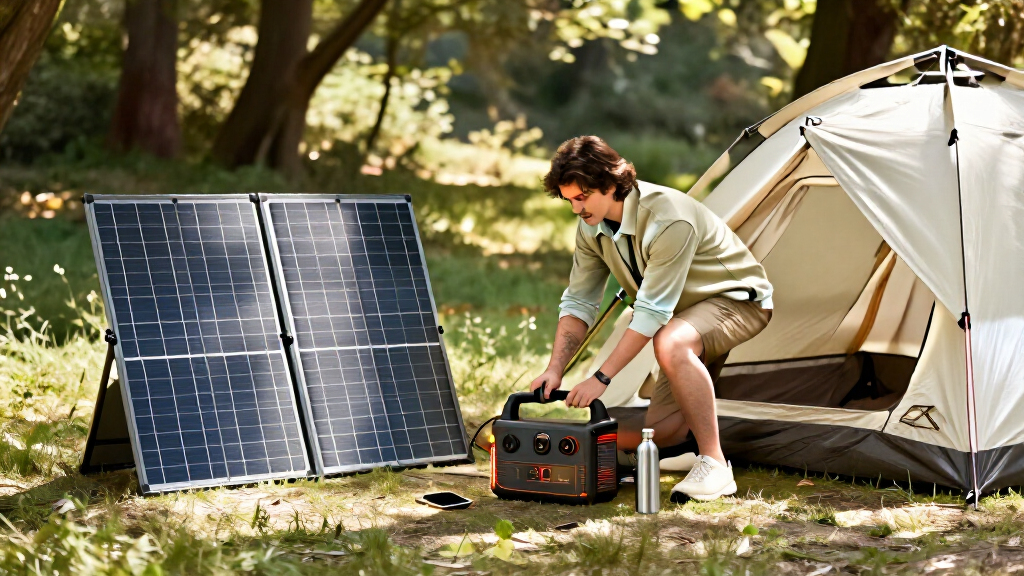
I compared these panels as companions to portable power stations, not as stand-alone solar products. The main criteria were rated output and usable portability, compatibility considerations such as connector type and station input limits, setup demands, and how each panel’s format fits common camping, backup, and travel needs. Bifacial construction and N-type cell descriptions helped distinguish models, but I treated them as design features—not guarantees of real-world charging speed.
The ranking gives priority to balanced usefulness across more buyers. That puts the Anker SOLIX PS400 first, while the larger ZOUPW bifacial models rank higher for capacity-focused setups and the 100W choices serve compact, lower-demand needs. I also weighed the extra arrangement flexibility of the Callsun two-panel set against its added setup steps. Since actual performance depends on sunlight, orientation, cabling, and the power station, I did not treat advertised wattage as a promise of constant output.
Factors to Consider When Choosing Solar Panels For Power Station
Choosing a panel starts with the power station you already own—or plan to buy. Beyond comparing wattage, I would check how the panel fits your station’s electrical limits, the place you’ll set it up, and how much effort you want to spend repositioning it. These details can matter more than a headline spec.
Match Panel Output to the Station’s Solar Input
Check the power station’s maximum solar input before choosing a high-wattage panel. A panel rated at 400W or more cannot make a station accept power beyond its own input ceiling, so extra capacity may not translate into faster charging. Voltage and current limits matter too; compare the panel’s electrical specifications with the station manual rather than relying on the connector fitting. Some stations accept multiple panels, but their wiring rules can change the voltage or current presented to the input. If your station has a modest input limit, a 100W or 200W panel may be a more sensible match than a larger model. Leave some headroom for the conditions you expect, but avoid buying capacity your station cannot use.
Compare Rated Wattage With Your Real Charging Routine
Rated wattage is a reference point, not a steady promise of power throughout the day. Sun angle, clouds, heat, shading, and panel direction all affect how much energy reaches the station. Think about when and where you will deploy the panel: a campsite with open sun can make a large foldable panel worthwhile, while a shaded or frequently changing location may limit its advantage. For a short trip with phone and light charging, a compact panel may be enough even if it takes longer to refill the station. For backup use, consider whether you can leave a larger panel positioned outside for extended periods. Match expectations to hours of useful sun, not just the wattage printed in a product name.
Plan for Footprint, Weight, and Setup Time
Large foldable panels can provide more rated capacity, but they need more clear ground space and can take more effort to place and reposition. A smaller panel is easier to carry and set up, though it may not replenish a larger station quickly. Multi-panel sets, such as two separate 200W panels, can be arranged independently, which may help if one part of the site is shaded. That flexibility comes with more pieces to carry and more cable management. Before choosing, measure the area where you expect to set up and think about who will handle the panel. If you regularly move camp or pack into a small vehicle, convenience may matter more than maximum output.
Check Connectors, Cables, and Electrical Limits
A panel is only useful if its output can connect safely to your power station. Confirm the connector type, included cable, polarity, and any adapter requirements before purchase; a familiar-looking plug does not prove electrical compatibility. Check open-circuit voltage and operating current against the station’s input range, especially when combining panels. Connecting panels in series raises voltage, while a parallel arrangement raises current, so either method can exceed the station’s limits if configured incorrectly. Avoid assuming that panels from different brands will work together as a set. When specifications are unclear, use the station manufacturer’s compatibility guidance before adding adapters or extra panels.
Decide Whether Bifacial Design Fits Your Site
Bifacial panels can collect light from the rear as well as the front, but the extra contribution depends on what is behind the panel. A reflective, open surface may offer more benefit than dark soil, grass, or a panel placed close to the ground. Keep rear-side light collection in perspective: it does not remove the need for direct sun, good positioning, or compatible station inputs. A bifacial model can make sense if your setup lets light reach both sides and you value higher potential output from a single panel. If the back will sit against a surface or face deep shade, that design may add less practical value. Compare the full panel format and setup needs, not just the bifacial label.
Choose Capacity for the Loads You Need to Support
Start with the devices you need to power and how long you expect to run them. A panel supports recharging; it does not directly guarantee that a station can run every appliance, since the station’s battery capacity and output rating still set those limits. Small electronics and occasional top-ups can pair well with a 100W panel, while repeated daily use or larger stations may call for more panel capacity. For backup planning, think about whether you need to recharge during daylight while continuing to draw power. That pattern can make panel input limits and station behavior just as relevant as panel wattage. Buy for your expected energy use and available sun, rather than choosing the largest number by default.
Frequently Asked Questions
Can I use a 400W or larger panel with a power station rated for less solar input?
Often the connection may be possible, but the station will not accept more than its specified solar input ceiling. The panel’s voltage and current must also stay within the station’s allowed range; wattage alone cannot confirm compatibility. A larger panel may still be useful in less-than-ideal sunlight, but it may not charge faster than a correctly matched panel under strong sun. Check the power station manual for its input limits and supported connectors before buying. If the panel’s electrical details are not clear, ask the manufacturer rather than relying on an adapter to solve a mismatch.
Should I choose one large panel or two smaller panels?
One large panel can mean fewer pieces and a simpler connection, which may suit a fixed campsite or a power station with a high input limit. Two smaller panels can be easier to position separately when shade affects part of a site, and one may be more convenient to deploy for a smaller charging need. The tradeoff is extra setup, carrying, and cable management. Before combining panels, check whether the station supports the proposed series or parallel arrangement and confirm the resulting voltage and current. The Callsun two-panel set in this lineup illustrates the flexibility of separate panels, while single-panel options favor a more consolidated setup.
Are bifacial solar panels worth choosing for camping?
They can be useful if sunlight can reach the rear of the panel, such as when it is elevated over a bright surface. On dark ground or in a tight spot where the back is blocked, the extra rear-side collection may be limited. Bifacial construction also does not guarantee a particular charging gain, since light, orientation, and station input limits still shape results. Compare a bifacial panel with a conventional option at similar output and consider how you will position it at camp. In this lineup, the Anker SOLIX PS400 and larger ZOUPW bifacial models suit buyers who can make use of that format, rather than every campsite user by default.
Is a 100W panel enough to keep a power station charged?
It can help maintain a compact station or recharge it for modest electronics use, but it may feel slow if you regularly drain a larger battery. The amount restored depends on available sun and how many hours the panel can stay well positioned. If you need to run several devices or replenish a station quickly between uses, a 200W or 400W-class option may be a better fit, provided the station accepts that input. Consider your daily energy needs and whether you can leave the panel in direct sun while using the station. The 100W ZOUPW and FlexSolar models make most sense when easy handling matters more than fast replenishment.
What should I verify before connecting a third-party panel to my power station?
Check the station’s accepted voltage range, maximum current and wattage, connector type, and cable requirements. Confirm the panel’s open-circuit voltage and operating current, then compare those figures with the station’s manual. If you intend to connect multiple panels, verify the manufacturer’s instructions for series or parallel wiring; the arrangement changes the electrical values. Do not assume that a connector adapter makes an electrically mismatched panel safe to use. When the panel’s specifications or the station’s compatibility guidance leave doubt, contact the relevant manufacturer before connecting the equipment.
Conclusion
For most buyers seeking a capable, versatile companion to a portable power station, I would start with the Anker SOLIX PS400 as the best overall choice. The ZOUPW 480W Bifacial is my best premium pick for buyers whose stations can accept its higher output and who have room to deploy it. The ZOUPW 100W is my best value-style fit for lighter charging needs, while the FlexSolar 100W is another compact option for buyers who prioritize a smaller setup. Beginners should focus on matching the panel’s electrical specifications to their station before choosing by wattage; the Renogy 200W offers a middle-ground option to compare against the ZOUPW 200W. For specific needs, choose the Callsun two-panel set if separate placement helps with shade, or the ZOUPW 450W or CTOLITY 400W if your setup calls for a higher-output foldable panel. My final recommendation is to verify compatibility first, then choose the largest, easiest-to-deploy panel your station and routine can make useful.