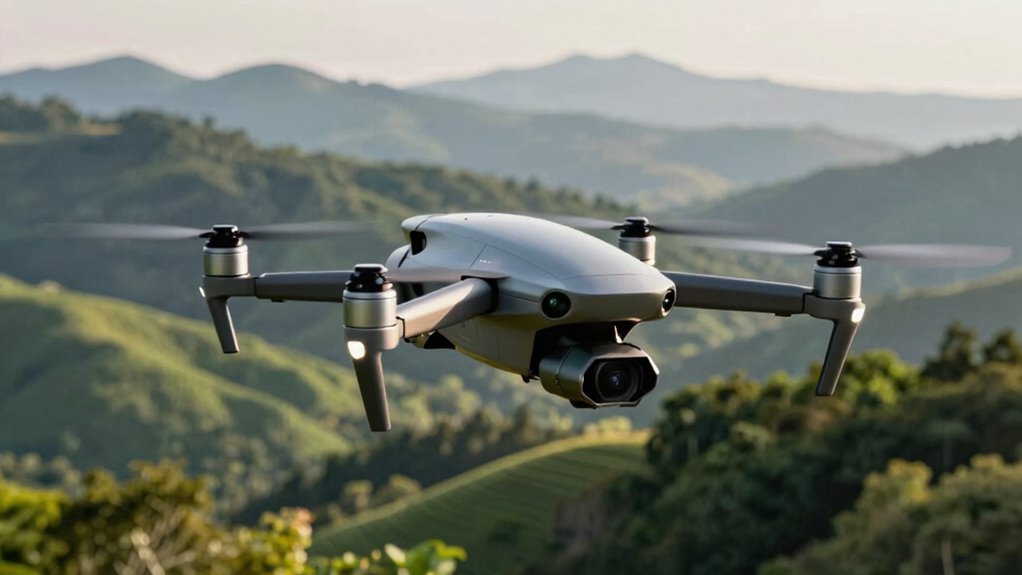

A cinematic drone with obstacle avoidance needs more than a capable camera: it should also help you fly with confidence without limiting the shots you can capture. I rank the DJI Mavic 4 Pro Creator Combo as the best overall choice for its premium filmmaking setup, while the DJI Mini 5 Pro Fly More Combo Plus stands out for a more compact, approachable package and the Antigravity A1 for distinctive 360-degree FPV footage. The main tradeoffs are camera flexibility versus portability, conventional camera-drone control versus immersive FPV flight, and how much assistance obstacle sensing can provide. Obstacle avoidance is a support feature, not a substitute for piloting skill or checking flight conditions. Read on for the full breakdown and help matching a drone to the way you plan to shoot.

Get the latest gadgets delivered free with Prime
- Fast, free delivery on millions of items
- Prime Video, Amazon Music and more included
- Member-only deals all year
Complete the kit



Key Takeaways
- The Mavic 4 Pro Creator Combo is the strongest all-around filmmaking pick in this lineup, while the Fly More and Creator bundles differ chiefly in their included controller, storage, and accessories.
- The Mini 5 Pro prioritizes portability; its appeal is carrying a capable camera drone more readily, not matching the larger Mavic setup for every professional workflow.
- The Antigravity A1 and DJI Avata 360 offer a different kind of cinematic footage through 360-degree and FPV-oriented capture, but that style is less interchangeable with conventional stabilized aerial shots.
- Bundle names can obscure meaningful differences. Check the exact controller, batteries, memory, and accessories included rather than assuming similarly named Mavic 4 Pro packages are equivalent.
- Obstacle avoidance does not make a drone collision-proof. Sensor limits, thin obstacles, lighting, and flight direction still matter, so safe piloting and a clear shot plan remain part of the purchase decision.
| Antigravity A1 Standard Bundle 360 FPV Drone with 8K Camera |  | Best for Reframing After Flight | Video capture: 8K 360° | Effective still resolution: 55 MP | Weight: 249 g with standard battery | VIEW ON AMAZON | See Our Full Breakdown |
| DJI Mavic 4 Pro Drone Fly More Combo with 64GB Memory Card and Accessories |  | Best for Longer Shoot Days | Model: DJI Mavic 4 Pro | Obstacle sensing: Omnidirectional | Flight modes: Subject tracking, automated orbits, waypoint navigation | VIEW ON AMAZON | See Our Full Breakdown |
| DJI Mavic 4 Pro Drone Creator Combo with RC Pro 2 |  | Best Premium Camera System | Main camera: 100MP Hasselblad wide-angle | Additional cameras: 48MP medium telephoto; 50MP telephoto | Maximum video resolution: 6K60 HDR | VIEW ON AMAZON | See Our Full Breakdown |
| DJI Mavic 4 Pro Fly More Combo with RC 2 and Deco Gear Kit |  | Best for Full-Feature Aerial Production | Main camera: 100MP 4/3 CMOS Hasselblad | Video resolution: Up to 6K/60fps HDR | Obstacle sensing: Omnidirectional vision system with six fisheye sensors and LiDAR | VIEW ON AMAZON | See Our Full Breakdown |
| DJI Mini 5 Pro Fly More Combo Plus with DJI RC 2 | 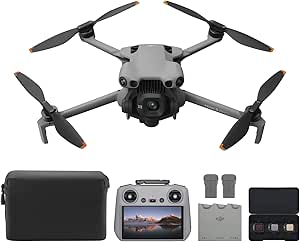 | Best Compact Cinematic Pick | Camera sensor: 1-inch CMOS | Video: 4K/60fps HDR | Gimbal rotation: 225° | VIEW ON AMAZON | See Our Full Breakdown |
| DJI Avata 360 Fly More Combo with RC 2 |  | Best for Immersive 360° Filmmaking | Video modes: 360° 8K60 HDR; single-lens 4K60 | Obstacle avoidance: Omnidirectional | Subject tracking: ActiveTrack 360 | VIEW ON AMAZON | See Our Full Breakdown |
| DCX Volo X EZ AI Drone with 4K Camera |  | Best for Longer AI-Assisted Flights | Camera: 4K | Gimbal: 3-axis | Obstacle avoidance: 360° LiDAR | VIEW ON AMAZON | See Our Full Breakdown |
| cinematic drone with obstacle avoidance | Maximum flight time | Weight | Obstacle sensing |
|---|---|---|---|
| Antigravity A1 Standard Bundle | Up to 39 minutes with high-capacity battery | 249 g with standard battery | — |
| DJI Mavic 4 Pro Drone Fly More | — | — | Omnidirectional |
| DJI Mavic 4 Pro Drone Creator | Up to 51 minutes | — | Omnidirectional, with forward-facing low-light LiDAR |
| DJI Mavic 4 Pro Fly More Combo | Up to 51 minutes | 958 g | Omnidirectional vision system with six fisheye sensors and LiDAR |
| DJI Mini 5 Pro Fly More Combo | Up to 52 minutes per Intelligent Flight Battery Plus | Approximately 249.9 g ± 4 g | Omnidirectional, with forward-facing LiDAR and vision sensors |
| DJI Avata 360 Fly More Combo w | Up to 23 minutes | 7.7 pounds | — |
| DCX Volo X EZ AI Drone with 4K | Up to 47 minutes | 14.4 ounces | — |
More Details on Our Top Picks
Antigravity A1 Standard Bundle 360 FPV Drone with 8K Camera
The Antigravity A1 makes the most sense when flexible composition matters more than a conventional camera workflow. Its 8K 360° capture lets you choose the view after flying, so one pass can yield several angles; the automatic reframing and editing also reduce hands-on work after landing. Point-to-fly controls give beginners a simpler way to direct it, while FPV mode offers a more immersive alternative. Unlike the DJI Mavic 4 Pro Creator Combo, this model is built around 360-degree footage rather than a high-resolution multi-camera system and 6K HDR video. Omnidirectional obstacle avoidance and subject tracking support hands-off shots, but the stated 39-minute flight time requires the high-capacity battery. The included goggles weigh 340 g, a notable comfort tradeoff for longer FPV sessions.
Pros:- 8K 360° capture allows reframing after the flight
- Omnidirectional obstacle avoidance and subject tracking assist complex shots
- Point-to-fly controls offer an approachable alternative to full manual piloting
- Automatic reframing and editing can simplify post-flight work
Cons:- 39-minute maximum flight time depends on the high-capacity battery
- The 340 g goggles may feel heavy during longer flights
- 360° footage workflow differs from conventional camera framing
Best for: Newer drone users and social video creators who want to reframe 360° footage after a flight and value assisted controls.
Not ideal for: Cinematic shooters who prioritize conventional multi-camera framing, or FPV pilots who find a 340 g headset uncomfortable for extended sessions.
- Video capture:8K 360°
- Effective still resolution:55 MP
- Weight:249 g with standard battery
- Maximum flight time:Up to 39 minutes with high-capacity battery
- Maximum range:10 km
- Battery capacity:2360 mAh
- Obstacle avoidance:Omnidirectional
- Goggles:340 g; 90° field of view
Our verdict“Choose the A1 if you want assisted FPV flying and 360° footage you can reframe later, rather than a traditional multi-camera cinema drone.”
DJI Mavic 4 Pro Drone Fly More Combo with 64GB Memory Card and Accessories
This Fly More Combo is the practical choice for creators who want the Mavic 4 Pro’s cinematic camera system and omnidirectional obstacle sensing with less downtime between flights. Extra batteries and a multi-battery charging hub support longer shoot days, while subject tracking, automated orbits, and waypoint navigation help repeat or choreograph shots. Compared with the Mavic 4 Pro Creator Combo, this package is less clearly specified: it does not state camera resolution, flight time, or transmission range, and it does not identify the RC Pro 2 controller. That makes it harder to judge the exact imaging and control setup from the supplied details. The 64GB memory card and carrying accessories add convenience, but several bundle items are third-party extras, so buyers focused on a precisely documented kit may prefer the Creator Combo.
Pros:- Omnidirectional obstacle sensing helps manage hazards from multiple directions
- Subject tracking, automated orbits, and waypoint navigation support planned shots
- Additional batteries and charging hub reduce breaks between flights
- Includes a 64GB memory card and practical carrying and maintenance accessories
Cons:- Supplied details do not specify camera resolution or maximum flight time
- Controller model is not identified in the product information
- Some included accessories are third-party items
Best for: Aerial creators who want spare-battery capacity and automated flight modes for repeated shoots, and are comfortable confirming camera and controller details before buying.
Not ideal for: Buyers who need published camera-resolution and flight-time figures or want a clearly specified premium controller and accessory package.
- Model:DJI Mavic 4 Pro
- Obstacle sensing:Omnidirectional
- Flight modes:Subject tracking, automated orbits, waypoint navigation
- Bundle:Fly More Combo
- Memory card:64GB
- Included power accessories:Additional flight batteries and multi-battery charging hub
- Other included accessories:Backpack, landing pad, cleaning kit, card wallet, card reader
Our verdict“Pick this bundle for battery-supported shoot days and automated Mavic 4 Pro flights, but choose the Creator Combo if clearer camera and controller specifications matter more.”
DJI Mavic 4 Pro Drone Creator Combo with RC Pro 2
For buyers who put image-making first, the Creator Combo stands apart with a 100MP Hasselblad wide camera plus 48MP medium-tele and 50MP tele cameras. That range gives a filmmaker more ways to vary perspective without moving the aircraft, while 6K60 HDR supports detailed, high-dynamic-range footage. It also pairs omnidirectional obstacle sensing with forward-facing low-light LiDAR, a useful safety layer when light drops, and ActiveTrack 360 supports moving-subject shots. Compared with the Mavic 4 Pro Fly More Combo, this package specifies the camera system and includes an RC Pro 2 controller, three batteries, and a charging hub. Its advanced imaging and flight features bring a learning curve, though, and the listing gives conflicting memory figures, so included storage is unclear.
Pros:- Triple-camera system provides wide, medium-tele, and telephoto framing options
- 6K60 HDR video supports detailed cinematic footage
- Omnidirectional sensing includes forward-facing low-light LiDAR
- Up to 51 minutes of flight time and three included batteries support extended shoots
Cons:- Advanced camera and flight features may take experience to use well
- Included memory is unclear because the description lists conflicting capacities
- Larger, more involved setup is less suited to casual grab-and-go flights
Best for: Experienced filmmakers and production teams who want multiple focal lengths, high-resolution HDR capture, obstacle sensing, and a dedicated RC Pro 2 controller.
Not ideal for: Casual flyers seeking a simple compact drone, or buyers who need unambiguous details about included memory before purchase.
- Main camera:100MP Hasselblad wide-angle
- Additional cameras:48MP medium telephoto; 50MP telephoto
- Maximum video resolution:6K60 HDR
- Maximum flight time:Up to 51 minutes
- Obstacle sensing:Omnidirectional, with forward-facing low-light LiDAR
- Tracking:ActiveTrack 360
- Transmission range:Up to 18.6 miles
- Included controller and batteries:RC Pro 2; three batteries
Our verdict“Choose the Creator Combo if camera flexibility and a specified RC Pro 2 matter more than simplicity or a compact kit.”
DJI Mavic 4 Pro Fly More Combo with RC 2 and Deco Gear Kit
This Mavic 4 Pro bundle suits creators who want a capable camera drone with omnidirectional sensing backed by six fisheye sensors and LiDAR. Its 100MP Hasselblad main camera, dual telephoto cameras, and 6K/60fps HDR offer framing flexibility for polished aerial work, while the 360° gimbal rotation can support distinctive camera moves. The three included batteries and RC 2 make the package ready for longer sessions. Compared with the Mini 5 Pro Fly More Combo, this is a larger, heavier production setup rather than a palm-sized travel option; the Mini is easier to carry, but has a smaller stated camera system. This bundle also lists a 30 km video transmission range and 64GB onboard storage. The tradeoff is bulk: at 958 g, it needs more room to transport and store.
Pros:- 100MP Hasselblad main camera and dual telephoto cameras offer varied framing
- Omnidirectional obstacle sensing combines six fisheye sensors with LiDAR
- Up to 51 minutes of flight time and three batteries support extended sessions
- 6K/60fps HDR and 360° gimbal rotation enable flexible cinematic shots
Cons:- 958 g weight and larger kit make transport less convenient than the Mini 5 Pro
- Advanced camera and flight features may exceed the needs of casual flyers
- Deco Gear extras add to the amount of equipment to store and carry
Best for: Aerial filmmakers who want a multi-camera system, extensive obstacle sensing, three batteries, and a dedicated controller in one production-oriented kit.
Not ideal for: Travelers and casual pilots who prioritize a lightweight, compact drone or have limited room for a larger aircraft and kit.
- Main camera:100MP 4/3 CMOS Hasselblad
- Video resolution:Up to 6K/60fps HDR
- Obstacle sensing:Omnidirectional vision system with six fisheye sensors and LiDAR
- Maximum flight time:Up to 51 minutes
- Video transmission range:Up to 30 km (18.6 miles)
- Maximum range:41 km (25.4 miles)
- Onboard storage:64GB
- Weight:958 g
Our verdict“Choose this Mavic bundle for feature-rich aerial production and extensive obstacle sensing, but favor the Mini 5 Pro if portability comes first.”
DJI Mini 5 Pro Fly More Combo Plus with DJI RC 2
The Mini 5 Pro is the lineup’s portability-focused choice, pairing a foldable body with a 1-inch CMOS sensor, 4K/60fps HDR, and true vertical filming. That makes it easier to carry for travel and social-video shoots than either Mavic 4 Pro bundle, while omnidirectional obstacle sensing with forward-facing LiDAR brings collision awareness to a compact format. Its 225° gimbal rotation and ActiveTrack 360° add creative movement and subject-following options without requiring constant manual framing. The Fly More Combo Plus includes three batteries and ND filters, useful for extended sessions and controlled exposure. The main compromise is camera headroom: it does not offer the Mavic 4 Pro Creator Combo’s triple-camera 6K system. At approximately 249.9 g ± 4 g, its weight can also vary around the 249 g mark.
Pros:- Foldable, palm-sized design is easier to transport than either Mavic 4 Pro bundle
- 1-inch CMOS sensor records 4K/60fps HDR video
- True vertical filming suits portrait-oriented content
- Omnidirectional sensing, forward-facing LiDAR, and ActiveTrack 360° support assisted flights
Cons:- Camera system does not match the Mavic 4 Pro Creator Combo’s triple cameras and 6K capture
- Listed weight of approximately 249.9 g ± 4 g can exceed 250 g
- DJI Fly must be downloaded from DJI’s website rather than Google Play
Best for: Travel filmmakers and vertical-video creators who want a compact drone with obstacle sensing, subject tracking, and a 1-inch sensor.
Not ideal for: Production teams who need a triple-camera system or 6K HDR capture, or buyers who require a weight figure that stays below 250 g in every configuration.
- Camera sensor:1-inch CMOS
- Video:4K/60fps HDR
- Gimbal rotation:225°
- Obstacle sensing:Omnidirectional, with forward-facing LiDAR and vision sensors
- Tracking:ActiveTrack 360°
- Internal storage:42GB
- Maximum flight time:Up to 52 minutes per Intelligent Flight Battery Plus
- Weight:Approximately 249.9 g ± 4 g
Our verdict“Pick the Mini 5 Pro for portable 4K cinematic and vertical footage with obstacle sensing, and choose a Mavic 4 Pro for more camera options and 6K capture.”
DJI Avata 360 Fly More Combo with RC 2
For cinematic footage that can be reframed after the flight, the DJI Avata 360 stands apart from conventional camera drones such as the DJI Mavic 4 Pro. Its 360° 8K60 HDR capture gives editors more freedom to choose a view later, while the single-lens 4K60 mode suits shots that need a more direct camera perspective. Omnidirectional obstacle avoidance and ActiveTrack 360 add support for moving subjects, and RockSteady and HorizonSteady help keep footage smooth. The Fly More bundle also includes three batteries and charging gear, reducing downtime between takes. The tradeoff is a stated flight time of up to 23 minutes, shorter than the DCX Volo X EZ AI’s listed 47 minutes. Its listed 7.7-pound weight also makes it a less portable choice than the compact DJI Mini 5 Pro.
Pros:- 360° 8K60 HDR capture allows substantial reframing flexibility in editing.
- Single-lens 4K60 mode offers a conventional video option alongside 360° capture.
- Omnidirectional obstacle avoidance and ActiveTrack 360 support tracked shots with added obstacle awareness.
- Three batteries, a charging hub, and a backpack are included in the bundle.
Cons:- Up to 23 minutes of flight time limits each session compared with the DCX Volo X EZ AI.
- The listed 7.7-pound weight makes it less travel-friendly than the DJI Mini 5 Pro.
- Its 360° capture and FPV-oriented feature set may be more than needed for pilots seeking straightforward conventional aerial footage.
Best for: Video creators who want reframable 360° footage, automated subject tracking, and a bundled set of batteries and filming accessories.
Not ideal for: Travelers prioritizing a lightweight carry kit or pilots who need longer sessions between battery changes; its listed weight and up-to-23-minute flight time work against those needs.
- Video modes:360° 8K60 HDR; single-lens 4K60
- Obstacle avoidance:Omnidirectional
- Subject tracking:ActiveTrack 360
- Maximum transmission range:12.4 miles
- Maximum flight time:Up to 23 minutes
- Weight:7.7 pounds
- Included batteries:3 intelligent flight batteries
- Included controller:RC 2 remote controller
- Stabilization:RockSteady and HorizonSteady
Our verdict“Choose the Avata 360 if post-flight framing freedom and obstacle-aware 360° filming matter more to you than lightweight portability or longer flights.”
DCX Volo X EZ AI Drone with 4K Camera
The DCX Volo X EZ AI puts flight duration and hands-off features ahead of specialty capture modes. Its 360° LiDAR obstacle avoidance, Follow Me, and automatic Return-to-Home make it a more approachable option for pilots who want tracking and navigation assistance. A 3-axis gimbal and electronic stabilization support steadier 4K footage, though this is a conventional camera setup rather than the Avata 360’s reframable 8K 360° capture. The listed up-to-47-minute flight time is a clear advantage over the DJI Avata 360’s 23 minutes, while the built-in-screen remote avoids relying on a separate phone display. There are caveats: the battery capacity is inconsistent across the supplied details, and users must remove foam padding before flying so it does not restrict the gimbal. Its Wi-Fi connectivity also contrasts with the Avata’s stated long-range O4+ transmission.
Pros:- 360° LiDAR obstacle avoidance is paired with Follow Me and automatic Return-to-Home.
- A 3-axis gimbal and electronic stabilization support smoother 4K video.
- Up to 47 minutes of listed flight time exceeds the DJI Avata 360’s stated maximum.
- The remote has a built-in screen, and the drone is listed as FAA Remote ID compliant.
Cons:- Battery capacity conflicts between the description’s 6000 mAh and specifications’ 5000 mAh.
- Camera foam padding must be removed before use to avoid restricting the gimbal.
- Wi-Fi connectivity is specified, but the supplied data does not give a transmission system comparable to the Avata 360’s O4+.
Best for: Newer pilots seeking a foldable 4K drone with LiDAR obstacle avoidance, Follow Me, a built-in-screen controller, and longer listed flight time.
Not ideal for: Creators who need 360° 8K footage, a clearly specified battery capacity, or the Avata 360’s stated O4+ long-range transmission system.
- Camera:4K
- Gimbal:3-axis
- Obstacle avoidance:360° LiDAR
- Maximum flight time:Up to 47 minutes
- Maximum range:4 miles
- Connectivity:Wi-Fi
- Weight:14.4 ounces
- Battery capacity:Inconsistent listing: 6000 mAh in description; 5000 mAh in specifications
- Compliance:FAA Remote ID compliant
Our verdict“Pick the Volo X EZ AI for longer listed flights and AI-assisted 4K flying, but choose the Avata 360 if 360° capture and a stated long-range transmission system matter more.”

How We Picked
I compared the seven listed bundles by how well they suit cinematic aerial work, weighing camera and flight style alongside the practical help obstacle sensing can offer. I also considered usability, portability, bundle contents, and whether a model’s strengths match a clear buyer need. Since product names and bundles do not establish identical sensor coverage or performance, I avoid treating obstacle avoidance as a blanket guarantee; buyers should confirm capabilities in the manufacturer’s specifications for the exact model.
The ranking favors versatility for conventional filmmaking first, then rewards packages that bring a distinct advantage such as portability, immersive FPV capture, or a more accessible entry point. The three Mavic 4 Pro listings are compared as separate bundles rather than separate aircraft categories: the controller, memory, and included accessories can change which package makes sense. The Antigravity A1 and Avata 360 rank on their specialized capture styles, while the DCX Volo X EZ is included as an AI-oriented alternative whose fit depends on verified camera and sensing details.
| cinematic drone with obstacle avoidance | Maximum flight time | Obstacle sensing |
|---|---|---|
| Antigravity A1 Standard Bundle | Up to 39 minutes with high-capacity battery | — |
| DJI Mavic 4 Pro Drone Fly More | — | Omnidirectional |
| DJI Mavic 4 Pro Drone Creator | Up to 51 minutes | Omnidirectional, with forward-facing low-light LiDAR |
| DJI Mavic 4 Pro Fly More Combo | Up to 51 minutes | Omnidirectional vision system with six fisheye sensors and LiDAR |
| DJI Mini 5 Pro Fly More Combo | Up to 52 minutes per Intelligent Flight Battery Plus | Omnidirectional, with forward-facing LiDAR and vision sensors |
| DJI Avata 360 Fly More Combo w | Up to 23 minutes | — |
| DCX Volo X EZ AI Drone with 4K | Up to 47 minutes | — |
Factors to Consider When Choosing Cinematic Drone With Obstacle Avoidance
Before choosing a drone, decide what kinds of shots you actually need and where you can legally fly them. The best fit depends on more than a headline camera specification: obstacle sensing, control style, bundle contents, and your tolerance for extra setup all affect the footage you can bring home.
Match the flight style to the footage
Conventional camera drones, FPV models, and 360-degree drones produce different kinds of material, even when all are marketed for cinematic use. A conventional camera drone is a natural fit for composed tracking shots and establishing footage; FPV flight favors motion and proximity, while 360 capture can leave reframing choices for editing. Do not choose by camera resolution alone if you already know the movement you want. A specialized flight style can make certain shots easier while making others less direct. If your work needs both controlled landscape footage and dynamic action, decide which style will be used most often before paying for a second type of drone.
Treat obstacle sensing as assistance, not autonomy
Obstacle avoidance can help reduce risk, but coverage and behavior vary by model, direction, speed, and flight mode. Fine branches, wires, low light, reflective surfaces, and fast lateral movement can challenge sensors. Read the aircraft’s current specification and manual for which directions are sensed and when those systems are active. A frequent mistake is assuming forward sensors protect a drone while it flies backward or sideways. Keep a clear route, maintain visual awareness, and leave room to stop or redirect the aircraft.
Compare the whole bundle, not just the drone name
Bundles with the same aircraft can differ in controller, batteries, storage, charging gear, and add-ons. Those details shape how quickly you can start shooting and how smoothly footage moves into your editing workflow. A screen-equipped controller may reduce setup friction outdoors, while extra batteries matter more for a long shoot than cosmetic accessories. Check each package’s itemized contents and confirm compatibility before buying memory cards or spare parts. A bundle is only a good fit if its included equipment replaces items you would otherwise need.
Balance portability against shoot readiness
A compact aircraft is easier to carry on hikes and trips, but portability alone does not determine how useful it is on location. Consider the combined load of the drone, controller, batteries, and charging equipment. Also think about how often you will fly: a convenient aircraft that stays in your bag can be more useful than a larger setup reserved for planned shoots. Conversely, dedicated production work may justify carrying a larger system if its imaging and workflow suit the job. Avoid judging travel convenience from the folded aircraft alone.
Plan for editing, storage, and backup
High-resolution and 360-degree footage can place heavier demands on memory cards, computer storage, and editing time than a simple finished clip suggests. Check supported card types and recording formats before relying on a bundle’s included storage. For important shoots, plan how you will copy and back up files before the card fills up. Reframing 360 footage can create flexibility, but it also adds a step after flight. Choose a recording workflow you can maintain, not just a camera mode that sounds impressive.
Check location rules and operating limits
Drone rules can depend on where you fly, the aircraft, the purpose of the flight, and local restrictions. Obstacle sensing does not grant permission to fly near people, buildings, or restricted airspace. Before a shoot, check current rules and airspace guidance for the exact location, along with weather and visibility. Wind, battery condition, and temperature can affect flight time and control, so leave a margin rather than planning to use every minute shown in a specification. If a shot requires an unsafe route, change the plan rather than relying on sensors to manage it.
Frequently Asked Questions
Can obstacle avoidance prevent every drone collision?
No. Sensors have limits, and their effectiveness can depend on the obstacle, lighting, flight direction, and selected mode. Thin wires and small branches can be difficult to detect, and not every aircraft senses in every direction. Check the manual for the exact model and understand when sensing may be reduced or disabled. Keep a clear flight path and pilot as though the aircraft still needs your attention.
Should I choose a Mavic 4 Pro bundle based on the drone or the controller?
Start with the aircraft’s camera and flight capabilities, then choose a bundle based on the equipment you will use. The listed Mavic 4 Pro packages include different controller and accessory combinations, so compare the itemized contents rather than relying on the bundle name. A controller can affect how you view and manage a shoot, while extra storage or batteries may be more useful for longer sessions. Avoid paying for duplicate accessories you already own, and check compatibility before treating third-party items as equivalents.
Is a 360 or FPV drone a good replacement for a conventional camera drone?
It depends on the shots you need. The Antigravity A1 and DJI Avata 360 are aimed at more immersive or reframable footage, while a conventional camera-drone workflow is better suited to direct, carefully composed aerial views. A 360 capture can give you options when reframing later, but it adds editing work and does not automatically match every traditional shot. FPV-style movement can be expressive, yet it calls for a different approach to flight and shot planning. If your projects demand both styles, treat them as complementary tools rather than assuming one replaces the other.
What should I verify before buying a bundle for a planned shoot?
Confirm the exact aircraft version, controller, battery count, charging equipment, memory, and accessories listed in the package. Then check the aircraft’s sensor coverage and operating limits against the locations and movements you expect to film. Look at supported recording formats and storage needs, especially if you plan to capture high-resolution or 360 footage. Check current local flight rules and whether your planned locations allow drone operation. A package that looks complete may still need compatible storage, spare batteries, or a separate workflow for backing up footage.
Is the Mini 5 Pro a better choice than a Mavic 4 Pro for travel filmmaking?
The Mini 5 Pro is the more natural option if keeping a smaller, easier-to-carry setup is your priority. The Mavic 4 Pro packages make more sense when their higher-end filmmaking setup and included controller or accessories better match a planned production workflow. Travel needs vary: a small drone is less appealing if its camera capabilities do not meet the project, while a larger kit can become cumbersome if you rarely use its extra flexibility. Compare the packed weight of the complete setup, not just the aircraft. Also check current local rules, since drone requirements can vary by jurisdiction and aircraft classification.
Conclusion
For most buyers seeking a cinematic drone with obstacle avoidance, I would start with the DJI Mavic 4 Pro Creator Combo as the best overall option, provided its controller and bundle contents fit the workflow. The DJI Mini 5 Pro Fly More Combo Plus is my pick for travelers and buyers who place portability first, while the Creator Combo is also the strongest premium recommendation in this group. For beginners, I would favor the Mini 5 Pro’s more compact, approachable role, while still treating sensing as assistance rather than a substitute for learning safe flight. The Antigravity A1 is the best choice for buyers specifically drawn to 360-degree FPV footage; the Avata 360 offers another specialized route for immersive capture. For value, compare the Mavic 4 Pro Fly More packages and choose the one whose controller, storage, and accessories you will actually use; the DCX Volo X EZ is best treated as an AI-oriented alternative after confirming its exact camera and obstacle-sensing specifications. Match the bundle to your shooting style, then verify the sensor limits and local flight rules before committing.
Halloween Picks

ELAMAS 11ft Animatronic Flying Witch Halloween Decoration

JOYIN 5-Foot Halloween Animatronic Drinking Skeleton

8.5 Foot Halloween Inflatable Haunted House Castle with Skeleton, Ghost & Skulls
As an affiliate, we earn on qualifying purchases.