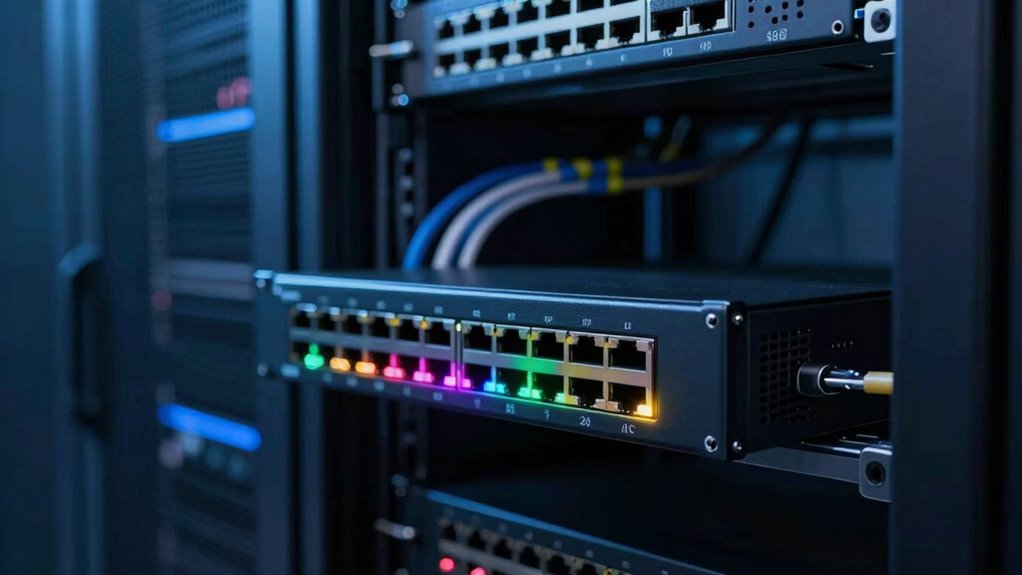

When searching for a 48 port managed switch, the goal is to find a solution that balances performance, manageability, and value. The TP-Link Omada SG3452XP stands out as the best overall choice thanks to its robust L2+ features and PoE capabilities. For those on a tighter budget, the NETGEAR GS748T offers reliable management at a more accessible price, while the TP-Link TL-SG3452P provides excellent PoE+ support for powering devices. The main challenge lies in balancing advanced features with ease of use and cost. Continue reading for a detailed breakdown of these options and how they compare.

Get the latest gadgets delivered free with Prime
- Fast, free delivery on millions of items
- Prime Video, Amazon Music and more included
- Member-only deals all year
Complete the kit



Key Takeaways
- Managed switches with PoE support tend to cost more but enable powering connected devices without extra hardware.
- L2+ features, like VLAN and QoS, significantly improve network control, especially for business environments.
- Switches with higher port uplink options, such as 10Gbps SFP+, future-proof the network for increased traffic.
- Unmanaged options like the Tenda 48-Port Gigabit Switch are ideal for simple, budget-friendly setups but lack manageability.
- Build quality and cooling features, like fanless designs, impact noise levels and longevity in different environments.
| Tenda 48-Port Gigabit Ethernet Switch – Unmanaged Rackmount Network Switch |  | Best Budget-Friendly Unmanaged Switch | Ports: 48 x Gigabit Ethernet | Type: Unmanaged, rackmount | PoE: No | VIEW ON AMAZON | See Our Full Breakdown |
| TP-Link Omada SG3452XP 48-Port Gigabit L2+ Managed PoE Switch |  | Best Enterprise-Grade Managed Switch with High Uplink Capacity | Ports: 48x PoE+ RJ45 | Uplink Slots: 4x 10 Gbps SFP+ | PoE Budget: 500W | VIEW ON AMAZON | See Our Full Breakdown |
| TP-Link TL-SG3452P 48-Port Gigabit L2+ Managed PoE+ Switch with 4 SFP Slots |  | Best Managed PoE+ Switch for Scalable Business Deployments | Ports: 48 x Gigabit PoE+ | SFP Slots: 4 | PoE Power Budget: 384W | VIEW ON AMAZON | See Our Full Breakdown |
| TP-Link SG2452LP 48-Port Gigabit Omada Fully Managed PoE Switch |  | Best Fully Managed PoE Switch with Quiet Operation | Ports: 48 Gigabit | PoE: Supported | Management: Omada Cloud, Web, CLI | VIEW ON AMAZON | See Our Full Breakdown |
| Aruba Instant On 1930 48-Port Gigabit Ethernet Smart Switch with 4x 1G/10G SFP+ (JL685A) |  | Best Smart Switch for Desktop and Small Office Environments | Ports: 48x Gigabit Ethernet | Uplink Ports: 4x 1G/10G SFP+ | Switch Type: L2+ Smart Switch | VIEW ON AMAZON | See Our Full Breakdown |
| YuanLey 48-Port Gigabit Managed Network Switch with 6 10Gbps SFP+ Uplinks, L3 Smart Management |  | Best Overall Managed Switch for High-Performance Networks | Brand: YuanLey | Product Type: Managed Network Switch | Total Ports: 54 | VIEW ON AMAZON | See Our Full Breakdown |
| Zyxel GS1920-48HPV2 48-Port Gigabit Smart Managed PoE+ Switch |  | Best PoE-Enabled Smart Managed Switch for Power-Driven Devices | Ports: 44 Gigabit PoE+ RJ-45, 4 combo, 2 SFP | Switching Capacity: 100 Gbps | PoE Budget: 375W | VIEW ON AMAZON | See Our Full Breakdown |
| TP-Link Omada SG3452 48-Port Gigabit L2+ Smart Managed Switch |  | Best Centralized Cloud-Managed Switch for Enterprise Networks | RJ45 Ports: 48 | SFP Slots: 4 | Switch Layer: L2+ | VIEW ON AMAZON | See Our Full Breakdown |
| TP-Link TL-SG1048 48-Port Gigabit Ethernet Switch, Plug and Play, Metal Rackmount, Fanless, Unmanaged, Black |  | Best Budget Unmanaged Switch for Small Networks | Model: TL-SG1048 | Ports: 48 x 10/100/1000Mbps RJ45 | Switching Capacity: 96Gbps | VIEW ON AMAZON | See Our Full Breakdown |
| NETGEAR GS748T 48-Port Gigabit Ethernet Smart Managed Network Switch |  | Best for Reliable Enterprise Connectivity and Remote Management | Brand: NETGEAR | Model: GS748T | Number of Ethernet Ports: 48 | VIEW ON AMAZON | See Our Full Breakdown |
| port managed switch | Management | Ports |
|---|---|---|
| Tenda 48-Port Gigabit Ethernet | — | 48 x Gigabit Ethernet |
| TP-Link Omada SG3452XP 48-Port | Omada SDN | 48x PoE+ RJ45 |
| TP-Link TL-SG3452P 48-Port Gig | Omada SDN, CLI, SNMP | 48 x Gigabit PoE+ |
| TP-Link SG2452LP 48-Port Gigab | Omada Cloud, Web, CLI | 48 Gigabit |
| Aruba Instant On 1930 48-Port | Web Browser | 48x Gigabit Ethernet |
| YuanLey 48-Port Gigabit Manage | L3, Web, CLI, SNMP | — |
| Zyxel GS1920-48HPV2 48-Port Gi | NebulaFlex cloud or standalone | 44 Gigabit PoE+ RJ-45, 4 combo, 2 SFP |
| TP-Link Omada SG3452 48-Port G | Web, CLI, SNMP, Omada SDN | — |
| TP-Link TL-SG1048 48-Port Giga | Unmanaged | 48 x 10/100/1000Mbps RJ45 |
| NETGEAR GS748T 48-Port Gigabit | — | — |
More Details on Our Top Picks
Tenda 48-Port Gigabit Ethernet Switch – Unmanaged Rackmount Network Switch
This Tenda switch stands out for offering a straightforward, plug-and-play solution that requires no configuration, making it ideal for environments where simplicity is key. Compared with the Aruba JL685A, it lacks advanced management features and PoE support, but its fanless design and high lightning protection make it reliable in harsh environments. The 12 Mb buffer helps maintain smooth video streaming and large file transfers without packet loss, while its silent operation and low power consumption appeal to offices or small data centers. However, its unmanaged nature limits customization, and it cannot power PoE devices, which might be a dealbreaker for those needing integrated power. Best for small businesses or setup teams seeking a cost-effective, reliable switch without advanced features.
Pros:- Plug-and-play setup with no configuration required
- Fanless design for silent, energy-efficient operation
- Large 12 Mb buffer prevents packet loss during high traffic
- Built-in 6KV lightning protection for reliability
Cons:- No PoE support limits powering of IP cameras or access points
- Unmanaged design restricts advanced network configuration
Best for: Small offices or network setups requiring a reliable, unmanaged switch with high lightning protection and silent operation
Not ideal for: Organizations with PoE needs or requiring advanced management features like VLANs or security controls
- Ports:48 x Gigabit Ethernet
- Type:Unmanaged, rackmount
- PoE:No
- Buffer:12 Mb
- Power Consumption:< 48 W
- Cooling:Fanless
- Lightning Protection:6KV on all ports and power supply
Our verdict“This switch is perfect for small-scale environments prioritizing simplicity and reliability over management features.”
TP-Link Omada SG3452XP 48-Port Gigabit L2+ Managed PoE Switch
The TP-Link Omada SG3452XP makes a compelling case for larger networks needing managed, scalable solutions. Its 4x 10G SFP+ uplinks outperform the unmanaged Tenda, providing non-blocking bandwidth for complex deployments. The 500W PoE budget supports numerous powered devices, surpassing the Tenda’s non-PoE design, but this added complexity may be unnecessary for small or simple setups. Its Omada SDN platform facilitates centralized control, ideal for organizations seeking remote management, though this might be overkill for users who prefer standalone switches. The security features and static routing capabilities put it ahead of unmanaged options, but managing the system requires more expertise. Best suited for mid-sized enterprises or integrators needing advanced security, PoE, and high-bandwidth uplinks.
Pros:- High 10G SFP+ uplinks for high-capacity, non-blocking performance
- Large 500W PoE budget supports many powered devices
- Integrated Omada SDN for centralized cloud management
- Enterprise-grade security features including ACL and DoS defense
Cons:- Requires matching SDN firmware and controllers for full features
- Higher complexity may be unnecessary for basic networks
Best for: Mid-sized businesses or IT teams requiring centralized management, security, and PoE for multiple devices
Not ideal for: Small offices or casual users with no need for managed or PoE features
- Ports:48x PoE+ RJ45
- Uplink Slots:4x 10 Gbps SFP+
- PoE Budget:500W
- Management:Omada SDN
- Layer:L2+
- Security Features:VLAN, ACL, DoS defense, 802.1X
Our verdict“This switch is geared toward organizations needing robust management, security, and PoE at scale with high uplink throughput.”
TP-Link TL-SG3452P 48-Port Gigabit L2+ Managed PoE+ Switch with 4 SFP Slots
The TP-Link TL-SG3452P excels for professional environments needing a managed, PoE+ capable switch with advanced features. Its 384W PoE budget supports a substantial number of powered devices, and the four SFP ports ensure flexible uplink options. Compared with the Omada SG3452XP, it offers a slightly lower PoE budget but adds static routing and multiple management modes, including CLI and SNMP, for greater deployment flexibility. Its comprehensive security, VLAN, and ACL controls make it suitable for scalable, secure networks, but the management complexity might be excessive for small or straightforward setups. Its 5-year warranty provides peace of mind in demanding environments. Best for growing enterprises or network administrators seeking detailed control and PoE power for multiple devices.
Pros:- High 384W PoE power supports many devices
- Multiple management options including CLI and SNMP
- Static routing and security features for scalable deployments
- 4 SFP ports for flexible uplinks
Cons:- Requires more network management expertise
- No redundancy in power supply listed
Best for: Businesses needing a scalable, managed switch with PoE+ and advanced security features
Not ideal for: Small home networks or users preferring simple plug-and-play devices
- Ports:48 x Gigabit PoE+
- SFP Slots:4
- PoE Power Budget:384W
- Management:Omada SDN, CLI, SNMP
- Layer:L2+
- Network Features:VLAN, ACL, static routing
Our verdict“Ideal for enterprises seeking a highly configurable, managed switch with PoE+ and advanced security controls.”
TP-Link SG2452LP 48-Port Gigabit Omada Fully Managed PoE Switch
The TP-Link SG2452LP is a versatile, fully managed switch tailored for professional environments that require comprehensive control and silent operation. Its fanless design ensures quiet running, even when fully loaded with PoE devices, making it ideal for open office settings. Its Omada cloud management platform enables remote monitoring, configuration, and zero-touch deployment, setting it apart from unmanaged or basic managed switches like the Tenda. The extensive security features, VLAN segmentation, and failover support facilitate scalable, secure networks. However, this advanced functionality may be more than needed for small or home use, and its reliance on Omada cloud management can introduce additional complexity. This switch is best for organizations prioritizing managed security and quiet operation in a scalable setup.
Pros:- Fanless passive cooling for quiet operation
- Centralized Omada cloud management for remote control
- Advanced security and VLAN features
- Support for failover and network redundancy
Cons:- Requires Omada platform for full management features
- Management complexity may be high for smaller teams
Best for: Medium to large businesses needing centralized management, security, and silent operation
Not ideal for: Small offices or users seeking a simple, unmanaged device without management overhead
- Ports:48 Gigabit
- PoE:Supported
- Management:Omada Cloud, Web, CLI
- Cooling:Fanless
- Security Features:802.1X, ACL, DHCP Snooping
- Warranty:5 years
Our verdict“This switch is suited for organizations demanding a fully managed, secure, and silent network core.”
Aruba Instant On 1930 48-Port Gigabit Ethernet Smart Switch with 4x 1G/10G SFP+ (JL685A)
The Aruba Instant On 1930 offers a balanced mix of manageability and simplicity, making it ideal for small offices or desktop deployments. Its web browser management interface is straightforward, unlike the more complex SNMP or CLI options seen in other switches like the TP-Link TL-SG3452P. The four 1G/10G SFP+ uplinks provide high-speed connectivity, but its fanless design and 40°C max temp limit its use in high-temperature environments or large data centers. Its compact size and metal case make it suitable for desktop or small rack setups, but the absence of advanced features such as PoE support or cloud management restricts its use in more demanding network environments. This switch makes sense for small business or branch office networks where ease of use and decent uplink options are priorities.
Pros:- Four 1G/10G SFP+ uplink ports for flexible high-speed connections
- Web browser management for easy setup
- Durable metal case and compact design
- Layer 2+ smart switching capabilities
Cons:- Limited management options—no CLI or cloud platform
- Fanless design may restrict use in hot environments
Best for: Small businesses or remote offices needing a manageable, reliable switch with high-speed uplinks
Not ideal for: Large enterprise networks or PoE-dependent setups requiring advanced security features
- Ports:48x Gigabit Ethernet
- Uplink Ports:4x 1G/10G SFP+
- Switch Type:L2+ Smart Switch
- Management:Web Browser
- Case Material:Metal
- Temperature Rating:40°C
Our verdict“This switch is well-suited for small offices or branch sites where straightforward management and reliable uplinks are needed without extensive configuration options.”
YuanLey 48-Port Gigabit Managed Network Switch with 6 10Gbps SFP+ Uplinks, L3 Smart Management
This YuanLey switch stands out for its robust combination of 48 gigabit ports and six 10G SFP+ uplinks, making it ideal for expanding high-throughput business networks. Compared to the NETGEAR GS748T, it offers higher uplink speeds but at the expense of more complex management features. Its L3 capabilities enable advanced routing, VLAN, QoS, and security functions, providing more flexibility than simpler unmanaged options like the TL-SG1048. However, the extensive feature set can be overwhelming for users seeking a plug-and-play device, and the 10G uplinks are limited to six ports, which might restrict future growth. Its fanless, energy-efficient design ensures quiet operation suitable for desktop or rackmount environments. Overall, this switch best suits organizations requiring advanced management and high-speed uplinks without sacrificing quiet operation.
Pros:- Supports 48 gigabit ports plus six 10G SFP+ uplinks for high-speed expansion
- Comprehensive L3 management including VLAN, QoS, ACL, and security features
- Fanless, energy-efficient design minimizes noise and power consumption
- Multiple management options via web, CLI, and SNMP
Cons:- Advanced features can be complex for users with basic networking needs
- Limited to six 10G uplinks, which may restrict future bandwidth expansion
Best for: Medium to large enterprises needing scalable, high-performance network infrastructure with advanced management features.
Not ideal for: Small businesses or home users seeking simple plug-and-play switches without complex configuration.
- Brand:YuanLey
- Product Type:Managed Network Switch
- Total Ports:54
- Gigabit RJ45 Ports:48
- 10G SFP+ Slots:6
- Switching Capacity:216 Gbps
- Management:L3, Web, CLI, SNMP
- Network Features:VLAN, QoS, ACL, IGMP
- Security Features:IP Source Protection, 802.1X
Our verdict“This switch is ideal for organizations that need a scalable, feature-rich solution with high-speed uplinks and advanced management capabilities.”
Zyxel GS1920-48HPV2 48-Port Gigabit Smart Managed PoE+ Switch
This Zyxel model makes a compelling case for small to medium networks that rely heavily on powered devices. Its 44 PoE+ ports and 375W budget support IP cameras, access points, and VoIP phones, providing a cost-effective solution for integrated device management. Compared with the TP-Link Omada SG3452, it offers a much higher PoE capacity but fewer management features, focusing more on PoE deployment than advanced security or SDN integration. Its whisper-quiet fan ensures minimal noise, making it suitable for office environments. The hybrid cloud management via NebulaFlex offers flexibility, though it requires a cloud connection for remote management, which might be a drawback for some users. This switch is best suited for businesses prioritizing PoE and power management over extensive network customization.
Pros:- Large 375W PoE+ budget supports up to 48 powered devices
- Whisper-quiet, temperature-controlled smart fan minimizes noise
- Hybrid cloud management with NebulaFlex enables flexible local or remote control
- Supports key Layer 2 features including VLAN, QoS, ACL
Cons:- Requires a fan, so it isn’t completely silent like fanless models
- Fewer advanced management features compared to fully managed switches like the TP-Link Omada SG3452
Best for: Small to medium-sized offices needing reliable PoE support for numerous powered devices with flexible management options.
Not ideal for: Large enterprise networks requiring extensive Layer 3 routing or advanced security features, as this switch is primarily Layer 2+ with PoE focus.
- Ports:44 Gigabit PoE+ RJ-45, 4 combo, 2 SFP
- Switching Capacity:100 Gbps
- PoE Budget:375W
- Max PoE Per Port:30W
- Noise Level:26.5 dBA
- Management:NebulaFlex cloud or standalone
Our verdict“This switch best serves organizations that need to power and manage multiple PoE devices efficiently in a quiet, flexible environment.”
TP-Link Omada SG3452 48-Port Gigabit L2+ Smart Managed Switch
The TP-Link SG3452 shines in environments where centralized management is essential. Its 48 gigabit ports and 4 SFP slots provide ample connectivity for expanding networks. The integration with Omada SDN platform allows seamless cloud or local management, making it a strong choice for IT teams managing multiple sites. Compared to the NETGEAR GS748T, it offers more extensive security and SDN features, but requires a compatible SDN environment for full benefits. Its security suite—including VLAN, ACL, DoS defense, and 802.1X—makes it suitable for enterprise environments. However, non-SDN devices won’t benefit from the same level of control, which could limit flexibility in mixed networks. This switch is ideal for organizations that want a scalable, cloud-managed solution with strong security features.
Pros:- High port density with 48 Gigabit ports and 4 SFP expansion slots
- Full integration with Omada SDN platform for centralized management
- Advanced security features including VLAN, ACL, DoS defense, and 802.1X
- 5-year warranty with dedicated 24/7 support
Cons:- Requires SDN-compatible environment for full management capabilities
- Non-SDN devices may not fully leverage cloud management features
Best for: Large enterprises or multi-site networks needing centralized, cloud-based management with extensive security controls.
Not ideal for: Small offices or home labs seeking simple plug-and-play devices without the need for SDN management.
- RJ45 Ports:48
- SFP Slots:4
- Switch Layer:L2+
- Management:Web, CLI, SNMP, Omada SDN
- Security Features:VLAN, ACL, DoS, 802.1X
- Warranty:5 years
Our verdict“This switch is best for organizations seeking scalable, centrally managed security and control across multiple locations.”
TP-Link TL-SG1048 48-Port Gigabit Ethernet Switch, Plug and Play, Metal Rackmount, Fanless, Unmanaged, Black
This TP-Link TL-SG1048 offers straightforward network expansion with its 48 gigabit ports and a simple, plug-and-play setup. Its fanless, metal design ensures silent operation, making it suitable for small offices or homes where ease of use matters most. Compared to managed options like the NETGEAR GS748T, it lacks advanced features like VLAN or QoS, which limits its flexibility but keeps costs low. Its 96Gbps switching capacity guarantees reliable data transfer for basic networking. While it cannot handle complex configurations, it provides a dependable, low-cost solution for users who need high port density without management overhead. This switch is best suited for environments where simplicity and quiet operation are priorities.
Pros:- Plug-and-play setup with no configuration required
- Fanless metal design offers quiet, reliable operation
- High 96Gbps switching capacity supports multiple devices
- Energy-efficient gigabit performance
Cons:- Lacks management features like VLAN, QoS, or security controls
- Limited to basic switching, not suitable for complex network segmentation
Best for: Small offices, home setups, or retail environments needing effortless network expansion without management complexity.
Not ideal for: Organizations that require VLANs, QoS, security features, or remote management, as this is an unmanaged switch.
- Model:TL-SG1048
- Ports:48 x 10/100/1000Mbps RJ45
- Switching Capacity:96Gbps
- Design:Fanless, metal, rackmount
- Management:Unmanaged
- Warranty:3 years
Our verdict“This switch is ideal for small-scale networks needing maximum ports with minimal fuss and management requirements.”
NETGEAR GS748T 48-Port Gigabit Ethernet Smart Managed Network Switch
The NETGEAR GS748T combines high port density with smart management features suited for office or rack environments. Its four shared 1G SFP ports support fiber connections, matching the needs of networks with both copper and fiber backbones. Compared with the Zyxel GS1920-48HPV2, it offers slightly more flexible remote management via NETGEAR Insight, though only for the first year included. Its fanless design provides quiet operation, and the extensive security options—including VLAN, ACL, and RMON—make it suitable for office deployments requiring reliable security. One limitation is that its remote management is only free for a year, after which licensing costs apply. This switch’s simplicity combined with smart features makes it a versatile choice for small to medium business networks.
Pros:- 48 Gigabit Ethernet ports for high-speed wired connectivity
- Supports fiber expansion through 4 1G SFP ports (shared)
- Fanless design for quiet operation
- Includes remote management with NETGEAR Insight for one year
Cons:- Remote Insight management is limited to one year, requiring ongoing licensing
- Ports are limited to 1G speeds, not multi-gigabit or 10G
Best for: Offices or small enterprise environments seeking reliable, remotely manageable wired connectivity with security features.
Not ideal for: Home users or very small networks that do not require remote management or extensive security controls.
- Brand:NETGEAR
- Model:GS748T
- Number of Ethernet Ports:48
- SFP Ports:4 x 1G SFP (shared)
- Switch Type:Smart Managed
- Remote Management:NETGEAR Insight (1 year)
Our verdict“This switch offers reliable, remotely manageable gigabit connectivity suitable for office environments with moderate security needs.”
How We Picked
These products were selected based on a combination of performance, manageability, build quality, and value for money. Priority was given to switches with enterprise-grade features like VLAN, QoS, and PoE support, as these are crucial for scalable networks. Uplink options, port speed, and management complexity also influenced rankings, ensuring options suit both small businesses and larger deployments. We aimed to balance advanced features with affordability, favoring models that offer a clear advantage over basic unmanaged switches while remaining accessible for different budgets.Factors to Consider When Choosing 48 Port Managed Switch
Choosing the right 48 port managed switch involves considering several factors that impact your network’s performance, scalability, and ease of use. Beyond basic port count, features like PoE, uplink speed, and management options play critical roles. Understanding these elements helps prevent common mistakes, such as overpaying for unnecessary features or underestimating future needs. The right switch should align with your current requirements and allow room for growth without overwhelming your budget or technical expertise.Port Uplink and Speed Options
While a 48-port switch provides ample local connectivity, the uplink ports determine how well your network can handle external traffic. Higher-speed uplinks, such as 10Gbps SFP+ ports, future-proof your setup against growing data demands. Failing to consider uplink capacity may lead to bottlenecks, especially in environments with multiple servers or internet connections. Think about your current and projected bandwidth needs before choosing switches with lower or higher uplink capabilities.
PoE Support and Power Budget
Power over Ethernet (PoE) is a valuable feature if you plan to connect devices like VoIP phones, wireless access points, or security cameras directly to the switch. However, PoE increases the cost and complexity of the switch. Pay attention to the total power budget—some models support PoE+ with higher wattage, enabling more devices to be powered simultaneously. Misjudging PoE needs can result in insufficient power delivery or unnecessary expenses for features you won’t use.
Management Features and Ease of Use
Managed switches offer extensive control over network traffic, security, and device configuration. Look for intuitive management interfaces, whether through web GUI or CLI, especially if you lack advanced networking skills. Some switches provide advanced features like VLAN segregation, QoS, and SNMP monitoring—beneficial for larger or segmented networks. Overly complex management interfaces can hinder setup and troubleshooting, so balance feature set with usability based on your expertise.
Build Quality and Cooling
Durability and noise levels are often overlooked but impact long-term reliability and environment suitability. Fanless switches tend to run quieter and are ideal for office or noise-sensitive areas, but may face heat dissipation issues in high-traffic environments. Metal chassis typically offer better durability and cooling. Consider your installation environment when evaluating build quality to avoid issues like overheating or premature hardware failure.
Budget and Future Growth
While it’s tempting to choose a budget model, investing slightly more can yield better longevity and feature set. Consider your future expansion plans—adding uplinks, PoE devices, or VLANs—when selecting a switch. Avoid skimping on essential features that may save money upfront but lead to costly upgrades or replacements down the line. A balanced approach ensures your network can grow without major overhauls.
Frequently Asked Questions
Is a managed switch worth the extra cost over an unmanaged one?
Yes, for most business or advanced home networks, managed switches provide essential control features like VLANs, QoS, and remote management, which unmanaged switches lack. They enable better traffic segmentation, security, and troubleshooting, ultimately delivering a more reliable and scalable network. While unmanaged switches are simpler and cheaper, they often fall short when network complexity increases, making managed switches a worthwhile investment for future-proofing.
How important are uplink speeds in a 48-port switch?
Uplink speeds are critical because they determine how efficiently your network connects to the internet or other network segments. Higher-speed uplinks, such as 10Gbps SFP+, reduce bottlenecks when transferring large files or supporting multiple users. If your network handles significant data flow, choosing a switch with faster uplinks ensures smoother operation and scalability as demands grow. Underestimating uplink capacity can limit overall network performance.
Should I prioritize PoE support in my switch?
PoE support is highly valuable if you plan to power devices like IP cameras, VoIP phones, or Wi-Fi access points directly through the switch. It simplifies wiring and reduces the need for separate power supplies. However, PoE switches tend to cost more and have a limited power budget. If your setup includes PoE devices, investing in a switch with sufficient PoE+ capacity ensures reliable power delivery without needing external power sources.
Is fanless design better for a 48 port switch?
A fanless design offers quieter operation, making it ideal for office environments or quiet areas. However, fanless switches might generate more heat in high-traffic setups, potentially affecting longevity if cooling isn’t adequate. Metal chassis switches with fans tend to dissipate heat better and are more suitable for intensive use. Consider your environment’s noise sensitivity and heat management needs before choosing between fanless or fan-assisted models.
How do I choose between a smart managed and fully managed switch?
Smart managed switches offer essential management features like VLANs and QoS with less complexity, making them suitable for smaller or less technical setups. Fully managed switches provide advanced options such as SNMP, advanced security, and extensive configuration, ideal for large or enterprise networks. Your choice depends on your current needs and technical expertise—opt for a smart managed switch if simplicity and ease of use matter, but opt for a fully managed model if you require granular control and scalability.
Conclusion
For most small to medium-sized businesses or tech-savvy home users, the TP-Link Omada SG3452XP offers a balanced combination of manageability, PoE support, and future-proofing, making it the overall best pick. If your priority is saving costs without sacrificing essential features, the NETGEAR GS748T stands out as a reliable value option. For enterprise environments requiring advanced control, the YuanLey 48-Port Managed Switch provides L3 features and high uplink capacity. Beginners or small setups should consider plug-and-play unmanaged options like the Tenda switch to simplify deployment. Your choice should align with your technical skills, budget, and future plans.
Halloween Picks
halloween
As an affiliate, we earn on qualifying purchases.