📊 Full opportunity report: Why Toyota, Nissan, And Honda Are Aligning Parts Across Their Brands on IdeaNavigator AI — validation score, market gap, and execution plan.

Get the latest gadgets delivered free with Prime
- Fast, free delivery on millions of items
- Prime Video, Amazon Music and more included
- Member-only deals all year
TL;DR
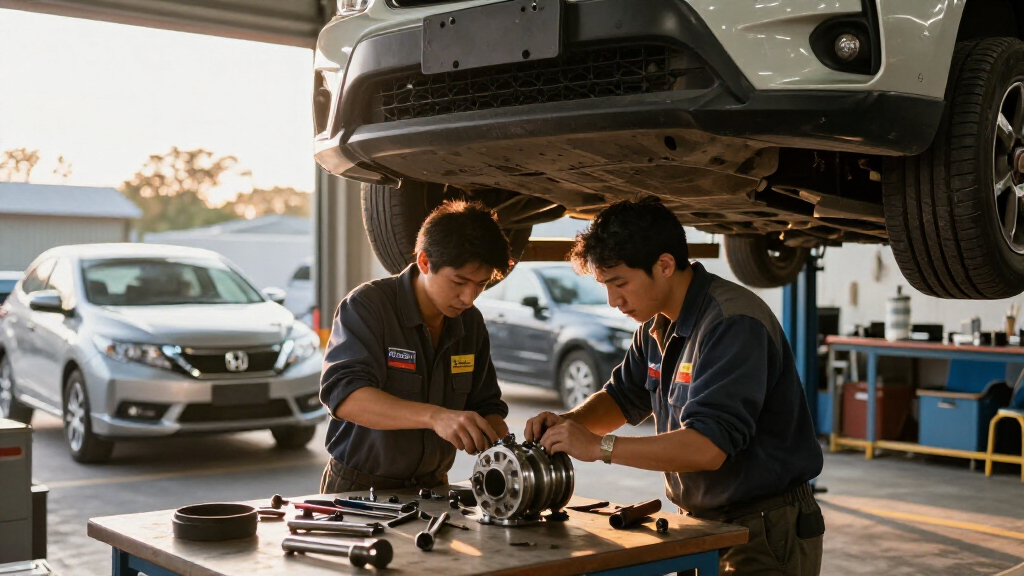
A supplied IdeaNavigator AI item frames parts standardization by Toyota, Nissan and Honda as a cost-cutting development, but it provides no details confirming an agreement, naming parts or setting a timeline. The business rationale is plausible, yet the scope and implications for dealers, repair shops and customers remain unverified.
A brief from IdeaNavigator AI identifies a reported effort by Toyota, Nissan and Honda to standardize some parts to lower costs, but the information available does not say which components are involved, whether the automakers have formally agreed, or when any changes would take effect. That gap matters to dealerships and repair shops: shared or more consistent parts could affect procurement and service planning, but the practical impact cannot yet be established.
The item is presented as an automotive retail development, with lowering costs as the stated purpose. It does not describe the proposed standards, identify specific vehicle models or parts, or explain whether the effort concerns design, manufacturing, purchasing, or another part of the supply chain. Those distinctions would determine whether repair businesses see any direct change.
It also provides no announcement from Toyota, Nissan or Honda, and gives no named spokesperson, formal document, date, or timetable. The reported plan should therefore be treated as unconfirmed in the available details, rather than as an established program with a defined launch. The brief does not quantify expected savings or say who would receive them.
IdeaNavigator AI frames the item as a signal that could be useful to an independent dealership or auto shop. Its proposed monitoring product would collect automotive news, recalls and regulatory developments, then turn relevant items into short decision briefs. That is a description of a suggested business workflow, not independent evidence about the automakers’ plans.
Toyota, Nissan and Honda and parts alignment
A brief reports a cost-saving parts standardization plan, but gives no details confirming an agreement or its effects. For businesses and drivers, the practical impact remains uncertain.
What the report says
IdeaNavigator AI describes a reported effort to standardize some parts across the three automakers.
Lower costs
The brief names cost reduction as the goal, but provides no savings estimate.
Not specified
No parts, models, markets, suppliers or type of standardization are identified.
Unconfirmed
The available information includes no company announcement or formal documentation.
What businesses can conclude
The reported objective does not establish what will change for parts buyers or customers.
- More consistent parts could simplify sourcing or production.
- Parts availability, maintenance costs or vehicle prices could be affected.
- Whether parts would be interchangeable across brands.
- Whether any savings would reach shops or customers.
What to watch for
Confirmation and practical details would help show whether repair and retail operations are affected.
Look for statements or documents from Toyota, Nissan or Honda.
Check which components, models, suppliers and markets are included.
Seek an implementation date and evidence of expected cost effects.
Potential Effects on Parts and Repairs
If the three automakers do coordinate on parts, the consequences would depend on the components and the form of coordination. More common specifications or purchasing arrangements could, in principle, simplify sourcing or production. But the available account gives no evidence that parts will be interchangeable across brands, that repair shops will be able to use the same replacement component, or that prices will fall for customers.
For independent repair businesses and dealers, the near-term issue is whether to change purchasing, inventory or service plans. Without a confirmed parts list and effective date, there is no clear basis for those decisions. Businesses should distinguish a reported cost-saving objective from demonstrated reductions in wholesale prices, repair bills or vehicle costs.
The development could also matter to consumers if it eventually affects parts availability, maintenance costs or vehicle pricing. None of those outcomes is confirmed. Any savings might stay with manufacturers, pass through suppliers, reach retailers, or be reflected in customer prices; the details supplied do not establish which, if any, would happen.
Products Worth Considering

LG UltraGear 34G600A-B 34-Inch Curved WQHD Gaming Monitor

Logitech MX Mechanical Wireless Illuminated Keyboard, Tactile Quiet, Graphite

Bose QuietComfort Wireless Bluetooth Noise-Cancelling Headphones, Ice Blue
As an affiliate, we earn on qualifying purchases.
A Signal for Automotive Retail
The brief’s focus is not only the reported parts plan but also how retail businesses learn about industry changes. It says vehicle launches, recalls and regulation are spread across news, forums and filings, and argues that a role-specific update could help an independent dealership or shop identify developments relevant to its work. This is the rationale for the proposed automotive retail signal monitor.
IdeaNavigator AI describes the monitor as an early-stage product concept: watch Hacker News and similar feeds, filter items for automotive retail roles, and produce a concise account of what changed, why it matters and what a business might do. The brief says Hacker News surfaced the topic with a signal score of 88 out of 100, but does not define the score’s method, comparison set or time window. It should not be read as a measure of the parts plan’s confirmed importance or reliability.
The suggested validation is to deliver this brief and two other automotive developments to five people matching the target customer profile, then see whether anyone changes a decision or forwards an item. That is a proposed test of demand for the monitoring service, not a reported result and not confirmation of the automakers’ plans.
The Parts Plan Still Lacks Detail
The available account does not establish whether Toyota, Nissan and Honda have made a formal agreement or whether the idea is being considered, negotiated or already put into practice. It names no participating divisions or suppliers, and does not clarify whether the effort is joint among all three companies or involves separate arrangements.
Key practical details are also missing: which parts might be standardized, which models or markets could be covered, what “standardize” means in this case, and whether the change would affect replacement parts sold to repair businesses. No cost estimate, customer-price forecast, safety assessment, regulatory filing or rollout schedule is provided. Until those details are independently confirmed, the effect on shops, dealers and drivers remains uncertain.
Watch for Company Confirmation
The next useful development would be a statement or documentation from Toyota, Nissan or Honda specifying whether a parts initiative exists and what it covers. Details on affected components, suppliers, markets, implementation dates and expected savings would help show whether the plan is a manufacturing measure or one that could alter repair and retail operations.
For independent businesses, the practical next step is to wait for verifiable information before changing orders or inventory. The monitoring service proposed by IdeaNavigator AI would also need to test whether its briefs lead target users to take action; the described five-person validation is a plan, not a completed test. No company response or further milestone is included in the information currently available.
Source: IdeaNavigator AI
Key Questions
Have Toyota, Nissan and Honda confirmed a parts-standardization agreement?
The available brief does not include a company announcement or other documentation confirming a formal agreement. The status is unclear.
Which parts would be standardized?
No components, vehicle models or markets are identified. It is also unclear what kind of standardization is proposed.
Will the plan lower repair bills or vehicle prices?
That has not been established. The brief gives no savings estimate and does not say whether any reductions would reach repair shops or customers.
Should independent shops change their inventory now?
The information provided does not offer a confirmed parts list or timetable that would support an inventory change. Shops would need specific company or supplier details to assess any operational effect.
Source: IdeaNavigator AI