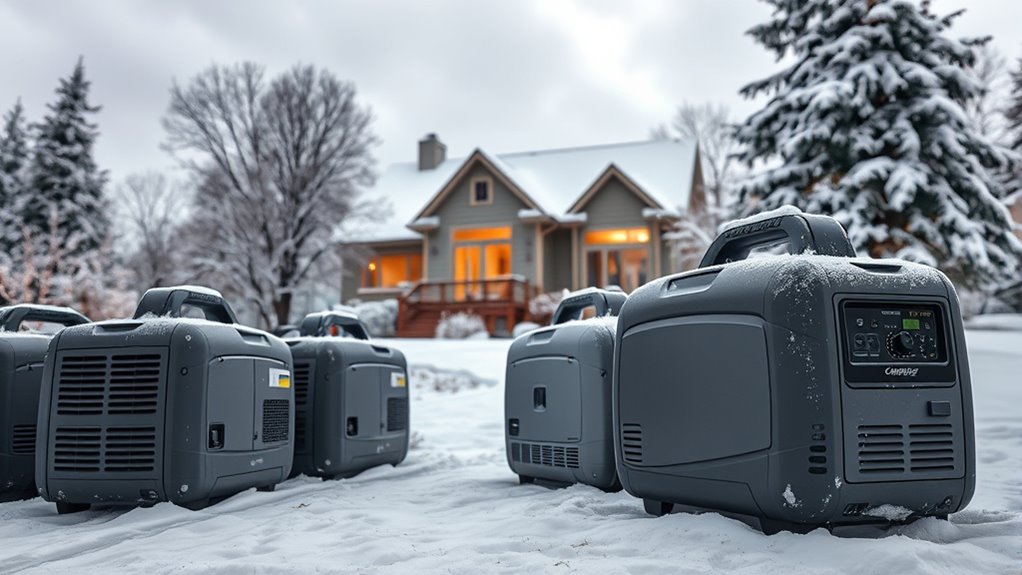
A winter backup generator alternative can mean a portable unit for essential circuits or a standby system that powers more of your home automatically. I rank the Champion 12,500-Watt Tri-Fuel Generator as the best overall for its mix of high output and fuel flexibility; the Honeywell 14kW Standby Generator suits homeowners seeking fixed, automatic backup, while the WEN DF475T is a more manageable fit for lighter loads. The central tradeoff is capacity and convenience versus portability, fuel availability, noise, and upkeep. No portable generator is a substitute for safe outdoor operation or a properly installed transfer switch. Read on for the full comparison and guidance on choosing a setup that fits your winter outage needs.

Get the latest gadgets delivered free with Prime
- Fast, free delivery on millions of items
- Prime Video, Amazon Music and more included
- Member-only deals all year
Complete the kit


Key Takeaways
Fuel choice separates the leading portable options: the Champion 12,500-Watt and Westinghouse WGen14500TFc support three fuel types, while several other high-output models are dual-fuel or gas-only.
Standby convenience comes with a different commitment: the Honeywell 14kW is a fixed home-backup system with a transfer switch, unlike the lineup’s portable generators, which need outdoor placement and manual setup.
More watts are not automatically better: the 14,500- and 15,000-watt-class units suit larger starting loads, but smaller households may find the WEN DF475T or Westinghouse WGen3600DFc easier to match to essential circuits.
Inverter choices add another priority: the WEN DF680iX, Champion 11,000-Watt Inverter, and Westinghouse ecoGen10000 offer inverter designs, but output, fuel options, and intended load size still differ.
Starting convenience varies across the range: electric, remote, and wireless-start features can reduce effort in cold weather, but they do not replace proper preparation, safe positioning, or routine maintenance.
| Champion 12,500-Watt Electric-Start Tri-Fuel Portable Generator |  | Best for Flexible Fuel Supply | Fuel types: Gasoline, propane, natural gas | Gasoline output: 12,500 starting watts; 10,000 running watts | Propane output: 11,250 starting watts; 9,000 running watts | VIEW ON AMAZON | See Our Full Breakdown |
| Westinghouse WGen14500TFc Tri-Fuel Portable Generator with CO Sensor |  | Best for Maximum Portable Output | Fuel types: Gasoline, propane, natural gas | Gasoline output: 18,000 peak watts; 14,500 running watts | Propane output: 16,000 peak watts; 13,000 running watts | VIEW ON AMAZON | See Our Full Breakdown |
| Honeywell 14kW Home Standby Generator with 16-Circuit Transfer Switch |  | Best Automatic Standby Alternative | Power output: 14,000 watts (14kW) | Fuel types: Natural gas or propane | Voltage and frequency: 120 volts; 60 hertz | VIEW ON AMAZON | See Our Full Breakdown |
| WEN DF475T 4,750-Watt Dual-Fuel Portable Generator with Electric Start and Wheel Kit |  | Best Value for Essential Loads | Fuel types: Gasoline and propane | Gasoline output: 4,750 surge watts; 3,800 running watts | Propane output: 4,350 surge watts; 3,500 running watts | VIEW ON AMAZON | See Our Full Breakdown |
| WEN DF680iX 6800-Watt Dual-Fuel Portable Inverter Generator |  | Best Quieter Portable Pick | Fuel types: Gasoline and propane | Gasoline output: 6,800 surge watts; 5,100 rated watts | Propane output: 6,000 surge watts; 4,500 rated watts | VIEW ON AMAZON | See Our Full Breakdown |
| DuroMax XP13000EH Dual Fuel Portable Generator |  | Best for High-Output Dual-Fuel Backup | Fuel: Gasoline or propane | Running wattage: 10,500 watts | Surge wattage: 13,000 watts | VIEW ON AMAZON | See Our Full Breakdown |
| DuroMax XP15000HX 15,000-Watt Dual Fuel Portable Generator |  | Best for Maximum Portable Output | Fuel: Gasoline or propane | Running wattage: 12,000 watts | Starting wattage: 15,000 watts | VIEW ON AMAZON | See Our Full Breakdown |
| Westinghouse WGen5300c Portable Generator with Remote Electric Start |  | Best for Longer Stated Runtime | Fuel: Gasoline | Running output: 5,300 watts | Peak output: 6,600 watts | VIEW ON AMAZON | See Our Full Breakdown |
| Champion 11,000-Watt Portable Inverter Generator with Wireless Remote Start |  | Best for Clean Power and Remote Starting | Fuel: Gasoline | Running wattage: 9,000 watts | Starting wattage: 11,000 watts | VIEW ON AMAZON | See Our Full Breakdown |
| Westinghouse WGen3600DFc Dual-Fuel Portable Generator |  | Best Compact Dual-Fuel Pick | Fuel: Gasoline or propane | Gasoline output: 3,600 rated watts; 4,650 peak watts | Propane output: 3,240 rated watts; 4,650 peak watts | VIEW ON AMAZON | See Our Full Breakdown |
| Westinghouse ecoGen10000 Portable Inverter Generator with CO Sensor |  | Best for Cleaner Power | Fuel type: Gasoline | Running wattage: 7,600 watts | Peak wattage: 10,000 watts | VIEW ON AMAZON | See Our Full Breakdown |
| Westinghouse WGen9500c 12,500-Watt Gas Portable Generator with Remote Start |  | Best for High-Output Gasoline Backup | Fuel type: Gasoline | Running wattage: 9,500 watts | Peak wattage: 12,500 watts | VIEW ON AMAZON | See Our Full Breakdown |
| Westinghouse WGen11500TFc Tri-Fuel Portable Generator with CO Sensor |  | Best for Fuel-Flexible Winter Backup | Fuel types: Gasoline, propane, and natural gas | Gasoline running output: 11,500 watts | Gasoline peak output: 14,500 watts | VIEW ON AMAZON | See Our Full Breakdown |
| winter backup generator alternative | Engine | Runtime | Fuel tank capacity |
|---|---|---|---|
| Champion 12,500-Watt Electric- | 500cc Champion | 8 hours at 50% load on gasoline; 3 hours at 50% load on a 20-pound propane tank | — |
| Westinghouse WGen14500TFc Tri- | 713cc 4-stroke OHV V-Twin | Up to 16 hours at 25% load on gasoline | 10.5 gallons |
| Honeywell 14kW Home Standby Ge | — | — | — |
| WEN DF475T 4,750-Watt Dual-Fue | 224cc 4-stroke OHV | Up to 11 hours at half load | 4 gallons |
| WEN DF680iX 6800-Watt Dual-Fue | 224cc | Up to 6.1 hours at half load on gasoline; up to 9 hours on a 20-pound propane tank | — |
| DuroMax XP13000EH Dual Fuel Po | 500cc OHV, 4-stroke | — | — |
| DuroMax XP15000HX 15,000-Watt | 670cc OHV, 4-stroke | — | 13.2 gallons |
| Westinghouse WGen5300c Portabl | 274cc 4-stroke OHV | Up to 14.5 hours | 4.7 gallons |
| Champion 11,000-Watt Portable | 459cc, 4-stroke Champion OHV | Up to 15 hours at 25% load | — |
| Westinghouse WGen3600DFc Dual- | 212cc, 4-stroke OHV | — | 4 gallons |
| Westinghouse ecoGen10000 Porta | 420cc 4-stroke OHV | Up to 12 hours | 5.28 gallons |
| Westinghouse WGen9500c 12,500- | 457cc 4-stroke OHV | Up to 12 hours | 6.6 gallons |
| Westinghouse WGen11500TFc Tri- | 550cc 4-stroke OHV | — | — |
More Details on Our Top Picks
Champion 12,500-Watt Electric-Start Tri-Fuel Portable Generator
For winter outages where fuel availability can change, I rank the Champion highly for its three fuel options: gasoline, propane, and natural gas. Its 10,000 running watts on gasoline or 8,000 on natural gas can support more household loads than the WEN DF475T, while natural-gas compatibility can reduce the need to store gasoline. The electric start and included battery also make cold-weather startup less dependent on pulling a recoil cord. CO Shield adds an automatic shutoff if elevated carbon monoxide is detected, but it is not a substitute for safe outdoor placement. The tradeoffs are substantial noise at 74 dBA and just three hours at half load on a 20-pound propane tank. I’d choose it for fuel flexibility, not quiet operation or extended propane runtime.
Pros:- Runs on gasoline, propane, or natural gas, giving winter outage plans more fuel options
- Electric start with the battery included avoids relying on recoil starting
- Up to 10,000 running watts on gasoline provides substantially more output than the WEN DF475T
- CO Shield, Intelligauge, fuel hoses, and engine oil are included
Cons:- Rated at 74 dBA at 23 feet, so it is a loud choice near living areas
- Runs for only three hours at 50% load on a 20-pound propane tank
- Portable setup still requires outdoor placement and suitable household connection equipment
Best for: Households that can connect to natural gas or keep multiple fuel types available and need portable backup for several major loads
Not ideal for: Buyers who need quiet operation or long runtime from a single 20-pound propane tank
- Fuel types:Gasoline, propane, natural gas
- Gasoline output:12,500 starting watts; 10,000 running watts
- Propane output:11,250 starting watts; 9,000 running watts
- Natural gas output:10,000 starting watts; 8,000 running watts
- Engine:500cc Champion
- Gasoline tank capacity:7.7 gallons
- Runtime:8 hours at 50% load on gasoline; 3 hours at 50% load on a 20-pound propane tank
- Noise level:74 dBA at 23 feet
- Starting system and warranty:Electric start with battery included; 3-year limited warranty with lifetime technical support
Our verdict“Choose the Champion if you want high-output portable backup with gasoline, propane, and natural gas flexibility and can accept its noise and limited small-tank propane runtime.”
Westinghouse WGen14500TFc Tri-Fuel Portable Generator with CO Sensor
When a winter outage calls for broad household coverage from a portable unit, I place the WGen14500TFc above the Champion 12,500-Watt for its 14,500 running watts on gasoline and higher output on each of its three fuels. That added capacity can help support more simultaneous loads, while remote and push-button starting is a practical advantage when the generator is set outside in bad weather. Its transfer-switch-ready outlets and under-5% THD also make it a better fit for planned home connection and electronics than a basic portable generator. The cost of that capacity is a large, heavy machine that is less convenient to move, even with wheels and handles. The quoted 16-hour runtime is at only 25% load on gasoline, so I wouldn’t treat it as a promise for heavier winter demand.
Pros:- Highest listed running output in this group on gasoline, propane, and natural gas
- Remote and push-button electric start can make operation easier in cold or unpleasant weather
- Transfer-switch-ready outlets support a planned home backup connection
- Less than 5% THD is suited to powering sensitive electronics
Cons:- Large and heavy, making storage and transport more demanding than with the WEN DF680iX
- The 16-hour gasoline runtime applies at 25% load, not heavier household demand
- Still produces up to 74 dBA, so it is not a quiet alternative to a standby setup
Best for: Homeowners with a transfer-switch setup who need high portable output, multiple fuel choices, and remote starting
Not ideal for: Buyers with limited storage or anyone who needs a lightweight generator that is easy to reposition
- Fuel types:Gasoline, propane, natural gas
- Gasoline output:18,000 peak watts; 14,500 running watts
- Propane output:16,000 peak watts; 13,000 running watts
- Natural gas output:14,400 peak watts; 11,600 running watts
- Engine:713cc 4-stroke OHV V-Twin
- Fuel tank capacity:10.5 gallons
- Runtime:Up to 16 hours at 25% load on gasoline
- Power quality:Less than 5% total harmonic distortion
- Starting system and safety:Push-button electric and remote start; CO shutdown sensor and automatic low-oil shutdown
Our verdict“Pick the WGen14500TFc when maximum portable household output and remote operation matter more than size, weight, and quiet running.”
Honeywell 14kW Home Standby Generator with 16-Circuit Transfer Switch
Unlike the Champion and Westinghouse portable units, this Honeywell is designed to start automatically when utility power fails, making it the closest option here to hands-off winter backup. Its 14kW output and included 16-circuit transfer switch are aimed at a planned residential installation rather than a generator that can be wheeled out and connected as needed. The natural gas or propane supply avoids reliance on stored gasoline, and the aluminum enclosure and composite mounting pad suit a fixed outdoor location. That convenience has a higher setup burden: installation and fuel connections are required, so it is not an immediate, movable fallback like the WEN DF475T. The listed data also lacks a runtime figure and detailed outlet-level information, which makes direct performance comparisons harder. I’d favor it for automatic coverage, not portability.
Pros:- Automatically starts when utility power is lost, unlike the portable options in this group
- 14kW output is designed for residential backup rather than a few essential devices
- Includes a 16-circuit transfer switch and composite mounting pad
- Aluminum enclosure is intended for outdoor, all-weather installation
Cons:- Requires installation and a compatible, connected fuel supply before it can provide backup
- Fixed standby design cannot be wheeled away or readily used at another location
- The supplied product data does not specify runtime or detailed circuit-level power limits
Best for: Homeowners who want automatic residential backup, have a suitable natural-gas or propane supply, and can arrange professional installation
Not ideal for: Renters, budget-conscious DIY buyers, or households that need a portable generator they can move between locations
- Power output:14,000 watts (14kW)
- Fuel types:Natural gas or propane
- Voltage and frequency:120 volts; 60 hertz
- Transfer switch:16-circuit transfer switch included
- Enclosure:All-weather aluminum
- Dimensions:48 × 25 × 29 inches
- Included mounting component:Composite mounting pad for soil installation
- Controls:Multilingual LCD control panel; electronic ignition
- Warranty:3-year limited
Our verdict“Choose the Honeywell if automatic, fixed home backup is worth installation work and you do not need a portable unit.”
WEN DF475T 4,750-Watt Dual-Fuel Portable Generator with Electric Start and Wheel Kit
I see the WEN DF475T as a simpler winter backup choice for essential circuits, not a whole-home substitute. It delivers 3,800 running watts on gasoline and can also use propane, while its switchable 120V/240V output and L14-30R outlet offer connection flexibility that a small single-voltage unit may lack. Compared with the Champion 12,500-Watt, it gives up a great deal of capacity and the natural-gas option, but its wheel kit and included LPG hose make setup more approachable for buyers who want a basic portable machine. The four-gallon tank is modest, although the listed runtime reaches 11 hours at half load. I’d keep expectations to selected appliances and circuits; buyers planning to run several major loads should step up to the WEN DF680iX or a higher-output tri-fuel model.
Pros:- Gasoline and propane capability offers fuel choice for outages
- Switchable 120V/240V output with an L14-30R outlet supports varied connection needs
- Electric start and included wheel and handle kit make operation and movement more manageable
- Up to 11 hours at half load from a four-gallon gasoline tank
Cons:- Running output is far below the Champion 12,500-Watt and Westinghouse WGen14500TFc
- Does not run on natural gas
- Four-gallon tank limits stored gasoline capacity for extended outages
Best for: First-time generator buyers who need portable backup for selected appliances and want gasoline or propane operation with 120V/240V output
Not ideal for: Households expecting to power many major appliances at once or wanting natural-gas operation
- Fuel types:Gasoline and propane
- Gasoline output:4,750 surge watts; 3,800 running watts
- Propane output:4,350 surge watts; 3,500 running watts
- Engine:224cc 4-stroke OHV
- Voltage:120V/240V
- Fuel tank capacity:4 gallons
- Runtime:Up to 11 hours at half load
- Starting method:Electric start
- Warranty:2 years
Our verdict“Choose the DF475T for portable, essential-load backup when manageable output and dual-fuel flexibility matter more than powering a large home.”
WEN DF680iX 6800-Watt Dual-Fuel Portable Inverter Generator
Among these five, the WEN DF680iX makes the strongest case for buyers who want lower noise and cleaner inverter power without dropping to the DF475T’s lower output. Its 5,100 rated watts on gasoline and 4,500 on propane provide more capacity than the DF475T, while the listed 64 dB at quarter load is quieter than the 74 dBA ratings on the Champion and Westinghouse high-output models. That can make it a more neighbor-conscious choice during a winter outage, though the noise figure is tied to a light load. The 240V output and bonded neutral support low-power Level 2 EV charging, but that is not a replacement for a household transfer-switch plan. Runtime is limited to 6.1 hours at half load on gasoline, and propane output is lower, so I’d trade endurance and peak capacity for quieter, more portable operation.
Pros:- Inverter output is suited to sensitive electronics
- Listed noise level of 64 dB at quarter load is below the high-output Champion and Westinghouse models
- Gasoline and propane operation adds fuel flexibility, with up to nine hours on a 20-pound propane tank
- Wheels and telescoping handle help with movement and storage
Cons:- Gasoline runtime is up to 6.1 hours at half load, shorter than the WEN DF475T’s listed half-load runtime
- Propane rated output falls to 4,500 watts
- Parallel connection kit is sold separately
Best for: Homeowners who want inverter power for electronics, moderate essential-load capacity, and a quieter portable unit for neighborhood use
Not ideal for: Buyers who need long unattended runtime, the highest household output, or a complete parallel setup without buying extra equipment
- Fuel types:Gasoline and propane
- Gasoline output:6,800 surge watts; 5,100 rated watts
- Propane output:6,000 surge watts; 4,500 rated watts
- Engine:224cc
- Noise level:64 dB at quarter load
- Gasoline tank capacity:2.9 gallons
- Runtime:Up to 6.1 hours at half load on gasoline; up to 9 hours on a 20-pound propane tank
- Outlets:L14-30R 120V/240V, two 120V receptacles, TT-30R RV, 12V DC, and two 5V USB ports
- Safety and warranty:CO shutdown, fuel shutoff, automatic low-oil and low-fuel shutdown; 3-year warranty
Our verdict“Pick the DF680iX if quieter inverter operation and portability matter more than maximum output or long gasoline runtime.”
DuroMax XP13000EH Dual Fuel Portable Generator
The XP13000EH suits households that want substantial portable backup output and the option to switch between gasoline and propane. Its 10,500 running watts and transfer-switch-ready 50-amp outlet give it more capacity for household circuits than the Westinghouse WGen5300c, though it is not as powerful as the XP15000HX. Electric start simplifies getting it running, while the all-metal frame is built for demanding residential, RV, or jobsite use. The tradeoff is substantial: at 234 pounds, it is not an easy generator to reposition, and the supplied runtime figure is only three hours, so I would verify expected fuel use and runtime for your intended load before relying on it through a long outage. It needs outdoor operation and safe exhaust placement like any fuel-burning generator.
Pros:- Dual-fuel operation gives buyers a choice of gasoline or propane.
- 10,500 running watts support more household loads than the WGen5300c.
- 50-amp transfer-switch-ready outlet supports connection to a compatible home transfer setup.
- Electric start, CO sensor, and low-oil shutdown add useful starting and safety features.
Cons:- At 234 pounds, moving it requires substantial effort despite the foldable handle and no-flat tires.
- The listed three-hour runtime is short and makes fuel planning a concern.
- Its large output does not remove the need to operate it outdoors, away from buildings.
Best for: Homeowners who need high running wattage, want gasoline-or-propane flexibility, and can keep a heavy generator in a fixed outdoor location.
Not ideal for: Buyers who need a lightweight unit, quiet operation, or a clearly established long runtime for overnight winter outages.
- Fuel:Gasoline or propane
- Running wattage:10,500 watts
- Surge wattage:13,000 watts
- Engine:500cc OHV, 4-stroke
- Voltage:240 volts
- Listed runtime:3 hours
- Weight:234 pounds
- Dimensions:30 x 29 x 26 inches
Our verdict“Choose the XP13000EH if you want strong dual-fuel portable backup and can accept a heavy unit with a notably short listed runtime.”
DuroMax XP15000HX 15,000-Watt Dual Fuel Portable Generator
Among the portable options here, the XP15000HX is the pick for buyers who put running capacity first. Its 12,000 running watts exceed the XP13000EH’s 10,500 watts, giving a household more headroom for larger loads when a winter outage affects several circuits. Gasoline-or-propane operation and a 50-amp transfer-switch-ready outlet add flexibility for backup setups, while the digital display makes voltage, frequency, and operating hours visible. The main compromise is physical scale: at 345 pounds and 38 inches long, this is far less convenient to store or move than the Champion 11,000-Watt inverter generator. The supplied data does not state runtime, so I would not choose it over models with published runtime figures if fuel endurance is the deciding factor. Its CO Alert shutdown is a safety feature, not a substitute for outdoor placement.
Pros:- 12,000 running watts provide the highest rated running output among the five products in this batch.
- Gasoline and propane compatibility offers fuel-choice flexibility.
- Digital display reports voltage, frequency, and operating hours.
- CO Alert automatic shutdown and a 50-amp transfer-switch-ready outlet support backup use.
Cons:- At 345 pounds, it is difficult to move and may require planned placement.
- Its 38 x 28 x 33-inch footprint takes more storage space than the XP13000EH.
- Runtime is not specified in the provided product data.
Best for: Homeowners with a compatible transfer setup who need high portable output and have a suitable outdoor storage and operating area.
Not ideal for: Buyers with limited storage, frequent repositioning needs, or a requirement for a stated runtime before choosing.
- Fuel:Gasoline or propane
- Running wattage:12,000 watts
- Starting wattage:15,000 watts
- Engine:670cc OHV, 4-stroke
- Fuel tank capacity:13.2 gallons
- Outlets:10
- Weight:345 pounds
- Dimensions:38 x 28 x 33 inches
Our verdict“Pick the XP15000HX when portable output matters more than easy handling, compact storage, or having a published runtime figure.”
Westinghouse WGen5300c Portable Generator with Remote Electric Start
The WGen5300c makes more sense for buyers who want a manageable level of household backup and a useful runtime figure, rather than the higher output of the DuroMax XP13000EH. It supplies 5,300 running watts and can run up to 14.5 hours from its 4.7-gallon gasoline tank, according to the product data. That gives buyers a clearer starting point for fuel planning than the XP15000HX, whose runtime is not specified here. A remote key fob can make starting more convenient in cold weather, and the outlets cover household, RV, and transfer-switch connections. Its limits matter: it runs on gasoline only, and its output may not cover the same combination of larger loads as the DuroMax models. The steel frame and generator weight also make moving it less casual than the remote start might suggest.
Pros:- Up to 14.5 hours of stated runtime from a 4.7-gallon tank offers a useful fuel-planning reference.
- Remote electric start lets users start it without walking to the unit.
- Includes household, RV-ready, and transfer-switch connection outlets.
- CO shutdown and low-oil shutdown add automatic protection features.
Cons:- Gasoline-only operation offers less fuel flexibility than the dual-fuel DuroMax models.
- Its 5,300 running watts provide less capacity for multiple large household loads.
- The steel-frame design can make transport challenging.
Best for: Households seeking midrange gasoline backup with a stated long runtime, remote starting, and household or RV outlet options.
Not ideal for: Buyers who want propane as a backup fuel or need the higher running output of the DuroMax XP13000EH or XP15000HX.
- Fuel:Gasoline
- Running output:5,300 watts
- Peak output:6,600 watts
- Engine:274cc 4-stroke OHV
- Fuel tank capacity:4.7 gallons
- Runtime:Up to 14.5 hours
- Voltage:120/240V
- Starting method:Electric start with remote key fob
- Outlets:5–20R 120V 20A duplex, TT-30R 30A, L14-30R 30A
Our verdict“Choose the WGen5300c if a stated extended gasoline runtime and remote starting matter more than dual-fuel capability or high output.”
Champion 11,000-Watt Portable Inverter Generator with Wireless Remote Start
The Champion stands apart from the conventional DuroMax generators by pairing 9,000 running watts with inverter output rated under 3% THD. That makes it the stronger fit for buyers prioritizing cleaner power for sensitive electronics, while still wanting substantial backup capacity. Its wireless remote works up to 80 feet, and the stated runtime reaches 15 hours at 25% load; that load condition matters, since runtime will vary with demand. Against the Westinghouse WGen5300c, it offers considerably more running output and inverter power quality, but it is gasoline-only and lists a 64 dBA noise level at 23 feet. CO Shield adds automatic shutdown when elevated carbon monoxide is detected, though it cannot make indoor operation safe. This is a capable compromise, not a quiet or fuel-flexible substitute for every winter setup.
Pros:- Less than 3% THD is a useful specification for powering sensitive electronics.
- 9,000 running watts exceed the WGen5300c’s rated running output.
- Wireless remote start works up to 80 feet, alongside electric start.
- CO Shield automatic shutoff and an included wheel kit support safer, easier handling.
Cons:- Gasoline-only operation lacks the propane option found on both DuroMax models.
- The stated 64 dBA at 23 feet may be disruptive in quiet residential settings.
- The 15-hour runtime applies at 25% load, not necessarily to heavier backup demand.
Best for: Buyers who need substantial backup output, inverter power for sensitive electronics, and remote starting from a distance.
Not ideal for: People who need propane operation, very quiet equipment, or a compact generator for frequent transport.
- Fuel:Gasoline
- Running wattage:9,000 watts
- Starting wattage:11,000 watts
- Power quality:Less than 3% THD
- Runtime:Up to 15 hours at 25% load
- Noise level:64 dBA at 23 feet
- Remote start range:Up to 80 feet
- Tank capacity:6.1 gallons
- Engine:459cc, 4-stroke Champion OHV
Our verdict“Choose the Champion if clean inverter power and remote starting justify gasoline-only operation and a stated noise level of 64 dBA.”
Westinghouse WGen3600DFc Dual-Fuel Portable Generator
The WGen3600DFc is the most modest-output choice in this group, but its dual-fuel operation and remote start make it a practical alternative for buyers who do not need to run a large share of the home. On gasoline, it provides 3,600 rated watts; propane output is lower at 3,240 rated watts, so I would size the loads around the fuel source rather than assume both perform alike. Compared with the WGen5300c, it gives up output but adds propane capability and wireless remote starting. Its 30-amp RV-ready outlet and stated gasoline runtime of up to 14 hours suit lighter backup or RV needs. The limitation is that no propane runtime is listed, and some assembly is required. This is a more manageable choice than the heavy DuroMax units, not a replacement for their higher capacity.
Pros:- Gasoline and propane operation provide more fuel options than the gasoline-only WGen5300c.
- Wireless remote and push-button electric start simplify startup.
- RV-ready 30A outlet supports compatible RV connections.
- Gasoline runtime is stated at up to 14 hours, with low-oil and CO shutdown features.
Cons:- Rated output falls to 3,240 watts on propane and 3,600 watts on gasoline.
- Propane runtime is not specified in the product data.
- Wheel installation and battery hookup require some assembly.
Best for: RV owners and households with a short list of essential loads who want dual-fuel flexibility and remote starting in a lower-output generator.
Not ideal for: Households planning to power several high-draw appliances at once or buyers who need propane runtime data for fuel planning.
- Fuel:Gasoline or propane
- Gasoline output:3,600 rated watts; 4,650 peak watts
- Propane output:3,240 rated watts; 4,650 peak watts
- Fuel tank capacity:4 gallons
- Gasoline runtime:Up to 14 hours
- Engine:212cc, 4-stroke OHV
- Starting system:Electric push-button and wireless remote
- Outlets:5-20R 120V duplex, TT-30R 30A, L5-30R 30A
- Safety features:Low-oil shutdown, CO shutdown, overload protection
Our verdict“Choose the WGen3600DFc for lighter backup or RV use when fuel flexibility and remote start matter more than high output.”
Westinghouse ecoGen10000 Portable Inverter Generator with CO Sensor
For winter outages where you need substantial household output without giving up inverter-style power quality, the ecoGen10000 is a useful middle ground. Its 7,600 running watts and less than 3% THD give it an advantage for sensitive electronics over many conventional open-frame generators, while transfer switch-ready outlets support connection to a home circuit setup. Remote and push-button electric start also make cold-weather starts less of a chore than relying on recoil alone. Compared with the WGen9500c, it supplies less running power, but it has lower stated THD; compared with the tri-fuel WGen11500TFc, it gives up fuel flexibility and extended gasoline runtime. Its open frame can be loud, and gasoline storage remains part of the winter-preparedness plan.
Pros:- 7,600 running watts can support a substantial set of household loads
- Less than 3% THD is a useful fit for sensitive electronics
- Remote and push-button electric start reduce dependence on recoil starting in cold weather
- CO sensor and transfer switch-ready outlets support safer, more practical backup use
Cons:- Open-frame construction may be louder than enclosed inverter generators
- Gasoline-only operation leaves buyers dependent on stored fuel and a 5.28-gallon tank
- Provides less running output than the WGen9500c and WGen11500TFc
Best for: Homeowners who want inverter-style power quality for electronics alongside enough output for major appliances during outages
Not ideal for: Buyers who need quieter enclosed operation, multiple fuel choices, or the highest running wattage in this group
- Fuel type:Gasoline
- Running wattage:7,600 watts
- Peak wattage:10,000 watts
- Total harmonic distortion:Less than 3%
- Engine:420cc 4-stroke OHV
- Fuel tank capacity:5.28 gallons
- Runtime:Up to 12 hours
- Voltage:240 volts
- Starting methods:Remote electric, push-button electric, and recoil
Our verdict“Choose the ecoGen10000 if cleaner inverter power matters more than tri-fuel flexibility or maximum output.”
Westinghouse WGen9500c 12,500-Watt Gas Portable Generator with Remote Start
The WGen9500c prioritizes raw household output over the cleaner power quality and fuel flexibility offered elsewhere in this group. Its 9,500 running watts can cover more demanding combinations of appliances than the ecoGen10000, making it a stronger fit when the goal is to keep several large loads operating. Remote and electric start are practical in freezing weather, and the CO shutdown and low-oil shutdown add useful safeguards. It also runs up to 12 hours per tank, though that figure depends on load. Compared with the WGen11500TFc, it has lower output and only uses gasoline, but it avoids the complexity of choosing among three fuel sources. At 212 pounds, it is heavy to reposition, and its gasoline dependence calls for fuel planning before winter storms.
Pros:- 9,500 running watts suit heavier household backup loads
- Remote, electric, and recoil starting provide multiple ways to start it
- CO shutdown, overload protection, and low-oil shutdown add safety protections
- Eight outlets and a fuel gauge support varied connections and monitoring
Cons:- At 212 pounds, it is difficult to move without help
- Gasoline-only operation requires fuel storage and replenishment planning
- Its output is below the WGen11500TFc, and no THD figure is provided in the product data
Best for: Households that need strong gasoline-powered output for several major appliances and can keep the generator in a fixed, accessible location
Not ideal for: Buyers who need a lightweight unit, low-THD inverter output, or propane and natural-gas backup options
- Fuel type:Gasoline
- Running wattage:9,500 watts
- Peak wattage:12,500 watts
- Engine:457cc 4-stroke OHV
- Fuel tank capacity:6.6 gallons
- Runtime:Up to 12 hours
- Weight:212 pounds
- Outlets:8
- Starting methods:Remote, electric, and recoil start
Our verdict“Pick the WGen9500c if you want high gasoline-only backup output and can accept a heavy unit with no alternative-fuel option.”
Westinghouse WGen11500TFc Tri-Fuel Portable Generator with CO Sensor
The WGen11500TFc earns its place for buyers who see fuel access as a winter outage risk, not a minor convenience. It can run on gasoline, propane, or natural gas, so a household with a suitable natural-gas connection may avoid relying solely on stored gasoline; propane offers another backup if supply or storage conditions change. On gasoline, it delivers 11,500 running watts and up to 19 hours per tank, more output and stated runtime than the WGen9500c. Its remote start and transfer-switch-ready outlets suit home backup, while the CO sensor and low-oil shutdown add safety features. The tradeoff is size and complexity: it is a heavy-duty portable generator, not a compact solution. Its stated THD is less than 5%, higher than the ecoGen10000’s less-than-3% figure.
Pros:- Gasoline, propane, and natural-gas compatibility reduces dependence on one fuel source
- 11,500 gasoline running watts can support substantial home backup loads
- Up to 19 hours of gasoline runtime per tank helps reduce refueling frequency
- Remote start, CO sensor, low-oil shutdown, and transfer-switch-ready outlets suit backup use
Cons:- Heavy-duty size can make repositioning difficult
- Its stated THD of less than 5% is higher than the ecoGen10000’s less-than-3% rating
- The longest stated runtime is on gasoline, so runtime varies by fuel and operating conditions
Best for: Homeowners with access to gasoline plus propane or natural gas who want high output and multiple fuel choices for prolonged winter outages
Not ideal for: Buyers who need a compact, easy-to-move generator or prioritize the lowest stated THD for sensitive electronics
- Fuel types:Gasoline, propane, and natural gas
- Gasoline running output:11,500 watts
- Gasoline peak output:14,500 watts
- Propane output:10,500 running watts; 13,500 peak watts
- Natural-gas output:9,500 running watts; 12,000 peak watts
- Engine:550cc 4-stroke OHV
- Gasoline tank capacity:9.5 gallons
- Gasoline runtime:Up to 19 hours
- Total harmonic distortion:Less than 5%
Our verdict“Choose the WGen11500TFc if fuel flexibility and high output matter more than compact storage or the ecoGen10000’s lower stated THD.”

How We Picked
I ranked these generators around the demands of winter backup: useful output for household loads, fuel flexibility, starting and connection convenience, portability or installation needs, and the practical burden of upkeep. I treated standby and portable models as different solutions rather than direct substitutes: automatic home coverage has a different value than a unit that can be moved or stored. Inverter models also merit comparison on their own terms, since buyers may prioritize inverter design alongside capacity and fuel choice.
The order reflects how broadly each option can serve a typical household while still accounting for meaningful tradeoffs. The Champion 12,500-Watt Tri-Fuel leads for its combination of substantial output and three-fuel flexibility; the Westinghouse WGen14500TFc offers a higher-output alternative with similar fuel versatility. Standby operation, compact essential-load coverage, inverter design, and remote starting earn distinct roles rather than being treated as universal upgrades. I do not assume a model can run a whole home from its wattage alone: buyers need to check appliance starting demands, circuit limits, transfer-switch requirements, and the exact product documentation.
Factors to Consider When Choosing Winter Backup Generator Alternative
Choosing a winter backup generator is less about finding the largest number on a spec sheet and more about matching a power plan to your home, fuel access, and tolerance for setup. I would make these decisions before choosing between a portable and standby design.
Plan Essential Loads Before Shopping for Wattage
List what must stay on during an outage, such as a furnace, refrigerator, sump pump, and selected lights, then note each item’s running and starting demand. Motors can draw extra power when they start, so adding only the running wattages may leave a generator overloaded. Decide whether you need simultaneous use or can rotate appliances; that choice can change the size you need. Avoid treating a high advertised output as proof that every household circuit can run at once. A qualified electrician can help translate the list into a safe circuit and transfer-switch plan. This step may point you toward a smaller, easier-to-handle unit instead of a heavier high-output model.
Choose Fuel Around Winter Access, Not Just Flexibility
Tri-fuel and dual-fuel capability can help when one supply becomes difficult to obtain, but each fuel type brings storage and connection requirements. Ask which fuels are realistically available at your home during a storm, and check the manufacturer’s instructions for approved fuel, connectors, and operating limits. Gasoline needs safe storage and periodic attention, while propane storage capacity and cold-weather performance deserve planning. Natural gas can simplify refueling for compatible equipment, but a portable generator still needs the correct connection and safe outdoor placement. Do not assume that a multi-fuel label means equal output on every fuel. Compare the rated output for the fuel you expect to use most.
Decide Whether Portability or Automatic Backup Matters More
A portable generator can serve a home during an outage and may be useful in other settings, but it needs to be moved into position, started, connected, and monitored. A standby system can respond automatically when installed with compatible equipment, yet it is a fixed investment in space, installation, and ongoing service. Consider who will operate the generator during severe weather, including whether the person responsible can safely move and connect a heavy unit. Also check storage space and whether the proposed outdoor location meets clearance and exhaust requirements. A portable model is not a plug-in replacement for a home transfer switch. Choose the operating routine you can realistically maintain, not only the one that sounds convenient.
Treat Cold-Weather Starting as a Whole-System Issue
Remote or electric starting can reduce the effort of starting a generator outside in poor weather, but starting features do not guarantee reliable operation after months in storage. Follow the manual’s schedule for inspections, oil, fuel handling, battery care, and exercise runs. Keep any starting battery maintained as directed, and make sure the unit is accessible without clearing a hazardous path during a storm. Cold conditions can affect fuel, batteries, and engine performance, so check the maker’s operating guidance for the temperatures you expect. A start button cannot compensate for stale fuel or neglected maintenance. Build a simple pre-season checklist and test the complete connection setup before an outage.
Budget for Safe Connection and Sound Placement
The generator itself is only one part of a safe backup plan. A transfer switch or other approved connection method helps prevent dangerous backfeeding, and installation may require a licensed electrician. Never run a portable generator indoors, in a garage, or near openings where exhaust can enter the home; use carbon-monoxide alarms and follow the manufacturer’s clearance instructions. A CO sensor on a generator is an added protective feature, not permission to place it close to living spaces. Think about cable routing, weather exposure, noise, and access to fuel before settling on a location. These requirements can make a smaller unit or standby installation more practical than a powerful portable model.
Pay More Only for a Difference You Will Use
Extra capacity is useful when it covers a real starting load or lets you power more critical circuits at once. Otherwise, a larger, heavier generator may add storage and handling burdens without improving your outage plan. Inverter design, three-fuel operation, remote starting, and automatic standby operation each address different priorities, so compare the feature to a specific problem you have. Check what accessories or home electrical work are required rather than comparing generator specifications alone. A value pick is not simply the least complicated model; it is the one whose output and operating demands fit your actual loads. If your needs are limited to a few essentials, reserve capacity for startup surges rather than buying far beyond your plan.
Frequently Asked Questions
Can a portable generator run my furnace during a winter outage?
Often it can, but the answer depends on the furnace’s electrical requirements, starting demand, and how you connect it. Check the furnace nameplate and manual, then include other loads you plan to run at the same time. A generator’s wattage alone does not show whether a particular circuit can be powered safely. Have an electrician confirm a suitable transfer switch or other approved connection method. Never use a cord or connection arrangement that can feed power back into utility lines.
Is a tri-fuel generator worth choosing over a dual-fuel model?
Tri-fuel capability can be worthwhile if all three listed fuel types are accessible and useful at your property. It gives you another option if a preferred supply is unavailable, but it can add connection and planning requirements. Compare the output specified for each fuel, rather than assuming the generator delivers the same capacity on all of them. If you only have reliable access to two fuels, a dual-fuel unit may meet your needs with less complexity. Your choice should follow your local fuel access and storage plan, not the number of fuel options alone.
Should I choose a standby generator instead of a portable unit?
A standby generator makes more sense if you want a fixed system that can start automatically and is sized for a planned set of home circuits. It usually calls for professional installation and a dedicated outdoor location. A portable unit can be moved and stored, but someone must position it, start it, connect it, and manage fuel during an outage. The Honeywell 14kW in this roundup represents the installed standby path, while the other models are portable options. Compare how much automation matters against installation requirements and the flexibility of a movable unit.
How much generator capacity do I need for a winter outage?
Start with the loads that protect health, prevent damage, or keep essential routines going, then account for motor startup surges. A furnace, pump, or refrigerator may need more power at startup than while running. Decide whether you will operate several appliances together or alternate them, since managed use can reduce the capacity required. Have an electrician verify circuit needs and compatibility before buying. Do not use a product’s maximum wattage as a substitute for a household load calculation.
Are inverter generators the best choice for winter home backup?
Not automatically. Inverter models in this roundup may appeal to buyers who prioritize inverter design, but the right choice still depends on the output needed, fuel options, and the loads being powered. A conventional portable generator may better match a buyer focused on high household output, while an inverter model may fit a different balance of features. Check product specifications for the specific appliances and connections you plan to use. Also compare noise guidance, operating limits, and maintenance instructions rather than relying on the inverter label alone.
Conclusion
For most buyers who want portable winter backup with strong output and fuel choice, I’d start with the Champion 12,500-Watt Tri-Fuel as the best overall. The WEN DF475T is the best value-style match for lighter essential loads, while the Honeywell 14kW Standby is the best premium choice for homeowners who want a fixed, automatic system and can plan for installation. For beginners, I’d favor a manageable setup matched to a short list of essential circuits rather than buying the largest unit; the WEN DF475T is the most approachable fit here when its capacity is sufficient. For buyers who need greater output with three fuel options, compare the Westinghouse WGen14500TFc and Westinghouse WGen11500TFc; for inverter-focused needs, look at the WEN DF680iX, Champion 11,000-Watt Inverter, or Westinghouse ecoGen10000 against your load plan. Pick only after confirming starting demands, safe connection, fuel access, and who will operate the unit in bad weather.