
TL;DR
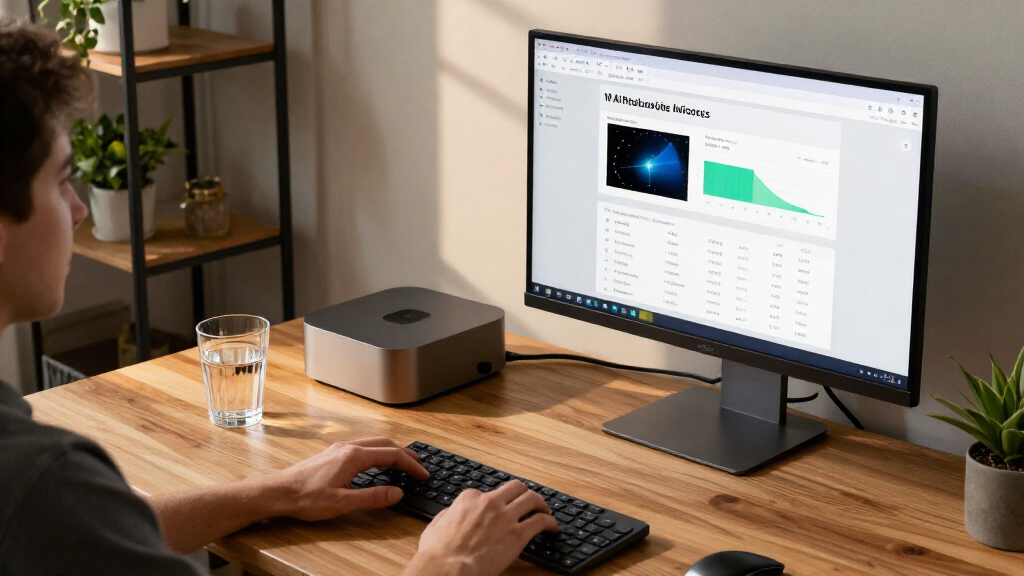
Apple is positioning its Mac mini for always-on AI, and published model requirements show that some smaller open models can run within its 16–64 GB of unified memory. The largest models exceed the top configuration’s capacity, while memory shared with macOS and apps and the cost of long context windows further limit what fits. Local use offers privacy and avoids per-token charges, but the supplied specifications do not establish real-world performance across model configurations.
Apple lists two chip options in the supplied November 16, 2026 price and configuration data: M6 systems with 16–32 GB of memory and M5 Pro systems with 24–64 GB. The listed U.S. starting price is $899 for an M6 Mac mini with 16 GB; the 64 GB M5 Pro configuration with 1 TB of storage is listed at $3,199. Prices and configurations can change.

Get the latest gadgets delivered free with Prime
- Fast, free delivery on millions of items
- Prime Video, Amazon Music and more included
- Member-only deals all year
Google’s published Gemma 4 figures put its 12B model at 6.7 GB at 4-bit precision, and its 26B A4B model at 14.4 GB at 4-bit. The source also lists 17.5 GB for Gemma 4 31B at 4-bit and 34.9 GB at 8-bit. Those figures cover static model weights, according to Google; they do not include the additional memory needed for the operating system, apps and context. OpenAI says gpt-oss-20b runs “within 16GB of memory,” while its gpt-oss-120b is sized for a single 80 GB GPU.
Apple’s MLX documentation describes Apple silicon’s unified architecture: the CPU and GPU can access the same memory pool. That allows the GPU to use system memory for model weights, but does not make all installed memory available to a model. The supplied specifications list 307 GB/s memory bandwidth for the M5 Pro, compared with 3.35 TB/s for Nvidia’s H100 data-center GPU. These figures describe bandwidth, not a direct comparison of model response speeds.

The Trade-Off Behind Local AI
Local inference can keep prompts and files on a computer, work without an internet connection and avoid per-token charges from hosted services. For a small business or individual running a modest model for private tasks, those features may matter more than matching a data-center system’s throughput.
The practical limit is a combination of memory capacity and bandwidth. A model that fits may still leave little space for long conversations or documents, and published bandwidth figures suggest the Mac mini operates in a different hardware class from a high-bandwidth server GPU. The supplied material does not include standardized response-time or throughput tests, so it cannot establish how quickly particular tasks will run on each Mac mini configuration.
Products Worth Considering
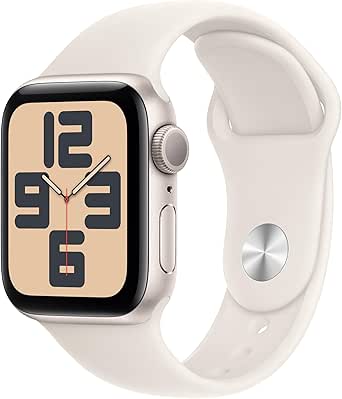
Apple Watch SE (2nd Generation) GPS 40mm Smartwatch with Starlight Aluminum Case and Starlight Sport Band (S/M)

Samsung Galaxy Tab A11+ Tablet (6GB RAM, 128GB Storage, Gray)

Amazon Kindle Scribe (16GB) with Premium Pen, Tungsten
As an affiliate, we earn on qualifying purchases.
How Mac Memory Shapes Model Choice
Model weights are the stored numerical parameters used to generate responses. Lower precision, such as 4-bit rather than 8-bit, reduces the memory required for those weights, though the source material does not quantify the quality effect for each model or task. A model’s published weight requirement is only a starting point: context length adds memory use, as do macOS and other applications running at the same time.
Apple CEO Tim Cook said on the company’s April 30 earnings call that customer recognition of the Mac mini and Mac Studio as platforms for AI and agentic tools was growing faster than Apple had predicted, according to MacRumors. The source article also says Apple had warned in April that it could not build enough units. In August, Apple’s press release described the new Mac mini as a desktop for always-on agentic computing. These statements show Apple’s positioning and reported demand; they do not establish that every AI workload is suited to the machine.
““the leading desktop for always-on agentic computing””
— Apple, in its August 25, 2026 Mac mini press release
Real-World Speed Remains Unreported
The supplied source material provides memory requirements and bandwidth specifications, but no controlled benchmarks showing generation speed, response time, energy use under sustained inference, or quality on specific Mac mini configurations. It is also unclear how much memory a given setup leaves available after macOS, apps and a chosen context window are accounted for.
Google’s figures describe static weights, not a complete working-memory budget. The material does not establish whether a model that technically fits will remain responsive for a particular workload, nor does it give a direct, like-for-like performance comparison between the Mac mini and an H100 system. Apple’s demand statements do not quantify how many units were unavailable or how long any supply constraints lasted.
Check Workloads Before Buying
Anyone considering a Mac mini for local AI should compare the precise model’s memory requirement at the intended precision with the machine’s usable memory, leaving room for macOS, other apps and the expected context length. The supplied data suggests that smaller models have more room on 16 GB systems, while larger weight sets require higher-memory configurations and still may need substantial extra space for context.
Future Apple configurations, model releases and local software support could change what is practical. For now, the cited figures support a bounded conclusion: some open models can run within Mac mini memory limits, but the 64 GB ceiling rules out models sized for 80 GB of GPU memory, and published specifications alone do not predict task speed.
Key Questions
Can a 16 GB Mac mini run local AI?
Some models may fit by published weight requirements. Google lists Gemma 4 12B at 6.7 GB at 4-bit precision, and OpenAI says gpt-oss-20b runs “within 16GB of memory.” Those figures do not mean all 16 GB is available to the model: macOS, apps and context also use memory.
Will a 64 GB Mac mini run gpt-oss-120b?
The supplied OpenAI specification sizes gpt-oss-120b for a single 80 GB GPU. That exceeds the Mac mini’s listed 64 GB maximum, before accounting for the operating system and other memory needs.
Why does context length matter?
Long documents and conversations require memory in addition to model weights. Google says its Gemma figures cover static weights and that larger context windows require significantly more memory.
Is local AI faster than using a cloud GPU?
The supplied specifications do not provide comparable task benchmarks. They list 307 GB/s bandwidth for the M5 Pro and 3.35 TB/s for Nvidia’s H100, but bandwidth alone does not determine response speed for every workload.
What does local AI offer?
Running a model on the computer can keep data on that machine, allow offline use and avoid per-token charges from hosted services. Whether those benefits justify the hardware cost depends on the user’s workload and the model that fits.
Source: Thorsten Meyer AI