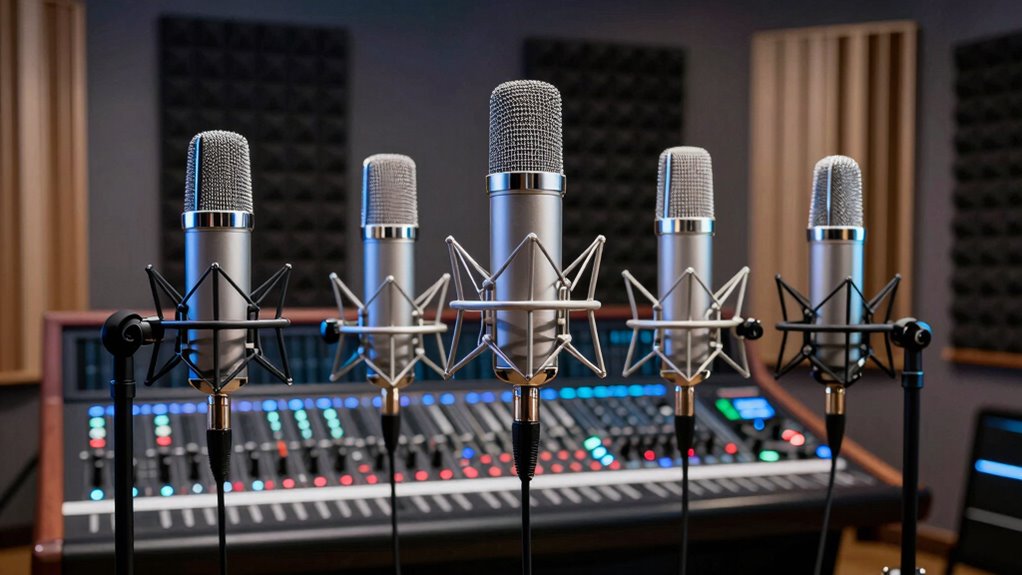

Choosing a premium microphone for podcasting involves balancing sound quality, usability, and price. The Shure SM7B stands out as the best overall thanks to its rich sound and durability, ideal for serious podcasters. The Sennheiser Profile USB Microphone offers excellent streaming quality with a user-friendly setup, making it perfect for content creators seeking convenience. Many high-end options come with tradeoffs like higher cost and complex setup, which can be daunting for newcomers or those on a tight budget. Keep reading to explore how these microphones compare and find the best fit for your podcasting needs.
Listen free for 30 days with Audible
Thousands of audiobooks and originals — cancel anytime.
Start your free trialAs an affiliate, we earn on qualifying purchases.
Complete the kit

Key Takeaways
- The top microphones balance professional sound quality with ease of use, often favoring dynamic over condenser designs for noise rejection.
- USB models offer convenience, but premium XLR options typically provide higher sound fidelity and flexibility for future upgrades.
- Built-in features like headphone monitoring and mute controls add value for serious podcasters, but may increase complexity.
- Price correlates strongly with build quality, sound clarity, and feature set; investing more often yields better long-term results.
- Compatibility with streaming and recording setups varies, so selecting a microphone aligned with your existing gear is essential.
| Shure MV7+ USB-C & XLR Podcast Dynamic Microphone – White |  | Best Overall for Versatility and Professional-Grade Audio | Connectivity: USB-C & XLR | Color: White | Voice Isolation Technology: Yes | VIEW ON AMAZON | See Our Full Breakdown |
| Sennheiser Profile USB Microphone Streaming Set with Boom Arm, 3 m USB-C Cable & Mic Pouch |  | Best for Plug-and-Play Simplicity and Natural Sound | Connectivity Technology: USB | Connector Type: USB | Polar Pattern: Unidirectional | VIEW ON AMAZON | See Our Full Breakdown |
| Audio-Technica AT2020 Cardioid Condenser Studio Microphone |  | Best for Studio-Quality Recording in Controlled Environments | Polar Pattern: Cardioid | Output Connector: 3-pin XLRM | Application: Studio recording | VIEW ON AMAZON | See Our Full Breakdown |
| ZealSound Podcast Microphone for PC, Noise Cancellation USB Mic with Gain, Volume Adjustment & Mute Button, Monitoring & Echo, for YouTube, TikTok, Podcasting, Streaming, iPhone, iPad, Android, Mac |  | Best for Multi-Device Flexibility and Noise Reduction | Frequency Response: 40Hz–18kHz | Sampling Rate: 46kHz | Sensitivity: –45dB ±3dB | VIEW ON AMAZON | See Our Full Breakdown |
| Shure MV6 USB Gaming Microphone for Streaming & Recording |  | Best for Streamers and Gamers Seeking Focused, Clear Audio | Connectivity Technology: USB | Connector Type: USB Type-C | Polar Pattern: Unidirectional | VIEW ON AMAZON | See Our Full Breakdown |
| Shure MV7+ Hybrid Podcast Microphone with Adjustable Boom Arm Stand |  | Best Overall for Versatile Podcasting and Streaming | Connectivity: USB-C and XLR | Includes: Adjustable boom arm stand | Features: Touch control strip, customizable LEDs, advanced audio controls via Shure MOTIV Mix app | VIEW ON AMAZON | See Our Full Breakdown |
| Shure SM7B Dynamic Vocal Microphone for Podcasting & Streaming |  | Best for Studio-Quality Vocal Recording | Type: Dynamic Vocal Microphone | Pickup Pattern: Cardioid | Frequency Response: Wide-range | VIEW ON AMAZON | See Our Full Breakdown |
| Shure MV7X XLR Podcast Microphone with XLR Cable |  | Best for Professional XLR-Only Setups | Type: Dynamic Microphone | Connectivity: XLR | Color: Black | VIEW ON AMAZON | See Our Full Breakdown |
| Maono PD200W Hybrid Wireless Podcast Microphone for PC, Dynamic XLR USB Mic |  | Best for Wireless Flexibility and Dual Microphones | Connectivity: Wireless, USB, XLR | Microphone Type: Dynamic | Pickup Pattern: Cardioid | VIEW ON AMAZON | See Our Full Breakdown |
| Shure MV7 USB Podcast Microphone for Podcasting, Recording, Live Streaming & Gaming, Built-in Headphone Output, All Metal USB/XLR Dynamic Mic, Voice-Isolating Technology, TeamSpeak Certified – Black |  | Best for Versatile USB/XLR Use with Monitoring | Type: USB/XLR Dynamic Microphone | Color: Black | Features: Onboard DSP, Headphone Output, Adjustable Gain, Voice-Isolating Technology | VIEW ON AMAZON | See Our Full Breakdown |
| Shure MV7+ USB-C & XLR Podcast Dynamic Microphone with Stand – Black |  | Best Overall for Versatile Podcasting Setup | Connectivity: USB-C and XLR | Color: Black | Features: OBS Certified, Voice Isolation Technology, Built-in DSP, LED Touch Panel, Auto Level Mode, Virtual Pop Filter | VIEW ON AMAZON | See Our Full Breakdown |
| Shure MV7X XLR Dynamic Podcast & Recording Microphone – Black |  | Best for Professional Broadcast-Style XLR Recording | Connectivity: XLR | Type: Dynamic cardioid | Material: All-metal | VIEW ON AMAZON | See Our Full Breakdown |
| Logitech Blue Yeti USB Microphone for PC, Mac, Gaming, Streaming, Podcasting, Studio, Midnight Blue |  | Best for Versatility and Ease of Use | Pickup Patterns: Cardioid, Omni, Bidirectional, Stereo | Connectivity: USB | Color: Midnight Blue | VIEW ON AMAZON | See Our Full Breakdown |
| Shure MV7+ USB-C & XLR Podcast Dynamic Microphone – Black |  | Best for All-in-One Podcasting and Streaming | Connectivity: USB-C & XLR | Color: Black | Features: Customizable LED touch panel, auto level, real-time denoising, built-in reverb | VIEW ON AMAZON | See Our Full Breakdown |
| premium microphone for podcasting | Connectivity | Color |
|---|---|---|
| Shure MV7+ USB-C & XLR Podcast | USB-C & XLR | White |
| Sennheiser Profile USB Microph | — | — |
| Audio-Technica AT2020 Cardioid | — | Black |
| ZealSound Podcast Microphone f | USB-C, Lightning adapters | — |
| Shure MV6 USB Gaming Microphon | — | — |
| Shure MV7+ Hybrid Podcast Micr | USB-C and XLR | — |
| Shure SM7B Dynamic Vocal Micro | XLR | — |
| Shure MV7X XLR Podcast Microph | XLR | Black |
| Maono PD200W Hybrid Wireless P | Wireless, USB, XLR | — |
| Shure MV7 USB Podcast Micropho | — | Black |
| Shure MV7+ USB-C & XLR Podcast | USB-C and XLR | Black |
| Shure MV7X XLR Dynamic Podcast | XLR | — |
| Logitech Blue Yeti USB Microph | USB | Midnight Blue |
| Shure MV7+ USB-C & XLR Podcast | USB-C & XLR | Black |
More Details on Our Top Picks
Shure MV7+ USB-C & XLR Podcast Dynamic Microphone – White
The Shure MV7+ stands out for its combination of advanced DSP, Voice Isolation Technology, and flexible connectivity options, making it a top choice for serious podcasters who want both USB and XLR compatibility. Compared to the Sennheiser Profile, the MV7+ offers more customization and onboard effects, though it comes at a higher price and a steeper learning curve. Its built-in reverb and auto gain adjustment make it ideal for dynamic recording environments, but beginners might find the feature set overwhelming. This microphone suits those seeking professional sound quality with adaptable setup options, especially if they plan to upgrade from USB-only microphones over time.
Pros:- Professional-quality audio with advanced DSP and Voice Isolation Technology
- Flexible connectivity with USB-C and XLR outputs
- Customizable LED touch controls for easy operation
- Built-in reverb effects to enhance sound
Cons:- Higher cost compared to basic USB microphones
- Features may require time to master for new users
Best for: Podcast creators and streamers who need a versatile, professional-grade microphone with both USB and XLR options.
Not ideal for: Beginners seeking simple, plug-and-play microphones without complex features or a learning curve.
- Connectivity:USB-C & XLR
- Color:White
- Voice Isolation Technology:Yes
- Auto Level Mode:Yes
- Real-time Denoising:Yes
- Built-in Reverb Effects:Yes
- Certifications:OBS-CERTIFIED FOR CREATION
Our verdict“This pick makes the most sense for experienced podcasters and content creators demanding maximum flexibility and sound quality.”
Sennheiser Profile USB Microphone Streaming Set with Boom Arm, 3 m USB-C Cable & Mic Pouch
The Sennheiser Profile offers a straightforward, high-quality USB microphone perfect for streamers and content creators who prioritize ease of use. Its plug-and-play setup is faster than the ZealSound K66, which requires some familiarity with controls, and it delivers a warm, natural tone that many find more pleasing for long streaming sessions. The included boom arm adds professional flexibility, but its USB-only design limits future upgrade options compared to the Shure MV7+. It’s especially well-suited for users who want a premium sound without fiddling with complex settings or additional equipment.
Pros:- Easy plug-and-play setup with no software required
- Warm, natural sound ideal for streaming and podcasting
- Includes a sleek boom arm for flexible positioning
- German-engineered premium capsule
Cons:- Limited to USB connectivity, no XLR option
- Higher price point for its feature set
- Requires external power via USB
Best for: Streamers, podcasters, and creators needing a simple, high-quality USB microphone with professional accessories.
Not ideal for: Users who want XLR connectivity or plan to expand to more advanced audio setups in the future.
- Connectivity Technology:USB
- Connector Type:USB
- Polar Pattern:Unidirectional
- Audio Sensitivity:125 db
- Microphone Form Factor:Table Array
- Power Source:USB
Our verdict“This microphone makes sense for streamers and podcasters valuing simplicity, quality, and a professional look without complex setup needs.”
Audio-Technica AT2020 Cardioid Condenser Studio Microphone
The Audio-Technica AT2020 is a classic choice for home and project studios, offering excellent transient response and high SPL handling that surpasses many USB options like the ZealSound K66. Its XLR connection and lack of onboard controls mean it’s less suitable for on-the-go recording but excels in controlled environments where audio fidelity is critical. Compared to the Shure MV7+, it requires an audio interface and phantom power, adding complexity and cost, but it provides a pure, uncolored sound that many professional users prefer. This mic is ideal for those who prioritize sound quality over convenience and are willing to invest in additional equipment.
Pros:- High SPL handling for versatile recording
- Excellent transient response and wide frequency range
- Reduces side and rear noise pickup for better isolation
- Robust XLR connection for professional audio setups
Cons:- Requires phantom power and audio interface
- No onboard controls or USB option
- Less portable for mobile recording
Best for: Home studio users and professional content creators who want high-fidelity recordings in a dedicated setup.
Not ideal for: Podcasters and streamers seeking a portable, all-in-one mic with onboard controls and simplicity.
- Polar Pattern:Cardioid
- Output Connector:3-pin XLRM
- Application:Studio recording
- Color:Black
Our verdict“This microphone is perfect for users who need studio-level sound quality and are equipped to handle a more complex setup.”
The ZealSound K66 offers a versatile, feature-rich USB microphone—ideal for creators who produce across multiple platforms and devices. It delivers studio-quality sound with noise reduction, and its onboard gain, volume, and echo controls provide a high level of customization, unlike simpler models like the Sennheiser Profile. However, the complex control panel can be daunting for beginners. Its compatibility with smartphones and gaming consoles makes it more flexible than many dedicated studio mics, but background noise in noisy environments remains a concern despite its noise cancellation features. This makes it a strong choice for creators needing multi-device use but not for those in highly unpredictable acoustic environments.
Pros:- High-quality sound with noise reduction features
- Compatibility with a wide range of devices including smartphones
- Real-time monitoring with zero latency
- Adjustable gain, volume, and echo controls
Cons:- Complex controls may require learning and adjustment
- Limited to USB connection, no XLR option
- Background noise may persist in very noisy settings
Best for: Content creators who need a multi-platform, noise-reducing microphone with advanced controls for flexible recording.
Not ideal for: Users seeking ultra-simplified setup or working in extremely noisy environments where noise cancellation alone isn’t enough.
- Frequency Response:40Hz–18kHz
- Sampling Rate:46kHz
- Sensitivity:–45dB ±3dB
- Connectivity:USB-C, Lightning adapters
- Compatibility:Windows, Mac, iPhone, iPad, Android
Our verdict“This microphone suits creators needing flexible device compatibility and advanced features, provided they are comfortable managing complex controls.”
Shure MV6 USB Gaming Microphone for Streaming & Recording
The Shure MV6 is tailored for streamers and gamers who want professional-quality voice clarity with minimal setup. Its Voice Isolation Technology and DSP processing deliver focused, noise-reduced sound, better suited for close-mic applications than the Audio-Technica AT2020, which is more studio-oriented. The MV6’s simple USB-C connection and zero-latency monitoring make it ideal for quick setup, but its fixed polar pattern limits versatility for recording multiple sources. While it offers excellent value for streamers, those requiring XLR flexibility or complex mixing may find it restrictive. This mic is an excellent choice for individuals prioritizing straightforward, high-quality vocal capture for live streaming or gaming.
Pros:- Clear, focused vocal audio with noise reduction
- Easy plug-and-play USB-C setup
- Includes real-time zero-latency monitoring
- Compact, desktop-friendly design
Cons:- Limited to USB-C, not compatible with older devices
- No XLR or multi-mic setup options
- DSP features can be complex to configure for some users
Best for: Streamers, gamers, and podcasters prioritizing easy setup with professional vocal clarity.
Not ideal for: Users needing multi-source recording or advanced studio controls, as it is primarily designed for straightforward vocal capture.
- Connectivity Technology:USB
- Connector Type:USB Type-C
- Polar Pattern:Unidirectional
- Special Feature:Voice Isolation Technology
- Compatible Devices:PC, Mac, Smartphone
Our verdict“This microphone fits content creators who want quick, reliable, professional vocal quality without fussing over complex setups or additional equipment.”
Shure MV7+ Hybrid Podcast Microphone with Adjustable Boom Arm Stand
The Shure MV7+ stands out for its combination of professional-grade sound quality and flexible connectivity, making it ideal for streamers and podcasters who want a comprehensive setup. Unlike the Shure SM7B, which requires additional audio interfaces, the MV7+ offers both USB-C and XLR options, simplifying setup while maintaining high audio standards. The included adjustable boom arm enhances ease of use, and the touch controls bring intuitive operation. However, this versatility comes with a higher price tag and some setup complexity for optimal performance. This pick makes the most sense for those seeking a one-stop solution that balances sound quality, ease of control, and hardware flexibility.
Pros:- Studio-quality sound suitable for professional podcasting and streaming
- Flexible connectivity with USB-C and XLR options
- Includes an adjustable boom arm for precise positioning
- User-friendly touch controls and customizable LEDs
Cons:- Higher price compared to basic USB microphones
- Requires some configuration to optimize audio quality
Best for: Podcasters and streamers who want professional sound without sacrificing setup flexibility
Not ideal for: Beginners or casual users seeking a simple plug-and-play microphone at a lower cost
- Connectivity:USB-C and XLR
- Includes:Adjustable boom arm stand
- Features:Touch control strip, customizable LEDs, advanced audio controls via Shure MOTIV Mix app
Our verdict“This microphone is perfect for creators who need a flexible, high-quality solution with professional features, willing to invest in setup time.”
Shure SM7B Dynamic Vocal Microphone for Podcasting & Streaming
The Shure SM7B remains a staple for vocal clarity, offering warm, professional sound that excels in controlled studio environments. Compared with the Shure MV7+, it requires an external XLR interface or mixer, adding complexity and cost but providing more control over sound shaping. Its cardioid pattern and built-in pop filter effectively reduce background noise and plosives, making it ideal for vocal-focused content. Its all-metal construction promises durability, but this means it’s less portable and more suited to fixed setups. This microphone is best for dedicated podcasters or streamers with a permanent studio space who prioritize sound quality over flexibility and affordability.
Pros:- Warm, clear, and professional vocal reproduction
- Reduces background noise and plosives effectively
- Durable all-metal build for long-term use
- Widely compatible with professional audio gear
Cons:- Requires external XLR interface or mixer
- Less portable and more complex to set up
Best for: Podcasters who prioritize studio-level vocal clarity and have a fixed setup
Not ideal for: Mobile content creators or those seeking a simple, all-in-one solution
- Type:Dynamic Vocal Microphone
- Pickup Pattern:Cardioid
- Frequency Response:Wide-range
- Connectivity:XLR
- Construction:All-metal
- Additional Features:Built-in pop filter, detachable windscreen, air suspension shock isolation
Our verdict“This microphone suits dedicated podcasters and broadcasters who want top-tier sound quality and have a stable recording environment.”
Shure MV7X XLR Podcast Microphone with XLR Cable
The Shure MV7X is designed specifically for users who prefer a purely XLR setup, offering excellent voice isolation and durable all-metal construction. Compared with the Shure SM7B, it provides a more streamlined, cost-effective option for those who already have or plan to invest in professional audio interfaces. Its voice isolation technology minimizes background noise, making it suitable for less controlled environments. However, it lacks a USB option, which limits its appeal for casual or mobile podcasters. This model is best for experienced creators with existing XLR gear who value durability and noise reduction above all.
Pros:- Excellent voice isolation reduces background noise
- Compatible with standard mic stands and professional audio interfaces
- All-metal durable construction
- No fuss with a straightforward XLR connection
Cons:- No built-in USB connectivity
- Requires an external audio interface or mixer
Best for: Podcasters and vocalists with professional XLR equipment seeking reliable voice isolation
Not ideal for: Beginners or users who want a straightforward, one-cable setup without additional gear
- Type:Dynamic Microphone
- Connectivity:XLR
- Color:Black
- Included Cable:20ft XLR Cable
- Thread Compatibility:5/8″ yoke, 3/8″ to 5/8″ adapter
- Construction:All Metal
Our verdict“Ideal for professionals with existing XLR setups who prioritize noise reduction and durability in their microphone choice.”
Maono PD200W Hybrid Wireless Podcast Microphone for PC, Dynamic XLR USB Mic
The Maono PD200W offers remarkable versatility with wireless, USB, and XLR connectivity, making it a flexible choice for mobile interview setups or multi-location recording. Its dynamic capsule and noise cancellation technology help produce studio-quality sound, comparable to wired options like the Shure MV7+. The inclusion of dual microphones is a notable feature for interview-style podcasts, providing the ability to switch or record multiple voices simultaneously. However, its wireless nature means additional accessories are needed for video or camera integration, and its RGB lighting may be unnecessary for most podcasters. This microphone makes the most sense for creators who need mobility and multiple microphone options in one device.
Pros:- Versatile connectivity: wireless, USB, and XLR
- Studio-quality sound with noise cancellation
- Supports dual microphones for interviews
- Long battery life up to 60 hours and stable wireless range
Cons:- Requires additional accessories for video sync
- RGB lighting customization may be superfluous
Best for: Podcasters, streamers, and interviewers needing wireless flexibility and multi-mic capabilities
Not ideal for: Content creators who prefer a simple, wired setup without additional accessories
- Connectivity:Wireless, USB, XLR
- Microphone Type:Dynamic
- Pickup Pattern:Cardioid
- Signal-to-Noise Ratio:82dB
- Maximum SPL:128dB
- Wireless Range:60m
- Battery Life:up to 60 hours
- Included Accessories:Desktop stand, cables, receiver
Our verdict“This model suits mobile or interview-focused creators who value flexibility and multiple microphone options in a single device.”
Shure MV7 USB Podcast Microphone for Podcasting, Recording, Live Streaming & Gaming, Built-in Headphone Output, All Metal USB/XLR Dynamic Mic, Voice-Isolating Technology, TeamSpeak Certified – Black
The Shure MV7 combines USB convenience with XLR flexibility, making it ideal for creators who want a robust microphone capable of both simple and professional setups. Its onboard DSP and voice-isolating features help produce clear, broadcast-quality audio, which makes it comparable to the Shure MV7+ but at a more accessible price point. The built-in headphone output allows real-time monitoring, a feature appreciated by streamers and gamers. However, its all-metal build adds weight, which could be inconvenient for portable use, and some initial setup may be needed for XLR configurations. This microphone suits those who want a durable, versatile microphone with monitoring capabilities, especially if they plan to use both USB and XLR connections over time.
Pros:- Versatile USB and XLR connectivity
- Built-in DSP and voice-isolation technology for clear sound
- Headphone output for real-time monitoring
- All-metal construction for durability
Cons:- Heavy for portable or mobile use
- Requires setup for optimal XLR connection
Best for: Podcasters, streamers, and gamers who want a durable, all-metal mic with monitoring and dual connectivity
Not ideal for: Beginners who prefer a plug-and-play USB mic and do not need XLR options
- Type:USB/XLR Dynamic Microphone
- Color:Black
- Features:Onboard DSP, Headphone Output, Adjustable Gain, Voice-Isolating Technology
- Certification:TeamSpeak Certified
Our verdict“This microphone is well-suited for creators who need durability, versatile connectivity, and monitoring features in a premium package.”
Shure MV7+ USB-C & XLR Podcast Dynamic Microphone with Stand – Black
The Shure MV7+ stands out for its combination of flexible connectivity—USB-C and XLR—making it a top choice for those who want both ease of use and professional-grade options. It surpasses models like the Blue Yeti in sound quality and noise isolation, especially with its advanced voice isolation tech, but this added sophistication comes with a steeper learning curve for beginners. Its customizable LED touch controls and app-based sound tuning allow for personalized setups, though users unfamiliar with complex audio features might find it overwhelming. This microphone is best suited for experienced creators who need adaptable connectivity and high-quality sound, but less so for newcomers seeking a plug-and-play experience. The inclusion of a stand and OBS certification makes it ideal for streaming and recording at a professional level.
Pros:- Flexible connectivity options suitable for various setups
- Advanced noise reduction and voice isolation technology
- Customizable LED touch controls for personalization
- App control for sound tuning and effects
Cons:- Complex feature set may be daunting for new users
- Higher price point compared to basic microphones
Best for: Podcasters and streamers looking for a flexible, high-end microphone with advanced noise reduction and customizable controls.
Not ideal for: Beginners or casual users who prefer straightforward, simple plug-and-play microphones without a steep learning curve.
- Connectivity:USB-C and XLR
- Color:Black
- Features:OBS Certified, Voice Isolation Technology, Built-in DSP, LED Touch Panel, Auto Level Mode, Virtual Pop Filter
- Included:Microphone, Stand
Our verdict“This is an excellent choice for experienced content creators who need versatile connectivity and professional sound quality.”
Shure MV7X XLR Dynamic Podcast & Recording Microphone – Black
The Shure MV7X excels in delivering focused, broadcast-quality voice with its high-quality cardioid dynamic capsule, making it ideal for serious podcasting and studio work. Compared to the Blue Yeti, which offers versatility with multiple pickup patterns, the MV7X prioritizes sound clarity and isolation for voice, but it’s limited to XLR connection, requiring an external audio interface or mixer. Its all-metal construction promises durability, yet this focus on professional-grade build and sound may be overkill for casual or beginner podcasters who prefer simple USB mics. It’s best suited for those with existing audio gear or who want a dedicated, high-quality XLR setup, though beginners should consider models with built-in interfaces. The absence of onboard controls or monitoring features can be a drawback for those needing quick adjustments.
Pros:- High-quality sound capture with focused voice isolation
- All-metal, durable construction for long-term use
- Broadcast-inspired design for professional aesthetics
Cons:- Requires external audio interface or mixer for connection
- No onboard monitoring or headphone jack for real-time audio feedback
Best for: Podcasters and vocalists with existing audio gear seeking a durable, professional-grade XLR microphone for studio or live settings.
Not ideal for: Beginners or casual streamers without an audio interface, since it requires additional equipment for operation.
- Connectivity:XLR
- Type:Dynamic cardioid
- Material:All-metal
- Included accessories:Adjustable yoke mount, 3/8″ adapter
Our verdict“This microphone is best for experienced users who want a dedicated XLR solution with excellent voice clarity and durability.”
Logitech Blue Yeti USB Microphone for PC, Mac, Gaming, Streaming, Podcasting, Studio, Midnight Blue
The Blue Yeti remains a popular choice for its versatility, offering four pickup patterns—cardioid, omni, bidirectional, and stereo—that make it suitable for a wide range of recording scenarios, including podcasting, streaming, and music. Unlike the Shure MV7+, which provides more refined sound control, the Blue Yeti’s onboard controls and software make quick adjustments straightforward, yet it can be bulky and less suitable for portable setups. Its plug-and-play USB connection simplifies setup for beginners, but this convenience might come at the expense of some audio fidelity compared to higher-end models. The inclusion of Blue VO!CE effects software adds creative options, but reliance on software updates can be a limitation for some users. It’s ideal for hobbyists and content creators needing an all-in-one solution.
Pros:- Four versatile pickup patterns for flexible recording
- Built-in Blue VO!CE effects for vocal enhancement
- Plug-and-play setup with included desktop stand
- Onboard controls for quick adjustments
Cons:- Requires Logitech G HUB software for full feature access
- Can be bulky and less portable
Best for: Content creators, gamers, and streamers seeking a versatile, easy-to-use USB microphone with multiple pickup patterns and voice effects.
Not ideal for: Professionals or audiophiles who prioritize ultimate sound quality and minimal setup complexity over versatility and effects.
- Pickup Patterns:Cardioid, Omni, Bidirectional, Stereo
- Connectivity:USB
- Color:Midnight Blue
- Software:Blue VO!CE
- Onboard Controls:Headphone volume, pattern selection, mute, mic gain
- Included Accessories:Desktop stand
Our verdict“This microphone suits casual and semi-professional creators who value convenience and variety in recording patterns.”
Shure MV7+ USB-C & XLR Podcast Dynamic Microphone – Black
The Shure MV7+ combines the best of both worlds with dual USB-C and XLR outputs, making it highly adaptable for different recording environments. Its advanced features, such as customizable LED controls, auto level adjustment, real-time denoising, and built-in reverb effects, offer professional sound manipulation in a single device. Compared to the MV7X, which focuses solely on XLR connection and durability, the MV7+ provides a more user-friendly experience with onboard controls and software integration. However, its complexity and higher cost might deter users who want a straightforward microphone without extra features. This model makes sense for those who want maximum flexibility and onboard sound customization, especially for live streaming and podcasting.
Pros:- Dual USB-C and XLR connectivity for maximum flexibility
- Advanced auto level, real-time denoising, and reverb effects
- Customizable LED touch panel for personalized control
- Built-in effects for enhanced vocal presentation
Cons:- Features can be complex for new users to master
- Higher price compared to simpler microphones
Best for: Podcasters, streamers, and voiceover artists who need a versatile, feature-rich microphone with both USB and XLR options.
Not ideal for: Beginners or users with limited technical knowledge, as its advanced features require some learning and setup effort.
- Connectivity:USB-C & XLR
- Color:Black
- Features:Customizable LED touch panel, auto level, real-time denoising, built-in reverb
- Intended Use:Podcasting, streaming, voiceover, recording
Our verdict“This microphone is ideal for experienced creators seeking a flexible, all-in-one solution with extensive sound customization capabilities.”

How We Picked
The microphones included in this roundup were evaluated based on several key criteria: sound quality, build durability, ease of setup, versatility, and value for the price. We prioritized models that are widely recognized in professional and enthusiast circles for their audio fidelity and reliability. Additional factors like onboard controls, connectivity options, and compatibility with various recording platforms were also considered. The ranking reflects a balance of performance, user-friendliness, and long-term usability, ensuring that each pick serves a distinct segment of podcasters—from beginners to seasoned professionals.| premium microphone for podcasting | Connectivity | Color |
|---|---|---|
| Shure MV7+ USB-C & XLR Podcast | USB-C & XLR | White |
| Sennheiser Profile USB Microph | — | — |
| Audio-Technica AT2020 Cardioid | — | Black |
| ZealSound Podcast Microphone f | USB-C, Lightning adapters | — |
| Shure MV6 USB Gaming Microphon | — | — |
| Shure MV7+ Hybrid Podcast Micr | USB-C and XLR | — |
| Shure SM7B Dynamic Vocal Micro | XLR | — |
| Shure MV7X XLR Podcast Microph | XLR | Black |
| Maono PD200W Hybrid Wireless P | Wireless, USB, XLR | — |
| Shure MV7 USB Podcast Micropho | — | Black |
| Shure MV7+ USB-C & XLR Podcast | USB-C and XLR | Black |
| Shure MV7X XLR Dynamic Podcast | XLR | — |
| Logitech Blue Yeti USB Microph | USB | Midnight Blue |
| Shure MV7+ USB-C & XLR Podcast | USB-C & XLR | Black |
Factors to Consider When Choosing Premium Microphone For Podcasting
Selecting the right premium microphone for podcasting involves understanding your specific needs and the environment you’ll record in. Beyond raw sound quality, factors such as connectivity, durability, and additional features influence how well a microphone fits your workflow. Recognizing common pitfalls—like choosing a microphone based solely on price or ignoring compatibility—can save you from costly mistakes. This guide outlines critical considerations to help you make an informed decision that matches your podcasting ambitions.Sound Quality and Microphone Type
The core of a premium microphone’s value is its sound quality. Dynamic microphones like the Shure SM7B excel at rejecting ambient noise, making them ideal for untreated rooms or noisy environments. Condenser mics, such as the Audio-Technica AT2020, often deliver more detailed audio but are more sensitive to background noise. Consider your recording environment—if you record in a controlled space, a condenser might be suitable, but for less sound-treated rooms, a dynamic model offers more forgiving performance.
Connectivity: USB vs. XLR
USB microphones provide plug-and-play simplicity, making them perfect for beginners or those who want quick setup without additional equipment. XLR mics, on the other hand, typically require an audio interface, but they deliver superior audio quality and expandability for future upgrades. If you plan to grow your podcasting setup or need the highest fidelity, investing in an XLR microphone paired with a quality interface makes sense—even if it demands a steeper learning curve and higher initial cost.
Build Quality and Durability
Premium microphones often come with sturdy construction, but not all are equally robust. Metal bodies and professional-grade components ensure longevity, especially for mobile or frequently used setups. Cheaper plastics or lightweight designs might save cost but can compromise durability over time. Think about where and how you’ll use your mic—if you travel or move your setup often, a solid build becomes more important.
Additional Features and Ease of Use
Features like built-in headphone monitoring, mute buttons, gain controls, and adjustable stands add convenience but can increase complexity and cost. For beginners, simple plug-and-play models might suffice, while more advanced users benefit from detailed controls to fine-tune their audio live. Balance your need for features against your comfort with technical setup—overly complex microphones may hinder quick adjustments during recordings.
Compatibility With Your Setup
Ensuring your microphone works seamlessly with your existing devices and recording software prevents headaches. Check for compatibility with your computer’s operating system, streaming platforms, and any audio interfaces. Some premium mics also offer software or firmware updates to improve functionality over time. Failing to verify compatibility can lead to frustration and subpar audio quality, especially when investing in high-end gear.
Frequently Asked Questions
Is a XLR microphone worth the extra cost over USB models?
For serious podcasting, a high-quality XLR microphone often provides better sound fidelity and flexibility than USB models. While the initial setup is more involved—requiring an audio interface—the upgrade results in cleaner, more professional audio. If you plan to expand your studio or prioritize audio quality, investing in an XLR microphone is a worthwhile decision. However, for casual or beginner podcasters, a premium USB mic can still deliver excellent results with less hassle.
Can I use a dynamic microphone in a noisy environment?
Yes, dynamic microphones are designed to reject background noise more effectively than condensers, making them well-suited for less ideal recording spaces. Their moving coil design focuses on capturing sound close to the capsule, which helps isolate your voice from environmental sounds. This makes them a popular choice for podcasting in rooms with ambient noise or for outdoor recordings. However, ensure you’re close enough to the mic to get the best sound, as proximity is key to optimal results.
What features should I look for if I want to stream and record simultaneously?
Look for microphones with built-in headphone monitoring and easy gain control, so you can hear yourself clearly and adjust levels during live sessions. Mics with multiple output options (USB and XLR) offer greater flexibility, allowing you to connect directly to your computer or through a mixer. Additionally, features like mute buttons and adjustable stands can streamline your workflow. Prioritizing these features ensures smooth, professional-quality streams and recordings without interruptions.
Is it better to choose a microphone with a built-in stand or separate one?
Many premium microphones come with integrated stands or mounts for convenience, but these might limit placement options or add to overall size. Separate stands or boom arms offer more flexibility for positioning, which can significantly improve your audio quality by reducing handling noise and ensuring consistent placement. If space or portability is a concern, a mic with a sturdy, integrated stand could be preferable. Otherwise, investing in a separate, adjustable stand allows for more precise positioning tailored to your environment.
How much should I expect to pay for a truly premium podcasting microphone?
Premium microphones for podcasting typically range from $300 to over $600, depending on their features, build quality, and sound fidelity. While higher prices generally correlate with better audio clarity and durability, it’s important to match the mic to your specific needs. For instance, a podcaster focused on radio-style broadcasts might prioritize a different feature set than someone doing interview-style podcasts. Budgeting accordingly ensures you get a microphone that elevates your sound without overspending on features you won’t use.
Conclusion
If you are just starting out or want a straightforward setup, the Audio-Technica AT2020 offers excellent value and simplicity. For those seeking the best overall quality and professional-grade sound, the Shure SM7B remains the gold standard, especially for serious podcasters. Creators who prioritize ease of use and plug-and-play convenience should consider the Sennheiser Profile USB or similar models. Budget-conscious buyers aiming for top-tier performance without breaking the bank might find the Shure MV7 series hits the sweet spot. Ultimately, selecting the right microphone depends on your recording environment, future plans, and budget constraints.
As an affiliate, we earn on qualifying purchases.Fall yard work Picks
leaf blowers