
You might think installing outdoor cameras is straightforward, but effective security needs more planning than you expect. You’ll need to take into account lighting placement, camera angles, wiring, and environmental factors to get reliable coverage. Proper positioning helps prevent shadows, glare, and blind spots. Testing and adjusting your setup is essential before finalizing. If you want to make sure your system works as intended and deters intruders, there’s more to discover about creating a thorough plan.
Key Takeaways
- Effective outdoor security depends on strategic placement of cameras and lighting, not just hardware quantity.
- Proper planning addresses environmental factors, ensuring weather resistance and reducing maintenance needs.
- Optimal camera angles and lighting prevent shadows, glare, and blind spots for clearer footage.
- Wiring, sensors, and landscaping must be integrated into the plan for reliable, seamless coverage.
- Testing and visualization before installation help identify issues and optimize system performance.
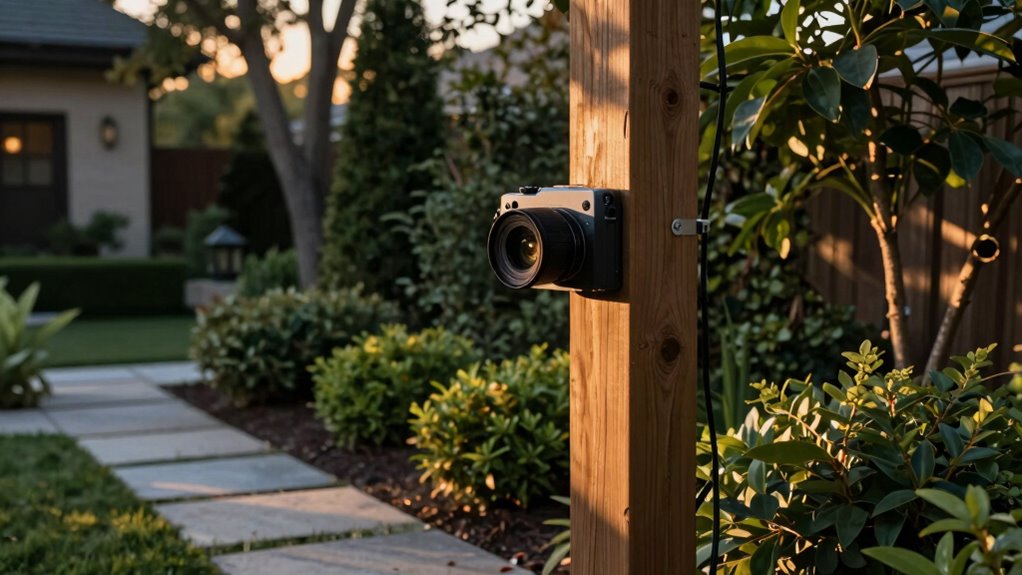
Planning your outdoor camera system is a crucial step in securing your property effectively. When you’re setting up security cameras, it’s easy to focus solely on choosing the right models or the number of cameras needed. But a well-thought-out plan involves more than just hardware; it requires careful consideration of how each camera interacts with its environment. One of the most critical aspects is lighting placement. Proper lighting not only enhances visibility during nighttime but also helps cameras capture clearer images. You want to avoid placing lights too close to the camera lens, which can cause glare, or too far away, which might leave shadows or poorly lit areas. Strategic lighting ensures your cameras have enough illumination to record sharp footage without creating blind spots or overexposing certain areas.
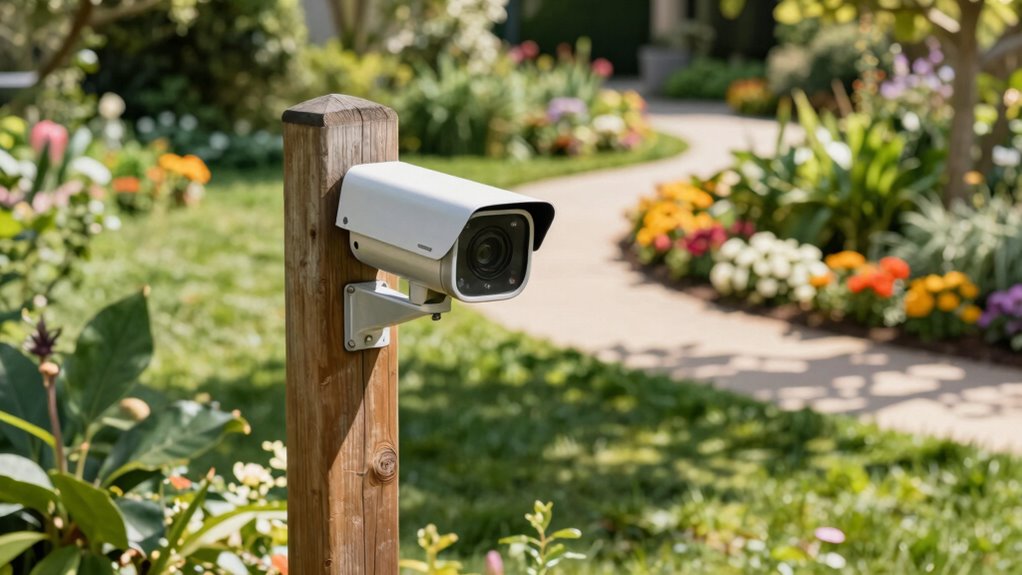
Next, you need to think about camera angles. This isn’t just about pointing cameras in the right direction; it’s about understanding how the angles will impact what your system can see and how effectively it can deter intruders. You should position cameras high enough to prevent tampering but low enough to capture useful detail, like facial features or license plates. You also want to avoid placing cameras directly under eaves or overhangs, as these can cast shadows or obscure parts of the view. When planning your camera angles, consider the areas most vulnerable to intrusion or activity—entry points, driveways, and backyard access—and ensure each camera covers these zones thoroughly. Adjusting angles for overlapping coverage reduces blind spots and creates a complete security net. Additionally, considering wiring best practices during planning can help prevent potential hazards and ensure system reliability. Incorporating sensor technology can further enhance motion detection and reduce false alarms. Understanding environmental challenges can also help you select equipment that withstands weather conditions and minimizes maintenance needs.
Moreover, it’s essential to visualize how lighting and camera angles work together. Well-placed lights can illuminate critical zones, making your camera’s job easier and footage clearer. Additionally, understanding the challenges in nanotech fabrication can help you design a system that is both effective and adaptable to your property’s unique environment. Conversely, poor lighting combined with improper angles can leave gaps in your coverage, making your system less effective. Take the time to walk around your property at different times of day and night, testing different lighting setups and camera positions. This way, you’ll identify potential issues before installation, saving you time and money. Remember, the goal isn’t just to install cameras but to create a seamless, reliable security system. Proper planning around lighting placement and camera angles ensures that your system functions as intended, providing peace of mind that your property is well-protected. Recognizing the importance of landscaping can help you design a more effective camera layout that complements your outdoor environment.
outdoor security camera system with adjustable angles
As an affiliate, we earn on qualifying purchases.
As an affiliate, we earn on qualifying purchases.
Frequently Asked Questions
How Do I Choose the Best Camera Resolution for My Needs?
You should choose a camera resolution based on your specific needs, considering the camera lens and desired image quality. Higher resolutions, like 4K, offer clearer images and better detail for identifying faces or license plates, but they require more storage. Lower resolutions are suitable for general surveillance. Balance resolution with your network bandwidth and storage capacity to guarantee peak performance without sacrificing image clarity.
What Are the Legal Considerations for Outdoor Camera Placement?
Carefully consider your camera placement to prevent privacy concerns and guarantee legal compliance. You should avoid pointing cameras at neighbors’ yards or windows, as it can breach privacy boundaries. Check local laws and regulations regarding outdoor surveillance, and document your setup. By balancing security with sensitivity, you protect privacy, prevent legal pitfalls, and promote peace of mind. Planning properly prevents problems and preserves personal privacy for everyone involved.
How Much Internet Bandwidth Do Outdoor Cameras Typically Require?
Outdoor cameras typically require between 1 to 4 Mbps of bandwidth per camera, depending on their resolution and recording quality. To guarantee smooth footage, you should have a stable internet speed of at least 10 Mbps for multiple cameras. Higher resolution cameras demand more bandwidth, so check your system’s bandwidth requirements carefully. Adequate internet speed prevents lag, buffering, and ensures reliable surveillance.
Can Outdoor Cameras Operate Effectively in Extreme Weather Conditions?
Outdoor cameras can often face weatherproofing challenges, but if you choose models designed for extreme conditions, they’ll operate reliably. However, you must consider power supply considerations—outdoor sensors need consistent power, especially in harsh weather. Without proper weatherproofing and a stable power source, your camera’s effectiveness drops dramatically. Don’t underestimate these factors; neglecting them could leave your property unprotected when you need surveillance most.
What Maintenance Is Required to Keep Outdoor Camera Systems Functioning Properly?
To keep your outdoor camera system functioning properly, you need to regularly clean the camera lens to prevent dirt and debris from obscuring the view. Check the power supply to verify it’s secure and functioning correctly, especially after storms or extreme weather. Also, inspect for any damage or corrosion, and update the firmware as needed. Proper maintenance helps guarantee clear footage and reliable operation over time.
Conclusion
Think carefully before installing outdoor camera systems; rushing the process can lead to overlooked blind spots and wasted resources. Many believe these systems are plug-and-play, but proper planning guarantees effective coverage and peace of mind. The truth is, investing time upfront prevents costly mistakes later. When you thoughtfully plan your setup, you’re not just installing cameras—you’re creating a safer, more secure environment for your loved ones and property. Don’t underestimate the power of preparation.