
Post-quantum crypto protects your data from future threats posed by powerful quantum computers. ML-KEM is a method that securely exchanges encryption keys, while ML-DSA creates digital signatures that are resistant to quantum attacks. This means your emails, transactions, and personal info stay safe even as technology evolves. As industries adopt these solutions, understanding these terms helps you appreciate how your privacy remains protected. Keep exploring to see how these innovations will impact your digital security.
Key Takeaways
- ML-KEM is a quantum-resistant key exchange method that secures data by generating strong encryption keys resistant to quantum attacks.
- ML-DSA is a digital signature system ensuring data authenticity and integrity even against powerful quantum computers.
- Both are part of post-quantum cryptography designed to protect your online communications today and in the future.
- They use advanced mathematical structures like lattices to prevent quantum computers from breaking encryption.
- Implementing ML-KEM and ML-DSA helps safeguard personal information, financial data, and private communications from future threats.

Physical-Layer Security, Quantum Key Distribution and Post-quantum Cryptography
As an affiliate, we earn on qualifying purchases.
As an affiliate, we earn on qualifying purchases.
Understanding Post-Quantum Cryptography and Its Importance for Consumers

Post-quantum cryptography is a new set of security methods designed to protect your digital information from future threats posed by quantum computers. These powerful machines could break the encryption that keeps your emails, banking details, and personal data safe today. Unlike current algorithms like RSA or elliptic-curve cryptography, post-quantum methods use advanced mathematical structures resistant to quantum attacks. This shift is vital because experts expect quantum computers capable of decrypting sensitive data around 2035. By adopting post-quantum cryptography now, organizations aim to safeguard your information against future threats. Staying ahead of these developments ensures your digital life remains private, secure, and trustworthy as technology evolves. It’s about future-proofing your data before vulnerabilities emerge. Understanding the importance of secure communication is essential to appreciating why these innovations are necessary for digital privacy.

Practical Lattice-Based Cryptography Using Python: A Hands-On Guide to Post-Quantum Cryptography, Kyber, and Dilithium Implementations
As an affiliate, we earn on qualifying purchases.
As an affiliate, we earn on qualifying purchases.
The Role of ML-KEM in Securing Future Data Exchanges

ML-KEM plays a vital role in providing quantum-resistant key exchanges that protect your data from future threats. By using hybrid encryption strategies, organizations can seamlessly move to post-quantum security without disrupting your experience. This guarantees that your information stays safe even as quantum computers become capable of breaking traditional encryption methods.
Quantum-Resistant Key Exchange
As quantum computers become capable of breaking traditional encryption methods, securing future data exchanges requires new approaches. ML-KEM (Module-Lattice-Based Key-Encapsulation Mechanism) offers a quantum-resistant way to securely exchange keys, replacing vulnerable systems like RSA and ECC. This guarantees your sensitive information remains protected even when powerful quantum computers emerge. With ML-KEM, you get:
- Robust security against quantum decryption attempts
- Faster key generation and exchange processes
- Compatibility with existing communication protocols
- Color accuracy ensures that encrypted data remains clear and reliable during transmission.
Hybrid Encryption Strategies
To effectively protect your data against future quantum threats, organizations are increasingly adopting hybrid encryption strategies that combine traditional and post-quantum algorithms. These methods guarantee your information stays secure during the changeover period. Hybrid encryption typically employs classical algorithms like RSA or Elliptic Curve cryptography alongside post-quantum solutions such as ML-KEM. This approach safeguards data even if one method becomes vulnerable, providing layered security. When you send sensitive information, your data is encrypted with both types of algorithms, reducing the risk of quantum decryption. Organizations implementing hybrid strategies can smoothly shift to post-quantum security without disrupting existing systems. This approach not only protects your data today but also prepares it for the quantum-enabled future. Additionally, understanding the importance of layered security can help in evaluating the robustness of these encryption strategies. As AI and quantum technologies evolve, integrating emerging security measures will be crucial to maintaining data integrity. Incorporating ongoing security assessments can further ensure these strategies adapt to new threats.
ML-KEM quantum encryption hardware
As an affiliate, we earn on qualifying purchases.
As an affiliate, we earn on qualifying purchases.
How ML-DSA Provides Quantum-Resistant Digital Signatures
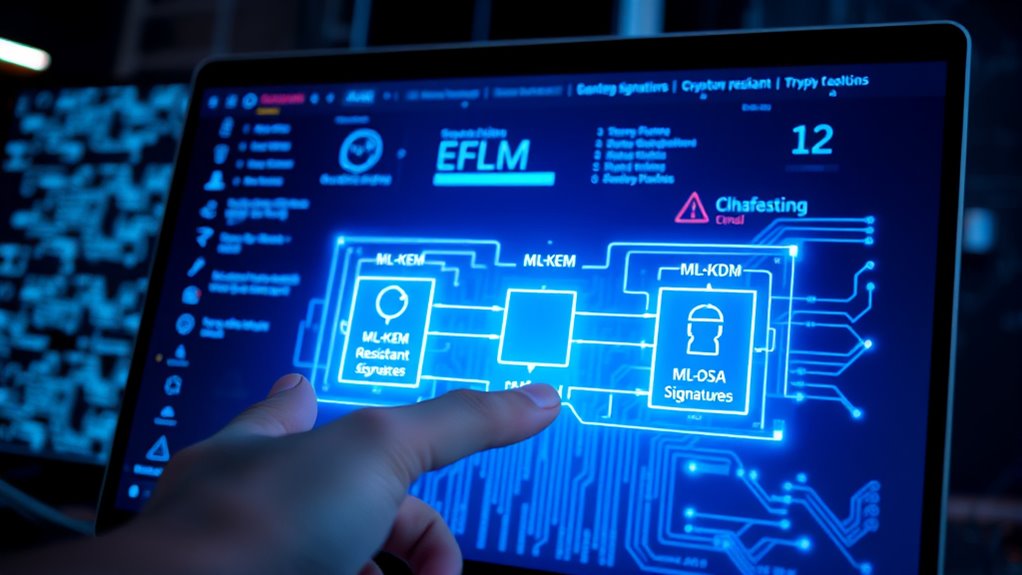
Quantum computers pose a significant threat to traditional digital signatures, but ML-DSA offers a robust solution by creating quantum-resistant signatures that guarantee data integrity and authenticity. ML-DSA uses lattice-based cryptography, making it resistant to quantum attacks. It guarantees that digital signatures remain secure even if quantum computers become powerful enough to break current algorithms. This means your online transactions, emails, and identity verifications stay protected. Additionally, the use of post-quantum cryptography techniques ensures long-term security against future threats. You should know that ML-DSA: – Provides strong resistance against quantum decryption attempts – Ensures the authenticity and integrity of digital communications – Is part of the NIST-approved standards for post-quantum security. Moreover, understanding the cryptographic foundations can help users appreciate the resilience of these advanced security measures. Strengthening these systems involves ongoing research into cryptography and related fields to maintain security robustness, particularly in developing quantum-resistant algorithms.

Post-Quantum Cryptography: Second International Workshop, PQCrypto 2008 Cincinnati, OH, USA October 17-19, 2008 Proceedings (Lecture Notes in Computer Science, 5299)
As an affiliate, we earn on qualifying purchases.
As an affiliate, we earn on qualifying purchases.
Timeline and Urgency for Transitioning to Post-Quantum Security

The urgency to shift to post-quantum security is pressing, given that powerful quantum computers capable of breaking current encryption are expected around 2035. If you delay, your sensitive data—such as banking info, emails, or personal health records—could become vulnerable through harvest-now/decrypt-later attacks. The clock is ticking, and organizations worldwide are racing to implement quantum-resistant solutions like ML-KEM and ML-DSA. The changeover will require planning, testing, and coordination across supply chains, making early adoption vital. Regulatory bodies are already mandating post-quantum readiness, and industry leaders are gaining competitive advantages by acting now. The longer you wait, the higher the risk of data breaches, regulatory penalties, and consumer trust loss. Act promptly to safeguard your data in the quantum era. Understanding quantum-resistant encryption is crucial for making informed decisions about your security strategy.
Impact of Quantum Computing on Consumer Data Privacy

Quantum computing poses a serious threat to your data privacy by making current encryption methods vulnerable to future decryption efforts. As more consumer data is collected and stored, it becomes a prime target for harvesting now and decrypting later once quantum computers are powerful enough. Moving to post-quantum encryption faces challenges, but delaying action risks exposing your information to breaches and misuse.
Quantum Threat to Privacy
As quantum computing advances, it threatens to render current encryption methods obsolete, putting your personal data at significant risk. Once powerful enough, quantum computers could decrypt sensitive information long stored in databases. This includes your emails, banking details, and online transactions. The danger isn’t theoretical; adversaries could harvest encrypted data today and decrypt it later. Consider these risks:
- Stored personal data like health records and financial info could be exposed retroactively.
- Confidential communications and digital signatures might be forged or manipulated.
- Intellectual property and proprietary data stored by companies could be stolen or compromised.
Without swift adoption of quantum-resistant encryption, your privacy faces serious jeopardy. The longer the delay, the greater the chance that your data remains vulnerable to future quantum decryption.
Data Harvesting Risks
Because quantum computers can break current encryption methods, malicious actors might harvest your sensitive data today with the intent to decrypt it in the future. They could intercept emails, financial transactions, or personal information now, storing it until quantum decryption becomes feasible around 2035. This “harvest-now, decrypt-later” strategy puts your data at risk even if it’s secure today. Healthcare records, intellectual property, and banking details are vulnerable, and organizations may not yet have shifted to quantum-resistant encryption. As a result, your past communications and private information could be exposed later, compromising your privacy and security. This growing threat emphasizes the importance of adopting post-quantum cryptography now, to prevent future breaches and safeguard your data from being exploited when quantum computers mature.
Encryption Transition Challenges
Shifting to post-quantum encryption presents significant challenges for protecting consumer data. You’ll face hurdles like updating existing systems, managing costs, and ensuring compatibility across devices. Moving involves:
- Upgrading legacy infrastructure without disrupting service
- Training staff and developing new security protocols
- Balancing new security measures with user experience
These hurdles require careful planning, as rushing can introduce vulnerabilities. Implementing hybrid encryption methods during the transition can help. However, delays increase exposure, risking data breaches from future quantum attacks. Organizations must prioritize timely adoption to avoid costly retrofits and potential regulatory penalties. Failure to act swiftly not only jeopardizes consumer trust but also exposes sensitive personal data to evolving threats. Navigating these challenges demands strategic foresight, resource allocation, and clear communication with consumers about ongoing security efforts.
Industry Adoption and Market Growth of Post-Quantum Solutions

The adoption of post-quantum cryptography is accelerating rapidly across industries, driven by the urgent need to protect consumer data from future quantum threats. Major technology firms like AWS, DigiCert, and Palo Alto are actively developing and deploying post-quantum solutions, recognizing the market’s growth potential. The global post-quantum cryptography market is projected to grow from USD 0.42 billion in 2025 to USD 2.84 billion by 2030, with a compound annual growth rate of over 46%. Hybrid encryption techniques are emerging as practical transitional tools for consumer-facing applications. Early adopters are gaining competitive advantages by demonstrating security leadership and building consumer trust. Industries such as banking, e-commerce, and healthcare are integrating these solutions to future-proof their systems, ensuring compliance and strengthening reputation in a rapidly evolving landscape. Vetted – Grobal World
Risks of Data Harvesting and the Need for Immediate Action

As quantum computers become capable of breaking current encryption standards, the risk of data harvesting and decryption escalates considerably. Adversaries can silently collect encrypted data today—emails, banking info, or personal details—with the intent to decrypt it later once quantum computing advances. This “harvest-now, decrypt-later” threat means your sensitive information could be at risk even if it’s currently secure. To understand the urgency, consider:
Quantum threats enable silent data harvesting today for future decryption.
- Encrypted consumer data stored now could be vulnerable in the future
- Intellectual property and healthcare records face long-term exposure
- Delays in adopting quantum-resistant encryption increase breach costs
- The development of vetted post-quantum cryptography solutions is critical to safeguarding data.
Immediate action is essential. Waiting could mean losing control over your data and exposing yourself to significant security breaches in the near future.
Regulatory Developments and How They Affect Consumer Protection

Regulatory developments are accelerating efforts to guarantee consumer data remains protected as quantum computing advances. Governments and agencies, like the U.S. NSA and NIST, are mandating the adoption of post-quantum cryptography standards such as ML-KEM and ML-DSA. These regulations aim to ensure organizations implement quantum-resistant encryption to prevent future breaches. As compliance becomes more common, security assessments will increasingly require proof of post-quantum readiness. Failing to meet these standards could lead to penalties, contractual issues, or loss of consumer trust. Additionally, understanding the trustworthiness of brands like Patchology can help consumers make informed choices about their data security. For you, this means organizations will need to update their security measures promptly. Staying informed about regulatory shifts helps you understand how your data will be protected and why compliance isn’t just a legal obligation but a crucial step in safeguarding your digital life. Recognizing the importance of self-awareness can also help consumers identify trustworthy organizations committed to robust security practices. Furthermore, fostering a culture of creative practice within organizations can enhance their ability to adapt to rapid technological changes and regulatory requirements. Staying ahead in post-quantum cryptography implementation will be essential for maintaining consumer trust in the evolving digital landscape.
Frequently Asked Questions
How Will Post-Quantum Algorithms Impact Everyday Online Shopping Security?
Your online shopping security will improve as post-quantum algorithms like ML-KEM and ML-DSA replace vulnerable encryption methods. These advanced algorithms will protect your personal data, transactions, and payment information from future quantum computer attacks. As companies adopt these standards, you’ll notice safer, more resilient encryption during checkout and account management. This shift guarantees your sensitive information remains private and secure, even as cyber threats evolve with technology.
Are Current Consumer Devices Capable of Supporting ML-KEM and ML-DSA Encryption?
Your devices aren’t yet ready to dance with ML-KEM and ML-DSA encryption, which are like advanced locks requiring powerful keys. These algorithms demand specialized hardware and software upgrades, meaning your current smartphones, tablets, or computers might not support them seamlessly. As the industry shifts, expect newer devices to be equipped with the necessary capabilities, but for now, most consumer gadgets need updates or replacements to fully embrace post-quantum security.
What Are the Costs Involved for Organizations to Adopt Post-Quantum Cryptography?
You’ll face costs to adopt post-quantum cryptography, including upgrading or replacing existing systems, training staff, and testing new algorithms. Organizations may need to invest in new hardware, software development, and security assessments. Additionally, shifting involves planning to minimize disruptions and guarantee compliance. While initial expenses can be significant, delaying adoption risks higher costs later due to potential breaches and regulatory penalties, making early investment a wise choice.
How Can Consumers Verify if Their Data Is Protected by Post-Quantum Standards?
You can’t directly verify if your data’s protected by post-quantum standards, ironically. Instead, trust organizations and apps to adopt certified encryption, look for their security policies, and stay updated on their compliance with recognized standards like ML-KEM and ML-DSA. Keep an eye on official notices or security badges indicating post-quantum readiness. Ultimately, consumer verification relies on organizational transparency and industry-wide adoption, not on individual checks.
Will Post-Quantum Encryption Affect Data Retrieval Speed and User Experience?
Post-quantum encryption might somewhat slow down data retrieval and user experience because the algorithms are more complex than traditional ones. You could notice longer loading times or delays during secure transactions, especially on devices with limited processing power. However, many developers are working on optimizing these algorithms to minimize impact. Over time, advancements will ensure security improves without considerably affecting your experience, making your data safer without noticeable inconvenience.
Conclusion
Staying ahead of quantum threats is essential for your data security. Just as you wouldn’t leave your door unsecured, you shouldn’t delay adopting post-quantum solutions like ML-KEM and ML-DSA. The future’s security depends on your actions today—remember, “a stitch in time saves nine.” Act now to protect your privacy from emerging risks, ensuring your digital life remains safe and private in a rapidly evolving tech landscape.