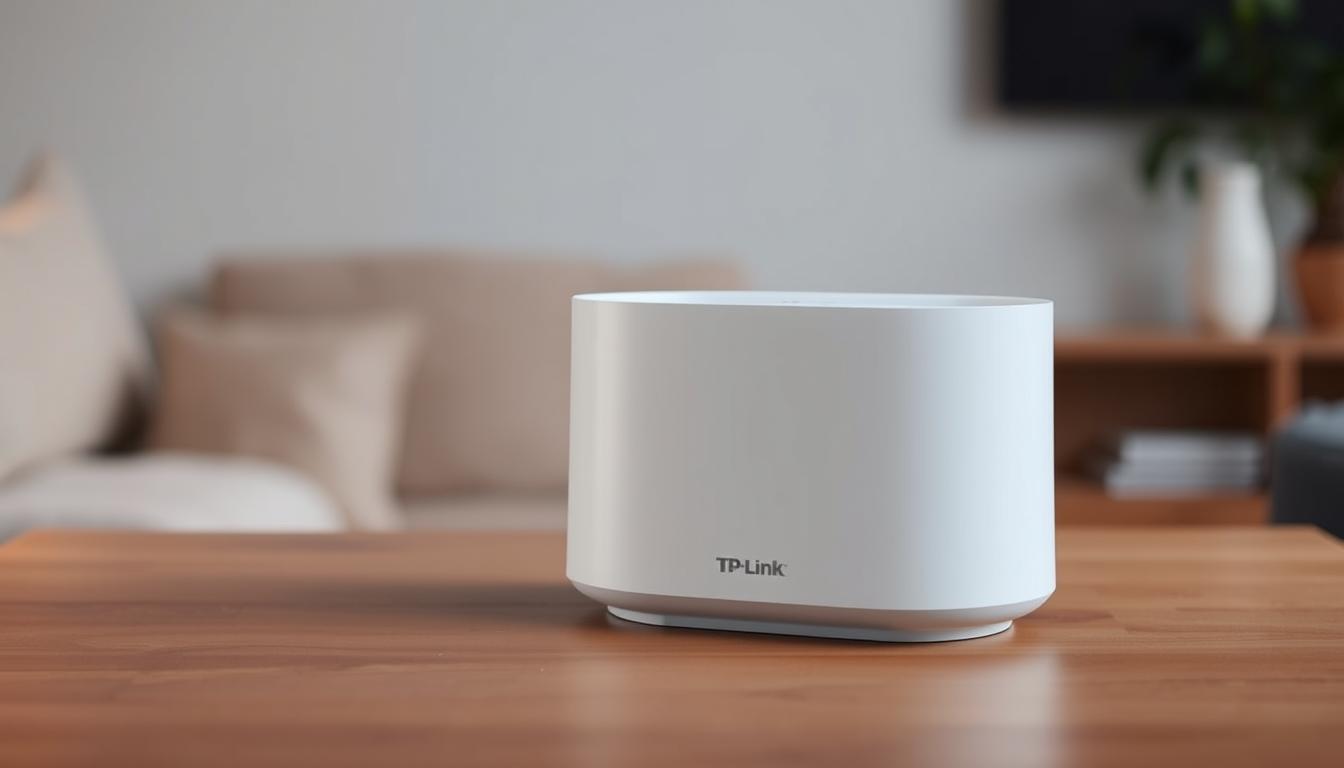

Shopping for a TP-Link AX1800 Deco X20 home mesh Wi-Fi system means choosing the right number of units as much as choosing the router itself. My top pick for most larger homes is the Deco X20 3-Pack, because its three nodes offer the broadest stated coverage and more placement flexibility. For a smaller household, the 2-Pack is a more balanced starting point; for a single dead zone or a small space, either one-unit listing may fit better.

Get the latest gadgets delivered free with Prime
- Fast, free delivery on millions of items
- Prime Video, Amazon Music and more included
- Member-only deals all year
All four options share the Deco X20’s dual-band Wi-Fi 6 platform, app-based management, and two Gigabit Ethernet ports per unit. The meaningful tradeoffs are coverage, pack size, and condition: the renewed single unit is explicitly refurbished and carries a limited warranty, while the other listings describe new systems. I compare these choices by the job each can do, rather than treating a larger bundle as automatically right for every home.
Complete the kit



Key Takeaways
- The 3-Pack has the largest stated coverage—up to 5,800 square feet—and is the strongest fit for spreading nodes across a larger or more segmented home.
- The 2-Pack lists up to 4,000 square feet of coverage, balancing reach with fewer nodes than the 3-Pack.
- Each single-unit option lists up to 2,200 square feet, but one node is better viewed as a small-home router or an addition to a compatible Deco network.
- All four options are dual-band AX1800 Wi-Fi 6; none offers a dedicated wireless backhaul band, so wired Ethernet backhaul can be useful where cabling is available.
- The renewed one-pack is the only listing with a stated 90-day limited warranty and renewed condition, so buyers should weigh that tradeoff against its single-node convenience.
| TP-Link Deco X20 Wi-Fi 6 Mesh System (3-Pack) |  | Best Overall for Larger Homes | Wi-Fi standard: Wi-Fi 6 | Wireless class: AX1800 | Pack size: 3 units | VIEW ON AMAZON | See Our Full Breakdown |
| TP-Link Deco X20 WiFi 6 Mesh System (2-Pack) |  | Best Balanced Two-Node Kit | Wi-Fi standard: Wi-Fi 6 (802.11ax) | Wireless class: AX1800, approximately 1,775 Mbps listed | Pack size: 2 units | VIEW ON AMAZON | See Our Full Breakdown |
| TP-Link Deco X20 Wi-Fi 6 Mesh System (1-Pack) |  | Best Single-Node Starter | Wi-Fi standard: Wi-Fi 6 (802.11ax) | Wireless class: AX1800, 1,775 Mbps listed | Pack size: 1 unit | VIEW ON AMAZON | See Our Full Breakdown |
| TP-Link Deco X20 AX1800 Wi-Fi 6 Mesh Router, 1-Pack, Renewed |  | Best Renewed Single-Node Option | Wi-Fi generation: Wi-Fi 6 (802.11ax) | Wireless class: AX1800 | Pack size: 1 unit | VIEW ON AMAZON | See Our Full Breakdown |
| tp link ax1800 deco x20 home mesh wifi review | Wireless class | Pack size | Stated coverage | Wi-Fi standard |
|---|---|---|---|---|
| TP-Link Deco X20 Wi-Fi 6 Mesh | AX1800 | 3 units | Up to 5,800 sq ft | Wi-Fi 6 |
| TP-Link Deco X20 WiFi 6 Mesh S | AX1800, approximately 1,775 Mbps listed | 2 units | Up to 4,000 sq ft | Wi-Fi 6 (802.11ax) |
| TP-Link Deco X20 Wi-Fi 6 Mesh | AX1800, 1,775 Mbps listed | 1 unit | Up to 2,200 sq ft | Wi-Fi 6 (802.11ax) |
| TP-Link Deco X20 AX1800 Wi-Fi | AX1800 | 1 unit | Up to 2,200 sq ft | — |
More Details on Our Top Picks
TP-Link Deco X20 Wi-Fi 6 Mesh System (3-Pack)
The Deco X20 3-Pack ranks first because it offers the most room to shape a whole-home network. Its listed coverage reaches up to 5,800 square feet, and three nodes give buyers more choices for placing access points across floors, long hallways, or rooms separated by substantial walls. Compared with the 2-Pack, it supplies another node and two additional Ethernet ports, which can matter when the home has several wired devices or awkward coverage zones.
The system supports Ethernet backhaul, so nodes can communicate over wired connections instead of relying only on wireless links. That can be useful in homes with existing Ethernet runs, especially because the X20 is dual-band rather than a tri-band system with a separate wireless backhaul band. Each unit can also function as a router, and the Deco app handles setup and network management. The listed support for up to 150 connected devices is a capacity claim, not a promise that every device will receive high throughput at once.
The tradeoff is that three nodes can be more than a small or open-plan home needs. The system still has two Gigabit ports per unit, which is modest if a node must serve several wired devices without an added switch. Some advanced security and parental-control features are also described as premium services. I would choose this over the 2-Pack when coverage and node placement are the priority, but skip the extra node if a compact space is already served by one or two units.
Pros:- Three nodes and a stated coverage area of up to 5,800 square feet
- Ethernet backhaul support for wired node-to-node links
- Six Gigabit Ethernet ports across the three units
- Deco app setup, network management, and parental controls
Cons:- Three nodes may be unnecessary for smaller or open-plan homes
- Dual-band design lacks a dedicated wireless backhaul band
- Some security and parental-control features are premium services
Best for: Households with a larger, multi-level, or room-divided home that need three placement points and may use wired backhaul.
Not ideal for: Small homes, apartments, or buyers who need a tri-band mesh system or many Ethernet connections at each node.
- Wi-Fi standard:Wi-Fi 6
- Wireless class:AX1800
- Pack size:3 units
- Stated coverage:Up to 5,800 sq ft
- Frequency bands:Dual-band
- Ethernet ports:6 total; 2 per unit
- Ethernet backhaul:Supported
- Connected devices:Up to 150, as listed
Our verdict“I rank the 3-Pack first for its broadest stated reach and placement flexibility, provided the home is large enough to use all three nodes.”
TP-Link Deco X20 WiFi 6 Mesh System (2-Pack)
The Deco X20 2-Pack is my best balanced choice for buyers who want a mesh set without committing to three nodes. It lists up to 4,000 square feet of coverage, placing it between the single units and the 3-Pack on paper. For many homes, two access points are easier to position and manage than three, while still allowing one node to extend service beyond the room where the modem sits.
Like the 3-Pack, this kit offers Wi-Fi 6, seamless roaming, and optional wired backhaul. Each unit has two Gigabit Ethernet ports, leaving four ports across the set for a modem, wired computers, a console, or other local devices. App-based setup and management are designed to keep routine network tasks accessible, and the listing includes parental controls and Alexa voice compatibility. Those shared features make the 2-Pack a practical alternative when the 3-Pack’s extra node would be surplus.
Its main limitation is the same one that defines the whole X20 family: it is a dual-band AX1800 system, so it does not provide a separate wireless band reserved for communication between nodes. Wired backhaul can help if a suitable cable path exists, but not every home has one. Its stated coverage is also lower than the 3-Pack’s, and the two-node layout may leave difficult corners underserved. I would pick it over either one-pack for a typical home that needs coverage from more than one location, but not over the 3-Pack for a sprawling layout.
Pros:- Two nodes with up to 4,000 sq ft of stated coverage
- Wi-Fi 6 support with seamless roaming
- Wired Ethernet backhaul option
- Four Gigabit Ethernet ports across the pair
Cons:- Less coverage and placement flexibility than the 3-Pack
- Dual-band design has no separate wireless backhaul band
- Two ports per unit may be limiting for several wired devices
Best for: Buyers who need two mesh nodes for a medium-sized home and want a less extensive setup than the 3-Pack.
Not ideal for: Very large or highly segmented homes, or buyers whose main priority is a dedicated wireless backhaul band.
- Wi-Fi standard:Wi-Fi 6 (802.11ax)
- Wireless class:AX1800, approximately 1,775 Mbps listed
- Pack size:2 units
- Stated coverage:Up to 4,000 sq ft
- Frequency bands:Dual-band, 2.4 GHz and 5 GHz
- Ethernet ports:4 total; 2 per unit
- Security protocols:WPA, WPA2, WPA3
- Voice compatibility:Amazon Alexa
Our verdict“I recommend the 2-Pack as the middle ground for a home that needs mesh coverage in two locations but not the 3-Pack’s extra node.”
TP-Link Deco X20 Wi-Fi 6 Mesh System (1-Pack)
The standard Deco X20 1-Pack makes the most sense when the need is modest: a small home, a single weak area, or a first unit for a compatible Deco network. Its stated coverage is up to 2,200 square feet, matching the renewed one-pack on the listing, and it includes two Gigabit Ethernet ports. Unlike buying a multi-node bundle immediately, one unit lets a buyer begin with a single access point and add compatible Deco units if the layout calls for more reach.
It uses the same dual-band Wi-Fi 6 platform as the two- and three-unit systems, with OFDMA and MU-MIMO support cited for handling multiple connected devices. The Deco app provides setup and network management, while the listing also names parental controls, security features, and Alexa compatibility. Compared with the renewed one-pack, this listing does not identify the product as renewed or give a short limited warranty in the supplied details, which may appeal to buyers who prefer the standard listing.
One node cannot create the same multi-point coverage as the 2-Pack or 3-Pack. A large home, a layout split by thick walls, or a dead zone far from the router may need another node, so the coverage estimate should not be treated as a blanket guarantee. The two Ethernet ports also leave little room for several wired devices without an external switch. I place this below the 2-Pack because it is a more limited whole-home answer, but it is the cleaner fit for a compact space or a gradual Deco setup.
Pros:- One-node option with up to 2,200 sq ft of stated coverage
- Two Gigabit Ethernet ports
- OFDMA and MU-MIMO support for multiple connected devices
- Works with other Deco mesh units, according to the listing
Cons:- One unit offers less placement flexibility than either multi-pack
- A modem is required for most internet service providers
- Two Ethernet ports may not suit a wired-device-heavy setup
Best for: People in a smaller home or apartment who want one Wi-Fi 6 router now and the option to expand with compatible Deco units.
Not ideal for: Households with multiple distant dead zones that need mesh coverage immediately, or users with many wired devices.
- Wi-Fi standard:Wi-Fi 6 (802.11ax)
- Wireless class:AX1800, 1,775 Mbps listed
- Pack size:1 unit
- Stated coverage:Up to 2,200 sq ft
- Frequency bands:Dual-band
- Ethernet ports:2 Gigabit ports
- Security protocols:WPA, WPA2, WPA3
- Management:Deco app
Our verdict“I would choose this standard one-pack for a smaller space or a gradual Deco build, not as a substitute for multi-node coverage in a large home.”
TP-Link Deco X20 AX1800 Wi-Fi 6 Mesh Router, 1-Pack, Renewed
This renewed Deco X20 1-Pack serves much the same network role as the standard one-pack: a single AX1800 Wi-Fi 6 node for a smaller home, a localized coverage problem, or expansion of a compatible Deco system. The listing gives it up to 2,200 square feet of coverage and names OFDMA and MU-MIMO for handling multiple devices. Against the standard one-pack, its distinguishing factor is not a stronger mesh specification; it is the explicitly renewed condition and stated 90-day limited warranty.
The Deco app handles setup and parental controls, and the unit has two Gigabit ports. It works with existing modems and internet providers, though most households will still need a modem to connect to their internet service. Like the other X20 options, it is dual-band rather than tri-band, and one node will not fill several distant dead zones the way a multi-node set can. Adding compatible Deco equipment may expand coverage, but the supplied listing describes a single unit, not a complete multi-node bundle.
I rank this below the standard one-pack because buyers should be comfortable with a renewed product and its stated limited warranty. It can be a sensible fit when one node is enough and the condition distinction is acceptable, but it does not solve a coverage problem that calls for two or three placement points. Compared with the 2-Pack, it offers less immediate reach; compared with the standard single unit, the core role is similar, with condition and warranty being the practical points to weigh.
Pros:- Single-node coverage listed up to 2,200 sq ft
- Wi-Fi 6 with OFDMA and MU-MIMO support
- Two Gigabit Ethernet ports
- Deco app setup and parental controls
Cons:- Product condition is listed as renewed
- Stated warranty is a 90-day limited warranty
- One unit cannot match the placement flexibility of the 2-Pack or 3-Pack
Best for: A buyer who needs one Deco X20 node, is comfortable with renewed condition, and wants the listing’s stated 90-day limited warranty.
Not ideal for: Anyone seeking a ready-made multi-node mesh kit, preferring a non-renewed product, or needing broader whole-home coverage.
- Wi-Fi generation:Wi-Fi 6 (802.11ax)
- Wireless class:AX1800
- Pack size:1 unit
- Condition:Renewed
- Stated coverage:Up to 2,200 sq ft
- Frequency band:Dual-band
- Ports:2 Gigabit ports
- Warranty:90-day limited warranty
Our verdict“I would consider this renewed one-pack only when one node is sufficient and the renewed condition is an acceptable tradeoff.”

How We Picked
I ranked these four listings around the questions that matter when choosing a Deco X20 home mesh system: how much area needs coverage, how many nodes are included, and whether the home can benefit from Ethernet backhaul. I also distinguish a stand-alone one-pack from a multi-node bundle, since a single router can cover a smaller home but cannot provide the same placement options as a mesh set.
Because the listings share the same general AX1800 dual-band Wi-Fi 6 platform, I did not treat small differences in stated speed figures as a meaningful performance ranking. Instead, I gave more weight to coverage claims, node count, port availability, management features, and condition. The stated square-foot figures are estimates, not guarantees: walls, floors, interference, and node placement can change actual reach.
My order favors the option that best serves the broadest range of home layouts, then moves toward smaller or more specialized needs. The 3-Pack leads for reach and placement flexibility; the 2-Pack is the more restrained whole-home choice; and the one-packs are separated by condition and their role as a compact starting point or network extension. I also account for shared limitations: these are dual-band systems, each unit has only two Ethernet ports, and some advanced security or parental-control functions may require a paid service.
| tp link ax1800 deco x20 home mesh wifi review | Wi-Fi standard | Wireless class | Stated coverage | Frequency bands |
|---|---|---|---|---|
| TP-Link Deco X20 Wi-Fi 6 Mesh | Wi-Fi 6 | AX1800 | Up to 5,800 sq ft | Dual-band |
| TP-Link Deco X20 WiFi 6 Mesh S | Wi-Fi 6 (802.11ax) | AX1800, approximately 1,775 Mbps listed | Up to 4,000 sq ft | Dual-band, 2.4 GHz and 5 GHz |
| TP-Link Deco X20 Wi-Fi 6 Mesh | Wi-Fi 6 (802.11ax) | AX1800, 1,775 Mbps listed | Up to 2,200 sq ft | Dual-band |
| TP-Link Deco X20 AX1800 Wi-Fi | — | AX1800 | Up to 2,200 sq ft | — |
Factors to Consider When Choosing Tp Link Ax1800 Deco X20 Home Mesh Wifi Review
I would choose among these Deco X20 listings by matching node count to the home’s layout, then checking whether wired connections and product condition fit the plan.Match the number of nodes to the layout
The pack sizes are the clearest difference in this lineup. The 3-Pack lists up to 5,800 square feet, the 2-Pack lists up to 4,000 square feet, and each one-pack lists up to 2,200 square feet. Treat those figures as planning estimates rather than promises: walls, building materials, interference, and where each node sits can change practical coverage. A two- or three-level home may benefit from more placement points, while a compact open-plan space may not need more than one.
Mesh nodes need to be placed where they can still communicate well with the main unit; placing a satellite inside the dead zone can limit the benefit. If the home has long distances or dense walls, the extra node in the 3-Pack may offer more placement options than the 2-Pack. If the connection problem is confined to one area, a single unit may be enough, especially when it can be added to an existing compatible Deco network.
Understand the AX1800 dual-band tradeoff
All four options use Wi-Fi 6 and dual-band AX1800. Wi-Fi 6 features such as OFDMA and MU-MIMO are intended to help manage traffic when several devices communicate, but the AX1800 label is a combined class figure, not the speed every device will receive. Actual wireless throughput depends on the internet plan, client device, distance, interference, and how traffic is split across the network.
Because the X20 is dual-band, it does not have a separate wireless band reserved for backhaul between mesh nodes. That may matter in busy homes or when a satellite is far from the main unit. The listings support Ethernet backhaul on the multi-packs, which lets nodes use wired links where the home has suitable cabling. If wired backhaul is not possible, node placement becomes especially important.
Count Ethernet ports before choosing
Each Deco X20 unit has two Gigabit Ethernet ports. That is enough for a small wired setup, such as connecting a modem and one local device at the main node, but it can feel restrictive for a television, console, computer, and network storage together. The 2-Pack provides four ports across its two units, while the 3-Pack provides six across three; those totals do not mean every port is interchangeable for every network arrangement.
If multiple devices will sit together near one node, plan for a separate Ethernet switch if the available ports are not enough. Buyers with a wired home should also check where Ethernet wall runs terminate before selecting a pack. A three-node kit can be more useful when it supports wired backhaul and places nodes near existing connections, rather than simply adding another wireless hop.
Check modem, app, and feature expectations
The Deco X20 is a router system, not a modem. Most internet services require a separate modem or gateway to connect the Deco to the provider, so check the equipment already supplied at home and whether it can work with a separate router. The Deco app is the stated route for setup and ongoing management across these listings, and parental controls are included in some form.
Some advanced security and parental-control functions may require a paid service, so do not assume every feature is available without an added subscription. The standard one-pack and 2-Pack list Alexa compatibility, while the 3-Pack listing also names Alexa. If voice control or particular security tools matter, verify the exact feature set for the product and service plan before choosing.
Weigh renewed condition against a standard listing
Only the one-pack with ASIN B0C5LX22X8 is specifically labeled renewed, and its supplied details state a 90-day limited warranty. Its coverage and general single-node role are similar to the standard one-pack, so the choice is mainly about whether renewed condition and that stated warranty meet your expectations. The product details supplied for the standard one-pack do not specify a warranty, so check the current listing for its terms.
For buyers who want a complete mesh setup from the start, the condition distinction is secondary to choosing the right bundle: the renewed unit remains one node, while the 2-Pack and 3-Pack offer additional coverage points. I would not select a single unit solely because it shares the Deco X20 name if the home clearly needs multiple nodes.
Frequently Asked Questions
Which Deco X20 pack should I choose for a larger home?
I would start with the 3-Pack for a larger or more divided home because it lists up to 5,800 square feet of coverage and gives you three node locations. The 2-Pack lists up to 4,000 square feet and may be sufficient for a less complex layout. Neither figure guarantees coverage in every room, so consider floors, walls, and possible wired backhaul when planning placement.
Is one Deco X20 enough to create a mesh network?
A single Deco X20 can act as a router and provide Wi-Fi coverage, but one unit alone does not provide multiple mesh access points. It may suit a smaller space or expand a compatible Deco network, while the 2-Pack and 3-Pack provide multiple nodes in the box. If you are trying to reach distant rooms or separate floors, a multi-unit option is the more direct fit.
Can the Deco X20 use Ethernet backhaul?
The multi-unit Deco X20 listings support Ethernet backhaul, allowing nodes to communicate over wired connections when suitable Ethernet cabling is available. This can reduce reliance on a wireless link between nodes. The X20 is dual-band, so a wired connection may be particularly useful when the home has existing cabling and the wireless path between nodes is weak.
Does a Deco X20 replace my modem?
No. The Deco X20 is a router and mesh Wi-Fi system, and most internet providers require a separate modem or gateway to bring service into the home. The renewed one-pack listing specifically notes that a modem is required for most providers. Check your current equipment and provider requirements before connecting a Deco system.
What is the difference between the standard and renewed one-pack?
Both are single Deco X20 units with similar listed coverage of up to 2,200 square feet, two Ethernet ports, and a dual-band Wi-Fi 6 design. The renewed listing explicitly identifies its condition as renewed and gives a 90-day limited warranty. The supplied details do not state a warranty for the standard one-pack, so review the current listing terms if warranty coverage is a deciding factor.
Conclusion
For a large or multi-level home, I would choose the Deco X20 3-Pack for its three node locations and largest stated coverage area. For a more typical home that needs mesh coverage in two places, the 2-Pack is the balanced option without the extra node. In a small apartment or as a gradual network build, the standard one-pack is the simpler starting point; the renewed one-pack suits buyers who specifically accept renewed condition and want one node.
I would skip every option if the priority is a tri-band system, more than two Ethernet ports per node, or guaranteed coverage from a square-foot claim. These Deco X20 choices share the same dual-band platform, so the best match comes down to the home’s shape, need for wired backhaul, and comfort with the listing’s condition and service terms.