Wireless microphone systems pair microphones with a receiver so performers, presenters, or guests can move without a cable tether. My best overall pick is the JBL Wireless Two-Microphone System for straightforward dual-mic use, while the Shure BLX24/PG58 stands out for a vocal-focused setup and the Phenyx Pro four-channel systems suit events that need several microphones at once. The main tradeoffs are how many people need to speak or sing, whether you need handheld or headset microphones, and how much setup flexibility matters. More channels and microphone types can help a group, but they also mean more gear and coordination. Read on for the full breakdown and help choosing the system that fits your use.

Get the latest gadgets delivered free with Prime
- Fast, free delivery on millions of items
- Prime Video, Amazon Music and more included
- Member-only deals all year
Complete the kit


Key Takeaways
- Two-microphone systems are the simplest fit for duets and small events: JBL’s dual-microphone options keep the setup more focused than the four- and eight-channel kits.
- Four channels are the roundup’s most common group setup: Phenyx Pro, Aveek, MELONARE, TONOR, and Pyle offer different ways to cover multiple speakers, but microphone types and receiver features vary.
- Microphone format changes who can use the system hands-free: Several Phenyx Pro and TONOR sets include bodypacks with headset or lavalier microphones, unlike handheld-focused kits.
- Brand and feature priorities separate the vocal pick from the flexible picks: Shure’s BLX24/PG58 is aimed at a dedicated vocal setup, while multi-mic bundles favor broader event coverage.
- Channel count alone does not determine fit: Fixed-frequency and multi-channel designs can differ in setup flexibility, so match the receiver to the number of simultaneous microphones and your operating environment.
| JBL Wireless Two-Microphone System with Dual-Channel Receiver |  | Best for JBL PartyBox Owners | Microphones: 2 wireless microphones | Receiver: Rechargeable dual-channel UHF | Compatible devices: Selected JBL PartyBox speakers | VIEW ON AMAZON | See Our Full Breakdown |
| Phenyx Pro Wireless Microphone System, 4-Channel UHF Microphone Set with Handheld, Bodypack, Headset, and Lavalier Mics |  | Best for Mixed Mic Setups | Channels: 4 | Frequency points: 541.9, 546.3, 561.6, and 568.65 MHz | Maximum range: Up to 260 ft | VIEW ON AMAZON | See Our Full Breakdown |
| Aveek 4-Microphone UHF Wireless Microphone System |  | Best for Rechargeable Group Karaoke | Microphones: 4 handheld dynamic microphones | Wireless technology: UHF | Maximum range: 262 ft | VIEW ON AMAZON | See Our Full Breakdown |
| Phenyx Pro PTU-52-2H Dual UHF Wireless Microphone System |  | Best for Tunable Two-Mic Flexibility | Microphones: 2 handheld wireless microphones | Frequency range: 500–590 MHz | Tunable frequency groups: 30 | VIEW ON AMAZON | See Our Full Breakdown |
| JBL PartyBox Wireless Microphone (2-Pack) with Rechargeable Battery and 2.4GHz Connection |  | Best for Long PartyBox Sessions | Microphones: 2 wireless microphones | Battery life: Up to 20 hours | Battery capacity: 700 mAh | VIEW ON AMAZON | See Our Full Breakdown |
| Phenyx Pro Single Digital Wireless Microphone System with Mini Receiver, Bodypack Transmitter, Headset & Lapel Microphones |  | Best for Headset and Lavalier Use | Frequency band: 902–928 MHz UHF | Channels: 15 tunable channels | Stated range: 160–200 feet | VIEW ON AMAZON | See Our Full Breakdown |
| Shure BLX24/PG58 Wireless Vocal Microphone System – H9 Band | 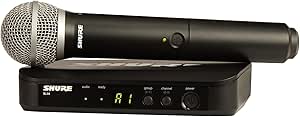 | Best for Solo Vocalists | Frequency band: H9 UHF, 512–542 MHz | Channels: 1 | Stated range: Approximately 300 feet line of sight | VIEW ON AMAZON | See Our Full Breakdown |
| Phenyx Pro PTU-7000-4H 4-Channel UHF Wireless Microphone System |  | Best for Separate Mixer Control | Channels: 4 | Frequency range: 530–580 MHz | Selectable frequencies: 40 per channel | VIEW ON AMAZON | See Our Full Breakdown |
| MELONARE 4-Channel UHF Wireless Handheld Microphone System |  | Best Compact Four-Mic System | Channels: 4 | Frequency range: 530–580 MHz | Sampling: 24-bit, 48 kHz | VIEW ON AMAZON | See Our Full Breakdown |
| Phenyx Pro PTU-71-2H Dual UHF Wireless Microphone System |  | Best Dual-Mic Range and Frequency Flexibility | Channels: 2 | Frequency ranges: Channel 1: 536.57–561.32 MHz; Channel 2: 562.37–587.12 MHz | Selectable frequencies: 100 per channel | VIEW ON AMAZON | See Our Full Breakdown |
| TONOR Wireless Microphone System with 4×10 Channels, UHF Range 60m/200ft, Handheld Microphones for Karaoke, Party, Church, Wedding |  | Best for Multi-Mic Karaoke | Wireless technology: UHF | Channels: 4 | Stated operating range: Up to 200 ft (60 m) | VIEW ON AMAZON | See Our Full Breakdown |
| Phenyx Pro 4-Channel UHF Fixed Frequency Wireless Microphone System PTU-5000-4H |  | Best for Rugged Venue Use | Wireless technology: UHF | Channels: 4 | Frequency range: 541.9–568.65 MHz (fixed) | VIEW ON AMAZON | See Our Full Breakdown |
| TONOR UHF Wireless Microphone System with Handheld, Headset, and Lavalier Mics |  | Best for Mixed Presentation Formats | Model: TW362 (model number TW360) | Wireless technology: UHF | Microphone types: Handheld, headset, lavalier | VIEW ON AMAZON | See Our Full Breakdown |
| TONOR TW388 8-Channel UHF Wireless Microphone System with Headset and Lavalier Mics |  | Best for Large Classes and Group Events | Wireless technology: UHF | Channels: 8 | Stated transmission range: Up to 295 ft (90 m) | VIEW ON AMAZON | See Our Full Breakdown |
| Pyle 4 Channel UHF Wireless Microphone System with 2 Handheld Mics, 2 Lavalier, 2 Headsets & Beltpack Transmitters, 300ft Range, Rack Mount Receiver |  | Best for Rack-Mounted Mixed-Mic Setups | Wireless technology: UHF | Channels: 4 | Stated range: 300+ ft | VIEW ON AMAZON | See Our Full Breakdown |
More Details on Our Top Picks
JBL Wireless Two-Microphone System with Dual-Channel Receiver
For a buyer who already owns a compatible JBL PartyBox, this two-mic set keeps setup simple: connect its rechargeable dual-channel UHF receiver and both voices can run through the speaker. That makes it more convenient for casual karaoke or announcements than the Phenyx Pro PTU-52-2H, which has more traditional outputs for mixers and separate sound equipment but involves a broader PA-style setup. Here, the tradeoff is limited speaker compatibility; the receiver is designed for selected PartyBox models, not a general-purpose audio rig. Replaceable AA batteries also make it easy to swap power on the fly, though the stated playback time is up to six hours, shorter than the Phenyx Pro system’s stated battery life. I’d choose this for uncomplicated two-person use, not for a venue needing flexible connections.
Pros:- Two microphones can operate through a dual-channel receiver
- Plug-and-play setup suits casual users
- Replaceable AA batteries are easy to swap
- Receiver is rechargeable
Cons:- Compatibility is limited to selected JBL PartyBox speakers
- Up to six hours of playback is shorter than the battery life listed for several alternatives
- Plastic enclosure is less suited to rough handling than the metal construction of the Phenyx Pro PTU-52-2H
Best for: JBL PartyBox owners who want two microphones for karaoke, small gatherings, or announcements without assembling a separate receiver-and-mixer setup
Not ideal for: Performers using non-JBL speakers, mixers, or a PA system, since compatibility is limited to selected JBL PartyBox speakers
- Microphones:2 wireless microphones
- Receiver:Rechargeable dual-channel UHF
- Compatible devices:Selected JBL PartyBox speakers
- Microphone batteries:Replaceable AA batteries
- Playback time:Up to 6 hours
- Polar pattern:Unidirectional
- Frequency range:65–15,000 Hz
- Enclosure material:Plastic
Our verdict“Choose this if you have a compatible JBL PartyBox and want a straightforward two-microphone setup; skip it if you need broader audio-system compatibility.”
Phenyx Pro Wireless Microphone System, 4-Channel UHF Microphone Set with Handheld, Bodypack, Headset, and Lavalier Mics
The Phenyx Pro’s strongest distinction is not simply its four channels, but the mix of handheld, bodypack, headset, and lapel microphones. A presenter can use a headset while singers or hosts take handhelds, which makes this more adaptable for services and events than the Aveek 4-Microphone UHF System, whose four transmitters are all handheld. Its all-metal receiver and up to eight hours of battery life also suit longer sessions, while four XLR outputs give each channel a separate path into a mixer. The compromise is a more conventional installation: it needs an external amplifier or speaker, and its fixed frequencies offer less room to respond to crowded RF conditions than a tunable system such as the Phenyx Pro PTU-52-2H. I’d pick it when microphone format matters more than frequency flexibility.
Pros:- Four channels support multiple simultaneous users
- Includes handheld, bodypack, headset, and lavalier microphone options
- Four XLR outputs allow separate channel connections to a mixer
- All-metal receiver and up to eight hours of battery life suit extended events
Cons:- Requires an external amplifier or speaker for sound output
- Fixed frequencies offer less flexibility in crowded RF environments
- Bodypack transmitter uses a plastic construction
Best for: Churches, event hosts, and small performance groups that need both handheld microphones and wearable headset or lavalier options
Not ideal for: Users seeking a self-contained speaker setup or frequent operation in crowded RF environments where fixed frequencies may be limiting
- Channels:4
- Frequency points:541.9, 546.3, 561.6, and 568.65 MHz
- Maximum range:Up to 260 ft
- Battery life:Up to 8 hours
- Power:8 AA batteries, included
- Outputs:4 XLR outputs
- Receiver construction:All-metal
- Included microphone types:Handheld, bodypack, headset, and lavalier
Our verdict“Pick this for events that need several microphone styles and separate mixer outputs, but choose a tunable model if RF conditions are likely to be congested.”
Aveek 4-Microphone UHF Wireless Microphone System
Four handheld microphones make this Aveek system a direct fit for group karaoke or events where several speakers need the same mic format. Its standout advantage over the Phenyx Pro four-channel set is rechargeable power: each microphone is rated for up to 40 hours and charges by USB-C, avoiding the steady supply of AA batteries that the Phenyx system requires. The receiver’s standard 1/4-inch output connects to compatible powered speakers, mixers, and karaoke machines, and the stated range reaches 262 feet. That flexibility stops at traditional audio gear, however: this system is explicitly not compatible with laptops, tablets, phones, or AV receivers. Channel assignment is also random when a microphone pairs, so it offers less user control than a system with tunable frequency groups. I’d favor it for rechargeable, multi-person vocal use—not computer-based recording or a complex RF setup.
Pros:- Four handheld microphones support group performances
- USB-C rechargeable microphones are rated for up to 40 hours
- Range is listed up to 262 feet
- 1/4-inch receiver output works with compatible PA and karaoke equipment
Cons:- Not compatible with laptops, tablets, phones, or AV receivers
- Microphones are assigned channels randomly when paired
- Four handhelds offer less format flexibility than the Phenyx Pro system’s headset and lavalier options
Best for: Karaoke hosts and community groups with a compatible PA, powered speaker, or mixer who want four rechargeable handheld microphones
Not ideal for: Content creators connecting directly to a laptop or phone, and buyers who need manual control over microphone channel assignments
- Microphones:4 handheld dynamic microphones
- Wireless technology:UHF
- Maximum range:262 ft
- Battery life:Up to 40 hours
- Charging:USB-C
- Receiver output:1/4-inch (6.35 mm)
- Polar pattern:Unidirectional (cardioid)
- Compatibility:PA systems, mixers, karaoke machines, amplifiers, and powered speakers
Our verdict“Choose Aveek for long-running group use with compatible PA equipment, but not for direct computer or mobile recording.”
Phenyx Pro PTU-52-2H Dual UHF Wireless Microphone System
Among the two-microphone options here, the PTU-52-2H is the better fit for a conventional PA or mixer setup. Its 30 tunable frequency groups, 60 channels, and automatic pairing give buyers more adjustment room than the JBL dual-mic system, which is intended for selected PartyBox speakers and does not offer the same stated frequency-group flexibility. Two XLR outputs keep the microphones separate for mixer control, while a mixed 1/4-inch output suits simpler connections. The metal receiver and microphones are also built for more demanding handling than the JBL system’s plastic enclosure. The tradeoff is that the stated 200-foot range assumes line of sight, and four AA batteries are required. Compared with the Phenyx Pro four-channel system, this is a more focused choice for two handheld users rather than a multi-mic setup with headset and lavalier options.
Pros:- Tunable frequency groups and automatic pairing support setup flexibility
- Two XLR outputs allow separate mixer channels
- Mixed 1/4-inch output offers a simpler connection option
- Metal receiver and microphone construction is suited to frequent handling
Cons:- The stated range of up to 200 feet is line-of-sight
- Requires four AA batteries
- Only includes two handheld microphones, unlike the Phenyx Pro four-channel system’s broader mic selection
Best for: Small venues, presenters, and performers who need two handheld microphones, mixer-friendly outputs, and frequency adjustment
Not ideal for: Users who need four or more microphones, wearable mic options, or a system that avoids replaceable AA batteries
- Microphones:2 handheld wireless microphones
- Frequency range:500–590 MHz
- Tunable frequency groups:30
- Channels:60
- Operating range:Up to 200 ft line of sight
- Outputs:2 XLR and 1 mixed 1/4-inch
- Signal-to-noise ratio:98 dB
- Power:4 AA batteries
Our verdict“Choose the PTU-52-2H for a flexible two-handheld PA setup with separate mixer outputs, and look elsewhere if you need more channels or wearable microphones.”
JBL PartyBox Wireless Microphone (2-Pack) with Rechargeable Battery and 2.4GHz Connection
This two-microphone pack is the clearest pick for PartyBox owners who want rechargeable microphones and longer sessions without replacing AA cells. Its stated 20-hour battery life is substantially longer than the six hours listed for the JBL Wireless Two-Microphone System, and compatibility extends to all PartyBox speakers rather than selected models. Built-in noise reduction, a pop filter, and a shock mount are aimed at keeping casual vocals clearer amid party handling and background noise. The catch is that a digital wireless dongle is required for full wireless operation, and battery life may fall when using it. Like the other JBL option, this is tied to PartyBox speakers rather than general-purpose mixers or PA systems. I’d select it for longer PartyBox gatherings; buyers building a flexible sound system should look at the Phenyx Pro PTU-52-2H instead.
Pros:- Up to 20 hours of battery life is well suited to extended sessions
- Compatible with all PartyBox speakers
- 2.4GHz wireless connection supports movement up to 30 meters
- Built-in pop filter and shock mount support clearer voice capture
Cons:- A digital wireless dongle is required for full wireless functionality
- Battery life may be shorter when using the wireless dongle
- PartyBox-only compatibility is narrower than the Phenyx Pro PTU-52-2H’s mixer and speaker connections
Best for: PartyBox owners who want two rechargeable microphones for extended karaoke, parties, or informal performances
Not ideal for: Performers using non-PartyBox speakers, mixers, or PA systems, and buyers who want wireless operation without a dongle
- Microphones:2 wireless microphones
- Battery life:Up to 20 hours
- Battery capacity:700 mAh
- Connection:2.4GHz wireless
- Stated wireless range:Up to 30 meters
- Compatibility:All JBL PartyBox speakers
- Voice features:Noise reduction, built-in pop filter, and shock mount
- Color:Black
Our verdict“Choose this two-pack for long sessions with any JBL PartyBox; pick a PA-oriented system if you need broader equipment compatibility.”
Phenyx Pro Single Digital Wireless Microphone System with Mini Receiver, Bodypack Transmitter, Headset & Lapel Microphones
For presenters who need to move freely without holding a mic, this single-channel bodypack system offers both headset and lapel options. Its 15 tunable UHF channels give it more frequency flexibility than the single-channel Shure BLX24/PG58, though Shure’s handheld format and stated 300-foot line-of-sight range better suit vocalists who want a conventional stage mic and broader coverage. The Phenyx Pro’s stated range is 160–200 feet, so it fits small stages, ceremonies, and indoor events more naturally than large venues. A rechargeable receiver and transmitter with USB-C charging avoid dependence on disposable AA batteries, but beginners may need time to sort out channel setup. The line-of-sight limitation also means walls and other obstructions can reduce reliable coverage.
Pros:- Includes both headset and lapel microphones for different speaking setups.
- 15 tunable UHF channels offer frequency choices when nearby systems compete for spectrum.
- Rechargeable 1500mAh receiver and 550mAh transmitter charge via USB-C.
- Compact bodypack and mini receiver are easy to transport.
Cons:- One bodypack transmitter means it supports only one microphone channel at a time.
- The stated 160–200-foot range depends on line of sight and is less suited to large venues than the Shure BLX24/PG58.
- Channel setup may be challenging for first-time wireless-system users.
Best for: Presenters, instructors, and ceremony officiants who need a hands-free headset or discreet lapel mic for small events.
Not ideal for: Singers who want a handheld microphone, or event crews needing multiple independent microphone channels and reliable coverage across a large venue.
- Frequency band:902–928 MHz UHF
- Channels:15 tunable channels
- Stated range:160–200 feet
- Receiver battery:1500mAh
- Transmitter battery:550mAh
- Charging:USB Type-C
- Included microphones:Headset and lapel/lavalier
- Audio output:1/4-inch TS connector
Our verdict“Choose this Phenyx Pro when hands-free headset or lapel use matters more than multiple channels or long-range handheld performance.”
Shure BLX24/PG58 Wireless Vocal Microphone System – H9 Band
This is the most straightforward pick here for a solo singer or speaker who wants a handheld dynamic microphone and a receiver from a familiar audio brand. The integrated PG58 cardioid capsule is designed to focus on the voice while reducing pickup from around the mic, and QuickScan frequency selection helps simplify setup compared with the more involved frequency options on the Phenyx Pro PTU-71-2H. Its stated 300-foot line-of-sight range also exceeds the MELONARE system’s 200-foot coverage figure. The tradeoff is capacity: this is a single-channel system, while both Phenyx Pro four-channel models can handle several microphones at once. The H9 band is specific to this version, so buyers need to check local frequency rules and compatibility before choosing it.
Pros:- Integrated PG58 cardioid dynamic microphone suits vocals and helps limit off-axis background pickup.
- QuickScan frequency selection makes setup simpler than manual frequency planning.
- Up to 14 hours of operation from two AA batteries.
- Stated line-of-sight range is approximately 300 feet.
Cons:- One channel cannot support multiple wireless microphones simultaneously.
- H9 band operation requires checking local frequency compliance.
- The handheld format is less suitable than a bodypack headset system for hands-free speaking.
Best for: Solo singers, presenters, and small venues that want a handheld mic with quick frequency setup and long stated line-of-sight range.
Not ideal for: Groups needing two or more wireless microphones, or buyers who cannot use the H9 frequency band in their location.
- Frequency band:H9 UHF, 512–542 MHz
- Channels:1
- Stated range:Approximately 300 feet line of sight
- Microphone:Integrated PG58 dynamic capsule
- Polar pattern:Cardioid
- Battery life:Up to 14 hours
- Battery type:2 AA batteries
- Signal-to-noise ratio:78 dB
Our verdict“Pick the Shure for a solo vocalist who values a familiar handheld setup and simple frequency selection over multi-mic capacity.”
Phenyx Pro PTU-7000-4H 4-Channel UHF Wireless Microphone System
For events where an operator needs to adjust each speaker independently at the mixer, the PTU-7000-4H earns its place with four individual XLR outputs alongside a mixed 1/4-inch output. That gives it a practical advantage over the MELONARE four-mic system, whose listed output is a single 6.35 mm jack. Four handheld mics, auto scan, and IR sync also make it a more useful fit for panels, churches, and event teams juggling several speakers. The receiver’s metal enclosure and rack ears suit a more permanent setup. In exchange, this system takes more rack and setup planning than a compact half-rack option, and the stated 328-foot reach applies only with clear line of sight. Each handheld also needs AA batteries, with eight required for the full set.
Pros:- Four individual XLR outputs allow separate channel processing and level control at a mixer.
- Auto scan and IR sync simplify frequency selection and microphone pairing.
- 40 selectable frequencies per channel offer options for frequency planning.
- Metal receiver with rack ears is suited to installed or rack-based sound systems.
Cons:- The stated range of up to 328 feet is line of sight and can shrink in obstructed spaces.
- Eight AA batteries are required for the four handheld microphones.
- Four channels and separate outputs require more setup and mixer inputs than the single-channel Shure BLX24/PG58.
Best for: Churches, event operators, and venues that need four handheld microphones with separate mixer control for each channel.
Not ideal for: Casual users seeking a small, simple setup, or buyers who prefer rechargeable microphones and minimal frequency coordination.
- Channels:4
- Frequency range:530–580 MHz
- Selectable frequencies:40 per channel
- Stated range:Up to 328 feet line of sight
- Microphones:4 handheld dynamic microphones
- Outputs:4 individual XLR outputs; 1/4-inch mixed output
- Pickup pattern:Unidirectional
- Battery requirement:8 AA batteries
Our verdict“Choose the PTU-7000-4H when four handheld channels need independent XLR control, and skip it if a compact, low-coordination setup matters more.”
MELONARE 4-Channel UHF Wireless Handheld Microphone System
The MELONARE pairs four handheld microphones with a compact half-rack receiver, making it a space-saving way to cover panels, parties, or small performances. Its built-in antennas avoid the external antenna setup found on the Phenyx Pro PTU-71-2H, while color-coded controls can help users keep track of which mic belongs to which channel. It also lists frequency hopping and support for up to eight systems at once, features that may appeal to venues coordinating several sets. The compromise is connectivity: its 6.35 mm jack is less flexible than the PTU-7000-4H’s four individual XLR outputs, so separate channel mixing is not provided in the listed specs. Its stated 200-foot coverage is shorter than the Phenyx Pro four-channel systems’ stated line-of-sight range, and all four mics use AA batteries.
Pros:- Four handheld microphones provide capacity for panels and group events.
- Compact half-rack receiver has built-in antennas.
- Color-coded controls and anti-roll grilles help with identification and handling.
- Frequency hopping and stated support for up to eight systems suit multi-system setups.
Cons:- A 6.35 mm output may require an adapter or limit connection options compared with the PTU-7000-4H’s individual XLR outputs.
- Stated coverage is up to 200 feet, below the stated line-of-sight reach of the Phenyx Pro PTU-71-2H.
- The four microphones require eight AA batteries.
Best for: Small venues, community groups, and party hosts who want four handheld microphones in a compact receiver package.
Not ideal for: Sound engineers who need separate XLR feeds for each mic, or users who want rechargeable handheld transmitters.
- Channels:4
- Frequency range:530–580 MHz
- Sampling:24-bit, 48 kHz
- Stated coverage:Up to 200 feet
- Pickup pattern:Unidirectional (cardioid)
- Microphone type:Handheld dynamic
- Connector:6.35 mm jack
- Power:8 included AA batteries
Our verdict“The MELONARE is a practical compact choice for four-mic events when easy channel identification matters more than individual XLR outputs.”
Phenyx Pro PTU-71-2H Dual UHF Wireless Microphone System
For duets, two-person presentations, or karaoke hosts who want more tuning options than a basic two-mic kit, the PTU-71-2H combines two independent channels with 100 selectable frequencies per channel and auto scanning. Its stated 290–328-foot line-of-sight range is longer than the MELONARE’s stated 200-foot coverage, while its metal construction gives the receiver a sturdier format than a lightweight portable unit. Compared with the four-channel PTU-7000-4H, this model serves fewer people at once but may be easier to fit into a setup that only needs two handhelds. The tradeoffs are familiar to UHF handheld systems: obstacles can cut the advertised range, and the two mics together require eight AA batteries. The receiver’s listed dimensions and weight also make it less suited to a very small portable rig.
Pros:- Two channels and 100 selectable frequencies per channel provide frequency-planning flexibility.
- Auto scan and IR synchronization help with setup and pairing.
- Cardioid pickup pattern is designed to focus on the speaker and reduce ambient pickup.
- Metal construction and replaceable microphone heads support maintenance and durability.
Cons:- The stated 290–328-foot range depends on clear line of sight.
- Both handheld microphones require AA batteries, with eight included.
- The listed receiver dimensions and 2.7 kg weight make it less portable than the compact MELONARE receiver.
Best for: Karaoke operators, duos, and presenters who need two handheld mics with broad frequency selection and long clear-path coverage.
Not ideal for: Panels needing four or more microphones, or users seeking a lightweight receiver and rechargeable handhelds.
- Channels:2
- Frequency ranges:Channel 1: 536.57–561.32 MHz; Channel 2: 562.37–587.12 MHz
- Selectable frequencies:100 per channel
- Stated range:290–328 feet line of sight
- Microphones:2 handheld dynamic microphones
- Polar pattern:Cardioid (unidirectional)
- Signal-to-noise ratio:98 dB
- Battery life:Up to 16 hours
- Connectivity:RF/UHF, XLR, and 6.35 mm jack
Our verdict“Choose the PTU-71-2H for two performers who need frequency flexibility and long clear-path reach, but opt for a four-channel system for larger groups.”
TONOR Wireless Microphone System with 4×10 Channels, UHF Range 60m/200ft, Handheld Microphones for Karaoke, Party, Church, Wedding
The TONOR four-handheld system is a practical choice for karaoke hosts and event organizers who want several speakers to take turns without passing one mic around. Its four channels and stated support for up to 40 simultaneous connections give it more room to coordinate multiple compatible systems than a simple two-mic setup such as the Phenyx Pro PTU-5000-4H. The claimed 200-foot UHF range also suits larger rooms, though real coverage can vary with walls and nearby wireless equipment.
Its focus is straightforward: handheld microphones, automatic syncing, and a 6.35 mm connection for common mixers, karaoke machines, amplifiers, and speakers. Unlike TONOR’s TW362, it does not include headset or lavalier options, so presenters who need hands-free speech should choose that more flexible kit. Plan for AA batteries, which are not included.
Pros:- Four handheld microphones support group singing and multi-speaker events.
- UHF operation and a stated range of up to 200 feet suit larger rooms.
- Automatic syncing is intended to reduce setup steps.
- Works with mixers, karaoke machines, amplifiers, and speakers.
Cons:- AA batteries are not included, adding a recurring setup need.
- Handheld-only microphones offer less flexibility than the TONOR TW362’s headset and lavalier options.
Best for: Karaoke hosts, churches, and event organizers who need four handheld microphones and a receiver that connects to common sound equipment.
Not ideal for: Presenters who need headset or lavalier microphones, or buyers who want batteries included.
- Wireless technology:UHF
- Channels:4
- Stated operating range:Up to 200 ft (60 m)
- Microphone type:Handheld
- Connector:6.35 mm jack
- Polar pattern:Unidirectional
- Compatible devices:Mixers, karaoke machines, amplifiers, speakers
- Microphone power:2 AA batteries per microphone; not included
Our verdict“Choose this TONOR when four handheld mics matter more than hands-free microphone choices or included batteries.”
Phenyx Pro 4-Channel UHF Fixed Frequency Wireless Microphone System PTU-5000-4H
The Phenyx Pro PTU-5000-4H favors durable, direct operation over flexible microphone formats. Its metal receiver, snap-on BNC antennas, and individual volume controls make it a sensible fit for churches, wedding venues, and small stages where equipment gets set up repeatedly. Compared with the TONOR four-handheld system, it offers a longer stated range—up to 260 feet—and includes batteries and connection accessories, reducing the list of items a buyer must source separately.
The tradeoff is its fixed-frequency design: it is built for straightforward operation, not frequency selection when a venue’s RF conditions are crowded. It also supplies handheld mics only, while the TONOR TW362 adds headset and lavalier choices for hands-free use. The receiver needs an external amplifier or speaker; it cannot produce sound by itself.
Pros:- Metal receiver and snap-on BNC antennas suit repeated venue setup.
- Individual volume controls allow per-microphone level adjustments.
- Includes eight AA batteries, antennas, cables, and a power adapter.
- Stated operating distance reaches up to 260 feet.
Cons:- Fixed frequencies offer less flexibility in crowded RF environments.
- Requires an external amplifier or speaker to produce sound.
- Handheld microphones only; no headset or lavalier option is included.
Best for: Churches, wedding venues, and small-stage operators who want a four-handheld kit with a metal receiver and included setup accessories.
Not ideal for: Buyers who need selectable frequencies, hands-free microphones, or a system that works without an external sound source.
- Wireless technology:UHF
- Channels:4
- Frequency range:541.9–568.65 MHz (fixed)
- Maximum operating distance:Up to 260 ft
- Frequency response:50 Hz–18 kHz
- Signal-to-noise ratio:105 dB
- Outputs and connectors:6.35 mm jack, XLR, UHF
- Enclosure material:Metal
- Included battery supply:8 AA batteries
Our verdict“Pick the PTU-5000-4H for a durable, accessory-complete handheld setup, but skip it if selectable frequencies or hands-free mics are priorities.”
TONOR UHF Wireless Microphone System with Handheld, Headset, and Lavalier Mics
The TONOR TW362 is the flexible pick for events that mix singing, announcements, and hands-free presentations. Its package combines two handheld mics with two bodypacks, plus headset and lavalier microphones, so speakers can choose a format suited to the job. That makes it more adaptable than the handheld-only Phenyx Pro PTU-5000-4H, though the Phenyx has a metal receiver and includes batteries.
Automatic pairing and a stated 200-foot range are useful for quick setup and movement around a room, while the 1/4-inch output fits many mixers, amplifiers, and powered speakers. The spec information lists 10 channels per microphone or bodypack and also lists 20 channels overall, so buyers should confirm the available channel arrangement for their setup. AA batteries are not included, and the single 1/4-inch connection may not suit every audio installation.
Pros:- Includes two handheld mics and headset and lavalier options for the bodypacks.
- Automatic pairing is intended to simplify setup.
- Stated operating range reaches up to 200 feet.
- Compatible with mixers, amplifiers, karaoke machines, and powered speakers.
Cons:- AA batteries are required for the mics and bodypacks, but are not included.
- Receiver uses a 1/4-inch audio connection rather than a listed XLR output.
- Channel details are presented as both 10 per unit and 20 overall, which may require clarification for multi-system use.
Best for: Schools, fitness instructors, event hosts, and presenters who need both handheld and hands-free mic options in one system.
Not ideal for: Buyers who need XLR output, included batteries, or a simple channel specification before coordinating multiple wireless systems.
- Model:TW362 (model number TW360)
- Wireless technology:UHF
- Microphone types:Handheld, headset, lavalier
- Stated operating range:Up to 200 ft (60 m)
- Channel information:10 per microphone and bodypack; 20 listed overall
- Audio connector:6.35 mm (1/4 in)
- Signal-to-noise ratio:60 dB
- Power:2 AA batteries per microphone or bodypack; not included
Our verdict“Choose the TW362 when your event needs both handheld and hands-free microphones, and accept the battery and connection limitations.”
TONOR TW388 8-Channel UHF Wireless Microphone System with Headset and Lavalier Mics
With eight bodypacks and eight headset and lavalier pairs, the TONOR TW388 is the lineup’s clearest choice for a class, ensemble, or event with many simultaneous speakers. It offers twice the listed channel count of the TONOR TW362, which is a better fit for smaller groups that want a mix of handheld and hands-free microphones. The TW388’s stated 295-foot range, receiver display, and frequency memory are aimed at organizing larger setups and checking transmitter status during use.
This scale comes with practical costs: eight transmitters mean a substantial battery load, and each bodypack needs two AA batteries that are not included. It also has no handheld microphones, making it less suited to karaoke or audience handoffs than the TONOR four-handheld model. The stated range can vary with interference and the venue, so it should not be treated as guaranteed coverage.
Pros:- Eight bodypacks support larger groups than the four-channel TONOR TW362.
- Each bodypack can be used with a headset or lavalier microphone.
- Receiver display shows battery level and frequency; bodypacks have mute and volume controls.
- Receiver provides both 6.35 mm and XLR outputs.
Cons:- Each of the eight bodypacks needs two AA batteries, which are not included.
- No handheld microphones are included.
- The 295-foot range is a stated maximum and can be affected by venue conditions and interference.
Best for: Schools, conference organizers, and performance groups that need up to eight hands-free microphone positions at once.
Not ideal for: Karaoke hosts needing handheld mics, or small groups that do not need eight transmitters and want to minimize battery management.
- Wireless technology:UHF
- Channels:8
- Stated transmission range:Up to 295 ft (90 m)
- Microphone types:Headset and lavalier
- Outputs:6.35 mm jack and XLR
- Bodypack power:2 AA batteries per transmitter; not included
- Receiver material:Metal
- Bodypack material:ABS
- Included transmitters:8 bodypacks
Our verdict“Choose the TW388 for large groups needing many hands-free channels, not for smaller events or handheld-mic use.”
Pyle 4 Channel UHF Wireless Microphone System with 2 Handheld Mics, 2 Lavalier, 2 Headsets & Beltpack Transmitters, 300ft Range, Rack Mount Receiver
The Pyle four-channel UHF system combines handheld and hands-free formats with a rack-mount receiver, making it a fit for venues that keep their audio gear installed or organized in a rack. Its listed package includes two handheld mics, two lavaliers, two headsets, and beltpack transmitters, giving it more microphone-format variety than the TONOR four-handheld system. A stated range of 300 feet or more also targets larger spaces, though actual coverage depends on the RF environment.
The main compromise is that the supplied details do not spell out how the four channels map to all the included microphone components, so buyers should confirm simultaneous-use arrangements before planning a multi-speaker event. Its 519–568 MHz UHF range may also need coordination in crowded wireless environments. Microphone batteries are not included, and this system is less compelling for buyers who only need a simple handheld karaoke setup.
Pros:- Includes handheld, headset, and lavalier microphone formats.
- Rack-mount receiver suits installed or centralized audio setups.
- Stated range exceeds 300 feet.
- Lists XLR and 1/4-inch combo inputs for audio connections.
Cons:- Microphone batteries are not included.
- The listed four-channel count is not clearly reconciled with all included mic components.
- UHF operation may require frequency coordination in crowded RF environments.
Best for: Venues with rack-based sound equipment that need a mix of handheld, headset, and lavalier microphone options.
Not ideal for: Buyers who need clear confirmation of simultaneous microphone assignments, included batteries, or a basic handheld-only kit.
- Wireless technology:UHF
- Channels:4
- Stated range:300+ ft
- Frequency range:519–568 MHz
- Frequency selection:4 × 200
- Frequency response:40 Hz–17 kHz
- Signal-to-noise ratio:90 dB
- Inputs:2 XLR + 1/4-inch combo
- Power supply:110–240 V
Our verdict“Pick the Pyle for a rack-based venue needing mixed microphone formats, but confirm channel assignments and battery requirements before purchase.”

How We Picked
I ranked these wireless microphone systems by how well their configurations match real use: number of simultaneous microphones, handheld versus headset or lavalier options, receiver and transmitter setup, and the practical demands of karaoke, events, presentations, and vocal performance. I also weighed ease of use, setup flexibility, and whether a system’s included parts make sense together rather than treating the largest microphone bundle as the automatic winner.
The JBL dual-microphone system leads for a straightforward two-person setup, while the Shure BLX24/PG58 earns a distinct place for buyers seeking a vocal-focused system. Four-channel bundles rank higher when their microphone mix fits group use; compact or specialized options rank well for specific needs but are less versatile. Since product listings do not provide the same level of detail for every performance measure, I avoid making unsupported claims about sound quality or real-world range and focus the order on the stated configuration and buyer fit.
Factors to Consider When Choosing Wireless Microphone Systems
Choosing among wireless microphone systems starts with the job, not the largest channel count. I’d first decide how many people need to use microphones at the same time, then match microphone style, receiver connections, and setup complexity to the room and the person running the event.
Count simultaneous microphones, not just included microphones
A bundle may include several transmitters, but the useful number is how many microphones can operate at once through its receiver. For a duet or small presentation, two channels can keep setup and controls manageable. A four-channel model is a better match for a host and several participants, provided its receiver supports those channels simultaneously. Avoid choosing extra channels solely for future-proofing if you will not use them; additional transmitters can add setup work and clutter. For rotating speakers, also ask whether each person needs a separate live microphone or whether one can be passed around.
Choose handheld, headset, or lavalier for the job
Handheld microphones suit singing, announcements, and situations where users can hold and pass a mic. Headsets keep both hands free and keep the microphone near the speaker’s mouth, which can help presenters who move around. Lavalier microphones are less visible and convenient for interviews or speeches, though placement and clothing can affect how they capture a voice. Bodypack systems add flexibility, but every wearer must manage a pack and cable. Do not assume a bundle’s variety means every microphone type is equally suitable for every speaker or performance.
Check frequency and channel setup for your venue
Wireless systems use radio frequencies, and nearby wireless devices or other microphone systems can affect how smoothly a setup operates. A fixed-frequency kit may be simple when its assigned frequencies work in your location, but it can leave fewer options if interference appears. Systems with more channel choices can offer flexibility, yet they may take more time to coordinate and configure. Before buying several systems for one venue, check whether their frequencies can coexist rather than assuming separate boxes will work together automatically. For a temporary event, test the setup in the actual room before the audience arrives.
Match the receiver to your sound equipment
A wireless receiver does not replace a mixer, powered speaker, or compatible audio input. Check the receiver’s outputs and confirm that your existing equipment accepts them; channel count on the microphone system does not tell you how many independent outputs you can route. If you need separate control over each speaker or singer, look for a setup that supports the routing your mixer requires. A simple party connection may not provide the control needed for a church or small performance venue. This compatibility check can prevent a system from arriving with the right microphones but the wrong connection plan.
Budget for setup time and ongoing management
More microphones mean more batteries or charging routines, more transmitters to label, and more chances for someone to take the wrong mic. Rechargeable designs can reduce disposable battery use, but users still need a charging plan between events. For a venue with changing presenters, clear labels and a short handoff routine can matter more than a long feature list. Fixed-frequency or simpler two-mic systems may be easier for occasional users to operate. If different people will run the equipment, prioritize controls and instructions they can understand without specialist help.
Pay for capabilities you will use regularly
Spending more makes sense when a particular need is persistent: dependable vocal use, several simultaneous speakers, or hands-free microphones for active presenters. It makes less sense to pay for a large set of transmitters that will sit unused or a microphone format that does not suit the performers. Compare the complete working setup, including receiver, microphones, bodypacks, and any extra audio equipment you still need. Consider how easily missing or damaged parts can be replaced before choosing a system for frequent events. The right value is the system that covers your actual use without adding equipment or complexity you will not use.
Frequently Asked Questions
Do I need a two-channel or four-channel wireless microphone system?
Choose two channels if you usually have one or two people speaking or singing at the same time; a dual system such as the JBL options keeps the setup focused. Four channels make more sense when a host and several guests need separate microphones concurrently. A larger channel count does not automatically improve audio quality, and it can add more transmitters to manage. Check that the receiver supports the number of microphones you plan to use simultaneously, not just the number included in the box. If users take turns, fewer microphones may be enough.
Should I choose a handheld microphone or a headset and lavalier kit?
Pick handheld microphones for karaoke, singing, and events where people can hold or pass a microphone. Headsets suit presenters who need both hands free or move around while speaking. Lavalier microphones work well when a discreet mic is useful, but their placement can affect voice pickup and clothing noise. A mixed kit offers more ways to accommodate different users, though bodypacks and cables add steps to setup. Choose the formats your regular users will actually wear and handle comfortably.
Can I use multiple wireless microphone systems in the same venue?
Often, but compatibility depends on the systems’ operating frequencies and how they are coordinated. Buying two separate kits does not guarantee that all microphones can run together without interference. Check frequency details for each system and consult the manufacturer’s guidance before planning a multi-system setup. A venue with other wireless audio or communication equipment may need extra care. Test every microphone at the venue before relying on the setup for an event.
Will a wireless microphone system connect directly to my speaker?
It depends on the receiver’s outputs and the inputs available on your speaker or mixer. Confirm the connection types before buying, and check whether your sound equipment can accept the receiver’s output at the level it provides. For multiple microphones, a mixer may be needed to control voices separately or combine them with music. Do not assume a receiver with several channels will provide separate outputs for each channel. A quick equipment check can prevent the need for an extra adapter or mixer on event day.
Is a fixed-frequency system a poor choice for events?
Not necessarily; a fixed-frequency system can be a straightforward fit when its assigned frequencies work well in the venue. The tradeoff is fewer options if another device or microphone system interferes. Systems with selectable frequencies may offer more room to adjust, but they can require more setup knowledge. For occasional use in a familiar space, simplicity may matter more than added adjustment choices. For a busy venue or several simultaneous wireless systems, check frequency coordination before deciding.
Conclusion
For most buyers who need a straightforward two-person setup, I’d start with the JBL Wireless Two-Microphone System as the best overall fit. For a vocal-focused single-mic setup, the Shure BLX24/PG58 is my best premium-style pick in this lineup; buyers seeking a four-mic package should compare the Phenyx Pro and other multi-channel bundles by microphone format and receiver setup rather than channel count alone. For value, I’d look at the Phenyx Pro four-channel kits when their included handheld, headset, or lavalier options match the event. Beginners with a simple duet or party use case are better served by a two-microphone system than a larger kit. For hands-free presentations, choose a headset or lavalier package such as the relevant Phenyx Pro or TONOR options; for bigger groups, consider a four-channel model, or TONOR’s eight-channel system when that many simultaneous microphones are genuinely needed.