
For most homes, I’d start with the TP-Link Deco 7 Pro BE67 as the best overall Wi-Fi 7 mesh system: its tri-band design offers a useful balance of capacity and whole-home flexibility. The NETGEAR Orbi 770 is a strong alternative for shoppers who want a three-unit kit, while the Amazon eero 7 makes a simpler dual-band option for buyers who value straightforward setup. The main tradeoff is between more affordable dual-band kits and pricier tri-band systems with more room for busy networks or wireless backhaul. Kit size, wired connections, and the layout of your home can matter as much as advertised coverage. Read on for the full comparison and guidance on which system best fits your setup.

Get the latest gadgets delivered free with Prime
- Fast, free delivery on millions of items
- Prime Video, Amazon Music and more included
- Member-only deals all year
Complete the kit



Key Takeaways
- Tri-band is the clearest dividing line. The Deco 7 Pro BE67, Deco 7 Pro BE10000, Orbi 770, Orbi 970, and eero Pro 7 offer a different capacity and backhaul proposition from the dual-band Deco, Orbi 360, Orbi 370, and eero 7 kits.
- Kit size changes the value equation. Several models come in two-, three-, or four-unit options, so the right configuration depends on your floor plan and where nodes can be placed—not just the system name.
- TP-Link’s Deco range has the widest spread of configurations here. It includes dual-band entry points as well as tri-band Pro models, giving buyers more ways to trade capacity against cost and kit size.
- NETGEAR’s Orbi lineup spans distinct household needs. The 370 and 360 series provide multi-unit options, while the 770 and 970 series target buyers seeking higher-tier tri-band systems.
- A premium system is not automatically the best fit. The Orbi 970 and Deco BE10000 make more sense when a network can use their higher-tier design; many homes may be better served by a less elaborate kit and well-placed nodes.
| TP-Link Deco 7 BE23 Dual-Band Wi-Fi 7 Mesh System, BE3600, 2-Pack |  | Best Value for Multi-Gig Wired Connections | Wi-Fi standard: Wi-Fi 7 | Bands: Dual-band | Advertised speed: BE3600; up to 3.6 Gbps | VIEW ON AMAZON | See Our Full Breakdown |
| NETGEAR Orbi 770 Series WiFi 7 Tri-Band Mesh System, 3-Pack |  | Best for Broad Tri-Band Coverage | Wi-Fi generation: Wi-Fi 7 | Frequency band: Tri-band | Maximum data transfer rate: Up to 11 Gbps | VIEW ON AMAZON | See Our Full Breakdown |
| NETGEAR Orbi 370 Series Wi-Fi 7 Mesh System (4-Pack) – Up to 8,000 sq ft |  | Best for Filling Coverage Gaps | Wi-Fi generation: Wi-Fi 7 (802.11be) | Coverage area: Up to 8,000 sq. ft. | Supported devices: Up to 70 | VIEW ON AMAZON | See Our Full Breakdown |
| NETGEAR Orbi 970 Series WiFi 7 Mesh System, 3-Pack | 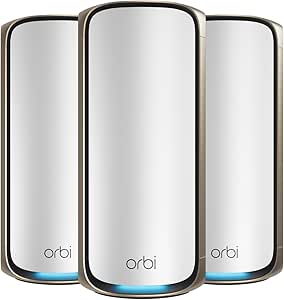 | Best Premium Multi-Gig System | Wi-Fi standard: Wi-Fi 7 | System configuration: 1 router and 2 satellites | Bands: Quad-band | VIEW ON AMAZON | See Our Full Breakdown |
| TP-Link Deco 7 Pro BE10000 Tri-Band Wi-Fi 7 Mesh System, 3-Pack |  | Best for High Device Capacity | Wi-Fi standard: Wi-Fi 7 (802.11be) | Frequency bands: Tri-band: 6 GHz, 5 GHz, and 2.4 GHz | Maximum combined speed: Up to 10 Gbps | VIEW ON AMAZON | See Our Full Breakdown |
| TP-Link Deco BE23 Wi-Fi 7 Dual-Band Mesh System, 3-Pack |  | Best for Broad Coverage on a Dual-Band System | Wi-Fi standard: Wi-Fi 7 | Bands: Dual-band, 2.4 GHz and 5 GHz | Maximum combined speed: Up to 3.6 Gbps | VIEW ON AMAZON | See Our Full Breakdown |
| TP-Link Deco BE25 Wi-Fi 7 Dual-Band Mesh System, 3-Pack |  | Best Dual-Band Value for a Large Home | Wi-Fi standard: Wi-Fi 7 (802.11be) | Frequency bands: Dual-band | Maximum combined speed: Up to 5 Gbps | VIEW ON AMAZON | See Our Full Breakdown |
| TP-Link Deco 7 Pro BE67 Tri-Band Wi-Fi 7 Mesh System, 3-Pack |  | Best for High Capacity and Multi-Gig Wired Networks | Wi-Fi standard: Wi-Fi 7 | Bands: Tri-band: 6 GHz, 5 GHz, and 2.4 GHz | Combined bandwidth: Up to 14 Gbps | VIEW ON AMAZON | See Our Full Breakdown |
| TP-Link Deco BE25 Dual-Band Wi-Fi 7 Mesh System, BE5000, 2-Pack |  | Best Two-Node Pick for Medium-Sized Homes | Wi-Fi standard: Wi-Fi 7 (802.11be) | Frequency bands: Dual-band | Advertised maximum speed: Up to 5 Gbps | VIEW ON AMAZON | See Our Full Breakdown |
| Amazon eero 7 Dual-Band Wi-Fi 7 Mesh Router, 3-Pack |  | Best for Smart Home Simplicity | Wi-Fi standard: Wi-Fi 7 (IEEE 802.11a/b/g/n/ac/ax/be) | Bands: Dual-band, 2.4 GHz and 5 GHz | Wireless speed: Up to 1.8 Gbps | VIEW ON AMAZON | See Our Full Breakdown |
| NETGEAR Orbi 370 Series WiFi 7 Mesh System, 3-Pack |  | Best for Large Homes with Many Devices | WiFi generation: WiFi 7 | Bands: Dual-band | Maximum data transfer rate: Up to 5 Gbps | VIEW ON AMAZON | See Our Full Breakdown |
| NETGEAR Orbi 360 Series WiFi 7 Mesh System, 3-Pack, up to 6,000 sq ft | | Best for App-Led Setup and Security Basics | WiFi standard: WiFi 7 (802.11be) | Bands: Dual-band | Maximum speed: Up to 5 Gbps | VIEW ON AMAZON | See Our Full Breakdown |
| NETGEAR Orbi 370 Series WiFi 7 Mesh System, 2-Pack |  | Best for Mid-Size Homes | WiFi generation: WiFi 7 (802.11be) | Bands: Dual-band | Maximum data transfer rate: Up to 5 Gbps | VIEW ON AMAZON | See Our Full Breakdown |
| TP-Link Deco 7 Pro (BE10000) Tri-Band WiFi 7 Whole Home Mesh System |  | Best for Multi-Gig Wired Networking | WiFi standard: WiFi 7 (802.11be) | Bands: Tri-band: 6 GHz, 5 GHz, and 2.4 GHz | Combined throughput: Up to approximately 10 Gbps | VIEW ON AMAZON | See Our Full Breakdown |
| Amazon eero Pro 7 Tri-Band Mesh Wi-Fi 7 Router, 3-Pack |  | Best for Very High Device Counts | WiFi generation: WiFi 7 | Bands: Tri-band | Pack size: Three routers | VIEW ON AMAZON | See Our Full Breakdown |
| wi fi 7 mesh system | Coverage | Device capacity | Bands | Wi-Fi standard |
|---|---|---|---|---|
| TP-Link Deco 7 BE23 Dual-Band | Up to 4,500 sq. ft. (2-pack) | Up to 150 devices | Dual-band | Wi-Fi 7 |
| NETGEAR Orbi 770 Series WiFi 7 | Up to 8,000 sq. ft. | — | — | — |
| NETGEAR Orbi 370 Series Wi-Fi | — | — | — | — |
| NETGEAR Orbi 970 Series WiFi 7 | — | — | Quad-band | Wi-Fi 7 |
| TP-Link Deco 7 Pro BE10000 Tri | Up to 7,600 sq. ft. | Over 200 devices | — | Wi-Fi 7 (802.11be) |
| TP-Link Deco BE23 Wi-Fi 7 Dual | Up to 6,500 sq. ft. (3-pack) | Up to 150 devices | Dual-band, 2.4 GHz and 5 GHz | Wi-Fi 7 |
| TP-Link Deco BE25 Wi-Fi 7 Dual | Up to 6,600 sq. ft. | Over 150 devices | — | Wi-Fi 7 (802.11be) |
| TP-Link Deco 7 Pro BE67 Tri-Ba | Up to 8,100 sq. ft. | Up to 200 devices | Tri-band: 6 GHz, 5 GHz, and 2.4 GHz | Wi-Fi 7 |
| TP-Link Deco BE25 Dual-Band Wi | Up to 4,600 sq. ft. | Over 150 devices | — | Wi-Fi 7 (802.11be) |
| Amazon eero 7 Dual-Band Wi-Fi | Up to 6,000 sq. ft. | — | Dual-band, 2.4 GHz and 5 GHz | Wi-Fi 7 (IEEE 802.11a/b/g/n/ac/ax/be) |
| NETGEAR Orbi 370 Series WiFi 7 | Up to 6,000 sq. ft. | Up to 70 devices | Dual-band | — |
| NETGEAR Orbi 360 Series WiFi 7 | Up to 6,000 sq. ft., expandable by up to 2,000 sq. ft. per satellite | Up to 70 devices | Dual-band | — |
| NETGEAR Orbi 370 Series WiFi 7 | Up to 4,000 sq. ft. | Up to 70 devices | Dual-band | — |
| TP-Link Deco 7 Pro | Up to 5,800 sq. ft. | More than 200 devices | Tri-band: 6 GHz, 5 GHz, and 2.4 GHz | — |
| Amazon eero Pro 7 Tri-Band Mes | Up to 6,000 sq. ft. | More than 600 devices | Tri-band | — |
More Details on Our Top Picks
TP-Link Deco 7 BE23 Dual-Band Wi-Fi 7 Mesh System, BE3600, 2-Pack
The Deco 7 BE23 is a practical entry into Wi-Fi 7 mesh for homes that need broad coverage without prioritizing the highest wireless throughput. Its two nodes are rated for up to 4,500 sq. ft., and each has two 2.5 Gbps WAN/LAN ports, giving wired devices and a compatible internet connection more flexibility than a single multi-gig port would. Wired backhaul can also help maintain a steadier link between nodes. Compared with the Deco 7 Pro BE10000, this two-pack is a simpler, dual-band choice: it gives up a 6 GHz band and higher capacity in exchange for a less elaborate setup. That tradeoff matters if wireless backhaul must carry heavy traffic. It also requires a separate modem for most providers, and its coverage claims depend on home layout.
Pros:- Two 2.5 Gbps WAN/LAN ports on each unit support flexible multi-gig wired connections.
- Rated to cover up to 4,500 sq. ft. as a two-unit system.
- Supports wired and wireless backhaul, so placement can adapt to the home.
- Includes WPA3 and HomeShield features, plus VPN support.
Cons:- Dual-band design lacks the extra 6 GHz band found on the Deco 7 Pro BE10000.
- A separate modem is needed for most internet providers.
- Advertised coverage and speeds can fall with distance, walls, and network conditions.
Best for: Households seeking Wi-Fi 7 coverage for a medium-to-large home, with multi-gig wired devices or the option to connect mesh nodes by Ethernet.
Not ideal for: Homes with heavy simultaneous wireless traffic that would benefit from tri-band capacity, or buyers expecting a modem to be included.
- Wi-Fi standard:Wi-Fi 7
- Bands:Dual-band
- Advertised speed:BE3600; up to 3.6 Gbps
- Coverage:Up to 4,500 sq. ft. (2-pack)
- Device capacity:Up to 150 devices
- Ethernet ports:Two 2.5 Gbps WAN/LAN ports per unit
- Backhaul:Wired and wireless
- Security:WPA3; HomeShield features
Our verdict“Choose the Deco 7 BE23 if you want a two-node Wi-Fi 7 system with useful multi-gig Ethernet, and skip it if tri-band wireless capacity is your priority.”
NETGEAR Orbi 770 Series WiFi 7 Tri-Band Mesh System, 3-Pack
The Orbi 770 Series suits buyers who want three nodes and broad coverage without stepping up to the Orbi 970’s more specialized quad-band hardware. NETGEAR rates this system for up to 8,000 sq. ft. and 100 devices, while its tri-band Wi-Fi 7 design and listed maximum rate of 11 Gbps offer more wireless capacity than the dual-band Orbi 370 4-Pack. That distinction can matter when the mesh connection itself has to carry traffic across a large home. App-guided setup and compatibility with Wi-Fi 6 and Wi-Fi 5 devices make it a reasonable fit for a mixed-device household. The tradeoffs are its lower stated coverage and device ceiling than the Orbi 970, plus a NETGEAR Armor subscription requirement after the trial. Actual performance varies with layout and internet service.
Pros:- Three-piece tri-band Wi-Fi 7 system rated for coverage up to 8,000 sq. ft.
- Listed maximum speed of 11 Gbps and support for up to 100 devices.
- Works with Wi-Fi 6 and Wi-Fi 5 devices.
- App-guided setup and WPA3 security.
Cons:- NETGEAR Armor requires a separate subscription after its 30-day trial.
- Its coverage and device limits are below the Orbi 970’s listed capacities.
- Real-world coverage and throughput depend on home layout, device mix, and internet plan.
Best for: Households with a large, multi-room home, a mix of newer and older Wi-Fi devices, and a preference for a three-node tri-band system.
Not ideal for: Buyers needing the Orbi 970’s 10,000-sq.-ft. rating, 200-device capacity, or quad-band dedicated backhaul.
- Wi-Fi generation:Wi-Fi 7
- Frequency band:Tri-band
- Maximum data transfer rate:Up to 11 Gbps
- Coverage:Up to 8,000 sq. ft.
- Supported devices:Up to 100
- Ports:7
- LAN port bandwidth:2,500 Mbps
- Security protocol:WPA3
- Package contents:Router and two satellites
Our verdict“Pick the Orbi 770 if you want three-node, tri-band Wi-Fi 7 coverage for a large home without moving up to the Orbi 970’s quad-band system.”
NETGEAR Orbi 370 Series Wi-Fi 7 Mesh System (4-Pack) – Up to 8,000 sq ft
The Orbi 370 4-Pack takes a different approach to large-home coverage than the three-unit Orbi 770: it adds another node while staying with a dual-band design. Its stated coverage reaches 8,000 sq. ft., and the extra satellite gives buyers more placement options around floors, extensions, or rooms separated by obstacles. NETGEAR lists speeds up to 5 Gbps and support for 70 devices, making this a more modest-capacity choice than the Orbi 770’s tri-band system, which supports up to 100 devices and lists 11 Gbps. The Orbi 370 may make more sense when node placement is the problem, rather than a need for higher wireless capacity. Its main compromise is connectivity: the listed hardware has just one 2.5 Gbps LAN port, limiting wired-device options.
Pros:- Four-unit package provides additional flexibility for placing nodes around a home.
- Rated for coverage up to 8,000 sq. ft.
- Wi-Fi 7 with listed speeds up to 5 Gbps and enhanced backhaul.
- Orbi app setup and WPA3 security.
Cons:- Only one 2.5 Gbps LAN port is listed, limiting wired connections.
- Dual-band design has less wireless capacity than the tri-band Orbi 770.
- Supports up to 70 devices, fewer than the Orbi 770’s stated 100.
Best for: Owners of large or awkwardly shaped homes who value four placement points and need coverage across separated rooms or floors.
Not ideal for: Households with many wired devices or heavy concurrent wireless use; the single LAN port and dual-band design are limiting compared with the Orbi 770.
- Wi-Fi generation:Wi-Fi 7 (802.11be)
- Coverage area:Up to 8,000 sq. ft.
- Supported devices:Up to 70
- Maximum speed:Up to 5 Gbps
- Frequency band:Dual-band (2.4 GHz and 5 GHz)
- Ethernet ports:1 LAN port (2.5 Gbps)
- Security protocol:WPA3
- Package configuration:Four-pack
Our verdict“Choose the Orbi 370 4-Pack when extra node placement matters more than tri-band capacity or multiple wired ports.”
NETGEAR Orbi 970 Series WiFi 7 Mesh System, 3-Pack
The Orbi 970 Series is the premium pick for buyers whose priorities include expansive coverage, high device capacity, and fast wired connections—not just Wi-Fi 7 on the box. Its three-piece system is rated for up to 10,000 sq. ft. and 200 devices, with quad-band Wi-Fi and dedicated backhaul designed to keep node-to-node traffic from competing as heavily with client connections. The 10 Gig internet port and 10 Gig and 2.5 Gig LAN options also make it a stronger fit for multi-gig service and wired equipment than the Orbi 770. Those capabilities may be excessive for smaller homes or ordinary broadband plans, where a less elaborate system can do the job. The Armor trial becomes a subscription after 30 days, and this model is specified for use in the US only.
Pros:- Three-piece system rated to cover up to 10,000 sq. ft.
- Supports up to 200 connected devices.
- Quad-band Wi-Fi 7 with dedicated backhaul.
- Includes a 10 Gig internet port and 10 Gig and 2.5 Gig LAN ports.
Cons:- NETGEAR Armor requires a separate subscription after the 30-day trial.
- Its high-capacity hardware can be more than a smaller home or standard internet plan needs.
- Specified for use in the US only, with actual coverage and speeds dependent on conditions.
Best for: Owners of very large US homes with multi-gig internet, many connected devices, and wired equipment that can use 10 Gig or 2.5 Gig ports.
Not ideal for: Buyers with modest broadband, smaller homes, or no need for quad-band backhaul and multi-gig wired connections.
- Wi-Fi standard:Wi-Fi 7
- System configuration:1 router and 2 satellites
- Bands:Quad-band
- Maximum coverage:Up to 10,000 sq. ft.
- Maximum speed:Up to 27 Gbps
- Maximum connected devices:Up to 200
- Internet port:10 Gig
- LAN ports:10 Gig and 2.5 Gig
- Region compatibility:For use in the US only
Our verdict“Choose the Orbi 970 if you can use its broad coverage, high device capacity, and multi-gig ports; otherwise, the Orbi 770 is a less elaborate alternative.”
TP-Link Deco 7 Pro BE10000 Tri-Band Wi-Fi 7 Mesh System, 3-Pack
The Deco 7 Pro BE10000 is the TP-Link choice for homes that need tri-band Wi-Fi 7 and room for a dense mix of connected devices. Three units are rated to cover up to 7,600 sq. ft. and support more than 200 devices, while the 6 GHz band adds capacity beyond the dual-band Deco 7 BE23. Its four 2.5 Gbps WAN/LAN ports and USB 3.0 port also give it broader wired and peripheral connectivity than the BE23’s two 2.5 Gbps ports per unit. Wired backhaul is available when Ethernet can link the nodes; wireless backhaul leaves more freedom in placement. Compared with the Orbi 970, the Deco has a lower listed maximum speed and coverage, but it offers a tri-band rather than quad-band design. A separate modem is required, and advertised coverage depends on conditions.
Pros:- Three units are rated for coverage up to 7,600 sq. ft.
- Tri-band Wi-Fi 7 includes 6 GHz and supports more than 200 devices.
- Four 2.5 Gbps WAN/LAN ports and a USB 3.0 port expand connectivity.
- Supports wired and wireless backhaul, plus VPN features and HomeShield controls.
Cons:- A separate modem is required.
- Its stated maximum speed and coverage are below the Orbi 970’s figures.
- Actual speed and coverage vary with distance, obstacles, and operating conditions.
Best for: Busy households with more than 200 connected devices, several multi-gig wired connections, and enough space to use a three-node system.
Not ideal for: Buyers with homes larger than its stated coverage, internet service that needs a modem included, or a need for the Orbi 970’s quad-band design and 10 Gig ports.
- Wi-Fi standard:Wi-Fi 7 (802.11be)
- Frequency bands:Tri-band: 6 GHz, 5 GHz, and 2.4 GHz
- Maximum combined speed:Up to 10 Gbps
- Coverage:Up to 7,600 sq. ft.
- Device capacity:Over 200 devices
- Package quantity:3 units
- Ports:Four 2.5 Gbps WAN/LAN ports and one USB 3.0 port
- Backhaul:Wired and wireless
- Setup and management:TP-Link Deco app
Our verdict“Pick the Deco 7 Pro BE10000 for a high-device-count home that benefits from tri-band Wi-Fi and several multi-gig ports, rather than the Orbi 970’s quad-band, 10 Gig focus.”
TP-Link Deco BE23 Wi-Fi 7 Dual-Band Mesh System, 3-Pack
The Deco BE23 three-pack is a practical fit for larger homes that need several access points without stepping up to a tri-band system. Its advertised coverage reaches 6,500 sq. ft., and each unit has two 2.5 Gbps ports, giving wired devices or a wired backhaul a faster connection option. Compared with the Deco BE25 three-pack, the BE23 has a lower stated combined speed and slightly less coverage, but it still supports up to 150 devices and offers flexible wired or wireless backhaul. The tradeoff is its dual-band design: there is no separate third band to dedicate to mesh traffic, so wireless performance can depend more on node placement and network conditions. A modem is also needed for most service setups, and headline speeds require compatible devices.
Pros:- Three-pack coverage is rated up to 6,500 sq. ft.
- Two 2.5 Gbps WAN/LAN ports on each unit
- Supports wired and wireless backhaul
- Supports up to 150 connected devices
Cons:- Dual-band design lacks a dedicated third band for mesh traffic
- A separate modem is required for most internet service providers
- Maximum speeds depend on compatible devices and network conditions
Best for: Households with a larger floor plan, many connected devices, and a preference for three wired-backhaul-capable mesh nodes.
Not ideal for: Buyers seeking tri-band mesh or the highest stated bandwidth; the Deco 7 Pro BE67 offers a third band and substantially higher combined bandwidth.
- Wi-Fi standard:Wi-Fi 7
- Bands:Dual-band, 2.4 GHz and 5 GHz
- Maximum combined speed:Up to 3.6 Gbps
- Coverage:Up to 6,500 sq. ft. (3-pack)
- Device capacity:Up to 150 devices
- Ethernet ports:Two 2.5 Gbps WAN/LAN ports per unit
- Backhaul:Wired and wireless
- Antennas:Four high-gain antennas per node
Our verdict“Choose the Deco BE23 if you want a three-node Wi-Fi 7 system with broad stated coverage and 2.5 Gbps ports, but do not need tri-band capability.”
TP-Link Deco BE25 Wi-Fi 7 Dual-Band Mesh System, 3-Pack
For shoppers who want a three-node system with a stronger stated speed ceiling than the BE23, the Deco BE25 three-pack is the more performance-focused dual-band pick. It advertises up to 5 Gbps, covers up to 6,600 sq. ft., and supports more than 150 devices, while putting two 2.5 Gbps WAN/LAN ports on every unit. Those ports are useful for multi-gig internet service, wired devices, or a wired mesh connection. Compared with the Deco 7 Pro BE67, however, the BE25 has no 6 GHz band and a lower combined bandwidth figure, so it is less suited to buyers prioritizing tri-band capacity. AI roaming and app controls make it approachable, but this is still a three-unit system that needs a separate modem. Advertised coverage and speed will vary with layout and conditions.
Pros:- Advertised coverage up to 6,600 sq. ft.
- Up to 5 Gbps combined speed and support for over 150 devices
- Two 2.5 Gbps WAN/LAN ports on each unit
- AI roaming, app management, parental controls, and VPN support
Cons:- Dual-band design does not include a 6 GHz band
- Requires a separate modem
- Wired or wireless mesh backhaul requires at least two Deco units
Best for: Owners of larger homes who want three mesh nodes, multi-gigabit Ethernet ports, and a high stated speed ceiling without moving to tri-band.
Not ideal for: Buyers who want a 6 GHz band or a tri-band system for more demanding wireless mesh traffic; the Deco 7 Pro BE67 is a better match.
- Wi-Fi standard:Wi-Fi 7 (802.11be)
- Frequency bands:Dual-band
- Maximum combined speed:Up to 5 Gbps
- Coverage:Up to 6,600 sq. ft.
- Device capacity:Over 150 devices
- Pack size:3 units
- Ethernet ports:Two 2.5 Gbps WAN/LAN ports per unit
- Management:Deco app
Our verdict“Pick the Deco BE25 three-pack for broad stated coverage and fast Ethernet on a dual-band budget, rather than paying for a tri-band system you may not need.”
TP-Link Deco 7 Pro BE67 Tri-Band Wi-Fi 7 Mesh System, 3-Pack
The Deco 7 Pro BE67 is the clearest step up in this group for buyers who need more wireless capacity, not just another mesh node. Its tri-band Wi-Fi 7 design adds 6 GHz, and the system advertises up to 14 Gbps combined bandwidth across coverage of up to 8,100 sq. ft. Each unit also has 10 Gbps, 2.5 Gbps, and 1 Gbps WAN/LAN ports, making it more flexible for fast wired equipment than the dual-band Deco BE23 and BE25. The USB 3.0 port adds another connection option, while app setup, AI roaming, and VPN support round out the feature set. That extra headroom may be unnecessary for ordinary broadband use, and Wi-Fi 7 benefits depend on compatible devices. A separate modem is sold separately.
Pros:- Tri-band Wi-Fi 7 includes 6 GHz connectivity
- Advertised coverage up to 8,100 sq. ft. and support for up to 200 devices
- 10 Gbps, 2.5 Gbps, and 1 Gbps WAN/LAN ports on each unit
- USB 3.0, AI-driven roaming, VPN support, and app-based setup
Cons:- A separate modem is required
- The benefits of Wi-Fi 7 depend on compatible client devices
- Its capacity and multi-gig features may go unused in less demanding homes
Best for: Households with a large floor plan, many simultaneous users, multi-gig wired equipment, and compatible Wi-Fi 7 devices.
Not ideal for: Smaller homes or buyers with routine internet needs who would not use tri-band capacity or the 10 Gbps port; the Deco BE25 three-pack is a less elaborate dual-band alternative.
- Wi-Fi standard:Wi-Fi 7
- Bands:Tri-band: 6 GHz, 5 GHz, and 2.4 GHz
- Combined bandwidth:Up to 14 Gbps
- Coverage:Up to 8,100 sq. ft.
- Device capacity:Up to 200 devices
- Pack size:3 units
- Ethernet ports per unit:10 Gbps, 2.5 Gbps, and 1 Gbps WAN/LAN
- USB port:USB 3.0
Our verdict“Choose the Deco 7 Pro BE67 when you need tri-band capacity, extensive stated coverage, and 10 Gbps wired connectivity in one mesh system.”
TP-Link Deco BE25 Dual-Band Wi-Fi 7 Mesh System, BE5000, 2-Pack
The Deco BE25 two-pack keeps the same dual-band platform and stated 5 Gbps speed ceiling as the BE25 three-pack, but scales the system to homes rated for up to 4,600 sq. ft. That makes it a more sensible starting point for buyers who do not need a third node; you still get two 2.5 Gbps WAN/LAN ports per unit, support for over 150 devices, AI-driven roaming, and app-based control. Compared with the Deco BE23 three-pack, this two-unit version has a smaller stated coverage area, so it is less suited to sprawling or partitioned layouts. Its dual-band design also lacks the 6 GHz band found in the Deco 7 Pro BE67. A modem must be supplied separately, and actual coverage can fall short of the stated maximum depending on walls and placement.
Pros:- Two-node setup is rated for coverage up to 4,600 sq. ft.
- Advertised speeds up to 5 Gbps and support for over 150 devices
- Two 2.5 Gbps WAN/LAN ports per unit
- AI-driven roaming and compatibility with other Deco units
Cons:- A separate modem is required
- Dual-band design has no 6 GHz band
- Stated coverage varies with distance, obstacles, and network conditions
Best for: People in medium-sized homes who want two mesh nodes, multi-gig Ethernet ports, and Wi-Fi 7 without installing a three-unit kit.
Not ideal for: Owners of large or heavily partitioned homes who need broader node coverage, or buyers seeking tri-band Wi-Fi; consider the BE25 three-pack or Deco 7 Pro BE67 instead.
- Wi-Fi standard:Wi-Fi 7 (802.11be)
- Frequency bands:Dual-band
- Advertised maximum speed:Up to 5 Gbps
- Coverage:Up to 4,600 sq. ft.
- Device capacity:Over 150 devices
- Mesh system size:2-pack
- Ethernet ports:Two 2.5 Gbps WAN/LAN ports per unit
- Setup and control:Deco app
Our verdict“Choose this BE25 two-pack if your home fits its stated coverage and you prefer two capable nodes over the wider reach of a three-pack.”
Amazon eero 7 Dual-Band Wi-Fi 7 Mesh Router, 3-Pack
The Amazon eero 7 three-pack stands apart from the Deco kits by combining mesh Wi-Fi with smart-home hub features. Thread, Zigbee, and Matter support can reduce the need for separate hubs, while two auto-sensing 2.5 GbE ports on each router provide useful wired connectivity. Its coverage is rated up to 6,000 sq. ft. for more than 120 devices, and it supports internet plans up to 2.5 Gbps. Compared with the Deco BE25 three-pack, eero has a lower stated wireless speed ceiling but may suit households already using Alexa or eero equipment. The tradeoffs are its dual-band design and an app-led setup that requires a supported iOS or Android device. Some advanced security and features require an optional eero Plus subscription, so check that service model against your needs.
Pros:- Three routers provide stated coverage up to 6,000 sq. ft.
- Two auto-sensing 2.5 GbE ports on each router
- Thread, Zigbee, and Matter controller features with Alexa support
- Three-year limited warranty
Cons:- Dual-band wireless speeds are stated up to 1.8 Gbps, below the Deco BE25’s advertised 5 Gbps combined speed
- Setup requires a supported iOS or Android device and internet service
- Advanced security and additional features require an optional eero Plus subscription
Best for: Smart-home households using Alexa, Thread, Zigbee, or Matter devices that want mesh Wi-Fi and hub functions in the same system.
Not ideal for: Buyers seeking the highest stated wireless bandwidth, a tri-band system, or advanced security features without an optional subscription; the Deco BE25 or Deco 7 Pro BE67 may fit better.
- Wi-Fi standard:Wi-Fi 7 (IEEE 802.11a/b/g/n/ac/ax/be)
- Bands:Dual-band, 2.4 GHz and 5 GHz
- Wireless speed:Up to 1.8 Gbps
- Maximum supported internet plan:Up to 2.5 Gbps
- Coverage:Up to 6,000 sq. ft.
- Supported devices:120+
- Ethernet ports:Two auto-sensing 2.5 Gigabit Ethernet ports per router
- Smart home features:Thread, Zigbee controller, Matter controller, and Works with Alexa
- Warranty:3-year limited warranty
Our verdict“Pick the eero 7 three-pack if smart-home integration and straightforward mesh coverage matter more to you than the higher stated speeds of the Deco BE25.”
NETGEAR Orbi 370 Series WiFi 7 Mesh System, 3-Pack
The Orbi 370 3-pack suits buyers who want broad coverage without stepping up to a more feature-rich tri-band system. Its router and two satellites are rated for up to 6,000 sq. ft. and 70 devices, making it a stronger fit for a spread-out household than the Orbi 370 2-pack, which covers up to 4,000 sq. ft. Like the Orbi 360 3-pack, it is dual-band and rated for speeds up to 5 Gbps, so buyers should not mistake the headline speed for the benefits of a separate third band. App-guided setup and WiFi 5 and 6 compatibility simplify replacing an older network. The tradeoffs are a paid Armor subscription after its 30-day trial and US-only use; its listed 2.5 Gbps port bandwidth also matters more than the port count alone when planning wired connections.
Pros:- Rated to cover up to 6,000 sq. ft. with a router and two satellites
- Supports up to 70 devices and WiFi 5 and WiFi 6 clients
- WiFi 7 speeds rated up to 5 Gbps
- Orbi app guides setup and network management
Cons:- NETGEAR Armor protection requires a subscription after the 30-day trial
- Made for use in the US only
- Dual-band design lacks a dedicated third band
Best for: Households with a larger floor plan, up to 70 connected devices, and a preference for app-guided setup over advanced network controls.
Not ideal for: Buyers outside the US, or homes needing tri-band mesh or extensive wired networking rather than a dual-band system.
- WiFi generation:WiFi 7
- Bands:Dual-band
- Maximum data transfer rate:Up to 5 Gbps
- Coverage:Up to 6,000 sq. ft.
- Device capacity:Up to 70 devices
- Configuration:Router and two satellites
- LAN port bandwidth:2.5 Gbps
- Security protocols:WPA3, WPA2-PSK
Our verdict“Choose this Orbi 370 kit over the 2-pack when you need broader stated coverage and want straightforward app management, but not tri-band networking.”
NETGEAR Orbi 360 Series WiFi 7 Mesh System, 3-Pack, up to 6,000 sq ft
The Orbi 360 3-pack is a sensible pick for people who value guided setup and built-in security basics as much as coverage. It is rated for 6,000 sq. ft. and up to 70 devices, matching the coverage and capacity claims of the Orbi 370 3-pack, while adding stated automatic firmware updates and app controls for guest access and connected devices. Both systems are dual-band WiFi 7 kits rated up to 5 Gbps, so neither is the right choice for someone seeking tri-band separation like the TP-Link Deco 7 Pro. The Orbi 360’s listed single Gigabit Ethernet port is a particular limitation: it leaves little room for wired equipment and may constrain a fast wired connection. Extra satellites can extend coverage, but placement and home construction still affect real-world reach, and Armor protection moves to a subscription after its trial.
Pros:- Rated for up to 6,000 sq. ft. and 70 devices
- WiFi 7 dual-band system with speeds rated up to 5 Gbps
- Orbi app provides guided setup, guest access, and device management
- Includes WPA2/WPA3 security and automatic firmware updates
Cons:- Only one listed Gigabit Ethernet port limits wired connections
- NETGEAR Armor requires a subscription after the 30-day trial
- Actual coverage can vary with building materials and satellite placement
Best for: A household wanting a guided mesh setup, automatic firmware updates, and broad stated coverage, with few devices to connect by Ethernet.
Not ideal for: People with multi-gig wired internet or several wired devices; the listed single Gigabit Ethernet port is restrictive compared with the TP-Link Deco 7 Pro.
- WiFi standard:WiFi 7 (802.11be)
- Bands:Dual-band
- Maximum speed:Up to 5 Gbps
- Coverage:Up to 6,000 sq. ft., expandable by up to 2,000 sq. ft. per satellite
- Device capacity:Up to 70 devices
- Ethernet:One Gigabit Ethernet port
- Antennas:Three internal antennas
- Security:WPA2/WPA3, Advanced Router Protection, 30-day NETGEAR Armor trial
Our verdict“Pick the Orbi 360 if easy app management and automatic updates matter more than having multiple or multi-gig Ethernet ports.”
NETGEAR Orbi 370 Series WiFi 7 Mesh System, 2-Pack
For a home that does not need three units, the Orbi 370 2-pack offers a more restrained footprint: one router and one satellite are rated to cover up to 4,000 sq. ft. The dual-band WiFi 7 system retains the same stated 5 Gbps maximum speed and support for up to 70 devices as the Orbi 370 3-pack, but gives up 2,000 sq. ft. of rated coverage. That makes this a better match for a mid-size layout than for a home with distant rooms or multiple floors where the 3-pack’s extra satellite may help. Setup and management run through the Orbi app, and WiFi 5 and 6 clients remain compatible. Buyers should budget for another satellite if they later need more reach, and NETGEAR Armor protection becomes subscription-based after its 30-day trial.
Pros:- Router and satellite are rated for up to 4,000 sq. ft. of coverage
- WiFi 7 speeds rated up to 5 Gbps
- Supports up to 70 devices and WiFi 5 and WiFi 6 clients
- Orbi app provides guided setup and network management
Cons:- Less stated coverage than the Orbi 370 3-pack
- An additional satellite is needed to extend coverage
- NETGEAR Armor requires a subscription after the 30-day trial
Best for: Owners of mid-size homes who want a two-unit WiFi 7 mesh kit, app-guided management, and support for a mix of newer and older devices.
Not ideal for: People covering a sprawling or highly segmented home who would likely need the Orbi 370 3-pack’s additional satellite.
- WiFi generation:WiFi 7 (802.11be)
- Bands:Dual-band
- Maximum data transfer rate:Up to 5 Gbps
- Coverage:Up to 4,000 sq. ft.
- Device capacity:Up to 70 devices
- Configuration:Router and one satellite
- Ethernet port bandwidth:2,500 Mbps
- Security protocols:WPA2-PSK, WPA3
Our verdict“Choose this 2-pack for a mid-size home that can use two mesh points; choose the Orbi 370 3-pack if your layout needs wider reach.”
TP-Link Deco 7 Pro (BE10000) Tri-Band WiFi 7 Whole Home Mesh System
The Deco 7 Pro BE10000 is the most flexible wired-networking choice in this group. Its tri-band design separates 6 GHz, 5 GHz, and 2.4 GHz traffic, while four 2.5 Gbps WAN/LAN ports and USB 3.0 give homes more options for wired devices than the Orbi 360’s single Gigabit port. It is rated for up to 5,800 sq. ft. and more than 200 devices, so its capacity claim also outstrips the Orbi systems here. The tradeoff is that it does not match their stated 6,000 sq. ft. coverage, and its strongest case depends on having compatible multi-gig gear or a busy household to benefit from the extra capacity. A separate modem is required, and wired backhaul calls for at least two Deco units.
Pros:- Tri-band WiFi 7 includes 6 GHz, 5 GHz, and 2.4 GHz bands
- Four 2.5 Gbps WAN/LAN ports support multi-gig wired connections
- Rated to support more than 200 devices
- Includes USB 3.0, AI roaming, and TP-Link HomeShield features
Cons:- Requires a separate modem for internet service
- Wired backhaul needs at least two Deco units
- Rated coverage of up to 5,800 sq. ft. is below the 6,000 sq. ft. Orbi kits
Best for: Households with multi-gig internet or several wired devices, plus many WiFi clients that can benefit from tri-band capacity.
Not ideal for: Buyers seeking a simple modem-free replacement or those without multi-gig wired devices who would not use its port flexibility.
- WiFi standard:WiFi 7 (802.11be)
- Bands:Tri-band: 6 GHz, 5 GHz, and 2.4 GHz
- Combined throughput:Up to approximately 10 Gbps
- Maximum band speeds:6 GHz: 5,188 Mbps; 5 GHz: 4,324 Mbps; 2.4 GHz: 574 Mbps
- Coverage:Up to 5,800 sq. ft.
- Device capacity:More than 200 devices
- WAN/LAN ports:Four 2.5 Gbps ports
- Additional connections:One USB 3.0 port
Our verdict“Choose the Deco 7 Pro when multi-gig Ethernet and tri-band capacity matter more than the Orbi kits’ slightly higher stated coverage.”
Amazon eero Pro 7 Tri-Band Mesh Wi-Fi 7 Router, 3-Pack
The eero Pro 7 3-pack is the standout for homes with an unusually large number of connected devices. It is rated for more than 600 devices, far above the 70-device claims for the Orbi 370 and Orbi 360 kits, and each unit has two auto-sensing 5 GbE ports for fast wired connections. Three routers provide stated coverage up to 6,000 sq. ft.; its maximum wireless speed is 3.9 Gbps, though it supports internet plans up to 5 Gbps. The tri-band layout is a step up in band count from the dual-band Orbi 370 kits, but the TP-Link Deco 7 Pro offers more listed port options and higher stated combined throughput. This eero makes most sense for device-heavy homes already using eero gear. Advanced security and other eero Plus features require an optional subscription.
Pros:- Rated to support more than 600 devices
- Three units provide coverage up to 6,000 sq. ft.
- Two auto-sensing 5 GbE ports on each router
- Backward compatible with previous eero generations and includes a three-year warranty
Cons:- Maximum wireless speed is rated at 3.9 Gbps, below the 5 Gbps claims of the Orbi kits
- eero Plus security and other subscription features are optional paid add-ons
- The Deco 7 Pro lists four 2.5 Gbps ports per unit for buyers needing more wired connections
Best for: Device-heavy households with compatible eero equipment, multi-gig wired devices, and a need for mesh coverage across a large home.
Not ideal for: Buyers focused on maximum stated wireless speed or who want advanced security features without an optional subscription.
- WiFi generation:WiFi 7
- Bands:Tri-band
- Pack size:Three routers
- Coverage:Up to 6,000 sq. ft.
- Maximum internet plan speed:Up to 5 Gbps
- Maximum wireless speed:Up to 3.9 Gbps
- Ethernet ports:Two auto-sensing 5 GbE ports per router
- Device capacity:More than 600 devices
- Warranty:Three years
Our verdict“Pick the eero Pro 7 for an eero-friendly home with a very high device count and fast wired links, not for the highest advertised wireless speed.”

How We Picked
I compared these systems around the decisions that affect everyday home use: band layout, mesh kit size, placement flexibility, and the potential for wired connections. Wi-Fi 7 branding alone does not show how a system will fit a particular home, so I weighed whether each lineup offers a meaningful choice between dual-band and tri-band hardware, as well as multiple pack sizes. I also considered the practical cost of adding nodes, the likely complexity of setup, and whether a buyer can match the system to their floor plan instead of paying for capacity they may not use.
The order favors balanced fit and useful choice over the highest claimed tier or largest coverage figure. Models with a sensible blend of capacity, kit options, and broad household appeal rank ahead of systems that make the most sense for a narrower premium use case. Since exact performance depends on building materials, client devices, placement, and internet service, I treat manufacturer coverage claims as planning signals rather than guarantees. Where product names refer to different pack sizes or hardware tiers, I distinguish the role each configuration can serve instead of treating every version as interchangeable.
| wi fi 7 mesh system | Wi-Fi standard | Bands |
|---|---|---|
| TP-Link Deco 7 BE23 Dual-Band | Wi-Fi 7 | Dual-band |
| NETGEAR Orbi 770 Series WiFi 7 | — | — |
| NETGEAR Orbi 370 Series Wi-Fi | — | — |
| NETGEAR Orbi 970 Series WiFi 7 | Wi-Fi 7 | Quad-band |
| TP-Link Deco 7 Pro BE10000 Tri | Wi-Fi 7 (802.11be) | — |
| TP-Link Deco BE23 Wi-Fi 7 Dual | Wi-Fi 7 | Dual-band, 2.4 GHz and 5 GHz |
| TP-Link Deco BE25 Wi-Fi 7 Dual | Wi-Fi 7 (802.11be) | — |
| TP-Link Deco 7 Pro BE67 Tri-Ba | Wi-Fi 7 | Tri-band: 6 GHz, 5 GHz, and 2.4 GHz |
| TP-Link Deco BE25 Dual-Band Wi | Wi-Fi 7 (802.11be) | — |
| Amazon eero 7 Dual-Band Wi-Fi | Wi-Fi 7 (IEEE 802.11a/b/g/n/ac/ax/be) | Dual-band, 2.4 GHz and 5 GHz |
| NETGEAR Orbi 370 Series WiFi 7 | — | Dual-band |
| NETGEAR Orbi 360 Series WiFi 7 | — | Dual-band |
| NETGEAR Orbi 370 Series WiFi 7 | — | Dual-band |
| TP-Link Deco 7 Pro | — | Tri-band: 6 GHz, 5 GHz, and 2.4 GHz |
| Amazon eero Pro 7 Tri-Band Mes | — | Tri-band |
Factors to Consider When Choosing Wi Fi 7 Mesh System
Choosing a Wi-Fi 7 mesh system is less about buying the biggest number on the box and more about matching the hardware to your home, devices, and willingness to manage the network. I’d use these factors to narrow the field before choosing a kit.
Dual-Band or Tri-Band: Match Capacity to Your Network
Dual-band systems can be a sensible fit for homes with moderate device counts and a straightforward layout, while tri-band systems give a busy network another band to work with. That extra band may matter when several people stream, game, or make video calls at once, especially if mesh nodes connect wirelessly. It does not guarantee faster service for every device; the client must support the relevant Wi-Fi features, and your internet plan still sets an upper limit. A common mistake is paying for tri-band hardware while most devices are older or the household has few demanding uses. Another is choosing dual-band solely from the router’s headline speed while overlooking how the satellite node connects. Start with the number of simultaneous heavy users and whether you can wire the nodes, then decide whether the extra band solves a real problem.
Choose the Number of Nodes for the Floor Plan
Two units may be enough for a compact, open home, while multi-floor layouts, long floor plans, or dense interior walls can call for more coverage points. More nodes are not always better: units placed too close together can add complexity without improving the weakest room. Coverage claims use assumptions that may not match your building materials, neighboring networks, or layout, so treat them as a starting estimate. Before buying a four-pack, identify where the signal drops and whether you have practical outlets and open locations for each node. A centrally placed node often contributes more than an extra unit tucked behind a television or inside a cabinet. The Orbi 370 and Deco options in this roundup show why comparing the same family across pack sizes can be more useful than comparing names alone.
Plan for Wired Backhaul and Ethernet Devices
Wired backhaul connects mesh nodes over Ethernet rather than asking them to relay traffic wirelessly, which can help when walls weaken the link between floors. If your home already has Ethernet runs, check that the system’s ports and supported setup suit the way you want to connect it. Wired connections can also be useful for desktop PCs, televisions, game consoles, or network storage that stay in one place. Do not assume every mesh kit has the same port count or that a fast Wi-Fi label replaces checking the hardware details. If you cannot run cable, favor a system whose band layout and placement options suit wireless node links. Planning for backhaul before buying can prevent paying for a high-tier kit that cannot address the actual bottleneck.
Check Device Compatibility Before Paying for Wi-Fi 7
Wi-Fi 7 benefits depend on compatible devices, and many homes will keep older phones, laptops, and smart-home products for years. Those devices can still connect to a newer mesh system, but they will not gain Wi-Fi 7 capabilities simply because the router supports them. Make a quick list of the devices that handle your most demanding work, such as a newer laptop used for large transfers or a console used for online play. Also check whether your internet plan, modem, and wired equipment can support the speeds you hope to reach. Buyers replacing an older system for coverage may see more immediate value from good node placement than from the newest wireless features. If only one device can use Wi-Fi 7, compare a balanced system with a premium one before spending on capacity your household cannot use yet.
Compare Setup, Controls, and Ongoing Management
App-led setup can make daily management easier, but the details of parental controls, guest access, device visibility, and security tools vary by brand and plan. Before choosing, decide whether you want a simple network that rarely needs attention or more control over device rules and settings. Check which functions are included and whether any rely on a subscription; do not treat every advertised feature as part of the basic kit. A beginner may prefer a guided setup and clear status checks, while a technically confident buyer may care more about configuration options and network visibility. Household needs can change, so consider whether it is easy to add another node or adjust access later. The best system is not only fast enough; it should also be manageable by the person who will maintain it.
Spend Up for a Specific Bottleneck, Not a Bigger Label
Premium tri-band hardware is most useful when it addresses a real constraint: many simultaneous users, weak wireless links between nodes, or a network with capable Wi-Fi 7 devices. For a smaller household with a solid signal and a modest internet plan, the higher-tier Orbi 970 or Deco BE10000 may deliver more system than necessary. On the other hand, choosing an entry-level dual-band kit for a large, busy home can leave the network struggling at the satellite link even if the main router is nearby. Compare the cost of a larger pack against the cost of a stronger tier, since those solve different problems. A larger pack adds placement points; a higher tier changes the system’s hardware capability. Identify whether your challenge is coverage, backhaul, or device capacity before deciding where to spend.
Frequently Asked Questions
Should I choose a tri-band Wi-Fi 7 mesh system over a dual-band one?
Choose tri-band when your network has a clear capacity or wireless-backhaul need, such as many active users or mesh nodes separated by walls. The Orbi 770, Orbi 970, Deco 7 Pro models, and eero Pro 7 represent the tri-band choices in this roundup, while several Deco, Orbi, and eero options are dual-band. Tri-band does not guarantee faster service for every device, and compatible clients and internet speed still matter. If your home is smaller or lightly used, a dual-band kit may be a better match. I’d pay for the extra band when it solves a known network constraint, not just because the label sounds more advanced.
Is a two-pack enough, or should I buy a three- or four-pack?
Choose pack size from your layout and node placement options, not from a coverage number alone. A two-pack may work in a compact home with an open path between units, while extra nodes can help spread coverage across floors or a long footprint. Walls, construction materials, and interference can change results, so advertised area figures are not a promise for every house. More nodes also need sensible locations and power outlets; placing them too close together can waste a unit. If the choice is between adding a node and buying a higher-tier system, first work out whether you need more coverage points or stronger capacity between them.
Will a Wi-Fi 7 mesh system improve service for my older devices?
Older devices can connect, but they will not gain Wi-Fi 7 features they do not support. A newer mesh may still improve their connection if it fixes weak coverage or replaces an overloaded router, but that benefit comes from the network setup rather than a Wi-Fi 7 upgrade on the client. Check the wireless capabilities of the devices that matter most before choosing a premium system. If most of your household’s equipment is older, focus on reliable coverage, node placement, and the fit with your internet plan. You can still choose Wi-Fi 7 for future devices, but there may be less immediate benefit from paying for the highest tier.
Can I mix two-pack and three-pack versions from the same mesh family?
Do not assume pack variants are interchangeable without checking compatibility for the exact model and hardware generation. A two-pack and three-pack in the same product family may share a platform, but product names can cover different tiers or revisions. Confirm the manufacturer’s supported node combinations and whether the added unit provides the coverage or capacity you need. Also check whether a satellite has the same ports and capabilities as the main router, since kit contents can differ. Buying a complete pack can be simpler, while adding a compatible node later may suit someone who wants to expand gradually.
Should I buy a premium system like the Orbi 970 or Deco BE10000?
A premium system makes sense when its higher-tier design matches your household’s demands, such as many concurrent users, capable Wi-Fi 7 devices, or a need for stronger mesh capacity. The Orbi 970 and Deco BE10000 sit above more modest dual-band options, but they cannot make a slow internet plan faster or remove every signal obstacle. Consider whether wired backhaul or a better node location could solve the same problem with less hardware. If your network is lightly used, a less elaborate option such as a dual-band Deco or Orbi kit may be sufficient. I’d choose premium hardware for a specific capacity need or a plan to use the features—not simply to own the highest-tier model.
Conclusion
For a balanced choice across capacity and household flexibility, I’d start with the TP-Link Deco 7 Pro BE67 as best overall. The TP-Link Deco BE23 two-pack is my best value direction for buyers whose home and device load suit a simpler dual-band setup, while the NETGEAR Orbi 970 is the best premium pick for a demanding network that can make use of its higher-tier design. For beginners, the Amazon eero 7 is the straightforward dual-band option to compare; shoppers who want a three-unit tri-band alternative should look at the Orbi 770. For larger layouts, compare four-unit coverage options such as the Orbi 370 four-pack with the room locations you need to reach. Choose by the problem you need to solve—capacity, ease, or coverage—rather than by Wi-Fi 7 branding alone.
Halloween Picks
halloween
As an affiliate, we earn on qualifying purchases.