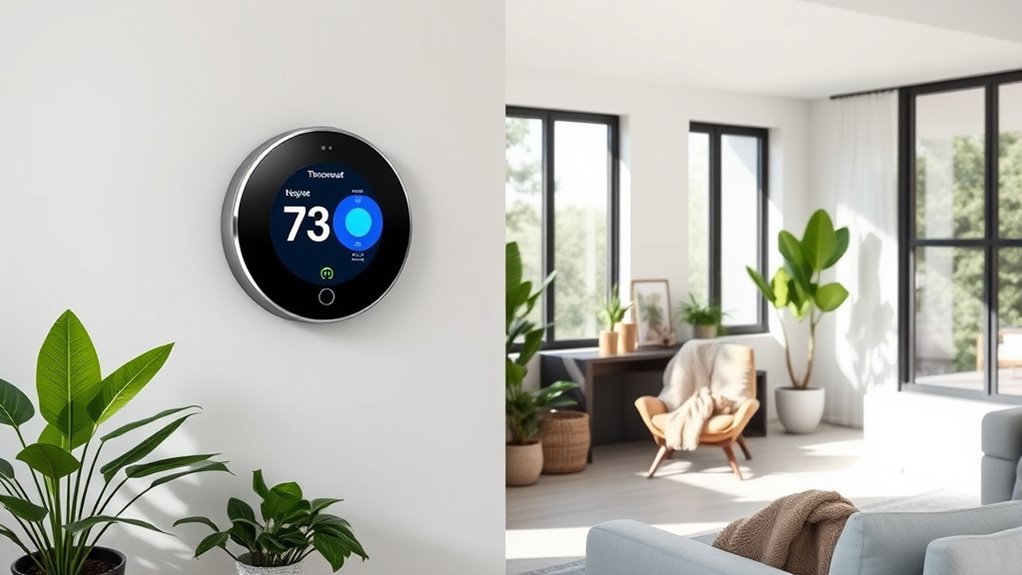

Smart thermostats with learning features can adapt schedules to household routines, but the amount of automation and setup involved varies. My best overall pick is the Google Nest Learning Thermostat (4th Gen) with a Nest Temperature Sensor, thanks to its learning-focused design and room-level temperature input. The ecobee Smart Thermostat Premium stands out for its added sensor and voice features, while the ecobee Smart Thermostat Essential is a simpler alternative for buyers who want app-based scheduling without a premium feature set. The main tradeoffs are how much control you want over schedules, which rooms you need to prioritize, and whether your wiring supports the thermostat you choose. Read on for the full comparison and buying advice.

Get the latest gadgets delivered free with Prime
- Fast, free delivery on millions of items
- Prime Video, Amazon Music and more included
- Member-only deals all year
Complete the kit



Key Takeaways
- Nest leads this group for learning-first automation: three 4th Gen color finishes share the same core thermostat and included 2nd Gen Temperature Sensor, so finish—not a different learning system—is the main distinction among those listings.
- Room sensors change the comfort equation: the Nest 4th Gen bundles and ecobee Premium offer room-sensing options, which can help address uneven temperatures that a hallway thermostat alone cannot represent.
- ecobee offers a range of feature levels: Essential is the simpler entry point, Enhanced adds more capability, and Premium bundles the broadest set of listed features, including voice assistants and a SmartSensor.
- Honeywell’s color-screen models emphasize schedule control: the RTH9600WF and RTH9585WF1004 provide a different approach from Nest’s learning-led identity, so buyers should distinguish programmable convenience from automatic adaptation.
- The Sensi ST55 is the leaner alternative, not the learning specialist: its place makes most sense for buyers prioritizing straightforward Wi-Fi thermostat control over the strongest learning-focused feature set in this roundup.
| Google Nest Learning Thermostat (4th Gen) with Nest Temperature Sensor (2nd Gen), Obsidian |  | Best Overall for Learning and Room Comfort | Temperature control: Heating and cooling | Connectivity: Wi-Fi | System voltage: 24 volts | VIEW ON AMAZON | See Our Full Breakdown |
| Honeywell Home RTH9600WF Wi-Fi Smart Color Thermostat |  | Best for Schedule-First Buyers | Model: RTH9600WF | Connectivity: Wi-Fi | Display: Selectable-color LCD touchscreen | VIEW ON AMAZON | See Our Full Breakdown |
| ecobee Smart Thermostat Essential Wi-Fi Thermostat |  | Best Value for Flexible Scheduling | Connectivity: Wi-Fi | Display: 3.74-inch LCD touchscreen | Power source: Battery powered | VIEW ON AMAZON | See Our Full Breakdown |
| ecobee Smart Thermostat Enhanced, Wi-Fi Programmable Thermostat |  | Best for Occupancy-Based Adjustments | Connectivity: Wi-Fi | Power source: Corded electric | Voltage: 24 volts | VIEW ON AMAZON | See Our Full Breakdown |
| Honeywell Home RTH9585WF1004 Wi-Fi Smart Color Thermostat |  | Best for Energy Reports and Alerts | Model: RTH9585WF1004 | Connectivity: Wi-Fi | Display: LED | VIEW ON AMAZON | See Our Full Breakdown |
| Google Nest Learning Thermostat (4th Gen) with Nest Temperature Sensor (2nd Gen), Silver |  | Best Overall for Learning and Room-by-Room Comfort | System compatibility: Common 24V heating and cooling systems; verify HVAC compatibility | Connectivity: Wi-Fi | Control: Google Home app, compatible voice assistants, and buttons | VIEW ON AMAZON | See Our Full Breakdown |
| ecobee Smart Thermostat Premium with Wi-Fi, SmartSensor, and Built-In Siri and Alexa |  | Best Premium for Sensors and Air Quality | Connectivity: Wi-Fi | Included sensor: SmartSensor | Voice assistants: Siri and Alexa | VIEW ON AMAZON | See Our Full Breakdown |
| Google Nest Learning Thermostat (4th Gen, 2024) with Nest Temperature Sensor, Polished Gold |  | Best Design-Led Learning Pick | System compatibility: Most 24V heating and cooling systems | Temperature control: Heating and cooling | Display: Graphical LCD, IPS | VIEW ON AMAZON | See Our Full Breakdown |
| Google Nest Learning Thermostat (3rd Generation, Stainless Steel) |  | Best for Energy-Use Insights | Connectivity: Wi-Fi (2.4 GHz and 5 GHz), Bluetooth Low Energy, and wireless interconnect | Power: Hardwired | Voltage: 24 V | VIEW ON AMAZON | See Our Full Breakdown |
| Sensi ST55 Wi-Fi Smart Thermostat |  | Best for Guided DIY Installation | Model: ST55 | Connectivity: Wi-Fi | Compatible platforms: Amazon Alexa, Apple HomeKit, Google Assistant, SmartThings, and Vera | VIEW ON AMAZON | See Our Full Breakdown |
| smart thermostats with learning feature | Connectivity | Display | Mounting | Power |
|---|---|---|---|---|
| Google Nest Learning Thermosta | Wi-Fi | Touchscreen | Wall mount | Battery powered; includes 1 CR2 battery |
| Honeywell Home RTH9600WF Wi-Fi | Wi-Fi | Selectable-color LCD touchscreen | Wall mount | 24 volts |
| ecobee Smart Thermostat Essent | Wi-Fi | 3.74-inch LCD touchscreen | Wall mount | — |
| ecobee Smart Thermostat Enhanc | Wi-Fi | 4-inch LCD screen | — | — |
| Honeywell Home RTH9585WF1004 W | Wi-Fi | LED | — | — |
| Google Nest Learning Thermosta | Wi-Fi | 3.5-inch touchscreen | Wall mount | 24 volts; corded electric |
| ecobee Smart Thermostat Premiu | Wi-Fi | — | — | — |
| Google Nest Learning Thermosta | — | Graphical LCD, IPS | Wall mount | Battery powered; 24 V |
| Google Nest Learning Thermosta | Wi-Fi (2.4 GHz and 5 GHz), Bluetooth Low Energy, and wireless interconnect | Digital | Wall mount | Hardwired |
| Sensi ST55 Wi-Fi Smart Thermos | Wi-Fi | 5-inch LED | Wall mount | Corded electric; two AA batteries included |
More Details on Our Top Picks
Google Nest Learning Thermostat (4th Gen) with Nest Temperature Sensor (2nd Gen), Obsidian
The Nest Learning Thermostat (4th Gen) is the clearest fit for buyers who want the thermostat itself to adapt to household routines, rather than relying mainly on manual scheduling. Its standout advantage over the ecobee Smart Thermostat Essential is the included Nest Temperature Sensor (2nd Gen), which can help address rooms that run warmer or cooler than the thermostat’s location. The sensor makes room-specific comfort more accessible without an extra accessory purchase. App and compatible voice-assistant controls add flexibility, while the stated 24V compatibility covers many common systems. The tradeoff is that HVAC compatibility still needs checking, and some smart-home features depend on compatible devices and setup. Choose this over the Honeywell color-screen models for adaptive learning and a bundled room sensor; skip it if you mainly want straightforward scheduled control.
Pros:- Learns temperature preferences and adapts to changing routines.
- Includes a second-generation Nest Temperature Sensor for room-specific comfort management.
- Works with many 24V heating and cooling systems.
- C wire is not required in most homes.
Cons:- Compatibility can vary by HVAC system, so wiring and system checks are needed.
- Some smart-home features and integrations depend on compatible devices and setup.
Best for: Households with changing daily routines that want temperature learning plus a sensor to address uneven room comfort.
Not ideal for: Buyers with unusual or high-voltage heating systems, or those who want a basic schedule without smart-home setup.
- Temperature control:Heating and cooling
- Connectivity:Wi-Fi
- System voltage:24 volts
- Display:Touchscreen
- Mounting:Wall mount
- Power:Battery powered; includes 1 CR2 battery
- Smart-home compatibility:Amazon Alexa, Android, Apple HomeKit, Google Assistant, and iOS
- Included accessory:Nest Temperature Sensor (2nd gen)
- Color and material:Polished Obsidian; aluminum
Our verdict“Choose the Nest if adaptive learning and an included room sensor matter more than keeping setup and controls basic.”
Honeywell Home RTH9600WF Wi-Fi Smart Color Thermostat
The Honeywell Home RTH9600WF suits buyers who want a visible, flexible schedule and app access more than a thermostat that learns habits automatically. Its selectable-color touchscreen, comfort information, weather forecasts, and smart alerts make routine adjustments easy to see, while energy insights can help owners review how settings are being used. Compared with the Google Nest Learning Thermostat (4th Gen), this Honeywell leans on programmed schedules rather than learning preferences, so it offers less hands-off adaptation but a more direct, screen-led approach. The main constraint is installation: it requires a C-wire and does not support 120–240V electric baseboard heat. Buyers with compatible forced-air, hot-water, steam, or supported heat-pump systems may prefer its straightforward scheduling; those seeking automatic routine learning should choose Nest instead.
Pros:- Selectable-color touchscreen makes settings and schedules easy to view.
- Supports flexible programming and provides energy usage insights.
- Offers remote app control and compatible smart-assistant control.
- Provides weather information, smart alerts, and automatic heat-to-cool switching.
Cons:- Requires a C-wire for installation.
- Not compatible with 120–240V electric baseboard heat.
- Does not offer the same preference-learning approach as the Nest Learning Thermostat.
Best for: Homeowners with a compatible HVAC system and C-wire who prefer to set and adjust schedules on a color touchscreen.
Not ideal for: People seeking automatic learning, homes without a C-wire, and households using 120–240V electric baseboard heat.
- Model:RTH9600WF
- Connectivity:Wi-Fi
- Display:Selectable-color LCD touchscreen
- Compatibility:Forced-air systems, hot-water and steam systems, and heat pumps with electric backup
- Power:24 volts
- C-wire:Required
- Mounting:Wall mount
- Dimensions:1 x 4.75 x 3.5 inches
- Included items:Thermostat, wall plate, screws, anchors, quick start guide, thermostat ID card, wire labels, and user guide
Our verdict“Pick this Honeywell if you want a customizable screen and hands-on scheduling, not automatic routine learning.”
ecobee Smart Thermostat Essential Wi-Fi Thermostat
The ecobee Smart Thermostat Essential is a sensible pick for buyers who want app control, broad smart-home support, and energy-minded scheduling without paying for a more elaborate learning setup. Its auto-scheduling and eco+ features can help manage routines and reduce unnecessary heating or cooling, while auto-away mode responds to whether the home is occupied. That makes it more adaptable than the schedule-first Honeywell Home RTH9600WF, though it is not described as learning temperature preferences in the same way as the Nest Learning Thermostat (4th Gen). Its stated system support spans many 24 VAC setups, including boilers and heat pumps. The compromise is wiring: homes without a C-wire may need a separately sold Power Extender Kit, and room sensors are also sold separately. Check system compatibility before choosing it.
Pros:- Auto-scheduling and eco+ features help manage comfort and energy use.
- Works with Apple HomeKit, Google Assistant, and Amazon Alexa.
- Supports many 24 VAC systems, including boilers, heat pumps, and dual-fuel setups.
- Includes auto-away mode, fan control, and indoor humidity detection.
Cons:- Homes without a C-wire may need a separately sold Power Extender Kit.
- SmartSensor and trim kit are sold separately.
- System compatibility should be checked before purchase.
Best for: Cost-conscious owners of common 24 VAC systems who want app scheduling, eco+ features, and compatibility with major smart-home platforms.
Not ideal for: Buyers who want an included room sensor, automatic preference learning, or a thermostat that installs without extra wiring accessories in every home.
- Connectivity:Wi-Fi
- Display:3.74-inch LCD touchscreen
- Power source:Battery powered
- Mounting:Wall mount
- Compatible systems:Most 24 VAC HVAC systems, including gas, oil, electric, dual fuel, forced air, heat pumps, and boilers
- Smart-home compatibility:Apple HomeKit, Google Assistant, and Amazon Alexa
- Features:Auto-away, auto-scheduling, fan control, programmable temperature control, and indoor humidity detection
- Color and material:White; plastic
- Energy savings claim:Up to 23% compared with holding the temperature at 72°F/22°C
Our verdict“Choose the Essential for app-led scheduling and broad system support, but pick Nest if automatic preference learning is your priority.”
ecobee Smart Thermostat Enhanced, Wi-Fi Programmable Thermostat
The ecobee Smart Thermostat Enhanced stands apart from the more schedule-focused Honeywell models through its occupancy-based temperature adjustments. It can respond to whether the home is occupied as well as to the schedule, which may suit households whose routines vary from day to day. Compared with the ecobee Smart Thermostat Essential, this model includes a Power Extender Kit for homes without a C-wire, easing one common installation hurdle. It also works with several major platforms, including Alexa, Google Assistant, Apple HomeKit, and SmartThings. The tradeoff is that room-by-room sensing requires separately purchased SmartSensors, so the included kit does not solve uneven temperatures across the whole home. HVAC compatibility still needs checking. This is a stronger fit than Nest for ecobee-platform households, but less complete if you want an included room sensor.
Pros:- Adjusts temperature based on occupancy and schedule.
- Includes a Power Extender Kit for homes without a C-wire.
- Works with Alexa, Google Assistant, Apple HomeKit, and SmartThings.
- Provides remote control and energy monitoring through the ecobee app.
Cons:- SmartSensors for room-by-room comfort are sold separately.
- HVAC compatibility needs to be confirmed before purchase.
Best for: Households with variable occupancy and compatible HVAC systems that want app-based control, smart-home integration, and an included C-wire workaround.
Not ideal for: Buyers seeking included room sensors or automatic learning of temperature preferences, or owners of systems that are not compatible with the thermostat.
- Connectivity:Wi-Fi
- Power source:Corded electric
- Voltage:24 volts
- Display:4-inch LCD screen
- Compatible HVAC systems:Air conditioner, boiler, furnace, heat pump, and humidifier
- Smart-home compatibility:Amazon Alexa, Android, Apple HomeKit, Google Assistant, and iOS
- Included accessories:Power Extender Kit and trim kit
- Certification:ENERGY STAR
- Warranty:3 years
Our verdict“Choose the Enhanced if occupancy response and broad smart-home integration matter more than included room sensors or Nest-style preference learning.”
Honeywell Home RTH9585WF1004 Wi-Fi Smart Color Thermostat
The Honeywell Home RTH9585WF1004 is a good match for buyers who want scheduling plus useful operating information, rather than a thermostat that learns preferences on its own. Its energy reports, weather forecasts, and equipment alerts give owners more context for managing a compatible system, and remote app or voice control adds convenience when plans change. Compared with the Honeywell Home RTH9600WF, it shares the color-screen, scheduling-first approach, so the choice between them is less about learning and more about their supplied specifications and setup fit. Like that model, this Honeywell requires a C-wire and does not support 120–240V electric baseboard heat. It can suit households that value reports and alerts, but buyers prioritizing automatic routine adaptation should look to the Nest Learning Thermostat instead.
Pros:- Customizable color touchscreen supports direct schedule changes.
- Offers remote control through the mobile app and compatible voice assistants.
- Provides energy reports, weather forecasts, and equipment alerts.
- Supports flexible scheduling and has ENERGY STAR certification.
Cons:- Requires a C-wire.
- Not compatible with 120–240V electric baseboard heat.
- Its scheduling and reporting approach is less hands-off than the Nest Learning Thermostat.
Best for: Owners of compatible forced-air, hot-water, steam, or supported heat-pump systems who want scheduled control and energy or equipment information.
Not ideal for: People who want automatic temperature-preference learning, homes without a C-wire, and households using 120–240V electric baseboard heat.
- Model:RTH9585WF1004
- Connectivity:Wi-Fi
- Display:LED
- Power source:AC power
- Compatibility:Forced-air gas, oil, or electric; hot-water and steam systems; heat pumps with electric backup
- C-wire:Required
- Smart assistants:Amazon Alexa and Google Home
- Certification:ENERGY STAR
- Color and mounting:Gray; wall mount
Our verdict“Pick this Honeywell for scheduled control and useful reports, but choose Nest if you want the thermostat to learn your routine.”
Google Nest Learning Thermostat (4th Gen) with Nest Temperature Sensor (2nd Gen), Silver
I rank this as the most balanced pick for buyers who want automatic learning plus a way to address uneven temperatures between rooms. It learns preferences and routines, while the included second-generation Nest Temperature Sensor can help direct comfort toward a room that runs too hot or cold. Compared with the Nest Learning Thermostat (3rd Generation), this package adds a sensor for room-specific temperature management; the ecobee Smart Thermostat Premium adds air-quality monitoring and a speaker instead. App and voice control suit a connected home, and ENERGY STAR certification adds an energy-conscious credential. The tradeoff is that learning does not remove the need to check HVAC compatibility, and some homes may need a C wire. Choose it for learning and sensor-guided comfort, not for built-in air-quality features.
Pros:- Learns temperature preferences and routines for automatic scheduling.
- Includes a second-generation sensor to help address room-specific hot and cold spots.
- Supports app and voice control through compatible platforms.
- Designed for common 24V heating and cooling systems and carries ENERGY STAR certification.
Cons:- Some installations may require a C wire.
- HVAC compatibility depends on the home’s system.
- Does not include the built-in air-quality monitor and speaker found on ecobee Smart Thermostat Premium.
Best for: Households with changing routines and a frequently occupied room that runs warmer or cooler than the rest of the home.
Not ideal for: Buyers whose HVAC setup is not compatible with the thermostat or who want built-in air-quality monitoring and a speaker.
- System compatibility:Common 24V heating and cooling systems; verify HVAC compatibility
- Connectivity:Wi-Fi
- Control:Google Home app, compatible voice assistants, and buttons
- Display:3.5-inch touchscreen
- Included sensor:Nest Temperature Sensor (2nd Gen)
- Mounting:Wall mount
- Power:24 volts; corded electric
- Color:Polished silver
- Certification:ENERGY STAR
Our verdict“Choose this Nest if you want learning schedules paired with an included sensor for a problem room and your HVAC system is compatible.”
ecobee Smart Thermostat Premium with Wi-Fi, SmartSensor, and Built-In Siri and Alexa
The ecobee Smart Thermostat Premium is the lineup’s strongest fit for buyers who want more than learned temperature schedules. Its occupancy sensing and included SmartSensor can help focus comfort on rooms being used, while the built-in air-quality monitor can provide alerts and filter reminders. Compared with the Google Nest Learning Thermostat (4th Gen) with Nest Temperature Sensor, ecobee adds air-quality features and a built-in speaker; Nest puts more emphasis on learning your preferences and routine. The included Power Extender Kit and trim kit may simplify installation where a C wire is unavailable, and the three-year warranty is a practical extra. Siri requires an Apple home hub, though, and some security features need a subscription. Skip it if you want straightforward learning without extra connected-home functions.
Pros:- Included SmartSensor and occupancy sensing support room-by-room comfort.
- Built-in air-quality monitoring offers alerts and filter reminders.
- Includes a Power Extender Kit and trim kit for installation flexibility.
- App and voice control plus a three-year warranty.
Cons:- Siri requires an Apple home hub.
- Some security features require an ecobee Smart Security subscription.
- Its added monitoring and speaker features may be unnecessary for buyers focused only on learning schedules.
Best for: Smart-home households that want room-aware comfort, air-quality alerts, and voice control in one thermostat.
Not ideal for: Buyers seeking a simple learning thermostat, or Apple users without a home hub who expect Siri support.
- Connectivity:Wi-Fi
- Included sensor:SmartSensor
- Voice assistants:Siri and Alexa
- Air-quality monitor:Built in
- HVAC compatibility:Compatible with 95% of HVAC systems, according to product data
- Installation accessories:Power Extender Kit and trim kit included
- Warranty:3 years
- Certification:ENERGY STAR
Our verdict“Pick ecobee Premium if you want room sensing and air-quality monitoring alongside thermostat control, and are comfortable with its connected-service requirements.”
Google Nest Learning Thermostat (4th Gen, 2024) with Nest Temperature Sensor, Polished Gold
This polished-gold Nest offers the same core case for learning your preferences and routine as the silver fourth-generation Nest in this list, with an included second-generation sensor to help manage room-to-room temperature differences. Its finish gives design-conscious buyers a way to make a wall-mounted thermostat feel more deliberate. Like the silver model, it supports app, voice, and button control and works with most 24V heating and cooling systems, though compatibility still needs checking. Compared with the Nest Learning Thermostat (3rd Generation), this package includes a temperature sensor; compared with ecobee Smart Thermostat Premium, it lacks built-in air-quality monitoring. Some schedule changes require user approval, so its learning is not entirely hands-off. Choose it for the finish and sensor bundle, rather than for extra monitoring features.
Pros:- Learns preferred temperatures and changing routines.
- Includes a second-generation Nest Temperature Sensor for hot and cold spots.
- Supports app, voice, and button control, including Matter integration according to product data.
- Typically does not require a C wire, according to product data.
Cons:- Compatibility depends on the home’s heating and cooling system.
- Some schedule changes require user approval.
- Does not provide the built-in air-quality monitor offered by ecobee Smart Thermostat Premium.
Best for: Homeowners who want a learning thermostat with an included room sensor and prefer a polished-gold finish for a visible installation.
Not ideal for: Buyers who want automatic schedule changes without approval or built-in air-quality monitoring.
- System compatibility:Most 24V heating and cooling systems
- Temperature control:Heating and cooling
- Display:Graphical LCD, IPS
- Control:App, voice, and buttons
- Included sensor:Nest Temperature Sensor (2nd gen)
- Mounting:Wall mount
- Power:Battery powered; 24 V
- Material:Aluminum
- Color:Polished Gold
Our verdict“Choose the polished-gold Nest if you want fourth-generation learning and a room sensor in a distinctive finish, and can accept occasional schedule approvals.”
Google Nest Learning Thermostat (3rd Generation, Stainless Steel)
The third-generation Nest suits buyers who want schedule learning with visible energy-use history. It learns routines and adjusts temperatures automatically, while Energy History can help users spot usage patterns and judge whether schedule changes are having an effect. Compared with the two fourth-generation Nest options in this list, this model does not include a temperature sensor, so it is less suited to addressing a room that consistently feels different from the thermostat’s location. It does offer app and voice control through Alexa and Google Assistant, plus HVAC monitoring alerts where the system supports them. Remote and voice functions depend on a stable Wi-Fi connection, and energy savings vary with household habits. Pick it for learning and usage insights; choose a sensor-equipped Nest for room-specific comfort.
Pros:- Learns schedules and adjusts temperatures automatically.
- Energy History shows usage trends and potential savings.
- Supports app and remote control plus Alexa and Google Assistant voice control.
- Can provide HVAC monitoring alerts when the system supports them.
Cons:- Does not include the room sensor bundled with the fourth-generation Nest models in this list.
- Remote and voice features require a stable Wi-Fi connection.
- Energy savings are not guaranteed and depend on household usage patterns.
Best for: Homeowners who want a learning schedule and energy-use history to review how their HVAC habits change over time.
Not ideal for: Households with uneven room temperatures that want an included sensor, or homes with unreliable Wi-Fi for remote control.
- Connectivity:Wi-Fi (2.4 GHz and 5 GHz), Bluetooth Low Energy, and wireless interconnect
- Power:Hardwired
- Voltage:24 V
- Display:Digital
- Control:Remote, app, and voice control
- Voice compatibility:Google Assistant and Amazon Alexa
- Mounting:Wall mount
- Material and color:Metal; stainless steel
Our verdict“Choose this third-generation Nest if learning and Energy History matter more than having an included sensor for room-by-room comfort.”
Sensi ST55 Wi-Fi Smart Thermostat
The Sensi ST55 is the practical choice for buyers who value guided setup and flexible smart-home support more than a thermostat that learns routines on its own. It offers programmable schedules, remote access, usage reports, and maintenance alerts, but the product details do not describe automatic learning like the Nest models. Its built-in level and step-by-step installation guidance make it a more approachable DIY option, and a C wire is not required for most applications. Compared with the Google Nest Learning Thermostat (3rd Generation), Sensi gives up automatic schedule learning and Energy History in favor of broad platform compatibility and a simpler installation pitch. Check your HVAC setup first: it supports 24V AC systems, and C-wire needs can vary.
Pros:- Built-in level and step-by-step instructions support DIY installation.
- C wire is not required for most applications.
- Works with Alexa, Apple HomeKit, Google Assistant, SmartThings, and Vera.
- Provides scheduling, remote access, usage reports, equipment alerts, and maintenance reminders.
Cons:- Product details describe programmable scheduling, not automatic learning features.
- Compatible with 24V AC systems, so other HVAC setups may not work.
- C-wire requirements vary by installation.
Best for: DIY homeowners with a compatible 24V system who want guided installation, programmable schedules, and broad smart-home platform support.
Not ideal for: Buyers specifically seeking a thermostat that learns their routine and changes schedules automatically, or anyone with an incompatible HVAC system.
- Model:ST55
- Connectivity:Wi-Fi
- Compatible platforms:Amazon Alexa, Apple HomeKit, Google Assistant, SmartThings, and Vera
- HVAC compatibility:Air conditioner, boiler, furnace, and heat pump; 24 V AC
- Display:5-inch LED
- Controls:Buttons, app, touch, and voice
- Mounting:Wall mount
- Power:Corded electric; two AA batteries included
- Color and material:White plastic
Our verdict“Choose the Sensi ST55 for guided DIY setup and platform flexibility, but pick a Nest if automatic schedule learning is your main priority.”

How We Picked
I ranked these thermostats by how well their features support the specific promise of learning and adapting to household routines, not simply by counting app controls or display features. I also weighed room sensing, the clarity of the control experience, the range of useful functions, and how well each model serves a distinct type of buyer. Compatibility and installation needs matter too: a thermostat’s automation has little value if the home’s HVAC setup or wiring does not support it.
The Google Nest Learning Thermostat (4th Gen) takes the lead because learning is central to its positioning and the included sensor adds room-level context. ecobee models follow according to their feature depth and flexibility, with Premium aimed at buyers who want more integrated capabilities and Essential suited to simpler needs. Honeywell’s color-screen options rank as schedule-focused alternatives rather than the strongest learning picks, while Sensi is included for buyers who favor a more basic Wi-Fi approach. The Nest 3rd Gen remains a distinct option, but it sits behind the newer 4th Gen bundle in this comparison.
| smart thermostats with learning feature | Connectivity |
|---|---|
| Google Nest Learning Thermosta | Wi-Fi |
| Honeywell Home RTH9600WF Wi-Fi | Wi-Fi |
| ecobee Smart Thermostat Essent | Wi-Fi |
| ecobee Smart Thermostat Enhanc | Wi-Fi |
| Honeywell Home RTH9585WF1004 W | Wi-Fi |
| Google Nest Learning Thermosta | Wi-Fi |
| ecobee Smart Thermostat Premiu | Wi-Fi |
| Google Nest Learning Thermosta | — |
| Google Nest Learning Thermosta | Wi-Fi (2.4 GHz and 5 GHz), Bluetooth Low Energy, and wireless interconnect |
| Sensi ST55 Wi-Fi Smart Thermos | Wi-Fi |
Factors to Consider When Choosing Smart Thermostats With Learning Features
Choosing among smart thermostats with learning features starts with your home and habits, not the longest feature list. These factors can help you decide how much automation is useful, what needs checking before purchase, and where a more capable model may—or may not—pay off.
Separate Automatic Learning From Programmable Scheduling
A thermostat with a weekly schedule can be convenient without learning your habits automatically. Before buying, decide whether you want to set temperature changes yourself or have the system adjust its schedule based on routine and occupancy signals. If your household follows a stable timetable, manual programming may deliver enough control without extra automation. Irregular work hours or changing routines make adaptive features more appealing, but they can also require time for the system to interpret patterns. Check which adjustments you can review and override, so convenience does not come at the cost of control.
Check HVAC Compatibility and Wiring Before Choosing
Smart features do not make an incompatible thermostat work with every heating and cooling system. Identify your HVAC type and existing thermostat wires before choosing a model, especially if you have a heat pump, multistage equipment, or a system with unusual controls. Some installations may call for a common wire or an adapter, and the requirements differ by model and setup. Do not assume that a familiar brand or a similar-looking thermostat guarantees compatibility. If the wiring diagram is unclear, consult the manufacturer’s compatibility checker or a qualified installer before purchase.
Decide Whether Room Sensors Solve a Real Problem
A thermostat reads the temperature where it is installed, which may not match conditions in bedrooms or far corners of the home. A remote sensor can give the system information from another room, but it cannot correct every cause of uneven heating or cooling, such as poor insulation or blocked vents. Think about which room should guide comfort at different times of day, and check how the thermostat uses sensor readings. Sensor bundles, like the Nest 4th Gen listings and ecobee Premium package here, can reduce the need to source a compatible sensor separately. If temperatures are already consistent, that added capability may not justify choosing a more elaborate setup.
Match Feature Depth to How You Want to Control the Home
Voice assistants, occupancy sensing, and detailed app controls can be useful, but each adds another layer to set up and maintain. Buyers who want a thermostat to manage routine changes may prefer a learning-led interface, while those who like direct control may value clear schedules and simple overrides more. Check which smart-home platforms and voice services the exact model supports rather than assuming every product in a brand’s range behaves the same way. Consider who else in the household will adjust the temperature and whether they need an easy on-device interface. Paying for features nobody uses adds complexity without improving everyday comfort.
Plan for Installation and Ongoing Maintenance
Installation effort can vary with wiring, HVAC configuration, and the location of the existing thermostat. Take a photo of the current wiring and label connections before removing anything, but do not proceed if the setup does not match the instructions. Sensor batteries, Wi-Fi access, app accounts, and software updates can all affect long-term use. A model with more connected features may call for more setup and troubleshooting than a basic Wi-Fi thermostat. Think about who will manage the system after installation, especially in a rental or a home where multiple people share control.
Treat Energy-Saving Claims as a Fit, Not a Guarantee
Learning features can reduce unnecessary heating or cooling when they match real household patterns, but no thermostat can promise the same results in every home. Savings depend on the climate, insulation, HVAC efficiency, chosen temperatures, and whether occupants accept automatic schedule changes. Compare the thermostat’s control behavior with the adjustments you are willing to make, rather than relying on a general savings claim. A feature that is frequently overridden may not help much, even if it sounds sophisticated. Choose for comfort and usability first, then treat reduced energy use as a possible result of better control.
Frequently Asked Questions
Which thermostat in this roundup is the strongest choice if I specifically want automatic learning?
The Google Nest Learning Thermostat (4th Gen) is the clearest fit because learning is central to its role in this group, and the listed bundles include a Nest Temperature Sensor. That makes it a stronger match for buyers seeking an adaptive experience than the Honeywell color-screen models, which are more schedule-oriented. ecobee models add useful flexibility, but their appeal varies by tier and feature set. If you prefer to set every schedule yourself, a learning-focused model may offer more automation than you need. Check compatibility and sensor placement before deciding.
Do I need a separate room sensor if my thermostat already learns my schedule?
Learning a schedule and sensing another room solve different problems. Schedule learning helps the thermostat respond to when people tend to be home or away, while a remote sensor can provide temperature information from a location away from the thermostat. A sensor may help if a bedroom or frequently used room feels different from the thermostat’s location, but it will not fix every airflow or insulation issue. The Nest 4th Gen bundles and ecobee Premium include sensor-related value in this lineup. If the temperature is consistent throughout your home, the extra sensor may not affect your decision.
Should I choose ecobee Essential, Enhanced, or Premium?
Start with the level of capability you will actually use rather than choosing by tier name alone. Essential suits buyers who want a simpler connected thermostat, while Enhanced is positioned between it and Premium in the listed ecobee range. Premium is the more feature-rich choice here, with a SmartSensor and built-in Siri and Alexa among its listed features. Those additions may appeal if you want room sensing and voice interaction in one package, but they also bring more setup and connected functions. Compare the exact compatibility and included accessories for the model you plan to buy.
Can a smart thermostat with learning features work with my heat pump or older wiring?
It may, but compatibility depends on the thermostat model and the specific HVAC controls and wiring in your home. Heat pumps, multistage systems, and older installations can have requirements that differ from a standard furnace-and-air-conditioner setup. Check the manufacturer’s compatibility tool using your current thermostat wiring before purchase, and confirm whether a common wire or adapter is needed. Do not rely on the product category or brand alone to answer this. If the wiring is unclear or the system uses unusual controls, ask an HVAC professional to check the setup.
Is a learning thermostat a better choice than a programmable Honeywell or Sensi model?
It depends on whether you want the thermostat to adapt schedules or prefer to create and manage them yourself. Nest’s learning-focused options are the more direct fit for buyers who want automatic schedule adaptation, while the Honeywell color-screen models offer a clear alternative for people who value programmable control. The Sensi ST55 is a leaner Wi-Fi choice in this roundup, rather than its strongest learning specialist. Manual schedules can be a better match for steady routines or buyers who want predictable settings. Choose based on the control style you will keep using, not on automation alone.
Conclusion
For the best overall learning-focused pick, I recommend the Google Nest Learning Thermostat (4th Gen) with a Nest Temperature Sensor; its learning emphasis and room-sensing bundle make it the most balanced match for this roundup. For best value within the ecobee range, consider the Smart Thermostat Essential if simpler connected control is enough. The best premium choice is ecobee Smart Thermostat Premium for buyers who want the listed SmartSensor and built-in voice assistant features. For beginners, the Essential or a Honeywell color-screen model may be easier to match to a preference for straightforward controls, depending on whether app-based simplicity or a programmable interface matters more. If you need a specific finish, the Nest 4th Gen Obsidian, Silver, and Polished Gold listings share the same core bundle; choose by appearance, not expected learning differences. For a more basic Wi-Fi approach, the Sensi ST55 is the specific-needs alternative—but buyers prioritizing automatic learning should favor Nest or compare the ecobee tiers first.
Halloween Picks

10 ft Halloween Inflatable Archway with Built-in LEDs

Pumpkin Halloween Fog Machine with 12-Color LED Lights, Bluetooth Speaker, and Remote

Thuodo 8 FT Tall Halloween Inflatable Three-Headed Dragon with Built-in LEDs
As an affiliate, we earn on qualifying purchases.