Finding the right server motherboard for AMD EPYC processors can be challenging, given the variety of options tailored for different workloads and budgets. The best overall pick is the Tyan Tempest CX S8056, known for robust performance and extensive I/O. For those focused on high-density, Supermicro H12DSG-O-CPU offers impressive GPU support, while the Supermicro MBD-H11SSL-C-B stands out for cost-effective reliability. Buyers need to weigh factors like expandability, compatibility, and form factor, often facing tradeoffs between features and price. Continue reading for a detailed breakdown of each option and help narrowing down the perfect motherboard for your specific server needs.
Complete the kit



Key Takeaways
- The choice of motherboard heavily depends on workload demands, with high-end options favoring expandability and GPU support.
- Form factor considerations, such as ATX versus EEB, influence deployment flexibility and case compatibility.
- Pricing varies significantly, with premium models providing advanced features but at a higher cost, while budget options still deliver solid performance for less demanding tasks.
- Compatibility with the latest AMD EPYC generations, especially the 9004 series, is a key factor to future-proof your build.
- Build quality and support for newer memory standards, such as DDR5, can impact long-term reliability and performance.
| Tyan Tempest CX S8056 Motherboard for AMD EPYC Genoa, Bergamo, Genoa X – ATX, Socket SP5 |  | Best Overall for High-Performance Enterprise Servers | Product Type: Motherboard | Form Factor: ATX | Processor Socket: Socket SP5 | VIEW ON AMAZON | See Our Full Breakdown |
| Supermicro H14SSL-NT AMD EPYC Single Socket SP5 DDR5 ATX Motherboard |  | Best Value for Single-Socket EPYC Builds | Processor Socket: Single Socket AMD EPYC SP5 | Memory Type: DDR5 | Form Factor: ATX | VIEW ON AMAZON | See Our Full Breakdown |
| Supermicro MBD-H11SSL-C-B AMD EPYC 7000 Motherboard | 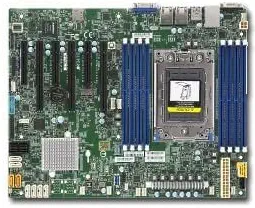 | Best for Enterprise and Data Center Compatibility | Processor Support: AMD EPYC 7000 series | Form Factor: ATX | SATA Ports: Multiple | VIEW ON AMAZON | See Our Full Breakdown |
| Supermicro H12DSG-O-CPU 4U 8GPU Server Dual Socket EPYC Motherboard |  | Best for GPU-Intensive 4U Servers | Processor Support: Dual AMD EPYC 7003/7002 | Memory: 8TB DDR4 ECC | PCIe Slots: 20 PCIe 4.0 x8 | VIEW ON AMAZON | See Our Full Breakdown |
| ASRock Rack ROMED4ID-2T Proprietary Deep Mini-ITX Server Motherboard AMD SP3 (LGA4094) EPYC 7002 Series |  | Best for Compact High-Performance Servers | Form Factor: Deep mini-ITX 6.7″ x 8.2″ | Socket: LGA 4094 | Supported Processors: AMD EPYC 7002 | VIEW ON AMAZON | See Our Full Breakdown |
| ASRock Rack ROMED8-2T/BCM ATX Server Motherboard for AMD EPYC 7003/7002 Processors |  | Best Overall for High-Performance Multi-Expansion | Form Factor: ATX (12″ x 9.6″) | Socket: LGA 4094 (SP3) | Supported Processors: AMD EPYC 7003 / 7002 series | VIEW ON AMAZON | See Our Full Breakdown |
| ASRock Rack GENOAD8X-2T/BCM EEB Server Motherboard for AMD EPYC 9004 Series |  | Best for Cutting-Edge Performance with DDR5 & PCIe 5.0 | Form Factor: EEB (12.63″ x 13″) | Socket: SP5 (LGA 6096) | Processor Support: AMD EPYC 9004 series with 3D V-Cache | VIEW ON AMAZON | See Our Full Breakdown |
| ASRock Rack Server Motherboard EPYC4000D4U Micro-ATX Single Socket AMD EPYC 4005/4004 and AMD Ryzen 9000/8000/7000 Series Processors |  | Best for Compact Builds with Versatile Processor Support | Form Factor: Micro-ATX | Socket: Single Socket AMD EPYC / Ryzen | Memory: 4 DDR5 ECC UDIMM | VIEW ON AMAZON | See Our Full Breakdown |
| server motherboard for epyc | Form Factor | PCIe Slots | Socket |
|---|---|---|---|
| Tyan Tempest CX S8056 Motherbo | ATX | — | — |
| Supermicro H14SSL-NT AMD EPYC | ATX | — | — |
| Supermicro MBD-H11SSL-C-B AMD | ATX | — | — |
| Supermicro H12DSG-O-CPU 4U 8GP | — | 20 PCIe 4.0 x8 | — |
| ASRock Rack ROMED4ID-2T Propri | Deep mini-ITX 6.7" x 8.2" | — | LGA 4094 |
| ASRock Rack ROMED8-2T/BCM ATX | ATX (12" x 9.6") | 7 PCIe 4.0 x16 | LGA 4094 (SP3) |
| ASRock Rack GENOAD8X-2T/BCM EE | EEB (12.63" x 13") | 7 PCIe 5.0 x16 / x8 | SP5 (LGA 6096) |
| ASRock Rack Server Motherboard | Micro-ATX | 1 PCIe 5.0 x16, 1 PCIe 4.0 x4 OCuLink, 1 PCIe 3.0 x4 OCuLink | Single Socket AMD EPYC / Ryzen |
More Details on Our Top Picks
Tyan Tempest CX S8056 Motherboard for AMD EPYC Genoa, Bergamo, Genoa X – ATX, Socket SP5
The Tyan Tempest CX S8056 stands out for its extensive memory support and robust PCIe 5.0 expansion, making it ideal for demanding enterprise environments that need maximum throughput. Compared with the Supermicro H12DSG-O-CPU, which emphasizes high GPU density, the Tyan provides more RAM capacity and network options, though it sacrifices some GPU flexibility for memory density. Its multiple PCIe 5.0 slots support cutting-edge devices, but the setup complexity and limited SATA ports can be hurdles for less experienced users. This motherboard is best suited for large-scale data centers or compute clusters that prioritize memory and bandwidth over simplicity.
Pros:- Supports up to 3TB of DDR5 RAM with 24 DIMM slots, ideal for memory-intensive workloads
- Multiple PCIe 5.0 slots enable future-proof expansion for GPUs and storage devices
- Dual 10Gb Ethernet ports ensure high-speed networking capabilities
- Designed for AMD EPYC Genoa, Bergamo, and Genoa X processors for versatile high-performance options
Cons:- Limited SATA ports restrict traditional storage options
- Setup can be complex, requiring advanced technical knowledge
- No integrated graphics, requiring a separate GPU for visual output
Best for: Large enterprise data centers and high-performance computing clusters needing maximum RAM and PCIe 5.0 expansion.
Not ideal for: Small offices or hobbyist server builders who prefer simpler, more integrated solutions with fewer PCIe slots.
- Product Type:Motherboard
- Form Factor:ATX
- Processor Socket:Socket SP5
- Compatible Processors:AMD EPYC Genoa, Bergamo, Genoa X
- Max RAM Size:3072 GB
- Memory Slots:24 DDR5
Our verdict“This motherboard is perfect for organizations that need maximum memory, bandwidth, and expandability in a high-density server environment.”
Supermicro H14SSL-NT AMD EPYC Single Socket SP5 DDR5 ATX Motherboard
The Supermicro H14SSL-NT offers a streamlined approach for single-socket AMD EPYC servers, supporting the latest DDR5 memory for high performance without the complexity of dual-socket setups. Unlike the Supermicro H12DSG-O-CPU, which targets enterprise-scale configurations, this board provides a more accessible platform for smaller or budget-conscious deployments. Its ATX form factor makes it adaptable to various chassis, but the single socket limits expandability for future upgrades. This pick makes sense for small to medium-sized businesses needing reliable EPYC performance with minimal fuss.
Pros:- Supports the latest AMD EPYC processors for up-to-date performance
- DDR5 memory compatibility enhances speed and efficiency
- ATX form factor offers flexibility in chassis selection
- Cost-effective choice for single-socket server setups
Cons:- Limited to one processor socket, reducing future expansion options
- Less suitable for high-density or GPU-heavy workloads
- No integrated graphics or advanced management features
Best for: Small to medium-sized enterprises or remote offices seeking a powerful single-socket server solution with modern memory support.
Not ideal for: Large data centers or users requiring multiple CPUs and extensive GPU options, as it is limited to a single socket and fewer PCIe lanes.
- Processor Socket:Single Socket AMD EPYC SP5
- Memory Type:DDR5
- Form Factor:ATX
Our verdict“This motherboard is well-suited for smaller businesses or remote sites that need reliable EPYC server performance without complex scalability.”
Supermicro MBD-H11SSL-C-B AMD EPYC 7000 Motherboard
The Supermicro H11SSL-C-B caters to enterprise environments with support for AMD EPYC 7000 series processors, emphasizing stability and expandability. Compared with the Tyan CX S8056, which supports newer Genoa processors, this board is tailored for legacy EPYC 7000 series, making it suitable for existing infrastructure. Its multiple SATA and PCIe slots support diverse storage and expansion needs, but the lack of detailed specs and limited modern features make it less appealing for cutting-edge deployments. This motherboard is best for organizations maintaining legacy EPYC deployments that need reliable, enterprise-grade hardware.
Pros:- Supports AMD EPYC 7000 series processors for proven enterprise performance
- Multiple SATA and PCIe slots support extensive storage and expansion
- Designed specifically for enterprise and data center applications
Cons:- Limited to AMD EPYC 7000 processors, missing newer features
- Less detailed info on ports and features, which could hinder deployment planning
- No modern DDR5 support, using older DDR4 technology
Best for: Enterprises with existing AMD EPYC 7000 series processors seeking stable, expandable server hardware.
Not ideal for: Organizations looking for the latest generation EPYC support or modern DDR5 features, as it’s limited to EPYC 7000 series and older specs.
- Processor Support:AMD EPYC 7000 series
- Form Factor:ATX
- SATA Ports:Multiple
Our verdict“This motherboard is ideal for legacy EPYC systems that demand proven stability and expandability over the latest features.”
Supermicro H12DSG-O-CPU 4U 8GPU Server Dual Socket EPYC Motherboard
The Supermicro H12DSG-O-CPU is designed for high-density GPU server deployments, supporting dual AMD EPYC 7003/7002 processors and up to 8TB of DDR4 ECC RAM. Its 20 PCIe 4.0 slots and multi-storage options make it ideal for AI, deep learning, or high-performance computing tasks, surpassing the ASRock ROMED4ID-2T in GPU support and expandability. However, its complexity and enterprise focus mean it’s not suitable for casual or small-scale setups. This motherboard is best suited for organizations that need massive GPU expansion alongside CPU power.
Pros:- Supports dual AMD EPYC processors for maximum computational power
- Ample 8TB DDR4 ECC RAM capacity for memory-intensive workloads
- 20 PCIe 4.0 slots facilitate extensive GPU and expansion card deployment
- Integrated IPMI with KVM for remote management
Cons:- Complex setup requiring advanced technical skills
- Designed for enterprise use, making it overkill for small or casual applications
- Limited availability and higher cost compared to less specialized boards
Best for: AI research labs or HPC facilities requiring extensive GPU and high-memory capacity in a 4U rackmount format.
Not ideal for: Small businesses or home labs that don’t need dual sockets or GPU density, as setup and maintenance are more complex.
- Processor Support:Dual AMD EPYC 7003/7002
- Memory:8TB DDR4 ECC
- PCIe Slots:20 PCIe 4.0 x8
Our verdict“This motherboard is tailored for GPU-heavy, high-performance server environments where expansion and remote management are priorities.”
ASRock Rack ROMED4ID-2T Proprietary Deep Mini-ITX Server Motherboard AMD SP3 (LGA4094) EPYC 7002 Series
The ASRock Rack ROMED4ID-2T packs impressive connectivity into a compact deep mini-ITX format, supporting AMD EPYC 7002 series processors. Unlike larger boards like the Tyan CX S8056, its small footprint makes it suitable for space-constrained applications, yet it still offers four DDR4 DIMM slots and dual 10GbE ports. Its proprietary socket and limited PCIe slots mean it’s less flexible for future expansion, especially compared to full-sized ATX boards. This motherboard suits specialized environments where space is at a premium but high network throughput and decent expandability are essential.
Pros:- Supports AMD EPYC 7002 series processors for high performance
- Dual 10GbE ports ensure fast network connectivity
- Compact deep mini-ITX form factor saves space
- Supports multiple PCIe 4.0 slots for expansion
Cons:- Limited to server-grade components, requiring specific parts
- No integrated graphics, necessitating a dedicated GPU
- Limited expandability due to small size and proprietary socket
Best for: Remote or edge servers requiring compact, high-performance hardware with excellent network connectivity.
Not ideal for: Large-scale data centers or GPU-intensive tasks that demand more PCIe slots and higher expansion capacity.
- Form Factor:Deep mini-ITX 6.7″ x 8.2″
- Socket:LGA 4094
- Supported Processors:AMD EPYC 7002
- Memory Slots:4
- Ethernet Ports:2 (10GbE)
Our verdict“This motherboard is ideal for space-constrained server environments that require high network throughput and solid processing power.”
ASRock Rack ROMED8-2T/BCM ATX Server Motherboard for AMD EPYC 7003/7002 Processors
This motherboard excels as a versatile platform that supports AMD EPYC 7003 and 7002 series processors, including those with AMD 3D V-Cache technology. Its 8 DDR4 DIMM slots and seven PCIe 4.0 x16 slots provide ample expansion options, making it ideal for demanding server environments. Compared with the ASRock Rack GENOAD8X-2T/BCM, which offers DDR5 and PCIe 5.0, this model trades some future-proofing for proven stability with DDR4. Its dual 10GbE ports guarantee fast network connectivity, but the setup can be complex, requiring technical skill. The absence of integrated graphics limits its use to headless servers, and its power consumption may be higher than more streamlined boards. Overall, this pick suits users seeking a feature-rich, expandable platform for enterprise-grade applications.
Pros:- Supports latest AMD EPYC processors with AMD 3D V-Cache
- Multiple PCIe 4.0 x16 slots enable extensive expansion
- Dual 10GbE ports ensure high-speed network connectivity
- Ample memory and storage options for enterprise applications
Cons:- Complex setup may require significant technical expertise
- Limited to server-grade hardware, not suitable for desktop use
- No integrated graphics support
Best for: IT professionals building high-performance, multi-expansion servers with a need for mature DDR4 support.
Not ideal for: Small businesses or hobbyists looking for a simple, plug-and-play server with minimal setup complexity.
- Form Factor:ATX (12″ x 9.6″)
- Socket:LGA 4094 (SP3)
- Supported Processors:AMD EPYC 7003 / 7002 series
- Memory Slots:8 DIMM
- Memory Type:DDR4 RDIMM, LRDIMM, RDIMM/LRDIMM-3DS, NVDIMM-N
- PCIe Slots:7 PCIe 4.0 x16
- Ethernet Ports:2 (10GbE)
- Remote Management:IPMI
- Chipset:AMD 785E
Our verdict“This motherboard offers a highly expandable platform ideal for those who need robust server performance and are comfortable with detailed configurations.”
ASRock Rack GENOAD8X-2T/BCM EEB Server Motherboard for AMD EPYC 9004 Series
This EEB-sized motherboard is tailored for users aiming to leverage the latest AMD EPYC 9004 processors, featuring 8 DDR5 DIMM slots and PCIe 5.0 slots, which future-proof the build for upcoming high-speed peripherals. It’s a step up from the ASRock Rack ROMED8-2T/BCM in terms of processing power support and bandwidth, though it’s limited to single socket configurations, making it less suitable for multi-CPU setups. The inclusion of dual 10G LAN ports provides robust network performance, especially for data center or cloud applications. Its setup complexity is high, requiring compatible chassis and power supplies, which might deter less experienced builders. The absence of integrated graphics and higher cost are potential downsides, but this motherboard clearly targets those wanting the latest tech innovations in a server environment.
Pros:- Supports AMD EPYC 9004 series with 3D V-Cache
- PCIe 5.0 slots offer unmatched bandwidth for future peripherals
- Dual 10G LAN ports ensure fast, reliable networking
- Supports DDR5 memory for improved performance and capacity
Cons:- Limited to single socket, restricting scalability
- Requires compatible server chassis and power supply
- High complexity and cost may deter casual builders
Best for: High-end server builders seeking maximum bandwidth and future compatibility with the newest AMD EPYC 9004 series.
Not ideal for: Small-scale or budget-conscious users who need multi-socket capabilities or simpler setup options.
- Form Factor:EEB (12.63″ x 13″)
- Socket:SP5 (LGA 6096)
- Processor Support:AMD EPYC 9004 series with 3D V-Cache
- Memory:8 DIMM slots, DDR5
- PCIe Slots:7 PCIe 5.0 x16 / x8
- Network:Dual 10G LAN ports
- Additional Features:Supports the latest high-speed peripherals and memory
Our verdict“This motherboard is ideal for those committed to deploying the newest AMD EPYC processors with maximum bandwidth and scalability in a single-socket setup.”
ASRock Rack Server Motherboard EPYC4000D4U Micro-ATX Single Socket AMD EPYC 4005/4004 and AMD Ryzen 9000/8000/7000 Series Processors
This micro-ATX motherboard caters to users needing a smaller, space-efficient server platform that still supports a wide range of AMD processors, including EPYC 4005/4004 and Ryzen 9000/8000/7000 series. Its 4 DDR5 ECC UDIMM slots and multiple PCIe and OCuLink ports provide decent expandability for compact systems. Compared with the larger ATX options like the ROMED8-2T/BCM, this board sacrifices some expansion slots for a smaller footprint, making it suitable for constrained spaces. The support for DDR5 ECC UDIMM boosts reliability, critical in server environments. Setup can be intricate, especially due to the variety of supported processors and high-speed connections, which may overwhelm less experienced builders. Its limited size and fewer slots mean it’s best suited for specific, space-constrained applications rather than full-scale data centers.
Pros:- Supports latest AMD EPYC 4000 series and Ryzen processors
- Multiple PCIe and OCuLink ports for high-speed connections
- DDR5 ECC UDIMM support for reliability
- Compact micro-ATX form factor saves space
Cons:- Limited to micro-ATX, fewer expansion options
- Setup complexity due to diverse processor compatibility
- No integrated graphics, requiring discrete GPU for display
Best for: Small businesses or remote office deployments requiring a compact, flexible server motherboard with recent processor support.
Not ideal for: Large enterprise data centers that need extensive expansion and multi-socket configurations.
- Form Factor:Micro-ATX
- Socket:Single Socket AMD EPYC / Ryzen
- Memory:4 DDR5 ECC UDIMM
- PCIe Slots:1 PCIe 5.0 x16, 1 PCIe 4.0 x4 OCuLink, 1 PCIe 3.0 x4 OCuLink
- Storage Support:SATA 6Gb/s, OCuLink
- Processor Compatibility:AMD EPYC 4005/4004 and Ryzen 9000/8000/7000 series
Our verdict“This motherboard fits users with space constraints seeking a flexible, modern server platform for specific workloads.”

How We Picked
Our evaluation process focused on critical factors that matter to server builders: performance potential, expandability, compatibility with different EPYC generations, build quality, and value. We prioritized motherboards that support the latest AMD EPYC processors and memory standards, while also considering ease of maintenance and future upgrade paths. Our rankings reflect a balanced view of features versus cost, aiming to highlight options suitable for a range of use cases—from small-scale deployments to large enterprise servers. We compared technical specifications, user reviews, and manufacturer support to determine which motherboards provide the best combination of reliability, performance, and value.| server motherboard for epyc | Form Factor | Socket |
|---|---|---|
| Tyan Tempest CX S8056 Motherbo | ATX | — |
| Supermicro H14SSL-NT AMD EPYC | ATX | — |
| Supermicro MBD-H11SSL-C-B AMD | ATX | — |
| Supermicro H12DSG-O-CPU 4U 8GP | — | — |
| ASRock Rack ROMED4ID-2T Propri | Deep mini-ITX 6.7" x 8.2" | LGA 4094 |
| ASRock Rack ROMED8-2T/BCM ATX | ATX (12" x 9.6") | LGA 4094 (SP3) |
| ASRock Rack GENOAD8X-2T/BCM EE | EEB (12.63" x 13") | SP5 (LGA 6096) |
| ASRock Rack Server Motherboard | Micro-ATX | Single Socket AMD EPYC / Ryzen |
Factors to Consider When Choosing Server Motherboard For Epyc
When selecting a server motherboard for AMD EPYC, understanding key factors can prevent costly mistakes and ensure you choose a platform that meets your current and future needs. Compatibility with your chosen EPYC processor series, expandability options, and form factor are fundamental. Beyond these, consider memory support, I/O options, and build quality. Being aware of tradeoffs—such as sacrificing some features for a lower price—helps in making an informed decision that aligns with your workload demands and budget constraints.Processor Compatibility and Generation Support
Matching the motherboard with the correct EPYC generation is essential for harnessing the processor’s full capabilities. Newer motherboards support the latest EPYC 9004 series, offering improved performance and efficiency, but may come at a premium. Conversely, older generation boards like those supporting EPYC 7002 or 7003 still provide solid performance and can be more budget-friendly. Always verify socket compatibility (such as SP5 or LGA4094) and ensure firmware updates are available for newer CPUs, to avoid compatibility issues and maximize longevity.
Expandability and I/O Options
Consider your future expansion needs—whether adding GPUs, NVMe drives, or additional memory. Motherboards with multiple PCIe slots and high RAM capacity are better suited for demanding applications like virtualization or AI workloads. However, more expandability often means larger form factors, which might limit deployment in constrained spaces. Balance your need for future upgrades with your current infrastructure, avoiding overpaying for features you won’t use immediately.
Form Factor and Compatibility
The choice between ATX, EEB, or proprietary form factors influences case selection and rack compatibility. Larger boards like EEB support more PCIe and RAM slots but require compatible enclosures and power supplies. Smaller form factors such as mini-ITX or micro-ATX offer more flexibility for compact builds but typically limit expansion. Assess your deployment environment carefully, ensuring the motherboard’s form factor aligns with your server chassis and cooling solutions.
Memory Support and Performance
EPYC servers benefit from high-speed, high-capacity memory configurations. Motherboards supporting DDR5 can deliver better bandwidth and efficiency, especially for data-intensive tasks. However, DDR5 modules tend to be more expensive and less mature than DDR4, so consider your budget and performance needs. Also, confirm the maximum RAM capacity and number of channels supported to avoid bottlenecks.
Build Quality and Support
Durability and manufacturer support are often overlooked but critical for server environments. Look for motherboards with quality components, good heat dissipation, and comprehensive warranty options. Reliable support can reduce downtime and maintenance costs. While premium models may offer better build quality, budget options with solid reviews and reputable brands can still serve well in less demanding settings.
Frequently Asked Questions
Will a motherboard supporting EPYC 7002 work with the latest EPYC 9004 series?
Motherboards are generally designed for specific EPYC generations and socket types, so compatibility is limited. A motherboard supporting EPYC 7002 typically won’t support the newer 9004 series without a BIOS update, and even then, socket compatibility may prevent use altogether. Always verify with the manufacturer whether a motherboard supports the specific EPYC CPU series you plan to use, especially for the latest processors, to avoid compatibility issues and ensure you get full feature support.
Is it worth paying extra for a motherboard with DDR5 support?
Investing in DDR5 support can provide noticeable improvements in memory bandwidth and efficiency, especially for data-heavy workloads. However, DDR5 modules are more expensive and less mature than DDR4, which might impact your total build cost and stability. If your application demands maximum memory performance and future-proofing, paying extra for DDR5 makes sense. Otherwise, DDR4-based motherboards still deliver solid performance at a lower cost, making them suitable for many enterprise scenarios.
How important is the form factor for my server build?
The form factor determines how easily the motherboard will fit into your chassis and how many expansion options are available. Larger sizes like EEB offer more PCIe slots and RAM capacity but need compatible enclosures and power supplies. Smaller boards like micro-ATX or mini-ITX save space but typically limit expandability. Carefully measure your server rack or case and choose a motherboard that balances space constraints with your performance and expansion needs.
Should I prioritize a motherboard with integrated features over expandability?
Integrated features like onboard network interfaces, storage controllers, or USB ports can reduce the need for additional cards, simplifying setup and reducing costs. However, this often means fewer PCIe slots or lower overall expandability. If your workload requires lots of add-ons or GPUs, prioritize expandability over integrated features. For smaller, less complex servers, integrated features can improve reliability and ease of maintenance.
What is the most critical factor for long-term server performance?
The most important factor is ensuring compatibility with your chosen EPYC processor and memory standards, combined with high build quality. A motherboard that supports future CPU upgrades and faster memory will extend your server’s useful life. Additionally, reliable manufacturer support and firmware updates can help maintain security and stability over time. Balancing these aspects prevents bottlenecks and ensures your server remains effective for years to come.
Conclusion
For most users seeking an all-around dependable server motherboard, the Tyan Tempest CX S8056 offers a compelling combination of features, expandability, and compatibility, making it the best overall choice. If budget is a concern but performance cannot be compromised, the Supermicro MBD-H11SSL-C-B delivers solid reliability at a lower price point. For those aiming at cutting-edge performance with future-proofing, the ASRock Rack GENOAD8X-2T/BCM supports the latest EPYC 9004 series. Beginners or small-scale deployers should look for compact, easy-to-maintain boards like the ASRock Rack ROMED4ID-2T, while large enterprise users with demanding workloads will benefit from boards like the Supermicro H12DSG-O-CPU with GPU support. Your choice should align with your specific workload, budget, and future expansion plans.