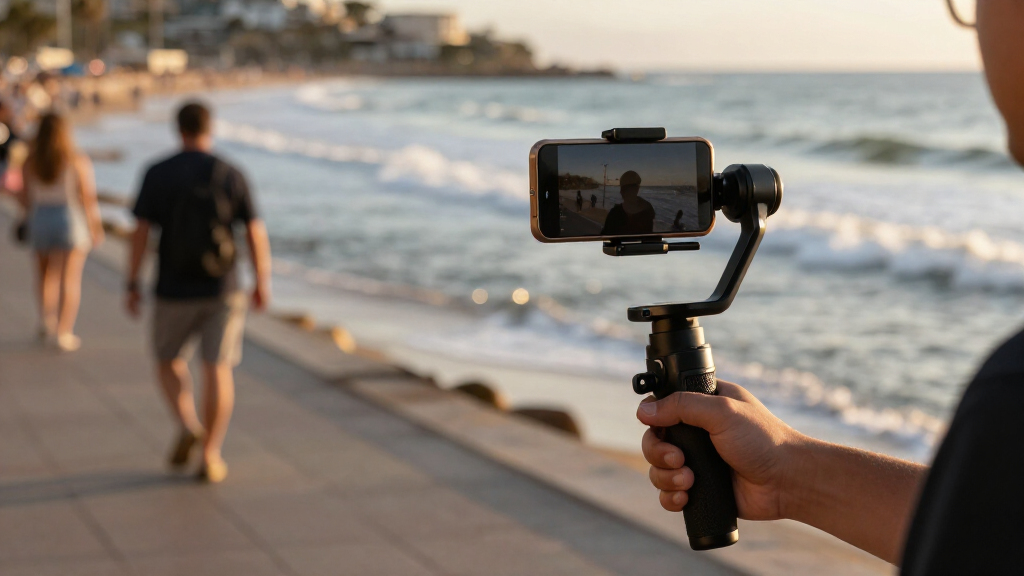

Smartphone gimbal stabilizers can make handheld phone footage steadier, but the right choice depends on whether you value tracking, portability, or extra filming controls most. I’d make the DJI Osmo Mobile 7P my best overall pick for its balance of stabilization and native tracking; the Hohem iSteady M7 stands out for its high payload and creator-focused accessories, while the DJI Osmo Mobile 7 offers a simpler alternative. The main tradeoffs are between compact designs and extended reach, built-in tracking and phone-app compatibility, and basic controls versus added accessories. Some models also use a single-axis design, which serves a different purpose from three-axis gimbals. Read on for the full comparison and guidance on matching a stabilizer to your phone and shooting habits.

Get the latest gadgets delivered free with Prime
- Fast, free delivery on millions of items
- Prime Video, Amazon Music and more included
- Member-only deals all year
Complete the kit



Key Takeaways
- The DJI Osmo Mobile 7P is the strongest all-round fit in this lineup for shoppers who want a current three-axis gimbal with tracking features without moving to the more accessory-heavy Hohem iSteady M7.
- The Hohem iSteady M7 is the specialist pick: its 500 g payload, extension rod, fill light, magnetic AI tracker, and detachable touchscreen remote suit more involved shoots, but add complexity compared with simpler DJI options.
- DJI Osmo Mobile 7 and 7P are not interchangeable picks: the 7P is the feature-forward option, while the standard 7 makes more sense for buyers who want a less involved setup.
- Three-axis stabilization is the common baseline across most of the roundup; the COOVOAMAE 1-axis model and the retractable selfie-stick-and-tripod option are better judged as simpler, reach-oriented tools rather than direct substitutes.
- Accessory bundles and tracking methods shape the choice: the DJI Osmo Mobile 8 listings vary by combo, while AOCHUAN, Hohem, and COMITOK models offer different tracking or control features that buyers should match to their phone and workflow.
| AOCHUAN Smart X3 360° Pan Rotation Gimbal Stabilizer for iPhone with Remote |  | Best for Portable, Hands-Free Tracking | Stabilization: 3-axis | Pan tracking: Unlimited 360° | Weight: 14.4 oz | VIEW LATEST PRICE | See Our Full Breakdown |
| AOCHUAN Smart XE 3-Axis Foldable Smartphone Gimbal Stabilizer |  | Best Value for Everyday Control | Stabilization: 3-axis | Compatibility: iPhone and most Android smartphones | Battery capacity: 2600 mAh | VIEW LATEST PRICE | See Our Full Breakdown |
| DJI Osmo Mobile 7P Smartphone Gimbal Stabilizer with Native Tracking |  | Best for Integrated Tracking and Lighting | Stabilization: 3-axis | Compatibility: iPhone and Android smartphones | Tracking: Native intelligent tracking; dual-lens enhanced tracking | VIEW LATEST PRICE | See Our Full Breakdown |
| Smartphone Gimbal Stabilizer with Retractable Selfie Stick and Tripod |  | Best Simple Selfie-Stick Stabilizer | Stabilization: 1-axis | Weight: 216 g (0.49 lb) | Folded length: 7.5 inches | VIEW LATEST PRICE | See Our Full Breakdown |
| Hohem iSteady M7 Smartphone Gimbal Stabilizer with Magnetic AI Tracker, Fill Light, Detachable Touchscreen Remote, and Extension Rod |  | Best Premium Control and Accessory Support | Payload capacity: 500 g (1.1 lb) | Touchscreen remote: 1.4-inch full-color detachable display | Remote range: Up to 10 m | VIEW LATEST PRICE | See Our Full Breakdown |
| DJI Osmo Mobile 6 3-Axis Smartphone Gimbal Stabilizer |  | Best for Guided Shooting | Brand: DJI | Model: Osmo Mobile 6 | Stabilization: 3-axis | VIEW LATEST PRICE | See Our Full Breakdown |
| DJI Osmo Mobile 8 Gimbal with Mic Mini Transmitter, Infinity Black |  | Best for Creator Audio Kits | Brand: DJI | Model: Osmo Mobile 8 | Stabilization: 3-axis | VIEW LATEST PRICE | See Our Full Breakdown |
| COOVOAMAE 1-Axis Gimbal Stabilizer Selfie Stick Tripod | 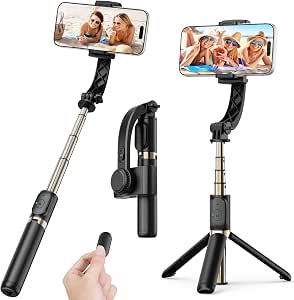 | Best Lightweight Selfie Stick Stabilizer | Stabilization: 1-axis tilt correction | Phone compatibility: Smartphones 4.0–6.2 inches | Additional compatibility: GoPro with 1/4-inch adapter | VIEW LATEST PRICE | See Our Full Breakdown |
| Hohem iSteady X3 3-Axis Gimbal Stabilizer for iPhone & Android – Black |  | Best Lightweight 3-Axis Alternative | Brand: Hohem | Model: iSteady X3 | Model number: HPG-X3P | VIEW LATEST PRICE | See Our Full Breakdown |
| DJI Osmo Mobile 8 Standard Combo Gimbal Stabilizer for Phone |  | Best for Long Recording Sessions | Brand: DJI | Model: Osmo Mobile 8 | Model number: 190021165779 | VIEW LATEST PRICE | See Our Full Breakdown |
| Hohem iSteady X3 SE 3-Axis Gimbal Stabilizer for iPhone and Android |  | Best for Remote Shooting | Stabilization: 3-axis, iSteady 8.0 | Weight: 0.79 lb | Payload capacity: 0.66 lb | VIEW LATEST PRICE | See Our Full Breakdown |
| COMITOK L7C Pro 3-Axis Smartphone Gimbal Stabilizer with AI Tracking |  | Best for Quick Setup | Stabilization: 3-axis | Tracking: Face and object tracking | Phone compatibility: Smartphones under 7 inches and up to 0.62 lb | VIEW LATEST PRICE | See Our Full Breakdown |
| DJI Osmo Mobile 7 3-Axis Gimbal Stabilizer for iPhone and Android |  | Best for Reliable Tracking | Stabilization: 3-axis | Tracking: ActiveTrack 7.0 | Weight: 300 g | VIEW LATEST PRICE | See Our Full Breakdown |
| DJI Osmo Mobile 8 3-Axis Phone Gimbal Stabilizer |  | Best Feature-Rich Pick | Stabilization: 3-axis | Pan rotation: 360° horizontal | Battery life: Up to 10 hours | VIEW LATEST PRICE | See Our Full Breakdown |
| AOCHUAN Smart XE Focus/Object Tracking Gimbal Stabilizer |  | Best for Manual Camera Control | Stabilization: 3-axis, 8.0 anti-shake | Compatibility: iPhone and Android phones up to 7 inches; 50–90 mm wide | Weight: 0.77 lb | VIEW LATEST PRICE | See Our Full Breakdown |
| smartphone gimbal stabilizer | Stabilization | Weight |
|---|---|---|
| AOCHUAN Smart X3 360° Pan Rota | 3-axis | 14.4 oz |
| AOCHUAN Smart XE 3-Axis Foldab | 3-axis | — |
| DJI Osmo Mobile 7P Smartphone | 3-axis | — |
| Smartphone Gimbal Stabilizer w | 1-axis | 216 g (0.49 lb) |
| Hohem iSteady M7 Smartphone Gi | — | — |
| DJI Osmo Mobile 6 3-Axis Smart | 3-axis | 1.3 lb |
| DJI Osmo Mobile 8 Gimbal with | 3-axis | — |
| COOVOAMAE 1-Axis Gimbal Stabil | 1-axis tilt correction | 0.49 lb |
| Hohem iSteady X3 3-Axis Gimbal | — | 0.93 lb |
| DJI Osmo Mobile 8 Standard Com | 3-axis | — |
| Hohem iSteady X3 SE 3-Axis Gim | 3-axis, iSteady 8.0 | 0.79 lb |
| COMITOK L7C Pro 3-Axis Smartph | 3-axis | 0.8 lb |
| DJI Osmo Mobile 7 3-Axis Gimba | 3-axis | 300 g |
| DJI Osmo Mobile 8 3-Axis Phone | 3-axis | — |
| AOCHUAN Smart XE Focus/Object | 3-axis, 8.0 anti-shake | 0.77 lb |
More Details on Our Top Picks
AOCHUAN Smart X3 360° Pan Rotation Gimbal Stabilizer for iPhone with Remote
The Smart X3 is a strong fit for creators who want to move between handheld clips, selfie framing, and hands-free tracking without packing separate gear. Its 3-axis stabilization handles movement more fully than the one-axis irianu Model 08, while the X3 adds unlimited 360° pan tracking to keep a moving subject in frame. The one-touch tripod and hidden 20-inch extension rod make quick solo shots and higher angles easier, and the detachable magnetic remote lets you start or control shots from a distance. At 14.4 oz and folded to 6.9 inches, it is especially travel-friendly. The tradeoff is that tracking depends on the app, and this standard version has no fill light; the DJI Osmo Mobile 7P is a better match if built-in lighting and audio reception matter more.
Pros:- 3-axis stabilization offers more complete motion correction than the one-axis irianu Model 08.
- Unlimited 360° pan tracking helps keep moving subjects in frame.
- One-touch tripod and 20-inch extension rod support hands-free and elevated shots.
- Lightweight, compact design with a detachable magnetic remote rated for up to 33.8 ft.
Cons:- Face and object tracking features require the app.
- The standard edition lacks a fill light for dim shooting conditions.
Best for: Solo vloggers and travel creators who want a lightweight gimbal that can switch quickly between tracking, tripod, and extended selfie-stick shots.
Not ideal for: Creators who want lighting built in or prefer tracking without relying on an app; the standard X3 has no AI fill light and requires its app for face or object tracking.
- Stabilization:3-axis
- Pan tracking:Unlimited 360°
- Weight:14.4 oz
- Extension rod:20 inches
- Remote range:Up to 33.8 ft
- Tripod deployment:One-touch open
- Folded length:6.9 inches
Our verdict“Choose the Smart X3 if you want a compact, versatile tracking gimbal; pick the DJI Osmo Mobile 7P instead if built-in lighting and audio features take priority.”
AOCHUAN Smart XE 3-Axis Foldable Smartphone Gimbal Stabilizer
The Smart XE brings useful manual and hands-free controls to a straightforward foldable 3-axis gimbal. Face tracking and gesture control suit creators who film themselves, while the focus wheel gives more direct control than the simpler irianu Model 08. Its included tripod helps with stationary clips, and the stated up-to-10-hour battery life is suited to long outings without frequent charging. Compared with the AOCHUAN Smart X3, the XE has no described 360° pan tracking, detachable remote, or extension rod, so it is less geared toward changing camera positions on the fly. It does, however, list compatibility with iPhone and most Android phones and supports up to 280 g, giving buyers a clearer fit guide. Android compatibility is not universal, and checking a specific phone model before buying is sensible.
Pros:- 3-axis stabilization with face tracking and gesture control.
- Focus wheel offers more direct camera adjustment than the irianu Model 08.
- Up to 10 hours of stated battery life suits extended filming sessions.
- Tripod and USB-C charging cable are included.
Cons:- Android compatibility is stated as covering most phones, not every model.
- No extension rod or detachable remote is listed, limiting framing options compared with the Smart X3.
- Phone is not included.
Best for: Phone creators who want a foldable 3-axis stabilizer with gesture control, a focus wheel, and a tripod for regular filming.
Not ideal for: People who need a long extension rod, remote operation, or wide-range subject tracking; the Smart X3 offers more flexibility for those shooting styles.
- Stabilization:3-axis
- Compatibility:iPhone and most Android smartphones
- Battery capacity:2600 mAh
- Maximum battery life:Up to 10 hours
- Maximum recommended phone weight:280 g
- Gimbal weight:0.78 lb
- Controls and modes:Face tracking, gesture control, focus wheel, horizontal and vertical shooting
- Package contents:Gimbal, tripod, USB-C cable, user manual
Our verdict“The Smart XE suits everyday phone filming with hands-on controls, while the Smart X3 is the better fit for creators who need remote operation and extended framing.”
DJI Osmo Mobile 7P Smartphone Gimbal Stabilizer with Native Tracking
The Osmo Mobile 7P earns its place through a more integrated filming setup than the Smart XE: its Multifunctional Module combines subject tracking, lighting, and audio reception, reducing the need to add separate accessories. A built-in tripod and extension rod also make it ready for both stationary recording and wider self-framing. Like the AOCHUAN Smart XE, it offers 3-axis stabilization and up to 10 hours of operating time, but DJI puts more emphasis on guided shooting and one-tap editing through Mimo. Magnetic phone mounting can simplify setup, though phone fit still depends on compatibility. The main friction point is software access: DJI Mimo is not on Google Play and must be downloaded from DJI’s website. Buyers who want a detachable remote and a higher listed payload may prefer the Hohem iSteady M7.
Pros:- Multifunctional Module combines subject tracking, lighting, and audio reception.
- Built-in tripod and extension rod support hands-free and wider-angle framing.
- Magnetic phone mounting simplifies attachment and removal.
- Up to 10 hours of operating time, with guided shooting and one-tap editing in DJI Mimo.
Cons:- DJI Mimo must be downloaded from DJI’s website rather than Google Play.
- The feature-rich module adds setup choices compared with the simpler AOCHUAN Smart XE.
- The supplied details do not state a maximum phone payload.
Best for: Creators who want tracking, fill lighting, and audio reception in one gimbal setup, along with a built-in tripod and extension rod.
Not ideal for: Android users who do not want to download an app outside Google Play, or buyers seeking the iSteady M7’s detachable touchscreen remote and stated 500 g payload.
- Stabilization:3-axis
- Compatibility:iPhone and Android smartphones
- Tracking:Native intelligent tracking; dual-lens enhanced tracking
- Battery life:Up to 10 hours
- Built-in features:Extension rod, tripod, lighting, phone charging
- Included items:Gimbal, Multifunctional Module, magnetic phone clamp, USB-C cables, storage pouch
- App:DJI Mimo; Android download required from DJI’s website
Our verdict“Pick the Osmo Mobile 7P for an integrated tracking, lighting, and audio setup, but choose the Hohem iSteady M7 if a detachable touchscreen remote is a higher priority.”
Smartphone Gimbal Stabilizer with Retractable Selfie Stick and Tripod
The irianu Model 08 is the simplest and most limited stabilizer here: its 1-axis gimbal is intended to reduce hand shake, not deliver the full motion correction of the AOCHUAN Smart XE or DJI Osmo Mobile 7P. That distinction matters for walking footage, where the two 3-axis options are better suited to smoothing movement. The Model 08 makes a different case with a 31.5-inch extension, tripod conversion, and horizontal or vertical phone positioning, giving group shots and hands-free clips more reach without a complex control system. It also supports select GoPro cameras through a 1/4-inch connector. Its 7.5-inch folded length is portable, but the phone holder is specified for 4.0–6.2-inch screens, and the unit is not water resistant. This is a basic framing aid, not a full-featured tracking gimbal.
Pros:- Extends to 31.5 inches for group shots and wider selfie framing.
- Converts into a tripod for hands-free recording.
- Supports horizontal and vertical phone positioning.
- Can be adapted for GoPro cameras with a 1/4-inch connector.
Cons:- One-axis stabilization offers less motion correction than the 3-axis models in this roundup.
- Phone holder compatibility is limited to phones with 4.0–6.2-inch screens.
- Not water resistant.
Best for: Casual phone users who mainly want a compact selfie stick and tripod with basic shake reduction for stationary clips and group photos.
Not ideal for: Creators who film while walking or need smooth, actively tracked footage; the Smart XE and DJI Osmo Mobile 7P both offer 3-axis stabilization.
- Stabilization:1-axis
- Weight:216 g (0.49 lb)
- Folded length:7.5 inches
- Extended length:31.5 inches
- Phone screen compatibility:4.0–6.2 inches
- Phone holder rotation:270°
- Maximum recommended weight:800 g
- Water resistance:Not water resistant
Our verdict“Choose the Model 08 for basic selfie-stick reach and tripod use, not for the smoother moving footage offered by a 3-axis gimbal.”
Hohem iSteady M7 Smartphone Gimbal Stabilizer with Magnetic AI Tracker, Fill Light, Detachable Touchscreen Remote, and Extension Rod
The iSteady M7 is the most gear-ready choice in this group, built for creators who want remote framing and accessory expansion rather than the lightest possible carry. Its magnetic AI tracker follows subjects, while a detachable 1.4-inch touchscreen remote offers control from up to 10 m away. The built-in extension rod and adjustable CCT/RGB fill light support high- and low-angle shots in varied lighting, and three 1/4-inch ports leave room for accessories. Its 500 g payload is a stated advantage over the AOCHUAN Smart XE’s 280 g recommendation. That capability comes with bulk: Hohem lists a weight of 1.1 lb, making it less comfortable for long handheld sessions than the 14.4 oz Smart X3. The number of controls and add-ons may also feel like extra setup for beginners.
Pros:- Magnetic AI tracker supports subject following without extra tracking hardware.
- Detachable touchscreen remote operates from up to 10 m away.
- 500 g payload exceeds the AOCHUAN Smart XE’s 280 g recommendation.
- Adjustable CCT/RGB fill light, extension rod, and three accessory ports expand filming options.
Cons:- At 1.1 lb, it is relatively heavy for extended handheld filming.
- Multiple controls and accessories may be a lot for a first-time gimbal user.
Best for: Experienced mobile creators who use heavier phone setups, want remote subject control, and plan to attach accessories such as microphones or lenses.
Not ideal for: Travelers prioritizing a light carry or beginners who want a simple setup; the Smart X3 is lighter, and the M7’s controls and accessory options add complexity.
- Payload capacity:500 g (1.1 lb)
- Touchscreen remote:1.4-inch full-color detachable display
- Remote range:Up to 10 m
- Extension rod:7.6 inches (193 mm)
- Expansion ports:3 x 1/4-inch-20 UNC
- Fill light:Adjustable CCT/RGB
- Compatible devices:iPhone and Android smartphones
Our verdict“Choose the iSteady M7 for remote control, lighting, and accessory capacity, but favor the lighter Smart X3 for simpler travel filming.”
DJI Osmo Mobile 6 3-Axis Smartphone Gimbal Stabilizer
The Osmo Mobile 6 is a good fit for phone videographers who want a conventional 3-axis gimbal with help planning and framing shots. Its ShotGuides and creative modes offer more direction than the simpler COOVOAMAE 1-Axis Selfie Stick Tripod, while the built-in extension rod makes it easier to include more of the scene or reach for a selfie angle. The foldable design also suits creators who want stabilization without carrying a larger rig.
There are tradeoffs: this model is listed for 1080p video, and it is not water resistant, so it is less suited to high-resolution capture or wet conditions. Compared with the newer Osmo Mobile 8 options in this roundup, it lacks their listed 360° pan and longer battery details. Choose it for approachable shooting tools and compact folding, not for the newest feature set.
Pros:- 3-axis stabilization helps smooth phone footage across movement.
- Built-in extension rod supports wider compositions and selfie angles.
- ShotGuides and creative modes provide in-app shooting guidance.
- Foldable design is easier to pack than a fixed-length selfie stick.
Cons:- Listed video capture resolution is limited to 1080p.
- Not water resistant, limiting use in rain or around splashes.
- Lacks the listed 360° pan feature of the Osmo Mobile 8 models.
Best for: Phone creators who want guided shooting modes, a built-in extension rod, and a foldable 3-axis stabilizer for everyday clips.
Not ideal for: Creators who need capture above 1080p, weather protection, or the newer 360° pan and audio features listed for the Osmo Mobile 8.
- Brand:DJI
- Model:Osmo Mobile 6
- Stabilization:3-axis
- Built-in extension rod:Yes
- Folded size:189 × 84.5 × 44 mm
- Weight:1.3 lb
- Video resolution:1080p
- Water resistance:Not water resistant
Our verdict“Choose the Osmo Mobile 6 if guided modes and a built-in extension rod matter more than higher-resolution capture or newer tracking features.”
DJI Osmo Mobile 8 Gimbal with Mic Mini Transmitter, Infinity Black
This Osmo Mobile 8 bundle makes the most sense for creators who want stabilization and an audio component in one package. Its Mic Mini transmitter and multifunctional module give it a more production-ready starting point than the Standard Combo, which lists its tracking module as a separate purchase. Add 360° pan rotation, intelligent tracking, and a built-in extension rod and tripod, and this is the more complete pick for solo filming with changing angles.
The tradeoff is setup: buyers using Android may need to download DJI Mimo from DJI’s website, since the app is not available on Google Play. The included extras also make this a more involved kit than the Osmo Mobile 6, which is better suited to straightforward guided shooting. The listed battery life is up to 10 hours, though actual runtime can vary with use.
Pros:- Includes a DJI Mic Mini transmitter and multifunctional module.
- 360° pan rotation supports continuous horizontal movement.
- Built-in extension rod and tripod widen shooting options.
- Listed battery life of up to 10 hours, with phone charging while filming.
Cons:- DJI Mimo must be downloaded from DJI’s website rather than Google Play.
- Bundled features may add setup complexity for casual users.
- The product details do not specify supported video resolution.
Best for: Solo creators who want a 3-axis phone gimbal bundled with a wireless microphone transmitter and tracking accessories.
Not ideal for: Buyers who want the simplest app setup or only need basic stabilization without bundled audio and tracking gear.
- Brand:DJI
- Model:Osmo Mobile 8
- Stabilization:3-axis
- Pan rotation:360°
- Battery life:Up to 10 hours
- Built-in features:Extension rod and tripod
- Included audio:DJI Mic Mini transmitter
- Color:Infinity Black
Our verdict“Pick this bundle over the Osmo Mobile 8 Standard Combo if you want the included Mic Mini transmitter and multifunctional module.”
COOVOAMAE 1-Axis Gimbal Stabilizer Selfie Stick Tripod
The COOVOAMAE is the lightest, simplest option here, but it is not a substitute for a full smartphone gimbal. Its 1-axis tilt correction can help keep a phone level, while the 31.5-inch extension, tripod grip, and detachable remote make it useful for stationary clips, group photos, and casual selfies. It folds to 7.5 inches and weighs 0.49 lb, so it is easier to carry than the 3-axis Hohem iSteady X3 or DJI Osmo Mobile 6.
That portability comes with a clear limit: it does not correct the up-and-down bounce that appears while walking, and the product is not recommended for running shots. The remote works up to 32 ft away, but battery life is listed at up to two hours. Choose this for simple framing and remote shooting; choose a 3-axis model when smooth moving footage is the priority.
Pros:- Lightweight at 0.49 lb and folds to 7.5 inches.
- Extends to 31.5 inches for raised or wider framing.
- Detachable Bluetooth remote has a listed range of up to 32 ft.
- Tripod mode and app-free one-button control suit simple shooting.
Cons:- One-axis tilt correction does not reduce up-and-down movement.
- Not recommended for running shots or footage needing smooth motion.
- Battery life is listed at up to two hours.
Best for: Travelers and casual phone shooters who mainly need a compact selfie stick, tripod, and remote for stationary filming or group shots.
Not ideal for: People filming while walking, running, or moving over uneven ground who need full 3-axis stabilization.
- Stabilization:1-axis tilt correction
- Phone compatibility:Smartphones 4.0–6.2 inches
- Additional compatibility:GoPro with 1/4-inch adapter
- Extended length:31.5 inches
- Folded length:7.5 inches
- Weight:0.49 lb
- Remote range:Up to 32 ft
- Battery life:Up to 2 hours
Our verdict“Choose the COOVOAMAE for a small remote-controlled selfie stick and tripod, not for the moving-footage smoothing offered by the Hohem iSteady X3.”
Hohem iSteady X3 3-Axis Gimbal Stabilizer for iPhone & Android – Black
The iSteady X3 is a strong alternative for creators who want 3-axis stabilization without moving to one of DJI’s Osmo Mobile 8 bundles. At 0.93 lb, it is lighter than the listed 1.3 lb Osmo Mobile 6, and its foldable build suits mobile filming. A detachable remote with a 32.8 ft range can help when framing yourself from a distance, while the magnetic fill light and app-based AI tracking add tools for low-light or solo shooting.
Those extras bring some friction: the remote adds bulk when attached, and the full feature set depends on the Hohem Joy app. Battery life is not specified, making it harder to judge suitability for long recording days. Compared with the COOVOAMAE, the iSteady X3 is the more capable choice for moving footage; compared with the Osmo Mobile 8 with Mic Mini, it is less of a bundled audio solution.
Pros:- 3-axis iSteady 8.0 stabilization is suited to smoother moving footage.
- Detachable remote supports shooting from up to 32.8 ft away.
- Magnetic fill light helps brighten low-light scenes.
- AI tracking and gesture control are available through the Hohem Joy app.
Cons:- Battery life is not specified in the product data.
- Attached remote adds bulk when carrying the gimbal.
- Full tracking and gesture features require the companion app.
Best for: iPhone and Android creators who want a lightweight folding 3-axis gimbal, remote framing, and a built-in fill light.
Not ideal for: Filmmakers planning long sessions who need a clearly stated battery runtime, or buyers who prefer to avoid companion apps.
- Brand:Hohem
- Model:iSteady X3
- Model number:HPG-X3P
- Stabilization technology:iSteady 8.0, 3-axis
- Compatibility:iPhone and Android
- Weight:0.93 lb
- Remote controller range:32.8 ft
- Foldable design:Yes
Our verdict“Choose the iSteady X3 over the COOVOAMAE if you need genuine 3-axis stabilization and remote framing in a lightweight foldable package.”
DJI Osmo Mobile 8 Standard Combo Gimbal Stabilizer for Phone
The Standard Combo puts its emphasis on a long listed runtime and flexible phone shooting rather than bundled audio accessories. Its 10-hour battery, phone-charging capability, integrated extension rod, and tripod make it suited to creators recording through a long day or switching between handheld and fixed shots. Like the Osmo Mobile 8 with Mic Mini, it offers 3-axis stabilization and 360° pan rotation; unlike that bundle, this package does not include the multifunctional tracking module.
That distinction matters: the product description lists native subject tracking, but the module required for the full tracking and audio-and-light setup is sold separately. DJI Mimo also requires a manual download outside Google Play. Compared with the Osmo Mobile 6, the Standard Combo offers newer listed features and longer battery life, but its app setup and separate-module caveat make it less straightforward than the older guided-shooting pick.
Pros:- Listed 10-hour battery life supports longer shooting days.
- Can charge a phone while filming.
- Built-in extension rod and tripod support varied framing and stationary shots.
- 3-axis stabilization and 360° pan rotation support smooth, flexible movement.
Cons:- Multifunctional tracking module is sold separately.
- DJI Mimo must be downloaded manually because it is unavailable on Google Play.
- The listed combo does not include the Mic Mini transmitter provided with the other Osmo Mobile 8 bundle.
Best for: Creators who film for extended stretches and want a phone-charging gimbal with an integrated extension rod and tripod.
Not ideal for: Buyers who expect the tracking module, microphone, or fill light to be included in the Standard Combo.
- Brand:DJI
- Model:Osmo Mobile 8
- Model number:190021165779
- Stabilization:3-axis
- Pan rotation:360°
- Battery life:10 hours
- Built-in features:Extension rod and tripod
- Included items:Gimbal, magnetic phone clamp, USB-C cables, storage pouch
Our verdict“Choose the Standard Combo over the Osmo Mobile 8 Mic Mini bundle if long runtime matters more than having the transmitter and multifunctional module included.”
Hohem iSteady X3 SE 3-Axis Gimbal Stabilizer for iPhone and Android
The iSteady X3 SE is the clearest choice here when you want to frame a shot without standing beside your phone. Its detachable remote works from up to 32.81 feet away, making solo filming, group clips, and fixed-angle shots easier than with the COMITOK L7C Pro, whose listed controls focus on app-based tracking and gestures. The foldable body and included tripod also suit travel and quick setups, while up to 11 hours of battery life outlasts the DJI Osmo Mobile 7’s stated 10 hours. The tradeoff is a modest 0.66-pound payload limit, so heavier phone setups may not fit. Remote shooting and tracking features also depend on the Hohem Joy app, which may not appeal to buyers who prefer a simpler, app-independent setup.
Pros:- Detachable remote supports control from up to 32.81 feet away.
- Foldable design and included tripod make it practical for travel and fixed shots.
- Up to 11 hours of battery life supports long filming days.
- Supports both landscape and portrait shooting.
Cons:- The 0.66-pound payload limit restricts heavier phones and accessory combinations.
- Tracking and shooting features require the Hohem Joy app.
Best for: Solo creators and families who want to start or control phone shots from a distance, especially for group videos and tripod-based clips.
Not ideal for: People using heavier phones or bulky accessories, or anyone who wants tracking features without relying on a companion app.
- Stabilization:3-axis, iSteady 8.0
- Weight:0.79 lb
- Payload capacity:0.66 lb
- Remote range:Up to 32.81 ft
- Battery life:Up to 11 hours
- Charging time:2 hours
- App:Hohem Joy
- Compatibility:iPhone and Android smartphones
Our verdict“Choose the iSteady X3 SE if remote operation and long battery life matter more than carrying a heavier phone setup.”
COMITOK L7C Pro 3-Axis Smartphone Gimbal Stabilizer with AI Tracking
The COMITOK L7C Pro suits creators who want tracking and gesture controls without spending time leveling the phone: its foldable design is described as requiring no-leveling setup. Face and object tracking add hands-free framing options, while the included grip tripod and wrist strap make it easier to switch between handheld clips and a stationary shot. Compared with the Hohem iSteady X3 SE, the COMITOK charges in about 80 minutes, far less than that model’s two-hour charge time, but it does not list a detachable remote for controlling a distant camera. Its 0.62-pound phone limit is also slightly lower than the Hohem’s. Tracking and creative modes depend on the companion app, so this is a better fit for app-friendly users than for people seeking bare-bones operation.
Pros:- Face and object tracking with gesture controls enables hands-free framing.
- No-leveling setup helps reduce preparation before filming.
- About 80-minute charging time is shorter than the Hohem iSteady X3 SE’s stated charge time.
- Includes a grip tripod and wrist strap.
Cons:- Tracking and creative modes require the companion app.
- Phone compatibility is limited to devices under 7 inches and 0.62 lb.
Best for: Newer smartphone video creators who want a foldable gimbal with tracking, gestures, and a fast recharge for short filming sessions.
Not ideal for: Owners of phones over 7 inches or 0.62 lb, and buyers who want remote operation or prefer not to use a companion app.
- Stabilization:3-axis
- Tracking:Face and object tracking
- Phone compatibility:Smartphones under 7 inches and up to 0.62 lb
- Folded dimensions:6 × 4.3 × 1.8 in
- Unfolded dimensions:10.2 × 5.1 × 3.5 in
- Weight:0.8 lb
- Battery capacity:2600 mAh
- Charging time:About 80 minutes
Our verdict“Pick the L7C Pro if quick setup and app-based tracking matter more than remote shooting or support for heavier phones.”
DJI Osmo Mobile 7 3-Axis Gimbal Stabilizer for iPhone and Android
The DJI Osmo Mobile 7 is a strong fit for creators who prioritize subject tracking from an established gimbal system. Its ActiveTrack 7.0 helps keep a moving subject framed, while the foldable body and built-in tripod support both walk-and-talk clips and hands-free recording. At 300 grams, it is also a defined, lightweight option beside the more feature-integrated Osmo Mobile 8, which adds an extension rod, audio, and lighting features. The 7’s simpler package may be preferable if those extras are unnecessary, though its listed runtime is up to 10 hours rather than the Hohem iSteady X3 SE’s 11. Android users face a specific setup inconvenience: DJI Mimo must be downloaded from DJI’s website, not Google Play. The Tracking Kit is sold separately, limiting out-of-box tracking accessories.
Pros:- ActiveTrack 7.0 supports subject-following shots.
- Built-in tripod and foldable design suit both stationary and handheld filming.
- 300-gram weight makes it relatively easy to carry.
- Can charge a phone through USB-C.
Cons:- Android users must download DJI Mimo from DJI’s website rather than Google Play.
- Tracking Kit accessories are sold separately.
Best for: Phone-video creators who want DJI ActiveTrack and a built-in tripod in a lightweight, foldable gimbal.
Not ideal for: Android users who want to install apps only through Google Play, or buyers expecting Tracking Kit accessories in the box.
- Stabilization:3-axis
- Tracking:ActiveTrack 7.0
- Weight:300 g
- Maximum operating time:Up to 10 hours
- Phone charging:USB-C
- Included accessories:Magnetic Phone Clamp 4, USB-C to USB-C cable (50 cm), storage pouch
- Android app availability:DJI Mimo must be downloaded from DJI’s website
Our verdict“Choose the Osmo Mobile 7 for DJI tracking in a lightweight package, provided its Android app installation and accessory requirements work for you.”
DJI Osmo Mobile 8 3-Axis Phone Gimbal Stabilizer
The Osmo Mobile 8 makes the most sense for creators who want more than stabilization and tracking in one phone rig. Its 360° horizontal rotation, built-in tripod, and extension rod give it more flexibility for moving shots and wider framing than the Osmo Mobile 7, which is a simpler foldable option with a built-in tripod. The Mobile 8 also combines tracking with integrated audio and lighting features, reducing the need to assemble a separate set of filming accessories. It offers up to 10 hours of battery life and phone charging, but the product data does not specify its weight or payload capacity, so buyers with a larger phone should verify fit before choosing it. Android users also need to install DJI Mimo from DJI’s website rather than Google Play.
Pros:- 360° horizontal rotation supports continuous panoramic movement.
- Built-in tripod and extension rod offer more framing options than the Osmo Mobile 7.
- Integrated tracking, audio, and lighting features reduce the need for separate filming tools.
- Up to 10 hours of battery life with phone charging.
Cons:- DJI Mimo must be downloaded from DJI’s website on Android.
- Weight and payload capacity are not provided in the supplied product specifications.
Best for: Mobile creators who want a more complete phone-filming setup, with an extension rod, subject tracking, and integrated audio and lighting features.
Not ideal for: Buyers seeking a lightweight, clearly specified travel setup, or Android users who do not want to install DJI Mimo outside Google Play.
- Stabilization:3-axis
- Pan rotation:360° horizontal
- Battery life:Up to 10 hours
- Built-in features:Tripod and extension rod
- Connectivity:Direct phone connection for tracking
- Included accessories:Multifunctional Module and Magnetic Phone Clamp
- Additional features:Integrated audio and lighting features
Our verdict“Choose the Osmo Mobile 8 if you want integrated filming tools and flexible rotation, and are comfortable with DJI’s app setup.”
AOCHUAN Smart XE Focus/Object Tracking Gimbal Stabilizer
The AOCHUAN Smart XE stands apart for creators who want hands-on control over focus and zoom, not just stabilized movement. Its focus wheel and zoom slider offer direct adjustments that the Hohem iSteady X3 SE does not list, while face, body, and object tracking give it several ways to follow a subject. It folds to 6.4 × 4.3 × 2.1 inches and weighs 0.77 lb, making it a travel-minded alternative to the more feature-rich DJI Osmo Mobile 8. That compact build comes with a tradeoff: the 0.55-pound payload limit is the lowest stated here, so heavier phones or accessories may be unsuitable. Full functionality also relies on a companion app, and charging takes about 3.5 hours despite its stated runtime of over 10 hours.
Pros:- Focus wheel and zoom slider provide direct camera adjustments.
- Face, body, object, and third-party live tracking modes offer varied subject-following options.
- Folds to a compact 6.4 × 4.3 × 2.1 inches and weighs 0.77 lb.
- Provides over 10 hours of shooting time.
Cons:- The 0.55-pound payload capacity limits heavier phones and accessories.
- Full feature access relies on a companion app.
- The stated charging time is about 3.5 hours.
Best for: Traveling phone creators who want a compact gimbal with physical focus and zoom controls plus several tracking modes.
Not ideal for: Users with heavier phones or accessory-heavy rigs, and anyone who wants the full feature set without a companion app.
- Stabilization:3-axis, 8.0 anti-shake
- Compatibility:iPhone and Android phones up to 7 inches; 50–90 mm wide
- Weight:0.77 lb
- Expanded dimensions:10.7 × 4.9 × 2.6 in
- Folded dimensions:6.4 × 4.3 × 2.1 in
- Payload capacity:0.55 lb
- Battery life:Over 10 hours
- Charging time:3.5 hours via USB-C
- Controls and tracking:Focus wheel, zoom slider, face/body/object and third-party live tracking, gesture control
Our verdict“Pick the AOCHUAN Smart XE if physical focus and zoom controls matter more than payload headroom or a short recharge.”

How We Picked
I compared these smartphone gimbal stabilizers by the factors that change the filming experience: stabilization design, tracking approach, phone compatibility, handling, portability, and the usefulness of included controls or accessories. I gave more weight to features that can improve everyday phone video than to a long feature list on its own. I also looked at whether a product’s design fits a clear use case, such as travel, solo filming, longer reach, or heavier phone setups.
The ranking favors versatile, practical three-axis models that balance stabilization and usability, then gives distinct places to specialized, compact, and simpler alternatives. A high-feature model does not automatically rank above a straightforward one: added tracking, lights, remotes, or extension rods can bring extra setup and compatibility questions. I treat the single-axis COOVOAMAE and retractable selfie-stick options as different kinds of tools, not equivalent replacements for full three-axis gimbals. Before choosing, buyers should verify current phone compatibility and exactly which accessories come with the specific listing.
Factors to Consider When Choosing Smartphone Gimbal Stabilizers
Before choosing among these models, match the stabilizer to how you film rather than buying by feature count. Phone fit, tracking needs, and shooting style can matter more than the number of accessories in the box.
Match Stabilization to the Kind of Movement You Film
For walking shots, moving subjects, and frequent changes in camera direction, a three-axis gimbal is usually the more suitable design because it addresses movement across multiple directions. A one-axis stabilizer can still appeal if your main need is a simpler selfie-stick or tripod-style setup, but it should not be expected to serve the same role. Think about the footage you actually make: stationary talking-head clips need less correction than walking tours or follow shots. A common mistake is to compare all products by the word “gimbal” without checking the axis design. If smooth movement is your priority, choose based on stabilization architecture first, then weigh extras.
Check Phone Fit With Your Case and Accessories
A gimbal’s phone compatibility depends on more than whether it supports iPhone or Android. Phone width, weight, camera layout, and case thickness can affect mounting and balance, especially when the phone has a bulky case or an attached lens. A listed payload limit, such as the Hohem iSteady M7’s 500 g rating, gives useful context but does not replace checking the clamp dimensions and supported phone range. Remove accessories only if you are comfortable doing so every time you film. Before buying, confirm that your exact phone model and case combination can be mounted without obstructing buttons or cameras.
Choose Tracking Based on Your Filming Workflow
Tracking is most useful when you film yourself or need a camera to follow a moving subject while you stay focused on the action. Native tracking, AI trackers, and app-based features can differ in setup, supported apps, and how much control they offer. Do not assume that a tracking feature will work in every camera or social-video app; check the maker’s compatibility notes for the apps you use. If you mostly shoot landscapes or manually framed clips, tracking hardware may add cost and setup without helping much. Solo creators should value reliable framing and simple controls over a tracker that works only in a narrow workflow.
Decide How Much Reach and Setup You Need
An extension rod, retractable selfie stick, or tripod can help with group shots, overhead angles, and hands-free recording. More reach adds framing options, but it can also make a setup bulkier and less convenient to carry or deploy. Consider where you will store the stabilizer and whether you will routinely use its extra parts; unused accessories are weight, not value. A built-in or detachable remote can also reduce the need to touch the phone while recording, though it adds another item to manage. Choose extra reach when it solves a recurring filming problem, not simply because it appears on the feature list.
Compare Bundles and Model Variants Carefully
Names alone may not tell you what arrives in the box, especially when a model has standard and accessory-focused combos. Check the exact bundle contents for transmitters, trackers, lights, remotes, cables, and tripods before comparing listings. Two listings built around the DJI Osmo Mobile 8, for example, may differ in included accessories even when the core gimbal name is similar. A bundle is useful only if its extras match your workflow and work with your devices. Treat the product name as a starting point, then verify the current listing details and compatibility information.
Pay for Features You Will Use, Not Features You May Try
Extra controls and accessories make sense for frequent creators who want a repeatable filming setup, while occasional users may benefit more from a gimbal that is easy to carry and operate. Feature density can bring setup overhead, so advanced tracking and remote controls are not automatically an upgrade for every buyer. Consider how often you record, whether you film alone, and if you need lighting or an external audio workflow. A simpler model can be the better choice when quick setup matters more than creative options. Spend more only when a specific feature removes a regular limitation in your filming routine.
Frequently Asked Questions
Can I use a smartphone gimbal with my phone case still on?
Sometimes, but the case can change the phone’s width and weight enough to affect mounting or balance. Check the gimbal’s supported dimensions and payload, then compare them with your phone in its usual case. Bulky cases, battery packs, and clip-on lenses are more likely to cause fit issues than slim protective covers. If compatibility details are unclear, plan to remove the case while filming rather than assuming the clamp will accommodate it. Also check that the mounted phone leaves its cameras and buttons unobstructed.
Do I need a tracking accessory if my phone already has subject tracking?
Not always; the answer depends on which camera app you use and how you want the phone to follow a subject. Some tracking features rely on a particular app or accessory, while phone software may offer tracking only in selected camera modes. Check whether your preferred recording app supports the gimbal’s tracking method before paying for extra hardware. If you usually frame shots yourself, the accessory may not add much. For solo filming, test the full phone-and-app workflow on paper before treating tracking as a deciding feature.
Is a one-axis stabilizer enough for walking videos?
A one-axis model can help with some movement, but it is not the same tool as a three-axis gimbal for smoothing varied walking motion. The difference matters most when you move in several directions or turn while filming. If your clips are mostly stationary, selfie-style, or tripod-based, a simpler design may still suit your needs. For walking tours, follow shots, or frequent camera movement, a three-axis model is the safer category to compare. Choose based on the movement in your footage, not the stabilizer’s name alone.
How can I tell whether a bundle includes the accessories shown?
Read the exact listing’s package contents rather than relying on product images or a shared model name. Look for specific mentions of the tracker, remote, transmitter, fill light, tripod, and charging accessories you expect to receive. This is especially useful when a product appears in standard and combo versions, such as the Osmo Mobile 8 options in this roundup. Also confirm whether an accessory is built into the gimbal or sold separately. If the listing leaves an item ambiguous, contact the seller or choose a clearly specified bundle.
Should I choose a gimbal with an extension rod or a separate selfie stick?
An integrated extension rod reduces the number of separate items you need to carry and can make quick changes in reach easier. A separate selfie stick may offer a different balance of length, weight, or flexibility, but adds another piece of gear to pack and set up. Consider whether you regularly film group scenes, overhead angles, or solo clips that benefit from extra distance. Also check how the added reach affects handling when the phone is mounted. If you rarely need those angles, a more compact stabilizer may be easier to use consistently.
Conclusion
For one stabilizer to cover a broad range of phone-video needs, I’d choose the DJI Osmo Mobile 7P as best overall. The DJI Osmo Mobile 7 is my value-oriented pick for buyers who want a more straightforward three-axis option, while the Hohem iSteady M7 is the best premium-style choice for creators who will use its higher payload and added controls. Beginners should start with a simpler model such as the Osmo Mobile 7 rather than paying for features they may not use. For specific needs, look at the AOCHUAN options for their tracking and rotation features, the retractable selfie-stick model for extra reach, and the COOVOAMAE only if its one-axis design fits your simpler setup. Confirm phone fit, tracking compatibility, and the exact bundle contents before making the final choice.