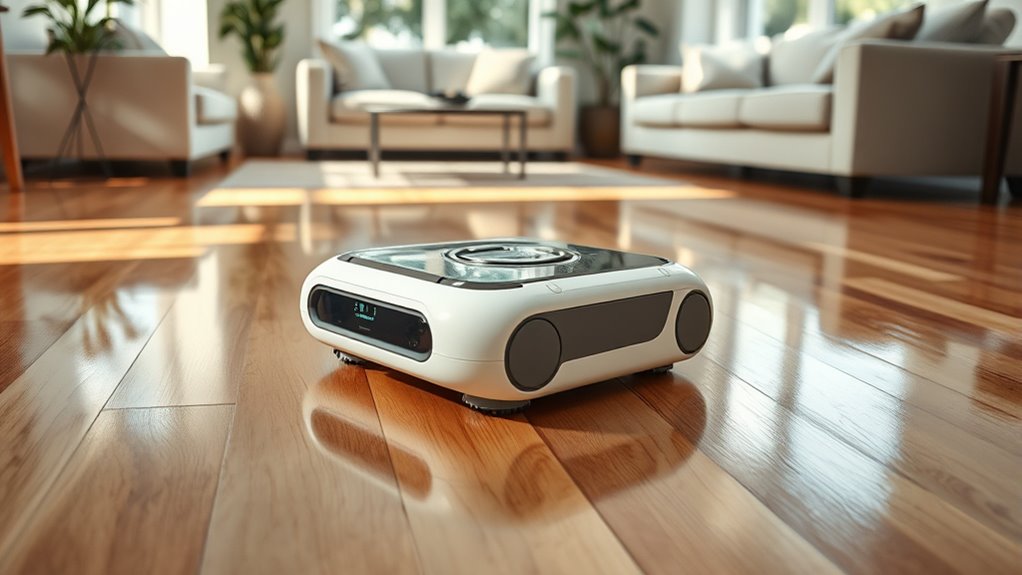

Robot mops with mapping can clean room by room, follow selected routes, and avoid the guesswork of random navigation. Roborock Qrevo S Pro is my best overall pick for buyers seeking a more capable mapped-cleaning setup, while the Roborock Q7 L5 stands out for strong listed suction and the Lefant M330 Pro for shoppers who want a simpler option. The main tradeoff is between advanced docks and mopping features that reduce hands-on work, and simpler machines that take less space and may be easier to manage. Mapping also varies in usefulness: room labels and editable maps matter more than a map display alone. Read on for the full breakdown and advice on matching a model to your floors, layout, and maintenance preferences.

Get the latest gadgets delivered free with Prime
- Fast, free delivery on millions of items
- Prime Video, Amazon Music and more included
- Member-only deals all year
Complete the kit


Key Takeaways
- The Roborock Qrevo S Pro leads this group for shoppers who want a feature-rich mapped-cleaning system, while the Q7 L5 puts its appeal in a stated 8,000 Pa suction rating rather than an all-in-one dock emphasis.
- Self-emptying does not mean hands-free mopping: buyers should distinguish dust handling from mop-pad washing, drying, and water management before choosing a docked model.
- Mapping features matter most in divided homes. Room selection, saved maps, and no-go zones can be more useful than a high suction figure when a home has multiple rooms or areas to avoid.
- The roundup spans very different upkeep expectations, from compact or simpler combos such as Lefant M330 Pro to self-emptying options from Wrydao, VONKO, Tikom, and Airzeen.
- Model names alone are not enough to compare Roborock variants: Qrevo S Pro, Qrevo 2 Pro, Q7 L5, Q10 S5+, and the LiDAR self-empty-dock model should be checked for their exact dock and mapping functions.
| Wrydao S6-Pro Robot Vacuum and Mop with Self-Emptying Station |  | Best for Room-by-Room Control | Navigation: LiDAR | Suction power: 6,000Pa | Dust bag capacity: 3L | VIEW ON AMAZON | See Our Full Breakdown |
| Shark Matrix Plus Robot Vacuum and Mop (UR2650WS) |  | Best for Sonic Scrubbing | Navigation: 360° LiDAR mapping | Mopping rate: 100 times per minute | Base capacity: Up to 30 days of dirt and debris | VIEW ON AMAZON | See Our Full Breakdown |
| Roborock Qrevo S Pro Robot Vacuum and Mop |  | Best for Automated Mop Care | Navigation: LiDAR | Suction power: 18,500Pa | Battery life: 180 minutes | VIEW ON AMAZON | See Our Full Breakdown |
| Roborock Qrevo 2 Pro Robot Vacuum and Mop |  | Best for Long Cleaning Runs | Navigation: LiDAR | Suction power: 20,000Pa | Battery life: 253 minutes | VIEW ON AMAZON | See Our Full Breakdown |
| Tikom L8000 Plus Robot Vacuum and Mop with Self-Emptying Base |  | Best for Multi-Floor Mapping | Navigation: 360° LiDAR | Suction: Up to 6,000Pa | Saved maps: Up to 5 | VIEW ON AMAZON | See Our Full Breakdown |
| ROPVACNIC Robot Vacuum and Mop Combo, 5200 Pa |  | Best for Simple, Flexible Controls | Suction power: 5200 Pa | Battery life: 120 minutes | Surface recommendation: Hardwood floors and low-pile carpets | VIEW ON AMAZON | See Our Full Breakdown |
| VONKO S6Pro Robot Vacuum and Mop with Self-Emptying Station |  | Best for Multi-Floor Homes | Suction power: Up to 8000 Pa | Runtime: Up to 180 minutes | Navigation: LiDAR 2.0 | VIEW ON AMAZON | See Our Full Breakdown |
| iRobot Roomba Plus 415X Robot Vacuum and Mop Combo |  | Best for Automated Mop-Pad Care | Suction power: 20,000 Pa | Navigation: LiDAR mapping and obstacle recognition | Cleaning modes: 4 | VIEW ON AMAZON | See Our Full Breakdown |
| Lefant M330 Pro Robot Vacuum and Mop |  | Best for Low-Clearance Spaces | Navigation: dToF LiDAR | Mapping: Multi-floor | Height: 95 mm | VIEW ON AMAZON | See Our Full Breakdown |
| Roborock Q7 L5 Robot Vacuum and Mop Combo, 8,000 Pa |  | Best for Map-Based Routine Cleaning | Suction power: 8,000 Pa | Navigation: LiDAR | Mapping: Multi-floor | VIEW ON AMAZON | See Our Full Breakdown |
| Tikom L8000 Pro Robot Vacuum and Mop Combo |  | Best for Multi-Level Mapping | Navigation: LiDAR smart mapping; saves up to five floor plans | Suction power: 6000 Pa with automatic carpet boost | Cleaning modes: Sweep only, mop only, sweep and mop | VIEW ON AMAZON | See Our Full Breakdown |
| Roborock Robot Vacuum and Mop with LiDAR Navigation and Self-Empty Dock |  | Best for Low-Intervention Vacuuming | Navigation: PreciSense LiDAR | Suction power: 10,000 Pa | Dust bag capacity: 2.7 L | VIEW ON AMAZON | See Our Full Breakdown |
| Roborock Q10 S5+ Robot Vacuum and Mop |  | Best for Carpet-Aware Mopping | Navigation: LiDAR with multi-level mapping | Obstacle avoidance: ReactiveTech structured light | Maximum suction: 10,000 Pa | VIEW ON AMAZON | See Our Full Breakdown |
| Airzeen Q20 Ultra Bagless Self-Emptying Robot Vacuum and Mop |  | Best Bagless Self-Emptying Pick | Model: Q20 Ultra | Navigation: LiDAR mapping; supports up to five maps | Suction: Up to 6000 Pa | VIEW ON AMAZON | See Our Full Breakdown |
| robot mops with mapping | Navigation | Suction power | Battery life |
|---|---|---|---|
| Wrydao S6-Pro Robot Vacuum and | LiDAR | 6,000Pa | 160 minutes |
| Shark Matrix Plus Robot Vacuum | 360° LiDAR mapping | — | 110 minutes |
| Roborock Qrevo S Pro Robot Vac | LiDAR | 18,500Pa | 180 minutes |
| Roborock Qrevo 2 Pro Robot Vac | LiDAR | 20,000Pa | 253 minutes |
| Tikom L8000 Plus Robot Vacuum | 360° LiDAR | — | — |
| ROPVACNIC Robot Vacuum and Mop | — | 5200 Pa | 120 minutes |
| VONKO S6Pro Robot Vacuum and M | LiDAR 2.0 | Up to 8000 Pa | — |
| iRobot Roomba Plus 415X Robot | LiDAR mapping and obstacle recognition | 20,000 Pa | — |
| Lefant M330 Pro Robot Vacuum a | dToF LiDAR | — | 240 minutes |
| Roborock Q7 L5 Robot Vacuum an | LiDAR | 8,000 Pa | 150 minutes |
| Tikom L8000 Pro Robot Vacuum a | LiDAR smart mapping; saves up to five floor plans | 6000 Pa with automatic carpet boost | — |
| Roborock Robot Vacuum and Mop | PreciSense LiDAR | 10,000 Pa | Up to 150 minutes |
| Roborock Q10 S5+ Robot Vacuum | LiDAR with multi-level mapping | — | Up to 150 minutes |
| Airzeen Q20 Ultra Bagless Self | LiDAR mapping; supports up to five maps | — | — |
More Details on Our Top Picks
Wrydao S6-Pro Robot Vacuum and Mop with Self-Emptying Station
The Wrydao S6-Pro is a good fit for buyers who want LiDAR-based room selection and no-go zones without moving to a dock that also washes mops. Its app scheduling and Alexa controls make it easy to target specific areas, while the 3L self-emptying bag reduces routine dustbin work. Compared with the Tikom L8000 Plus, it lists a longer maximum battery life and a similar bag capacity, but Tikom specifies support for both 2.4GHz and 5GHz Wi-Fi; the Wrydao requires 2.4GHz. Its 6,000Pa suction and simultaneous vacuuming and mopping suit mixed hard-floor and low- to mid-pile carpet homes, though the supplied details do not specify automatic mop washing or carpet mop lifting. Choose it for mapped, scheduled cleaning and less frequent dust disposal, not for hands-off mop maintenance.
Pros:- LiDAR mapping supports room selection and no-go zones.
- 3L dust bag is advertised for up to 90 days between changes.
- Adjustable suction and water flow provide control over vacuuming and mopping.
- App scheduling and Alexa voice control support routine cleaning.
Cons:- Requires a 2.4GHz Wi-Fi connection.
- No automatic mop washing or drying is listed.
- Extended warranty protection requires registration.
Best for: Households that want scheduled, room-by-room cleaning, no-go zones, and a self-emptying dust station.
Not ideal for: Homes using only 5GHz Wi-Fi or buyers who want a dock that washes and dries mop pads automatically.
- Navigation:LiDAR
- Suction power:6,000Pa
- Dust bag capacity:3L
- Advertised bag-change interval:Up to 90 days
- Battery life:160 minutes
- Controls:App and Alexa voice control
- Wi-Fi requirement:2.4GHz
- Dimensions:12.35 × 3.87 × 12.35 inches
Our verdict“Choose the S6-Pro if you want mapped room control and a long-interval self-emptying bag, and skip it if automatic mop care is a priority.”
Shark Matrix Plus Robot Vacuum and Mop (UR2650WS)
The Shark Matrix Plus earns its place for buyers who want a mapped robot with a more active hard-floor mopping action: its sonic mop scrubs 100 times per minute. LiDAR mapping, matrix cleaning, and edge detection support methodical coverage, while the bagless base can hold up to 30 days of debris. Compared with the Wrydao S6-Pro, Shark adds sonic scrubbing and HEPA filtration, but its stated 110-minute battery life is shorter than Wrydao’s 160 minutes and its base capacity is described in days rather than as a larger dust bag. The 0.22-quart onboard bin is small, making the base especially relevant for regular use. Mopping is for hard floors only, so this is not the pick for a robot expected to mop across carpeted areas.
Pros:- Sonic mopping scrubs hard floors 100 times per minute.
- 360° LiDAR mapping supports methodical navigation.
- Bagless base holds up to 30 days of dirt and debris.
- HEPA filtration captures 99.97% of dust and allergens down to 0.3 microns.
Cons:- Mopping is specified for hard floors, not carpets.
- The listed 0.22-quart dustbin is small.
- 110-minute battery life is shorter than the Wrydao S6-Pro’s listed runtime.
Best for: Homes with mostly hard flooring where buyers want mapped coverage and frequent sonic scrubbing.
Not ideal for: Buyers who need carpet mopping, longer stated runtime, or a large onboard dustbin.
- Navigation:360° LiDAR mapping
- Mopping rate:100 times per minute
- Base capacity:Up to 30 days of dirt and debris
- Filtration:HEPA; captures 99.97% of dust and allergens down to 0.3 microns
- Battery life:110 minutes
- Dustbin capacity:0.22 quarts
- Controls:App, Amazon Alexa, and Google Assistant
- Cleaning type:Vacuuming and sonic mopping
Our verdict“Pick the Shark Matrix Plus for mapped hard-floor cleaning with sonic scrubbing, but look elsewhere if you need carpet mopping or longer runtime.”
Roborock Qrevo S Pro Robot Vacuum and Mop
The Qrevo S Pro makes sense for buyers who want mapping to lead into a more hands-off cleaning routine. Its LiDAR navigation and multi-floor mapping pair with a dock that empties dust, washes and dries mop pads, and refills the robot, cutting down on several recurring chores. The liftable spinning mops and 18,500Pa suction also give it more flexibility across hard floors and carpets than the Shark Matrix Plus, whose sonic mop is specified for hard floors. Anti-tangle brushes and obstacle avoidance add appeal in homes with pets and changing floor plans. The tradeoff is dependence on 2.4GHz Wi-Fi, and the listed noise figures conflict: the description says 55dB while product information says 60dB. Buyers who do not need dock-based mop care may find a simpler mapped model easier to justify.
Pros:- Dock empties dust, washes and dries mop pads, and refills the robot.
- LiDAR and multi-floor mapping support tailored cleaning across levels.
- Liftable spinning mops help separate hard-floor mopping from carpet cleaning.
- Anti-tangle brushes are designed to reduce hair wrap.
Cons:- Supports 2.4GHz Wi-Fi only.
- Listed noise levels conflict between 55dB and 60dB.
- The extensive dock functions may be unnecessary for buyers seeking basic mapped mopping.
Best for: Pet households with multiple floor types that want mapped cleaning and automated mop washing, drying, and water refilling.
Not ideal for: Homes without 2.4GHz Wi-Fi or buyers who prefer a simpler dock without automated mop maintenance.
- Navigation:LiDAR
- Suction power:18,500Pa
- Battery life:180 minutes
- Dust bag capacity:2.7L
- Mop lift:10mm
- Mop washing temperature:167°F
- Mop drying:113°F warm air
- Wi-Fi:2.4GHz only
Our verdict“Choose the Qrevo S Pro if you want mapped multi-floor cleaning with automated mop maintenance, and avoid it if 2.4GHz Wi-Fi is unavailable.”
Roborock Qrevo 2 Pro Robot Vacuum and Mop
The Qrevo 2 Pro is the strongest fit here for larger homes where long runtime and dock-based mop care matter together. Its 253-minute battery life exceeds the Qrevo S Pro’s listed 180 minutes, while LiDAR mapping helps organize room coverage and avoid everyday obstacles. The dock handles dust emptying, water refilling, mop washing, and warm-air drying, so the robot needs less routine attention between runs. At 20,000Pa, its stated suction is also higher than the S Pro’s 18,500Pa, and the extending mop and side brush are intended to improve edge and corner reach. The tradeoffs are 2.4GHz-only Wi-Fi and a mop lift of up to 15mm, which may not clear every carpet edge. This is a feature-rich option, but its long-run advantage matters less in smaller homes.
Pros:- 253-minute battery life supports longer cleaning runs.
- Dock empties dust, refills water, washes mops at 149°F, and dries them with 113°F warm air.
- LiDAR mapping supports room navigation.
- Extending mop and side brush are designed to improve edge and corner coverage.
Cons:- Supports 2.4GHz Wi-Fi only.
- Mop lift is limited to up to 15mm, which may not clear every carpet edge.
- Its long runtime and dock features may be more than smaller homes need.
Best for: Owners of larger homes who want extended mapped runs, automated dock maintenance, and improved edge coverage.
Not ideal for: Small homes where the long runtime and multifunction dock add little value, or households relying on 5GHz-only Wi-Fi.
- Navigation:LiDAR
- Suction power:20,000Pa
- Battery life:253 minutes
- Mop lift:Up to 15mm
- Dock functions:Auto-emptying, water refilling, mop washing, and warm-air drying
- Mop washing temperature:149°F
- Mop drying:113°F warm air
- Noise level:54dB
Our verdict“Choose the Qrevo 2 Pro for long mapped cleaning runs and automated dock care, especially in a larger home with mixed flooring.”
Tikom L8000 Plus Robot Vacuum and Mop with Self-Emptying Base
The Tikom L8000 Plus stands out for households that need a robot to remember more than one floor: LiDAR mapping saves up to five maps, and room selection helps direct cleaning without restarting a full run. Its self-emptying base has a 3-liter dust bag, while recharge-and-resume support helps it finish larger jobs when one charge is not enough. Compared with the Wrydao S6-Pro, Tikom lists both 2.4GHz and 5GHz Wi-Fi support and five saved maps, though Wrydao specifies a longer maximum battery life and an advertised bag-change interval of up to 90 days. Tikom’s 6,000Pa suction is paired with vacuuming and mopping, but carpet handling needs attention: the mop holder must be removed or carpet zones restricted to prevent wetting. Its 150-minute runtime applies to gentle suction mode.
Pros:- 360° LiDAR supports room selection and up to five saved maps.
- 3-liter self-emptying dust bag reduces frequent debris disposal.
- Automatically recharges and resumes cleaning.
- Supports both 2.4GHz and 5GHz Wi-Fi.
Cons:- Mop holder must be removed or carpet zones restricted to avoid wetting carpets.
- The 150-minute maximum runtime is specified for gentle suction mode.
- The supplied details do not list automatic mop washing or drying.
Best for: Multi-story households that want saved floor maps, room selection, and recharge-and-resume cleaning.
Not ideal for: Homes with mixed carpet and hard floors where users do not want to remove the mop holder or set carpet restrictions.
- Navigation:360° LiDAR
- Suction:Up to 6,000Pa
- Saved maps:Up to 5
- Dustbag capacity:3 liters
- Runtime:Up to 150 minutes in gentle suction mode
- Connectivity:2.4GHz and 5GHz Wi-Fi
- Filter:HEPA
- Noise level:60dB
Our verdict“Pick the L8000 Plus if saved maps for multiple floors are your priority and you are willing to manage carpet zones before mopping.”
ROPVACNIC Robot Vacuum and Mop Combo, 5200 Pa
The ROPVACNIC Robot S1 is a straightforward mapping-roundup pick for buyers who value flexible controls and adjustable mopping more than detailed map features. Its four-stage water adjustment lets you tailor water delivery to hard-floor cleaning, while app, remote, touchpad, and voice controls make scheduling accessible to different household members. Compared with the Roborock Q7 L5, it offers less mapping detail in the supplied specifications: there is no stated LiDAR navigation, multi-floor storage, or no-go-zone support. Its brush-free design and dual side brushes are intended to limit hair tangles, but the listed suitability for low-pile carpet does not make it a strong choice for carpet-heavy homes. I’d choose it for a mostly hard-floor layout and simple daily upkeep, not for buyers who need precise room-by-room map control.
Pros:- Four-stage water adjustment offers more control over mopping moisture
- App, remote, touchpad, and voice controls suit different users
- Scheduling and automatic return to the charging dock support routine cleaning
- Brush-free design and dual side brushes are intended to reduce pet-hair tangles
Cons:- Low-pile carpet is the only stated carpet suitability, limiting mixed-floor flexibility
- The supplied product details do not specify a mapping system or map-management features
- A 120-minute battery life may be limiting for larger layouts
Best for: Households with mostly hardwood floors that want several control options and adjustable mop water without needing advanced map management
Not ideal for: Carpet-heavy homes or buyers who need confirmed LiDAR mapping, saved floor plans, or room-specific cleaning
- Suction power:5200 Pa
- Battery life:120 minutes
- Surface recommendation:Hardwood floors and low-pile carpets
- Control methods:App, remote, touchpad, and voice
- Voice assistants:Amazon Echo and Google Home
- Suction levels:3
- Water adjustment:Four-stage
- Filter:Multi-layer high-efficiency filtration
Our verdict“Choose the ROPVACNIC for adjustable, easy-to-control cleaning on mostly hard floors, but pick the Roborock Q7 L5 if explicit LiDAR and multi-floor mapping matter more.”
VONKO S6Pro Robot Vacuum and Mop with Self-Emptying Station
For buyers whose main mapping need is handling several levels of a home, the VONKO S6Pro stands out with LiDAR 2.0 and storage for up to five floor maps. Room selection and no-go zones add practical control, while its 2.5-liter self-emptying station cuts down on routine dustbin emptying. Compared with the Roborock Q7 L5, the VONKO pairs mapping with a dock and a longer stated runtime, but its mopping is specified for hard floors only. The advertised interval of up to 60 days between manual emptying is a maximum, not a guaranteed schedule for every household. I’d favor this model for larger, multi-level homes that want less debris handling; buyers focused on hands-off mop-pad care should look at the Roomba Plus 415X instead.
Pros:- LiDAR mapping stores plans for up to five floors
- Room selection and no-go zones provide useful map-based control
- 2.5-liter station reduces the frequency of manual debris emptying
- Up to 180 minutes of runtime supports longer cleaning sessions
Cons:- Mopping is specified for hard floors rather than carpet
- The stated 60-day period between emptying is an advertised maximum
- The product details do not specify automatic mop-pad washing or drying
Best for: Owners of multi-level homes who want saved maps, room selection, no-go zones, and a self-emptying station
Not ideal for: Buyers who want automated mop-pad washing or who need the robot to mop carpeted areas
- Suction power:Up to 8000 Pa
- Runtime:Up to 180 minutes
- Navigation:LiDAR 2.0
- Map storage:Up to 5 floors
- Self-emptying station capacity:2.5 liters
- Controls:App, voice, and Alexa
- Surface recommendations:Hard floors and carpet; mopping specified for hard floors
- Battery type:Lithium-ion
Our verdict“Pick the VONKO S6Pro for multi-floor mapping and reduced dustbin upkeep, but choose the Roomba Plus 415X if dock-based mop-pad care is a higher priority.”
iRobot Roomba Plus 415X Robot Vacuum and Mop Combo
The Roomba Plus 415X is the clearest choice here for buyers who want mapping paired with less mop maintenance. Its LiDAR navigation and obstacle recognition support planned cleaning around a home, while the AutoWash dock empties debris, washes the pads, and heat-dries them after a run. That dock-led upkeep is a bigger differentiator than its four cleaning modes: compared with the VONKO S6Pro, the Roomba adds specified pad washing and drying, while the VONKO offers explicit storage for up to five floor maps. The 10 mm mop lift helps the Roomba pass over some rugs, though rug clearance depends on rug thickness. I’d choose it for mixed-floor homes that want the dock to handle pad care, but skip it if space for the AutoWash dock is tight or if you need stated battery and coverage figures before buying.
Pros:- LiDAR mapping and obstacle recognition support planned navigation
- AutoWash dock washes and heat-dries mop pads after cleaning
- 10 mm mop lift helps keep pads raised over some rugs
- Four cleaning modes and SmartScrub offer different approaches to floor messes
Cons:- The AutoWash dock needs dedicated floor space and access
- Battery life and cleaning coverage are not specified in the supplied details
- The 10 mm lift may not clear thicker rugs
Best for: Mixed-floor households that want LiDAR navigation and a dock that empties debris and washes and dries mop pads
Not ideal for: Small homes with little dock space or buyers who need published battery-life and cleaning-coverage details
- Suction power:20,000 Pa
- Navigation:LiDAR mapping and obstacle recognition
- Cleaning modes:4
- Self-emptying:Up to 90 days
- Mop pad drying temperature:113°F
- Mop lift:10 mm
- Mop pads:DualClean
- Dock:AutoWash dock empties debris, washes pads, and heat-dries pads
Our verdict“Choose the Roomba Plus 415X if dock-based pad washing and obstacle-aware mapping matter most, but favor the VONKO S6Pro for explicitly stated multi-floor map storage.”
Lefant M330 Pro Robot Vacuum and Mop
The Lefant M330 Pro brings mapping to a problem many robots handle poorly: reaching under low furniture. Its 95 mm profile, dToF navigation, and obstacle detection aim to support planned routes through tighter spaces, while multi-floor mapping and no-go zones add useful app control. Compared with the Roborock Q7 L5, the Lefant is slimmer and lists carpet detection with automatic suction boost, but its surface recommendation is hard floor and its 200 ml water tank needs attention after mopping. The instructions specifically advise emptying it to help prevent leaks and floor stains. A 240-minute battery life is a strong fit for longer sessions, though buyers should note that the listing gives inconsistent Wi-Fi details. I’d shortlist it for furnished homes with low-clearance gaps, not for shoppers seeking a self-emptying or mop-washing dock.
Pros:- 95 mm height can help it reach beneath lower furniture
- dToF navigation supports route planning and multi-floor maps
- Carpet detection and automatic suction boost adapt vacuuming across surfaces
- Anti-tangle design and a 450 ml dustbin suit homes with pet hair
Cons:- The 200 ml water tank should be emptied after mopping to help prevent leaks and stains
- Hard floor is the stated surface recommendation, limiting confidence for carpet-focused use
- Wi-Fi details are inconsistent in the supplied product information
Best for: Pet households with hard floors, low furniture, and multiple levels that need a slim robot with saved maps
Not ideal for: Buyers who want automated bin or mop-pad maintenance, or those who need consistent Wi-Fi specifications before purchase
- Navigation:dToF LiDAR
- Mapping:Multi-floor
- Height:95 mm
- Dustbin capacity:450 ml
- Water tank capacity:200 ml
- Battery life:240 minutes
- Obstacle avoidance:PSD precision detection
- Controls:App and voice control; Alexa and Google Assistant compatible
- Warranty:One year
Our verdict“Choose the Lefant M330 Pro for slim, mapped cleaning under furniture, but pick the Roborock Q7 L5 if you prefer a more clearly specified surface range and 2.4 GHz connectivity.”
Roborock Q7 L5 Robot Vacuum and Mop Combo, 8,000 Pa
The Roborock Q7 L5 is a balanced option for buyers who want mapping to make everyday vacuuming and mopping more deliberate. LiDAR navigation, multi-floor mapping, schedules, and no-go zones let owners set up repeatable routines rather than rely on basic route behavior. Its 8,000 Pa suction and 150-minute battery life support cleaning across a mix of hard floors and carpets, while the 270 ml water tank handles its mopping function. Compared with the slimmer Lefant M330 Pro, the Roborock does not offer a stated 95 mm body height or the same 240-minute runtime; compared with the VONKO S6Pro, it lacks a self-emptying station. Its integrated water tank and dustbin may also mean more frequent hands-on servicing. I’d pick it for map-led routine cleaning without a large dock, especially where 2.4 GHz Wi-Fi is available.
Pros:- LiDAR and multi-floor mapping support planned, repeatable cleaning
- No-go zones and scheduling provide useful app-based control
- 8,000 Pa suction is specified for carpet and hard-floor cleaning
- Anti-tangle brushes are designed to reduce hair wrap
Cons:- Wi-Fi is limited to 2.4 GHz
- The water tank and dustbin are an integrated combo part
- No self-emptying or mop-pad washing dock is specified
Best for: Households wanting LiDAR-based routines, multi-floor maps, and no-go zones across both carpet and hard flooring
Not ideal for: Homes using only 5 GHz Wi-Fi or buyers who want a self-emptying dock and automated mop-pad care
- Suction power:8,000 Pa
- Navigation:LiDAR
- Mapping:Multi-floor
- Water tank capacity:270 ml
- Battery life:150 minutes
- Wi-Fi:2.4 GHz only
- Noise level:60 dB
- Surface recommendations:Carpet, laminate, tile, vinyl, wood, and marble
- Controls:App, buttons, and voice
Our verdict“Choose the Roborock Q7 L5 for map-based routines across mixed flooring without a large maintenance dock, but pick the VONKO S6Pro if self-emptying is a priority.”
Tikom L8000 Pro Robot Vacuum and Mop Combo
The Tikom L8000 Pro is a mapping-first pick for homes where a robot needs to remember more than one floor: its LiDAR system can save up to five maps, making repeat room-by-room cleaning easier to manage. Its 300 ml water tank and 450 ml dustbin are generous for a robot without a self-emptying base, while the 150-minute runtime suits larger cleaning sessions. Compared with the Airzeen Q20 Ultra, it offers similar multi-map capacity but avoids relying on a bagless self-emptying setup; neither option eliminates routine upkeep. The tradeoff is that the Tikom has no listed self-emptying dock, so you must empty its bin yourself, and first-time users may need time to learn the app. Choose it for saved maps, quiet low-mode operation, and straightforward combined cleaning—not hands-off maintenance.
Pros:- LiDAR mapping can save up to five floor plans
- 300 ml water tank and 450 ml dustbin reduce interruptions between refills and emptying
- 150-minute runtime supports longer cleaning sessions
- 45 dB low mode and Alexa or Google Home control
Cons:- No self-emptying dustbin, so debris must be disposed of manually
- App interface may feel complicated to first-time users
- Mop system is a basic dual-mode setup rather than a listed sonic scrubbing system
Best for: Households with multiple mapped floors that want long runtime and sizeable onboard tanks without a self-emptying dock
Not ideal for: Buyers who want minimal bin handling or a particularly simple app experience
- Navigation:LiDAR smart mapping; saves up to five floor plans
- Suction power:6000 Pa with automatic carpet boost
- Cleaning modes:Sweep only, mop only, sweep and mop
- Water tank capacity:300 ml
- Dustbin capacity:450 ml
- Runtime:Up to 150 minutes
- Low-mode noise:45 dB
- Connectivity:2.4 GHz and 5 GHz Wi-Fi, app, Alexa, and Google Home
Our verdict“Pick the Tikom L8000 Pro if you need saved maps for several floors and can handle emptying its onboard bin yourself.”
Roborock Robot Vacuum and Mop with LiDAR Navigation and Self-Empty Dock
This Roborock LiDAR vacuum and mop is the practical choice for buyers who want mapped cleaning paired with less frequent dustbin handling. Its 2.7 L self-empty dock is designed to hold debris for a stretch between bag changes, while LiDAR mapping supports planned routes and app-based no-go zones. The stated 10,000 Pa suction gives it a stronger vacuuming emphasis than the Tikom L8000 Pro, which instead stands out for five saved floor plans and quieter low-mode operation. The Roborock’s three water-flow settings add some control over mopping, but the listing gives less detail about map storage and mop mechanics than the Q10 S5+, which adds sonic scrubbing and mop lifting. Its 65 dB noise figure and self-empty interval that varies with debris mean it is not truly maintenance-free. It fits mixed-floor homes prioritizing scheduled vacuuming over advanced mopping features.
Pros:- LiDAR mapping supports planned routes and app-set no-go zones
- 2.7 L dust bag reduces how often debris needs handling
- 10,000 Pa stated suction is suited to a vacuuming-focused routine
- Three water-flow settings let users adjust mopping output
Cons:- Actual time between dust-bag changes depends on debris and cleaning frequency
- 65 dB listed noise level may be noticeable during operation
- Mopping details are less specific than the sonic system and mop lift listed for the Roborock Q10 S5+
Best for: Owners of mixed carpet-and-hard-floor homes who want LiDAR routes, no-go zones, and a self-empty dock
Not ideal for: Buyers seeking detailed multi-floor map specifications, quieter operation, or an explicitly described scrubbing and mop-lift system
- Navigation:PreciSense LiDAR
- Suction power:10,000 Pa
- Dust bag capacity:2.7 L
- Battery life:Up to 150 minutes
- Water flow settings:3
- Cleaning path width:12.8 inches
- Noise level:65 dB
- Surfaces:Wood, tile, marble, and carpet
Our verdict“Choose this Roborock if a self-empty dock and mapped vacuuming matter more to you than advanced, clearly specified mop features.”
Roborock Q10 S5+ Robot Vacuum and Mop
The Roborock Q10 S5+ earns its place for homes where mapping needs to coordinate vacuuming and mopping across mixed flooring. Its VibraRise 2.0 sonic mop is specified for up to 3,000 scrubs per minute, and the mop can lift up to 8 mm when carpet detection calls for it. That gives it a clearer carpet-protection advantage than the standard mop description for the other Roborock LiDAR vacuum and mop in this lineup. Multi-level LiDAR mapping and ReactiveTech obstacle avoidance also make it the more feature-detailed navigation package here. The tradeoff is that its 2.4 GHz-only Wi-Fi can rule it out for households relying on other network bands, and the advertised 70-day hands-free period is an estimate, not a fixed schedule. Its dock and mapping suit users wanting fewer chores, but it costs more space than a robot without a station.
Pros:- LiDAR supports multi-level mapping and structured-light obstacle avoidance
- Sonic mopping and up to 8 mm mop lift help limit carpet wetting
- 2.7 L self-empty bag reduces routine dustbin handling
- Washable filter and anti-tangle brushes are designed to ease upkeep
Cons:- Wi-Fi support is limited to 2.4 GHz
- The advertised up-to-70-day hands-free period varies with use and debris
- The self-emptying station takes additional floor space
Best for: Homes with both carpets and hard floors where mapped routes, carpet-aware mop lifting, and reduced bin maintenance are priorities
Not ideal for: Households that require 5 GHz Wi-Fi or buyers who want a compact robot without a docking station
- Navigation:LiDAR with multi-level mapping
- Obstacle avoidance:ReactiveTech structured light
- Maximum suction:10,000 Pa
- Mopping system:VibraRise 2.0 sonic mopping, up to 3,000 scrubs per minute
- Mop lift:Up to 8 mm
- Dust bag capacity:2.7 L
- Battery life:Up to 150 minutes
- Wi-Fi:2.4 GHz only
Our verdict“Choose the Q10 S5+ if mapped cleaning across carpet and hard floors calls for a lifting mop and a self-empty station.”
Airzeen Q20 Ultra Bagless Self-Emptying Robot Vacuum and Mop
The Airzeen Q20 Ultra is the standout for buyers who want mapped cleaning and self-emptying without disposable dust bags. Its reusable, rinseable dust cup sets it apart from the Roborock Q10 S5+, whose 2.7 L station uses a dust bag; that difference matters to people who prefer a washable container over replacing bags. Airzeen’s LiDAR can store up to five maps, and app controls support scheduling and no-go zones, making it a flexible fit for multi-floor households. Suction reaches 6000 Pa and runtime up to 150 minutes, though the Roborock offers higher stated suction plus a more detailed sonic mop and carpet-lifting system. Airzeen’s own tradeoffs are its 2.4 GHz-only Wi-Fi and the need to remove the mop holder before carpet cleaning. It is a distinctive mapping option, but not the best match for homes with lots of rugs.
Pros:- LiDAR mapping supports up to five saved floor plans
- Reusable, rinseable bagless dust cup avoids disposable dust bags
- App and voice controls support schedules and no-go zones
- Automatically recharges and resumes cleaning
Cons:- Mop holder should be removed before carpet cleaning
- Wi-Fi support is limited to 2.4 GHz
- Up to 6000 Pa suction is below the 10,000 Pa listed for the Roborock Q10 S5+
Best for: Multi-floor households that want saved LiDAR maps and a reusable bagless self-emptying cup
Not ideal for: Homes with many carpets or rugs, since the mop holder should be removed before carpet cleaning
- Model:Q20 Ultra
- Navigation:LiDAR mapping; supports up to five maps
- Suction:Up to 6000 Pa
- Runtime:Up to 150 minutes in ECO mode
- Self-emptying:Bagless reusable dust cup
- Cleaning modes:Vacuum, sweep, mop, and self-empty
- Water tank:2-in-1 dustbin and water tank
- Wi-Fi:2.4 GHz only
Our verdict“Pick the Airzeen Q20 Ultra if you want multi-floor mapping and a reusable self-emptying cup, especially in a mostly hard-floor home.”

How We Picked
I ranked these robot mops with mapping around the choices that affect day-to-day ownership: navigation and map control, the usefulness of the mopping setup, dust and water handling, maintenance demands, and flexibility across different floor plans. A mapped robot should do more than draw a map; room selection, route control, and the ability to keep it away from rugs or delicate areas shape whether mapping helps in practice. I also treated stated specifications, such as suction figures, as one part of the comparison rather than a substitute for mopping performance or usable app controls.
The ranking gives more weight to balanced cleaning and useful automation than to any single headline feature. Models with self-emptying bases may cut down on dust-bin chores, but that feature does not automatically mean the mop is washed or maintained by the dock. I considered simpler and compact combos for buyers who want fewer systems to manage, while distinguishing them from feature-rich options suited to larger or more divided homes. Where product names cover variants, I recommend checking the exact configuration before purchase rather than assuming similarly named models share the same mapping or dock functions.
Factors to Consider When Choosing Robot Mops With Mapping
Before choosing among robot mops with mapping, decide what you expect the map and mop to do for your home. The strongest fit depends on your floor plan, rug placement, tolerance for upkeep, and whether you need a robot to vacuum first or mop routinely.
Look Beyond the Map Image
A map is useful only when it gives you control over cleaning. Check whether the app supports room selection, named zones, no-go areas, and saved maps if your home has multiple floors. A basic map may show where the robot traveled without letting you adjust its route or protect a rug. Before buying, think of a recurring problem area, such as a pet bowl or a bathroom threshold, and confirm the controls can address it. Multi-level homes also need a clear plan for carrying the robot and whether maps can be stored separately. A simpler map can be enough for an open-plan space, while divided layouts benefit from more precise room and zone controls.
Match the Mop to Your Floor Routine
Robot mops are best treated as routine floor-maintenance tools, not automatic replacements for every manual scrub. A water-fed pad or basic mop attachment can handle light, regular soil, while dried spills and sticky marks may still need attention by hand. Ask whether the design lets you control water flow or set mop-only areas, especially if you have wood or other moisture-sensitive flooring. Rugs create another practical issue: check whether the robot can avoid them while mopping or whether you will need to move them. Buyers who mostly want dust and debris pickup may value vacuum performance more than elaborate mop features. Choose around the messes you actually expect the robot to manage.
Separate Dust Automation From Mop Automation
A self-emptying base handles collected dust, but it does not necessarily clean the mop pad or refill its water tank. This distinction is easy to miss when product names emphasize a station or dock. If you want less hands-on work, verify exactly what the dock does: emptying, pad washing, pad drying, water refilling, or only some of these tasks. More dock functions can reduce routine chores but take extra floor space and add components to maintain. A simpler base may suit a smaller home or a buyer who does not mind emptying and rinsing parts. Compare the upkeep you will still perform, not just the dock’s headline label.
Treat Suction Ratings as One Clue
Published suction figures can help distinguish vacuum-focused models, but they do not tell the whole cleaning story. Floor type, brush design, airflow, navigation coverage, and how often the robot runs all affect what ends up in the bin. For a home with rugs, hair, or heavier debris, review the vacuum setup and maintenance needs alongside the stated rating. For hard floors and frequent light cleaning, reliable route coverage and convenient mopping may matter more than chasing the largest number. Also check whether the robot can vacuum and mop in the combination you prefer. A high spec is useful only when it matches your surfaces and routine.
Plan Around Layout, Thresholds, and Storage
Measure the available dock area before choosing a model with a large station. The robot also needs clear paths between rooms; narrow passages, raised thresholds, and clutter can affect whether mapping leads to complete coverage. Think about where cords, rugs, and pet accessories sit, since maps do not remove every obstacle. If you have more than one level, consider how often you are willing to move the robot and whether carrying the dock is practical. Compact models can suit tighter homes, but a smaller footprint may come with fewer dock functions. Map the physical constraints of your home before comparing feature lists.
Check Replacement Parts and Routine Care
Every robot mop needs some ongoing care, even when it has a self-emptying base. Pads need washing or replacement, brushes collect hair, and filters and sensors need periodic attention. Before choosing a model, look for clear availability of compatible pads, filters, brushes, and bags if the dock uses them. Consider how easy it is to remove and clean the parts you will handle most often. A system with more automation can save time, but it may have more components to maintain when something needs cleaning. Buyers who prefer low-complexity ownership may be happier with a simpler setup than a feature-packed station.
Frequently Asked Questions
Is a robot mop with mapping useful in a small apartment?
It can be, particularly if you want to send the robot to one room or keep it away from a specific rug or doorway. In a small, open layout, basic route coverage may be enough, so advanced multi-room controls may not justify a larger dock. Check the robot and station dimensions against the space you have available. Also consider whether the floor is mostly hard surface, since a mop feature adds less value if much of the apartment is carpeted. A compact, straightforward model may suit a small home better than a setup built around a large service station.
Does a self-emptying base mean I will not have to clean the mop?
No. Self-emptying usually refers to moving debris from the robot’s dustbin into a larger container, not washing or drying the mop pad. Some docks offer additional mop care, while others leave pad rinsing and water handling to you. Read the exact dock description and check which tasks it performs rather than relying on the words “self-emptying” or “self-cleaning” in a product name. If reducing mop chores is a priority, confirm pad washing, drying, and water refilling separately. You will still need to inspect the system and clean parts as directed.
Should I choose a robot with stronger stated suction or better mapping?
Choose based on the job that causes more trouble in your home. Stronger stated suction can be relevant for debris pickup, especially where rugs or heavier messes are common, but it does not guarantee better mopping or coverage. Mapping controls are more valuable when you need room-by-room schedules, restricted areas, or reliable cleaning across a divided floor plan. If you have mostly hard floors and run the robot often, route control may matter more than a headline suction figure. For mixed flooring, consider both the vacuum design and the robot’s ability to manage rugs during mopping.
How can I tell whether similarly named models have the same mapping features?
Compare the full model number and the included dock configuration, not just the product-family name. Models in the same line can differ in navigation controls, map storage, mop functions, and what the station handles. Check the manufacturer’s specification page and manual for features such as room selection, no-go zones, multi-floor maps, and pad care. Confirm that the listing describes the exact variant you plan to buy, since bundle names can make differences less obvious. If a feature is not explicitly listed for that model, do not assume it is included because a related model has it.
Can a mapped robot mop safely clean around rugs and wood floors?
Mapping can help you set restricted areas, but it does not by itself confirm that a robot will lift its mop or avoid every rug. Check for specific rug-detection or mop-avoidance controls, and use app-defined no-mop zones when available. For wood floors, follow the flooring maker’s care guidance and use conservative water settings if the robot provides them. Test a small area and keep pads clean, since grit or excess moisture can create problems regardless of navigation. If your home has many rugs and sensitive flooring, reliable zone controls may matter more than a larger suction rating.
Conclusion
For the strongest all-around starting point, I recommend the Roborock Qrevo S Pro as best overall among these mapped options. Buyers seeking best value should compare the Tikom L8000 Plus and Roborock Q7 L5 by the exact dock and app functions they need, rather than choosing on a spec number alone. For a best premium direction, consider the Qrevo S Pro or Qrevo 2 Pro and verify which variant provides the dock features that matter to you. For beginners, the Lefant M330 Pro may be a more approachable place to start if a simpler setup fits their needs. If your priority is a self-emptying station, compare the Wrydao S6-Pro, VONKO S6Pro, Tikom L8000 Plus, and Airzeen Q20 Ultra by station tasks and maintenance; for a vacuum-focused spec, look closely at the Q7 L5. Match the map controls and upkeep to your home, and confirm the exact model configuration before deciding.