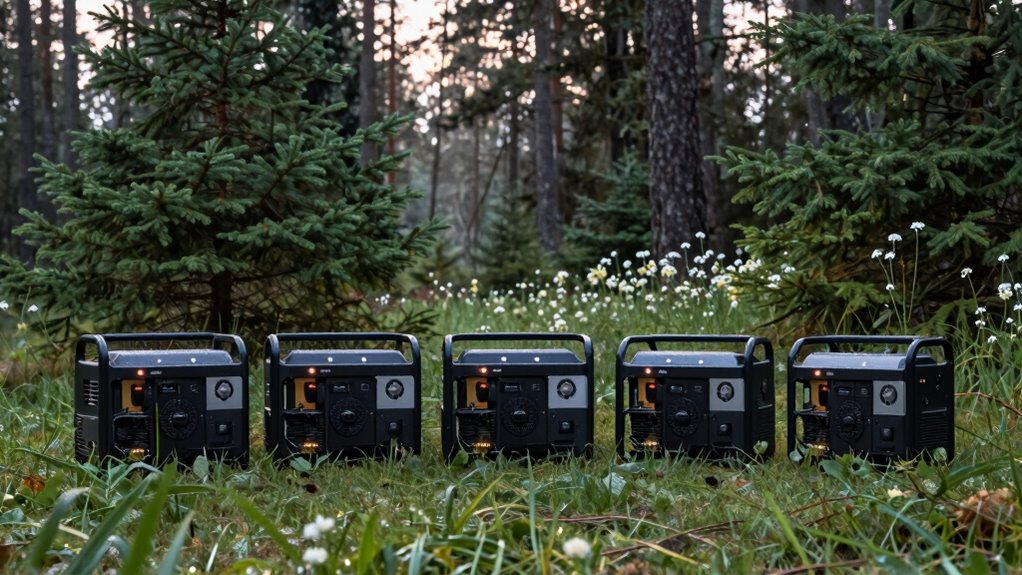

A quiet inverter generator should balance useful power with a sound level that suits your campsite, RV, or home backup setup. My best overall pick is the WEN DF480iX, which pairs midrange output with dual-fuel flexibility; the WEN 2350 is a compact option for lighter loads, while the Westinghouse iGen8200TFc stands out for buyers who need more output and tri-fuel capability. The main tradeoff is straightforward: larger generators can run more equipment, but they are heavier and may be less suited to close-quarters use. Fuel choice, runtime, and the distinction between rated and peak watts also affect how useful a generator will be day to day. Read on for the full comparison and guidance on matching a model to your actual loads.

Get the latest gadgets delivered free with Prime
- Fast, free delivery on millions of items
- Prime Video, Amazon Music and more included
- Member-only deals all year
Complete the kit


Key Takeaways
- Midrange output leads the shortlist: The WEN DF480iX offers a more balanced mix of dual-fuel flexibility and usable capacity than the smallest camping-focused models.
- Portability and power pull in opposite directions: The 39-pound Oxseryn 2800W and WEN 2350 are easier to move, while the 6800- to 12000-watt choices suit heavier loads but are bulkier.
- Fuel flexibility is not the same as quiet operation: Dual- and tri-fuel models give buyers more supply options, but the product name alone does not establish sound levels under a particular load.
- RV readiness needs a connection check: Several WEN models are positioned for RV use, but buyers still need to match outlet type and running wattage to their equipment.
- The lineup covers very different jobs: Compact units favor light, mobile use; larger Westinghouse, WEN, and Genkins models prioritize more appliances and backup capacity over easy carrying.
| Oxseryn 4400-Watt Gas Inverter Generator |  | Best for Lightweight RV Backup | Peak output: 4,400 watts | Running output: 3,400 watts | Fuel: Gasoline | VIEW ON AMAZON | See Our Full Breakdown |
| Westinghouse iGen8200TFc Tri-Fuel Portable Inverter Generator |  | Best Quiet Tri-Fuel Home Backup | Fuel types: Gasoline, propane, and natural gas | Gasoline output: 6,600 running watts / 8,200 peak watts | Propane output: 5,940 running watts / 7,380 peak watts | VIEW ON AMAZON | See Our Full Breakdown |
| WEN DF480iX 4800-Watt Dual-Fuel Inverter Generator |  | Best for Portable Dual-Fuel RV Use | Fuel types: Gasoline and propane | Surge output: 4,800 W gasoline / 4,320 W propane | Noise level: 62 dB at quarter load | VIEW ON AMAZON | See Our Full Breakdown |
| PowerSmart 4000-Watt Portable Inverter Generator |  | Best Quiet Pick for Sensitive Electronics | Starting wattage: 4,000 watts | Running wattage: 3,200 watts | Noise level: Under 59 dBA at 23 feet | VIEW ON AMAZON | See Our Full Breakdown |
| Genkins 8000W Portable Quiet Inverter Generator with Electric Start |  | Best High-Output Inverter for Home Backup | Starting wattage: 8,000 watts | Running wattage: 6,500 watts | Noise level: 62 dBA at 23 feet | VIEW ON AMAZON | See Our Full Breakdown |
| Westinghouse iGen5000DF Dual-Fuel Portable Inverter Generator |  | Best Quiet Dual-Fuel for RV Backup | Peak wattage: 5,000 watts | Running wattage: 3,900 watts | Fuel: Gasoline or propane | VIEW ON AMAZON | See Our Full Breakdown |
| WEN 4800-Watt RV-Ready Portable Inverter Generator |  | Best Gas-Only Choice for RV Output | Starting wattage: 4,800 watts | Running wattage: 4,000 watts | Fuel: Gasoline | VIEW ON AMAZON | See Our Full Breakdown |
| WEN DF360iX 3600-Watt Dual-Fuel Portable Inverter Generator |  | Best Compact Dual-Fuel RV Pick | Gasoline output: 3,600 surge watts; 2,900 rated watts | Propane output: 3,500 surge watts; 2,600 rated watts | Fuel: Gasoline or propane | VIEW ON AMAZON | See Our Full Breakdown |
| Oxseryn 2800W Portable Inverter Generator with Fuel Shut-Off, 1.1-gal Tank, 39 lb |  | Best Lightweight Quiet Pick for Small Loads | Peak power: 2,800 watts | Running power: 2,000 watts | Engine: 79.8 cc 4-stroke OHV | VIEW ON AMAZON | See Our Full Breakdown |
| Oxseryn 4400-Watt Gas Inverter Generator |  | Best Open-Frame Output for Longer Light-Load Runs | Peak power: 4,400 watts | Running power: 3,400 watts | Fuel: Gasoline | VIEW ON AMAZON | See Our Full Breakdown |
| WEN 2350-Watt Portable Inverter Generator (56235i) |  | Best Compact Quiet Pick | Surge wattage: 2,350 watts | Running wattage: 1,900 watts | Noise level: 51 dB at quarter load | VIEW ON AMAZON | See Our Full Breakdown |
| Westinghouse iGen5000 Portable Inverter Generator |  | Best for Quiet RV and Extended Use | Peak wattage: 5,000 watts | Noise level: As low as 52 dBA | Fuel and tank: Gasoline; 3.4 gallons | VIEW ON AMAZON | See Our Full Breakdown |
| Westinghouse iGen12000DFc Dual Fuel Portable Inverter Generator |  | Best High-Capacity Quiet Backup | Peak output: 12,000 watts gasoline; 11,000 watts propane | Running output: 9,000 watts gasoline; 8,100 watts propane | Noise level: As low as 64 dBA | VIEW ON AMAZON | See Our Full Breakdown |
| WEN DF680iX 6800-Watt Dual-Fuel Inverter Generator |  | Best Dual-Fuel Midrange Choice | Gasoline output: 6,800 surge watts; 5,100 rated watts | Propane output: 6,000 surge watts; 4,500 rated watts | Noise level: 64 dB at quarter load | VIEW ON AMAZON | See Our Full Breakdown |
| WEN 3600-Watt Portable Inverter Generator (56360i) |  | Best Quiet RV-Ready Upgrade | Surge wattage: 3,600 watts | Noise level: 65 dB at quarter load | Weight: 46 pounds | VIEW ON AMAZON | See Our Full Breakdown |
| quiet inverter generator | Runtime | Noise level | Weight | Outlets |
|---|---|---|---|---|
| Oxseryn 4400-Watt Gas Inverter | Up to 14 hours at 25% load in ECO mode | Under 72 dBA at 23 feet | 56 pounds | 2 × 120V AC, 1 × 12V DC, 1 × RV port |
| Westinghouse iGen8200TFc Tri-F | Up to 17 hours at 25% load | Around 60 dBA at 25% load | — | 120/240V 14-50R 50A, 120V TT-30R 30A, 120V 5-20R 20A duplex |
| WEN DF480iX 4800-Watt Dual-Fue | Up to 7 hours at half load on gasoline; up to 20 hours at half load on a 20 lb propane tank | 62 dB at quarter load | — | Four 120V outlets, one 120V TT-30R RV outlet, one 12V DC outlet, two 5V USB ports |
| PowerSmart 4000-Watt Portable | Up to 8 hours | Under 59 dBA at 23 feet | 50.7 pounds | — |
| Genkins 8000W Portable Quiet I | 8 hours at 50% load; 16 hours at 25% load | 62 dBA at 23 feet | 112 pounds | 1 × 240V NEMA L14-30R, 1 × 120V NEMA L5-30R, 2 × 120V NEMA 5-20R |
| Westinghouse iGen5000DF Dual-F | Up to 18 hours | As low as 52 dBA | — | — |
| WEN 4800-Watt RV-Ready Portabl | Up to 7 hours at half load | 62 dB at quarter load | 72.7 pounds | — |
| WEN DF360iX 3600-Watt Dual-Fue | Up to 5 hours at half load on gasoline; up to 14 hours at half load on a 20 lb propane tank | 65 dB at quarter load | 49 pounds | — |
| Oxseryn 2800W Portable Inverte | Up to 9 hours at 25% load | Under 58 dBA at 23 feet | 39 pounds | — |
| Oxseryn 4400-Watt Gas Inverter | Up to 14 hours at 25% load | — | 57 pounds | Two 120V AC, one 30A RV, and one 12V DC |
| WEN 2350-Watt Portable Inverte | Over 5.7 hours at half load | 51 dB at quarter load | 39 pounds | Two 120V receptacles, one 12V DC receptacle, two 5V USB ports |
| Westinghouse iGen5000 Portable | Up to 18 hours | As low as 52 dBA | — | 5–20R 120V duplex, TT-30R 30A RV, and two USB outlets |
| Westinghouse iGen12000DFc Dual | Up to 19 hours at 25% load | As low as 64 dBA | — | — |
| WEN DF680iX 6800-Watt Dual-Fue | Up to 6.1 hours at half load on gasoline; up to 9 hours at half load on a 20 lb propane tank | 64 dB at quarter load | — | L14-30R 120V/240V, two 120V receptacles, TT-30R RV, 12V DC, and two 5V USB |
| WEN 3600-Watt Portable Inverte | Up to 5 hours at half load | 65 dB at quarter load | 46 pounds | Two 120V receptacles, one TT-30R RV receptacle, one 12V DC receptacle, and two 5V USB ports |
More Details on Our Top Picks
Oxseryn 4400-Watt Gas Inverter Generator
The Oxseryn 4400 balances useful RV and backup capacity with a listed weight of just 56 pounds, making it easier to reposition than the 112-pound Genkins 8000W. Its 3,400 running watts and dedicated RV port suit campers who need more than a small electronics-only generator, while ECO-mode runtime reaches up to 14 hours at 25% load. The tradeoff is noise: its rating of under 72 dBA at 23 feet is higher than the PowerSmart’s under-59-dBA figure, so I would not rank it for sound-sensitive campsites. The two-gallon tank also limits fuel reserve during heavier or extended use. I see it as a portability-and-output compromise, not a quietest-in-class pick.
Pros:- 3,400 running watts provide useful capacity for RV equipment and backup loads.
- Weighs 56 pounds, substantially less than the Genkins 8000W.
- ECO-mode runtime is listed up to 14 hours at 25% load.
- Includes AC, 12V DC, and RV outlets.
Cons:- Under 72 dBA at 23 feet is louder on paper than the PowerSmart 4000’s under-59-dBA rating.
- Two-gallon tank can mean more frequent refueling during sustained use.
- One-year warranty is shorter than the three-year coverage listed for the WEN DF480iX.
Best for: RV owners and campers who want 3,400 running watts, an RV outlet, and a generator light enough for one person to reposition.
Not ideal for: Sound-sensitive campers and buyers planning long, high-load outages, because the listed noise level is relatively high and the two-gallon tank is modest.
- Peak output:4,400 watts
- Running output:3,400 watts
- Fuel:Gasoline
- Noise level:Under 72 dBA at 23 feet
- Fuel tank:2 gallons
- Runtime:Up to 14 hours at 25% load in ECO mode
- Weight:56 pounds
- Outlets:2 × 120V AC, 1 × 12V DC, 1 × RV port
Our verdict“Choose the Oxseryn if manageable weight and RV-ready output matter more than the quietest listed operation or a large fuel reserve.”
Westinghouse iGen8200TFc Tri-Fuel Portable Inverter Generator
For buyers who need substantial backup capacity without committing to gasoline alone, the Westinghouse iGen8200TFc is the most flexible option here. It produces 6,600 running watts on gasoline, with reduced output on propane and natural gas, and its 50A outlet is suited to a transfer-switch connection. The listed noise figure—around 60 dBA at 25% load—is a stronger quiet-generator case than the Oxseryn 4400’s under-72-dBA rating, though the two figures use different stated conditions and should not be treated as a direct test comparison. Remote and electric start, a CO sensor, and less than 3% THD add practical value for backup use. It is much more machine than casual campers need, and its bulk is a tradeoff against the smaller WEN DF480iX.
Pros:- Three fuel choices provide flexibility when gasoline supply or storage is a concern.
- 6,600 gasoline running watts and a 50A outlet suit substantial home backup loads.
- Around 60 dBA at 25% load is a comparatively low listed noise figure.
- Remote and electric start, CO sensing, and less than 3% THD support convenient, electronics-friendly use.
Cons:- Output drops on propane and natural gas compared with gasoline.
- Its heavy-duty format is less convenient to move than the WEN DF480iX or Oxseryn 4400.
- The larger capacity may be unnecessary for camping and small essential loads.
Best for: Homeowners seeking a quieter, high-capacity inverter generator with gasoline, propane, and natural-gas options plus a 50A transfer-switch-ready outlet.
Not ideal for: Campers who need an easy-to-lift unit or buyers who can get by with modest output; this model’s backup-power capability comes with greater size and handling demands.
- Fuel types:Gasoline, propane, and natural gas
- Gasoline output:6,600 running watts / 8,200 peak watts
- Propane output:5,940 running watts / 7,380 peak watts
- Natural gas output:5,280 running watts / 6,560 peak watts
- Noise level:Around 60 dBA at 25% load
- Runtime:Up to 17 hours at 25% load
- THD:Less than 3%
- Outlets:120/240V 14-50R 50A, 120V TT-30R 30A, 120V 5-20R 20A duplex
- Starting:Electric start and remote start
Our verdict“Pick the iGen8200TFc for quiet-oriented, high-capacity home backup when fuel flexibility matters more than easy portability.”
WEN DF480iX 4800-Watt Dual-Fuel Inverter Generator
The WEN DF480iX is a middle-ground choice for RV users who want to switch between gasoline and propane without stepping up to the bulk and capacity of the Westinghouse iGen8200TFc. Its 62 dB noise rating at quarter load gives it a clearer quiet-use case than the Oxseryn 4400’s under-72-dBA listing, while wheels and a telescoping handle make repositioning less awkward. A TT-30R RV outlet and multiple USB and 120V outlets cover common travel needs, and the CO shutdown sensor adds a useful safety layer. The main compromise is fuel-dependent performance: surge output falls from 4,800 watts on gasoline to 4,320 on propane. Gasoline runtime is listed at up to seven hours at half load; the longer propane figure depends on a separate 20-pound tank. The parallel kit is sold separately.
Pros:- Runs on gasoline or propane for flexibility at campsites and during outages.
- Listed at 62 dB at quarter load, below the Oxseryn 4400’s stated under-72-dBA figure.
- Wheels, telescoping handle, and TT-30R outlet suit RV use.
- CO shutdown sensor and overload protection add safety features.
Cons:- Surge output is lower on propane than on gasoline.
- Gasoline runtime is listed at up to seven hours at half load, so extended use may require refueling.
- Parallel connection kit is sold separately.
Best for: RV travelers who want a wheeled inverter with an RV receptacle, dual-fuel flexibility, and a quieter listed rating than the Oxseryn 4400.
Not ideal for: Buyers who need high continuous output, a supplied parallel kit, or the Westinghouse iGen8200TFc’s tri-fuel and home-transfer-switch features.
- Fuel types:Gasoline and propane
- Surge output:4,800 W gasoline / 4,320 W propane
- Noise level:62 dB at quarter load
- Gasoline tank:1.9 gallons
- Runtime:Up to 7 hours at half load on gasoline; up to 20 hours at half load on a 20 lb propane tank
- Outlets:Four 120V outlets, one 120V TT-30R RV outlet, one 12V DC outlet, two 5V USB ports
- Engine:224 cc
- Warranty:3 years
Our verdict“Choose the DF480iX for wheeled, dual-fuel RV power with a comparatively quiet listing, rather than maximum output or turnkey parallel capability.”
PowerSmart 4000-Watt Portable Inverter Generator
Among these five, the PowerSmart 4000 has the most compelling stated noise figure for buyers prioritizing quieter operation: under 59 dBA at 23 feet. It also pairs under-3% THD with 3,200 running watts, giving electronics-conscious campers or homeowners useful capacity without moving up to the heavier Genkins 8000W or tri-fuel Westinghouse. At 50.7 pounds, it remains reasonably manageable, and Eco Mode, USB, AC, and DC outlets support mixed everyday loads. The quiet-and-portable balance comes with a short fuel reserve: its 1.3-gallon tank and up-to-eight-hour runtime mean run time depends on load and refueling may be more frequent than with the Westinghouse’s 3.9-gallon tank. The parallel kit is separate, so expansion adds another purchase and setup step.
Pros:- Under 59 dBA at 23 feet is the lowest stated noise figure among these five products.
- Under-3% THD is suited to sensitive electronics.
- 50.7-pound weight is easier to manage than the Genkins 8000W’s 112 pounds.
- Eco Mode and AC, DC, and USB outlets support varied small loads.
Cons:- The 1.3-gallon tank limits fuel reserve for extended operation.
- Parallel connection kit is sold separately.
- 120V output does not provide the 240V outlet options found on the Genkins 8000W.
Best for: Campers and homeowners powering sensitive electronics who value a low listed noise level, manageable weight, and moderate 120V capacity.
Not ideal for: People needing long stretches of higher-load backup or larger 240V home loads; this is a 120V unit with a small tank, unlike the Westinghouse iGen8200TFc.
- Starting wattage:4,000 watts
- Running wattage:3,200 watts
- Noise level:Under 59 dBA at 23 feet
- THD:Under 3%
- Fuel and tank:Gasoline; 1.3 gallons
- Runtime:Up to 8 hours
- Weight:50.7 pounds
- Engine:149 cc, 4-stroke
Our verdict“Choose the PowerSmart when a low stated noise level and clean 120V power matter more than long runtime or 240V backup.”
Genkins 8000W Portable Quiet Inverter Generator with Electric Start
The Genkins 8000W is the capacity pick for buyers whose backup loads exceed what the PowerSmart 4000 or Oxseryn 4400 can comfortably cover. Its 6,500 running watts, 240V outlet, and stated THD of no more than 2% make it a better fit for heavier home loads and sensitive electronics than a basic open-frame generator. The listed noise level is 62 dBA at 23 feet, but that does not make it the quietest choice here: the PowerSmart is listed under 59 dBA at the same distance. Electric start, wheels, and a telescopic handle help with operation and movement, yet 112 pounds remains a substantial load to lift or load into a vehicle. Its four-gallon tank is larger than the PowerSmart’s, with up to eight hours at 50% load.
Pros:- 6,500 running watts and a 240V outlet support heavier backup loads.
- THD of no more than 2% is a strong specification for sensitive electronics.
- Electric start and digital display simplify operation.
- Wheels and telescopic handle help move the 112-pound unit.
Cons:- At 112 pounds, it is difficult to lift and transport without help.
- Its 62 dBA at 23 feet rating is higher than the PowerSmart 4000’s under-59-dBA figure.
- Runtime varies with load; the listed eight hours applies at 50% load.
Best for: Homeowners who need high running wattage, 240V output, electric start, and cleaner inverter power for backup loads.
Not ideal for: Campers or solo users who prioritize low noise and easy lifting; the PowerSmart is quieter by its listed figure and weighs less than half as much.
- Starting wattage:8,000 watts
- Running wattage:6,500 watts
- Noise level:62 dBA at 23 feet
- THD:≤2%
- Engine:327 cc, four-stroke OHV
- Fuel tank:4 gallons
- Runtime:8 hours at 50% load; 16 hours at 25% load
- Weight:112 pounds
- Outlets:1 × 240V NEMA L14-30R, 1 × 120V NEMA L5-30R, 2 × 120V NEMA 5-20R
Our verdict“Choose the Genkins for higher-capacity inverter backup and 240V output, but skip it if quietest operation and easy lifting lead your list.”
Westinghouse iGen5000DF Dual-Fuel Portable Inverter Generator
The iGen5000DF suits buyers who want substantial RV-ready output without giving up fuel choice. Its stated noise level starts at 52 dBA, and the TT-30R outlet, remote start, and wheeled frame make it easier to place and operate at a campsite or during home outages. Compared with the WEN DF360iX, it offers more running power and a longer stated gasoline runtime, which gives it more room for several moderate loads. The tradeoff is that its 3,900 running watts still may not handle demanding appliances together, and no propane runtime is provided. I’d choose it for quiet operation and flexible fueling, not as a substitute for a high-output backup unit.
Pros:- Gasoline or propane operation gives buyers a fuel alternative during supply disruptions.
- Noise level is listed as low as 52 dBA.
- TT-30R outlet supports RV connections, with household and USB outlets for other devices.
- Remote start, wheels, and extendable handle simplify operation and repositioning.
Cons:- 3,900 running watts may fall short for several high-power appliances running together.
- Propane runtime is not specified, making fuel planning less predictable.
- The 3.4-gallon tank and generator body are less compact than smaller camping-focused choices.
Best for: RV owners and households seeking quiet, dual-fuel backup with remote start and enough capacity for several moderate loads.
Not ideal for: Buyers who need to run multiple high-draw appliances at once or want a clear propane-runtime estimate.
- Peak wattage:5,000 watts
- Running wattage:3,900 watts
- Fuel:Gasoline or propane
- Noise level:As low as 52 dBA
- Runtime:Up to 18 hours
- Fuel tank:3.4 gallons
- Total harmonic distortion:Less than 3%
- Starting methods:Remote, electric, and recoil
- Warranty:3-year limited
Our verdict“Choose the iGen5000DF if quiet dual-fuel flexibility and RV-ready output matter more than high-load capacity or compact size.”
WEN 4800-Watt RV-Ready Portable Inverter Generator
The WEN 4800-Watt makes sense for buyers who prioritize RV-ready output and built-in safety features over dual-fuel flexibility. It supplies 4,000 running watts, slightly more than the Westinghouse iGen5000DF, but its stated noise level is 62 dB at quarter load rather than the Westinghouse’s lower 52 dBA figure. That difference matters when the generator will sit near a campsite or living area. WEN adds carbon monoxide and low-oil shutdown, plus fuel shutoff to help limit carburetor buildup during storage. Its 1.9-gallon tank runs up to seven hours at half load, so expect more frequent refueling than with the iGen5000DF’s stated 18-hour maximum. It’s a practical gasoline-only option, but not my pick for the quietest setting or long intervals between fuel stops.
Pros:- 4,000 running watts provide slightly more rated output than the Westinghouse iGen5000DF.
- CO and low-oil shutdown add automatic protection during operation.
- Fuel shutoff can help reduce carburetor buildup before storage.
- Wheels and telescoping handle help move the 72.7-pound unit.
Cons:- Noise is listed at 62 dB at quarter load, louder than the iGen5000DF’s stated minimum.
- Runtime is up to seven hours at half load, requiring more frequent refueling than some alternatives.
- Runs on gasoline only, with no propane option.
Best for: RV users who want 4,000 rated watts, an RV receptacle, and automatic CO protection in a gasoline-only generator.
Not ideal for: Campers particularly sensitive to generator noise or buyers seeking dual-fuel operation and longer stated runtime.
- Starting wattage:4,800 watts
- Running wattage:4,000 watts
- Fuel:Gasoline
- Noise level:62 dB at quarter load
- Runtime:Up to 7 hours at half load
- Fuel tank:1.9 gallons
- Weight:72.7 pounds
- Engine displacement:224 cc
- Warranty:3-year limited
Our verdict“Pick this WEN for gasoline-powered RV use and built-in safeguards, but choose the Westinghouse iGen5000DF if lower stated noise or dual-fuel capability leads your list.”
WEN DF360iX 3600-Watt Dual-Fuel Portable Inverter Generator
At 49 pounds, the WEN DF360iX is easier to move and store than the larger Westinghouse iGen5000DF, while still offering gasoline or propane operation and a TT-30R RV outlet. Its strongest case for sensitive electronics is the listed distortion: under 1.2% at full load, lower than the under-3% figure supplied for the Westinghouse. Output is the compromise: rated power falls to 2,900 watts on gasoline and 2,600 on propane, so buyers need to be selective about simultaneous loads. The small 1.5-gallon tank also yields only up to five hours at half load on gasoline; propane stretches the listed runtime to 14 hours with a 20-pound tank. For quieter operation, the Westinghouse has the lower stated noise figure, while this WEN wins on lighter weight and documented low distortion.
Pros:- At 49 pounds, it is lighter than the Westinghouse iGen5000DF and easier to stow.
- Dual-fuel operation offers flexibility, with a longer listed runtime on propane.
- Low stated total harmonic distortion suits sensitive electronics.
- CO shutdown protection and fuel shutoff add useful safety and storage features.
Cons:- Gasoline runtime is up to five hours at half load.
- Rated output drops to 2,600 watts on propane, limiting heavier-load use.
- Listed noise is 65 dB at quarter load, higher than the iGen5000DF’s stated minimum.
Best for: Campers and RV owners who need a relatively light dual-fuel generator, clean power, and an RV outlet for moderate loads.
Not ideal for: Households needing higher continuous output or buyers who mainly run on gasoline and want fewer refueling stops.
- Gasoline output:3,600 surge watts; 2,900 rated watts
- Propane output:3,500 surge watts; 2,600 rated watts
- Fuel:Gasoline or propane
- Noise level:65 dB at quarter load
- Runtime:Up to 5 hours at half load on gasoline; up to 14 hours at half load on a 20 lb propane tank
- Weight:49 pounds
- Total harmonic distortion:Under 0.3% at no load; under 1.2% at full load
- Fuel tank:1.5 gallons
- Warranty:3-year limited
Our verdict“Choose the DF360iX for a lighter dual-fuel RV generator with clean power, and skip it if you need the Westinghouse iGen5000DF’s greater running capacity.”
Oxseryn 2800W Portable Inverter Generator with Fuel Shut-Off, 1.1-gal Tank, 39 lb
The Oxseryn 2800 is the portability choice in this group: at 39 pounds, it is much easier to lift into a vehicle than the 49-pound WEN DF360iX, and its stated noise level is under 58 dBA at 23 feet. That makes it a fit for modest camping loads where carrying weight and keeping noise restrained matter more than RV-scale output. It offers two AC outlets, DC, USB, and Type-C connections, plus less than 3% THD for compatible sensitive electronics. The limitation is capacity: 2,000 running watts is far below the Westinghouse iGen5000DF’s 3,900, and its 1.1-gallon tank is listed for up to nine hours only at 25% load. Buyers should treat that runtime as a light-load figure, not a promise under heavier use.
Pros:- 39-pound weight makes it the easiest listed model here to carry.
- Stated noise is under 58 dBA at 23 feet.
- USB and Type-C ports add direct charging options alongside AC and DC outlets.
- Less than 3% THD is suitable for compatible sensitive electronics.
Cons:- 2,000 running watts are substantially below the Westinghouse iGen5000DF’s capacity.
- The 1.1-gallon tank limits fuel reserve, and the nine-hour figure applies at only 25% load.
- No RV TT-30R outlet or dual-fuel option is listed.
Best for: Solo campers, tailgaters, and vehicle travelers who need a light generator for small electronics and modest AC loads.
Not ideal for: RV owners or households needing a 30A RV outlet, dual-fuel operation, or capacity for multiple high-draw appliances.
- Peak power:2,800 watts
- Running power:2,000 watts
- Engine:79.8 cc 4-stroke OHV
- Fuel tank:1.1 gallons
- Runtime:Up to 9 hours at 25% load
- Noise level:Under 58 dBA at 23 feet
- Weight:39 pounds
- Total harmonic distortion:Less than 3%
Our verdict“Choose the Oxseryn 2800 for light, portable camping power, not for RV-level output or home backup loads.”
Oxseryn 4400-Watt Gas Inverter Generator
The Oxseryn 4400 targets buyers who want more continuous output than the compact models without moving up to the Westinghouse iGen5000DF. Its 3,400 running watts and 30A RV outlet suit a broader mix of RV or backup loads than the 2,000-watt Oxseryn 2800, while the 2-gallon tank is listed for up to 14 hours at 25% load. That runtime figure is tied to light use, so heavier loads will mean more fuel stops. The quiet-generator tradeoff is its open-frame design: unlike the enclosed WEN DF360iX, it has less sound shielding, and no decibel figure is supplied here. It also runs on gasoline only and carries a one-year warranty, shorter than the three-year coverage listed for the WEN and Westinghouse alternatives.
Pros:- 3,400 running watts offer more capacity than the Oxseryn 2800.
- 30A RV outlet supports RV connections.
- Up to 14 hours of runtime is listed at 25% load.
- Low-oil shutdown, overload protection, and cold-start technology are included.
Cons:- Open-frame construction provides less sound shielding than enclosed inverter options such as the WEN DF360iX.
- No noise-level figure is supplied, making quiet-site suitability harder to judge.
- Gasoline-only operation and a one-year warranty offer less flexibility and coverage than several alternatives.
Best for: RV users and backup-power buyers who need 3,400 running watts, a 30A outlet, and extended light-load runtime in a wheeled portable format.
Not ideal for: Noise-sensitive campers who want a stated low decibel level, or buyers seeking dual-fuel operation and a longer warranty.
- Peak power:4,400 watts
- Running power:3,400 watts
- Fuel:Gasoline
- Fuel tank:2 gallons
- Runtime:Up to 14 hours at 25% load
- Weight:57 pounds
- Outlets:Two 120V AC, one 30A RV, and one 12V DC
- Engine:4-stroke
- Warranty:1 year
Our verdict“Pick the Oxseryn 4400 when RV-ready output and light-load runtime outrank low noise, dual-fuel choice, and longer warranty coverage.”
WEN 2350-Watt Portable Inverter Generator (56235i)
At 51 dB at quarter load and 39 pounds, this WEN is the quiet, easy-to-carry choice for modest power needs. Its 1,900 running watts suit phones, laptops, lights, and smaller appliances, while clean inverter output is appropriate for sensitive electronics. Compared with the WEN 3600-Watt 56360i, it is lighter and quieter, but gives up capacity and has no listed RV outlet. Fuel shutoff can reduce the chance of stale fuel causing carburetor trouble during storage. The tradeoff is its one-gallon tank: even with over 5.7 hours at half load, longer use means more refueling. I’d choose it for quiet portability, not as a broad home-backup solution; the parallel kit is also sold separately if you later need more output.
Pros:- Low stated noise level of 51 dB at quarter load
- 39-pound weight is manageable for transport
- Clean inverter power suits sensitive electronics
- Fuel shutoff helps limit carburetor buildup during storage
Cons:- 1,900 running watts restrict the appliances it can support
- One-gallon tank requires more frequent refueling during extended use
- Parallel connection kit is sold separately
Best for: Campers and electronics users who prioritize low noise, easy carrying, and modest power for essentials.
Not ideal for: RV owners needing a TT-30R connection or households planning to run several high-draw appliances; its output and one-gallon tank are limiting.
- Surge wattage:2,350 watts
- Running wattage:1,900 watts
- Noise level:51 dB at quarter load
- Weight:39 pounds
- Fuel and tank:Gasoline; 1 gallon
- Runtime:Over 5.7 hours at half load
- Engine:79cc, 4-stroke OHV
- Outlets:Two 120V receptacles, one 12V DC receptacle, two 5V USB ports
Our verdict“Choose this WEN for quiet, lightweight power for essentials, but pick the WEN 3600-Watt 56360i if you need an RV outlet and more capacity.”
Westinghouse iGen5000 Portable Inverter Generator
The iGen5000 combines 3,900 rated watts with a stated noise level as low as 52 dBA, a useful balance for RV trips and backup needs where a compact generator would run short. Its TT-30R outlet connects directly to many RVs, while the digital display and three starting methods—remote, electric, and recoil—make operation more convenient than on the smaller WEN 2350-Watt 56235i. The larger 3.4-gallon tank supports up to 18 hours of runtime, though that figure depends on load and conditions. That extra capacity comes with a larger, wheeled format rather than the WEN’s 39-pound carry-anywhere advantage. It is also gasoline-only, so buyers wanting fuel flexibility should look at a dual-fuel option such as the WEN DF680iX.
Pros:- 3,900 rated watts provide more capacity than compact models
- TT-30R outlet is ready for compatible RV connections
- Up to 18 hours of stated runtime on a 3.4-gallon tank
- Remote, electric, and recoil starting plus a digital display
Cons:- Gasoline-only operation limits fuel choice
- Larger wheeled design is less convenient to lift and carry than the WEN 2350
- Stated runtime varies with load and operating conditions
Best for: RV owners and households seeking moderate backup capacity, a direct RV outlet, longer runtime, and convenient starting options.
Not ideal for: Buyers who need a lightweight generator to carry by hand or want propane operation alongside gasoline.
- Peak wattage:5,000 watts
- Noise level:As low as 52 dBA
- Fuel and tank:Gasoline; 3.4 gallons
- Runtime:Up to 18 hours
- Engine:224cc, 4-stroke
- Starting methods:Remote, electric, and recoil
- Outlets:5–20R 120V duplex, TT-30R 30A RV, and two USB outlets
- Total harmonic distortion:Less than 3%
Our verdict“Pick the iGen5000 for a relatively quiet, long-running RV or backup setup, but choose the WEN 2350 if portability matters more than output.”
Westinghouse iGen12000DFc Dual Fuel Portable Inverter Generator
This is the lineup’s high-output choice, delivering 9,000 running watts on gasoline or 8,100 on propane while keeping stated noise as low as 64 dBA. That is louder than the smaller Westinghouse iGen5000, but the extra capacity can support a much broader set of home-backup loads, with 120/240V output and transfer-switch-ready outlets. Dual-fuel operation adds flexibility when gasoline supply or storage is a concern, and the CO sensor and remote start bring useful convenience for backup duty. The size and heavy-duty design make it a poor match for buyers who need a generator to lift into a car or move frequently. Its 19-hour runtime is specified at 25% load, so it should not be read as a full-load expectation.
Pros:- High running output on both gasoline and propane
- Less than 3% THD suits sensitive electronics
- 120/240V output and transfer-switch-ready outlets support home backup
- Remote and electric start, CO sensor, and digital display
Cons:- At up to 64 dBA, it is louder than the iGen5000 at its stated minimum
- Large, heavy-duty construction is harder to move despite wheels
- Up to 19-hour runtime is stated at 25% load and varies with use
Best for: Homeowners seeking substantial 120/240V backup power, dual-fuel flexibility, and transfer-switch-ready connections.
Not ideal for: Campers, apartment users, and anyone who needs a compact generator or expects the quietest operation at higher loads.
- Peak output:12,000 watts gasoline; 11,000 watts propane
- Running output:9,000 watts gasoline; 8,100 watts propane
- Noise level:As low as 64 dBA
- Fuel:Gasoline and propane
- Gas tank capacity:7.9 gallons
- Runtime:Up to 19 hours at 25% load
- Engine:457cc, 4-stroke OHV
- Voltage:120/240 volts
- Total harmonic distortion:Less than 3%
Our verdict“Choose the iGen12000DFc when broad home-backup capacity and fuel flexibility outweigh portability and lower noise.”
WEN DF680iX 6800-Watt Dual-Fuel Inverter Generator
The DF680iX sits between the compact WEN models and the much larger Westinghouse iGen12000DFc: it offers useful 120/240V capacity and gasoline-or-propane operation without reaching the iGen’s 9,000-watt gasoline rating. Its 64 dB noise level at quarter load is not the quietest in this group, but the inverter design pairs that output with low stated distortion—under 1.2% at full load—suited to sensitive electronics. Electric start, a recoil backup, CO shutdown, and a telescoping handle make it a practical option for RV trips and backup use. It also supports low-power Level 2 EV charging, not a fast or high-capacity charging setup. Runtime is more limited on gasoline than the iGen12000DFc’s quoted 19 hours, and the parallel kit is sold separately.
Pros:- Runs on gasoline or propane
- Low stated THD supports sensitive electronics
- CO shutdown protection, fuel shutoff, and automatic safety features
- Wheels and telescoping handle help with repositioning
Cons:- 64 dB at quarter load is louder than the WEN 2350’s stated 51 dB
- Gasoline runtime is up to 6.1 hours at half load
- Parallel connection kit is sold separately
Best for: RV users and homeowners who want dual-fuel flexibility, 120/240V output, and midrange backup capacity in a wheeled inverter generator.
Not ideal for: Buyers seeking the lowest noise, very long gasoline runtime, or substantial EV charging; its stated EV support is low-power Level 2.
- Gasoline output:6,800 surge watts; 5,100 rated watts
- Propane output:6,000 surge watts; 4,500 rated watts
- Noise level:64 dB at quarter load
- Fuel capacity:2.9 gallons
- Runtime:Up to 6.1 hours at half load on gasoline; up to 9 hours at half load on a 20 lb propane tank
- Engine:224cc, dual-fuel
- Total harmonic distortion:Under 0.3% at no load; under 1.2% at full load
- Outlets:L14-30R 120V/240V, two 120V receptacles, TT-30R RV, 12V DC, and two 5V USB
- Starting:Electric start with recoil backup
Our verdict“Choose the DF680iX for flexible midrange power and dual-fuel convenience, but step up to the iGen12000DFc for greater backup capacity.”
WEN 3600-Watt Portable Inverter Generator (56360i)
With 2,900 rated watts and a TT-30R RV outlet, the WEN 56360i is a practical step up for campers who need more than the 1,900 running watts offered by the WEN 2350. Its 46-pound weight keeps it more manageable to transport than the larger Westinghouse models, and clean inverter output supports sensitive electronics. The compromise is noise: at 65 dB at quarter load, it is louder on paper than the 2350’s 51 dB, so buyers focused first on quiet operation may prefer the smaller WEN. A 1.6-gallon tank provides up to five hours at half load, which is adequate for shorter outings but calls for refueling on longer runs. Fuel shutoff helps with storage, while parallel capability requires a separately sold kit.
Pros:- 2,900 rated watts offer a meaningful step up from the WEN 2350
- TT-30R RV outlet supports compatible RV connections
- 46-pound weight is relatively manageable for its output class
- Clean power, USB outlets, eco mode, and fuel shutoff
Cons:- 65 dB at quarter load is louder than the WEN 2350’s stated level
- Up to five hours at half load limits time between refueling
- Parallel connection kit is sold separately
Best for: RV campers who want a portable generator with an RV outlet, more running power than a compact model, and clean output for electronics.
Not ideal for: Buyers prioritizing the lowest stated noise or extended runtime between refueling; the WEN 2350 is quieter and this model runs up to five hours at half load.
- Surge wattage:3,600 watts
- Noise level:65 dB at quarter load
- Weight:46 pounds
- Fuel and tank:Gasoline; 1.6 gallons
- Runtime:Up to 5 hours at half load
- Engine displacement:149cc
- Outlets:Two 120V receptacles, one TT-30R RV receptacle, one 12V DC receptacle, and two 5V USB ports
Our verdict“Choose the WEN 56360i for portable RV-ready capacity, but opt for the WEN 2350 if quieter operation and lower weight matter more.”
How We Picked
I ranked these generators around the practical meaning of “quiet”: not a claim that any unit is silent, but a buying priority that has to be weighed alongside usable output, portability, and intended setting. I considered the listed wattage class, fuel type, RV-oriented features, starting method where stated, and carrying burden where supplied. Because comparable sound measurements and test conditions were not provided for every model, I did not treat marketing language such as “quiet” as proof that one generator is quieter than another.
The leading positions go to models with a useful balance of capacity and flexibility for common RV, outdoor, and backup tasks. Compact models rank well for buyers whose loads are modest and who value easier handling; high-output models rank lower for a quiet-first shortlist because their size and capacity are more than many campers need. I also account for drawbacks: a generator can be a poor match if its output, fuel setup, outlet, or weight does not fit the job, even when its headline wattage looks appealing.
Factors to Consider When Choosing Quiet Inverter Generator
To choose a quiet inverter generator, start with your actual use rather than the largest wattage on the label. These broader checks can prevent overspending on capacity, choosing an awkward fuel setup, or buying a unit that does not suit a campground or home installation.
Match Running Watts to Real Loads
List the devices you expect to run at the same time, then check their running and starting watt requirements. Motors in items such as air conditioners and refrigerators can draw more power during startup, so adding only their steady-state figures can leave too little headroom. A larger generator may cover those surges, but it can add weight and bulk that make sense only if you need that capacity. Compact choices such as the WEN 2350 are better suited to modest loads than whole-home backup. Avoid treating peak watts as continuous output; use the rated figure for ordinary operation. Leave a practical margin rather than planning to run at the unit’s limit.
Treat Noise Claims as Context-Dependent
Sound depends on distance, load, placement, and the surface around the generator, so a quiet-sounding specification is not a complete prediction of campsite noise. Compare sound figures only when they use similar measurement distances and operating loads. A generator working hard to power several appliances may sound different from the same model running a light load. Check campground rules before buying, since permitted hours or sound limits can shape the right choice more than a small difference in a published number. Keep the unit outdoors, away from windows and occupied areas, and follow the manufacturer’s clearance instructions. Never run a fuel-burning generator indoors or in an enclosed space.
Choose Fuel Options for Your Supply Plan
Gasoline models keep the setup simple when gasoline is easy to obtain, while dual-fuel models can give you another operating option when a suitable propane supply is available. Tri-fuel capability, as offered by the Westinghouse iGen8200TFc, may suit buyers who want more flexibility, but extra fuel choices do not remove the need to store and handle fuel safely. Check output ratings for each fuel type because a generator may deliver different capacity depending on what it burns. Consider how you will transport, store, and replenish fuel before paying for additional fuel compatibility. For emergency use, a plan that you can maintain matters more than the number of fuel choices on the label.
Weigh Portability Against Backup Capacity
A light generator is easier to lift into a vehicle or move around a campsite, but lower-output units cannot cover every appliance. Larger models in this lineup can support heavier loads, yet their weight and footprint may call for wheels, a fixed storage spot, or help during setup. Think through the entire trip from storage to operating location, including stairs, vehicle space, and the distance you may need to move the unit. Buyers often focus on watts and overlook whether one person can handle the generator safely. If you need both substantial output and frequent movement, check the actual weight and handle or wheel arrangement before choosing.
Check RV Connections and Starting Features
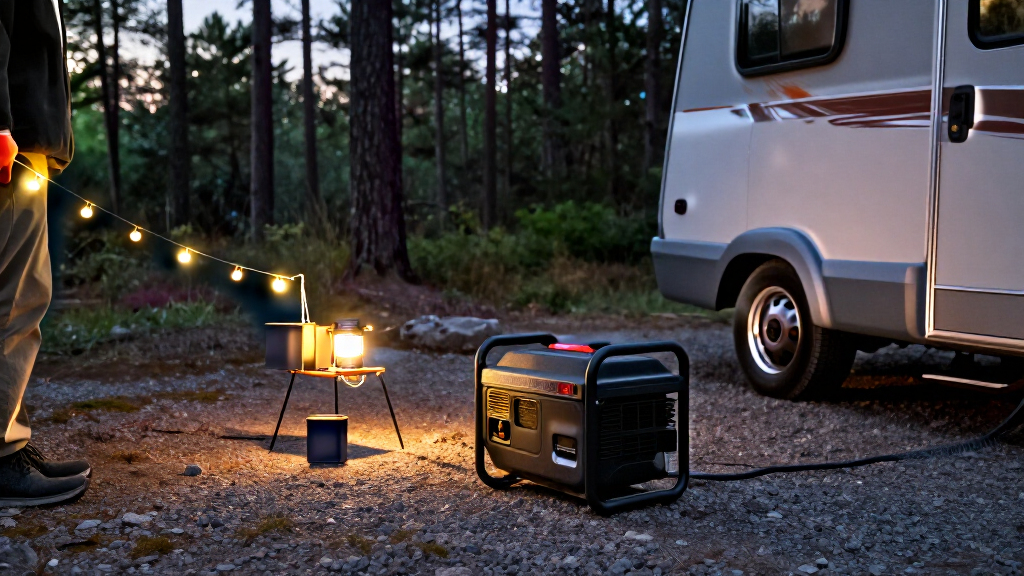
“RV-ready” is useful only when the generator’s outlet matches your RV’s connection and the unit can support the loads you plan to use. Compare receptacle types, voltage, and any required adapters before purchase rather than assuming a standard RV plug is included. Electric start can simplify operation, but it may add components and does not replace checking battery care or the manual-start option. For camping, also consider where the generator can sit while respecting campground rules and cable limits. A model with ample wattage but the wrong connection can require extra equipment. Verify the complete setup—generator, cable, transfer equipment, and appliances—before relying on it for a trip or outage.
Plan for Maintenance and Safe Backup Use
Routine upkeep affects whether a generator is ready when needed: follow the manual’s schedule for oil, air filters, spark plugs, and fuel-system care. Fuel left sitting for long periods can create storage problems, so use the manufacturer’s guidance for stabilization, draining, or fuel shutoff. A fuel shut-off feature can help with storage routines, but it does not eliminate periodic maintenance. For home backup, a portable generator must operate outdoors and be connected through appropriate equipment installed by a qualified professional; never connect it directly to household wiring through an improvised method. Carbon monoxide protection and safe placement matter regardless of noise level. Buyers who want occasional emergency power should plan a test schedule, not wait for an outage to learn the setup.
Frequently Asked Questions
Can I tell which generator is quietest from this lineup?
Not reliably from the product names or wattage figures alone. A fair comparison needs sound measurements taken at the same distance and under comparable loads, and those details are not available consistently across these 15 models. Smaller units may be less demanding for light-duty use, but that does not prove a particular model will be quieter in every setting. Check the manufacturer’s published decibel figure and how it was measured before choosing. Also consider campground rules and where the generator will sit relative to people and buildings.
Is a 2350-watt generator enough to run an RV air conditioner?
It depends on the air conditioner’s startup demand, the generator’s rated output, and what else is running. A smaller unit such as the WEN 2350 may handle light RV needs, but buyers should not assume it can start an air conditioner just because the running-watt figure appears close. Check the appliance label or manual for starting watts and account for other simultaneous loads. A soft-start device may help some setups, but compatibility and required capacity still need verification. If air conditioning is a must-have, compare the generator’s rated output and outlet with the RV equipment before buying.
Should I choose dual fuel if I care most about quiet operation?
Dual fuel is mainly a supply-flexibility feature, not a guarantee of lower noise. It can make sense if propane storage or availability is part of your backup plan, while a gasoline-only model may be simpler for buyers who already have a reliable gasoline supply. Output can vary by fuel, so check the ratings for both operating modes against your appliances. Noise also changes with load, placement, and operating conditions. Choose fuel type for convenience and preparedness, then compare sound information separately.
Is the largest generator in the roundup a better home backup choice?
Only if its capacity matches the loads you intend to support and you can safely store and operate it. High-output models such as the Westinghouse iGen12000DFc or WEN DF680iX may suit heavier demands, but their size is unnecessary for buyers who need only a few essentials. Make a load list, include startup surges, and decide whether you need selected circuits or broader backup. A qualified electrician can advise on safe connection equipment and household requirements. More wattage does not automatically mean a better quiet-first choice, especially where portability and sound exposure matter.
What should I verify before taking an inverter generator to a campground?
Check the campground’s generator hours, sound rules, and any restrictions on fuel or generator placement before your trip. Confirm that the unit’s outlet and rated output suit your RV or camping equipment, and bring only compatible cables and adapters. Consider the generator’s weight and whether you can move it without blocking walkways or placing it near tents and occupied areas. Review the manual for safe outdoor placement, clearances, grounding, and operation. A quiet-oriented model can still be unwelcome if it breaks local rules or is run too close to other campers.
Conclusion
For a balanced mix of output and fuel flexibility, I’d start with the WEN DF480iX as the best overall. The WEN 2350 is my best fit for beginners who want a smaller, simpler option for modest loads, while the Oxseryn 2800W is the lineup’s portability-minded pick for buyers who value its stated 39-pound weight. For higher-demand backup, the Westinghouse iGen8200TFc is a premium-style choice with tri-fuel flexibility; buyers with still heavier requirements can compare the largest WEN and Westinghouse models, accepting their bulk. I’d treat the WEN DF360iX as a value-oriented middle ground when dual-fuel capability matters more than maximum output. Before choosing any of them, confirm sound data, rated watts, connections, and safe placement for your specific setting.
Halloween Picks
halloween
As an affiliate, we earn on qualifying purchases.