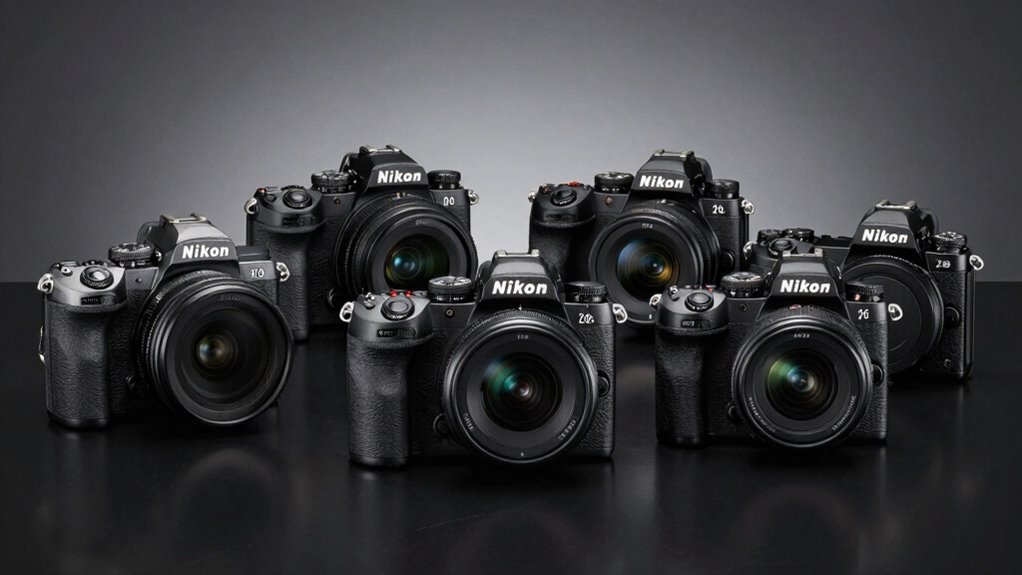

Nikon mirrorless cameras offer a compelling mix of image quality, portability, and advanced features, making them ideal for both enthusiasts and professionals. The Nikon Z 7II stands out as the best overall choice, thanks to its full-frame sensor and versatile performance. For those seeking a compact yet capable option, the Nikon Z50 II delivers excellent value with its smaller size and strong feature set. Meanwhile, the Nikon Z8 caters to professionals demanding top-tier image quality and speed. Buyers often face tradeoffs between size, price, and performance, so understanding what each model offers is key. Keep reading for a detailed comparison to help you find the perfect fit.

Get the latest gadgets delivered free with Prime
- Fast, free delivery on millions of items
- Prime Video, Amazon Music and more included
- Member-only deals all year
Complete the kit



Key Takeaways
- The full-frame Nikon Z 7II offers the best balance of resolution and versatility for serious photographers.
- The Nikon Z50 II provides excellent value and portability, ideal for beginners or casual shooters.
- The Nikon Z8 is designed for professionals who need top-tier speed, durability, and image quality.
- Sensor size and lens selection are critical factors that influence performance and future expandability.
- Pricing varies widely, with premium models offering advanced features, but budget models still delivering strong results.
| Nikon Z 30 with Wide-Angle Zoom Lens |  | Best for Content Creators and Vloggers | Lens: 16-50mm wide-angle zoom lens | Video Resolution: 4K | Autofocus: Eye tracking for people and pets | VIEW ON AMAZON | See Our Full Breakdown |
| Nikon Z 7II Full-Frame Mirrorless Camera |  | Best for Professional Photography and Videography | Resolution: 45.7MP | Video Resolution: 2160p (4K UHD 60p) | Buffer Capacity: 3.3x more than Z 7 | VIEW ON AMAZON | See Our Full Breakdown |
| Nikon Z 8 Professional Full-Frame Mirrorless Camera |  | Best for High-End Hybrid Shooting | Sensor Type: CMOS | Sensor Resolution: 45.7 MP | Maximum Video Resolution: 8K/60p | VIEW ON AMAZON | See Our Full Breakdown |
| Nikon Z50 II with Two Lenses |  | Best for Beginners and Versatile Shooters | Sensor: 20.9 MP APS-C | Video: 4K UHD/60p | Lenses Included: NIKKOR Z DX 16-50mm f/3.5-6.3 VR, NIKKOR Z DX 50-250mm f/4.5-6.3 VR | VIEW ON AMAZON | See Our Full Breakdown |
| Nikon Z6III Mirrorless Camera 28-400mm Lens Kit |  | Best for Versatile Professionals and All-in-One Shooting | Video Recording: 6K/60p, 4K UHD, 4K/120p, Full HD/240p | Viewfinder: 5760k-dot, 120 fps refresh rate | ISO Range: 100-64000, extended to 204800 | VIEW ON AMAZON | See Our Full Breakdown |
| Nikon Z 6II Full-Frame Mirrorless Camera |  | Best Overall for Versatility and Professional-Grade Performance | Sensor Resolution: 24.5MP | Video Resolution: 4K UHD at 60p | Frame Rate: 14 FPS | VIEW ON AMAZON | See Our Full Breakdown |
| Nikon Z50 II Mirrorless Camera with NIKKOR Z DX 50-250mm Lens Bundle |  | Best for Beginners and Versatile Creators | Sensor: 20.9MP DX-format CMOS | Processor: EXPEED 7 | ISO Range: up to 204800 | VIEW ON AMAZON | See Our Full Breakdown |
More Details on Our Top Picks
Nikon Z 30 with Wide-Angle Zoom Lens
The Nikon Z 30 stands out for creators who need a compact, versatile camera perfect for vlogging and live streaming. Its lightweight design makes it easy to carry, and the flip-out touchscreen enhances on-camera framing, especially during self-recording. Compared with the larger Z 7II or Z 8, it sacrifices some professional-grade features but excels in ease of use and portability for casual content. The 4K video with advanced autofocus, including eye tracking for people and pets, ensures sharp results. However, its lens ecosystem is limited to NIKKOR Z lenses, which can be costly for expanding your setup, and additional accessories may be needed for professional streaming. This pick makes the most sense for social media influencers, travel vloggers, or streamers seeking a straightforward, high-quality video solution without bulky gear.
Pros:- Compact, lightweight design ideal for on-the-go shooting
- High-quality 4K video with advanced autofocus features
- Flip-out touchscreen for versatile framing and vlogging
Cons:- Limited to compatible NIKKOR Z lenses, restricting expansion
- May require additional accessories for professional-grade streaming setups
Best for: Amateur content creators, vloggers, and streamers who prioritize portability and ease of use
Not ideal for: Professional videographers or photographers needing extensive lens choices and advanced controls
- Lens:16-50mm wide-angle zoom lens
- Video Resolution:4K
- Autofocus:Eye tracking for people and pets
- Stabilization:Image stabilization
- Screen:Flip-out touchscreen
- Microphone:Built-in stereo microphone
Our verdict“This camera is perfect for creators needing an easy-to-carry device with strong video capabilities, but less suited for those requiring extensive lens options or advanced features.”
Nikon Z 7II Full-Frame Mirrorless Camera
The Nikon Z 7II delivers exceptional detail with its 45.7MP full-frame sensor, making it ideal for landscape, studio, and commercial photographers who demand high resolution. Its fast autofocus and dual card slots provide reliability and flexibility, especially compared to the Z 8, which emphasizes video features. While it offers 4K UHD 60p video, this is a step below the Z 8’s 8K and RAW capabilities, making it less suitable for high-end videographers. The camera’s weight and size reflect its professional build, which could be cumbersome for extended handheld shooting. Nonetheless, its image quality and robust features make it a go-to for serious photographers who need detailed images and reliable performance. It’s less ideal for travelers or casual shooters due to its bulk and price.
Pros:- High-resolution 45.7MP sensor for sharp, detailed images
- Fast autofocus with improved tracking
- Dual card slots for flexible professional storage
- 4K UHD 60p video recording for serious videographers
Cons:- Heavy and bulky for portable use
- High price may be prohibitive for casual users
- Requires additional lenses for full creative versatility
Best for: Professional photographers seeking high resolution and reliable dual-slot storage
Not ideal for: Travelers or hobbyists who prefer lightweight, simpler cameras for casual shooting
- Resolution:45.7MP
- Video Resolution:2160p (4K UHD 60p)
- Buffer Capacity:3.3x more than Z 7
- Lens Compatibility:NIKKOR Z lenses, F-mount with FTZ adapter
- Card Slots:Dual (CFexpress/XQD and UHS-II SD)
- Connectivity:USB-C for power and charging
Our verdict“This camera is best suited for professional photographers who prioritize resolution and durability over portability and price.”
Nikon Z 8 Professional Full-Frame Mirrorless Camera
The Nikon Z 8 pushes professional boundaries with its 45.7MP stacked CMOS sensor, enabling ultra-fast readout and superior image quality. Its deep learning autofocus and eye detection rival top-tier systems, making it a standout for both stills and video. The camera’s ability to record 8K/60p and 4K/120p RAW footage surpasses the Z 7II and Z 6III in video performance, catering to videographers who need cinematic quality. Its compact, lightweight design and blackout-free EVF enhance usability during fast-paced shoots. However, the high price and complex feature set may deter casual users, and battery life is limited for extended sessions. Compared to the Z 7II, the Z 8 offers more advanced video tools, but at a premium cost, making it a tool for serious professionals.
Pros:- Exceptional 45.7MP stacked CMOS sensor for rapid processing
- Advanced autofocus with deep learning technology
- 8K/60p and 4K/120p RAW video recording
- Lightweight and portable for a professional-grade camera
Cons:- High price limits accessibility for casual users
- Complex features require learning and adjustment
- Limited battery life for prolonged shoots
Best for: High-end professionals demanding top-tier video and image quality in a portable package
Not ideal for: Casual shooters or hobbyists looking for a budget-friendly or simpler camera
- Sensor Type:CMOS
- Sensor Resolution:45.7 MP
- Maximum Video Resolution:8K/60p
- Viewfinder:Blackout-free electronic viewfinder
- Display Size:3.2 inches
- Weight:1.8 pounds
Our verdict“This camera is designed for professionals needing premium video and stills in a portable form, with a premium price that reflects its advanced capabilities.”
Nikon Z50 II with Two Lenses
The Nikon Z 50 II offers a compelling entry point into mirrorless photography with its 20.9MP APS-C sensor, making it suitable for beginners and casual enthusiasts. The included two lenses—the 16-50mm and 50-250mm—cover a wide range of shooting scenarios from wide landscapes to telephoto wildlife. Its 4K UHD video and wireless sharing via Nikon SnapBridge add to its versatility. Compared with the higher-resolution Z 7II or Z 8, the Z 50 II’s smaller sensor means slightly less detail, especially in low-light conditions, and it lacks in-body stabilization. Still, its straightforward controls and affordable bundle make it ideal for those stepping into mirrorless photography without a steep learning curve. It’s less suited for advanced professionals or those needing extensive low-light performance.
Pros:- 20.9MP APS-C sensor for detailed images
- Includes two versatile lenses for various shooting styles
- 4K UHD video with slow-motion capabilities
- Easy wireless sharing with Nikon SnapBridge
Cons:- Limited maximum aperture range on included lenses
- No in-body image stabilization
- Battery life may be limited for extended shooting
Best for: Beginners or hobbyists looking for an affordable, flexible camera with included lenses
Not ideal for: Advanced photographers or videographers needing high resolution or robust low-light capabilities
- Sensor:20.9 MP APS-C
- Video:4K UHD/60p
- Lenses Included:NIKKOR Z DX 16-50mm f/3.5-6.3 VR, NIKKOR Z DX 50-250mm f/4.5-6.3 VR
- Connectivity:Wireless (SnapBridge)
- Built-in Flash:Yes
- Subject Detection:People, dogs, cats, birds, vehicles
Our verdict“This camera provides a straightforward, affordable option for beginners who want flexibility and included lenses to develop their skills.”
Nikon Z6III Mirrorless Camera 28-400mm Lens Kit
The Nikon Z 6III kit with the 28-400mm lens offers a highly adaptable tool for professionals who need a single camera capable of handling diverse shooting situations. Its 6K/60p and 4K/120p video recording, combined with an ultra-wide ISO range, make it suitable for both studio and outdoor work. The 8 stops of vibration reduction and bright 5760k-dot viewfinder enhance stability and visibility, especially compared to the Z 8’s focus on high-end video. However, its lens’ variable aperture (f/4-8) can be limiting in low-light conditions or when a shallow depth of field is desired. This kit is ideal for professionals who want a comprehensive, all-in-one solution, but its complexity and price can be daunting for casual users or hobbyists.
Pros:- High-quality 6K/60p video recording
- Bright electronic viewfinder with high resolution
- Wide ISO range for various lighting conditions
- Effective 8-stop image stabilization
Cons:- Complex feature set may be overwhelming for newcomers
- Lens aperture range (f/4-8) limits low-light performance
- Price may be high for casual users
Best for: Experienced photographers and videographers seeking a versatile, all-in-one zoom lens kit
Not ideal for: Beginners or casual shooters who prefer simpler, more compact setups
- Video Recording:6K/60p, 4K UHD, 4K/120p, Full HD/240p
- Viewfinder:5760k-dot, 120 fps refresh rate
- ISO Range:100-64000, extended to 204800
- Autofocus:Multi-subject recognition, deep learning
- Image Stabilization:8 stops of Vibration Reduction
- Lens:NIKKOR Z 28-400mm f/4-8 VR
Our verdict“This kit is designed for professionals who need a flexible, all-in-one system capable of high-quality video and stills, with a premium price reflecting its capabilities.”
Nikon Z 6II Full-Frame Mirrorless Camera
The Nikon Z 6II stands out as a balanced choice for photographers and videographers seeking a full-frame mirrorless camera that excels in both areas. Its 24.5MP sensor delivers impressive low-light performance and high detail, making it a step above the Z 50 II for image quality. The addition of 4K UHD video at 60p and 14 FPS continuous shooting provides versatility that appeals to hybrid shooters. Compared with the Nikon Z 7II, the Z 6II offers faster burst speeds but slightly lower resolution, making it better suited for action and event photography. The dual card slots support professional workflows, but the need to buy the FTZ adapter to use F-mount lenses adds a cost. Its weight and size, however, make it less ideal for travel or extended handheld shooting.
Pros:- Excellent low-light capability with a 24.5MP sensor
- Advanced 4K UHD video recording at 60p
- Fast, reliable autofocus with improved performance
- Dual card slots for seamless workflows
Cons:- Requires additional purchase of FTZ adapter for F-mount lenses
- Heavier and bulkier than smaller mirrorless cameras
- Premium price may be prohibitive for casual users
Best for: Professional photographers and serious enthusiasts who want a flexible full-frame camera for both stills and video.
Not ideal for: Travelers or casual users who prioritize lightweight gear or budget-friendly options.
- Sensor Resolution:24.5MP
- Video Resolution:4K UHD at 60p
- Frame Rate:14 FPS
- Mount Compatibility:NIKKOR Z and F-mount with FTZ adapter
- Buffer Capacity:3.5x more than Z 6
- Card Slots:Dual (CFexpress/XQD and UHS-II SD)
Our verdict“This camera is best suited for those who need a versatile, high-performance full-frame mirrorless system that balances stills and video capabilities.”
Nikon Z50 II Mirrorless Camera with NIKKOR Z DX 50-250mm Lens Bundle
The Nikon Z50 II is an appealing choice for newcomers and enthusiasts who want a compact, feature-rich mirrorless camera. Its 20.9MP DX-format sensor offers sharp images with good detail, comparable to the Z 6II but without the full-frame benefits, making it easier to carry around. The autofocus system, with AI-powered subject detection—including eye and bird recognition—makes capturing dynamic scenes straightforward, especially compared to the more complex Z 7II. The bundle, including versatile zoom lenses and accessories, provides great value for those starting out or exploring multiple genres. While lacking a built-in flash, the camera compensates with excellent video features, supporting UHD 4K at 60 fps. The learning curve might be steep for absolute beginners, given the advanced autofocus and menu options.
Pros:- High-resolution 20.9MP sensor with excellent image quality
- Advanced autofocus with subject recognition and eye/bird detection
- Includes versatile lenses and accessories for various shooting scenarios
- Supports 4K UHD video at 60 fps
Cons:- No built-in flash, requiring external accessories for fill light
- Complex menu system may challenge complete beginners
- Price could be high relative to entry-level expectations
Best for: Beginner photographers and hobbyists looking for a portable camera that covers a wide range of styles with included accessories.
Not ideal for: Experienced professionals needing full-frame quality or extensive customization options.
- Sensor:20.9MP DX-format CMOS
- Processor:EXPEED 7
- ISO Range:up to 204800
- Continuous Shooting:up to 30 fps
- Autofocus:AI-powered with subject detection
- Video:UHD 4K at 60 fps
Our verdict“This camera makes the most sense for enthusiastic beginners and travel shooters who want a portable, feature-packed system with a comprehensive kit.”
How We Picked
The products in this roundup were selected based on their performance, usability, build quality, and value for different types of users. We prioritized models that represent a range of budgets and skill levels, from entry-level to professional-grade. Each camera was evaluated for image quality, autofocus capabilities, video features, and overall durability. The ranking reflects a combination of versatility, technological innovation, and how well each camera addresses real-world photography needs. Our goal was to highlight options that stand out for specific use cases, rather than just the most expensive or feature-rich models.Factors to Consider When Choosing Nikon Mirrorless Cameras
Choosing the right Nikon mirrorless camera depends on several factors that go beyond specifications. Consider your primary photography style, whether you need high-resolution images, fast autofocus, or compact size. Budget also plays a significant role, but investing in a camera with better sensor and lens ecosystem can pay off long-term. Compatibility with existing gear and future expandability are worth evaluating. Understanding these broader considerations will help you avoid common pitfalls like overpaying for unnecessary features or selecting a model that doesn’t suit your skill level.Sensor Size and Image Quality
The sensor size directly impacts image quality, low-light performance, and depth of field. Full-frame sensors, like those in the Z 7II and Z8, generally produce sharper images with better detail and control over background blur. Cropped sensors such as the Z50 II are more compact and affordable but may sacrifice some image quality and lens versatility. Think about your typical shooting conditions and whether you prioritize maximum resolution or portability.
Autofocus and Speed
Fast and reliable autofocus is crucial for capturing moving subjects or spontaneous moments. Cameras like the Z8 feature advanced eye-tracking and subject detection, making them suitable for action or wildlife photography. Entry-level models may have more basic autofocus systems, which can be sufficient for casual shooting but may struggle in complex scenes. Consider how much you need speed and accuracy in your work, especially if you shoot sports or events.
Video Capabilities
If video is a priority, look for models that support 4K recording with high frame rates and good stabilization. The Z50 II, for instance, offers 4K video and wireless sharing, making it appealing for content creators. However, some premium models like the Z8 include features like 10-bit recording and advanced heat management, suitable for professional videographers. Balance your video needs with other still photography features to choose the best hybrid option.
Build Quality and Durability
Professional models such as the Z8 are built with weather-sealing, rugged bodies, and high durability, ideal for outdoor or demanding environments. Entry-level models tend to be lighter and less robust but are easier to carry around. Assess where you’ll be shooting most often and whether you need a rugged design or a lightweight setup. Remember that a durable body can extend the lifespan of your investment.
Lens Ecosystem and Expandability
Nikon’s mirrorless system benefits from a growing selection of native Z-mount lenses, but compatibility with older DSLR lenses via adapters can be a consideration. Investing in a camera with a wide range of compatible lenses is wise if you plan to expand your gear over time. Additionally, consider whether the camera supports accessories like external flashes or microphones, especially if you create multimedia content.
Price and Value
Higher-priced models offer advanced features and build quality but may be overkill for casual users. Budget options like the Z50 II provide excellent value for beginners or hobbyists who want quality without the hefty price tag. Think about your current skill level, future aspirations, and how much you’re willing to invest. Sometimes, a slightly lower-tier camera with good lenses can be more effective than overspending on features you won’t use.
Frequently Asked Questions
Is a full-frame Nikon mirrorless camera worth the extra cost?
Full-frame Nikon mirrorless cameras typically deliver better image quality, especially in low-light conditions, and offer more control over depth of field. They are often more durable and have advanced autofocus systems suitable for professional work. However, they come with higher prices and larger sizes. If you’re a serious photographer or videographer, the investment can be justified, but casual users or beginners might find a crop sensor offers enough quality at a lower price.
Can I use DSLR Nikon lenses on mirrorless cameras?
Yes, Nikon offers adapters that allow many DSLR F-mount lenses to be mounted on Z-series mirrorless cameras. This compatibility provides a cost-effective way to use existing lenses while benefiting from the smaller, more advanced mirrorless bodies. Keep in mind that some functionalities like autofocus may be limited or slower depending on the lens and adapter quality, so it’s worth testing or researching specific lens compatibility before investing.
What’s the best Nikon mirrorless camera for video production?
The Z8 stands out for video, supporting 10-bit recording, high frame rates, and professional video features like N-Log and HDR. It’s designed for content creators who need high-quality footage and extensive customization options. If your focus is primarily video, investing in a higher-end model like the Z8 or Z6III can provide more creative control and better overall results, though they come at a premium price.
Is it better to buy a kit with lenses or a body-only camera?
Buying a kit with lenses is often more cost-effective and convenient, especially if you’re starting out or want a ready-to-shoot setup. Kits typically include versatile zoom lenses suitable for a range of scenarios. However, if you already own compatible lenses or prefer to customize your gear, a body-only purchase allows more flexibility to choose specific lenses that match your shooting style. Consider your current equipment and future plans to make the best choice.
How important is sensor resolution when choosing a mirrorless camera?
Sensor resolution determines how much detail your images can capture and how large you can print or crop photos. High-resolution sensors, like those in the Z7II and Z8, are beneficial for landscape, studio, or commercial work where detail matters most. However, higher resolution can also mean larger file sizes and slower processing. For everyday photography or fast-paced shooting, moderate resolution sensors might offer better performance with less storage and processing demand.
Conclusion
For those seeking the best overall performance, the Nikon Z 7II offers a versatile full-frame experience suitable for most professional and enthusiast needs. Budget-conscious buyers or hobbyists should consider the Nikon Z50 II, which combines quality with affordability and portability. Professionals demanding top-tier capabilities will find the Nikon Z8 worth the investment for its speed, durability, and advanced features. Beginners or casual shooters looking for ease of use should focus on models with intuitive controls and good lens options, while those with specific needs such as video production should lean toward the higher-end options. Your choice ultimately hinges on your photography goals, budget, and how much you value portability versus advanced features.
As an affiliate, we earn on qualifying purchases.Halloween Picks
halloween