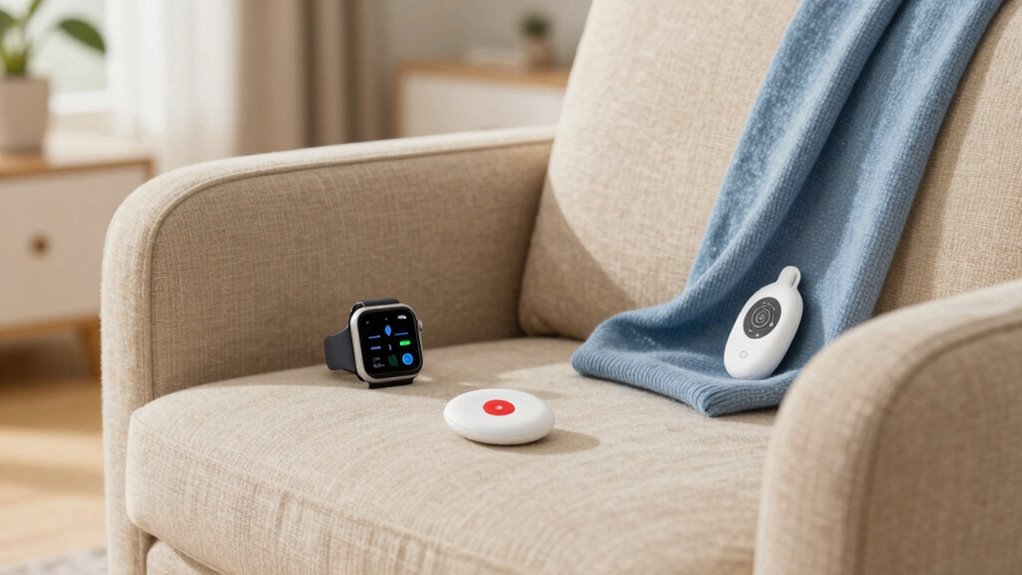

For most families, I’d start with the Safety+ 4G Medical Alert System for its combination of mobile coverage, GPS, and fall detection; the Bay Alarm Medical SOS Mobile GPS is another strong choice for parents who spend time away from home. If your parent mainly needs to reach someone inside the house, a CallToU caregiver pager may be a simpler fit. The main tradeoffs are professional monitoring versus calling family directly, at-home range versus mobile coverage, and automatic fall detection versus added setup and upkeep. A wearable device can help only if your parent is comfortable keeping it charged and wearing it. Read on for the full breakdown of all 15 options and how I’d match them to different needs.

Get the latest gadgets delivered free with Prime
- Fast, free delivery on millions of items
- Prime Video, Amazon Music and more included
- Member-only deals all year
Complete the kit



Key Takeaways
Mobile coverage separates the leading medical alert options from household pagers: picks such as Safety+ 4G, Bay Alarm Medical SOS Mobile GPS, and ADT On-the-Go are aimed at parents who may need help outside the home.
Caregiver pagers serve a different job than monitored medical alert systems: CallToU, STECHRO, WiFi caregiver pager, and FullHouse options focus on summoning a nearby helper, not necessarily reaching a professional response center.
Fall detection and GPS appear together in several SecuLife and Safety+ options, but families should check how alerts are handled and whether the parent can reliably wear and charge the device.
Wearable style affects daily use: the MGMini, SecuLife Smartband, and wristband options may suit parents who dislike a pendant, while a necklace or wrist button may be easier for others to keep close.
Direct 911 calling is not the same as a monitored service: the 911 Help Now pendant may suit a buyer seeking a direct emergency call, while families wanting operator support should prioritize a product that explicitly includes monitoring.
| Waterproof Medical Alert System with Necklace and Wrist Buttons |  | Best for Landline Households | Brand: AtsCares.com | Included alert buttons: 2: 1 wrist button and 1 necklace button | Maximum alert buttons: 8 | VIEW ON AMAZON | See Our Full Breakdown |
| ADT On-the-Go Emergency Medical Alert for Seniors |  | Best for Professional Monitoring Away From Home | Brand and model: ADT MD5 | Connectivity: Cellular with GPS | Monitoring: 24/7 professional monitoring; monthly plan required | VIEW ON AMAZON | See Our Full Breakdown |
| CallToU Caregiver Pager with 2 Wireless Call Buttons and 2 Receivers |  | Best for Multiple Caregiver Rooms | Brand: CallToU | Included components: 2 call buttons and 2 receivers | Wireless range: 500+ feet | VIEW ON AMAZON | See Our Full Breakdown |
| STECHRO Wireless Caregiver Pager with Call Button and Receiver |  | Best for Long-Range, Single-User Home Alerts | Brand: STECHRO | Included components: 1 call button and 1 receiver | Wireless range: Up to 1,500 feet | VIEW ON AMAZON | See Our Full Breakdown |
| SecuLife Medical Alert Pendant with Fall Detection, GPS Tracking, and Two-Way Calling |  | Best for Caregiver Location Updates | Brand: SecuLife | Connectivity: 4G LTE cellular | Alert and communication features: Fall alerts, SOS calling, two-way calling, GPS tracking, and geofencing | VIEW ON AMAZON | See Our Full Breakdown |
| Safety+ 4G Medical Alert System with Fall Detection and GPS |  | Best for Active Parents Who Need Fall Detection | Connectivity: Nationwide 4G | Monitoring: 24/7 emergency monitoring | Fall detection: Automatic | VIEW ON AMAZON | See Our Full Breakdown |
| Bay Alarm Medical SOS Mobile GPS Medical Alert Device |  | Best Lightweight Mobile Alert | Connectivity: Verizon 4G LTE cellular | Location: GPS | Weight: Under 2 oz | VIEW ON AMAZON | See Our Full Breakdown |
| WiFi Caregiver Pager with Waterproof Call Button, Watch Button, and Receiver |  | Best for In-Home Caregiver Alerts | Connectivity: 2.4 GHz Wi-Fi | Included components: 1 waterproof call button, 1 watch button, and 1 receiver | Wireless range: Up to 656 feet (200 meters) | VIEW ON AMAZON | See Our Full Breakdown |
| Wi-Fi Medical Alert System for Seniors with Panic Buttons, Waterproof Wristband, and Receiver |  | Best for No-Fee Local Receiver Alerts | Connectivity: 2.4 GHz Wi-Fi and wireless signal | Wireless range: Up to 300 feet | Water resistance: Wrist-worn remote only | VIEW ON AMAZON | See Our Full Breakdown |
| 911 Help Now Medical Alert Pendant with Direct 911 Calling |  | Best No-Subscription Direct 911 Pendant | Connectivity: 4G cellular in the United States where compatible coverage is available | Emergency calling: Direct call to 911 | Activation: Press and hold SOS button for 3 seconds | VIEW ON AMAZON | See Our Full Breakdown |
| Medical Guardian MGMini Medical Alert Device for Seniors, Rose Gold |  | Best for Longer Battery Life | Connectivity: Cellular with Wi-Fi backup | Battery life: Up to 72 hours | Recharge time: 4 hours | VIEW ON AMAZON | See Our Full Breakdown |
| Seculife Medical Alert Smartband for Seniors with Fall Detection, GPS, and Two-Way Calling |  | Best for Caregiver App Alerts | Compatibility: iOS and Android | Fall and SOS alerts: Fall alerts and SOS calling | Location features: GPS tracking and geofencing | VIEW ON AMAZON | See Our Full Breakdown |
| FullHouse Wireless Caregiver Pager with Emergency Call Button |  | Best No-Monthly-Fee Home Pager | Included components: Two call buttons and three plug-in receivers | Maximum range: Up to 1,000 feet outdoors | Range through walls: Up to 500 feet | VIEW ON AMAZON | See Our Full Breakdown |
| SecuLife SOS Wristband with Fall Detection, GPS Tracking, and Two-Way Calling |  | Best Screen-Free Wristband | Connectivity: Cellular | Emergency features: SOS button, fall alerts, and two-way calling | Location features: GPS tracking and geofencing | VIEW ON AMAZON | See Our Full Breakdown |
| Medical Alert System for Seniors – Advanced Mini Device with Automatic Fall Detection, 24/7 Monitoring, GPS Tracking, Emergency Alert Pendant Necklace, SOS Button, Caregiver App, Waterproof – Black | 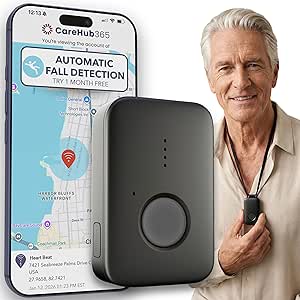 | Best for Longer Wear Between Charges | Connectivity: 4G LTE on AT&T and Verizon networks | Battery life: Up to 5 days per charge | Monitoring: 24/7 connection to trained operators | VIEW ON AMAZON | See Our Full Breakdown |
| medical alert devices for aging parent | Connectivity | Water resistance |
|---|---|---|
| Waterproof Medical Alert Syste | — | — |
| ADT On-the-Go Emergency Medica | Cellular with GPS | IP57 |
| CallToU Caregiver Pager with 2 | — | — |
| STECHRO Wireless Caregiver Pag | — | — |
| SecuLife Medical Alert Pendant | 4G LTE cellular | IP67 waterproof |
| Safety+ 4G Medical Alert Syste | Nationwide 4G | Suitable for showers and rain |
| Bay Alarm Medical SOS Mobile G | Verizon 4G LTE cellular | — |
| WiFi Caregiver Pager with Wate | 2.4 GHz Wi-Fi | — |
| Wi-Fi Medical Alert System for | 2.4 GHz Wi-Fi and wireless signal | Wrist-worn remote only |
| 911 Help Now Medical Alert Pen | 4G cellular in the United States where compatible coverage is available | — |
| Medical Guardian MGMini Medica | Cellular with Wi-Fi backup | — |
| Seculife Medical Alert Smartba | — | IP67; listed depth of 1 meter |
| FullHouse Wireless Caregiver P | — | IP55; splash-proof, not for immersion |
| SecuLife SOS Wristband with Fa | Cellular | IP67 |
| Medical Alert System for Senio | 4G LTE on AT&T and Verizon networks | Water-resistant; described as shower safe |
More Details on Our Top Picks
Waterproof Medical Alert System with Necklace and Wrist Buttons
For an aging parent who mostly stays at home and has a working landline, this system stands out for its two included wearable buttons: your parent can choose a wrist button or necklace, and both are waterproof for shower use. It calls up to three chosen numbers and plays a personalized message, so alerts go to family contacts rather than a professional monitoring center. Compared with the ADT On-the-Go Emergency Medical Alert, it avoids a required monitoring plan but lacks mobile GPS and 24/7 agent support. Its stated 70,000-square-foot coverage and capacity for eight buttons may suit a large home or multiple users, though coverage figures can depend on the setting. The main constraint is the home phone line requirement; cellphone use needs an optional Bluetooth adapter.
Pros:- Includes both wrist and necklace buttons, giving the wearer a choice
- Waterproof buttons can be worn during everyday activities, including showering
- Calls up to three numbers with a personalized emergency message
- Supports up to eight buttons for additional household users or locations
Cons:- Requires a home phone line unless paired with an optional Bluetooth adapter
- Calls family-selected numbers rather than providing professional monitoring
- Does not provide the mobile GPS support offered by the ADT On-the-Go device
Best for: Families with an aging parent who lives at home, has a landline, and wants family members to receive calls from either a wrist or necklace button.
Not ideal for: Parents who regularly leave home, need GPS location sharing, or rely on professional monitoring instead of family answering calls.
- Brand:AtsCares.com
- Included alert buttons:2: 1 wrist button and 1 necklace button
- Maximum alert buttons:8
- Coverage range:70,000 square feet
- Phone connection:Home phone line; optional Bluetooth adapter for cellphone
- Emergency calling:Sequential calls to up to 3 numbers with a personalized message
- Waterproof:Yes
- Power and batteries:Battery powered; 2 included AAA batteries
- Base unit dimensions:6.5 x 4.5 x 1.7 inches
Our verdict“Choose this for a landline household that wants waterproof, family-connected alerts without a required monitoring plan.”
ADT On-the-Go Emergency Medical Alert for Seniors
This is the clearest fit for an aging parent who leaves home and needs 24/7 professional monitoring rather than a caregiver-only pager. Its all-in-one device combines a one-button SOS call, nationwide cellular service, and GPS, so it does not depend on a home phone line or a separate base station. Compared with the Waterproof Medical Alert System with Necklace and Wrist Buttons, it is better suited to outings but requires phone activation and an ongoing monitoring plan. The compact 1.76-ounce unit comes with a lanyard and charging cradle, while its IP57 rating offers water resistance. Optional fall detection adds another possible alert path, but costs extra and may not detect every fall. Families should also weigh charging and cellular coverage needs against the simpler home-only setup of a caregiver pager.
Pros:- Provides 24/7 access to professional monitoring agents
- Built-in GPS and nationwide cellular service support use away from home
- All-in-one design avoids a separate pendant or wrist button
- Optional integrated fall detection is available
Cons:- Requires phone activation and a monthly monitoring plan
- Fall detection costs extra and may not detect every fall
- Requires charging and depends on cellular service for mobile use
Best for: Families whose parent spends time outside the home and needs access to a staffed monitoring service through a cellular device with GPS.
Not ideal for: Households seeking a no-plan family alert system, or parents who need a wrist-worn option rather than a lanyard device.
- Brand and model:ADT MD5
- Connectivity:Cellular with GPS
- Monitoring:24/7 professional monitoring; monthly plan required
- Fall detection:Optional integrated feature
- Water resistance:IP57
- Dimensions:2.75 x 1.75 x 0.63 inches
- Weight:1.76 ounces
- Included items:Medical alert mobile device, lanyard, and cradle charger
Our verdict“Pick the ADT device when professional monitoring and location support outside the home matter more than avoiding a subscription.”
CallToU Caregiver Pager with 2 Wireless Call Buttons and 2 Receivers
When an aging parent lives with family or has a caregiver nearby, the CallToU is a practical way to send a direct household alert without setting up a monitored medical alert service. Two buttons can be worn as pendants or mounted where help is needed, and two plug-in receivers let caregivers hear a request in more than one room. Compared with the STECHRO Wireless Caregiver Pager, CallToU includes a second button and receiver in the set, making it more ready for shared coverage; STECHRO, by contrast, has a longer stated range and louder maximum volume. CallToU’s 500+ feet range is stated for open areas and may shrink indoors. Its 110 dB maximum and 55 ringtones offer customization, but receivers need outlets and a nearby person must respond.
Pros:- Includes two call buttons and two receivers for shared household coverage
- Buttons can be worn as pendants or mounted in accessible locations
- Offers five volume levels and a stated maximum of 110 dB
- Waterproof and dustproof components suit everyday home use
Cons:- Receivers must be plugged into electrical outlets
- The 500+ feet range is stated for open areas and may vary indoors
- Alerts depend on a nearby caregiver hearing and responding to a receiver
Best for: Families or in-home caregivers who want two alert buttons and receivers placed in separate rooms, with someone available to respond.
Not ideal for: Parents who live alone, need professional monitoring or GPS, or cannot reliably reach a caregiver within the home.
- Brand:CallToU
- Included components:2 call buttons and 2 receivers
- Wireless range:500+ feet
- Ringtones:55
- Volume:5 levels; maximum 110 dB
- Power:Battery-powered buttons; receivers plug into outlets
- Batteries:2 included 12V alkaline batteries
- Button placement:Wearable as pendants or mountable
- Water and dust resistance:Waterproof and dustproof components
Our verdict“Choose CallToU for a shared home where two caregivers or rooms need to hear a parent’s request for help.”
STECHRO Wireless Caregiver Pager with Call Button and Receiver
STECHRO is suited to an aging parent who needs a simple button to reach a caregiver elsewhere on the property, not a mobile medical alert service. Its one-button, one-receiver setup is leaner than the CallToU kit, which includes two of each, while STECHRO claims a longer range of up to 1,500 feet. That can help when caregiver and parent are farther apart, though the stated range should not be treated as a guaranteed indoor distance. The receiver offers five volume levels up to 120 dB and 58 ringtones, and the call button has an IP55 water- and dust-resistant rating. It can expand to multiple buttons and receivers, but this is still a local alert system: it does not provide GPS or professional response. Warranty details conflict, listing 18 months in one description and two years elsewhere.
Pros:- Stated wireless range of up to 1,500 feet
- Receiver volume adjusts across five levels up to 120 dB
- IP55 water- and dust-resistant design
- Expandable to up to 30 call buttons and multiple receivers
Cons:- Includes only one call button and one receiver
- A local receiver requires a caregiver to be nearby and respond
- Warranty length is inconsistent across the product details
Best for: A household that needs one simple alert button across a larger home or property and has a caregiver available to respond.
Not ideal for: Parents who need alerts routed to professionals or family members away from the property, or buyers who want a clearly consistent warranty term.
- Brand:STECHRO
- Included components:1 call button and 1 receiver
- Wireless range:Up to 1,500 feet
- Ringtones:58
- Volume:5 levels, adjustable from 0 to 120 dB
- Water and dust resistance:IP55
- Power:Battery powered; lithium battery listed
- Expandable capacity:Up to 30 call buttons and multiple receivers
- Warranty information:18 months in description; 2 years in item details
Our verdict“Choose STECHRO over the two-button CallToU when longer stated range and expandability matter more than included alert points.”
SecuLife Medical Alert Pendant with Fall Detection, GPS Tracking, and Two-Way Calling
For families who want to keep track of an aging parent’s location as well as receive emergency calls, SecuLife combines GPS tracking, geofence alerts, two-way calling, and fall alerts in one wearable pendant. The senior-friendly display and large SOS button aim to make it easier to request help directly, while IP67 waterproofing supports daily wear around water. Unlike the ADT On-the-Go Emergency Medical Alert, which connects the wearer to professional monitoring agents, this device’s listed service features send alerts to preselected contacts; buyers should not treat that as an equivalent response service. Its cellular connection also makes it more useful away from home than the CallToU household pager. The tradeoff is a required subscription and regular charging: battery life is listed as up to six days, with an average of five.
Pros:- Combines GPS tracking and geofence notifications with SOS calling
- Two-way calling lets the wearer and selected contacts communicate
- Fall alerts can notify preselected contacts
- IP67 waterproofing and a large SOS button support daily wearable use
Cons:- A monthly subscription is required for service features
- Battery life is listed as up to six days and as an average of five days
- Contact alerts are not the same as the ADT device’s 24/7 professional monitoring
Best for: Families who want GPS and geofence updates, two-way contact, and fall alerts for a parent who carries a cellular wearable.
Not ideal for: Buyers who want no recurring service cost, professional monitoring, or a wearable that can go several days without recharging.
- Brand:SecuLife
- Connectivity:4G LTE cellular
- Alert and communication features:Fall alerts, SOS calling, two-way calling, GPS tracking, and geofencing
- Water resistance:IP67 waterproof
- Battery capacity:1000 mAh
- Battery life:Up to 6 days; listed average of 5 days
- Compatible devices:Android and iOS smartphones
- Included items:Charging cable, SIM card, and user manual
- Subscription:Required for service features
Our verdict“Choose SecuLife for location sharing and contact-based alerts, but choose ADT instead if professional monitoring is the priority.”
Safety+ 4G Medical Alert System with Fall Detection and GPS
I’d put Safety+ near the top for parents who spend time away from home and may not be able to press an alert button after a fall. Automatic fall detection, GPS, and 24/7 emergency monitoring combine to give caregivers a way to locate the wearer and summon help. The caregiver app adds battery status, activity and step tracking, and emergency notifications, while up to six days of battery life means less frequent charging than many small wearables may require.
Compared with the Bay Alarm Medical SOS Mobile GPS, Safety+ includes automatic fall detection in the described package; Bay Alarm lists it as optional. That extra safety layer comes with a recurring commitment: service is included for the first month, then requires a paid subscription. I’d skip it for parents who want a no-fee device or are unlikely to wear and charge a pendant consistently.
Pros:- 24/7 emergency monitoring over nationwide 4G connectivity
- Automatic fall detection and GPS location services are included
- Caregiver app provides location, battery status, activity tracking, and emergency notifications
- Up to six days of battery life with shower- and rain-suitable water resistance
Cons:- Requires a paid monthly subscription after the included first month
- The wearer must keep the device charged and on their person for mobile protection
- The description does not specify that fall detection can identify every fall or replace pressing the alert button
Best for: Families whose parent is often out alone and needs automatic fall detection, GPS location, and caregiver app updates.
Not ideal for: Buyers seeking a device with no ongoing service fee, or a parent who will not wear or recharge a wearable consistently.
- Connectivity:Nationwide 4G
- Monitoring:24/7 emergency monitoring
- Fall detection:Automatic
- Location:GPS
- Battery life:Up to 6 days
- Water resistance:Suitable for showers and rain
- Wear options:Lanyard with magnetic clasp or belt clip
- Caregiver app:Location, activity and step tracking, battery status, emergency notifications, and Care Circle
- Service:First month included; paid subscription required afterward
Our verdict“Choose Safety+ for a parent who needs monitored mobile coverage and automatic fall detection, and whose family accepts an ongoing service plan.”
Bay Alarm Medical SOS Mobile GPS Medical Alert Device
For a parent who wants a simple way to reach a trained operator away from home, this Bay Alarm device keeps the main action clear: press one button, then speak through the two-way speaker. It connects through Verizon 4G LTE and GPS, works without a smartphone, and weighs under two ounces. The caregiver app can help family check device status, battery, and activity, while the lanyard and belt clip offer a choice of wearing styles.
Compared with the Safety+ 4G Medical Alert System, Bay Alarm makes fall detection optional rather than listing it as included, so it may suit someone who wants a basic operator connection more than an automatic fall alert. Its up-to-144-hour battery life is useful, but actual life varies with use and network conditions. A service plan is required, making this a poor fit for families looking to avoid recurring monitoring costs.
Pros:- Standalone operation does not depend on the wearer having a smartphone
- One-button access to a trained operator with two-way audio
- Caregiver app offers device status, battery, and activity monitoring
- Lightweight design with lanyard and belt-clip options
Cons:- A service plan is required for operation
- Fall detection is optional rather than included as standard
- Battery life can vary with usage and network conditions
Best for: Parents who are mobile, do not carry a smartphone, and can reliably press a button to reach a trained operator.
Not ideal for: Families seeking included automatic fall detection or a device without a required ongoing service plan.
- Connectivity:Verizon 4G LTE cellular
- Location:GPS
- Weight:Under 2 oz
- Dimensions:2.72 x 1.38 x 0.57 inches
- Battery capacity:420 mAh
- Battery life:Up to 144 hours; varies with use and network conditions
- Alert features:One-button calling, two-way speaker, and optional fall detection
- Wear options:Lanyard with magnetic clasp or belt clip
- Service:Service plan required
Our verdict“Pick Bay Alarm for a lightweight, operator-connected mobile device when your parent can press the button and your family is comfortable with a service plan.”
WiFi Caregiver Pager with Waterproof Call Button, Watch Button, and Receiver
This pager makes more sense for a parent who is usually at home with a caregiver nearby than for someone who needs emergency response while out alone. A waterproof call button, watch button, and receiver provide several ways to request help, with a loud, flashing alarm and app notifications for family. Its stated range of up to 656 feet can help cover a larger home, and customizable ringtones and four volume levels let households tailor the alert to their space.
Unlike the Bay Alarm Medical SOS Mobile GPS, this is a home notification system, not a cellular connection to a trained operator. It depends on 2.4 GHz Wi-Fi for app connectivity, and SMS or phone-call alerts require a subscription. I’d choose it for nearby caregivers who can respond to the receiver or app, but not as a substitute for monitored mobile coverage or emergency services.
Pros:- Includes a waterproof call button, watch button, and receiver
- Loud and flashing receiver alert can notify a nearby caregiver without relying on a phone
- App notifications can be shared with family members
- Stated wireless range is up to 656 feet, with customizable tones and four volume levels
Cons:- Supports only 2.4 GHz Wi-Fi
- SMS and phone-call alerts require a subscription
- Does not provide the cellular operator connection or GPS location offered by mobile alert devices
Best for: Families caring for a parent at home who can respond to a receiver alarm or app alert and want a wearable call button.
Not ideal for: Parents who spend time alone outside the home or need direct access to a monitored emergency operator.
- Connectivity:2.4 GHz Wi-Fi
- Included components:1 waterproof call button, 1 watch button, and 1 receiver
- Wireless range:Up to 656 feet (200 meters)
- Waterproof component:Call button
- Alert options:Flashing and loud receiver alarm; app notifications
- Sound settings:Customizable ringtones and four volume levels
- Item weight:7.4 ounces
- Subscription:Required for SMS and phone-call alerts
Our verdict“Choose this pager for a parent who needs an easy way to alert an in-home caregiver, not for independent safety away from home.”
Wi-Fi Medical Alert System for Seniors with Panic Buttons, Waterproof Wristband, and Receiver
I’d consider this system for a parent who stays within a modest home area and has a caregiver able to hear the receiver. Receiver alerts do not require a monthly fee, and the wrist-worn remote is waterproof, giving the wearer a button to request help without reaching for a phone. The system can also send app notifications through Tuya Smart or Smart Life, and multiple caregivers can share access.
Its stated wireless range of up to 300 feet is shorter than the WiFi Caregiver Pager, which claims up to 656 feet, so I’d favor this one for a smaller home rather than a large property. Wi-Fi is limited to 2.4 GHz, SMS alerts require a subscription, and only the wrist remote is waterproof. It is a local alert setup, not a monitored cellular device with GPS like the Safety+ 4G Medical Alert System.
Pros:- Receiver alerts have no monthly fee
- Waterproof wrist-worn remote gives the wearer a convenient call button
- App notifications can be shared with multiple caregivers
- Wireless signal is stated to reach up to 300 feet and pass through walls and doors
Cons:- Only supports 2.4 GHz Wi-Fi
- SMS notifications require a subscription
- Only the wrist-worn remote is waterproof, and the range is shorter than the WiFi Caregiver Pager’s stated range
Best for: Families who want no-fee receiver alerts for a parent in a smaller home and can respond locally or through app notifications.
Not ideal for: Parents who need coverage beyond the home, a long wireless range, or a waterproof receiver and other system components.
- Connectivity:2.4 GHz Wi-Fi and wireless signal
- Wireless range:Up to 300 feet
- Water resistance:Wrist-worn remote only
- Display:1–6 LED number display
- App compatibility:Tuya Smart or Smart Life
- Receiver alerts:No monthly fee
- SMS notifications:Subscription required
Our verdict“Choose this system for no-fee receiver alerts in a smaller home when local caregivers, rather than a monitoring center, will respond.”
911 Help Now Medical Alert Pendant with Direct 911 Calling
This pendant is for families who prefer a direct call to emergency services over a monitoring center. Holding the SOS button for three seconds calls 911, and the built-in microphone and speaker let the wearer speak with a dispatcher. There are no monthly monitoring fees, and the package includes three AAA batteries, a protective cover, lanyard, and clothing clip. That keeps the setup straightforward for a parent who can use a phone-style conversation in an emergency.
Compared with the Bay Alarm Medical SOS Mobile GPS, this device avoids a service plan but calls 911 directly instead of connecting the wearer to a trained monitoring operator. It also lacks listed GPS, caregiver app access, and fall detection. Cellular coverage is limited to compatible service in the United States, so I’d skip it if family wants location sharing, automatic alerts, or a person to assess the call before contacting emergency services.
Pros:- Calls 911 directly without a monitoring center
- Built-in microphone and speaker support two-way conversation with a dispatcher
- No subscription or monthly monitoring fees
- Includes AAA batteries, protective cover, lanyard, and clothing clip
Cons:- Does not connect to a monitoring center that can assess the situation
- No GPS location, caregiver app, or fall detection is listed
- Works only where compatible 4G cellular service is available in the United States
Best for: Parents who can make and speak during an emergency call and want a cellular 911 device without a monitoring subscription.
Not ideal for: Families seeking a monitoring center, GPS sharing, automatic fall detection, or coverage in areas without compatible cellular service.
- Connectivity:4G cellular in the United States where compatible coverage is available
- Emergency calling:Direct call to 911
- Activation:Press and hold SOS button for 3 seconds
- Cancel call:Press and hold Function button for 2 seconds
- Audio:Built-in microphone and speaker
- Power source:3 included AAA alkaline batteries
- Dimensions:2.8 x 1.75 x 0.6 inches
- Weight:2.4 oz
- Monthly fees:None
Our verdict“Choose this pendant if your parent can call and speak with 911 and your family values avoiding a monitoring subscription over added caregiver and fall-detection features.”
Medical Guardian MGMini Medical Alert Device for Seniors, Rose Gold
For a parent who may forget to charge a wearable every night, the MGMini’s up-to-72-hour battery is a practical advantage over the SecuLife smartband and SOS wristband, both listed for one day. Its two-way speaker and 24/7 monitoring connect the wearer with a response team, while GPS assistance and hourly location updates can help caregivers locate someone who is away from home. The included lanyard and belt clip let the wearer choose a familiar way to carry it. The tradeoff is an ongoing monitoring subscription, and optional fall detection adds a separate monthly charge. Unlike the FullHouse pager, this device is suited to use beyond the home, but it depends on an active service plan and only one device can be active per member at a time.
Pros:- Two-way audio connects the wearer with a 24/7 monitoring team.
- GPS assistance and hourly location updates support locating a parent away from home.
- Battery life is listed at up to 72 hours.
- Includes both a lanyard and belt clip for different wearing preferences.
Cons:- Requires an ongoing monitoring subscription.
- Fall detection is an optional paid add-on.
- Only one device can be active per member at a time.
Best for: Families who want a wearable with professional 24/7 monitoring, location assistance, and fewer charging interruptions than a one-day-battery wristband.
Not ideal for: Households seeking a no-monthly-fee alert or a device that can be shared across multiple active users; monitoring is required and only one device can be active per member.
- Connectivity:Cellular with Wi-Fi backup
- Battery life:Up to 72 hours
- Recharge time:4 hours
- Emergency support:24/7 monitoring with SOS button and two-way speaker
- Location features:GPS assistance and hourly location updates
- Included wear options:Lanyard and belt clip
- Subscription:Required; no long-term contract; cancel anytime
- Optional fall detection:Available as a paid add-on
Our verdict“Choose the MGMini if professional monitoring and longer battery life matter more than avoiding a subscription or adding fall detection without an extra fee.”
Seculife Medical Alert Smartband for Seniors with Fall Detection, GPS, and Two-Way Calling
The Seculife smartband is aimed at families who want safety updates routed to their own phones: it offers GPS, geofencing, and caregiver app notifications, with automatic calls to preselected contacts after a detected fall or SOS activation. That family-contact approach differs from the Medical Guardian MGMini, which connects users to a 24/7 monitoring team. Automatic call answering for approved contacts may also suit a parent who struggles to operate a phone. Its IP67 rating supports everyday wear around splashes, though the product specifies water resistance to one meter rather than making it a bathing-proof guarantee. The main compromise is charging: its one-day battery life calls for a daily routine, unlike the MGMini’s listed 72 hours. A monthly subscription is required, too.
Pros:- Fall detection and SOS can initiate calls to preselected emergency contacts.
- GPS tracking and geofencing provide caregiver location and safety updates.
- Automatic answering supports calls from approved contacts.
- IP67-rated band is designed for everyday wear.
Cons:- Listed battery life is only one day, requiring frequent charging.
- A monthly subscription is required.
- The listed water resistance does not make it suitable for immersion beyond its stated rating.
Best for: Families who want GPS and geofence notifications in an app and prefer alerts to go to selected relatives or contacts.
Not ideal for: Parents who need longer intervals between charges or families who want a clearly stated professional monitoring team rather than calls to preselected contacts.
- Compatibility:iOS and Android
- Fall and SOS alerts:Fall alerts and SOS calling
- Location features:GPS tracking and geofencing
- Calling:Phone calls with automatic answering for pre-approved contacts
- Water resistance:IP67; listed depth of 1 meter
- Battery:680 mAh; listed life of 1 day
- Health metrics:Heart rate, blood oxygen, and body temperature
- Subscription:Required
Our verdict“Pick this smartband if family-app alerts and automatic calls to chosen contacts matter more than extended battery life or monitored response.”
FullHouse Wireless Caregiver Pager with Emergency Call Button
For a parent who is usually at home and needs a simple way to call a nearby caregiver, the FullHouse pager avoids the service plan required by the MGMini and SecuLife wearables. It includes two call buttons and three plug-in receivers, so alerts can be heard in several rooms. The button can be worn as a necklace or mounted where help is needed; five volume levels, multiple melodies, and a silent LED option give households flexibility. Its key limitation is scope: this is a local pager, not a GPS or cellular alert device, so it cannot reach a monitoring team or family member away from the receivers. Range is listed up to 1,000 feet outdoors and 500 feet through walls. The splash-proof button also needs to come off for bathing, unlike devices designed for more continuous wear.
Pros:- No monthly fee is listed.
- Two call buttons and three plug-in receivers support coverage across rooms.
- Button can be worn, wall-mounted, or door-mounted.
- Offers multiple melodies, five volume levels, and a silent LED alert.
Cons:- Range is listed at 500 feet through walls, less than the outdoor maximum.
- Does not provide GPS tracking or remote professional monitoring.
- The splash-proof call button must be removed before bathing or showering.
Best for: Families caring for a parent at home who want a straightforward call button heard by caregivers in several rooms without a monthly service fee.
Not ideal for: Parents who live alone, go out unaccompanied, or need alerts sent to someone outside the home; the pager relies on nearby receivers and has no listed GPS or monitoring service.
- Included components:Two call buttons and three plug-in receivers
- Maximum range:Up to 1,000 feet outdoors
- Range through walls:Up to 500 feet
- Alert options:52 melodies and silent LED flash
- Volume:Five levels; listed range of 0–110 dB
- Water resistance:IP55; splash-proof, not for immersion
- Mounting and wear:Wall mount, door mount, or worn on the neck
- Power:Battery powered; two lithium-ion batteries included
Our verdict“Choose the FullHouse pager for nearby, in-home caregiver alerts without a subscription, but not as a substitute for an away-from-home medical alert service.”
SecuLife SOS Wristband with Fall Detection, GPS Tracking, and Two-Way Calling
This SecuLife model keeps its focus on a screen-free, one-button safety routine: a parent can call preset contacts, while automatic fall alerts, GPS tracking, and geofencing add caregiver visibility. Two-way calling and hands-free auto-answer help when a wearer cannot manage a separate phone. Compared with the FullHouse pager, it can support location sharing beyond the home; compared with the Medical Guardian MGMini, however, the supplied details describe contact-based alerts rather than a 24/7 monitoring team. Its IP67 rating suits rain, splashes, and handwashing, but the listed battery life is only one day, so caregivers need to build charging into the routine. A monthly subscription is also required, making it less suitable for families who only need a local call button.
Pros:- One-button SOS and automatic fall alerts provide two ways to request help.
- GPS tracking and geofencing support caregiver location updates.
- Two-way calling includes hands-free auto-answer.
- Screen-free design and IP67 water resistance suit everyday wear around splashes.
Cons:- Listed battery life is one day.
- Requires a monthly subscription.
- Product details do not specify a 24/7 professional monitoring team.
Best for: Families seeking a simple, screen-free wrist wearable with GPS, fall alerts, and two-way calling through a caregiver-connected service.
Not ideal for: Parents who are unlikely to charge a device daily or families who want a no-subscription home pager or explicitly listed 24/7 professional monitoring.
- Connectivity:Cellular
- Emergency features:SOS button, fall alerts, and two-way calling
- Location features:GPS tracking and geofencing
- Battery:680 mAh; listed life of 1 day
- Water resistance:IP67
- Compatibility:Android and iOS smartphones
- Enclosure:Plastic
- Warranty:1 year
- Subscription:Required
Our verdict“Choose this wristband if a screen-free wearable with location features and two-way calls is the priority and daily charging is manageable.”
The Family First Alert pendant suits families who want a monitored mobile alert without charging every day: its battery is listed for up to five days, longer than the MGMini’s 72 hours and the SecuLife wristbands’ one day. It connects to 24/7 trained operators over 4G LTE on AT&T and Verizon networks, while GPS and a caregiver app give relatives another way to stay informed. The water-resistant design is described as shower safe, which can help keep the pendant on during a common at-home risk period. Fall detection is optional, not included in the standard setup, and the monitoring service requires a subscription. Compared with the FullHouse pager, this is built for use beyond the home, but it adds recurring service costs and lists only a 30-day warranty.
Pros:- Up to five days of battery life is longer than the listed life of the other wearable options here.
- 24/7 monitoring connects users with trained operators.
- 4G LTE coverage is listed on both AT&T and Verizon networks.
- Shower-safe water resistance and a caregiver app support ongoing family awareness.
Cons:- Requires an ongoing monthly subscription.
- Fall detection is a paid add-on rather than a standard included feature.
- Warranty is listed as 30 days.
Best for: Families who want a professionally monitored pendant for a parent who may leave home and prefer several days of battery life between charges.
Not ideal for: Households avoiding subscriptions or buyers who require fall detection included without an add-on; this device requires a service plan and charges extra for fall detection.
- Connectivity:4G LTE on AT&T and Verizon networks
- Battery life:Up to 5 days per charge
- Monitoring:24/7 connection to trained operators
- Location and caregiver tools:GPS tracking and companion caregiver app
- Water resistance:Water-resistant; described as shower safe
- Fall detection:Optional paid add-on
- Activation:QR code or phone support
- Warranty:30 days
- Subscription:Required
Our verdict“Choose the Family First Alert pendant if you want 24/7 monitoring and longer battery life, provided the subscription and separate fall-detection add-on suit your family.”

How We Picked
I compared these 15 devices around the needs families face when supporting an aging parent: how help is summoned, where the device works, and who receives the alert. I gave more weight to clear emergency pathways, mobile use beyond the home, wearable options, fall detection, waterproofing, and caregiver communication than to feature count alone. A GPS pendant and an in-home pager can both be useful, but they solve different problems, so I ranked them by the situations they can realistically support rather than treating them as interchangeable.
The ordering favors options with a more complete fit for a parent who may be alone, including mobile coverage and clear alert handling, while simpler household pagers rank better for families whose helper is nearby. I also considered ease of everyday use, charging and setup demands, and the risk of mistaking a caregiver alert for professional monitoring. Product names alone do not confirm service terms or coverage; buyers should verify monitoring, cellular compatibility, fall-detection behavior, and ongoing requirements with the provider before choosing.
Factors to Consider When Choosing Medical Alert Devices For Aging Parents
I’d choose around your parent’s routines and the person expected to respond, not around the longest feature list. These decisions can prevent a mismatch between a device that sounds reassuring and one your family can use when help is needed.
Match the alert pathway to who can respond
Start by deciding whether an alert should reach a professional monitoring center, a family member, a nearby caregiver, or emergency services directly. These are different response paths, and a household pager may only notify its paired receiver rather than summon outside help. Ask who answers at all hours, what happens if the first contact does not respond, and whether the service can contact emergency responders. A direct 911 device may reduce steps for some users but may not provide an operator who can speak with them or contact family. A common mistake is buying a device labeled “medical alert” without checking what happens after the button is pressed. Write down the expected response sequence before comparing models.
Choose home-only or mobile coverage from real routines
Consider where your parent spends time alone: upstairs, in the yard, on walks, or away from home. In-home systems and caregiver pagers can work well when a helper is nearby and the device stays within its supported range, but they are not a substitute for a mobile unit outside the house. GPS and cellular features may extend coverage, yet performance can vary by location, carrier availability, and indoor signal. Ask the provider to confirm coverage in the places your parent regularly visits rather than relying on a feature name. Also check what happens if the device loses signal or needs charging. The right choice follows the parent’s weekly routine, not an occasional trip.
Treat wearability and charging as part of safety
A device only helps when it is worn, within reach, and powered. Ask your parent whether a pendant, wristband, watch-style button, or pocketable mobile unit feels least intrusive; comfort can matter more than adding another feature. Think about dexterity, vision, hearing, and whether the person can remember a charging routine or manage a clasp. Try a charging plan that fits an existing habit, such as charging overnight, but first confirm whether the device can be worn while charging. Water resistance matters for bathing, where falls can happen, but buyers should confirm the specific rating and care instructions. Avoid assuming that a wearable’s appearance or compact size guarantees daily use.
Understand what fall detection can and cannot do
Automatic fall detection can add a route to request help when a person cannot press a button, but it should not replace an accessible manual alert. Detection may miss some falls or trigger when a hard movement is mistaken for one, so ask how the system handles both cases. Find out whether an alert goes to a monitoring center or a caregiver and whether the wearer can cancel a false alarm. Fit, placement, battery status, and the parent’s movement patterns may affect how useful the feature is. Families sometimes pay for automatic detection while overlooking whether anyone will answer the resulting alert. Treat it as a helpful backup, not a guarantee of rescue.
Check setup, caregiver access, and ongoing upkeep
Before choosing, identify who will set up the device, test it, manage contacts, and handle account changes. Caregiver apps can help relatives stay informed, but they add another layer of setup and may require a reliable phone and internet connection. Ask whether the system needs a base station, Wi-Fi, cellular service, or a separate subscription, and confirm which features depend on each. Clarify battery life, charging reminders, replacement procedures, and how often the family should test the alert. A low-complexity pager can be easier for a household helper, while a mobile monitored unit can ask more of both the wearer and the caregiver. Pick the arrangement your family can maintain consistently.
Pay for the response your family actually needs
Extra features are useful only when they address a real gap in the care plan. GPS may matter for a parent who goes out alone, while it may add little for someone who stays home with a caregiver nearby. Professional monitoring can make sense when relatives cannot answer at all hours; a local pager may be enough when a helper is within hearing range. Compare the full service terms, including activation, subscriptions, cellular access, equipment requirements, and cancellation rules, rather than focusing on the device itself. Ask what support remains if the internet or power fails. Paying more is most defensible when it changes who can respond or where the device works, not simply when it adds features the parent will not use.
Frequently Asked Questions
Should I choose professional monitoring or a device that calls family directly?
I’d choose based on whether a family member can reliably answer and act at any hour. A direct-to-family alert can suit a household with an available caregiver and a clear backup contact, but it may leave a gap if calls go unanswered. Professional monitoring can provide a staffed response path, though you should confirm what operators do, which contacts they call, and how emergency services are involved. Some products are designed for local caregiver notification rather than either of these services. Before buying, map the alert sequence from button press through response and decide who owns each step.
Does a mobile GPS device work as an in-home system too?
Some mobile devices can be used at home, but that does not mean they offer the same range, speaker setup, or reliability as a dedicated home base system. Ask whether the parent can hear and speak through the wearable from the rooms they use most, and confirm the cellular signal indoors. GPS may help locate someone outdoors, but it is not a substitute for a strong connection or an answered alert. If the parent mostly stays home, a simpler home system may be easier to maintain. If they go out alone, mobile coverage can fill a gap that a home-only pager cannot.
Is fall detection worth choosing if my parent can press the button?
Fall detection may add a backup when a person is injured, disoriented, or unable to reach the manual button. It does not detect every fall, so the person should still have an alert button they can use. Ask whether the feature is included or requires a separate service, who receives its alerts, and how false alarms are handled. Also consider whether your parent will wear and charge the device consistently, since an unworn or unpowered sensor cannot help. The feature is most useful when it fills a specific response gap rather than serving as a substitute for a broader safety plan.
Can a caregiver pager replace a medical alert service?
Usually, a caregiver pager is best understood as a way to call someone nearby, not as an automatic connection to a professional response center. It may be a practical choice when a caregiver is in the home or close enough to hear the receiver. It may not help if the parent is alone, the caregiver is out of range, or no one is available to respond. Check the pager’s range, whether walls or outdoor spaces affect it, and whether it has any connection beyond its own receivers. If help may need to come from outside the household, compare it with a monitored or mobile alert option.
How can I tell whether my parent will actually wear the device?
Ask your parent to choose among a pendant, wristband, watch-style button, or compact mobile device, then talk through when they would wear and charge it. Consider clothing preferences, comfort, skin sensitivity, dexterity, and whether the device needs to be worn in the shower. A device that feels conspicuous or gets in the way may be left on a table, even if its feature list is strong. Build charging into a routine your parent already follows and confirm whether reminders or caregiver alerts are available. If possible, agree on a short trial period and check use without framing it as a loss of independence.
Conclusion
For a broad mix of at-home and away-from-home needs, my best overall pick is Safety+ 4G, provided its coverage and service terms suit your parent’s area. I’d choose Bay Alarm Medical SOS Mobile GPS for a parent who is often out alone, and look at CallToU as a best value-style fit for nearby caregiver alerting when a household helper is available and professional monitoring is not the goal. For beginners, a straightforward in-home pager such as STECHRO may be easier to understand than a GPS wearable with more setup demands. Parents who prefer a wrist-worn form can compare the SecuLife Smartband or SOS Wristband; those seeking a direct emergency call can investigate 911 Help Now while confirming exactly how calls are handled. My final choice would depend on one question: who needs to receive the alert, and where will your parent be when they press it?
Fall Picks
fall essentials
As an affiliate, we earn on qualifying purchases.