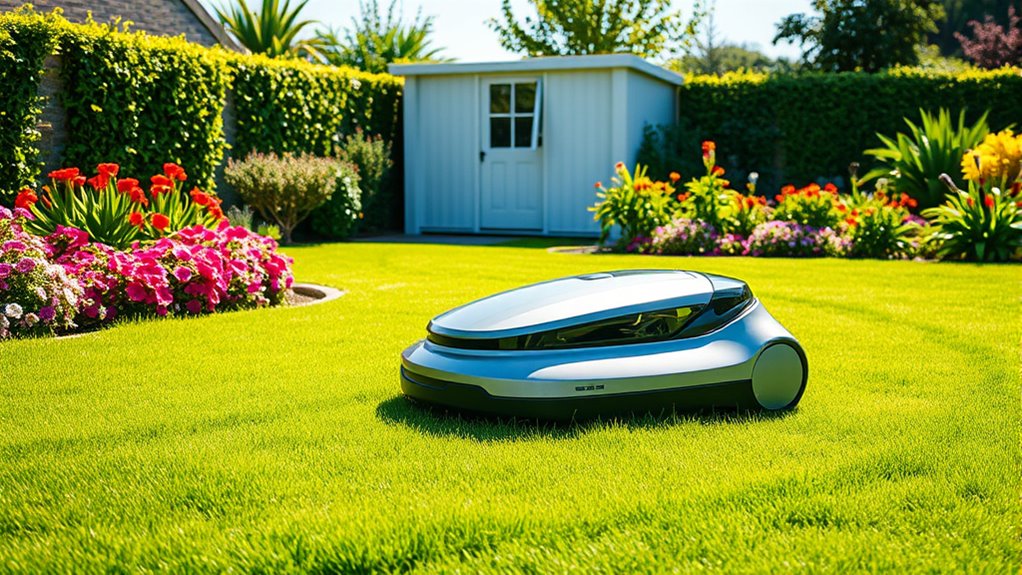

Robotic lawn mowers vary most in how they map a yard, handle slopes, and cope with obstacles. I’d put the Segway Navimow i105N forward as the best overall balance in this lineup; the WORX WR342 stands out for four-wheel drive and larger lawns, while the YARDCARE V100 offers a simpler vision-led approach. Wire-free setup can save installation work, but navigation systems may need a clear view of the yard, and stronger off-road capability can mean more complexity. Lawn size, narrow passages, slopes, and tree cover can matter more than headline features. Read on for the full breakdown and a guide to matching a mower to your lawn.

Get the latest gadgets delivered free with Prime
- Fast, free delivery on millions of items
- Prime Video, Amazon Music and more included
- Member-only deals all year
Complete the kit


Key Takeaways
- Navigation is the main dividing line: this lineup includes RTK, LiDAR, and camera-based options, and the best fit depends on whether your yard offers open sky, distinct visual features, or reliable sensor visibility.
- Four-wheel drive is a specialist advantage, not a default need: the WORX WR342, Mammotion LUBA 3 AWD 3000, and Roborock RockMow X115H and X130H are more relevant for slopes and uneven ground than flat, simple lawns.
- Capacity claims need a yard-layout check: a mower rated for a larger area can still struggle with narrow corridors, multiple zones, or frequent obstacles if its navigation does not suit the property.
- Vision-led models favor simpler lawns: the YARDCARE V100 and WORX Landroid Vision Cloud WR320 can appeal to buyers seeking a less infrastructure-heavy setup, but visual navigation depends on what the mower can detect.
- Feature depth adds setup decisions: models with advanced positioning, LiDAR, or terrain systems may offer more flexibility, while buyers with a compact, uncomplicated lawn may gain more from a straightforward mower.
| Segway Navimow i105N Wire-Free Robotic Lawn Mower |  | Best for Multi-Zone Lawns | Coverage: Up to 1/8 acre | Navigation: RTK with vision enhancement | Boundary setup: Wire-free virtual boundaries with AI-assisted mapping | VIEW ON AMAZON | See Our Full Breakdown |
| WORX WR342 Robot Lawn Mower 4WD (½ Acre, No Perimeter Wire) |  | Best for Steep, Uneven Terrain | Coverage area: 1/2 acre | Drive: 4WD | Maximum slope: 84% (approximately 40°) | VIEW ON AMAZON | See Our Full Breakdown |
| YARDCARE V100 Automatic Robot Lawn Mower with HD Vision |  | Best for Small-Lawn Simplicity | Maximum lawn area: 1,600 sq ft | Navigation: HD Vision / AI camera | Boundary method: Magnetic strip; 32 ft included | VIEW ON AMAZON | See Our Full Breakdown |
| Roborock RockNeo Q110H Wire-Free Robot Lawn Mower |  | Best for Shaded, Complex Layouts | Lawn coverage: Up to 1/4 acre | Navigation: Full-Band RTK + VSLAM | Mapping: AI auto-mapping and app-guided manual mapping | VIEW ON AMAZON | See Our Full Breakdown |
| ECOVACS GOAT O1000 RTK CARE Robot Lawn Mower |  | Best for Included Maintenance Supplies | Coverage: Up to 1/4 acre | Navigation: RTK | Perimeter wire: Not required | VIEW ON AMAZON | See Our Full Breakdown |
| WORX Landroid Vision Cloud WR320 Robot Lawn Mower for Lawns up to 1/2 Acre |  | Best for Large, Wire-Free Lawns | Model: WR320 | Lawn coverage: Up to 1/2 acre | Navigation: RTK Cloud with V-SLAM support | VIEW ON AMAZON | See Our Full Breakdown |
| LawnMaster OcuMow VBRM601YCM AD Robot Lawn Mower |  | Best for Simple, App-Free Mowing | Model: VBRM601YCM AD | Lawn coverage: Up to 2,600 sq. ft. | Runtime: Up to 6 hours | VIEW ON AMAZON | See Our Full Breakdown |
| ECOVACS GOAT A2000 LiDAR PRO Robot Lawn Mower |  | Best for Shaded Lawns and Built-In Edge Trimming | Navigation: HoloScope 360° Dual LiDAR | Positioning accuracy: 2 cm | Perimeter wire and RTK antenna: Neither required | VIEW ON AMAZON | See Our Full Breakdown |
| Mammotion LUBA 3 AWD 3000 Robotic Lawn Mower with Cleaning Stand |  | Best for Steep, Difficult Terrain | Model: LUBA 3 3000H-03 | Navigation: 360° LiDAR, NetRTK, and dual-camera AI vision | Maximum slope: 80% (38.6°) | VIEW ON AMAZON | See Our Full Breakdown |
| YARDCARE V100 Automatic Robot Lawn Mower |  | Best for Small, Simple Lawns | Model: V100-Graphite | Recommended lawn area: Up to 1,600 sq. ft. | Battery: 18V, 4Ah | VIEW ON AMAZON | See Our Full Breakdown |
| DREAME A3 AWD 1000 LiDAR Robot Lawn Mower |  | Best for Steep, Wire-Free Lawns | Drive: All-wheel drive | Navigation: 360° LiDAR and binocular AI vision | Maximum slope: 80% (38.7°) | VIEW ON AMAZON | See Our Full Breakdown |
| Roborock RockMow X115H Wire-Free 4WD Robot Lawn Mower | 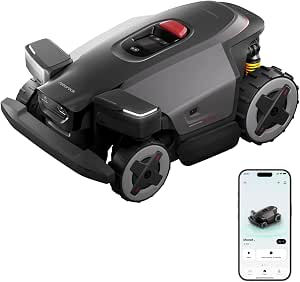 | Best for Compact, Steep Yards | Maximum coverage: 0.37 acre | Drive system: 4WD | Maximum slope: 80% (38.7°) | VIEW ON AMAZON | See Our Full Breakdown |
| Neomow X SE Robotic Lawn Mower with 360° 3D LiDAR Navigation, for up to 0.75 Acre | 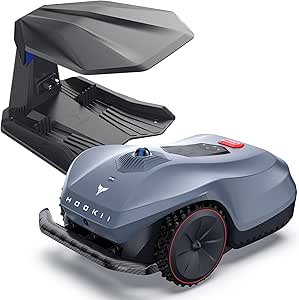 | Best for Larger Lawns Without RTK | Maximum lawn area: 0.75 acre | Navigation: 360° 3D LiDAR and AI vision | Runtime: Up to 2 hours per charge | VIEW ON AMAZON | See Our Full Breakdown |
| MOVA LiDAX Ultra 1000 Wire-Free Robotic Lawn Mower |  | Best for Multi-Zone Small Yards | Coverage: Up to 0.25 acre | Navigation: 360° 3D LiDAR and AI vision | Maximum slope: 45% | VIEW ON AMAZON | See Our Full Breakdown |
| Roborock RockMow X130H Wire-Free 4WD Robot Lawn Mower | | Best for Large, Steep Properties | Maximum lawn coverage: 1 acre | Navigation: Full-band RTK and quad-camera AI vision | Drive system: 4WD | VIEW ON AMAZON | See Our Full Breakdown |
| lawn mower robot | Navigation | Maximum slope |
|---|---|---|
| Segway Navimow i105N Wire-Free | RTK with vision enhancement | — |
| WORX WR342 Robot Lawn Mower 4W | RTK Cloud + V-SLAM Vision AI | 84% (approximately 40°) |
| YARDCARE V100 Automatic Robot | HD Vision / AI camera | 20 degrees |
| Roborock RockNeo Q110H Wire-Fr | Full-Band RTK + VSLAM | 45% |
| ECOVACS GOAT O1000 RTK CARE Ro | RTK | — |
| WORX Landroid Vision Cloud WR3 | RTK Cloud with V-SLAM support | — |
| LawnMaster OcuMow VBRM601YCM A | Optical navigation with wide-angle camera | 35% |
| ECOVACS GOAT A2000 LiDAR PRO R | HoloScope 360° Dual LiDAR | — |
| Mammotion LUBA 3 AWD 3000 Robo | 360° LiDAR, NetRTK, and dual-camera AI vision | 80% (38.6°) |
| YARDCARE V100 Automatic Robot | — | 20 degrees |
| DREAME A3 AWD 1000 LiDAR Robot | 360° LiDAR and binocular AI vision | 80% (38.7°) |
| Roborock RockMow X115H Wire-Fr | Full-Band RTK and quad-camera AI vision | 80% (38.7°) |
| Neomow X SE Robotic Lawn Mower | 360° 3D LiDAR and AI vision | — |
| MOVA LiDAX Ultra 1000 Wire-Fre | 360° 3D LiDAR and AI vision | 45% |
| Roborock RockMow X130H Wire-Fr | Full-band RTK and quad-camera AI vision | 80% (38.7°) |
More Details on Our Top Picks
Segway Navimow i105N Wire-Free Robotic Lawn Mower
The Navimow i105N is a strong fit for smaller lawns divided into distinct sections: its wire-free mapping supports up to 12 zones, so schedules can match separate front, back, or side yards without installing perimeter wire. RTK positioning paired with vision enhancement gives it more navigation tools than the simpler camera-and-strip setup of the YARDCARE V100, while the 140-degree camera is designed to identify common garden obstacles. At 58 dB(A), it is also the quieter option compared with the ECOVACS GOAT O1000 RTK CARE listed here. The tradeoff is coverage: it is rated for up to 1/8 acre, less than the quarter-acre ECOVACS and Roborock models. Its 4G anti-theft tracking module is optional, so buyers wanting cellular tracking should account for that extra hardware.
Pros:- Wire-free, AI-assisted mapping avoids installing perimeter wire.
- Manages schedules across up to 12 zones.
- RTK positioning and vision enhancement support varied lawn layouts.
- Quiet 58 dB(A) operating noise and a three-year warranty.
Cons:- Coverage is limited to up to 1/8 acre, below the quarter-acre Roborock and ECOVACS options.
- 4G anti-theft tracking requires an optional module.
Best for: Owners of lawns up to 1/8 acre with several separate mowing zones who want wire-free mapping and app scheduling.
Not ideal for: People with larger properties or buyers who require included 4G anti-theft tracking; its stated coverage is limited and the tracking module is optional.
- Coverage:Up to 1/8 acre
- Navigation:RTK with vision enhancement
- Boundary setup:Wire-free virtual boundaries with AI-assisted mapping
- Obstacle detection:140° camera; detects 150+ types of common objects
- Zone management:Up to 12 zones
- Noise level:58 dB(A)
- Warranty:3 years
- Included accessories:Charging station, GNSS antenna kit, installation kit, 9 spare blades and bolts
Our verdict“Choose the Navimow i105N for a smaller, multi-section lawn where quiet operation and wire-free zone management matter more than wider coverage.”
WORX WR342 Robot Lawn Mower 4WD (½ Acre, No Perimeter Wire)
For a half-acre lawn with slopes or rough patches, the WORX WR342 is the standout terrain specialist in this group. Its 4WD chassis is rated for slopes up to 84% (about 40 degrees), a capability that separates it from the Roborock RockNeo Q110H, rated for slopes up to 45%. Commercial-grade RTK Cloud navigation and V-SLAM vision handle positioning without a local antenna, while app-based setup supports unlimited zones and several mowing patterns. Its cut-to-zero edge feature may also reduce the trimming left along borders. The main compromise is dependence on cloud connectivity: poor internet or cellular coverage can undermine the convenience of its navigation and controls. Compared with the smaller Navimow i105N, this WORX covers more ground and tackles tougher inclines, but may be more than a level, compact yard needs.
Pros:- 4WD drive system is rated for slopes up to 84% (about 40°).
- Covers up to 1/2 acre without perimeter wire.
- RTK Cloud and V-SLAM vision support precise navigation without a local antenna.
- Unlimited app zones, multiple mowing patterns, and cut-to-zero edge cutting.
Cons:- Cloud connectivity reliance may be a problem where internet or cellular service is weak.
- Its slope-focused 4WD capability may be unnecessary for small, level lawns.
Best for: Owners of lawns up to 1/2 acre with steep slopes, uneven ground, or multiple custom mowing zones.
Not ideal for: Buyers in areas with unreliable internet or cellular service, or those with a small, mostly level lawn that does not need 4WD capability.
- Coverage area:1/2 acre
- Drive:4WD
- Maximum slope:84% (approximately 40°)
- Navigation:RTK Cloud + V-SLAM Vision AI
- Perimeter requirement:No perimeter wire
- Obstacle avoidance:AI neural network
- Edge cutting:Cut-to-Zero
- Mowing patterns:Parallel, Checkerboard, Diamond, Natural
- Security:GPS tracking, cellular connectivity, lockout
Our verdict“Pick the WR342 if your half-acre lawn’s steep or uneven terrain rules out less capable mowers and you have dependable connectivity.”
YARDCARE V100 Automatic Robot Lawn Mower with HD Vision
The YARDCARE V100 keeps boundary setup simple for a small lawn: the included 32-foot magnetic strip marks no-go areas without digging or laying a perimeter wire. Its camera-based system distinguishes grass from obstacles, and tilt, bumper, rain, and emergency-stop sensors add useful safeguards. That straightforward approach makes it a different proposition from the wire-free RTK mapping on the Segway Navimow i105N, which offers more elaborate multi-zone control but is rated for a larger area. The V100 is limited to 1,600 square feet, and its random mowing path is less orderly than the systematic patterns of the Navimow or ECOVACS GOAT O1000 RTK CARE. Manual battery replacement when depleted also means less autonomous operation. I’d reserve it for compact, uncomplicated lawns where easy boundary changes matter more than efficient coverage.
Pros:- Included magnetic strip sets no-go areas without digging or perimeter-wire installation.
- HD vision and AI camera identify grass and obstacles.
- Safety features include tilt, emergency-stop, rain, and bumper sensors.
- Cutting height adjusts from 0.8 to 2.4 inches.
Cons:- Rated for lawns of only up to 1,600 square feet.
- Random mowing paths can cover a lawn less systematically than the Navimow i105N or ECOVACS GOAT O1000 RTK CARE.
- Requires manual battery replacement when depleted.
Best for: Owners of lawns under 1,600 square feet who want a no-dig way to mark garden beds or other no-go areas.
Not ideal for: People with larger or complex lawns, or buyers who want systematic mowing patterns and minimal battery handling.
- Maximum lawn area:1,600 sq ft
- Navigation:HD Vision / AI camera
- Boundary method:Magnetic strip; 32 ft included
- Cutting width:6.3 inches
- Cutting height:0.8–2.4 inches
- Maximum slope:20 degrees
- Battery:4 Ah
- Safety features:Tilt sensor, emergency stop, rain sensor, bumper sensor
Our verdict“Choose the V100 for a compact lawn where simple magnetic no-go boundaries matter more than larger coverage or systematic mowing.”
Roborock RockNeo Q110H Wire-Free Robot Lawn Mower
The Roborock RockNeo Q110H suits a quarter-acre lawn where trees, shade, or a complicated layout can challenge positioning. Its Full-Band RTK + VSLAM navigation pairs satellite positioning with visual mapping, and buyers can choose AI auto-mapping or app-guided manual mapping. That gives it a more adaptable setup than the ECOVACS GOAT O1000 RTK CARE, which uses RTK navigation and automatic mapping. Dual-camera AI vision is designed to recognize people, pets, and garden obstacles, while its 45% slope rating covers more demanding ground than the YARDCARE V100’s 20-degree limit. There are add-on costs for finishing touches: the edge-cutting module and 4G tracking module are sold separately. Its 2.3-foot narrow-passage requirement may also rule it out for tight garden corridors.
Pros:- Full-Band RTK and VSLAM combine positioning methods for varied lawn conditions.
- Offers AI auto-mapping and app-guided manual mapping.
- Dual-camera AI vision is designed to detect people, pets, and garden obstacles.
- Handles slopes up to 45% and obstacles up to 1.57 inches.
Cons:- Edge-cutting module is sold separately.
- 4G tracking module is sold separately.
- Requires narrow passages to be at least 2.3 feet wide.
Best for: Owners of lawns up to 1/4 acre with shaded areas, varied layouts, or slopes who want a choice of mapping methods.
Not ideal for: Buyers with passages narrower than 2.3 feet or anyone who expects edge cutting and 4G tracking to be included.
- Lawn coverage:Up to 1/4 acre
- Navigation:Full-Band RTK + VSLAM
- Mapping:AI auto-mapping and app-guided manual mapping
- Obstacle avoidance:Dual-camera AI vision
- Maximum slope:45%
- Obstacle clearance:1.57 inches
- Narrow passage width:2.3 feet
- Security:PIN lockout and alarm; optional 4G tracking module
Our verdict“Choose the RockNeo Q110H for a quarter-acre lawn with shade or complex routing, provided its passage-width requirement fits and add-on modules are acceptable.”
ECOVACS GOAT O1000 RTK CARE Robot Lawn Mower
The ECOVACS GOAT O1000 RTK CARE is a practical choice for quarter-acre lawns when a wire-free, systematic mowing routine is the priority. RTK navigation supports planned coverage, while automatic mapping, multi-zone app management, scheduled mowing, and automatic recharging reduce routine intervention. Its clearest distinction from the Roborock RockNeo Q110H is the CARE bundle: this ECOVACS includes 36 extra blades and an RTK extension cable, whereas Roborock’s edge-cutting and 4G tracking modules are separate purchases. The O1000’s 90-minute runtime and 8.66-inch cutting width are listed specifications, but they do not make it the widest or most capable terrain pick here; the WORX WR342 is better suited to steep ground and covers twice the area. At 62 dB, it is also louder than the Navimow i105N.
Pros:- RTK navigation supports wire-free, systematic mowing.
- Automatic mapping and app-based multi-zone management simplify lawn scheduling.
- Automatically recharges between mowing sessions.
- CARE bundle includes 36 extra blades and an RTK extension cable.
Cons:- Coverage is limited to up to 1/4 acre, below the WORX WR342’s 1/2-acre rating.
- Listed battery runtime is 90 minutes.
- At 62 dB, it is louder than the Segway Navimow i105N at 58 dB(A).
Best for: Owners of lawns up to 1/4 acre who want wire-free systematic mowing, app-based zones, automatic recharging, and spare blades supplied.
Not ideal for: People with steep terrain or lawns larger than 1/4 acre, or buyers prioritizing quieter operation over the Navimow i105N.
- Coverage:Up to 1/4 acre
- Navigation:RTK
- Perimeter wire:Not required
- Cutting width:8.66 inches
- Cutting height:1.2–3.2 inches
- Battery runtime:90 minutes
- Noise level:62 dB
- Included accessories:36 extra replacement blades and RTK extension cable
- Weight:44.5 pounds
Our verdict“Pick the GOAT O1000 RTK CARE for a quarter-acre lawn if systematic wire-free mowing and included replacement supplies are more useful than extra coverage or terrain capability.”
WORX Landroid Vision Cloud WR320 Robot Lawn Mower for Lawns up to 1/2 Acre
The WORX Landroid Vision Cloud WR320 is the scale-focused choice here: it covers up to 1/2 acre and maps the yard automatically, without a perimeter wire or local antenna. Its RTK Cloud navigation, with V-SLAM support for shaded areas, is designed to keep mowing practical across changing light conditions. Compared with the compact LawnMaster OcuMow VBRM601YCM AD, which is limited to 2,600 square feet and relies on a clearly defined lawn edge, the WR320 is aimed at substantially larger, more configurable properties. Unlimited zones, multiple mowing patterns, AI obstacle avoidance, and RadioLink add flexibility. The tradeoff is dependence on connectivity for cloud navigation; buyers seeking a setup that works without that reliance should look elsewhere. Its two-wheel drive also makes it less suited to severe slopes than the all-wheel-drive Mammotion LUBA 3 AWD 3000.
Pros:- Covers lawns up to 1/2 acre without perimeter wire or a local antenna.
- Automatically maps the yard and supports unlimited mowing zones.
- AI obstacle avoidance and multiple mowing patterns support tailored coverage.
- Bluetooth, Wi-Fi, and RadioLink provide several connectivity options.
Cons:- Cloud-based navigation features require connectivity.
- Two-wheel drive is less suited to steep terrain than the LUBA 3 AWD 3000.
- Large-yard performance depends on the availability of a reliable connection.
Best for: Owners of larger lawns up to 1/2 acre who want wire-free mapping, multiple mowing zones, and app-based control.
Not ideal for: Buyers with unreliable connectivity or steep, challenging terrain who need cloud-independent navigation or all-wheel-drive traction.
- Model:WR320
- Lawn coverage:Up to 1/2 acre
- Navigation:RTK Cloud with V-SLAM support
- Perimeter wire:Not required
- Mapping and zones:Automatic mapping; unlimited mowing zones
- Obstacle avoidance:AI-powered
- Connectivity:Bluetooth, Wi-Fi, and RadioLink
- Drive style:Two-wheel drive
- Manufacturer warranty:3 years
Our verdict“Choose the WR320 for a large, connected lawn where wire-free mapping and flexible zones matter more than all-wheel-drive capability.”
LawnMaster OcuMow VBRM601YCM AD Robot Lawn Mower
The LawnMaster OcuMow VBRM601YCM AD suits buyers who want a straightforward wire-free mower without app setup or an outdoor power socket. Its optical navigation lays down parallel mowing lines, while ultrasonic sensors detect objects as small as six inches. The up-to-six-hour runtime and ability to handle slopes up to 35% give it practical strengths on a small, uneven lawn. Compared with the camera-guided YARDCARE V100, it covers more area and adds a longer stated runtime, but it lacks the V100’s adjustable cutting-height specification and safety feature details. The boundary approach is more hands-on than the mapping systems on the WORX Landroid Vision Cloud WR320: magnetic strips mark no-go areas, and the lawn needs a clear edge. Plan on trimming borders separately, too.
Pros:- Drop-and-mow operation does not require an app or outdoor power socket.
- Optical navigation cuts in parallel lines rather than a random pattern.
- Handles slopes up to 35%.
- Ultrasonic sensors detect objects as small as six inches.
Cons:- Coverage is limited to 2,600 square feet.
- A clearly defined lawn edge is recommended for reliable operation.
- A grass trimmer is needed to finish lawn borders.
Best for: Owners of small lawns who want app-free, wire-free operation, orderly mowing lines, and useful slope handling.
Not ideal for: Buyers with large or poorly defined lawns, or anyone who expects the mower to finish borders without a separate trimmer.
- Model:VBRM601YCM AD
- Lawn coverage:Up to 2,600 sq. ft.
- Runtime:Up to 6 hours
- Navigation:Optical navigation with wide-angle camera
- Maximum slope:35%
- Obstacle detection:Ultrasonic sensors; detects objects as small as 6 inches
- No-go boundary:49 feet of magnetic strip with 30 pegs
- Battery:MX 24V 8.0Ah
- Included accessories:24V charger, magnetic strip pegs, and 6 extra sets of blades and screws
Our verdict“Pick the OcuMow for a small, clearly edged lawn when simple app-free operation matters more than automated edge finishing.”
ECOVACS GOAT A2000 LiDAR PRO Robot Lawn Mower
The ECOVACS GOAT A2000 LiDAR PRO is a strong fit for yards where shade complicates navigation and crisp edges matter. Its wire-free dual LiDAR system provides 2 cm positioning, and the built-in TruEdge trimmer tackles borders that leave many robot mowers needing a follow-up pass. That edge-cutting feature gives it a clear advantage over the LawnMaster OcuMow VBRM601YCM AD, which recommends a separate trimmer, while its app lets owners set zones, no-go areas, cutting height, speed, and schedules. A dual-blade 32V system and roughly 50-minute recharge add capability, but the supplied information does not state lawn capacity or cutting-height range. That makes it harder to match the A2000 to a particular yard than the clearly rated WORX Landroid Vision Cloud WR320.
Pros:- Dual LiDAR navigation is designed to work in shaded areas without perimeter wire or an RTK antenna.
- Built-in TruEdge trimmer cuts lawn borders.
- App controls include zones, no-go areas, cutting height, speed, travel paths, and schedules.
- Approximately 50-minute recharge helps limit charging downtime.
Cons:- Lawn capacity is not specified in the provided product data.
- Cutting-height range is not specified.
- Dense-grass and terrain performance claims are based on manufacturer lab testing.
Best for: Owners of shaded or divided lawns who want wire-free mapping, app-defined zones, and automatic edge trimming.
Not ideal for: Buyers who need a confirmed lawn-capacity rating or a specified cutting-height range before choosing a mower.
- Navigation:HoloScope 360° Dual LiDAR
- Positioning accuracy:2 cm
- Perimeter wire and RTK antenna:Neither required
- Edge trimming:Built-in TruEdge trimmer
- Trimming line included:2 rolls, approximately 3 km of edging each
- Motor and cutting system:32V platform; dual-blade disc
- Battery:3.0Ah
- Charging power and recharge time:113.4W; about 50 minutes
- App features:Zones, no-go areas, cutting height and speed, travel paths, and schedules
Our verdict“Choose the GOAT A2000 if shaded navigation and built-in edge trimming are priorities and its unspecified lawn capacity is acceptable.”
Mammotion LUBA 3 AWD 3000 Robotic Lawn Mower with Cleaning Stand
The Mammotion LUBA 3 AWD 3000 earns its place for terrain that can stop less capable robot mowers: its all-wheel drive is rated for slopes up to 80% and obstacles up to 50 mm. A 360° LiDAR, NetRTK, and dual-camera AI vision system work together for navigation and obstacle recognition, while up to 30 mowing zones let owners separate complex areas. Compared with the two-wheel-drive WORX Landroid Vision Cloud WR320, the LUBA is much better matched to steep ground; the WORX, by contrast, offers unlimited zones and specified coverage up to 1/2 acre. Runtime reaches 175 minutes per charge, and the included charging station, extra blades, and cleaning stand add practical support. The steep-terrain focus comes with a caveat: the cleaning stand ships separately.
Pros:- All-wheel drive handles slopes up to 80%.
- Combines 360° LiDAR, NetRTK, and dual-camera AI vision for navigation.
- Recognizes more than 300 obstacle types and handles obstacles up to 50 mm.
- Supports up to 30 zones and includes a charging station and extra blades.
Cons:- The cleaning stand ships separately.
- Zone capacity is capped at 30, fewer than the unlimited zones supported by the WORX WR320.
- Its specialized traction may be more capability than flat-lawn owners need.
Best for: Owners of steep, uneven lawns who need all-wheel drive, obstacle handling, and separate mowing zones.
Not ideal for: Buyers with mostly flat lawns who do not need its high-slope capability, or anyone expecting the cleaning stand to arrive with the mower.
- Model:LUBA 3 3000H-03
- Navigation:360° LiDAR, NetRTK, and dual-camera AI vision
- Maximum slope:80% (38.6°)
- Obstacle detection:Over 300 obstacle types
- Maximum obstacle height:50 mm
- LiDAR range:Up to 230 ft
- Runtime:Up to 175 minutes per charge
- Coverage rate:Up to 500 m²/h
- Mowing zones:Up to 30
Our verdict“Choose the LUBA 3 AWD 3000 for steep or obstacle-heavy terrain where all-wheel drive matters more than unlimited zone capacity.”
YARDCARE V100 Automatic Robot Lawn Mower
The YARDCARE V100 is a compact choice for lawns up to 1,600 square feet, with camera-based navigation that distinguishes grass from other surfaces and detects up to 150 obstacles. Its adjustable 0.8–2.4-inch cutting height gives owners more control over the finish than the OcuMow’s provided specifications, while a magnetic strip marks no-go areas without digging or powered boundary equipment. Safety features include lift sensing, an emergency stop, and a rain sensor. The tradeoff is its random mowing path: compared with the LawnMaster OcuMow VBRM601YCM AD, which cuts in parallel lines and offers a longer stated runtime, the V100’s route is less orderly. Its smaller coverage also rules it out for larger lawns, and battery replacement may be needed over time.
Pros:- Camera-based navigation distinguishes grass from other surfaces and detects up to 150 obstacles.
- Adjustable cutting height ranges from 0.8 to 2.4 inches.
- Magnetic strip creates no-go zones without digging or a powered boundary.
- Includes lift, emergency-stop, and rain-sensor safety features.
Cons:- Recommended lawn area is limited to 1,600 square feet.
- Random mowing path is less orderly than the OcuMow’s parallel-line approach.
- The battery may need replacement over time.
Best for: Owners of small lawns who want camera-based boundary detection, adjustable cutting height, and simple magnetic no-go zones.
Not ideal for: Buyers with larger lawns or those who prefer systematic parallel mowing and a stated long runtime.
- Model:V100-Graphite
- Recommended lawn area:Up to 1,600 sq. ft.
- Battery:18V, 4Ah
- Cutting width:6.3 inches
- Cutting height:0.8–2.4 inches
- Maximum slope:20 degrees
- Obstacle detection:Up to 150 obstacles
- No-go boundary:32-ft magnetic strip
- Included accessories:20 magnetic strip pegs and 3 extra sets of blades and screws
Our verdict“Pick the V100 for a small lawn where adjustable cutting height and camera-based navigation matter more than systematic mowing lines.”
DREAME A3 AWD 1000 LiDAR Robot Lawn Mower
The DREAME A3 AWD 1000 is the strongest fit here for a smaller lawn where steep ground is the main challenge. Its all-wheel drive and stated 80% slope capacity give it an advantage over the MOVA LiDAX Ultra 1000, which is rated for 45% slopes. 360° LiDAR and binocular AI vision handle mapping without boundary wires, while app scheduling and camera monitoring add remote oversight. The 45-minute charge time also helps it get back to work quickly. Its stated coverage reaches 0.50 acre, but the product description gives a range of 0.25–0.50 acre, so buyers should match expectations to their lawn. Skip it if you need an included edging solution: the optional trimmer module is sold separately, and the supplied product information offers little buyer feedback to draw on.
Pros:- All-wheel drive is suited to steep slopes and uneven ground.
- LiDAR and binocular AI vision map without boundary wires.
- 45-minute charging time supports quicker return to mowing.
- App includes scheduling and camera monitoring.
Cons:- Optional trimmer module is sold separately.
- Coverage is specified as a 0.25–0.50-acre range, rather than one fixed capacity.
- The supplied product information cites only one customer review.
Best for: Owners of wire-free lawns up to 0.50 acre with steep slopes who want app scheduling and camera monitoring.
Not ideal for: Buyers who want a built-in trimming module or a mower with extensive buyer feedback before choosing.
- Drive:All-wheel drive
- Navigation:360° LiDAR and binocular AI vision
- Maximum slope:80% (38.7°)
- Lawn coverage:0.25–0.50 acre
- Charging time:About 45 minutes
- Obstacle clearance:2.17 inches
- Edge precision:Within 1.97 inches
- Warranty:3 years
Our verdict“Choose the DREAME if steep terrain and wire-free mapping matter more than an included trimmer or a clearly stated single coverage figure.”
Roborock RockMow X115H Wire-Free 4WD Robot Lawn Mower
The RockMow X115H makes sense for a compact yard where steep sections and terrain obstacles matter more than acreage. Its 4WD and 80% slope rating match the DREAME A3 AWD 1000, while its 3.15-inch obstacle clearance is higher than the DREAME’s listed 2.17 inches. Full-Band RTK and quad-camera AI vision support wire-free navigation, and buyers can choose between automatic mapping and app-guided manual mapping. That flexibility is useful for shaping mowing areas, but the 0.37-acre coverage ceiling makes this a less natural fit than the RockMow X130H for larger properties. Included 4G, GPS tracking, a PIN lock, and an alarm add security features; the tradeoff is that its strongest terrain credentials do not make it a high-capacity choice.
Pros:- 4WD and an 80% slope rating suit steep ground.
- Clears obstacles up to 3.15 inches high.
- Offers AI auto-mapping and app-controlled manual mapping.
- Included 4G, GPS tracking, PIN lock, and alarm support security.
Cons:- Coverage is limited to 0.37 acre.
- RTK and quad-camera navigation add setup and mapping complexity compared with simpler small-yard needs.
Best for: Owners of lawns up to 0.37 acre with steep slopes or rough patches who want both automatic and manual mapping options.
Not ideal for: Owners of larger properties who would benefit from the RockMow X130H’s one-acre coverage.
- Maximum coverage:0.37 acre
- Drive system:4WD
- Maximum slope:80% (38.7°)
- Navigation:Full-Band RTK and quad-camera AI vision
- Obstacle clearance:3.15 inches
- Cutting width:9.49 inches (24 cm)
- Cutting height:1.57–3.54 inches
- Security:Included 4G, PIN lock, alarm, and GPS tracking
Our verdict“Pick the X115H for a steep, obstacle-filled lawn below 0.37 acre, but choose the X130H if your property needs more coverage.”
Neomow X SE Robotic Lawn Mower with 360° 3D LiDAR Navigation, for up to 0.75 Acre
The Neomow X SE pairs a relatively generous 0.75-acre lawn rating with wire-free navigation that does not require an RTK station. That makes it a different proposition from the Roborock RockMow X130H: the X130H is rated for one acre and uses RTK plus quad-camera navigation, while the Neomow relies on 360° 3D LiDAR and AI vision. Its 11-inch deck is wider than the Roborock models’ 9.49-inch cutting paths, though actual mowing pace also depends on lawn layout and recharge needs. The mower runs for up to two hours and covers up to 0.17 acre per charge, then can resume after charging. That makes its larger lawn rating useful, but not a promise of one-pass coverage. Choose it for broad, wire-free mapping; skip it if frequent recharge cycles are a deal-breaker.
Pros:- Rated for lawns up to 0.75 acre without perimeter wire or RTK station.
- 360° 3D LiDAR and AI vision support obstacle avoidance and low-light navigation.
- 11-inch cutting deck is wider than the Roborock models listed here.
- Can resume mowing after recharging and supports app-set zones and no-go areas.
Cons:- Covers up to 0.17 acre per charge, so larger lawns require recharging.
- Runtime is limited to up to two hours per charge.
- Obstacle crossing height is about 1.6 inches.
Best for: Owners of lawns up to 0.75 acre who want LiDAR-based wire-free mapping without an RTK station and can accommodate recharge cycles.
Not ideal for: Buyers who want a mower to cover a large area per charge or need the stated 80% slope performance of the Roborock and DREAME options.
- Maximum lawn area:0.75 acre
- Navigation:360° 3D LiDAR and AI vision
- Runtime:Up to 2 hours per charge
- Area per charge:Up to 0.17 acre
- Cutting deck width:11 inches (280 mm)
- Cutting height:1.18–3.35 inches (30–85 mm)
- Obstacle crossing height:About 1.6 inches (4 cm)
- Water resistance:IPX5
- Warranty:2 years
Our verdict“Choose the Neomow X SE if you want broad wire-free coverage without an RTK station and accept recharge breaks along the way.”
MOVA LiDAX Ultra 1000 Wire-Free Robotic Lawn Mower
The MOVA LiDAX Ultra 1000 is the pick for a smaller, divided lawn where setting up distinct areas matters more than tackling extreme slopes. It maps with 360° 3D LiDAR and AI vision and needs neither perimeter wire nor an RTK station, much like the DREAME A3 AWD 1000. Its distinguishing feature is management for up to two maps and 150 zones, which can help organize separated sections and no-go areas. It also recognizes more than 300 obstacle types and resumes mowing after returning to its charging station. The tradeoff is a 0.25-acre coverage limit and a 45% slope rating, well below the 80% ratings listed for the DREAME and both Roborock models. Buyers also need the charging station and app to use its smart functions.
Pros:- Maps automatically without perimeter wire or an RTK station.
- Supports up to two maps and 150 managed zones.
- Recognizes more than 300 types of obstacles.
- Returns to charge and resumes mowing where it stopped.
Cons:- Coverage is limited to 0.25 acre.
- 45% maximum slope is lower than the 80% ratings of the DREAME and Roborock options.
- Smart features require the app, and operation requires a charging station.
Best for: Owners of lawns up to 0.25 acre with multiple sections or mapped zones who want wire-free setup and app-based management.
Not ideal for: Buyers with steep slopes, large lawns, or a preference for a mower that does not depend on app-based smart features.
- Coverage:Up to 0.25 acre
- Navigation:360° 3D LiDAR and AI vision
- Maximum slope:45%
- Cutting height:1.2–3.9 inches
- Obstacle recognition:More than 300 obstacle types
- Maps:Up to 2
- Managed zones:Up to 150
- Warranty:3 years
Our verdict“Choose the MOVA for a compact, divided lawn where map and zone control matter more than maximum slope or acreage.”
Roborock RockMow X130H Wire-Free 4WD Robot Lawn Mower
The RockMow X130H leads this group for buyers who need wire-free mowing across up to one acre and also have steep or uneven terrain. Like the smaller RockMow X115H, it combines 4WD, an 80% slope rating, and 3.15-inch obstacle clearance; the key difference is its much larger stated coverage, up to one acre versus 0.37 acre. Full-band RTK and quad-camera AI vision support automatic or app-controlled mapping, while scheduling, progress tracking, and wildlife-friendly mode give owners more control over when and how it mows. GPS tracking, an alarm, and PIN protection add security. This capacity comes with a more involved navigation system than the LiDAR-based MOVA, which is rated for only 0.25 acre. The X130H is a poor match for small lawns, and the supplied product information does not include customer feedback.
Pros:- Rated for up to one acre, the largest stated coverage in this group.
- 4WD and an 80% slope rating suit steep or uneven terrain.
- RTK and quad-camera AI vision support automatic and app-controlled mapping.
- App features include scheduling, progress tracking, wildlife-friendly mode, and anti-theft tools.
Cons:- The RTK and camera-based mapping system may be more than a small, simple lawn needs.
- The supplied product information includes no customer reviews or rating.
Best for: Owners of properties up to one acre with steep slopes or uneven ground who want app scheduling, wire-free mapping, and theft deterrents.
Not ideal for: Owners of small lawns who do not need its one-acre capacity, or buyers seeking a product with supplied customer-review information.
- Maximum lawn coverage:1 acre
- Navigation:Full-band RTK and quad-camera AI vision
- Drive system:4WD
- Maximum slope:80% (38.7°)
- Maximum obstacle height:3.15 inches (8 cm)
- Cutting width:9.49 inches (24 cm)
- Cutting height:1.57–3.54 inches
- Obstacle avoidance:Multi-sensor fusion with 4 sensors
- Anti-theft features:PIN lockout, alarm, and GPS tracking
Our verdict“Choose the X130H if you need the group’s largest stated coverage alongside steep-slope capability, but skip it for a small, uncomplicated lawn.”

How We Picked
I compared these 15 lawn mower robots by the factors that shape day-to-day ownership: navigation approach, stated lawn capacity, slope and traction capability, obstacle handling, setup demands, and maintenance features. I gave extra weight to whether a mower’s strengths solve a recognizable yard problem, rather than treating a longer feature list as an automatic advantage. A wire-free model, for example, only ranks well for a buyer if its navigation suits the property’s layout and surroundings.
The ranking gives the strongest positions to options that appear to balance useful capability with broad yard compatibility, then places specialized models according to the buyer they serve best. Four-wheel-drive machines earn attention for challenging terrain, while vision-led and compact-capacity models make more sense for simpler or smaller lawns. Where product names identify a technology or capacity but do not establish how it performs in every yard, I treat that as a point to verify against the manufacturer’s specifications—not as proof of universal suitability.
Factors to Consider When Choosing Lawn Mower Robots
Choosing among lawn mower robots starts with the yard, not the feature list. I’d check the property’s boundaries, terrain, and obstacles before comparing navigation systems or extras; these details often decide whether a mower can work reliably without frequent intervention.
Wire-free does not mean every yard is equally easy to map. RTK-based positioning can depend on a suitable signal environment, while LiDAR and camera-led systems rely on their sensors having useful information about the surroundings. Dense tree cover, tall boundaries, shaded areas, and visually uniform lawn can affect different systems in different ways. Before choosing, identify where a mower will need to travel and check the maker’s requirements for its positioning equipment and signal coverage. A common mistake is buying by “no perimeter wire” alone without checking whether the installation still needs a base station, clear sky view, or careful digital mapping. If the yard has mixed conditions, favor a product whose navigation method and setup guidance match those specific areas.
Measure Mowable Area and Map Every Zone
Use the area the mower can actually reach, not the total property size: patios, planting beds, steep banks, and other no-mow areas reduce the useful lawn. Separate front and back lawns, narrow gates, and disconnected sections can also complicate scheduling even when the combined grass area falls within a stated capacity. Check whether the model supports multiple mapped zones and how it travels between them; a mower may need manual repositioning if zones are disconnected. Leave margin between your measured lawn area and the maker’s maximum capacity if the grass grows quickly or the layout is fragmented. Buyers often focus on acreage and overlook access routes, which can matter more than the open lawn itself. Confirm that the mower’s specified area and operating schedule fit your actual mowing window.
Choose Traction for the Hardest Slope
Base your traction choice on the steepest section the mower must cut, not the average grade of the yard. Four-wheel drive models such as the WORX WR342, Mammotion LUBA 3 AWD 3000, and Roborock RockMow X series are the terrain-focused choices in this group, but drivetrain labels alone do not tell you whether a specific slope is supported. Check the manufacturer’s limits for slopes, including whether they apply while mowing or only while traveling. Wet grass, loose soil, and sharp turns can make a hill harder to manage than its angle suggests. If the lawn is mostly flat, paying for stronger drive hardware may add complexity without solving a real problem. For sloped properties, verify that the model can handle the steepest route and that it can turn safely near edges.
Look Beyond Obstacle Detection
Obstacle avoidance can reduce interruptions, but no sensor setup makes a lawn completely maintenance-free. Think about what is normally left on the grass: toys, hoses, garden tools, pet waste, and low branches may pose different challenges for cameras, LiDAR, or other sensors. Ask what the mower is designed to recognize and whether it stops, routes around, or reports an obstacle. Keep in mind that avoiding an object can leave an unmown patch, so occasional edging or spot mowing may still be needed. A common buying error is treating obstacle detection as a replacement for tidying the lawn or setting boundaries. If children or pets use the yard, review operating schedules and safety guidance alongside the detection features.
Compare Setup, Support, and Ongoing Upkeep
Wire-free setup can remove the work of placing a boundary cable, but it still involves mapping, configuring zones, and checking where the mower can operate. Before buying, confirm the setup process, app or network requirements, included components, and the availability of service and replacement parts in your region. Cutting blades are consumables, and wheels, sensors, and the mower deck need periodic cleaning; a cleaning stand may help with one task but does not eliminate routine care. Also check how software updates, winter storage, and repairs are handled. A feature-rich model may take more time to configure than a simple machine, so count that effort as part of ownership. If you do not want to manage maps or settings, prioritize clear setup instructions and accessible support over extra mowing modes.
Pay for Capability You Will Use
Advanced navigation, larger capacity, and all-wheel drive are useful when they solve specific constraints, not simply because they sound more capable. A premium mower makes a stronger case when a property has challenging slopes, several zones, or obstacles that demand more capable mapping. For a small, flat lawn, a simpler vision-based model may be easier to justify if its coverage and setup suit the site. Compare included accessories and cleaning provisions as well as the mower itself, since those details can affect ownership effort. Check exactly what each model includes rather than assuming a named feature covers every installation need. My rule is to select the least complex mower that can reliably handle the yard’s most difficult area.
Frequently Asked Questions
Are wire-free robotic lawn mowers a good fit for yards with trees or tall fences?
They can be, but the answer depends on the mower’s navigation system and the specific layout. RTK-based models may need suitable satellite reception, while LiDAR or vision systems use different environmental cues. Trees, overhangs, narrow passages, and tall fences can create areas where positioning or detection behaves differently from an open lawn. Check the manufacturer’s site requirements and ask how the model handles signal loss or restricted areas. If possible, map the trouble spots before buying or confirm the seller’s return and support terms.
Do I need a four-wheel-drive robot mower for a sloped lawn?
Not for every slope, and a four-wheel-drive label by itself is not enough to confirm a match. Compare the mower’s published slope limits with the steepest section it must cut, and check whether those limits apply to mowing, travel, or both. Wet grass and loose ground can reduce traction, while a steep turn or edge can be harder than a straight climb. Four-wheel-drive options in this roundup, including the WORX WR342 and Mammotion LUBA 3 AWD 3000, are aimed at more demanding terrain than a basic flat lawn. If most of your property is level, stronger traction may not justify added system complexity.
Can one robotic mower manage a front lawn and a separate back lawn?
Sometimes, but the answer depends on whether the mower supports multiple zones and can travel between them. A gate or path may provide a route, while disconnected lawns may require you to carry the mower from one section to another. Check the mapping tools, zone limits, and scheduling controls before choosing. Also confirm whether the mower can cross the route safely and whether it needs a separate boundary or setup for each area. Measure the total mowable grass, then make sure the capacity leaves enough room for both sections within the maker’s recommended schedule.
Will a robot mower eliminate trimming along fences and garden edges?
Usually not completely. A mower needs to keep its wheels and cutting system within safe boundaries, so it may leave a narrow strip beside walls, fences, trees, or raised beds. The amount left depends on the machine’s cutting width, edge mode, and how the boundary is mapped. Check the manufacturer’s guidance for edge mowing rather than assuming the robot cuts flush with every obstacle. Buyers who want a fully finished look should plan for occasional trimming or choose a design with edge-focused features. Keeping the lawn boundary clearly defined can help the mower reach more of the grass safely.
What should I check before buying a mower advertised for a particular lawn area?
Measure grass the mower can reach, subtracting buildings, beds, paths, and other no-mow spaces. Then account for separate zones, narrow access routes, slopes, and obstacles, since they can make a yard harder to cover than a single open lawn. Compare your usable area with the manufacturer’s stated capacity and operating assumptions, and avoid sizing right at the limit if your lawn grows quickly or has a complex layout. Check the mowing schedule and battery or charging behavior described by the maker as well. A capacity figure is a starting point; it cannot tell you by itself whether the mower fits your property.
Conclusion
For the broadest balance of wire-free mowing and practical yard coverage, I’d start with the Segway Navimow i105N as the best overall pick. The YARDCARE V100 is my best-value and beginner-oriented choice for a simpler lawn where a vision-led approach fits the site, while the Mammotion LUBA 3 AWD 3000 is the premium pick for buyers who need stronger terrain capability and broader coverage. For steep or uneven ground, compare the WORX WR342 and Roborock’s 4WD RockMow models against the published slope limits; for a yard where mapping and obstacle sensing are the main priorities, examine the LiDAR and RTK options closely. If your lawn is small and uncomplicated, do not pay for capacity or drivetrain features you will not use. Measure the accessible grass, check navigation conditions, and choose the model that solves your yard’s hardest problem with the least setup burden.
Halloween Picks
halloween
As an affiliate, we earn on qualifying purchases.