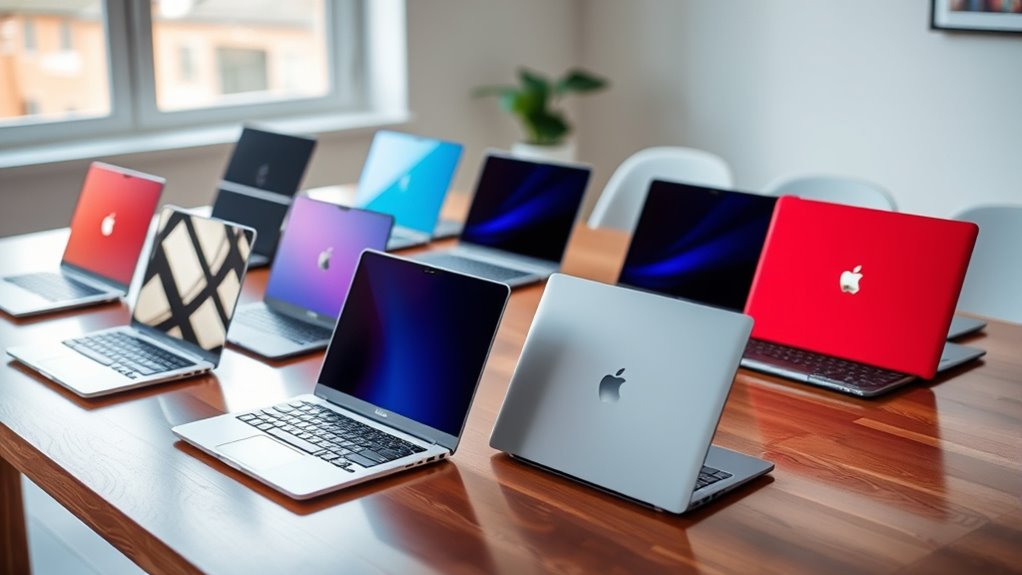

Among the best laptops under $500, my top overall pick is the Dell 15 because its Core 3 100U processor, 8GB of RAM, and 512GB SSD form the most balanced package for everyday Windows use. The ASUS Vivobook Go 15 is my value choice for buyers who want capable Ryzen performance and 8GB of DDR5 memory, while the HP OmniBook 3 17.3-inch stands out when screen size and storage matter more than portability. At this price, the main compromises involve limited memory, modest displays, slower eMMC or UFS storage, and entry-level processors that are better for routine tasks than demanding creative work. Some models also use Windows 11 in S Mode or ChromeOS, which can restrict software choices. Continue reading for the full breakdown of which laptop fits each type of buyer.

Get the latest gadgets delivered free with Prime
- Fast, free delivery on millions of items
- Prime Video, Amazon Music and more included
- Member-only deals all year
Complete the kit



Key Takeaways
- The Dell 15 leads my ranking because its Core 3 100U processor, 8GB of RAM, and 512GB SSD avoid the biggest performance and storage compromises found elsewhere in the lineup.
- The ASUS Vivobook Go 15 offers the strongest value balance: its Ryzen 3 7320U and 8GB of DDR5 memory are better suited to multitasking than the many 4GB Windows models.
- The HP OmniBook 3 is the large-screen choice, pairing a 17.3-inch FHD panel with 512GB of storage, but its size makes it less practical for daily travel.
- Four gigabytes of RAM is the clearest dividing line in this comparison; it can handle light browsing and documents, but 8GB models provide more breathing room for Windows 11.
- The Chromebook options suit simpler workloads, with the Lenovo touchscreen Chromebook offering more flexibility than the Acer Chromebook 315, while both sacrifice access to full Windows software.
| Lenovo 15.6″ IdeaPad Everyday Laptop, 2026 Edition |  | Best for Student Commuters | Processor: Intel N100 quad-core, up to 3.4GHz | Memory: 4GB LPDDR5-4800 | Storage: 128GB UFS 3.1 | VIEW ON AMAZON | See Our Full Breakdown |
| Dell Latitude 7480 14″ FHD Business Laptop (Renewed) |  | Best Renewed Business Pick | Processor: Intel Core i5-6300U, 2.4GHz to 3.0GHz | Memory: 8GB DDR4 | Storage: 256GB SSD | VIEW ON AMAZON | See Our Full Breakdown |
| HP Essential 14-Inch Laptop (2026) |  | Best Microsoft 365 Bundle | Processor: Intel N150, up to 3.6GHz | Memory: 4GB LPDDR5 | Storage: 128GB UFS | VIEW ON AMAZON | See Our Full Breakdown |
| Lenovo Essential 15.6″ FHD Laptop |  | Best Bare-Bones 15-Inch Pick | Processor: Intel N100 quad-core, up to 3.4GHz | Memory: 4GB LPDDR5-4800 | Storage: 128GB UFS 3.1 | VIEW ON AMAZON | See Our Full Breakdown |
| HP OmniBook 3 17.3-Inch FHD Laptop |  | Best Overall | Processor: AMD Ryzen 3 30 | Memory: 8GB LPDDR5 | Storage: 512GB PCIe NVMe M.2 SSD | VIEW ON AMAZON | See Our Full Breakdown |
| HP New Everyday Slim Laptop, 2026 Edition |  | Best for Light Travel | Processor: AMD High Performance Processor | Memory: 4GB DDR5 | Storage: 128GB SSD | VIEW ON AMAZON | See Our Full Breakdown |
| ASUS Vivobook Go 15.6-inch FHD Slim Laptop |  | Best Value Pick | Processor: AMD Ryzen 3 7320U | Memory: 8GB DDR5 | Storage: 128GB SSD | VIEW ON AMAZON | See Our Full Breakdown |
| HP 14-inch Laptop with Intel N150 and 628GB Storage |  | Best Software and Accessory Bundle | Processor: Intel N150, 4 cores, up to 3.6GHz | Memory: 4GB LPDDR5 | Internal Storage: 128GB UFS | VIEW ON AMAZON | See Our Full Breakdown |
| Dell 15 15.6-inch FHD Laptop |  | Best Overall | Processor: Intel Core 3 100U | Memory: 8GB RAM | Storage: 512GB SSD | VIEW ON AMAZON | See Our Full Breakdown |
| Acer Aspire 3 A315-24P-R7VH |  | Best for Video Calls | Processor: AMD Ryzen 3 7320U quad-core | Memory: 8GB LPDDR5 onboard | Storage: 128GB NVMe SSD | VIEW ON AMAZON | See Our Full Breakdown |
| Acer Aspire Go 15 AI Ready Laptop |  | Best Windows Multitasker | Display: 15.6-inch Full HD IPS | Processor: Intel Core 3 N355 | Memory: 8GB DDR5 | VIEW ON AMAZON | See Our Full Breakdown |
| Acer Chromebook 315 |  | Best for Battery Life | Processor: Intel Celeron N4020, up to 2.8GHz | Display: 15.6-inch anti-glare HD LCD, 1366 x 768 | Memory: 4GB LPDDR4 | VIEW ON AMAZON | See Our Full Breakdown |
| Lenovo 14-Inch FHD Touchscreen Chromebook |  | Best Display for Travel | Processor: 8-core MediaTek Kompanio 520 | Memory: 4GB LPDDR4X-3733 | Storage: 64GB eMMC 5.1 with microSD expansion | VIEW ON AMAZON | See Our Full Breakdown |
| HP 14-Inch Laptop |  | Best Starter Office Bundle | Processor: Intel Celeron N4120, 4 cores and 4 threads | Memory: 8GB DDR4 | Storage: 64GB eMMC plus 128GB microSD card | VIEW ON AMAZON | See Our Full Breakdown |
| Lenovo IdeaPad Slim 3i 15.6-Inch FHD Laptop |  | Best for Durability | Processor: Intel N100, 4 cores and 4 threads, up to 3.4GHz | Memory: 4GB LPDDR5 | Storage: 128GB SSD | VIEW ON AMAZON | See Our Full Breakdown |
| laptops under 500 | Processor | Memory | Display | Storage |
|---|---|---|---|---|
| Lenovo 15.6" IdeaPad Everyday | Intel N100 quad-core, up to 3.4GHz | 4GB LPDDR5-4800 | 15.6-inch Full HD anti-glare | 128GB UFS 3.1 |
| Dell Latitude 7480 14" FHD Bus | Intel Core i5-6300U, 2.4GHz to 3.0GHz | 8GB DDR4 | 14-inch Full HD | 256GB SSD |
| HP Essential 14-Inch Laptop | Intel N150, up to 3.6GHz | 4GB LPDDR5 | 14-inch anti-glare, 1366 x 768 | 128GB UFS |
| Lenovo Essential 15.6" FHD Lap | Intel N100 quad-core, up to 3.4GHz | 4GB LPDDR5-4800 | 15.6-inch Full HD anti-glare TN panel | 128GB UFS 3.1 |
| HP OmniBook 3 17.3-Inch FHD La | AMD Ryzen 3 30 | 8GB LPDDR5 | 17.3-inch Full HD IPS | 512GB PCIe NVMe M.2 SSD |
| HP New Everyday Slim Laptop | AMD High Performance Processor | 4GB DDR5 | 14-inch IPS LED, 1366 x 768 | 128GB SSD |
| ASUS Vivobook Go 15.6-inch FHD | AMD Ryzen 3 7320U | 8GB DDR5 | 15.6-inch Full HD NanoEdge | 128GB SSD |
| HP 14-inch Laptop with Intel N | Intel N150, 4 cores, up to 3.6GHz | 4GB LPDDR5 | 14-inch anti-glare HD, 1366 x 768, 250 nits | — |
| Dell 15 15.6-inch FHD Laptop | Intel Core 3 100U | 8GB RAM | 15.6-inch Full HD anti-glare | 512GB SSD |
| Acer Aspire 3 A315-24P-R7VH | AMD Ryzen 3 7320U quad-core | 8GB LPDDR5 onboard | 15.6-inch Full HD IPS, 16:9 | 128GB NVMe SSD |
| Acer Aspire Go 15 AI Ready Lap | Intel Core 3 N355 | 8GB DDR5 | 15.6-inch Full HD IPS | 128GB UFS |
| Acer Chromebook 315 | Intel Celeron N4020, up to 2.8GHz | 4GB LPDDR4 | 15.6-inch anti-glare HD LCD, 1366 x 768 | 64GB eMMC |
| Lenovo 14-Inch FHD Touchscreen | 8-core MediaTek Kompanio 520 | 4GB LPDDR4X-3733 | 14-inch Full HD IPS touchscreen, 300 nits, 100% sRGB | 64GB eMMC 5.1 with microSD expansion |
| HP 14-Inch Laptop | Intel Celeron N4120, 4 cores and 4 threads | 8GB DDR4 | 14-inch HD BrightView, 1366 x 768 | 64GB eMMC plus 128GB microSD card |
| Lenovo IdeaPad Slim 3i 15.6-In | Intel N100, 4 cores and 4 threads, up to 3.4GHz | 4GB LPDDR5 | 15.6-inch Full HD anti-glare LCD, 1920 x 1080 | 128GB SSD |
More Details on Our Top Picks
Lenovo 15.6″ IdeaPad Everyday Laptop, 2026 Edition
I rank the Lenovo IdeaPad Everyday Laptop as the student-friendly 15-inch choice because its 3.42-pound, MIL-STD-810H-tested design balances screen space with portability. Its Full HD panel displays documents and browser windows more sharply than the lower-resolution HP Essential 14-Inch, while Wi-Fi 6 and a USB-C port with charging and video support fit modern study setups. The Intel N100 is appropriate for coursework, streaming, and web apps, but 4GB of fixed-class memory leaves little breathing room when many tabs and applications are open. The 128GB UFS drive is also modest beside the HP OmniBook 3’s 512GB SSD. I would choose this over the similar Lenovo Essential when prices are close because its listed low-blue-light certification adds value for long reading sessions, though neither Lenovo is meant for demanding creative work.
Pros:- Full HD anti-glare screen provides useful workspace without excessive weight
- USB-C supports power delivery and external displays
- Wi-Fi 6 and Bluetooth 5.2 support current wireless accessories
- MIL-STD-810H-tested construction suits frequent travel
Cons:- 4GB RAM restricts multitasking and demanding Windows applications
- 128GB UFS storage can fill quickly
- Keyboard lacks backlighting for dim rooms
Best for: Students who carry their laptop between classes and need a full-size screen for documents, research, and video lessons
Not ideal for: Content creators and heavy multitaskers who need more than 4GB of memory and 128GB of local storage
- Processor:Intel N100 quad-core, up to 3.4GHz
- Memory:4GB LPDDR5-4800
- Storage:128GB UFS 3.1
- Display:15.6-inch Full HD anti-glare
- Graphics:Intel UHD Graphics
- Battery:47Wh
- Weight:3.42 lb
- Wireless:Wi-Fi 6 and Bluetooth 5.2
Our verdict“I recommend this for students who value a portable 15-inch Full HD screen more than multitasking power or generous storage.”
Dell Latitude 7480 14″ FHD Business Laptop (Renewed)
The Dell Latitude 7480 earns its place by offering a more work-ready configuration than the two 4GB Lenovo models: 8GB RAM, a 256GB SSD, and Windows 11 Pro make office applications and moderate multitasking less restrictive. Its 14-inch footprint and three USB-A ports also suit workers carrying older peripherals. I rank it below newer budget notebooks for buyers who prioritize battery freshness and long service life, since the renewed condition introduces uncertainty and the Core i5-6300U is from an older generation. Compared with the HP OmniBook 3, it has half the storage and a smaller screen, yet it is the more compact business-oriented choice. The absence of 4K is not a serious loss at 14 inches; condition and warranty coverage are the bigger concerns. I would verify both before choosing this over a new entry-level laptop.
Pros:- 8GB RAM handles office multitasking better than the 4GB models
- 256GB SSD offers faster, roomier storage than 128GB UFS alternatives
- Windows 11 Pro provides business-focused management features
- Three USB-A ports reduce reliance on adapters
Cons:- Renewed condition makes cosmetic quality and battery health less predictable
- Older Core i5-6300U trails current processors in efficiency and longevity
- Warranty terms may be more limited than those of a new laptop
Best for: Home-office workers who want Windows 11 Pro, ample legacy ports, and 8GB RAM at a low price
Not ideal for: Buyers seeking a factory-new laptop with predictable battery health, warranty coverage, and a current processor
- Processor:Intel Core i5-6300U, 2.4GHz to 3.0GHz
- Memory:8GB DDR4
- Storage:256GB SSD
- Display:14-inch Full HD
- Operating System:Windows 11 Pro
- USB Ports:3 USB-A and 1 USB-C
- Video Output:HDMI
- Weight:3 lb
Our verdict“I would buy this for inexpensive office duty only after confirming the refurbisher’s warranty and battery policy.”
HP Essential 14-Inch Laptop (2026)
I see the HP Essential 14-Inch as the strongest starter bundle here, chiefly because its one-year Microsoft 365 Personal subscription can offset part of the purchase cost for someone who already needs Word, Excel, and cloud storage. It is slightly lighter than the 15.6-inch Lenovo IdeaPad and offers a newer Intel N150 processor, Bluetooth 5.4, and useful claimed battery life for study or travel. The compromise appears whenever work moves beyond basic documents: 4GB RAM and 128GB UFS storage provide little headroom. Its 1366-by-768 display is also visibly less detailed than the Full HD panels on both Lenovo models, with modest brightness and color coverage. I rank it as a bundle specialist rather than a broad value winner. Compact size and included software drive the appeal; buyers focused on screen quality should choose the Lenovo IdeaPad instead.
Pros:- One-year Microsoft 365 Personal subscription adds immediate productivity value
- 3.24-pound body is easy to carry
- Up to 11 hours of video playback supports mobile use
- USB-C, HDMI, USB-A, and SD connections cover common accessories
Cons:- 1366 x 768 display is less sharp than Full HD competitors
- 4GB RAM leaves limited room for multitasking
- 128GB UFS storage is restrictive for applications and offline files
Best for: First-year students and casual home users who need Microsoft 365 immediately and mainly handle documents, email, and video calls
Not ideal for: Photo editors, spreadsheet power users, and frequent split-screen workers who need a sharper display and more memory
- Processor:Intel N150, up to 3.6GHz
- Memory:4GB LPDDR5
- Storage:128GB UFS
- Display:14-inch anti-glare, 1366 x 768
- Brightness:250 nits
- Battery Life:Up to 11 hours of video playback
- Weight:3.24 lb
- Wireless:Wi-Fi 6 and Bluetooth 5.4
- Included Software:One year of Microsoft 365 Personal
Our verdict“I recommend this when portability and the Microsoft 365 bundle outweigh the need for a Full HD screen or stronger multitasking.”
Lenovo Essential 15.6″ FHD Laptop
The Lenovo Essential 15.6-inch is my bare-bones recommendation for buyers who want a large, sharp Windows workspace without paying for performance they will not use. Its Full HD anti-glare display gives documents and streaming video more detail than the HP Essential 14-Inch, while the camera shutter is useful in shared homes. Performance is confined to browsing, email, and light office work by the Intel N100, 4GB RAM, and 128GB UFS storage. In hardware, this is extremely close to the Lenovo IdeaPad Everyday Laptop, sharing the processor, memory, weight, and port layout. I would choose whichever is cheaper, with one warning: this model’s disclosed TN panel has narrower viewing angles and weaker color than IPS alternatives. The HP OmniBook 3 costs more of the $500 allowance but offers a far better screen, twice the memory, and four times the storage. Low purchase price must be this Lenovo’s deciding advantage.
Pros:- Full HD anti-glare resolution is strong for basic work at this tier
- Camera privacy shutter provides a simple physical safeguard
- USB-C supports both power delivery and DisplayPort output
- 3.42-pound chassis is light for a 15.6-inch laptop
Cons:- TN display offers weaker colors and viewing angles than IPS panels
- 4GB RAM is poorly suited to sustained multitasking
- 128GB UFS storage leaves little space for large local libraries
Best for: Budget-focused home users who need a Full HD screen for web browsing, bills, email, and occasional video calls
Not ideal for: Shoppers who watch from off-center positions or run many applications, since the TN panel and 4GB RAM impose firm limits
- Processor:Intel N100 quad-core, up to 3.4GHz
- Memory:4GB LPDDR5-4800
- Storage:128GB UFS 3.1
- Display:15.6-inch Full HD anti-glare TN panel
- Camera:720p with privacy shutter
- Wireless:Wi-Fi 6 and Bluetooth 5.2
- Weight:3.42 lb
- Dimensions:14.15 x 9.25 x 0.70 inches
Our verdict“I would select this only when it undercuts the similar Lenovo IdeaPad and Full HD resolution is the main priority.”
HP OmniBook 3 17.3-Inch FHD Laptop
I rank the HP OmniBook 3 first among these five because it spends the under-$500 budget where buyers will feel the difference: 8GB RAM, a 512GB NVMe SSD, and a 17.3-inch IPS display. That combination provides more room for applications, files, and side-by-side windows than either 4GB Lenovo, while wide viewing angles make it better for shared video watching. It also surpasses the renewed Dell Latitude 7480 in storage capacity and claimed battery life, without the uncertainty attached to refurbished hardware. Size is the tradeoff. A 17.3-inch screen suits a desk or occasional room-to-room movement better than daily commuting, and Radeon 610M graphics remain limited to casual games and basic media work. Eight gigabytes of memory is capable at this price, though not generous for editing or demanding workloads. For most home buyers, the strongest all-around specification balance justifies its top position.
Pros:- Large Full HD IPS display provides wide viewing angles and generous workspace
- 512GB NVMe SSD offers four times the storage of the 128GB models
- Up to 14 hours 15 minutes of claimed battery life with fast charging
- FHD HDR camera and AI noise reduction improve video-call hardware
Cons:- 17.3-inch format is cumbersome for frequent travel
- 8GB RAM may constrain demanding creative applications
- Radeon 610M graphics are unsuitable for modern high-detail gaming
Best for: Home-office users and families wanting a spacious screen, ample storage, and capable everyday performance below $500
Not ideal for: Daily commuters and serious gamers who need a compact chassis or stronger dedicated graphics
- Processor:AMD Ryzen 3 30
- Memory:8GB LPDDR5
- Storage:512GB PCIe NVMe M.2 SSD
- Display:17.3-inch Full HD IPS
- Graphics:AMD Radeon 610M
- Battery Life:Up to 14 hours 15 minutes
- Fast Charging:Approximately 50% in 45 minutes
- Camera:Full HD with HDR auto-switch
- Wireless:Wi-Fi 6 and Bluetooth 5.4
Our verdict“I would choose the OmniBook 3 as the best all-around option for buyers who want a large home laptop rather than a frequent travel companion.”
HP New Everyday Slim Laptop, 2026 Edition
I place the HP New Everyday Slim Laptop in the travel-focused slot because its compact 14-inch frame, 0.7-inch profile, and 52Wh battery suit commuters handling email, documents, and streaming. It is easier to carry than the 15.6-inch Dell 15, but that portability comes with steep compromises. The 4GB of memory leaves little room for many browser tabs or demanding software, while the 1366 x 768 screen looks less detailed than the Full HD panels on the ASUS Vivobook Go and Acer Aspire 3. Its 128GB SSD is also tight once Windows and applications are installed. I see this as a single-task productivity machine, not a general-purpose powerhouse. Buyers who value screen quality or multitasking should spend their budget on the ASUS instead.
Pros:- Compact 14-inch chassis is easier to carry than most 15.6-inch alternatives
- 52Wh battery supports mobile everyday use
- DDR5 memory offers modern memory technology
- SSD storage provides faster startup than eMMC-based budget laptops
Cons:- 4GB of RAM severely restricts multitasking
- 1366 x 768 display is less detailed than Full HD competitors
- 128GB SSD leaves limited space for applications and personal files
Best for: Commuters and casual users who need a compact Windows laptop for email, web browsing, streaming, and basic documents
Not ideal for: Heavy multitaskers, creative users, and buyers who want a sharp Full HD screen or generous internal storage
- Processor:AMD High Performance Processor
- Memory:4GB DDR5
- Storage:128GB SSD
- Display:14-inch IPS LED, 1366 x 768
- Graphics:Integrated AMD Graphics
- Battery:52Wh
- Operating System:Windows 11
- Dimensions:12.7 x 8.8 x 0.7 inches
Our verdict“I recommend this HP only for light, travel-friendly computing where compact dimensions matter more than multitasking or display sharpness.”
ASUS Vivobook Go 15.6-inch FHD Slim Laptop
The ASUS Vivobook Go earns my value designation by pairing a Ryzen 3 7320U with 8GB of DDR5 memory and a 15.6-inch Full HD display. That combination gives everyday buyers more breathing room than either 4GB HP model, especially when several browser tabs and Office applications are open. It weighs less than the Dell 15 and includes a webcam privacy shutter, making it a practical choice for students moving between classes. The Dell remains the better all-around purchase for buyers who can afford it because its 512GB SSD holds far more than this ASUS model’s 128GB drive. Acer’s Aspire 3 offers similar core performance plus an IPS panel and Wi-Fi 6, but the Vivobook counters with a clearly listed port selection. I rank it as the balanced budget choice, provided external or cloud storage is acceptable.
Pros:- Ryzen 3 processor and 8GB DDR5 memory provide capable everyday performance
- Full HD NanoEdge display offers more detail than the HD screens on the HP models
- 3.59-pound design is portable for a 15.6-inch laptop
- Webcam privacy shutter provides a simple physical security measure
Cons:- 128GB SSD can fill quickly after applications and updates
- Integrated Radeon graphics are unsuitable for demanding games or 3D workloads
- No stated battery-life estimate makes unplugged endurance harder to judge
Best for: Students and home-office users seeking a portable Full HD Windows laptop for browser-based work, video calls, and routine productivity
Not ideal for: Buyers with large local media libraries or gamers who need dedicated graphics and substantial storage
- Processor:AMD Ryzen 3 7320U
- Memory:8GB DDR5
- Storage:128GB SSD
- Display:15.6-inch Full HD NanoEdge
- Graphics:Integrated AMD Radeon Graphics
- Wireless:Wi-Fi 5 and Bluetooth 5.1
- Weight:3.59 pounds
- Operating System:Windows 11 Home
Our verdict“I favor the Vivobook Go for value-minded students who want competent everyday performance and Full HD clarity without paying for the Dell’s larger SSD.”
HP 14-inch Laptop with Intel N150 and 628GB Storage
I chose this HP 14-inch bundle for buyers who would otherwise spend extra on productivity software, a mouse, and external storage. Windows 11 Pro and Microsoft Office 2024 Professional Plus make it more work-ready out of the box than the ASUS Vivobook Go, while Wi-Fi 6 and its broad port selection add practical flexibility. The advertised 628GB total storage needs context: only 128GB sits inside the laptop, with 500GB supplied through an external drive that must be carried and connected. Performance is another limitation. Its Intel N150 and 4GB of memory trail the 8GB Ryzen configurations in the ASUS and Acer models when workloads grow. The 1366 x 768 screen is also noticeably less spacious than their Full HD panels. I rank it as a bundle-first purchase rather than a performance pick.
Pros:- Includes Windows 11 Pro and Microsoft Office 2024 Professional Plus
- Bundled 500GB external drive expands file capacity
- Wi-Fi 6, Bluetooth 5.4, and an SD card reader provide modern connectivity
- 3.24-pound chassis is easy to carry
Cons:- 4GB of memory creates a low ceiling for multitasking
- Most advertised storage comes from a separate external drive
- 1366 x 768 display offers less workspace and detail than Full HD rivals
Best for: School or small-business buyers who need Office software, portable file storage, a mouse, and common cables in one package
Not ideal for: Users who run many applications at once or want all advertised storage built into the laptop
- Processor:Intel N150, 4 cores, up to 3.6GHz
- Memory:4GB LPDDR5
- Internal Storage:128GB UFS
- External Storage:500GB external drive
- Display:14-inch anti-glare HD, 1366 x 768, 250 nits
- Battery:41Wh, rated for up to 9 hours
- Wireless:Wi-Fi 6 and Bluetooth 5.4
- Operating System:Windows 11 Pro
- Weight:3.24 pounds
Our verdict“I would choose this HP for its unusually broad bundle, but only when included software and accessories outweigh modest performance and screen quality.”
Dell 15 15.6-inch FHD Laptop
The Dell 15 takes my top position because it avoids the biggest compromise shared by most laptops in this batch: cramped storage. Its 512GB SSD holds four times as much as the ASUS Vivobook Go or Acer Aspire 3, while 8GB of RAM and an Intel Core 3 100U provide a sound base for office work, research, and everyday media. The Full HD anti-glare display and ComfortView feature also make it better suited to long work sessions than either low-resolution HP. A numeric keypad gives spreadsheet users another reason to choose it. Portability is the price of that practicality; at 4.2 pounds, it is heavier than the ASUS and 14-inch HP models. Integrated graphics and 8GB of memory still rule out serious gaming and demanding production work. Even so, I see the Dell as the most complete everyday package under the stated budget.
Pros:- 512GB SSD offers substantially more internal capacity than most rivals in the lineup
- Full HD anti-glare display with ComfortView supports extended work sessions
- Numeric keypad benefits spreadsheet and data-entry users
- One-year onsite service adds stronger support than many budget alternatives
Cons:- 4.2-pound weight makes it less portable than the ASUS and HP options
- Integrated Intel graphics cannot handle demanding gaming or graphics work
- 8GB of RAM may constrain intensive multitasking and large creative projects
Best for: Home-office workers, students, and spreadsheet users who want ample internal storage and a full-size keyboard
Not ideal for: Frequent travelers, serious gamers, and creators who need a lightweight chassis, dedicated graphics, or more than 8GB of memory
- Processor:Intel Core 3 100U
- Memory:8GB RAM
- Storage:512GB SSD
- Display:15.6-inch Full HD anti-glare
- Graphics:Integrated Intel UHD Graphics
- Keyboard:Ergonomic keyboard with numeric keypad
- Weight:4.2 pounds
- Operating System:Windows 11 Home
- Warranty:One-year onsite service
Our verdict“I rate the Dell 15 as the strongest all-around buy for shoppers who prioritize usable storage, screen comfort, and desk-based productivity.”
Acer Aspire 3 A315-24P-R7VH
I assign the Acer Aspire 3 the video-call role because its HD camera uses Temporal Noise Reduction and its microphones add AI-assisted noise reduction. Those features address image grain and distracting background sound, benefits that matter more in remote classes and meetings than a decorative extra would. Its Ryzen 3 7320U and 8GB of LPDDR5 memory match the ASUS Vivobook Go’s capable everyday foundation, while the Full HD IPS panel and Wi-Fi 6 give the Acer an advantage for viewing angles and wireless connectivity. Yet the ASUS lists a webcam privacy shutter and weighs 3.59 pounds, so privacy-minded or highly mobile buyers may prefer it. Like the ASUS, this Acer supplies only 128GB of storage, and its onboard memory may be difficult or impossible to expand. I rank it as the remote-meeting specialist, not the best long-term storage choice.
Pros:- Camera noise reduction can produce a cleaner image in imperfect lighting
- AI-assisted microphone noise reduction helps suppress background distractions
- Full HD IPS display offers sharp detail and broad viewing angles
- Ryzen 3 processor, 8GB LPDDR5 memory, and Wi-Fi 6 suit routine remote work
Cons:- 128GB NVMe SSD provides little room for large local file collections
- Onboard memory may restrict future upgrades
- Integrated Radeon graphics are not designed for demanding gaming or professional 3D work
Best for: Remote students and hybrid workers who spend much of the day in video meetings and want a clear Full HD IPS screen
Not ideal for: Buyers who need abundant internal storage or expect to upgrade the memory later
- Processor:AMD Ryzen 3 7320U quad-core
- Memory:8GB LPDDR5 onboard
- Storage:128GB NVMe SSD
- Display:15.6-inch Full HD IPS, 16:9
- Graphics:AMD Radeon Graphics
- Wireless:Wi-Fi 6
- Camera:HD camera with Temporal Noise Reduction
- Audio:Acer PurifiedVoice with AI Noise Reduction
- Operating System:Windows 11 Home
Our verdict“I recommend the Aspire 3 for frequent video callers who value an IPS screen and cleaner conferencing more than storage capacity or upgrade flexibility.”
Acer Aspire Go 15 AI Ready Laptop
I rank the Acer Aspire Go 15 as the best Windows multitasker on a tight budget because its 8GB of DDR5 memory gives browser tabs, documents, and video calls more breathing room than the 4GB Lenovo IdeaPad Slim 3i. Its 15.6-inch Full HD IPS panel is also sharper than the HD screen on the HP 14-inch Laptop, making long work sessions easier on the eyes. Two USB-C ports, HDMI 2.1, and Wi-Fi 6 add practical desk flexibility. The compromise is only 128GB of UFS storage, which is slower and less roomy than the SSDs found in stronger sub-$500 models such as the Dell 15. Windows 11 S Mode also limits app installation until switched off, while the Core 3 N355 and integrated graphics remain aimed at routine productivity rather than editing or gaming.
Pros:- 8GB of DDR5 memory provides more multitasking headroom than many entry-level rivals
- 15.6-inch Full HD IPS display delivers a sharper workspace than common HD panels
- Two USB-C ports, two USB-A ports, and HDMI 2.1 support varied accessories
- Wi-Fi 6 provides modern wireless connectivity
Cons:- 128GB UFS storage is small and less desirable than an SSD
- Core 3 N355 is intended for everyday work rather than demanding creative software
- Windows 11 S Mode restricts software installation until switched off
Best for: Students and home-office users who need 8GB of memory, a sharp large screen, and broad Windows software support
Not ideal for: Video editors, gamers, and buyers storing large media libraries because the processor, integrated graphics, and 128GB UFS storage impose firm limits
- Display:15.6-inch Full HD IPS
- Processor:Intel Core 3 N355
- Memory:8GB DDR5
- Storage:128GB UFS
- Operating System:Windows 11 Home in S Mode
- Wireless:Wi-Fi 6 and Bluetooth 5.1
- Ports:2 USB-C, 2 USB 3.2 Gen 1, HDMI 2.1, and audio jack
- Camera:720p HD with Acer TNR
- Certifications:ENERGY STAR and EPEAT Gold
Our verdict“I recommend the Acer Aspire Go 15 to budget Windows buyers who value memory and display quality more than storage capacity.”
Acer Chromebook 315
I place the Acer Chromebook 315 in the best battery-life role: its rated 12.5 hours and 3.59-pound body suit students or household users who spend a day in web apps away from an outlet. The 15.6-inch anti-glare screen gives spreadsheets and streaming more physical space than the 14-inch Lenovo Touchscreen Chromebook, and the numeric keypad helps with data entry. Yet Lenovo’s Chromebook is the better visual choice because it offers Full HD resolution, richer color, and touch input; Acer settles for a coarse 1366 x 768 panel. Its 4GB RAM and Celeron N4020 are fine for a few Chrome tabs but can bog down under heavier multitasking. With just 64GB of eMMC storage and ChromeOS, this is a cloud-first machine, not a cheap substitute for a full Windows workstation.
Pros:- Battery rating of up to 12.5 hours supports long unplugged sessions
- Large anti-glare screen provides ample physical space for documents
- Two USB-C and two USB-A ports reduce reliance on adapters
- Numeric keypad is useful for spreadsheets and household accounts
Cons:- 1366 x 768 resolution looks coarse across a 15.6-inch display
- 4GB of RAM and the Celeron N4020 limit heavier multitasking
- 64GB eMMC storage leaves little room for local files
Best for: Students and shared-home users who work mainly in browser apps and want a large screen with all-day battery potential
Not ideal for: Windows software users and frequent multitaskers because ChromeOS, 4GB of RAM, and the Celeron processor narrow its capabilities
- Processor:Intel Celeron N4020, up to 2.8GHz
- Display:15.6-inch anti-glare HD LCD, 1366 x 768
- Memory:4GB LPDDR4
- Storage:64GB eMMC
- Graphics:Intel UHD Graphics 600
- Battery Life:Up to 12.5 hours
- Ports:2 USB-A 3.1, 2 USB-C 3.1, and audio jack
- Weight:3.59 pounds
- Operating System:ChromeOS
Our verdict“I recommend the Chromebook 315 for cloud-based schoolwork and everyday browsing when battery life matters more than screen sharpness or local storage.”
Lenovo 14-Inch FHD Touchscreen Chromebook
I give the Lenovo 14-inch Touchscreen Chromebook the best display for travel slot. At 2.87 pounds, it is lighter than the Acer Chromebook 315, yet its Full HD IPS touchscreen is sharper, brighter at 300 nits, and rated for 100% sRGB color. That combination makes reading, streaming, and touch-based Android apps more pleasant without adding much bag weight. Wi-Fi 6, USB-C charging, a microSD slot, and a physical webcam shutter also make it feel more current than Acer’s Chromebook. The limits sit beneath that polished screen: 4GB RAM and 64GB eMMC leave little room for large local files or tab-heavy workloads, and the keyboard lacks a backlight. Compared with the Acer Aspire Go 15, ChromeOS also offers less freedom for Windows-only programs. I favor this for mobile, browser-led work, not desktop software or sustained creative production.
Pros:- Full HD IPS touchscreen offers 300-nit brightness and 100% sRGB coverage
- 2.87-pound weight makes it the most travel-friendly option in this batch
- Wi-Fi 6, Bluetooth 5.3, and USB-C charging provide modern connectivity
- Physical webcam shutter and Google H1 security chip add privacy protection
Cons:- 4GB of RAM can restrict tab-heavy multitasking
- 64GB eMMC storage depends heavily on cloud or microSD expansion
- Non-backlit keyboard is harder to use in dim rooms
Best for: Traveling students and browser-based workers who prioritize a color-rich touchscreen and low carrying weight
Not ideal for: Users who run Windows-only applications or keep many tabs and large files open because memory and internal storage are limited
- Processor:8-core MediaTek Kompanio 520
- Memory:4GB LPDDR4X-3733
- Storage:64GB eMMC 5.1 with microSD expansion
- Display:14-inch Full HD IPS touchscreen, 300 nits, 100% sRGB
- Wireless:Wi-Fi 6 and Bluetooth 5.3
- Ports:USB-A, USB-C, audio jack, and microSD reader
- Camera:720p HD with physical privacy shutter
- Keyboard:Non-backlit English keyboard
- Weight:2.87 pounds
Our verdict“I recommend this Lenovo Chromebook to mobile buyers who want the strongest screen here and can keep their work inside ChromeOS.”
HP 14-Inch Laptop
I assign the HP 14-inch Laptop the best starter Office bundle role because 8GB of RAM, a one-year Microsoft 365 subscription, and a compact 3.24-pound frame fit school papers and basic business admin. It has more memory than the Lenovo IdeaPad Slim 3i, while its quoted 11.5-hour video battery and fast charging favor days split between classrooms or meetings. The storage headline needs scrutiny: 192GB combines 64GB of slower eMMC with a 128GB microSD card, rather than providing one roomy SSD. Its 1366 x 768 BrightView screen is also much less crisp than the Acer Aspire Go 15’s Full HD IPS panel, and the Celeron N4120 leaves little performance headroom. Windows 11 S Mode restricts installations until disabled, and Microsoft 365 becomes a paid subscription after the included year.
Pros:- 8GB of RAM accommodates everyday multitasking better than 4GB alternatives
- One-year Microsoft 365 subscription adds immediate value for school or office work
- Battery is rated for up to 11.5 hours of video playback
- Fast charging can restore about 50% capacity in 45 minutes
Cons:- 1366 x 768 BrightView display lacks the detail of Full HD competitors
- Advertised 192GB capacity relies on a removable 128GB microSD card
- Celeron N4120 offers limited performance headroom
Best for: Students and first-time home-office buyers who need Microsoft 365, 8GB of memory, and a portable Windows laptop
Not ideal for: Display-focused buyers and people running demanding programs because the HD panel and Celeron processor are entry-level
- Processor:Intel Celeron N4120, 4 cores and 4 threads
- Memory:8GB DDR4
- Storage:64GB eMMC plus 128GB microSD card
- Display:14-inch HD BrightView, 1366 x 768
- Operating System:Windows 11 Home in S Mode
- Included Software:One-year Microsoft 365 subscription
- Battery Life:Up to 11.5 hours of video playback
- Ports:USB-C, 2 USB-A, HDMI, audio jack, and microSD slot
- Weight:3.24 pounds
Our verdict“I recommend this HP for basic school or office work when the included Microsoft 365 year outweighs its low-resolution screen and modest processor.”
Lenovo IdeaPad Slim 3i 15.6-Inch FHD Laptop
I rank the Lenovo IdeaPad Slim 3i as the best durable grab-and-go Windows pick. Its 3.41-pound chassis carries MIL-STD-810H testing, while Rapid Charge Boost, Wi-Fi 6, a fingerprint reader, and a privacy shutter suit commuters who work in shared spaces. The 15.6-inch Full HD anti-glare screen is appreciably sharper than the HP 14-inch Laptop’s HD panel, and the 128GB SSD should feel more responsive than HP’s eMMC-based primary storage. Still, the Acer Aspire Go 15 is a better choice for multitasking because it doubles the memory to 8GB. Here, 4GB RAM is the main bottleneck, and 128GB fills quickly once Windows and apps are installed. USB-C handles data only, so one-cable charging or monitor setups are off the table. I see this as a sturdy basics machine, not a long-term option for demanding workloads.
Pros:- MIL-STD-810H-tested chassis adds confidence for frequent travel
- Full HD anti-glare display is sharper than entry-level HD screens
- Rapid Charge Boost provides up to two hours of use from a 15-minute charge
- Fingerprint reader and webcam privacy shutter support shared-space use
Cons:- 4GB of soldered LPDDR5 memory restricts multitasking
- 128GB SSD offers limited room after Windows and applications
- USB-C port supports data transfer only
Best for: Commuters and students who need a sturdy full-size Windows laptop for documents, browsing, and video calls
Not ideal for: Heavy multitaskers and desk users seeking a one-cable USB-C setup because memory is limited and USB-C lacks charging and video support
- Processor:Intel N100, 4 cores and 4 threads, up to 3.4GHz
- Memory:4GB LPDDR5
- Storage:128GB SSD
- Display:15.6-inch Full HD anti-glare LCD, 1920 x 1080
- Operating System:Windows 11
- Wireless:Wi-Fi 6 and Bluetooth 5.1
- Charging:Rapid Charge Boost
- Security:Fingerprint reader and webcam privacy shutter
- Weight:3.41 pounds
Our verdict“I recommend the IdeaPad Slim 3i to mobile buyers who value physical durability and a sharp screen over multitasking capacity.”
How We Picked
I ranked these laptops by usable everyday performance, not by the longest feature list. Processor capability, installed memory, storage type and capacity, display resolution, operating-system restrictions, portability, and likely longevity carried the most weight. I gave higher positions to models with 8GB of RAM and SSD storage because those specifications have a direct effect on responsiveness when several browser tabs and applications are open. I also looked for balanced configurations; a large storage figure could not compensate for weak memory or a low-resolution display.
Value shaped the order, but I did not treat the cheapest model as the automatic winner. The Dell 15 ranks first because it presents the fewest major compromises, while the ASUS Vivobook Go 15 follows as a more value-focused alternative with less storage. Specialized models rank according to how well they serve a defined buyer: the HP OmniBook 3 favors screen space, the Dell Latitude 7480 favors business-grade construction, and the Chromebooks favor simple web-based work. I placed 4GB Windows laptops lower because memory pressure can shorten their useful life, and I treated renewed hardware, S Mode, bundled storage, and included software as tradeoffs that buyers should verify before purchasing.
| laptops under 500 | Wireless | Operating System |
|---|---|---|
| Lenovo 15.6" IdeaPad Everyday | Wi-Fi 6 and Bluetooth 5.2 | — |
| Dell Latitude 7480 14" FHD Bus | — | Windows 11 Pro |
| HP Essential 14-Inch Laptop | Wi-Fi 6 and Bluetooth 5.4 | — |
| Lenovo Essential 15.6" FHD Lap | Wi-Fi 6 and Bluetooth 5.2 | — |
| HP OmniBook 3 17.3-Inch FHD La | Wi-Fi 6 and Bluetooth 5.4 | — |
| HP New Everyday Slim Laptop | — | Windows 11 |
| ASUS Vivobook Go 15.6-inch FHD | Wi-Fi 5 and Bluetooth 5.1 | Windows 11 Home |
| HP 14-inch Laptop with Intel N | Wi-Fi 6 and Bluetooth 5.4 | Windows 11 Pro |
| Dell 15 15.6-inch FHD Laptop | — | Windows 11 Home |
| Acer Aspire 3 A315-24P-R7VH | Wi-Fi 6 | Windows 11 Home |
| Acer Aspire Go 15 AI Ready Lap | Wi-Fi 6 and Bluetooth 5.1 | Windows 11 Home in S Mode |
| Acer Chromebook 315 | — | ChromeOS |
| Lenovo 14-Inch FHD Touchscreen | Wi-Fi 6 and Bluetooth 5.3 | — |
| HP 14-Inch Laptop | — | Windows 11 Home in S Mode |
| Lenovo IdeaPad Slim 3i 15.6-In | Wi-Fi 6 and Bluetooth 5.1 | Windows 11 |
Factors to Consider When Choosing Laptops Under 500
Choosing among laptops under $500 becomes easier once I separate headline specifications from the features that affect daily use. The right choice depends less on chasing a single large number and more on matching memory, processor class, storage, display, and operating system to the work the laptop will perform.
Start With Memory, Not the Storage Headline
I treat 8GB of RAM as the practical target for a Windows 11 laptop in this price range. A 4GB model can manage email, one document, and a modest number of browser tabs, but it may pause or reload content as workloads grow. Extra drive capacity does not solve that problem because storage and memory serve different jobs. Buyers often choose a laptop advertising hundreds of gigabytes while overlooking its limited RAM. I would favor 8GB RAM with 128GB storage over 4GB RAM with a large bundled storage figure if smooth multitasking is the priority. Before buying, I would also check whether the memory is upgradeable, since soldered RAM cannot be expanded later.
Match the Processor to the Workload
Entry-level Intel Celeron, N-series, Core 3, and AMD Ryzen 3 processors do not deliver the same experience even when their laptops share a similar price. I would reserve Celeron and older low-power chips for basic browsing, streaming, and document editing. Current Core 3 and Ryzen 3 options provide more headroom for video calls, larger spreadsheets, and heavier browser use. Processor names can be confusing, so generation and exact model matter more than labels such as “high performance.” I would not buy any model based on that marketing phrase without finding the processor number in the listing. For sustained multitasking, Core 3 100U or Ryzen 3 7320U-class hardware is a safer starting point within this group.
Check the Storage Type and What the Capacity Includes
A true 512GB internal SSD offers more useful space and usually better responsiveness than a small eMMC or UFS drive. Some budget listings combine internal storage with a memory card, external drive, or cloud allocation to advertise a larger total. I would verify the built-in capacity before comparing prices, especially when the stated number is unusual. A 128GB drive is workable for browser-based tasks and a small collection of applications, but Windows updates can reduce the free space quickly. Cloud storage helps with files, yet it does not create room for locally installed programs. Buyers keeping photos, games, or offline media should prioritize at least 256GB of internal storage or confirm that the laptop accepts a larger replacement drive.
Choose Screen Size Around Where the Laptop Will Live
A 14-inch laptop fits commuters and students who carry their computer every day, while a 15.6-inch model gives spreadsheets and split-screen work more room. A 17.3-inch display can replace a basic desktop monitor for home use, but the larger chassis takes up more desk and bag space. Resolution matters alongside size: FHD text and images appear sharper and provide more workspace than an HD panel. I would also favor an IPS display when viewing angles and color consistency matter. Touch support is useful for casual navigation and Android apps on a Chromebook, though it does not replace processor power or memory. My rule is to pay for screen quality before touch input unless touch is central to the intended workflow.
Understand ChromeOS, Windows S Mode, and Full Windows
ChromeOS works well for browser-led routines, Google Workspace, streaming, and many school assignments, but it cannot run every traditional Windows application. Windows 11 in S Mode limits installations to approved Microsoft Store apps until the user switches out of it. Leaving S Mode is generally straightforward, but the change is one-way and does not make weak hardware faster. Full Windows offers broader software compatibility, which is useful for specialized school, accounting, or workplace programs. I would check required applications and peripherals before choosing the operating system. A Chromebook can feel faster than a low-memory Windows laptop for simple work, while full Windows remains the more flexible choice for buyers who need desktop software.
Know When a Renewed Business Laptop Makes Sense
A renewed business laptop can offer a sturdier keyboard, better port selection, and stronger chassis than a new entry-level consumer model. The Dell Latitude 7480 represents that tradeoff in this lineup, but its older hardware may have fewer years of software support and a battery with reduced capacity. I would examine the seller’s grading policy, warranty, return window, and battery guarantee before ordering. Cosmetic wear is usually less concerning than an unreliable battery or unsupported operating system. New laptops offer fresher components and clearer support timelines, while renewed models may deliver better physical quality for the money. This route makes sense when repairability and business-oriented construction outweigh having the newest processor.
Frequently Asked Questions
Is 4GB of RAM Enough for a Laptop Under $500?
I view 4GB of RAM as a basic-use specification, suitable for email, streaming, document editing, and a limited number of browser tabs. Windows 11 can run on it, but background services and modern browsers leave little spare memory for multitasking. ChromeOS handles 4GB more gracefully because it has lighter system demands. For a laptop expected to last several years, I would choose 8GB whenever the budget allows. Buyers considering a 4GB model should confirm whether its memory can be upgraded later.
Should I Choose a Chromebook or a Windows Laptop at This Price?
I would choose a Chromebook for web-based work, Google apps, simple school assignments, and low-maintenance everyday use. A Windows laptop makes more sense when the buyer needs desktop Office features, specialized programs, broad printer support, or software required by an employer. Chromebooks can feel responsive on modest hardware, but their compatibility limits are the price of that simplicity. Windows provides more freedom, though 4GB configurations may feel slower under load. The deciding factor should be required software rather than hardware alone.
Can a Laptop Under $500 Handle Gaming or Video Editing?
These laptops can handle light games and basic editing, but none is built around a dedicated gaming graphics card. Simple esports titles, older games, browser games, and low-resolution edits are realistic on the stronger Core 3 or Ryzen 3 models. New demanding games, complex timelines, and high-resolution effects will expose the limits of their integrated graphics and memory. I would prioritize 8GB of RAM, dual-channel memory where available, and the strongest processor in the budget. For regular gaming or video production, spending more on stronger graphics and 16GB of RAM will produce a much better result.
Is 128GB of Storage Practical for School or Work?
128GB can be enough when most files live in cloud storage and the laptop runs only a few core applications. It becomes restrictive for large photo libraries, offline video, games, or several professional programs. Windows itself, updates, recovery files, and temporary data consume part of the advertised capacity. I would check whether the internal drive is replaceable or whether an SD card can hold documents and media. Buyers who prefer local storage should aim for 512GB, as offered by the Dell 15 and HP OmniBook 3.
Is an Older Renewed Business Laptop Better Than a New Budget Model?
An older business machine may provide better build quality, ports, and keyboard feel than a new consumer laptop at the same price. Its drawbacks can include an aging battery, heavier construction, older wireless hardware, and a shorter remaining support window. A new model is the safer choice for buyers who want a fresh battery and predictable manufacturer coverage. I would select renewed hardware only from a seller with a clear warranty and return policy. The Dell Latitude 7480 suits repair-minded buyers, while the newer Dell 15 is the stronger all-around choice for longevity and performance.
Conclusion
For most buyers, I recommend the Dell 15 as the best overall laptop under $500 because its Core 3 100U processor, 8GB of RAM, and 512GB SSD create the most complete everyday configuration here. The ASUS Vivobook Go 15 is my best-value pick for buyers willing to accept less storage in exchange for capable Ryzen performance and 8GB of DDR5 memory. I would choose the HP OmniBook 3 as the premium large-screen option for home offices, while the Lenovo 14-inch touchscreen Chromebook is the easiest beginner choice for web-based tasks. The Dell Latitude 7480 fits buyers seeking business-style construction and repair potential, provided they accept the risks attached to renewed hardware. For portability, I would compare the compact 14-inch HP models, while the Acer Aspire Go 15 is more appealing when an FHD IPS display matters. Buyers with very light needs can save with the Acer Chromebook 315, but anyone planning to multitask regularly should stay with an 8GB model near the top of my ranking.
Fall Picks
fall essentials
As an affiliate, we earn on qualifying purchases.