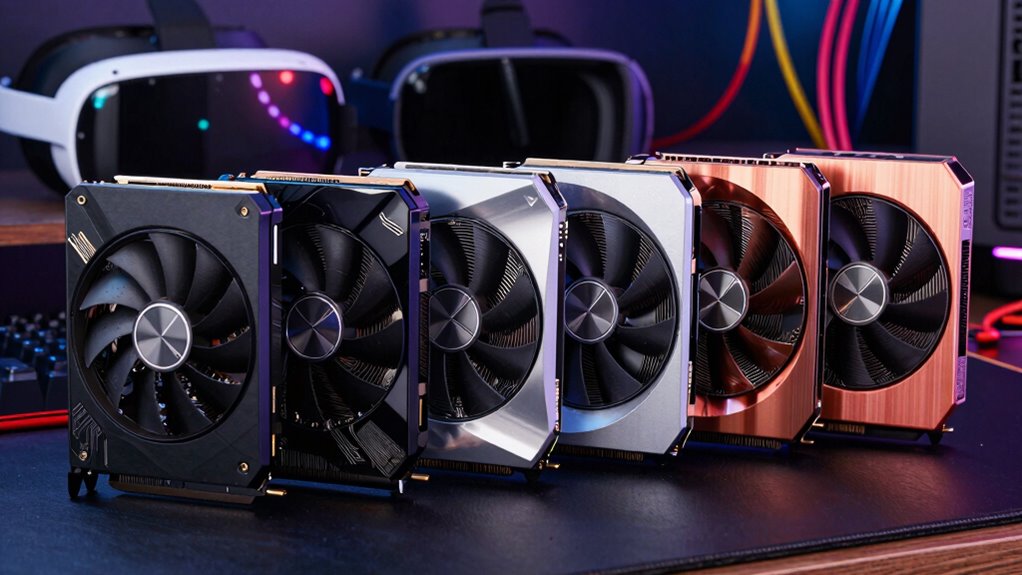

Building a VR-capable PC on a budget means balancing performance with price. Among the top contenders, the MSI GeForce GTX 1660 Super Ventus XS OC stands out as the best overall choice for its reliable VR performance at a lower cost. Meanwhile, the ASUS Dual GeForce RTX 3050 offers more advanced features like ray-tracing for slightly higher price points. The main tradeoffs? The GTX 1660 models tend to be more affordable but lack the newer ray-tracing tech, while the RTX 3050 delivers improved visuals but at a premium. This guide compares five options to help you find the best fit for immersive VR gaming without overspending.

Get the latest gadgets delivered free — and shop member deals
- Fast, free delivery on millions of items
- Access to Prime Big Deal Days deals on October 6–7
- Prime Video, Amazon Music and more included
Complete the kit



Key Takeaways
- The MSI GeForce GTX 1660 Super Ventus XS OC strikes the best balance between price and performance for VR.
- The ASUS RTX 3050 offers ray-tracing and AI features, but at a higher cost, making it suitable for future-proofing.
- All options are limited by VRAM—6GB may be enough now but could be restrictive in future titles or higher resolutions.
- Renewed models can save money but come with limited warranties and potential reliability concerns.
- Cooling and size vary; compact or dual-fan designs influence thermal management and compatibility.
| MSI Gaming GeForce GTX 1660 6GB GDDR5 Graphics Card (Renewed) |  | Best Budget Overall | Chipset: NVIDIA GeForce GTX 1660 | Boost Clock: 1860 MHz | Memory Interface: 128-bit | VIEW ON AMAZON | See Our Full Breakdown |
| MSI GeForce GTX 1660 Super Ventus XS OC Graphics Card |  | Best Value for VR | Memory: 6GB GDDR6 | Bit Width: 192-bit | Outputs: HDMI, DisplayPort | VIEW ON AMAZON | See Our Full Breakdown |
| ASUS Dual GeForce RTX 3050 6GB GDDR6 OC Edition |  | Best for Future-Proofing | GPU: GeForce RTX 3050 | Memory: 6GB GDDR6 | Boost Clock: 1500 MHz (OC mode) | VIEW ON AMAZON | See Our Full Breakdown |
| MSI GeForce GTX 1660 VENTUS XS 6G OC Gaming Graphics Card |  | Best for High Performance in Budget Build | Chipset: NVIDIA GeForce GTX 1660 | Boost Clock: 1830 MHz | Memory Interface: 192-bit | VIEW ON AMAZON | See Our Full Breakdown |
| MSI GeForce GTX 1660 Ti 6GB GDDR6 Graphics Card |  | Best for Gaming and VR Performance | GPU Model: GTX 1660 Ti Ventus XS 6G OC | Memory: 6GB GDDR6 | Memory Interface: 192-bit | VIEW ON AMAZON | See Our Full Breakdown |
| gpu for vr on a budget pc build | Outputs | Boost Clock | Memory Interface | Memory |
|---|---|---|---|---|
| MSI Gaming GeForce GTX 1660 6G | DisplayPort x 3 (V1.4), HDMI 2.0B x 1 | 1860 MHz | 128-bit | — |
| MSI GeForce GTX 1660 Super Ven | HDMI, DisplayPort | — | — | 6GB GDDR6 |
| ASUS Dual GeForce RTX 3050 6GB | — | 1500 MHz (OC mode) | — | 6GB GDDR6 |
| MSI GeForce GTX 1660 VENTUS XS | DisplayPort x 3, HDMI 2.0b x 1 | 1830 MHz | 192-bit | — |
| MSI GeForce GTX 1660 Ti 6GB GD | HDMI, DisplayPort | — | 192-bit | 6GB GDDR6 |
More Details on Our Top Picks
MSI Gaming GeForce GTX 1660 6GB GDDR5 Graphics Card (Renewed)
This MSI GTX 1660 offers solid VR performance thanks to its 6GB GDDR5 memory and a boost clock of 1860 MHz, making it a reliable choice for budget builds. Its dual fans help keep temperatures in check during extended gaming sessions, and its outputs support multiple displays, including VR headsets. Compared with newer models, it lacks ray-tracing but provides enough power for most VR titles at a friendly price. The fact that it’s renewed means savings but also introduces some uncertainty around warranty and longevity. This card is ideal for gamers who want dependable VR performance without breaking the bank.
Pros:- Affordable renewal price
- Strong 6GB GDDR5 VRAM for smooth VR gameplay
- Dual fan cooling ensures stable temperatures
Cons:- Limited warranty on renewed products
- No RGB or advanced cooling features
- Requires a compatible power supply and case
Best for: Budget-conscious gamers seeking reliable VR performance
Not ideal for: Those wanting the latest ray-tracing features or long-term warranty support
- Chipset:NVIDIA GeForce GTX 1660
- Boost Clock:1860 MHz
- Memory Interface:128-bit
- Video Memory:6GB GDDR5
- Outputs:DisplayPort x 3 (V1.4), HDMI 2.0B x 1
Our verdict“A dependable, cost-effective choice for VR newcomers or casual players on a tight budget.”
MSI GeForce GTX 1660 Super Ventus XS OC Graphics Card
The MSI GTX 1660 Super Ventus XS OC offers a step up with 6GB GDDR6 memory and a 192-bit memory interface, providing better bandwidth for VR. Its dual fans manage heat effectively during longer gaming sessions, and it supports VR and DirectX 12, making it a good choice for immersive experiences. Compared to the GTX 1660, it delivers a slight performance boost thanks to faster VRAM, but as a renewed product, it shares the same warranty limitations. Its price-to-performance ratio makes it appealing for budget builders who want solid VR capabilities without paying more for newer models.
Pros:- Higher bandwidth with GDDR6 VRAM
- Excellent thermal management with dual fans
- Supports VR and DirectX 12
Cons:- Renewed product, warranty limited
- Performance might lag behind newer, higher-end cards
- No included accessories
Best for: Gamers wanting a balanced combo of price and performance for VR
Not ideal for: High-end VR users or those seeking the latest ray-tracing tech
- Memory:6GB GDDR6
- Bit Width:192-bit
- Outputs:HDMI, DisplayPort
- Features:VR Ready, DirectX 12, Dual Fan
Our verdict“A smart pick for those who want reliable VR performance at an affordable price point.”
ASUS Dual GeForce RTX 3050 6GB GDDR6 OC Edition
The ASUS RTX 3050 stands out for its ray-tracing and AI capabilities, thanks to NVIDIA’s Ampere architecture. Its 6GB GDDR6 VRAM is paired with a dual-fan cooling system, designed for durability and consistent performance, even in compact cases. Compared to GTX 1660 cards, it offers more advanced features that may be more relevant for future VR titles, but the higher price might be a barrier for some. Its size, cooling, and feature set make it a solid choice if you’re willing to invest a bit more for enhanced visuals and longer-term usability.
Pros:- Ray-tracing and AI support for enhanced visuals
- Robust cooling with dual axial-tech fans
- Durable, dust-resistant design
Cons:- Limited to 6GB VRAM, which can be restrictive
- Slightly higher power consumption
- More expensive than GTX options
Best for: VR enthusiasts wanting improved graphics and future resistance
Not ideal for: Tight budgets or small cases where size and power are constrained
- GPU:GeForce RTX 3050
- Memory:6GB GDDR6
- Boost Clock:1500 MHz (OC mode)
- Design:2-slot, Axial-tech fans
- Dust Resistance:IP5X
Our verdict“A good choice for those aiming to extend their VR experience with newer features, despite a higher price tag.”
MSI GeForce GTX 1660 VENTUS XS 6G OC Gaming Graphics Card
The MSI GTX 1660 Ventus XS OC combines a high boost clock of 1830 MHz with 6GB GDDR5 VRAM, making it a strong candidate for VR gaming on a budget. Its 192-bit memory interface boosts bandwidth, and its triple-display outputs support immersive setups. While it’s a renewed product, its performance edge over standard GTX 1660 models makes it appealing for gamers who want a little extra juice. Its cooling system is effective, but it lacks the flashy features like RGB lighting. This card is well-suited for gamers prioritizing performance and reliability over aesthetics or cutting-edge tech.
Pros:- High boost clock speeds
- Supports multiple displays and VR
- Good thermal performance
Cons:- Renewed with limited warranty
- No RGB or advanced cooling features
- Limited output options compared to premium models
Best for: High-performance VR gaming on a budget
Not ideal for: Users seeking the latest tech features or aesthetic customizations
- Chipset:NVIDIA GeForce GTX 1660
- Boost Clock:1830 MHz
- Memory Interface:192-bit
- Video Memory:6GB GDDR5
- Outputs:DisplayPort x 3, HDMI 2.0b x 1
Our verdict“A solid, performance-focused choice for budget VR gamers who want extra headroom.”
MSI GeForce GTX 1660 Ti 6GB GDDR6 Graphics Card
The MSI GTX 1660 Ti offers a slight performance edge with GDDR6 VRAM and a robust cooling system, making it a good fit for demanding VR titles. Its 192-bit interface and dual fan design help sustain high frame rates, essential for smooth virtual experiences. While it lacks the ray-tracing features of RTX cards, it excels in raw gaming performance within a budget. The absence of specific clock speeds and potential higher power needs are tradeoffs to consider. This card is ideal for gamers who want high performance without stepping into the premium price range.
Pros:- GDDR6 VRAM for faster data transfer
- Effective cooling with dual fans
- Supports DirectX 12 and VR
Cons:- Renewed product, limited warranty
- No specific clock speed info
- Potentially higher power draw
Best for: High-performance VR gaming without RTX features
Not ideal for: Users seeking advanced ray-tracing or AI features
- GPU Model:GTX 1660 Ti Ventus XS 6G OC
- Memory:6GB GDDR6
- Memory Interface:192-bit
- Outputs:HDMI, DisplayPort
- VR Ready:Yes
Our verdict“A strong performer for users focused on immersive gameplay and VR, with a slight performance boost over GTX 1660 models.”

How We Picked
Our selections are based on a combination of price, VR performance, compatibility with budget builds, and reviews from trusted sources. We prioritized cards with at least 6GB of VRAM, essential for VR gaming, and considered cooling solutions, outputs, and size for compatibility with small or mid-tower cases. Each option offers a different balance of features and cost to cater to various types of budget-conscious VR enthusiasts.
| gpu for vr on a budget pc build | Outputs |
|---|---|
| MSI Gaming GeForce GTX 1660 6G | DisplayPort x 3 (V1.4), HDMI 2.0B x 1 |
| MSI GeForce GTX 1660 Super Ven | HDMI, DisplayPort |
| ASUS Dual GeForce RTX 3050 6GB | — |
| MSI GeForce GTX 1660 VENTUS XS | DisplayPort x 3, HDMI 2.0b x 1 |
| MSI GeForce GTX 1660 Ti 6GB GD | HDMI, DisplayPort |
Factors to Consider When Choosing Gpu For Vr On A Budget Pc Build
Choosing the right GPU for VR on a budget requires understanding how performance, VRAM, and features align with your gaming needs. VR gaming demands higher frame rates and stable performance, so selecting a card with at least 6GB VRAM and sufficient cooling is essential. While older GTX models are more affordable, the RTX 3050 offers a glimpse of future-proofing with ray-tracing and AI enhancements, albeit at a higher price. Size compatibility and power requirements also matter in tight cases or limited PSU budgets. This guide breaks down what to look for in a budget VR GPU and how each option stacks up for different user priorities.
Performance and VRAM
VR gaming benefits from higher frame rates and sufficient VRAM—6GB is generally the minimum for smooth experiences at 1080p, but more demanding titles or higher resolutions may require more. GTX cards with GDDR6 tend to perform better than GDDR5, offering better bandwidth for immersive visuals. The RTX 3050’s ray-tracing introduces more realistic lighting, but VRAM limits might still bottleneck future titles. Match your VR headset and intended resolution with the GPU’s capabilities to avoid performance hiccups.
Cooling and Size
Effective cooling systems, like dual fans, help maintain performance during extended sessions. In small cases, size can be a limiting factor; compact models like the MSI Ventus XS are designed to fit in tighter spaces. Always check dimensions before purchasing, especially if you plan to upgrade or add multiple cards. Noise levels vary, but most budget cards are fairly quiet under load, with dual-fan designs providing a good balance of cooling and noise control.
Price and Warranty
Renewed models can significantly lower costs but come with limited warranties and potential reliability issues. Newer cards, while more expensive, typically offer better longevity and support. Consider your tolerance for risk—if you’re comfortable with possible repairs or returns, renewed cards offer value. Otherwise, stretching your budget for a new card might be more reassuring long-term, especially when investing in VR gear that demands stable performance.
Frequently Asked Questions
Is 6GB VRAM enough for VR gaming?
For most current VR titles at 1080p or lower resolutions, 6GB VRAM is sufficient to deliver smooth performance. However, as VR games become more demanding or if you plan to upgrade to higher resolutions or multi-monitor setups, more VRAM could be beneficial. While 6GB provides a good starting point, future titles might push this limit, so consider your gaming habits and headset requirements before settling on VRAM capacity.
Are renewed graphics cards reliable for VR?
Renewed cards can offer excellent value, but their reliability depends on the seller and product condition. They are tested to meet certain standards, but warranty coverage is often limited. For VR, where stability and performance are critical, a renewed card might work well in the short term but could pose risks if it develops issues early. If reliability is a priority, investing in a new card or one with a full warranty might be safer.
How important is cooling in a budget VR GPU?
Cooling is vital for maintaining performance and longevity, especially during extended VR sessions that generate significant heat. Dual-fan designs are common in budget models and generally effective, but smaller or cheaper cards may run hotter and louder. Proper airflow in your case and choosing a card with a reputable cooling system can prevent thermal throttling, which reduces frame rates and impacts VR experience quality.
Can I use a GTX 1660 for VR in 2026?
Yes, a GTX 1660 can still handle many VR titles in 2026, especially at 1080p. However, as VR games evolve and demand more graphical power, you might find it limiting for newer titles or higher resolutions. Upgrading to a card with newer architecture, like the RTX 3050, could provide a longer-lasting experience, but if your budget is tight, the GTX 1660 remains a capable choice for entry-level VR gaming.
What should I consider when choosing a GPU for a small case?
Size is a key factor; compact models like the MSI Ventus XS are designed to fit in smaller chassis, making them ideal for cramped spaces. Check the exact dimensions and compatibility with your case before purchase. Also consider cooling and power requirements, as smaller cases may have limited airflow and power supply capacity. Choosing a card with a dual-fan cooling system and lower power draw will help maintain stable performance without overheating or power issues.
Conclusion
If you’re on a tight budget but want to enjoy VR, the MSI GTX 1660 Super Ventus XS OC offers the best balance of price and performance. For those who can stretch their budget for slightly better visuals and future-proofing, the ASUS RTX 3050 provides ray-tracing and AI enhancements, albeit at a higher cost. If your priority is raw gaming performance and reliability, the MSI GTX 1660 Ti delivers solid results without the premium price. Ultimately, your choice should reflect your budget, case size, and long-term VR plans.
Fall Picks
fall essentials
As an affiliate, we earn on qualifying purchases.