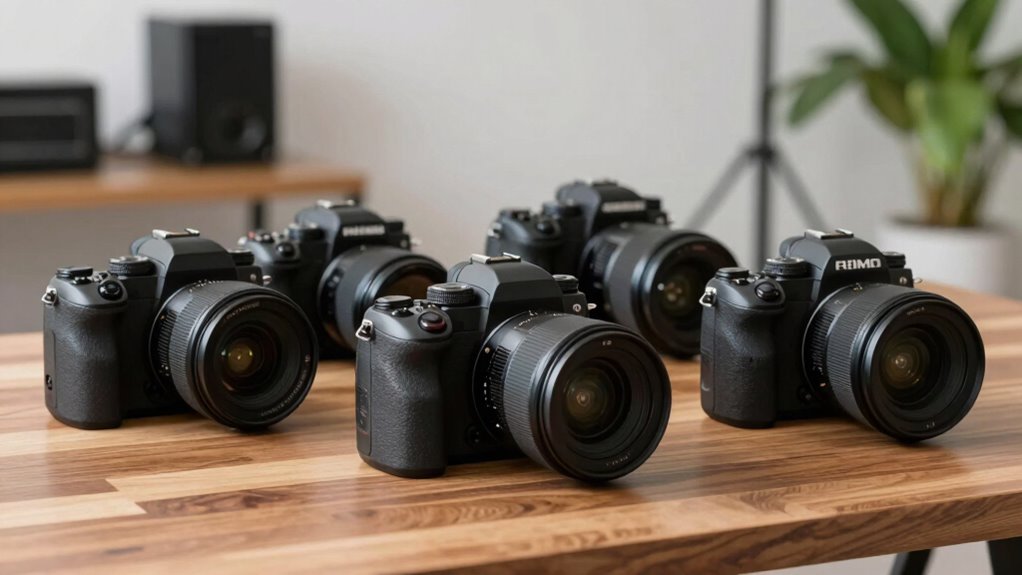

Choosing a full-frame camera for beginners means balancing a manageable learning curve against the size, cost, and complexity of a larger camera system. I rank the Canon EOS RP kit first because it comes with a versatile zoom lens and approachable automatic modes; the Sony Alpha 7 IV is my pick for beginners who already know they want advanced photo and video tools. For a straightforward older mirrorless kit, the Sony a7 with 28–70mm lens is another option, while the refurbished Canon EOS 5D Mark III suits learners drawn to a durable DSLR and optical viewfinder.

Get the latest gadgets delivered free — and shop member deals
- Fast, free delivery on millions of items
- Access to Prime Big Deal Days deals on October 6–7
- Prime Video, Amazon Music and more included
The main tradeoff is readiness versus headroom: the RP includes a lens and keeps the package compact, while the Sony A7 IV offers more room to grow but presents more settings to learn. The two older bodies can teach the fundamentals, yet bring limitations in video, stabilization, or product condition. My ranking favors beginner usability, a useful starting lens, and a clear path to learning over professional-level specifications alone.
Complete the kit



Key Takeaways
- The Canon EOS RP kit is the easiest starting point here because it includes a 24–105mm lens and automatic shooting modes.
- The Sony Alpha 7 IV is the strongest hybrid option, but its extensive controls may distract a beginner who mainly wants simple still photography.
- The Sony a7 bundle includes a standard zoom, but its 1080p video and lack of stabilization make it less capable for modern hybrid use.
- The Canon 5D Mark III offers DSLR handling and a durable magnesium-alloy body, but it is a refurbished body-only purchase.
- Before choosing, weigh lens inclusion and camera condition against autofocus, video features, and the mirrorless or DSLR experience you prefer.
| Canon EOS RP Mirrorless Camera RF24-105mm Lens F4-7.1 is STM Lens Kit |  | Best Overall for Beginners | Sensor: 26.2MP full-frame CMOS | Lens included: RF 24–105mm f/4–7.1 IS STM | Lens mount: Canon RF | VIEW ON AMAZON | See Our Full Breakdown |
| Sony Alpha 7 IV Full-Frame Mirrorless Camera |  | Best for Beginners Who Want Room to Grow | Sensor: 33MP full-frame Exmor R back-illuminated CMOS | Lens mount: Sony E | Image processor: BIONZ XR | VIEW ON AMAZON | See Our Full Breakdown |
| Sony a7 Full-Frame Mirrorless Camera with 28–70mm Lens, Black |  | Best Simple Starter Kit from Sony | Sensor: 24.3MP full-frame Exmor CMOS | Lens included: 28–70mm | Lens mount: Sony E | VIEW ON AMAZON | See Our Full Breakdown |
| Canon EOS 5D Mark III 22.3 MP Full-Frame DSLR Camera Body (Renewed) |  | Best for Beginners Who Prefer a DSLR | Sensor: 22.3MP full-frame CMOS | Image processor: DIGIC 5+ | Autofocus: 61 points, up to 41 cross-type | VIEW ON AMAZON | See Our Full Breakdown |
| full frame camera for beginner | Sensor | Autofocus | Lens included | Lens mount |
|---|---|---|---|---|
| Canon EOS RP Mirrorless Camera | 26.2MP full-frame CMOS | Dual Pixel CMOS AF; 4,779 AF points | RF 24–105mm f/4–7.1 IS STM | Canon RF |
| Sony Alpha 7 IV Full-Frame Mir | 33MP full-frame Exmor R back-illuminated CMOS | Hybrid AF with 693 focus points | — | Sony E |
| Sony a7 Full-Frame Mirrorless | 24.3MP full-frame Exmor CMOS | Hybrid autofocus with phase detection | 28–70mm | Sony E |
| Canon EOS 5D Mark III 22.3 MP | 22.3MP full-frame CMOS | 61 points, up to 41 cross-type | No; body only | — |
More Details on Our Top Picks
Canon EOS RP Mirrorless Camera RF24-105mm Lens F4-7.1 is STM Lens Kit
The EOS RP kit is my first choice for most beginners because it pairs a compact full-frame mirrorless body with an included 24–105mm zoom. That range handles everyday scenes, portraits, travel, and closer details without requiring a new lens for every subject. By comparison, the Sony A7 IV body offers stronger room for advanced video and image-making, but a buyer must plan for a lens separately; the RP kit puts a more immediately usable setup in the box.
Its 26.2MP sensor, electronic viewfinder, articulating touch display, and scene-based automatic modes give a newcomer several ways to learn at a comfortable pace. Start in an automatic mode, then experiment with aperture priority or manual exposure as confidence grows. The supplied lens also adds optical stabilization, useful when handholding in situations where camera shake might otherwise blur a shot. Its close-focus feature makes small subjects and detail photography more accessible than the kit’s modest maximum aperture might suggest.
The compromise is that the RP is not the strongest choice for demanding video or fast action. It records 4K, but the listing does not suggest the advanced 4K 60p, 10-bit format offered by the Sony A7 IV. The lens opens to f/4–7.1, so it gathers less light at the long end than a brighter zoom; indoor scenes may call for more ISO, a steadier stance, or an additional lens. I would choose this kit for a beginner who values a ready-to-shoot package and approachable controls over the newest professional features.
Pros:- Includes a versatile 24–105mm RF zoom lens
- 26.2MP full-frame sensor and electronic viewfinder
- Articulating touchscreen and approachable automatic modes
- Lens optical stabilization supports steadier handheld photos
Cons:- 4K video capabilities are less advanced than the Sony A7 IV’s 4K 60p 10-bit recording
- The lens aperture narrows to f/7.1 at the long end
Best for: First-time full-frame buyers who want a lens included, broad everyday framing, and automatic modes they can gradually outgrow.
Not ideal for: Beginners focused on advanced 4K video, indoor sports, or low-light shooting who want a brighter kit zoom.
- Sensor:26.2MP full-frame CMOS
- Lens included:RF 24–105mm f/4–7.1 IS STM
- Lens mount:Canon RF
- Autofocus:Dual Pixel CMOS AF; 4,779 AF points
- Video:4K UHD
- Stabilization:Optical stabilization in the included lens
- Display:3-inch articulating LCD
Our verdict“I recommend the EOS RP kit to most beginners who want a complete, adaptable full-frame setup without starting with a body-only purchase.”
Sony Alpha 7 IV Full-Frame Mirrorless Camera
If I were choosing on capability rather than simplicity, the Sony Alpha 7 IV would lead this group. Its 33MP back-illuminated sensor captures more resolution than the Canon RP and can give photographers extra flexibility when cropping. The camera also adds 5-axis in-body stabilization, which the older Sony a7 lacks, and combines it with a hybrid autofocus system with 693 focus points. Those features can help a learner get more keepers as subjects move or when shooting handheld.
Video is the clearest reason to choose it over the RP or either older camera. The A7 IV records 4K 60p, 10-bit 4:2:2, giving a video-minded beginner more scope for slow-motion footage and color work. It also shoots up to 10 frames per second. These capabilities are valuable if photography and video are both serious interests, but they can be excess complexity for someone who only wants to learn portraits and family snapshots. Its larger feature set asks the buyer to spend time learning menus and settings.
This is a body-only camera in the supplied product information, unlike the RP and the Sony a7 bundle. A beginner will need to choose a compatible E-mount lens, adding a decision before the first photo. At 0.99 kg, it is also heavier than the listed Sony a7 body. I place it second because it has the strongest long-term headroom here, but for a first full-frame camera, the RP’s included lens and gentler learning path are more practical. Choose the A7 IV when you are ready to invest attention in its wider capabilities.
Pros:- 33MP back-illuminated full-frame sensor
- 5-axis in-body image stabilization
- Records 4K 60p 10-bit 4:2:2 video
- 693-point hybrid autofocus and up to 10 fps shooting
Cons:- Body-only purchase means a beginner must select a lens separately
- Professional feature set can make the learning process more involved
- Heavier than the older Sony a7 listed here
Best for: Beginners committed to learning both still photography and video who want advanced autofocus, stabilization, and a system with room to grow.
Not ideal for: New owners seeking the simplest ready-to-shoot kit, a light camera, or a bundled lens.
- Sensor:33MP full-frame Exmor R back-illuminated CMOS
- Lens mount:Sony E
- Image processor:BIONZ XR
- Video:Up to 4K 60p, 10-bit 4:2:2
- Stabilization:5-axis sensor-shift
- Autofocus:Hybrid AF with 693 focus points
- Continuous shooting:Up to 10 fps
- Weight:0.99 kg
Our verdict“I would choose the Alpha 7 IV over the simpler RP kit when advanced video, stabilization, and longer-term capability matter more than an easy start.”
Sony a7 Full-Frame Mirrorless Camera with 28–70mm Lens, Black
The original Sony a7 bundle offers a straightforward route into full-frame mirrorless photography: a 24.3MP sensor and a 28–70mm lens come together in one package. That lens covers common everyday framing, so a beginner can try wide scenes and tighter portraits without first assembling a system. Compared with the body-only Alpha 7 IV, this kit is easier to start using, and its 1 lb listed weight makes it a more portable option than the newer Sony body.
Its hybrid autofocus, electronic OLED viewfinder, and tilting LCD provide the core tools a beginner needs to learn composition and exposure. It records RAW as well as JPEG, which leaves room to explore editing later. The 24.3MP resolution is sufficient for many general photography needs, though the RP offers a higher-resolution sensor and a more flexible display. I see this Sony as a basic stills-first entry point rather than an all-purpose modern hybrid camera.
The age of the design shapes its limitations. Video tops out at Full HD 1080p, its continuous shooting reaches 4 fps, and it has no in-body image stabilization. The included lens does not change the body’s lack of stabilization, so handheld video and slower shutter speeds demand more care than with the EOS RP kit. The A7 IV is a much stronger choice for action, video, and stabilization; the RP is the better beginner package for a touch-friendly display and close-focus flexibility. I would pick this model if the bundled lens and basic mirrorless experience are the priority, not if advanced video is on the learning plan.
Pros:- 24.3MP full-frame sensor records JPEG and RAW
- Includes a 28–70mm zoom lens
- Electronic OLED viewfinder and tilting LCD
- Wi-Fi and NFC connectivity
Cons:- No in-body image stabilization
- Video is limited to Full HD 1080p
- Continuous shooting is limited to 4 fps
Best for: Beginners who want a Sony E-mount full-frame camera bundled with an everyday zoom and mainly plan to shoot still photos.
Not ideal for: New buyers who want in-body stabilization, fast action performance, or 4K video.
- Sensor:24.3MP full-frame Exmor CMOS
- Lens included:28–70mm
- Lens mount:Sony E
- Video:FHD 1080p
- Autofocus:Hybrid autofocus with phase detection
- Continuous shooting:Up to 4 fps
- Display:3-inch tilting LCD
- Weight:1 lb
Our verdict“I see the Sony a7 bundle as a basic stills-oriented starter, though the Canon RP kit is a more flexible and approachable choice for most first-time buyers.”
Canon EOS 5D Mark III 22.3 MP Full-Frame DSLR Camera Body (Renewed)
The Canon EOS 5D Mark III is the traditional DSLR pick in this group. Its 22.3MP full-frame sensor, optical-style DSLR viewing experience, and durable magnesium-alloy body will appeal to a learner who wants a substantial camera with physical controls. The 61-point autofocus system, including up to 41 cross-type points, gives it a more developed focusing arrangement than the older Sony a7’s basic hybrid system. Its body is also described as weather-resistant, though that does not make it immune to damage or harsh conditions.
Compared with the mirrorless RP and Alpha 7 IV, the 5D Mark III has a different learning feel: the viewfinder is optical rather than electronic, and it does not offer the mirrorless models’ compact form. That can be a plus for someone who prefers a familiar DSLR layout, but a beginner may find the mirrorless cameras easier for previewing exposure and framing with a live electronic display. The camera shoots up to 6 fps and records HD video, but it cannot match the A7 IV’s modern 4K formats.
The most consequential drawback is not a camera setting: this listing is for a certified refurbished body only. No lens is included, so a first-time buyer needs to check compatibility and source a lens before shooting. The RP kit is the more direct beginner recommendation because it arrives with a versatile zoom. I would select the 5D Mark III only if DSLR handling is a deliberate preference and the buyer accepts the condition and lens requirements. Its sturdy construction is appealing, but it does not cancel out the extra setup work.
Pros:- 22.3MP full-frame CMOS sensor
- 61-point autofocus with up to 41 cross-type points
- Magnesium-alloy body with weather-resistant construction
- Shoots up to 6 fps and records HD video
Cons:- Certified refurbished condition may not suit buyers seeking a new camera
- Body-only listing does not include a lens
- HD video is behind the 4K options in this comparison
Best for: Beginners who specifically want a DSLR, prefer an optical viewfinder, and are comfortable buying a compatible lens separately.
Not ideal for: Buyers who want a new, lightweight mirrorless kit with a lens included or modern 4K video.
- Sensor:22.3MP full-frame CMOS
- Image processor:DIGIC 5+
- Autofocus:61 points, up to 41 cross-type
- ISO range:100–25,600; expandable
- Continuous shooting:Up to 6 fps
- Body:Magnesium alloy; weather-resistant
- Condition:Certified refurbished
- Lens included:No; body only
Our verdict“I recommend the 5D Mark III only to DSLR-minded beginners who accept a refurbished body and are prepared to choose a lens separately.”
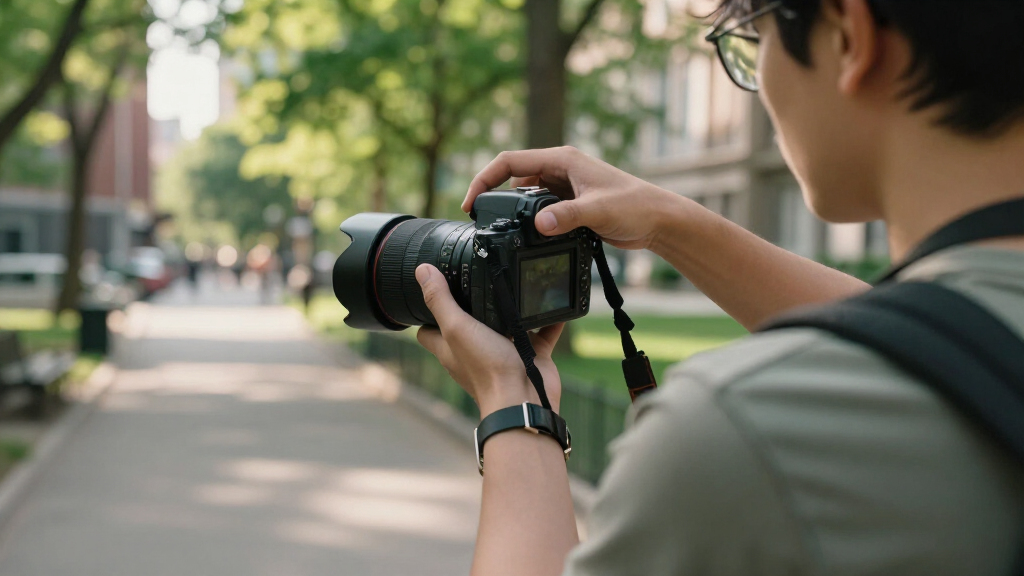
How We Picked
I ranked these cameras for someone entering full-frame photography, not for a professional comparing every performance metric. My main questions were practical: can a new owner start shooting without buying an additional lens, are there beginner-friendly ways to operate the camera, and does the camera leave room to learn manual exposure and more advanced techniques?
I also compared what separates these four options. The EOS RP kit gets a strong position because its included zoom and scene modes make the first outings simpler. The Sony A7 IV ranks highly for its more capable autofocus, stabilization, resolution, and video, though those features bring a steeper learning curve. The older Sony a7 offers a bundled lens but lacks stabilization and is limited to Full HD recording. The Canon 5D Mark III is the distinct DSLR choice, yet its refurbished, body-only condition makes it a less friction-free first purchase.
I treated the included lens and condition as part of the buying decision, rather than judging body specifications in isolation. A camera body cannot take photos without a lens, and a refurbished product deserves different expectations from a new kit. I did not assume that extra resolution or a longer feature list automatically makes a camera better for a beginner. Each recommendation has a clear audience, and each drawback matters to a different kind of first-time full-frame buyer.
| full frame camera for beginner | Lens mount | Image processor | Continuous shooting |
|---|---|---|---|
| Canon EOS RP Mirrorless Camera | Canon RF | — | — |
| Sony Alpha 7 IV Full-Frame Mir | Sony E | BIONZ XR | Up to 10 fps |
| Sony a7 Full-Frame Mirrorless | Sony E | — | Up to 4 fps |
| Canon EOS 5D Mark III 22.3 MP | — | DIGIC 5+ | Up to 6 fps |
Factors to Consider When Choosing Full Frame Camera For Beginners
I would choose a beginner full-frame camera by starting with the whole shooting setup, not the sensor specification alone. The lens, controls, stabilization, and condition can matter more to your first months of photography than a small resolution difference.Choose a kit if you want to start shooting right away
A bundled lens removes an early decision and gives a new owner a practical focal-length range. The Canon EOS RP kit includes a 24–105mm zoom, while the Sony a7 bundle includes a 28–70mm lens. Both are more ready to use than the body-only Alpha 7 IV and refurbished 5D Mark III. The RP’s longer range makes it the most adaptable of these starter kits for travel, everyday scenes, and portraits. Before ordering a body-only camera, include the lens mount and the kind of lens you will need in your plan.
Match the learning curve to your goals
If your first goal is to learn exposure and composition, automatic and scene modes can help you focus on making pictures while you learn. The RP lists multiple automatic and priority modes, making it a natural first step. The A7 IV offers more control and advanced options, a benefit when you want to grow into video and more complex work but a potential distraction at the start. DSLR fans may prefer the 5D Mark III’s physical camera experience, while mirrorless models provide electronic viewfinders and displays.
Think about video and stabilization before you buy
Video capability differs sharply across the four cameras. The Sony A7 IV’s 4K 60p 10-bit recording is the most advanced specification here; the RP also records 4K, while the older Sony a7 is limited to 1080p and the 5D Mark III to HD video. Stabilization matters when you shoot handheld: the A7 IV has in-body stabilization, while the RP’s supplied lens offers optical stabilization. The older Sony a7 has no in-body stabilization. If video or handheld low-light shooting is part of your plan, these distinctions can matter more than a modest resolution gap.
Account for condition and system commitment
The refurbished Canon 5D Mark III is not equivalent to a new kit. Check the listing’s condition and included items, and remember that its body-only format requires a compatible lens. Each mirrorless body also commits you to a lens mount: Canon RF for the RP and Sony E for both Sony models. I would choose based on the lenses you might want to own over time, not just the first camera body. A more capable body is not a good beginner fit if it leaves you with an inconvenient lens choice or a setup you do not want to carry.
Frequently Asked Questions
Which camera is easiest for a beginner to start using?
I would start with the Canon EOS RP kit if ease and readiness matter most. It includes a 24–105mm zoom, automatic and scene modes, and an articulating display. The Sony a7 also comes with a lens, but it has less advanced video and no in-body stabilization. The RP offers the more versatile starting package in this comparison.
Is the Sony Alpha 7 IV too advanced for a beginner?
Not necessarily, but its breadth of controls and video features can mean more settings to learn than on the RP. I would choose it as a beginner if you expect to explore advanced video, action, or a broader range of photography and are comfortable starting with a body-only camera. For casual first steps, the included-lens RP kit is simpler.
Do any of these cameras include a lens?
Yes. The Canon EOS RP kit includes an RF 24–105mm lens, and the Sony a7 bundle includes a 28–70mm lens. The Sony Alpha 7 IV and Canon EOS 5D Mark III listings are body-only, so buyers need to select a compatible lens separately. That difference affects how quickly a new owner can begin shooting.
Is the refurbished Canon 5D Mark III a good first full-frame camera?
It can suit a beginner who deliberately wants a DSLR and understands that the listing is for a certified refurbished body without a lens. Its durable body and 61-point autofocus are appealing, but it is less turnkey than the RP kit and its video is limited to HD. I would skip it if you want a new camera, a compact mirrorless body, or a complete kit.
Which camera is best for beginner video?
The Sony Alpha 7 IV has the strongest video specification in this group, recording 4K 60p 10-bit 4:2:2. The EOS RP also records 4K and includes a lens with optical stabilization, which makes its kit more immediately usable. The older Sony a7 records only 1080p and the 5D Mark III offers HD, so I would not choose either as the main video camera.
Conclusion
For most first-time full-frame buyers, I recommend the Canon EOS RP kit: its included zoom, approachable modes, and compact mirrorless design make it the clearest all-around starting point. Choose the Sony Alpha 7 IV if you are a video-minded learner or want the strongest room to grow and do not mind buying a lens separately. The Sony a7 bundle fits stills-first beginners who want a basic Sony setup with a lens, while the Canon 5D Mark III is best reserved for DSLR fans comfortable with a refurbished body and separate lens purchase. Your best choice is the one that matches how you want to learn and gives you a setup you will actually carry and use.
Halloween Picks
halloween
As an affiliate, we earn on qualifying purchases.